

If you’ve ever watched your ATV sink axle-deep into a mud pit while your buddy on better tires cruises through like it’s nothing, you know the sting. That moment made me rethink everything about my tire setup.
The Maxxis Zilla kept showing up in forum recommendations and dealer suggestions, so I decided to put it through a thorough test myself. What I found genuinely surprised me — both the good and the not-so-good.
If you’re exploring the broader Maxxis lineup, our full Maxxis Tires Review guide covers every model side by side and can help you compare the Zilla against other popular options in their range.
- The Maxxis Zilla is a lightweight, affordable mud tire designed for ATVs and UTVs that punches well above its price point.
- Excellent mud evacuation and soft-terrain traction thanks to its angled knob design and wide-spaced tread pattern.
- Lighter than most competitors, which translates to less strain on your machine and more responsive handling.
- Not ideal for rocky or hard-packed terrain — the 6-ply rating limits puncture resistance in extreme conditions.
- Best suited for riders who spend most of their time in mud, swamps, and soft trails rather than aggressive rock crawling.
- Prices typically range from $60–$130 per tire depending on size, making it one of the best values in the mud tire category.
Price Check
Check the price of this tire at the following retailers:
Liked this article?
Add TireAdvise as a preferred source so you see more of our tire reviews and guides on Google.
What Exactly Is the Maxxis Zilla?
The Maxxis Zilla is a purpose-built mud tire designed for ATVs and UTVs. It falls into Maxxis’s specialty off-road tire lineup, targeting riders who regularly deal with soft, wet, and swampy terrain across the United States — from Louisiana bayou trails to Pacific Northwest mud runs.
What makes it stand out from the crowded mud tire market is its remarkably low weight. Maxxis engineered this tire to be significantly lighter than comparable mud tires, and you feel that difference the moment you start riding.
The Zilla comes in a range of popular ATV/UTV sizes, with the most common being 25×8-12 for the front and 25×10-12 for the rear. It features a 6-ply rated construction, which is adequate for most recreational and moderate trail use but something to keep in mind if you ride in particularly punishing conditions.
My Testing Conditions and Setup
I mounted a full set of Maxxis Zillas on my Polaris Sportsman 570 and took them through a range of conditions over several weeks. My testing covered everything from thick clay mud to loose sandy trails, shallow creek crossings, and some moderate hard-pack sections.
I ride primarily in the Southeast US, where the terrain is a unpredictable mix of sticky red clay, sandy loam, and everything in between. Rainfall is frequent, so wet conditions are basically the default — exactly the kind of environment the Zilla was designed for.
I also spent time on groomed trail systems and even some light gravel roads to see how the tire performs when you’re not actively trying to drown it in mud. Because let’s be honest — most of us don’t ride in pure mud 100% of the time.
Tread Design and Construction: What Makes It Work
The Tread Pattern
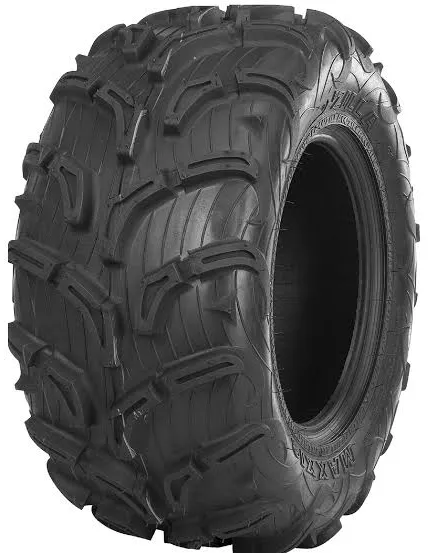
The Zilla’s tread pattern is its defining feature. It uses angled, widely-spaced knobs that create aggressive channels for mud evacuation. When you look at the tire from above, the knob arrangement almost resembles rows of shark fins — they’re designed to bite into soft terrain on entry and then shed mud as the tire rotates.
In my experience, this design works remarkably well. I noticed the tires cleared themselves quickly even in the thickest clay, which is something cheaper mud tires often struggle with. Once a tire packs with mud, you’re basically running slicks — the Zilla resists that better than I expected.
The Lightweight Construction
Here’s where the Zilla really differentiates itself. A 25×8-12 Zilla weighs roughly 16–17 pounds. Compare that to some competing mud tires in the same size that tip the scales at 22–25 pounds, and you begin to understand why this matters.
Less rotational mass means your engine doesn’t have to work as hard. On my Sportsman 570, I noticed better throttle response and less belt strain compared to the heavier aftermarket tires I’d been running previously. Over a full day of riding, this translates to less fatigue on both you and your machine.
The 6-Ply Rating
The Zilla carries a 6-ply rated construction. For mud and soft terrain riding, this is perfectly fine. The sidewalls are reasonably durable and I didn’t experience any punctures during my testing period, even when I clipped some partially submerged sticks and roots.
However, I want to be upfront — if you’re regularly riding on sharp limestone, jagged rocks, or terrain where punctures are a constant threat, you may want something with a more robust ply rating. The Zilla’s lightweight design comes with a trade-off in raw durability.
Performance in Mud: Where the Zilla Earns Its Name
Let’s get to what matters most — how does this tire actually perform in the stuff it was named after?
In a word: impressively. After several days of dedicated mud riding, I came away genuinely satisfied with the Zilla’s traction in soft and wet terrain. The tire bites into mud with authority, and the self-cleaning action keeps the tread effective even when conditions get truly nasty.
I rode through several sections of knee-deep standing mud that would have stopped my old tires cold. The Zilla clawed through with steady forward progress — not effortlessly, but consistently. I could feel the knobs finding purchase beneath the surface muck and pulling the machine forward.
One thing I noticed is that the Zilla performs best when you maintain moderate throttle. If you hammer the gas and spin the tires wildly, they’ll dig ruts like anything else. But with controlled power delivery, they hook up well and move you through boggy sections efficiently.
Creek Crossings and Wet Rocks
Creek crossings were a mixed bag. On sandy and muddy creek bottoms, the Zilla performed exactly as you’d expect — great traction and confident grip. But on wet, algae-covered rocks, I noticed more slippage than I’d like. The widely-spaced knobs don’t offer the same contact-patch density that you’d get from a more trail-oriented tire.
This isn’t unique to the Zilla — it’s a characteristic of most aggressive mud tires. But it’s worth mentioning because a lot of trails in the US involve creek crossings with rocky bottoms.
Performance on Hard-Pack and Gravel
Here’s where I need to set realistic expectations. The Zilla is a mud tire. It’s not designed to be a do-everything trail tire, and if you spend most of your time on hard-packed trails or gravel roads, it’s not the best choice.
On hard-pack, the ride is noticeably rougher than a trail tire. Those aggressive knobs that work so well in mud create vibration and noise on firm surfaces. I could feel every knob making contact during faster runs on gravel roads, and the ride quality was definitely inferior to what I’d experienced with smoother-tread options.
Cornering grip on hard surfaces is also limited. The Zilla doesn’t have a lot of intermediate tread elements between those big knobs, so the contact patch on hard ground is relatively small. I found myself taking turns more conservatively on groomed trails than I normally would.
That said, the Zilla handles well enough on hard-pack to get you from the truck to the mud pit without issues. It’s functional on firm terrain — just not in its element.
Wear and Durability: How Did They Hold Up?
After weeks of regular riding across various terrain types, the Zilla showed minimal visible wear. The knobs maintained their shape and sharp edges, and I didn’t see any chunking, tearing, or abnormal wear patterns.
The rubber compound Maxxis uses on the Zilla seems to strike a good balance between grip and longevity. It’s soft enough to conform to terrain for traction but firm enough that it’s not wearing away at an alarming rate. Based on what I’ve seen so far, I’d expect a full set to last a reasonable number of riding seasons with typical recreational use.
I did notice some minor scuffing on the sidewalls from brush and root contact, but nothing that concerned me structurally. The 6-ply sidewalls held up to incidental contact without any cuts or tears.
Maxxis Zilla vs. The Competition
No tire review is complete without context. Here’s how the Zilla stacks up against some of the most popular alternatives in the ATV/UTV mud tire market.
| Feature | Maxxis Zilla | ITP Mud Lite II | Sedona Mud Rebel RT | Maxxis Mudzilla |
|---|---|---|---|---|
| Tire Type | Mud | Mud/All-Terrain | Mud | Extreme Mud |
| Weight (25×8-12) | ~17 lbs | ~19 lbs | ~22 lbs | ~25 lbs |
| Ply Rating | 6-ply | 6-ply | 6-ply | 6-ply |
| Mud Traction | Excellent | Good | Excellent | Outstanding |
| Hard-Pack Performance | Fair | Good | Fair | Poor |
| Self-Cleaning | Very Good | Good | Very Good | Excellent |
| Price Range (per tire) | $60–$130 | $70–$140 | $90–$160 | $80–$150 |
| Best For | Moderate mud, lightweight setup | Mixed terrain with some mud | Deep mud, aggressive trailing | Extreme mud bogging |
Maxxis Zilla vs. ITP Mud Lite II
The ITP Mud Lite II is probably the Zilla’s closest competitor in terms of price and positioning. In my experience, the Mud Lite II is slightly better on mixed terrain — it handles hard-pack and gravel with a bit more confidence. But in pure mud, the Zilla has a noticeable edge in self-cleaning and deep-mud traction.
If you split your riding 50/50 between mud and trails, the Mud Lite II might be the better all-rounder. But if mud is your primary playground, the Zilla wins.
Maxxis Zilla vs. Maxxis Mudzilla
The naming can be confusing — Zilla vs. Mudzilla. Think of the Mudzilla as the Zilla’s bigger, more aggressive sibling. The Mudzilla has deeper lugs, more extreme tread spacing, and is designed for dedicated mud bogging. It’s also significantly heavier.
For most recreational riders, the Zilla offers a better balance. The Mudzilla is overkill unless you’re regularly riding in genuinely extreme conditions. The weight penalty alone makes it a harder sell for everyday trail riders who encounter mud regularly but don’t live in it.
Maxxis Zilla vs. Sedona Mud Rebel RT
The Sedona Mud Rebel RT is a solid tire that competes well with the Zilla on pure mud performance. Where it falls short is weight and price — it’s heavier and generally costs more. The Zilla’s weight advantage gives it the edge for riders on smaller machines where every pound matters.
If you’re on a larger, more powerful UTV where weight is less of a concern and you want maximum mud aggression, the Mud Rebel RT deserves consideration. But for ATVs and mid-size UTVs, I’d lean toward the Zilla for its combination of performance and light weight.
Sizing and Fitment
The Maxxis Zilla is available in a solid range of sizes that cover most popular ATV and UTV platforms. Here are the most common sizes you’ll find at US retailers:
- Front sizes: 25×8-12, 26×9-12, 27×10-14, 28×9-14
- Rear sizes: 25×10-12, 26×11-12, 27×11-14, 28×11-14
The 12-inch sizes are the most popular for traditional ATVs, while the 14-inch options fit the growing number of UTVs and side-by-sides on the market. I ran the 25×8-12 front and 25×10-12 rear setup, which is essentially the standard fitment for most mid-size sport-utility ATVs.
One thing I appreciated is that the Zilla runs true to size. Some aftermarket tires run smaller than their stated measurements, but my Zillas measured within a fraction of an inch of their listed dimensions. This makes planning your fitment much easier.
Installation and Break-In
Mounting the Zillas was straightforward. Their lightweight construction makes them easy to handle, and they seated on the bead without much fuss. I used standard bead sealer and had no issues with air retention.
I ran them at 5-6 PSI for mud riding and bumped up to around 8-10 PSI for harder trail sections. The sidewalls respond well to pressure changes — lowering pressure noticeably increases the footprint and flotation in soft terrain.
There wasn’t really a break-in period to speak of. The tires felt consistent from the first ride through the rest of my testing. I noticed no change in handling characteristics or traction as the tires wore in — they were ready to perform right out of the box.
Who Should Buy the Maxxis Zilla?
Based on my testing, the Maxxis Zilla is an excellent fit for a specific type of rider. Let me break down who should and shouldn’t consider this tire.
The Zilla Is Perfect For:
- Recreational mud riders who encounter muddy conditions regularly but aren’t doing extreme mud bogging competitions.
- ATV owners on a budget who want legitimate mud tire performance without spending $150+ per tire.
- Riders with smaller machines where weight savings genuinely impact performance and belt longevity.
- Southeast and Gulf Coast riders who deal with soft, wet terrain as a standard riding condition.
- Weekend warriors who want a reliable mud tire that won’t break the bank or break their machine.
You Might Want Something Else If:
- You ride primarily rocky terrain. The 6-ply construction and open tread don’t offer the puncture protection or grip you’d want on rocks.
- You need a true all-terrain tire. The Zilla is a mud specialist, and trying to make it do everything will leave you disappointed on hard surfaces.
- You’re doing competitive mud bogging. The Zilla is great for trail mud, but for extreme bog events, look at the Mudzilla or dedicated bog tires.
- You ride aggressively on groomed trails. The rough ride and reduced cornering grip on hard-pack make it a poor choice for fast trail riding.
Pricing and Where to Buy
As of my research, the Maxxis Zilla typically retails between $60 and $130 per tire in the US, depending on the size you need. The smaller 25-inch sizes sit at the lower end, while the larger 28-inch UTV sizes command the higher prices.
For a full set of four tires in the most common 25-inch size, you’re looking at roughly $280–$400 total. That’s an outstanding value for a tire with this level of mud performance — many competing tires cost significantly more for similar or even lesser capability.
You can find the Zilla at most major US ATV tire retailers, including:
- Rocky Mountain ATV/MC
- Dennis Kirk
- Amazon (multiple authorized sellers)
- Chaparral Motorsports
- Local ATV/UTV dealerships
I’d recommend comparing prices across at least two or three of these retailers, as prices can vary by $10–$20 per tire. Also check for free shipping offers — tire shipping costs can add up quickly.
Maintenance Tips for Getting the Most Out of Your Zillas
After spending significant time on these tires, here are a few things I learned that will help you maximize their performance and lifespan.
Clean them after mud rides. While the Zilla’s self-cleaning tread works great in motion, dried mud packed into the tread can affect balance and performance on your next ride. A pressure washer makes quick work of this.
Adjust pressure for the terrain. Don’t just set it and forget it. Running lower pressure (4–6 PSI) in mud gives you a dramatically larger footprint and better flotation. Bump it up to 8–10 PSI for trail riding to reduce rolling resistance and improve handling.
Inspect sidewalls regularly. The 6-ply construction is adequate but not bombproof. After rides through brushy or rocky terrain, take a moment to check for cuts, tears, or embedded objects. Catching a small issue early prevents a trailside blowout later.
Rotate if needed. If you notice uneven wear between front and rear tires (common since rear tires work harder on most ATVs), consider rotating them. The Zilla is directional-friendly, so this is straightforward.
My Honest Pros and Cons After Extended Testing
What I Loved
- Outstanding mud traction — genuinely impressed with how well these perform in thick, sticky clay and boggy conditions.
- Best-in-class weight — noticeably lighter than competitors, which matters for acceleration, braking, and machine longevity.
- Excellent self-cleaning — the angled knob design really does shed mud effectively, keeping traction consistent.
- Incredible value — dollar for dollar, this is one of the best mud tire purchases you can make in the US market right now.
- True-to-size fitment — no surprises on sizing, which I really appreciate when buying online.
What Could Be Better
- Hard-pack performance is mediocre — rough ride, noise, and reduced grip on firm surfaces are noticeable compromises.
- Rocky terrain capability is limited — the 6-ply rating leaves me wanting more protection for aggressive rocky sections.
- Wet rock traction is poor — creek crossings with algae-covered rocks require extra caution.
- Not aggressive enough for extreme mud bogging — serious bog competitors will want something with deeper, more extreme lugs.
Final Verdict: Is the Maxxis Zilla Worth Your Money?
After putting the Maxxis Zilla through every type of terrain I could find during my testing period, I can confidently say this is one of the best value mud tires on the US market today. It excels at what it’s designed to do — deliver reliable, effective traction in soft, muddy terrain — while keeping weight and cost impressively low.
Is it perfect? No. It has clear limitations on hard-pack surfaces and in rocky conditions. But if you understand its intended purpose and your riding aligns with its strengths, the Zilla will deliver performance that rivals tires costing significantly more.
I recommend the Maxxis Zilla to any recreational ATV or UTV rider who regularly encounters muddy conditions and wants a dedicated mud tire without spending a fortune. It’s an honest tire that delivers exactly what it promises — nothing more, nothing less. And in a market full of overpromising and underdelivering, that honesty is worth a lot.
For the price, the performance, and the lightweight construction, the Maxxis Zilla earns a solid recommendation from me. If mud is your thing, this tire should be on your shortlist.
Frequently Asked Questions
Is the Maxxis Zilla a good ATV/UTV tire for mud and trail riding?
The Maxxis Zilla is one of the most popular mud tires for ATVs and UTVs, and for good reason. Its aggressive tread pattern with angled lugs provides excellent traction in soft, muddy terrain while still being manageable on harder-packed trails. I found it performs best in light-to-moderate mud conditions, though it can handle deeper mud better than most stock tires.
How long do Maxxis Zilla tires last compared to other ATV mud tires?
Maxxis Zilla tires offer solid durability for a mud-oriented tire, typically lasting 2,000 to 4,000 miles depending on terrain and riding style. The 6-ply rated construction resists punctures well on rocky trails, which is a big plus for riders in the US who encounter mixed terrain. They outlast many budget mud tires but won’t match the longevity of a dedicated hard-surface trail tire.
What is the price range for Maxxis Zilla tires in 2024?
Maxxis Zilla tires generally range from $70 to $140 per tire in the US market, depending on the size you need. Common sizes like the 25×8-12 front and 25×10-12 rear typically fall around $80 to $110 each. You can find competitive pricing at online retailers like Rocky Mountain ATV/MC, Amazon, and Tire Rack, and buying a full set of four usually runs between $320 and $500.
How does the Maxxis Zilla compare to the Maxxis Bighorn for trail riding?
The Maxxis Zilla and Maxxis Bighorn serve different purposes, so choosing between them depends on your primary riding conditions. The Zilla excels in muddy, soft terrain with its paddle-style lugs and self-cleaning tread, while the Bighorn is a better all-around trail tire with superior performance on rocks and hard-packed surfaces. If you ride mostly muddy trails in states like Louisiana, Florida, or the Pacific Northwest, go with the Zilla; for drier, rocky terrain out West, the Bighorn is the smarter choice.
Are Maxxis Zilla tires good on pavement and hard surfaces?
The Maxxis Zilla is not ideal for extended pavement riding, as the aggressive mud lugs tend to wear quickly on hard surfaces and produce a louder ride. That said, they handle short stretches of gravel roads and hard-packed dirt reasonably well without feeling overly squirmy. If your riding mix includes a lot of road travel between trails, you might want to consider a more versatile tire like the Maxxis Bighorn or ITP Mud Lite instead.
What ATV and UTV sizes are available for the Maxxis Zilla?
The Maxxis Zilla comes in a wide range of sizes to fit most popular ATVs and side-by-sides, from 22-inch to 30-inch diameters. Common fitments include 25×8-12 and 26×9-12 for the front, and 25×10-12 and 26×11-12 for the rear. Larger UTV sizes like 27×10-14 and 28×11-14 are also available for machines like the Polaris RZR and Can-Am Maverick, making it easy to find the right Zilla for your specific ride.
Do Maxxis Zilla tires require tubes or are they tubeless?
Maxxis Zilla tires are designed to be mounted tubeless on standard ATV and UTV wheels, which is the setup most US riders prefer for convenience and reliability. As long as your rims are in good condition without dents or damage, they should seal and bead properly without tubes. I recommend using a bead sealer during installation if you’re mounting them at home, especially on older or slightly worn rims, to ensure an airtight fit.
