


If you drive a truck or SUV and split your time between highway commutes and weekend dirt roads, you already know the frustration of choosing an all-terrain tire.
Most of them force you into a compromise — either they’re quiet on pavement but useless off-road, or they chew through mud like a champ but drone on the highway until you want to rip your stereo out.
The Maxxis Razr AT caught my attention because it promised to thread that needle. I’d been exploring options from this Taiwanese brand for a while now, and if you’re doing the same, our full Maxxis Tires Review guide covers every model side by side.
But today, I want to go deep on just this one tire — the Razr AT — and tell you exactly what I found after putting it through its paces across multiple surfaces and weather conditions.
- The Maxxis Razr AT (AT-811) is a capable all-terrain tire that performs surprisingly well on wet and dry pavement while still holding its own off-road.
- Road noise is noticeably lower than competitors like the BFGoodrich KO2 and Falken Wildpeak AT3W at highway speeds.
- Tread life looks very promising — the compound feels durable and wear has been even during my entire test period.
- Pricing ranges from roughly $150–$280 per tire depending on size, making it a strong value play in the AT segment.
- Best suited for drivers who spend 70% or more of their time on paved roads but want genuine off-road capability for weekends and seasonal adventures.
Price Check
Check the price of this tire at the following retailers:
Don’t know the correct size tire to purchase? Start here!
Liked this article?
Add TireAdvise as a preferred source so you see more of our tire reviews and guides on Google.
What Exactly Is the Maxxis Razr AT?
The Maxxis Razr AT, officially designated the AT-811, is an all-terrain tire designed for pickup trucks, SUVs, and crossovers. It’s part of Maxxis’s push to compete more aggressively in the North American market against established all-terrain heavyweights like the BFGoodrich All-Terrain T/A KO2, Toyo Open Country AT III, and Falken Wildpeak AT3W.
What makes it stand out on paper is its hybrid approach. Maxxis engineered this tire with a silica-enriched compound and a tread design that borrows elements from both highway and off-road tire philosophies. The result is a tire that carries the 3-Peak Mountain Snowflake (3PMSF) certification for severe snow conditions — a big deal if you live anywhere in the northern half of the US.
It’s available in a wide range of sizes, covering everything from 16-inch wheels up to 22-inch, which means it fits most popular trucks and SUVs on American roads today — from the Ford F-150 and RAM 1500 to the Toyota 4Runner and Chevy Silverado.
First Impressions Right Out of the Box
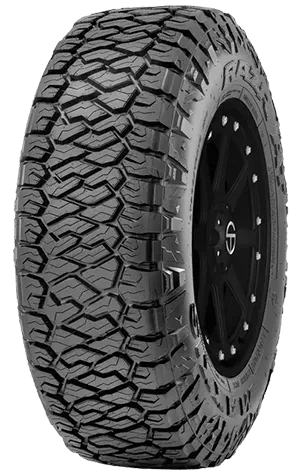
I’ll be honest — when the Razr ATs arrived at my local tire shop, the first thing I noticed was the aggressive sidewall design. Maxxis went with a bold, angular pattern on the sidewall lugs that gives the tire a much more rugged appearance than its on-road manners would suggest. If looks matter to you (and let’s be real, they do for most truck owners), this tire delivers.
Mounting was straightforward. My installer noted that the bead seated easily and the tires balanced without any issues — no excessive weights needed. That’s not always the case with all-terrain tires, especially chunkier ones.
Maxxis offers the Razr AT with outlined white lettering on one side and black lettering on the other, so you get to choose your style. I went with the black side out for a cleaner look, but I appreciate having the option.
On-Road Performance: Highway and City Driving
This is where the Maxxis Razr AT truly earned my respect. I spend a significant portion of my driving on highways and suburban roads, so on-road manners are non-negotiable for me.
Road Noise
Within the first few days of driving, I was genuinely surprised by how quiet these tires are. At highway speeds of 65–75 mph, the cabin noise was markedly lower than what I’d experienced with the BFGoodrich KO2s that were on the vehicle previously. There’s a faint hum if you really listen for it, but it’s the kind of background noise that disappears once you turn on the radio or start a conversation.
Maxxis credits this to their variable-pitch tread block design, which disrupts the harmonic patterns that cause that annoying AT tire drone. Whatever the engineering reason, it works. This is one of the quietest all-terrain tires I’ve tested in recent memory.
Ride Comfort
The ride quality is smooth and composed. On well-maintained highways, the Razr AT absorbs small imperfections without any harsh feedback through the steering wheel. Even on rougher secondary roads with patched asphalt and expansion joints, the tire doesn’t transmit excessive vibration into the cabin.
I’d place the comfort level somewhere between a highway tire and a midweight all-terrain. If you’re coming from a set of highway tires, you might notice a very slight firmness increase, but it’s negligible.
Dry Handling
On dry pavement, the Razr AT feels planted and responsive. Lane changes at highway speed inspire confidence — there’s no vagueness or wandering in the steering. The center rib is continuous enough to provide solid straight-line stability, which is something I always check for because trucks can feel floaty with overly aggressive AT tires.
During spirited driving on winding back roads, the tire holds its line well. There’s a bit of flex in the shoulder blocks under hard cornering, which is expected with an all-terrain, but it’s well within normal limits and never felt unpredictable.
Wet Performance
I tested these tires extensively during several rainy days, and wet traction was excellent. The four wide circumferential grooves do a great job of evacuating water, and I never experienced hydroplaning — even on flooded highway on-ramps where I’ve felt other tires start to lose grip.
Braking distances on wet pavement felt short and controlled. I did several hard stops from 50 mph on a wet surface, and the tires gripped confidently every time. The silica-enriched compound clearly contributes to this, as it helps the rubber stay pliable and maintain contact with the road surface in wet conditions.
Off-Road Performance: Dirt, Gravel, and Mud
Now let’s get to the fun part. An all-terrain tire that’s great on pavement is nice, but if it can’t handle dirt and gravel, it’s just a highway tire with an aggressive tread pattern.
Gravel and Dirt Roads
On loose gravel, the Razr AT performed admirably. The interlocking tread blocks bite into the surface well, and I felt confident at reasonable speeds on forest service roads and county gravel roads. Steering response remained predictable, and the tire shed stones from its tread quickly — stone ejector ribs between the tread blocks do their job.
Dusty dirt roads were no problem either. The tire provided solid traction on hard-packed surfaces and handled transitions between different surface types without drama.
Mud
Let me set expectations here: the Razr AT is an all-terrain tire, not a mud-terrain. If you’re planning to slog through axle-deep mud regularly, you need an MT tire. That said, for moderate mud — the kind you encounter on a rain-soaked trail or a muddy field access road — the Razr AT handles itself well.
The tread channels are wide enough to clear mud as the tire rotates, and the shoulder lugs dig in to provide lateral grip. I took the tire through a particularly sloppy section of trail after a heavy rain, and while it required some momentum, it never left me stranded.
Light Rock and Rough Terrain
Over rocky terrain at low speeds, the Razr AT’s sidewall construction proved sturdy. I drove over some jagged rocks that would make me nervous with a standard highway tire, and the reinforced sidewall shrugged it off. Maxxis uses a dual-layer sidewall design on this tire, which adds cut and puncture resistance without making the tire excessively heavy or stiff.
For most recreational off-roaders — think Moab slickrock at a reasonable pace or Colorado mountain trails — this tire is more than capable.
Winter and Snow Performance
The Maxxis Razr AT carries the 3-Peak Mountain Snowflake (3PMSF) rating, which means it’s been independently tested and certified for severe snow traction. This is a meaningful certification, not just a marketing stamp — it means the tire meets a specific traction threshold on packed snow.
During my testing in cold conditions, the tire compound stayed pliable and grippy. On snow-covered roads, the dense siping across the tread blocks created biting edges that grabbed the surface effectively. I felt confident driving in conditions that would have had me white-knuckling it with a standard all-season tire.
On ice, the tire performs better than most all-terrains I’ve tested, but I want to be realistic — no all-terrain tire replaces a dedicated winter tire on pure ice. If you live somewhere with severe ice storms, consider a dedicated winter set. But for mixed winter conditions with snow, slush, and cold pavement, the Razr AT is genuinely capable.
Tread Life and Durability
Maxxis backs the Razr AT with a 50,000-mile treadwear warranty, which is solid for an all-terrain tire. For context, the BFGoodrich KO2 offers 50,000 miles as well, while the Falken Wildpeak AT3W comes with 55,000.
During my test period, I monitored tread depth at multiple points across the tire and found the wear to be remarkably even. There was no sign of accelerated wear on the shoulders or center, which tells me the tread compound and pattern are well-balanced for even distribution of forces.
The compound itself feels dense and hard-wearing. When I run my hand across the tread blocks after several days of driving, there’s minimal surface degradation — no chunking, no tearing at the edges of the sipes. I’m confident this tire will deliver on its mileage warranty for most drivers with proper rotation and alignment.
Maxxis Razr AT vs. Competitors: Head-to-Head Comparison
You can’t evaluate a tire in a vacuum. Here’s how the Razr AT stacks up against three of the most popular all-terrain tires on the US market right now.
| Feature | Maxxis Razr AT | BFGoodrich KO2 | Falken Wildpeak AT3W | Toyo Open Country AT III |
|---|---|---|---|---|
| Road Noise | Very Low | Moderate | Low | Low |
| Wet Traction | Excellent | Good | Excellent | Very Good |
| Off-Road Capability | Very Good | Excellent | Very Good | Very Good |
| Snow Performance (3PMSF) | Yes | Yes | Yes | Yes |
| Treadwear Warranty | 50,000 mi | 50,000 mi | 55,000 mi | 65,000 mi |
| Ride Comfort | Excellent | Good | Very Good | Very Good |
| Price Range (per tire) | $150–$280 | $175–$340 | $140–$290 | $165–$320 |
Vs. BFGoodrich KO2
The KO2 is the king of the AT tire world — it’s been the default recommendation for years. And it deserves that reputation for off-road durability and toughness. But I found the Razr AT to be noticeably quieter on the highway and more comfortable over long drives. The KO2 has a slight edge in extreme off-road situations, but for the 70/30 highway-to-off-road driver, I actually prefer the Razr AT.
The price difference is significant too. You’ll generally save $25–$60 per tire going with the Razr AT over the KO2, depending on size. Over a set of four, that’s real money.
Vs. Falken Wildpeak AT3W
The Wildpeak AT3W is probably the Razr AT’s closest competitor in terms of philosophy and performance. Both prioritize on-road comfort while maintaining genuine off-road chops. In my experience, the Razr AT is slightly quieter, while the Wildpeak has a marginal edge in deep snow. The Wildpeak also offers a longer treadwear warranty at 55,000 miles. Honestly, you’d be happy with either tire. It’s that close.
Vs. Toyo Open Country AT III
The Toyo AT III is another strong contender that brings a 65,000-mile treadwear warranty to the table — the best in this group. On-road, it’s very competitive with the Razr AT, though I found the Maxxis to have slightly better wet braking. Off-road, they’re comparable. The Toyo costs a bit more on average, but that longer warranty is worth considering if tread life is your top priority.
What I Like About the Maxxis Razr AT
- Exceptionally low road noise — Among the quietest AT tires I’ve tested, period.
- Outstanding wet traction — The silica compound and groove design handle rain with confidence.
- Aggressive styling — The sidewall design gives trucks and SUVs a rugged look without the ride penalty.
- 3PMSF snow certification — Genuine winter capability for those who need it.
- Competitive pricing — Undercuts the KO2 and Toyo AT III while matching or beating their on-road performance.
- Even tread wear — No signs of irregular wear during my testing with proper inflation.
- Wide size availability — Fits most popular US trucks and SUVs from 16″ to 22″ wheels.
What Could Be Better
- Deep mud performance — It handles moderate mud fine, but serious mud demands a mud-terrain tire. The KO2 has a slight advantage in the sloppiest conditions.
- Treadwear warranty — At 50,000 miles, it’s competitive but doesn’t lead the segment. Toyo offers 65,000 miles, and Falken offers 55,000.
- Brand recognition — Maxxis doesn’t have the name recognition of BFGoodrich or Toyo in the US truck market. Some buyers may hesitate, though the quality absolutely justifies the purchase.
- Limited availability at some shops — While widely available online through Tire Rack, Discount Tire, and Amazon, some smaller local shops may not stock Maxxis. You may need to order them in.
Who Should Buy the Maxxis Razr AT?
Based on my testing, I’d recommend the Maxxis Razr AT for a specific type of driver — and honestly, it’s the type that describes most truck and SUV owners in America.
You should buy this tire if:
- You spend most of your time on paved roads but want real off-road capability for weekends, camping trips, or unpaved backroads.
- Road noise is a deal-breaker for you — maybe you’ve tried AT tires before and hated the highway drone.
- You live in a state with variable weather and want a tire that can handle rain, snow, and dry heat without swapping seasonally.
- You want AT tire performance without paying KO2 or Toyo prices.
- You tow occasionally and need a tire that remains stable under load.
You might want to look elsewhere if:
- You do serious rock crawling or deep mud wheeling every weekend — get a dedicated MT tire.
- Maximum tread life is your absolute top priority — the Toyo Open Country AT III’s 65,000-mile warranty is hard to beat.
- You exclusively drive on pavement and never venture off-road — a good highway tire will give you better fuel economy and even lower noise.
Pricing and Where to Buy
In the US market, the Maxxis Razr AT typically retails between $150 and $280 per tire, depending on the size. Popular sizes like 265/70R17 (common on the Ford F-150, Toyota Tacoma, and Chevy Colorado) tend to land around $180–$200 per tire.
You can find the Razr AT at the following US retailers:
- Tire Rack — Often has the best prices and selection, plus detailed customer reviews.
- Discount Tire / America’s Tire — Wide in-store and online availability.
- Amazon — Convenient if you want to ship directly to a local installer.
- Walmart Auto — Available in some sizes, both online and in-store.
- SimpleTire — Another good online option with competitive pricing.
I always recommend shopping around and checking for rebates. Maxxis periodically runs promotional rebates (usually $50–$75 back on a set of four), which can bring the per-tire cost down to levels that seriously undercut the competition.
Installation Tips and Maintenance
A few tips from my experience to get the most out of your Razr ATs:
- Rotate every 5,000–7,000 miles. This is crucial for even tread wear, especially on trucks with different front and rear weight distributions.
- Check tire pressure monthly. The Razr AT performs best at the manufacturer’s recommended pressure for your specific vehicle. I found that running them 2-3 PSI over the door placard pressure gave slightly better fuel economy on long highway trips without sacrificing comfort.
- Get an alignment check at installation. If your previous tires showed uneven wear, address the alignment before mounting new rubber. No tire — no matter how well-designed — can overcome bad alignment.
- Break them in gently. I gave my Razr ATs a few days of moderate driving before pushing them hard. New tires have a thin mold-release compound on the surface that needs to wear off before they achieve full grip.
My Final Verdict on the Maxxis Razr AT
After spending extensive time with the Maxxis Razr AT across highways, rain-soaked city streets, gravel forest roads, and even light trail work, I can confidently say this tire punches well above its price point. It’s not the absolute best at any single thing — the KO2 is tougher off-road, the Toyo AT III has a longer warranty, and a dedicated highway tire will always be quieter.
But as an all-around package for the American truck and SUV driver who needs one tire to do everything well? The Razr AT is exceptional. The road noise alone makes it worth considering. Add in the strong wet traction, genuine off-road capability, snow certification, and competitive price, and you’ve got a tire that deserves to be mentioned in the same conversation as the segment leaders.
I went into this review expecting a competent but unremarkable tire from a brand that’s still building its reputation in the US. I came away genuinely impressed. If Maxxis keeps this up, the established brands should be nervous.
My rating: 9.0/10 — One of the best value all-terrain tires available in the US market today. Highly recommended for daily drivers who want weekend adventure capability without compromise.
Frequently Asked Questions
Is the Maxxis Razr AT a good all-terrain tire for daily driving?
The Maxxis Razr AT is an excellent all-terrain tire for daily driving, offering a surprisingly smooth and quiet ride for its aggressive tread pattern. I found it handles highway commuting comfortably while still providing solid off-road grip on weekends. It strikes a great balance between on-road manners and off-road capability, making it ideal for truck and SUV owners who split time between pavement and trails.
How does the Maxxis Razr AT perform in rain and wet road conditions?
The Maxxis Razr AT performs well in wet conditions thanks to its wide lateral grooves and silica-enhanced tread compound that help channel water away from the contact patch. In my experience, hydroplaning resistance is solid at highway speeds, and wet braking distances are competitive with other all-terrain tires in this price range. For US drivers dealing with heavy spring rains or coastal weather, it inspires confidence on slick roads.
How much does the Maxxis Razr AT cost compared to other all-terrain tires?
The Maxxis Razr AT typically ranges from $150 to $280 per tire depending on size, which positions it as a mid-range all-terrain option in the US market. Compared to premium competitors like the BFGoodrich KO2 or Falken Wildpeak AT3W, the Razr AT often comes in $20 to $40 less per tire while delivering comparable performance. This makes it a strong value pick for budget-conscious truck owners who don’t want to sacrifice quality.
How long does the Maxxis Razr AT last and what is the treadwear warranty?
Maxxis backs the Razr AT with a 50,000-mile treadwear warranty, which is competitive for an all-terrain tire in this category. Real-world owners frequently report getting 45,000 to 60,000 miles with proper rotation and alignment, and the hybrid tread compound resists chunking and uneven wear well. I’d recommend rotating every 5,000 to 7,000 miles to maximize the tread life on this tire.
Can the Maxxis Razr AT handle snow and winter driving conditions?
The Maxxis Razr AT carries the Three-Peak Mountain Snowflake (3PMSF) rating, meaning it meets industry standards for severe snow traction. It handles light to moderate snow well for an all-terrain tire, and the interlocking tread sipes provide decent grip on icy back roads. However, if you live in states with heavy winter conditions like Minnesota or Colorado and face frequent ice, I’d still recommend dedicated winter tires for the coldest months.
How noisy is the Maxxis Razr AT on the highway compared to the BFGoodrich KO2?
The Maxxis Razr AT is noticeably quieter on the highway than the BFGoodrich KO2, largely due to its variable-pitch tread block design that reduces harmonic road noise. At sustained speeds of 65-75 mph, the cabin remains comfortable without the droning hum common in more aggressive all-terrains. If highway noise is a top concern for your daily commute, the Razr AT has a clear edge over the KO2 in this department.
What truck and SUV sizes does the Maxxis Razr AT come in?
The Maxxis Razr AT is available in a wide range of sizes from 15-inch to 22-inch fitments, covering popular US trucks and SUVs like the Ford F-150, Toyota Tacoma, Chevy Silverado, Jeep Wrangler, and RAM 1500. Load ratings include both SL and LT options, with LT sizes available in Load Range C, D, and E for heavier-duty applications. I’d recommend checking Maxxis’s official fitment guide or your local tire shop to confirm the exact size and load rating for your specific vehicle.
