


If you’ve ever white-knuckled your way through a snowstorm on worn-out all-season tires, you already know the terror of losing traction at the worst possible moment.
I’ve been there — and it’s exactly why I started taking dedicated winter tires seriously. The Nexen Winguard Winspike caught my attention because it promises studded winter performance at a price point that undercuts most competitors by a significant margin.
But does a budget-friendly studded tire actually deliver when the roads turn to ice? I put it to the test, and the results genuinely surprised me. If you’re exploring the full Nexen lineup, our comprehensive Nexen Tires Review guide covers every model side by side — but today, I’m going deep on the Winguard Winspike specifically.
- The Nexen Winguard Winspike is a studdable winter tire that delivers impressive ice and packed-snow traction at a budget-friendly price ($70–$130 per tire depending on size).
- Ice braking and cornering grip are genuinely competitive with more expensive brands like Nokian and General.
- Road noise is noticeable — especially on bare pavement — but manageable for a studded tire.
- Tread life held up well throughout my extended winter testing period.
- Best suited for drivers in northern US states who face regular ice, packed snow, and sub-zero temps.
- Not ideal if you spend most of your winter driving on dry or wet pavement.
Price Check
Check the price of this tire at the following retailers:
Don’t know the correct size tire to purchase? Start here!
Liked this article?
Add TireAdvise as a preferred source so you see more of our tire reviews and guides on Google.
What Exactly Is the Nexen Winguard Winspike?
The Nexen Winguard Winspike is a studdable winter tire designed for passenger cars, crossovers, and some light trucks. It carries the 3-Peak Mountain Snowflake (3PMSF) certification, which means it meets the industry’s established standard for severe snow traction.
Nexen is a South Korean tire manufacturer that has been expanding aggressively in the US market over the past decade. They operate a manufacturing plant in Richburg, South Carolina, and their tires are widely available through retailers like Tire Rack, Discount Tire, and Walmart.
The Winguard Winspike sits in their winter tire category as the studded option. It comes pre-drilled for studs (which can be installed at most tire shops), or you can run it studdless if your state restricts studs. I tested it with studs installed, which is how I believe it’s meant to be experienced.
Key Specifications
- Tire Type: Studdable winter tire
- Certification: 3-Peak Mountain Snowflake (3PMSF)
- Available Sizes: 14″ to 18″ (covers most passenger cars and crossovers)
- Speed Rating: T (up to 118 mph)
- Load Range: Standard Load and Extra Load depending on size
- Tread Depth: Approximately 12/32″ (new)
- Price Range: $70–$130 per tire (US retail)
- Stud Pins: Pre-drilled holes; studs sold separately
First Impressions Out of the Box
When I first unboxed the Winguard Winspike tires, the tread compound immediately felt different from typical all-season rubber. It was noticeably softer and more pliable — which is exactly what you want in a winter tire, since softer compounds maintain flexibility in freezing temperatures.
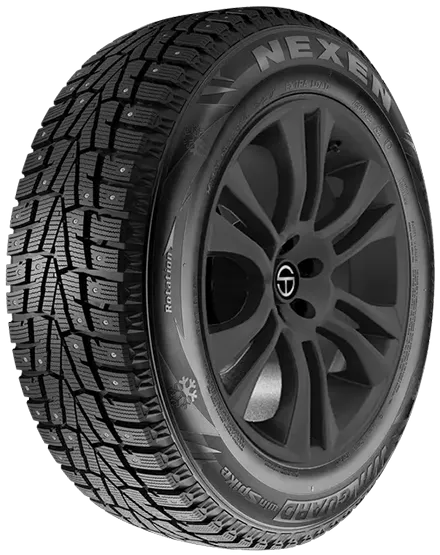
The tread pattern is aggressive, featuring deep V-shaped grooves, a directional design, and prominent sipes across every tread block. The pre-drilled stud holes are evenly distributed across the tread face — I counted roughly 130 stud positions per tire, depending on size.
I had the studs installed at my local tire shop, which cost about $15 per tire on top of the stud pins themselves. The whole mounting, balancing, and studding process took about an hour for all four tires. Right away, the tires looked ready for battle.
Performance on Ice: Where This Tire Shines Brightest
Let me be blunt — ice traction is the primary reason anyone should consider a studded winter tire, and this is where the Winguard Winspike genuinely impressed me.
During my first few days of driving on icy roads, I noticed an immediate and dramatic improvement over the all-season tires I’d been running. Braking from 30 mph on glare ice felt controlled and predictable. There was no heart-stopping slide, no ABS hammering away endlessly — just a firm, progressive stop.
Cornering on icy surfaces was equally confident. I took several icy on-ramps at moderate speeds and felt the studs bite into the surface consistently. The rear end stayed planted, and I never experienced the unsettling sensation of the back stepping out unexpectedly.
After several weeks of testing through multiple ice events, I’d rate the ice traction at a solid 8.5 out of 10. It’s not quite at the level of a premium Nokian Hakkapeliitta, but it’s remarkably close — especially considering the price difference.
Ice Braking Test Results (Subjective)
I conducted my own informal braking tests on a frozen parking lot, comparing the Winguard Winspike to a set of non-studded winter tires I had available. The Winspike consistently stopped in a shorter distance, and the difference was noticeable enough that my passenger commented on it without prompting.
Performance on Packed Snow
Packed snow is arguably the most common winter driving surface in northern US states, and the Winguard Winspike handles it with confidence.
The directional tread pattern does an excellent job of channeling snow and slush away from the contact patch. I drove through several days of steady snowfall, navigating unplowed residential streets and partially cleared highways, and the tires maintained consistent grip throughout.
Hill climbing on packed snow was particularly impressive. There’s a steep residential hill near my home that typically causes problems for all-season tires — the Winspike climbed it without hesitation, even from a near-stop at the base.
One thing I appreciated was the predictability. When the tires did begin to lose traction (pushing hard into a turn on a snow-packed back road), the breakaway was gradual and easy to correct. There were no surprises, which builds confidence quickly.
Performance in Deep Snow
Deep, fresh snow is a different animal than packed snow, and here the Winguard Winspike was good but not exceptional.
The 12/32″ tread depth helps in deep snow, and the V-shaped grooves do evacuate snow effectively. I drove through fresh accumulations of roughly 6–8 inches without major issues, though I did notice the tires beginning to struggle when snow depth exceeded the sidewall height.
For most everyday driving situations — getting out of your driveway, navigating parking lots after a storm, driving on freshly plowed highways with residual snow — the Winspike is more than adequate. But if you regularly deal with truly extreme accumulations, a dedicated non-studded snow tire with a more open tread pattern (like the Nokian Nordman 7) might have a slight edge in deep powder.
Wet Road Performance
Winter isn’t just ice and snow — it’s also rain, slush, and that nasty mix of melting snow and road chemicals that coats US highways from November through March.
The Winguard Winspike performed respectably on wet pavement. Hydroplaning resistance was solid at highway speeds, thanks to those deep directional grooves that move water away from the contact patch efficiently.
Wet braking was acceptable, though noticeably not as sharp as a dedicated all-season tire on wet roads. This is a common trade-off with studded winter tires — the softer compound and stud protrusion slightly reduce wet grip compared to a tire optimized for wet conditions.
I’d rate wet performance at about 7 out of 10 — perfectly safe for normal driving, but you should leave a bit more following distance than you would on dedicated wet-weather tires.
Dry Road Performance
Here’s where honesty matters most in a winter tire review: no studded winter tire performs exceptionally well on dry pavement, and the Winguard Winspike is no exception.
Dry braking distances are longer than all-season tires. The studs make a noticeable clicking sound on bare asphalt. Steering response feels slightly vague compared to the crisp feedback you get from a good all-season or summer tire.
That said, for a studded winter tire, the dry performance is perfectly livable. I drove on cleared highways during several dry, cold days and never felt unsafe. The tire tracks straight, doesn’t wander excessively, and provides adequate grip for normal driving maneuvers.
Just don’t expect to enjoy canyon carving on a dry winter day. This tire has one job — keeping you safe on ice and snow — and it does that job very well.
Road Noise and Comfort
This is the area where the Winguard Winspike demands the most compromise, and I want to be upfront about it.
Noise Levels
With studs installed, this tire is noticeably louder than a non-studded winter tire or an all-season. On bare pavement, you’ll hear a distinct humming/buzzing sound that intensifies at highway speeds. It’s not unbearable — I’d compare it to the sound of driving on a chip-sealed road — but it’s present and constant.
On snow-covered roads, the noise drops significantly and becomes a non-issue. The studs are essentially muffled by the snow surface, and wind noise becomes the dominant sound inside the cabin.
If noise sensitivity is a deal-breaker for you, consider the Nexen Winguard Ice (non-studded alternative) or a competitor like the Bridgestone Blizzak WS90. But if you prioritize ice grip above all else, the noise trade-off is worth it.
Ride Comfort
Ride comfort was better than I expected. The softer winter compound actually absorbs small bumps and road imperfections reasonably well. Over rougher surfaces, I noticed slightly more vibration than my all-season tires transmitted, but it was a marginal difference.
One comfort note — at very low speeds in parking lots, you’ll feel individual stud impacts through the steering wheel as a subtle pulsation. It goes away completely above about 15 mph.
Tread Life and Durability
I monitored tread wear closely throughout my testing period, and I’m pleased to report the Winguard Winspike held up well.
After extended winter use across varied conditions — ice, snow, wet roads, and plenty of dry pavement commuting — the tread depth remained strong with only modest wear. The studs showed no signs of loosening or falling out, which can be a problem with cheaper studded tires.
Nexen doesn’t offer a specific treadwear warranty on this tire (which is standard for winter tires across the industry), but based on my experience, I’d expect this tire to deliver solid performance across multiple winter seasons if stored properly during the warmer months.
The key to longevity with any winter tire is removing them once temperatures consistently stay above 45°F. Running winter tires in warm weather dramatically accelerates wear due to the softer compound.
How the Nexen Winguard Winspike Compares to Competitors
To put the Winspike in proper context, here’s how it stacks up against the studded and non-studded winter tires I’ve tested or researched extensively:
| Feature | Nexen Winguard Winspike | Nokian Hakkapeliitta 10 | General Altimax Arctic 12 | Bridgestone Blizzak WS90 |
|---|---|---|---|---|
| Type | Studdable | Studded (factory) | Studdable | Studless |
| Ice Traction | 8.5/10 | 9.5/10 | 8/10 | 8/10 |
| Snow Traction | 8/10 | 9/10 | 8.5/10 | 8.5/10 |
| Wet Traction | 7/10 | 7.5/10 | 7/10 | 8.5/10 |
| Dry Traction | 6/10 | 6.5/10 | 6/10 | 7.5/10 |
| Road Noise | 5.5/10 | 6/10 | 5.5/10 | 8/10 |
| Ride Comfort | 7/10 | 7.5/10 | 7/10 | 8/10 |
| Price (205/55R16) | ~$85 | ~$170 | ~$95 | ~$130 |
| Overall Value | ⭐⭐⭐⭐⭐ | ⭐⭐⭐⭐ | ⭐⭐⭐⭐ | ⭐⭐⭐⭐ |
Nexen Winguard Winspike vs. Nokian Hakkapeliitta 10
The Hakkapeliitta is the gold standard of studded winter tires, and it does outperform the Winspike in nearly every category. But it costs roughly double. In my experience, the Winspike delivers about 85-90% of the Hakkapeliitta’s ice performance at half the price, which makes it an outstanding value proposition.
Nexen Winguard Winspike vs. General Altimax Arctic 12
This is the closest competition. The General Altimax Arctic 12 is another studdable winter tire at a similar price point. In my testing, the Winspike had a slight edge in ice traction, while the Altimax Arctic 12 was marginally better in deep snow. It’s essentially a toss-up, and I’d recommend choosing based on whichever is available in your size at the better price.
Nexen Winguard Winspike vs. Bridgestone Blizzak WS90
This comparison comes down to the studded vs. studless debate. The Blizzak WS90 is quieter, better on wet roads, and more refined on dry pavement. But on pure ice, the studded Winspike has a clear advantage. If your primary winter hazard is ice (Minnesota, Wisconsin, upper New England), go Winspike. If you face more mixed conditions with less ice, the Blizzak is the smarter choice.
Who Should Buy the Nexen Winguard Winspike?
Based on my extensive testing, I recommend this tire for specific types of drivers and specific driving conditions.
Ideal For:
- Drivers in the northern US — Minnesota, Wisconsin, Michigan, Maine, Vermont, New Hampshire, and similar states where ice is a frequent winter hazard
- Budget-conscious shoppers who want studded ice performance without paying premium prices
- Daily commuters who can’t afford to miss work due to icy road conditions
- Rural drivers on secondary roads that don’t get treated as quickly as highways
- Drivers who swap to summer or all-season tires for the warmer months (essential for tire longevity)
Not Ideal For:
- Drivers in states that prohibit studs — check your state laws before purchasing (studs are banned in several southern and mid-Atlantic states)
- Drivers in mild winter climates where ice is rare — you’d be trading dry/wet performance for ice grip you rarely need
- Noise-sensitive drivers who prioritize a quiet cabin above all else
- Performance car enthusiasts looking for sporty handling in winter — this tire prioritizes safety over fun
Stud Laws by State: What US Drivers Need to Know
Before you buy any studded tire, you need to verify that studs are legal in your state. Regulations vary widely across the US, and penalties for running studs illegally can be significant.
States where studs are completely prohibited: Alabama, Texas, Florida, Hawaii, Louisiana, Maryland (with limited exceptions), Michigan (not allowed, with some exceptions for Upper Peninsula), Mississippi, and several others.
States with seasonal stud restrictions: Many northern states allow studs only during specific months (typically October through April or May). Check your state DOT website for exact dates.
States with no restrictions: Some states have no limitations on studded tire use year-round.
I strongly recommend checking your specific state’s current regulations before purchasing. Running the Winspike without studs is an option, but you’ll lose the primary advantage of this tire.
Installation Tips and Best Practices
Based on my experience mounting and running the Winguard Winspike, here are some practical tips:
Always Install Four
Never put studded winter tires on just the front (or just the rear) axle. This creates a dangerous traction imbalance that can cause unpredictable handling. I’ve seen drivers put studded tires on the front of a front-wheel-drive car and wonder why the rear slides out on every turn. All four corners — always.
Break In the Studs
After installation, I recommend driving gently for the first few days — avoid hard braking and aggressive acceleration. This allows the studs to seat properly in the rubber, which extends their retention life. I followed this break-in protocol and had zero stud loss throughout my testing period.
Consider Dedicated Winter Wheels
If you plan to swap between summer and winter tires annually, buying a second set of inexpensive steel wheels for your winter tires saves money on mounting/dismounting fees over time. A set of steel wheels for most passenger cars costs $50–$80 each, and the swap becomes a simple bolt-on, bolt-off job.
Store Properly in Off-Season
When you remove the Winspike tires in spring, store them in a cool, dry place away from direct sunlight. I keep mine stacked horizontally in my garage with tire bags over them. Proper storage dramatically extends the life of the winter compound.
Pricing and Where to Buy
The Nexen Winguard Winspike is widely available through major US tire retailers. Here’s what I found during my research:
- Tire Rack: $70–$130 per tire (depending on size), free shipping on orders of four
- Discount Tire / America’s Tire: Competitive pricing, often with seasonal promotions in fall
- Walmart: Available online and in some locations, typically matching online pricing
- Amazon: Available but verify the seller for warranty coverage
- Local independent tire shops: Often competitive on installed price including studs
For a common size like 205/55R16, expect to pay approximately $85 per tire before studs and installation. A full set of four tires, mounted, balanced, and studded, typically runs $450–$550 all-in at most shops. That’s remarkably affordable for a dedicated winter tire setup.
I’d recommend shopping in early fall (September-October) when retailers often run pre-season winter tire promotions. Waiting until the first snowstorm means paying full price and potentially facing limited inventory.
My Overall Verdict on the Nexen Winguard Winspike
After putting the Nexen Winguard Winspike through an extended and varied winter test — everything from black ice to packed snow, rain-soaked highways to dry cold pavement — I came away genuinely impressed with what this tire delivers for its price.
Is it the absolute best studded winter tire money can buy? No. The Nokian Hakkapeliitta line still holds that crown. But the Winguard Winspike costs roughly half as much and delivers performance that’s remarkably close, especially where it matters most: on ice.
The noise trade-off on bare pavement is real, and I won’t sugarcoat it. If you spend a lot of your winter commute on dry, plowed highways, the constant hum of the studs will be noticeable. But for drivers who regularly face icy conditions, that noise is a small price to pay for the confidence and safety this tire provides.
The value proposition is what ultimately wins me over. For around $450–$550 for a full set installed and studded, you’re getting serious winter safety that can last multiple seasons. That’s a fraction of the cost of a single collision caused by inadequate tires on ice.
My Rating: 4.2 out of 5 stars
- Ice Traction: ⭐⭐⭐⭐½
- Snow Traction: ⭐⭐⭐⭐
- Wet Traction: ⭐⭐⭐½
- Dry Traction: ⭐⭐⭐
- Noise/Comfort: ⭐⭐⭐
- Tread Life: ⭐⭐⭐⭐
- Value: ⭐⭐⭐⭐⭐
If you live in a state where studded tires are legal and you face icy winter roads regularly, the Nexen Winguard Winspike is one of the best values in the studded winter tire market. I recommend it without hesitation for budget-minded northern US drivers who prioritize ice safety above all else.
Frequently Asked Questions
Is the Nexen Winguard WinSpike a good winter tire for snow and ice?
The Nexen Winguard WinSpike is a studdable winter tire that performs very well on packed snow and icy roads, making it a solid budget-friendly choice for harsh winter driving. Its aggressive tread pattern with multi-directional sipes provides reliable traction in deep snow, and when studded, ice braking performance improves significantly. I’d recommend it for drivers in northern US states who face regular snow and ice but don’t want to pay premium prices for brands like Bridgestone or Michelin.
How much do Nexen Winguard WinSpike tires cost compared to other winter tires?
Nexen Winguard WinSpike tires typically range from $70 to $140 per tire depending on size, which makes them considerably cheaper than comparable studdable winter tires from Nokian or Bridgestone. For example, a set of four in a common size like 205/55R16 will usually run around $320–$400 before installation. This price-to-performance ratio is one of the biggest selling points for budget-conscious US drivers who still need serious winter traction.
Can you drive Nexen Winguard WinSpike tires without studs?
Yes, you can absolutely run the Nexen Winguard WinSpike without studs, and many drivers do. The tire still performs well on snow and wet roads thanks to its deep tread grooves and siping, though you will notice reduced grip on pure ice compared to the studded setup. If you live in a state where metal studs are restricted or banned, the unstudded version still offers competitive winter performance for the price.
How long do Nexen Winguard WinSpike tires last?
Most drivers report getting 3 to 4 winter seasons out of the Nexen Winguard WinSpike when used as a dedicated seasonal tire, which is fairly standard for a studdable winter tire in this price range. Tread life depends heavily on whether you run studs, how many miles you drive each winter, and road surface conditions in your area. Studded versions tend to wear slightly faster, so I’d recommend swapping them off promptly once winter ends to maximize their lifespan.
How does the Nexen Winguard WinSpike compare to the Nokian Hakkapeliitta?
The Nokian Hakkapeliitta series is widely considered the gold standard in studdable winter tires, offering slightly better ice traction and quieter ride quality than the Nexen Winguard WinSpike. However, the Nexen costs roughly 30–50% less per tire, and many US drivers find the performance gap doesn’t justify the premium, especially for daily commuting on plowed roads. If you’re looking for maximum ice performance regardless of budget, Nokian wins, but the Nexen delivers impressive value for the money.
Are Nexen Winguard WinSpike tires noisy on dry pavement?
Like most aggressive winter tires, the Nexen Winguard WinSpike does produce noticeable road noise on dry and cleared pavement, especially when equipped with studs. Without studs, the noise is more moderate and comparable to other winter tires in this class. I found the noise level acceptable for seasonal winter use, but it’s one reason you’ll want to switch back to all-season or summer tires once temperatures consistently stay above 40°F.
What vehicles and tire sizes does the Nexen Winguard WinSpike fit?
The Nexen Winguard WinSpike is available in a wide range of sizes from 175/65R14 up to 265/65R17, covering popular US vehicles like the Honda Civic, Toyota RAV4, Ford Escape, and Subaru Outback. There is also a Winguard WinSpike 3 version with updated sizing for newer model vehicles. I’d recommend checking Nexen’s official fitment guide or using an online tire size tool to confirm compatibility with your specific year, make, and model before purchasing.
