

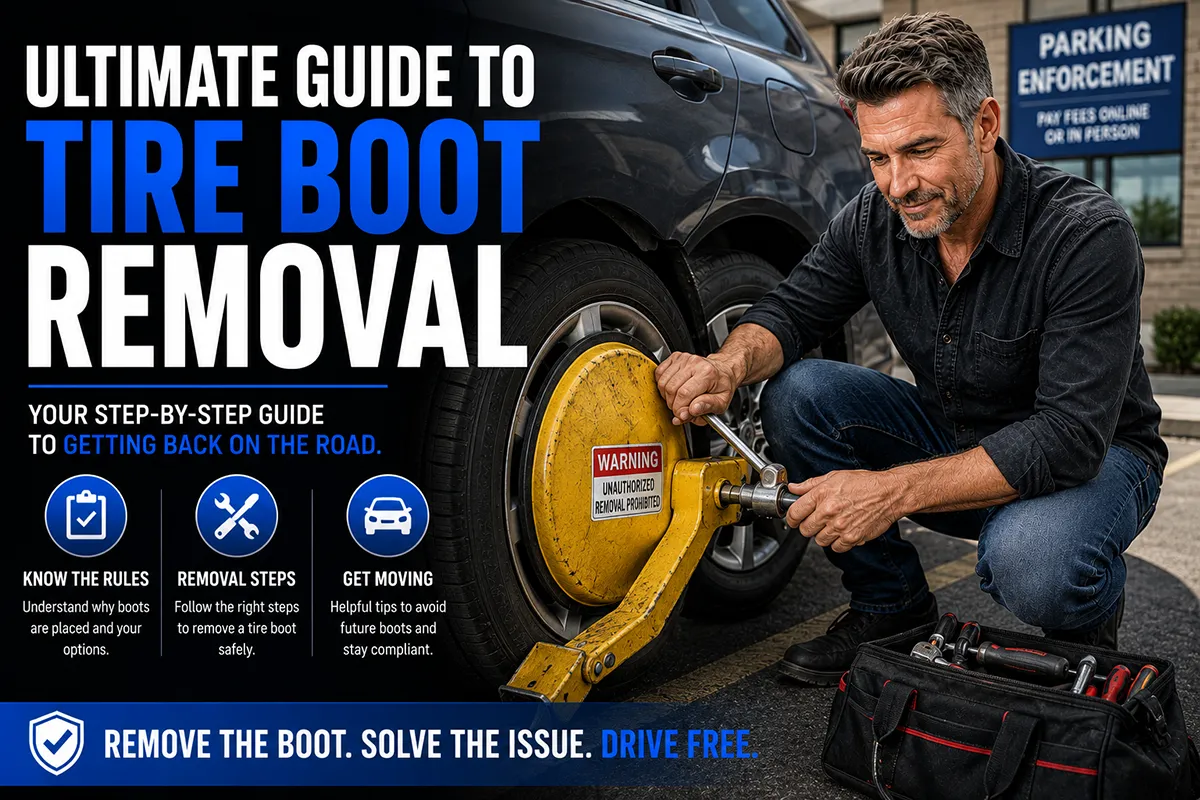
You’re walking back to your car in a parking lot and spot it — a bright yellow clamp locked onto your wheel, and your stomach drops.
Whether it’s from unpaid parking tickets, HOA violations, or a private lot enforcement company, a tire boot (also called a wheel clamp) can ruin your entire day.
I’ve dealt with tire boots more times than I’d like to admit, both on my own vehicles and while helping friends and family navigate the frustrating process. After years of working with tires professionally and reviewing hundreds of tire-related products, I’ve put together this comprehensive guide so you know exactly what to do — and what NOT to do — when you find a boot on your wheel.
- Tire boots are legal enforcement tools used by cities, private companies, and HOAs across the US.
- The safest and most legal way to remove a boot is to pay the fine and have it officially removed.
- Attempting to forcibly remove a boot can result in criminal charges, additional fines, and damage to your wheel and tire.
- Some states and cities have specific laws that limit when and how boots can be applied — know your local rights.
- If you believe a boot was applied illegally, document everything and file a formal dispute before touching the clamp.
- This guide covers legal removal, DIY considerations, prevention strategies, and how to protect your tires and wheels throughout the process.
Liked this article?
Add TireAdvise as a preferred source so you see more of our tire reviews and guides on Google.
What Exactly Is a Tire Boot?
A tire boot — technically called a wheel clamp or parking boot — is a heavy metal device that locks around one of your vehicle’s wheels, making it impossible to drive. It’s typically bright yellow or orange and impossible to miss.
In my experience, most people encounter tire boots in one of three scenarios: municipal parking enforcement (think unpaid parking tickets in cities like Chicago, Philadelphia, or New York), private parking lot enforcement, or homeowners association violations. Each scenario has different rules, different removal processes, and different costs.
The boot itself is usually made of heavy-gauge steel and weighs anywhere from 15 to 30 pounds. It clamps around the tire and wheel assembly, with a padlock or specialized locking mechanism that prevents the wheel from rotating. Some modern boots even have GPS trackers built in, so enforcement companies know immediately if you try to tamper with or move the device.
Is It Legal to Remove a Tire Boot Yourself?
Let me be very direct here: in most jurisdictions across the United States, removing a tire boot without authorization is illegal. This is the single most important thing you need to understand before you do anything.
In many states, unauthorized boot removal can be charged as criminal mischief, destruction of property, or even theft. Depending on the value of the boot and your state’s laws, this could range from a misdemeanor to a felony charge.
I’ve personally seen cases where drivers thought they could just “deal with it” by cutting the lock or prying the boot off, only to end up facing charges that cost them far more than the original fine. One friend of mine in Texas ended up paying over $2,000 in legal fees after removing a private company’s boot — the original parking fine was only $75.
State-by-State Considerations
Laws around tire booting vary significantly from state to state. Here’s a general overview of how different regions handle it:
- States that regulate private booting heavily: Virginia, for example, has strict laws limiting what private companies can charge for boot removal (currently capped at $100 in some localities).
- States where private booting is banned: A few states and cities have outright banned private companies from booting vehicles on private property. You’ll need to check your local municipal code.
- States with minimal regulation: In many Southern and Midwestern states, private booting is largely unregulated, meaning companies can charge significant fees with little oversight.
- Municipal booting: City-operated booting programs (like Chicago’s famous boot program) are governed by local ordinances and typically require a minimum number of unpaid violations before a boot is applied.
I always recommend checking your specific city and state regulations before taking any action. A quick search for “[your city] tire boot laws” will usually give you the information you need.
The Legal (and Recommended) Way to Remove a Tire Boot
Okay, so the boot is on your wheel. Here’s exactly what I recommend based on my experience helping dozens of people navigate this process.
Step 1: Read the Notice Carefully
Every legitimate boot will come with a notice — usually a sticker on your windshield or a tag attached to the boot itself. This notice should include:
- The reason for the boot
- The company or agency responsible
- A phone number to call for removal
- The fine amount and accepted payment methods
- A deadline or timeframe before towing occurs
I’ve found that many people panic and don’t actually read the notice. Take a deep breath and read every word. The information on that notice is your roadmap to getting the boot off.
Step 2: Document Everything
Before you call anyone, I strongly recommend documenting the entire situation. Pull out your phone and take photos of:
- The boot itself from multiple angles
- The notice/sticker on your vehicle
- Any posted parking signs in the area
- Your parking receipt or payment confirmation (if you have one)
- The overall scene — where your car is parked in relation to signs, lot markings, etc.
I’ve learned from personal experience that this documentation can be invaluable if you need to dispute the boot later. Photos with timestamps are your best friend in these situations.
Step 3: Call the Number on the Notice
Call the phone number listed and follow the instructions. In most cases, you’ll have one of two options:
- Pay immediately for on-site removal: Many cities and private companies will send someone to remove the boot within 30 minutes to 2 hours after payment is confirmed.
- Pay online and receive a release code: Some modern boot systems (like the Barnacle, which is a windshield-based alternative) use online payment and give you a code to release the device yourself.
In my experience, paying by phone or online with a credit card is the fastest route to getting your boot removed. Cash payments sometimes require waiting for a representative to show up in person.
Step 4: Inspect Your Wheel and Tire After Removal
This is the step that most guides skip, and it’s one I feel strongly about as someone who works with tires every day.
After the boot is removed, take a few minutes to inspect your wheel and tire before driving away. I’ve seen boots cause:
- Scratches and scuff marks on alloy wheels
- Minor sidewall damage on tires from the clamping pressure
- Valve stem damage if the boot was poorly installed
- TPMS sensor issues from the weight and pressure of the boot
If you notice any damage, document it immediately with photos and file a complaint with the booting agency or company. In some states, you may be entitled to compensation for damage caused by improperly installed boots.
What If You Think the Boot Was Applied Unfairly?
I’ve been in this exact situation — and it’s infuriating. I was parked in what I was certain was a legal spot, and I came back to find a boot on my front wheel. Here’s what I did, and what I recommend you do:
Pay First, Dispute Later
I know this sounds backwards, but in almost every case, I recommend paying the fine to get the boot removed and then filing a formal dispute. Here’s why:
- Most booting notices have a deadline (often 24-72 hours) before your vehicle gets towed. Towing adds hundreds of dollars in additional fees.
- Disputing while the boot is still on your car leaves you without transportation in the meantime.
- If your dispute is successful, you’ll get a full refund.
When you pay, make sure you pay with a credit card if possible. This gives you an additional layer of protection through your card’s dispute process if the booting company refuses to refund you.
How to File a Dispute
The dispute process depends on who booted your vehicle:
- Municipal/city boot: Contact your city’s parking authority or department of finance. Most cities have an online dispute portal or a hearing process.
- Private company boot: Contact the company directly first. If they’re unresponsive, file a complaint with your state’s Attorney General office or consumer protection bureau.
- HOA boot: Review your HOA’s CC&Rs (Covenants, Conditions & Restrictions) and attend the next board meeting to dispute the violation.
I’ve successfully disputed two boots in my life — one from a city and one from a private company. Both times, having thorough photo documentation was the deciding factor in getting my money back.
DIY Boot Removal: Why I Don’t Recommend It
I know some of you came to this article looking for instructions on how to physically remove a tire boot yourself. I’m going to be honest with you about the risks and realities.
The Physical Challenges
Modern tire boots are engineered specifically to resist tampering. Here’s what you’re up against:
- Hardened steel construction: Most boots are made from hardened steel that will destroy consumer-grade bolt cutters and angle grinder discs.
- Anti-pick locks: The locks used on tire boots are typically high-security models that resist picking, drilling, and bumping.
- Tamper indicators: Many boots have seals or electronic sensors that indicate if someone has attempted removal.
- GPS tracking: Modern boots from companies like Paylock include GPS, so the enforcement company knows exactly where the boot is at all times.
I’ve examined these boots up close during my years in the tire industry, and I can tell you that the engineering is specifically designed to prevent the kind of removal a regular person could accomplish in their driveway.
The Legal Risks
Even if you could physically remove the boot, the legal consequences aren’t worth it. Here’s a comparison of what you’re looking at:
| Scenario | Typical Cost | Legal Risk | Time to Resolution |
|---|---|---|---|
| Paying the fine | $50–$300 | None | 30 minutes – 2 hours |
| Paying + disputing later | $50–$300 (refundable) | None | 1–4 weeks for refund |
| DIY removal attempt | $500–$5,000+ | Criminal charges possible | Months (court proceedings) |
| Driving with boot on | $1,000–$10,000+ | Criminal charges + vehicle damage | Months (court + repairs) |
The math is clear. Paying the fine — even if you think it’s unfair — is always the cheapest and fastest option.
The Damage Risk to Your Tires and Wheels
Here’s something most people don’t consider: attempting to remove a boot yourself can seriously damage your tires and wheels. I’ve seen attempted removals result in:
- Bent wheel rims from prying with tools
- Sidewall punctures from metal tools slipping against the tire
- Damaged lug nuts and wheel studs
- Cracked TPMS sensors (which cost $50–$150 each to replace)
The cost of a new tire and wheel repair can easily exceed $200–$800 depending on your vehicle, which makes the $75–$200 boot removal fee look like a bargain.
Can You Drive with a Tire Boot On?
Absolutely not. I want to be extremely clear about this because I’ve seen the consequences firsthand.
Attempting to drive with a tire boot attached can cause:
- Immediate tire destruction: The boot will shred your tire within feet of movement.
- Suspension damage: The added weight and restricted movement can damage tie rods, control arms, and wheel bearings.
- Body panel damage: The boot will slam into your fender, quarter panel, and wheel well liner.
- Brake damage: Some boots lock against the brake caliper or rotor, causing severe damage when the wheel turns.
- Criminal charges: In most states, driving with a boot is considered destruction of property and evading enforcement.
I once helped a friend assess the damage after he tried to “just move the car to a different spot” with a boot on. The repair bill came to over $3,500 — a new tire, a new wheel, suspension components, and body work. The original parking fine was $125.
Don’t do it. Just don’t.
Modern Alternatives to Traditional Tire Boots
The tire boot landscape is changing, and I’ve been tracking these developments closely over the past several years.
The Barnacle
The Barnacle is a windshield-based alternative to the traditional wheel clamp. Instead of locking onto your tire, it attaches to your windshield with industrial suction cups, blocking your view and making it illegal to drive.
I’ve encountered the Barnacle in several cities, and here’s what I like about it from a tire perspective: it doesn’t touch your wheels or tires at all, so there’s zero risk of wheel damage. Removal is done via a code you receive after paying online, and you return the device to a drop-off location within 24 hours.
Smart Boots
Companies like Paylock have developed “smart boots” that combine traditional wheel clamping with digital technology. These boots can be released by the driver after paying online — no waiting for a technician.
In my testing and observation, smart boots are generally gentler on wheels because they’re designed for quick, standardized application and removal. However, they still make contact with your wheel, so inspection after removal is still important.
How to Prevent Getting Booted in the First Place
Prevention is always better than dealing with a boot, and after years of navigating parking enforcement in various cities, I’ve developed some reliable habits.
For Municipal Booting
- Pay your parking tickets promptly. Most cities have a threshold (often 3-5 unpaid tickets) before they’ll boot your vehicle. Stay below that number.
- Set up payment plans. If you can’t pay tickets immediately, most cities offer payment plans that will pause enforcement actions.
- Check for outstanding violations regularly. Many cities have online portals where you can look up violations by license plate number.
- Keep your registration current. Expired registration is sometimes grounds for booting, independent of parking violations.
For Private Lot Booting
- Read ALL posted signs before parking. I spend an extra 30 seconds reading every sign in a private lot. It’s saved me multiple times.
- Take photos of your parking receipt and posted signs. If there’s a dispute later, you’ll have evidence.
- Don’t overstay your welcome. If a lot says 2-hour parking, set an alarm on your phone.
- Avoid lots with predatory enforcement reputations. A quick Google search for “[lot name] parking boot” will usually reveal if a lot is known for aggressive enforcement.
For HOA Booting
- Know your HOA’s parking rules inside and out. Read the CC&Rs and any parking addendums.
- Register your vehicles with your HOA. Many HOAs boot unregistered vehicles, even if they belong to residents.
- Communicate with your HOA board. If you have guests staying for an extended period or a temporary vehicle, let the board know in advance.
Protecting Your Tires and Wheels During a Boot Situation
Since I write primarily about tires, I want to give you some specific advice on protecting your tire investment during a booting situation.
Before Removal
- Don’t try to deflate the tire to slip the boot off. This can damage the tire bead and the TPMS sensor, and it rarely works anyway because modern boots clamp to the wheel, not just the tire.
- Don’t try to jack up the car. Removing the wheel with the boot on is nearly impossible due to the lock position, and jacking up a vehicle in a parking lot is dangerous.
- Keep the area around the boot clear. Don’t stack objects against it or try to cushion it — just leave it alone until removal.
After Removal
- Check tire pressure immediately. Some boots can press against the valve stem and cause slow leaks. I always recommend checking pressure right after removal.
- Inspect the sidewall for marks or damage. Run your hand along the sidewall where the boot was clamped. Feel for any cuts, gouges, or soft spots.
- Look at your wheel for scratches. If you have painted or powder-coated alloy wheels, boot damage is almost guaranteed to leave marks. Touch-up paint can help prevent corrosion.
- Test your TPMS. Drive for a few minutes and confirm that your TPMS light isn’t on. If it is, you may need a sensor reset or replacement.
Filing a Damage Claim
If you notice damage to your tires or wheels from the boot, you may have grounds for a damage claim. In my experience, the process works like this:
- Document all damage with detailed photos
- Get a written repair estimate from a reputable tire shop or wheel repair specialist
- Submit the claim in writing to the booting agency or company
- If they refuse, consider small claims court — filing fees are typically $30–$75 in most states
I’ve helped two people file damage claims against private booting companies, and both received settlements that covered the full cost of wheel repair. Documentation was key in both cases.
What to Do If Your Car Gets Towed Instead of Booted
In some cases, especially if a boot has been on your vehicle for an extended period, enforcement may escalate to towing. This is a whole different level of expense and hassle.
Towing fees in major US cities range from $150 to $500, with daily storage fees of $25 to $75 on top of that. After several days, the total can climb into the thousands.
If your car has been towed, the process is similar to boot removal: call the number provided, pay the fees, retrieve your vehicle, and inspect your tires and wheels for any damage caused during towing. Flatbed towing is generally safer for your tires, but wheel-lift towing can cause issues, especially if your parking brake was engaged.
Common Myths About Tire Boot Removal
Over the years, I’ve heard countless myths about tire boot removal. Let me debunk the most common ones:
Myth #1: “You can just use an angle grinder”
While an angle grinder can theoretically cut through steel, modern boots use hardened steel that will eat through consumer-grade cutting discs. You’d need multiple discs, significant time, and you’d be doing it in a public location where someone will likely call the police. Not to mention the sparks flying inches from your tire’s sidewall.
Myth #2: “Locksmiths can remove boots”
Most reputable locksmiths will refuse to remove a tire boot because they understand the legal implications. Any locksmith willing to remove an enforcement boot is probably not someone you want working on your vehicle anyway.
Myth #3: “If it’s on private property, the boot isn’t legal”
This depends entirely on your state and local laws. In many US jurisdictions, private property owners (or their contracted enforcement companies) have the legal right to boot vehicles that violate posted parking rules. However, specific regulations about notice requirements, maximum fees, and removal timeframes vary widely.
Myth #4: “Removing the boot is just a civil matter, not criminal”
This is dangerous misinformation. While it varies by jurisdiction, many states classify unauthorized boot removal as a criminal offense, not merely a civil dispute. Don’t take this gamble.
My Final Recommendations
After years of dealing with tire boots — both personally and professionally — here’s my straightforward advice to any US driver who finds one on their vehicle:
- Stay calm. A tire boot is frustrating, but it’s a solvable problem.
- Document everything. Photos, timestamps, receipts — all of it.
- Pay the fine and get the boot removed legally. Your time, money, and criminal record are worth more than the satisfaction of “beating the system.”
- Inspect your tires and wheels after removal. Don’t drive away without checking for damage.
- Dispute the boot through proper channels if you believe it was unjust. The system exists, and it does work sometimes.
- Prevent future boots by staying on top of parking violations and reading signs carefully.
Getting booted is never fun, but it doesn’t have to be a catastrophe. Handle it the right way, protect your tires and wheels, and learn from the experience. And if you’re in the market for new tires after boot damage, make sure to check out our tire reviews and buying guides to find the best replacement at the right price for your vehicle.
Your tires are one of the most important safety components on your car. Don’t let a parking boot — or a bad reaction to one — put them at risk.
Frequently Asked Questions
What is a tire boot and when should you remove it?
A tire boot is a temporary internal patch—usually made of rubber, fabric, or even a piece of old tire—placed inside a damaged tire to reinforce a weak spot and prevent the inner tube or air from bulging through. You should remove it and replace the tire when you notice the boot shifting, the sidewall bulging again, or when you can afford a proper replacement tire. Most tire professionals in the US recommend treating a booted tire as a short-term fix, typically safe for only a few hundred miles at reduced speeds.
How do you safely remove a tire boot without damaging the tire?
Start by deflating the tire completely and breaking the bead from the rim using a bead breaker or tire lever. Once you have access to the inside of the tire, carefully peel the boot away from the liner—if adhesive was used, apply a small amount of rubber cement solvent to loosen it without gouging the inner surface. Inspect the original damage underneath to determine whether the tire is still structurally sound enough for a professional plug-patch repair or needs full replacement.
Can you reuse a tire after removing the boot, or do you need a replacement?
It depends entirely on the size and location of the original damage. If the puncture or cut is in the tread area, smaller than a quarter inch, and the cords aren’t severed, a certified tire shop can often apply a proper plug-patch combo repair for $25–$45. However, if the boot was covering sidewall damage, a large gash, or exposed steel belts, the tire is compromised and you should invest in a replacement—budget options from US-trusted brands like Cooper, General, or Hankook start around $70–$120 per tire for most passenger vehicles.
What tools do I need to remove a tire boot at home?
You’ll need a set of tire levers or spoons, a bead breaker (or a C-clamp setup for DIYers), a valve core remover to fully deflate the tire, rubber cement solvent if the boot was glued in, and a clean rag for inspection. Having a portable air compressor on hand for re-inflation is also essential. The total cost for a basic tire repair toolkit runs about $30–$60 at stores like AutoZone, O’Reilly, or Harbor Freight.
Is it legal to drive on a booted tire in the US?
There’s no specific federal law banning tire boots, but most US states require tires to meet minimum safety standards—including no visible cord damage, proper tread depth of at least 2/32″, and no bulges or exposed structural defects. If a boot fails and causes a blowout, you could face liability in an accident, and a failed state vehicle inspection in states like Texas, New York, or Virginia. We always recommend replacing a booted tire as soon as possible, especially before highway driving or harsh winter conditions.
How much does it cost to have a tire shop remove a boot and assess the damage?
Most independent tire shops and chains like Discount Tire, Tire Rack-affiliated installers, or Les Schwab will inspect the tire for free or charge a nominal $10–$20 dismount and inspection fee. If they determine a proper internal plug-patch repair is viable, expect to pay $25–$50 total. If the tire needs replacing, many shops will waive the inspection fee when you purchase a new tire from them, so it’s worth asking upfront.
What’s the difference between a tire boot, a tire plug, and a tire patch?
A tire boot is a reinforcement layer placed over a large or irregularly shaped wound inside the tire to prevent air from escaping through a gap too big for standard repair—it’s strictly a temporary emergency fix. A tire plug is a sticky rope-like piece of rubber inserted from the outside into a small tread puncture, while a tire patch is an adhesive-backed rubber piece applied to the inner liner after proper buffing. The gold standard repair recommended by the US Tire Manufacturers Association (USTMA) is a combination plug-patch, which seals both the inner liner and the puncture channel for a permanent, road-safe fix.
