

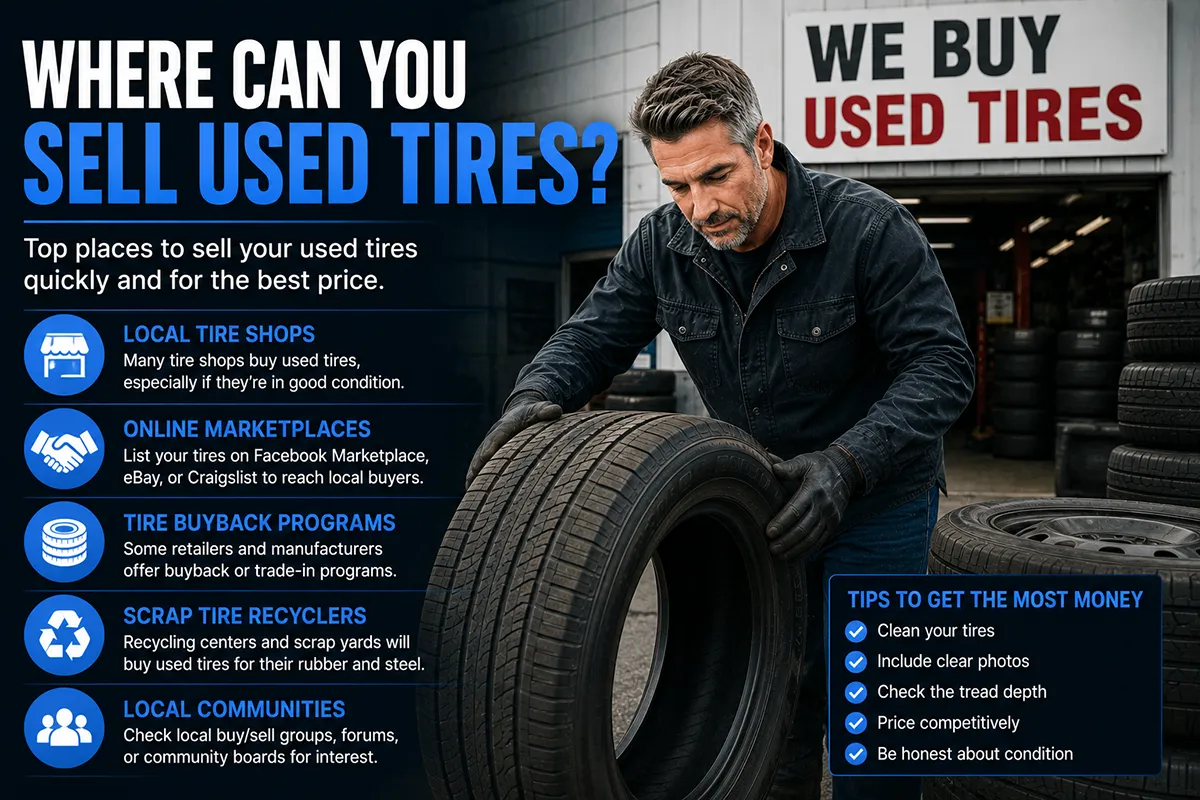
If you’ve ever swapped out a set of tires that still had decent tread left, you’ve probably stared at them in your garage and thought, “Someone would pay good money for these.”
You’re absolutely right — and you’d be surprised how much demand there is for quality used tires in the US market.
I’ve been reviewing tires for years, and in that time I’ve personally sold, traded, and consigned more used tires than I can count. I’ve used nearly every method available — from Facebook Marketplace to local tire shops to specialized consignment services — and I’ve learned exactly what works, what doesn’t, and where you’ll get the best return for your rubber.
- Used tires with 4/32″ or more tread depth sell easily — expect $25–$80+ per tire depending on brand and size.
- Facebook Marketplace and Craigslist are the fastest local options for most sellers.
- Tire shops and used tire dealers may buy in bulk but typically pay less per tire.
- eBay and specialized platforms like TreadHunter work well for premium or hard-to-find sizes.
- Always clean your tires, measure tread depth, and take quality photos to maximize your sale price.
- Tires with damage, dry rot, or less than 3/32″ tread are generally not worth selling — recycle them instead.
Liked this article?
Add TireAdvise as a preferred source so you see more of our tire reviews and guides on Google.
Why Would Anyone Buy Used Tires?
Before I walk you through the best places to sell, it helps to understand why the used tire market is thriving. It’s not just bargain hunters — there are legitimate, practical reasons people seek out pre-owned rubber.
Budget-conscious drivers make up the biggest segment. A new set of all-season tires can easily run $600–$1,000+ for a midsize sedan. A matching pair of used tires with 60% tread life remaining might cost $80–$150 total. For someone who needs to pass inspection or just needs to get through a few more months, that’s a no-brainer.
Classic car owners and enthusiasts often hunt for discontinued tire sizes or specific models that are no longer manufactured. I once sold a pair of older BFGoodrich Radial T/A tires for nearly what I paid new because the size had been discontinued and a Camaro restorer desperately needed them.
Seasonal tire swappers sometimes look for used winter or summer tires to bridge a gap. Not everyone wants to invest $800 in a brand-new set of snow tires they’ll only use for a few months of the year.
The bottom line: if your tires have life left, there’s almost certainly a buyer out there.
How to Know If Your Used Tires Are Worth Selling
Not every used tire is sellable. I’ve learned this the hard way after listing tires that attracted zero interest because they were simply too worn or too old. Here’s how I evaluate whether a tire is worth the effort.
Check the Tread Depth
This is the single most important factor. I use a simple tread depth gauge (you can grab one for about $5 at any auto parts store). Here’s my general rule of thumb:
- 6/32″ or more: Excellent — these will sell quickly and command the best prices.
- 4/32″ to 6/32″: Good — still very sellable, especially for budget buyers.
- 3/32″ to 4/32″: Marginal — you might find a buyer, but don’t expect much.
- Below 3/32″: Not worth selling. Recycle them.
Inspect for Damage
I always do a thorough visual inspection before listing any tire. Look for sidewall bulges, cracking, puncture repairs (one plug is usually fine — multiple plugs are a red flag for buyers), uneven wear patterns, and any exposed cords or belt separation.
Even one sidewall bulge makes a tire unsellable in my book. It’s a safety hazard, and no responsible buyer — or seller — should be involved in that transaction.
Check the Age
Every tire has a DOT code stamped on the sidewall. The last four digits tell you the week and year of manufacture. For example, “2321” means the tire was made in the 23rd week of 2021.
In my experience, tires older than six years are much harder to sell, even if the tread looks great. Rubber degrades over time regardless of use, and savvy buyers know this. Tires older than 10 years shouldn’t be sold at all — most tire safety organizations recommend replacing them regardless of condition.
Best Places to Sell Used Tires Locally
Local sales are my preferred method for most used tire transactions. There’s no shipping hassle (tires are heavy and expensive to ship), you get paid immediately, and the buyer can inspect the tires in person. Here are the options I’ve used successfully.
1. Facebook Marketplace
This is hands-down my number one recommendation for selling used tires locally. I’ve sold more tires through Facebook Marketplace than all other channels combined.
The audience is massive. Facebook reports over 200 million active Marketplace users in the US alone. The listing process is simple — snap a few photos, write a description, set a price, and you’re live within minutes. There are no listing fees, and you keep 100% of the sale price for local pickup transactions.
I typically get inquiries within hours of posting, especially for popular sizes like 225/65R17 or 245/75R16. The key is writing a clear title that includes the tire size, brand, and approximate tread depth percentage. Something like “4 Michelin Defender LTX 265/70R17 — 70% Tread — $250” performs much better than “Used Tires For Sale.”
Pro tip: I always list in tire-specific buy/sell groups in my area in addition to the general Marketplace. Most metro areas have at least one dedicated group, and the buyers there tend to be more serious and knowledgeable.
2. Craigslist
Craigslist has been around forever, and it still works. I find it particularly effective in mid-sized and smaller markets where Facebook Marketplace might have less traffic.
Listing is free in the “auto parts” section. The audience skews slightly more toward mechanics, shade-tree DIYers, and used tire shop owners — people who know exactly what they’re looking for. I’ve had several local tire dealers reach out to me through Craigslist wanting to buy sets in bulk at a slight discount.
The downside? You’ll get more lowball offers and spam on Craigslist compared to Facebook. I always include “price is firm” in my listings when I know the tires are priced fairly. It doesn’t eliminate the lowballers, but it reduces them.
3. OfferUp and Mercari (Local Pickup)
Both OfferUp and Mercari have become solid alternatives for local sales. OfferUp in particular has a strong user base in many US cities, and its app-based interface makes it easy to communicate with buyers.
I’ve had good luck with OfferUp for individual tires or pairs. Full sets tend to move faster on Facebook, but OfferUp is a great supplementary platform. Mercari recently expanded its local pickup option, which eliminates their shipping fee structure — worth trying if you’re already on the platform.
4. Local Tire Shops and Used Tire Dealers
This is the fastest way to sell used tires if you’re willing to accept a lower price. Many independent tire shops — especially those that sell used tires — will buy directly from walk-in sellers.
I’ve done this several times when I just wanted the tires out of my garage quickly. The typical offer is roughly 20–40% of what you’d get selling directly to an end buyer. So a tire you could sell for $60 on Facebook might net you $15–$25 from a shop.
The trade-off is speed and convenience. No listing, no messaging back and forth, no scheduling meetups. You load the tires in your car, drive to the shop, and walk out with cash. For some people, that’s worth the reduced price.
My advice: Call ahead. Not every shop buys used tires, and those that do are often picky about brands and conditions. I always ask, “Do you buy used tires, and what’s the minimum tread depth you’ll accept?”
5. Tire Consignment at Local Shops
Some tire shops offer a consignment model where they display and sell your tires for you, taking a percentage of the sale (usually 20–30%). I’ve used this exactly once, and while I got a better price than a flat buyout, it took over a month for the tires to sell.
If you’re not in a rush and have a relationship with a local shop, consignment can work. Just make sure you get the terms in writing — specifically who’s liable if the tires are damaged or stolen while in the shop’s possession.
6. Auto Swap Meets and Flea Markets
In certain parts of the US — particularly the Southeast, Texas, and parts of California — auto swap meets and flea markets have a thriving tire trade. I’ve attended several where vendors set up with nothing but used tires and wheels, and they move serious volume.
If you have a larger inventory (maybe you’re a hobbyist who goes through tires frequently), renting a booth at a local swap meet can be surprisingly profitable. Booth fees typically run $20–$50 for a weekend, and you’re reaching an audience that came specifically to buy auto parts.
Best Places to Sell Used Tires Online (With Shipping)
Sometimes local demand isn’t there — maybe you have an unusual tire size, or you live in a less populated area. In those cases, online platforms with shipping options open up a national audience.
1. eBay
eBay is the gold standard for selling used tires online, especially premium brands and uncommon sizes. I’ve sold specialty tires on eBay for significantly more than I could get locally — sometimes double.
The platform charges a 13.25% final value fee (as of 2026), and shipping is the major hurdle. A single tire typically costs $25–$50 to ship via FedEx or UPS Ground depending on size and weight. Many sellers build shipping into the price and offer “free shipping” to attract more buyers.
I recommend eBay specifically for:
- Premium brands (Michelin, Continental, Bridgestone) where buyers are willing to pay more
- Performance or specialty tires (track tires, mud-terrain, etc.)
- Uncommon sizes that are hard to find locally
- Full matched sets, which command premium prices
For common, budget-brand tires? Stick with local sales. The eBay fees and shipping costs will eat most of your profit.
2. TireTrader and TreadHunter
There are a handful of niche platforms specifically designed for used tire sales. TireTrader and TreadHunter are two that I’ve seen gain traction in recent years.
These platforms cater to an audience that’s specifically looking for used tires, which means less competition from other product categories compared to general marketplaces. The listing process usually involves entering detailed tire specs (size, brand, model, tread depth, DOT date), and the platform handles some of the trust factors with buyer protection policies.
I’ve experimented with TreadHunter and found it works well for mid-range to premium tires. The buyer audience is smaller than eBay, but they’re highly targeted — every visitor is there looking for tires.
3. Amazon (Seller Central)
Yes, you can sell used tires on Amazon, but I only recommend this for experienced online sellers. Amazon’s seller fees, FBA logistics, and strict listing requirements make it impractical for someone trying to sell a single set of takeoff tires.
If you’re already an Amazon seller or have a small side business in used tires, the volume potential is there. But for the average person reading this article? Skip Amazon and stick with eBay or local channels.
Selling Used Tires: A Platform Comparison
To help you decide which method makes the most sense for your situation, here’s a comparison table based on my personal experience:
| Platform | Best For | Typical Price Per Tire | Fees | Speed of Sale | Effort Level |
|---|---|---|---|---|---|
| Facebook Marketplace | All tire types, local sales | $30–$80 | None (local) | Fast (1–7 days) | Low |
| Craigslist | Budget buyers, bulk sales | $25–$70 | None | Moderate (3–14 days) | Low |
| OfferUp | Singles, pairs, local sales | $25–$65 | None (local) | Moderate (3–10 days) | Low |
| eBay | Premium brands, rare sizes | $40–$120+ | ~13.25% + shipping | Variable (1–30 days) | Medium-High |
| Local Tire Shop (Buyout) | Quick cash, no hassle | $10–$30 | None | Immediate | Very Low |
| Consignment (Tire Shop) | Higher value, patient sellers | $30–$70 | 20–30% commission | Slow (2–6 weeks) | Low |
| Swap Meet / Flea Market | Volume sellers, enthusiasts | $20–$60 | Booth fee ($20–$50) | Same day | High |
How to Maximize Your Sale Price
Over the years, I’ve refined my process for selling used tires. Following these steps consistently has helped me get top dollar almost every time.
Clean the Tires
This sounds basic, but it makes a huge difference. I spend about 10 minutes per tire with a stiff brush, some tire cleaner, and a hose. A clean tire looks newer, more trustworthy, and more appealing in photos. I’ve seen identical tires listed side by side where the clean ones sold for 30% more.
After cleaning, I apply a light coat of tire dressing. Not the glossy, overly shiny kind — just enough to give them a fresh, well-maintained appearance.
Measure and Report Tread Depth Accurately
Buyers want to know exactly what they’re getting. I measure tread depth at three points across the tread face (inside, center, outside) and report the lowest reading. This builds trust and reduces the chance of disputes later.
I also convert the measurement to a percentage of new tread life for the listing. Most new tires start with 10/32″ to 11/32″ of tread. If my tire measures 7/32″, I’ll describe it as “approximately 65% tread remaining.” Buyers respond to percentages — they’re intuitive and easy to understand.
Take Great Photos
I photograph every tire from at least four angles: the tread face straight on, a close-up of the tread depth (with a gauge or penny for scale), the sidewall showing brand and size information, and the DOT code.
Natural daylight is your best friend. I shoot in my driveway on a sunny morning, and the photos look infinitely better than flash-lit garage shots. Buyers are visual — good photos sell tires faster and for more money.
Price Competitively
Before listing, I always check what comparable tires are selling for on the same platform. I search the exact tire model and size, filter for “sold” listings on eBay or check recent posts on Facebook Marketplace.
In my experience, pricing at the market rate or slightly below results in faster sales with less haggling. I’d rather sell a tire for $55 in two days than hold out for $70 and wait three weeks.
Be Transparent About Condition
I disclose every imperfection — patches, minor scuffs, date of manufacture, the works. I’ve found that transparency actually increases buyer confidence and reduces returns or complaints. If a tire has a plugged puncture in the tread area, I photograph it and mention it in the listing. Most buyers are fine with a single proper repair.
What About Selling Tires Still Mounted on Wheels?
If you have tires mounted on rims — say, your old winter setup or the takeoff wheels from a new vehicle — you have a decision to make: sell the package together, or separate them.
In my experience, selling wheels and tires as a package almost always yields a higher total return. Many buyers specifically search for ready-to-mount packages because it saves them the cost of mounting and balancing ($60–$100+ at most shops).
However, if the wheels are generic steel rims with no resale value, you might as well separate them. The wheels can go to a scrap yard, and the tires can be sold individually.
For OEM alloy wheels from popular vehicles (Toyota, Honda, Ford F-150, Jeep Wrangler), the package approach is definitely the way to go. I sold a set of stock Jeep Wrangler Rubicon wheels with barely used BFGoodrich KO2 tires for nearly $1,200. Separately, the tires might have brought $400 and the wheels $500 — the convenience premium is real.
Where NOT to Sell Used Tires (Mistakes I’ve Made)
Learning from my missteps can save you time and frustration.
Garage Sales
I tried selling tires at a garage sale once. Nobody was interested. Garage sale shoppers are looking for household items, clothes, and electronics — not tires. The people who need tires are searching online or visiting tire shops, not browsing your driveway on a Saturday morning.
Generic “For Sale” Signs on the Curb
I propped tires against a “For Sale” sign on my front lawn for a week. I got zero calls but plenty of confused looks from neighbors. Don’t do this. It’s ineffective and makes your property look cluttered.
Selling Damaged or Unsafe Tires
Early on, I tried to sell a tire with a slow sidewall leak. The buyer brought it back the next day, rightfully upset. I refunded the money and learned an important lesson: never sell a tire you wouldn’t put on your own car. Beyond the ethical issues, you could face liability if a defective tire causes an accident.
What If Your Tires Aren’t Sellable? Options for Disposal
Sometimes tires are simply too worn, too old, or too damaged to sell. That doesn’t mean they should end up in a landfill. Here’s what I do with unsellable tires.
Tire recycling centers: Most counties in the US have free or low-cost tire recycling programs. A quick search for “tire recycling near me” will usually turn up local options. Many municipalities accept up to 4–8 tires per household at no charge.
Retail tire shops: When you buy new tires, most retailers (Discount Tire, Tire Rack, Costco, etc.) will dispose of your old tires for a small fee — usually $3–$5 per tire. Some include disposal in the installation price. I always ask about this when purchasing new rubber.
Auto parts stores: Some locations will accept old tires for recycling. Call ahead to confirm.
Repurposing: If you’re the creative type, old tires make decent planters, tire swings, or workout equipment. I have a buddy who cut an old all-terrain tire in half and uses it as a base for a heavy bag in his garage gym.
Legal Considerations When Selling Used Tires
I want to touch on this briefly because it’s something most casual sellers overlook.
In most US states, selling used tires casually (person-to-person) doesn’t require a special license. However, if you’re buying and reselling tires as a business, some states require a dealer license and may impose specific safety inspection requirements.
A handful of states — including California, Texas, and New York — have regulations around used tire sales that require sellers to verify minimum tread depths and the absence of certain defects. Even if your state doesn’t mandate this, I strongly recommend only selling tires that meet basic safety standards. It’s the right thing to do, and it protects you from potential liability.
If you’re collecting and selling tires in any significant volume, talk to a local accountant about reporting the income. The IRS considers resale income taxable, and platforms like eBay and Facebook will issue 1099-K forms if your sales exceed the reporting threshold ($600 as of recent changes).
My Recommended Approach: The Step-by-Step Process
Here’s exactly what I do every time I have used tires to sell. This process has been refined over dozens of transactions.
- Inspect thoroughly. Check tread depth, sidewall condition, DOT date code, and overall wear pattern. If anything concerns me, I don’t sell — I recycle.
- Clean and dress. Scrub off all dirt, brake dust, and grime. Apply a thin coat of tire dressing for a fresh look.
- Photograph in natural light. At least 4–6 photos per set: tread face, tread depth close-up, sidewall with branding, DOT code, and any imperfections.
- Research pricing. Check completed/sold listings on eBay and current listings on Facebook Marketplace for comparable tires.
- List on Facebook Marketplace first. This gets the widest local exposure with zero fees. I also post in any local tire-specific buy/sell groups.
- Cross-list on Craigslist and OfferUp. More exposure means faster sales. I copy-paste the same listing across platforms.
- Consider eBay for premium or unusual tires. If I have Michelin Pilot Sport 4S tires or some uncommon truck size, eBay’s national audience is worth the fees and shipping hassle.
- Respond promptly and be professional. Quick, clear communication is the difference between a sale and a ghosted conversation.
- Meet safely for local sales. I always meet buyers at a well-lit public location (many police stations have designated safe exchange zones). I accept cash or verified digital payments only — no checks, no payment apps I’m unfamiliar with.
How Much Money Can You Realistically Make?
Let me set realistic expectations based on what I’ve actually earned selling used tires.
A set of four name-brand all-season tires (like Michelin Defenders or Continental TrueContacts) with 50–70% tread remaining typically sells for $200–$350 total on Facebook Marketplace. That’s roughly $50–$90 per tire.
Budget brands (like Westlake, Falken Wildpeak, or Cooper) in similar condition sell for $100–$200 per set, or $25–$50 per tire.
Performance tires and specialty off-road tires (like BFGoodrich KO2s or Toyo Open Country) tend to command higher prices — I’ve gotten $75–$100+ per tire for popular models in good condition.
Selling on eBay with shipping can push prices 15–25% higher, but after fees and shipping costs, the net return is often similar to a local sale. The math only works in eBay’s favor when local demand is weak or the tire is unusual enough to justify national exposure.
Final Thoughts: It’s Worth the Effort
Selling used tires might seem like a hassle, but I genuinely believe it’s one of the easiest ways to recoup some of the money you’ve invested in your vehicle. Tires are a consumable that most drivers replace every few years, and if you upgrade early, switch tire types, or buy a vehicle with takeoffs you don’t want — there’s real money sitting in your garage.
In my experience, the sweet spot for most people is Facebook Marketplace plus one or two backup platforms. The process takes less than 30 minutes to set up, and the return can be substantial — enough to offset a meaningful portion of your next tire purchase.
Don’t let good rubber go to waste. Clean them up, take some photos, and get them listed. You’ll be surprised how quickly they move.
Frequently Asked Questions
Where can you sell used tires locally for the best price?
You can sell used tires locally through Facebook Marketplace, Craigslist, or OfferUp, where buyers in your area actively search for affordable replacement tires. Local tire shops and salvage yards may also buy used tires in bulk, typically offering $15–$75 per tire depending on tread depth and brand. I’ve found that meeting buyers in person eliminates shipping costs and lets them inspect the tires before purchasing.
How much can you get for selling used tires with good tread?
Used tires with 6/32″ or more tread depth typically sell for 30–50% of the original retail price, meaning a premium tire from Goodyear or Michelin could fetch $50–$120 each. Matching sets of four sell faster and command higher prices than individual tires. Factors like tire size, brand reputation, and seasonal demand — such as winter tires selling better in fall — heavily influence what buyers are willing to pay.
Can you sell used tires to a tire shop or dealership?
Yes, many independent tire shops across the US buy used tires in good condition to resell as budget-friendly options for their customers. Dealerships rarely purchase used tires directly, but smaller shops and used tire retailers may offer $20–$60 per tire depending on the brand and remaining tread life. Call ahead and ask about their buying criteria, since most shops only accept tires with at least 4/32″ of tread and no sidewall damage.
Is it worth selling used tires online through eBay or Amazon?
Selling used tires on eBay can be very profitable, especially for hard-to-find sizes or premium brands like Bridgestone, Continental, or BFGoodrich, where individual tires can sell for $60–$150. The main drawback is shipping costs, which typically run $25–$50 per tire through carriers like FedEx or UPS Ground. I recommend listing tires with detailed photos of tread depth and DOT date codes, since online buyers rely heavily on accurate condition descriptions before committing.
What condition do used tires need to be in to sell them?
To sell used tires successfully, they should have at least 4/32″ of remaining tread depth, no exposed cords or steel belts, and no sidewall bulges, cracks, or puncture repairs near the shoulder. Tires manufactured within the last six years — verified by the DOT code on the sidewall — are far easier to sell since buyers worry about dry rot on older rubber. Evenly worn tires from regular rotations are more desirable than those with cupping or one-sided wear patterns caused by alignment issues.
Are there apps or websites specifically for selling used tires?
Beyond general marketplaces like Facebook Marketplace and Craigslist, platforms like TreadHunter and TireConnect cater specifically to used tire buyers and sellers in the US market. The OfferUp and Letgo apps also have strong local tire-buying communities, especially in metro areas where demand for affordable replacements stays high year-round. Listing on multiple platforms simultaneously increases your chances of a quick sale, and always include the tire size, brand, model name, and tread depth in your listing title for maximum visibility.
Is it legal to sell used tires in the United States?
Yes, selling used tires is legal throughout the United States, but some states have specific regulations regarding minimum tread depth and safety standards for resale. For example, most states require a minimum of 2/32″ tread for road-legal tires, though buyers strongly prefer tires well above that threshold. You should never sell tires that have been recalled or show signs of structural damage, as you could face liability issues if a buyer experiences a tire failure on the road.
