

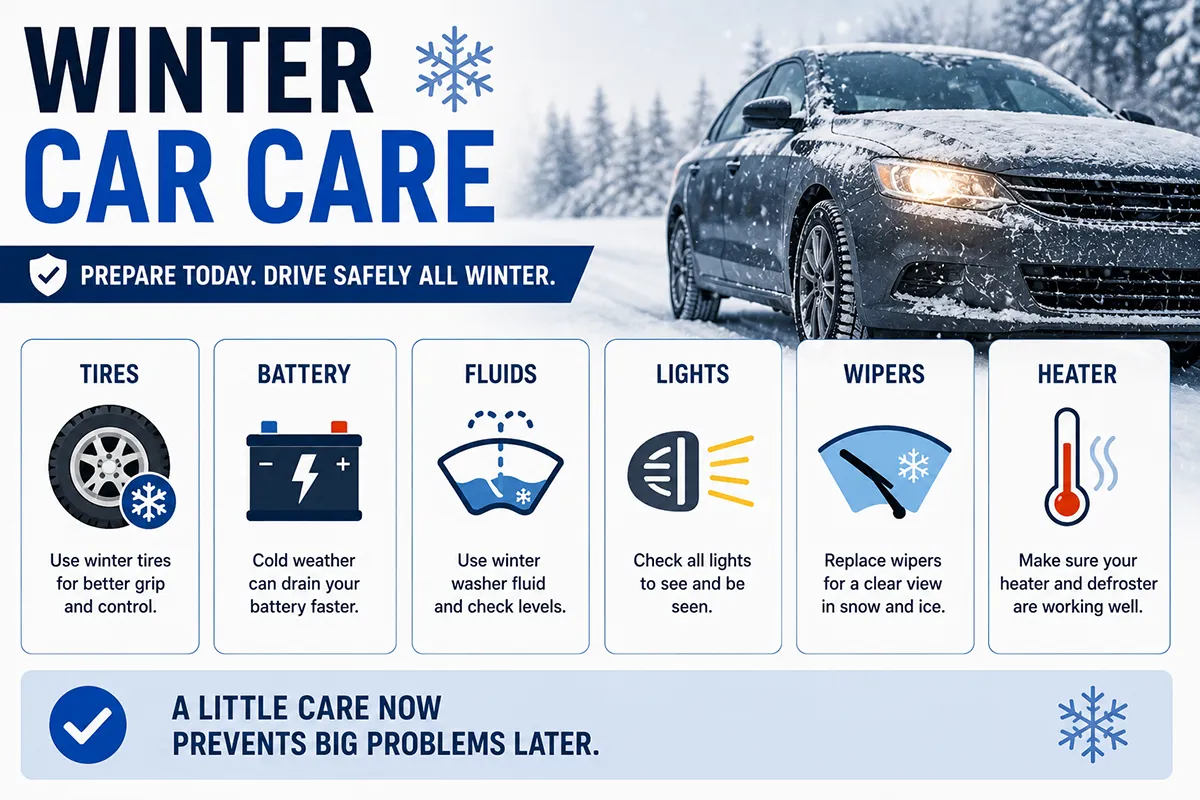
Every winter, I see the same story play out: temperatures drop overnight, and suddenly my inbox fills up with panicked emails from readers asking why their tire pressure light came on, why their car is sliding through intersections, or why their brand-new all-season tires feel like hockey pucks on cold pavement.
Here’s the thing most people don’t realize — winter doesn’t just test your tires, it tests every single system your car relies on to keep you safe. And after years of reviewing tires and driving through some of the worst winter conditions the US has to offer, I can tell you that a little preparation goes a very long way.
- Cold temperatures cause tire pressure to drop roughly 1 PSI for every 10°F decrease — check your pressure at least twice a month in winter.
- All-season tires lose significant grip below 45°F; dedicated winter tires are the single best safety upgrade you can make.
- Battery failures, wiper blade degradation, and coolant issues spike in winter — address them before the first freeze.
- A basic winter emergency kit in your trunk can be a literal lifesaver if you get stranded.
- Simple habits like warming up your car properly and washing off road salt regularly protect both your tires and your vehicle’s longevity.
Liked this article?
Add TireAdvise as a preferred source so you see more of our tire reviews and guides on Google.
Why Winter Car Care Starts With Your Tires
I’ll be honest — as a tire reviewer, I’m biased toward talking about tires first. But there’s a very good reason for that. Your tires are the only part of your car that actually touches the road, and in winter, that contact patch becomes more critical than ever.
When temperatures drop below 45°F, the rubber compound in standard all-season tires begins to harden. I’ve tested this repeatedly with a durometer (a tool that measures rubber hardness), and the difference between a tire at 70°F and the same tire at 20°F is genuinely shocking. Harder rubber means less grip, longer braking distances, and reduced control.
This is why I always recommend that drivers in northern states — anywhere that regularly sees temperatures below freezing for weeks at a time — seriously consider a set of dedicated winter tires. I’ve tested dozens of winter tires over the years, and the difference in stopping distance alone is enough to justify the investment.
Understanding Tire Pressure Changes in Cold Weather
One of the most common winter tire issues I deal with is pressure loss. For every 10°F drop in ambient temperature, your tires lose approximately 1 PSI. That means if you properly inflated your tires during a 70°F fall afternoon and the temperature drops to 20°F overnight, you could be driving on tires that are 5 PSI underinflated.
I’ve seen this catch countless drivers off guard. They wake up to a TPMS warning light and assume they have a leak or a puncture. In most cases, it’s just the cold doing its thing.
My recommendation? Check your tire pressure at least twice a month during winter, and always do it when the tires are cold — meaning the car has been parked for at least three hours. I keep a quality digital tire gauge in my glovebox year-round. The ones from brands like Accutire or Milton cost under $15 and are far more accurate than the pencil-style gauges you find at gas stations.
Winter Tires vs. All-Season Tires: What I’ve Learned From Testing Both
I can’t tell you how many readers write in saying, “My all-season tires are rated for snow, so I should be fine, right?” And technically, they’re not wrong — many all-season tires carry the M+S (Mud and Snow) designation.
But in my experience, there’s a world of difference between an M+S-rated all-season and a tire that carries the Three-Peak Mountain Snowflake (3PMSF) symbol.
Over the past several winters, I’ve conducted back-to-back braking tests with all-season and winter tires on the same vehicle, on the same surface.
In one memorable test on packed snow, the winter tires brought me to a complete stop a full two car lengths sooner than the all-seasons. That’s the difference between stopping safely and rear-ending someone at an intersection.
Here’s a comparison that sums up what I’ve observed:
| Feature | All-Season Tires | Dedicated Winter Tires |
|---|---|---|
| Rubber Compound | Hardens below 45°F | Stays flexible well below 0°F |
| Tread Design | Moderate siping, general purpose | Aggressive siping, biting edges for ice/snow |
| Snow Braking | Adequate in light snow | Significantly shorter stopping distances |
| Ice Traction | Poor to moderate | Good to excellent (some use special compounds) |
| Typical Cost (per tire) | $80–$200 | $100–$250 |
| Recommended For | Mild winters, Southern/Mid-Atlantic states | Heavy snow regions, Northern/Mountain states |
| Summer Use | Year-round capable | Must be swapped out — wears fast in warm temps |
If you live in states like Minnesota, Wisconsin, Michigan, Colorado, or anywhere in New England, I strongly suggest investing in winter tires. Brands like Bridgestone (Blizzak line), Michelin (X-Ice line), and Continental (VikingContact) have consistently impressed me in testing.
Tire Tread Depth: The Minimum Isn’t Enough for Winter
Legally, most US states consider a tire “worn out” at 2/32″ of tread depth. But I’ve found through my own testing that winter performance degrades significantly once tread depth drops below 5/32″. At that point, the tire’s ability to channel slush and evacuate water from the contact patch is seriously compromised.
I use a simple tread depth gauge that costs about $5 at any auto parts store. If your tires are approaching 4/32″, I’d recommend planning for replacements before winter hits rather than trying to squeeze another season out of them. It’s not worth the risk.
Battery Care: The Silent Winter Killer
After tires, the second most common winter car problem I encounter is battery failure. Cold temperatures slow down the chemical reactions inside your battery, reducing its capacity. A battery that works perfectly in September can leave you stranded in a parking lot in January.
I’ve made it a personal habit to have my battery tested every fall. Most auto parts stores like AutoZone, O’Reilly, or Advance Auto Parts will test your battery for free.
If your battery is more than three years old and shows anything less than a strong charge, I’d replace it preemptively. A new battery runs anywhere from $100 to $250 depending on the size and brand, and that’s a lot cheaper than a tow truck on a freezing morning.
Keeping Your Terminals Clean
Corrosion on battery terminals is another sneaky winter issue. I check mine every couple of months during cold weather. If you see white or greenish buildup, a quick cleaning with a wire brush and a paste of baking soda and water will take care of it. I also apply a thin layer of dielectric grease to the terminals after cleaning to prevent future corrosion.
This takes about ten minutes and costs almost nothing, but it can prevent a no-start situation when you least expect it.
Fluids: What You Need to Check Before the Freeze
Winter puts extra demands on virtually every fluid in your vehicle. Here’s what I personally check heading into cold weather season:
Coolant/Antifreeze
Your engine’s cooling system does double duty in winter — it also provides the heat for your cabin. I test my coolant with an antifreeze tester (a simple hydrometer that costs about $8) to make sure the freeze protection is adequate for my climate. In most northern US states, you want protection down to at least -30°F or lower.
If your coolant looks muddy, rusty, or hasn’t been changed according to your vehicle manufacturer’s schedule, winter is a terrible time to procrastinate on a flush. I’ve seen cooling system failures in winter that led to cracked engine blocks — a repair that costs thousands of dollars.
Windshield Washer Fluid
This one seems minor until you’re on the highway behind a salt truck and your windshield is completely opaque. I always switch to a winter-rated washer fluid that’s rated to at least -20°F. You can find it at Walmart, any auto parts store, or even most gas stations for a few dollars a gallon.
I keep an extra gallon in my trunk during winter. Trust me, you’ll go through washer fluid faster than you think when road salt and grime are constantly coating your windshield.
Oil Viscosity
Most modern vehicles use multi-viscosity oils (like 5W-30 or 0W-20) that are designed to perform across a wide temperature range. But if you’re running a higher-viscosity oil that was fine for summer, it might be too thick for cold starts in winter.
I always check my owner’s manual for the manufacturer’s recommended oil viscosity for cold weather. If you’re due for an oil change heading into winter, it’s a great time to make sure you’re running the right grade.
Visibility: Wipers, Defrosters, and Lights
I’ve driven in enough winter storms to know that visibility is just as important as traction. If you can’t see the road, it doesn’t matter how good your tires are.
Windshield Wipers
Wiper blades degrade faster than most people realize, especially after a hot summer. The rubber cracks, the blade starts chattering, and suddenly you’re smearing road grime instead of clearing it. I replace my wiper blades every fall without exception.
For winter driving, I prefer beam-style blades (like the Bosch Icon or Rain-X Latitude) over traditional bracket-style wipers. They resist ice buildup much better because there are no external frame components for ice to cling to. A good set runs about $20–$40 for the pair, and installation takes five minutes.
Defrosters and Climate System
Before winter hits, I always test both my front and rear defrosters to make sure they’re working properly. A non-functioning rear defroster is something you might not notice until you’re backing out of a parking spot and can’t see a thing.
I also make sure my cabin air filter is clean. A clogged filter reduces airflow through the HVAC system, which means your defroster works harder and takes longer to clear the windshield. A replacement filter is usually $15–$25 and takes about five minutes to swap on most vehicles.
Headlights and Taillights
Winter means shorter days and more driving in the dark. I walk around my car at least once a month during winter to verify that all lights are functioning — headlights, taillights, brake lights, and turn signals.
It’s also worth checking that your headlight lenses aren’t fogged or yellowed, which can dramatically reduce light output.
A headlight restoration kit from 3M or Sylvania costs about $15–$25 and can make a noticeable difference if your lenses are hazy. I’ve done this on several test vehicles and the improvement in nighttime visibility is remarkable.
Protecting Your Car’s Exterior From Winter Damage
Road salt is your car’s worst enemy in winter. It accelerates rust, damages paint, and can even corrode your wheel finish. I’ve seen expensive alloy wheels pitted and ruined by a single season of salt exposure because the owner never washed them.
Wash Your Car Regularly — Yes, Even in Winter
I know it seems counterintuitive to wash your car when it’s going to get dirty again immediately, but regular washing is the single best defense against salt corrosion. I aim for a wash every week or two during the heaviest salt season, and I always make sure to hit the undercarriage.
Many touchless car washes offer an undercarriage spray option for a few extra dollars. It’s absolutely worth it. The underside of your car — including brake lines, suspension components, and exhaust — takes the brunt of salt spray.
Wax and Sealant
I apply a good coat of wax or paint sealant before winter starts. This creates a protective barrier between the paint and the salt, making it easier to wash off contaminants and reducing the chance of permanent damage.
Products like Meguiar’s Ultimate Liquid Wax or Chemical Guys Butter Wet Wax work well and are easy to apply at home.
If you want even more protection, a ceramic coating spray offers a longer-lasting barrier, though these tend to cost more.
Protecting Your Wheels and Tires From Salt
As a tire reviewer, this is something I pay special attention to. Salt and chemical deicers can degrade the rubber sidewalls of your tires over time, and they wreak havoc on wheel finishes — especially chrome and polished aluminum.
I apply a tire dressing that contains UV and chemical protectants after every wash during winter. For wheels, a coat of wheel sealant before the season starts can make cleanup much easier and prevent pitting. Brands like Griot’s Garage and Adam’s Polishes make excellent wheel sealant products in the $15–$25 range.
Building a Winter Emergency Kit
I keep a winter emergency kit in every vehicle I drive from November through March. This isn’t paranoia — it’s practicality. I’ve been stranded once due to a dead battery in a rural area, and that experience taught me that being prepared is non-negotiable.
Here’s what I keep in my kit:
- Jumper cables or a portable jump starter — I prefer the lithium-ion jump starters like the NOCO Boost Plus. They’re compact and can start a car without needing a second vehicle.
- Blanket and extra warm layers — If your car breaks down and you’re waiting for help, hypothermia is a real risk.
- Flashlight with extra batteries — Winter breakdowns often happen in the dark.
- Ice scraper and snow brush — Get a good one with an extendable handle if you drive an SUV or truck.
- Small shovel — A collapsible camping shovel works great for digging out from a snowbank.
- Bag of kitty litter or sand — Pour it under your drive wheels for traction if you’re stuck on ice.
- Phone charger (USB or 12V) — A dead phone when you need to call for help is a nightmare scenario.
- First aid kit — Basic bandages, gauze, antiseptic, and any personal medications.
- Non-perishable snacks and water — Energy bars, nuts, or crackers can keep you going if you’re waiting for a tow.
- Reflective triangles or flares — Visibility is critical if you’re stopped on the shoulder in a snowstorm.
All of this fits in a medium-sized duffel bag and lives in my trunk. The total cost is probably around $100–$150, and most of it lasts for years.
Driving Habits That Protect Your Tires in Winter
Even with the best winter tires and a fully prepared vehicle, how you drive in winter matters enormously. I’ve picked up some habits over the years that have saved me from several close calls.
Gentle Inputs Are Everything
The golden rule of winter driving is to do everything smoothly and gradually. Sudden acceleration, hard braking, and sharp steering inputs are the quickest way to lose traction. I think of it as driving with an egg between my foot and the pedals — gentle pressure, no sudden movements.
This applies to braking especially. Even with ABS, stopping distances on snow and ice are dramatically longer than on dry pavement. I always leave at least double the following distance I’d normally maintain.
Know How to Handle a Skid
No matter how careful you are, winter driving can surprise you. I’ve experienced skids on black ice that no amount of preparation could have prevented. The key is knowing how to respond.
If your front tires lose grip (understeer), ease off the gas and straighten the wheel — don’t keep turning harder, as that just pushes the front end wider. If your rear end slides out (oversteer), look where you want to go and gently steer in that direction. In both cases, avoid slamming the brakes.
Warming Up Your Car the Right Way
There’s a lot of debate about warming up modern vehicles, and I’ve settled on what I think is a practical approach. I start the car and let it idle for about 30–60 seconds — just long enough for oil to circulate — then drive gently for the first few minutes. Extended idling wastes fuel, increases emissions, and doesn’t actually warm up the drivetrain any faster than light driving does.
That said, I always make sure my windshield is fully clear before driving. Operating a vehicle with a tiny peephole scraped in the frost is dangerous and, in many states, illegal.
Seasonal Tire Rotation and Alignment Checks
Winter is especially hard on tire wear patterns because of cold pavement, road salt, and the increased likelihood of hitting potholes hidden under snow or slush. I always schedule a tire rotation at the beginning of winter and again at the end.
If you notice your car pulling to one side, or if your steering wheel isn’t centered when driving straight, get an alignment check. Potholes are alignment killers, and a misaligned vehicle wears through tires unevenly and much faster than normal. An alignment at most shops runs between $75 and $120 — a small price compared to replacing tires prematurely.
I also take this opportunity to have the tires inspected for any damage — sidewall bulges, cuts, or embedded objects. Winter debris and rough road surfaces can cause damage you might not notice until it becomes a blowout.
Storing Summer or All-Season Tires Properly
If you do switch to dedicated winter tires, proper storage of your off-season tires is important. I store mine in a cool, dry area away from direct sunlight and heat sources. A basement or insulated garage works well; an unheated shed or outdoor storage is not ideal.
I clean the tires thoroughly before storage to remove any brake dust and road grime, then stack them flat or hang them on wall hooks if they’re still mounted on rims. I also slightly reduce the pressure by about 10 PSI to reduce stress on the rubber during long-term storage.
Tire tote bags — available from brands like Kurgo or Seasonal Tire Totes for about $30–$40 — keep them clean and make them easier to transport to and from the tire shop.
When to Make the Switch: Timing Your Winter Tire Installation
One of the most common questions I get is, “When should I put on my winter tires?” My answer: when consistent overnight temperatures start dropping below 45°F. For most of the northern US, that means late October to mid-November.
Don’t wait for the first snowfall. By that point, tire shops are overwhelmed, appointment wait times stretch to weeks, and you’ve already been driving on compromised tires during the coldest mornings. I schedule my winter tire swap in early October, before the rush.
Similarly, I swap them off in spring once temperatures consistently stay above 45°F. Running winter tires on warm, dry pavement wears them out much faster and actually reduces your grip compared to all-season or summer tires.
Don’t Forget the Small Stuff
There are a handful of minor winter car care tasks that are easy to overlook but can save you headaches:
- Lubricate door locks and weatherstripping — A silicone-based spray prevents doors from freezing shut. I apply it to all door seals and lock cylinders before winter.
- Top off your fuel tank more frequently — Keeping your tank at least half full reduces moisture condensation inside the tank and ensures you have fuel if you’re stuck in traffic during a storm.
- Check your spare tire — If you have a full-size or compact spare, check its pressure. A flat spare is useless when you need it most.
- Inspect your brakes — Braking performance is critical in winter. If you hear squealing, grinding, or feel pulsation when braking, address it before winter weather arrives.
- Clean your exhaust pipe after heavy snow — If you’re warming up your car in a snowstorm, make sure the tailpipe isn’t blocked by snow. A blocked exhaust can cause deadly carbon monoxide buildup inside the cabin.
A Word on Four-Wheel Drive and All-Wheel Drive
I need to address a common misconception I encounter constantly: AWD and 4WD help you accelerate on slippery surfaces, but they do absolutely nothing to help you stop or turn. I’ve tested AWD vehicles with all-season tires against front-wheel-drive vehicles with winter tires, and the FWD car with winters outperformed the AWD car in braking and cornering every single time.
AWD is a wonderful tool, and I recommend it for winter driving. But it’s a supplement to good tires, not a replacement for them. The best winter setup, in my experience, is AWD combined with a quality set of winter tires. That combination gives you the best possible traction for acceleration, braking, and steering.
Don’t let the confidence that AWD provides lull you into driving faster than conditions allow. I’ve seen more AWD SUVs in ditches than I can count, usually driven by people who assumed their drivetrain would save them.
My Final Checklist for Winter Car Care
To wrap up everything I’ve covered, here’s the checklist I personally follow every year before winter arrives:
- ☐ Check tire tread depth (replace if below 5/32″ for winter driving)
- ☐ Inspect tires for damage (sidewall cracks, bulges, embedded objects)
- ☐ Check and adjust tire pressure (including the spare)
- ☐ Consider switching to dedicated winter tires if applicable
- ☐ Test the battery and clean terminals
- ☐ Check coolant/antifreeze freeze protection level
- ☐ Switch to winter-rated windshield washer fluid
- ☐ Verify proper oil viscosity for cold weather
- ☐ Replace windshield wiper blades
- ☐ Test front and rear defrosters
- ☐ Check all exterior lights
- ☐ Apply wax or paint sealant
- ☐ Assemble and store a winter emergency kit in the trunk
- ☐ Schedule a tire rotation and alignment check
- ☐ Lubricate door seals and lock cylinders
- ☐ Inspect brakes
It looks like a lot, but most of these tasks take only a few minutes each. I usually knock out the entire list over a single weekend. The peace of mind that comes from knowing your car is ready for whatever winter throws at it is absolutely worth the effort.
Winter driving doesn’t have to be terrifying. With the right tires, a properly maintained vehicle, and a few smart habits, you can navigate the season safely and confidently. I’ve been doing this for years, and every fall I go through the same routine — because when it comes to winter, preparation isn’t optional. It’s essential.
Frequently Asked Questions
What winter car care steps should I take before cold weather hits?
Before temperatures drop below 45°F, I recommend checking your tire tread depth, battery health, coolant antifreeze levels, and wiper blades. Switching to winter tires or verified all-season tires is one of the most impactful things you can do, since cold weather causes standard all-season rubber to harden and lose grip. A pre-winter inspection at a local tire shop typically costs $20–$50 and can catch problems before they strand you on a freezing highway.
Do I really need winter tires or are all-season tires good enough for snow?
If you regularly drive in temperatures below 40°F or encounter snow and ice more than a few times per season, dedicated winter tires like the Bridgestone Blizzak WS90 or Michelin X-Ice Snow will outperform all-season tires in braking distance and cornering grip by a significant margin. All-season tires are a reasonable compromise for drivers in milder US climates like the mid-Atlantic or Pacific Northwest where snow is infrequent. However, no all-season tire matches the soft rubber compound and siping of a true winter tire when roads are consistently icy.
How often should I check my tire pressure during winter months?
I check my tire pressure at least once every two weeks during winter because tires lose about 1 PSI for every 10°F drop in ambient temperature. Underinflated tires reduce fuel economy, wear unevenly, and compromise handling on wet or icy roads. Always check pressure when tires are cold—before driving—and inflate to the PSI listed on your driver’s side door jamb, not the number on the tire sidewall.
How much does it cost to mount and balance a set of winter tires in the US?
Most US tire shops charge between $80 and $150 total to mount and balance a set of four winter tires, though prices vary by region and tire size. If you buy a dedicated set of steel or alloy wheels for your winter tires, seasonal swaps become faster and cheaper—often $50–$80 for a simple changeover. Retailers like Tire Rack, Discount Tire, and Costco frequently offer free or discounted mounting when you purchase tires through them.
What tire tread depth is too low for safe winter driving?
While the legal minimum tread depth in most US states is 2/32 of an inch, I strongly recommend replacing tires before they reach 4/32 of an inch if you drive in winter conditions. At 4/32, tires lose a dramatic amount of their ability to channel slush and maintain grip on snow-packed roads. You can measure tread depth quickly with a quarter—insert it upside down into the groove, and if you can see the top of Washington’s head, it’s time to start shopping for replacements.
Should I use tire chains or winter tires for driving through mountain passes in the US?
For occasional trips over mountain passes in states like Colorado, Washington, or California, carrying a set of tire chains rated for your tire size is a practical and affordable solution at $30–$80 per pair. If you live in or frequently commute through mountainous terrain, investing in a quality set of winter tires is safer and far more convenient since many states accept winter tires with the 3PMSF snowflake symbol as an alternative to chains. Check your state’s DOT chain law requirements before heading out, because some passes legally require chains or snow tires during active advisories.
Does cold weather affect my car battery and how does that relate to winter tire safety?
Cold weather can reduce your car battery’s cranking power by up to 50%, and a dead battery in freezing conditions is more than an inconvenience—it can leave you stranded on roads where tire traction is already compromised. I recommend having your battery tested at an auto parts store like AutoZone or O’Reilly for free before winter arrives, especially if it’s older than three years. Pairing a reliable battery with properly inflated winter or cold-rated all-season tires ensures you can start your vehicle and maintain control when temperatures plunge.
