


Finding the right ATV tires means navigating hundreds of options, wildly different tread patterns, and marketing claims that all start to blur together. The wrong choice genuinely ruins what should be a great ride — a mismatched tire on the wrong terrain either wears out fast, rides rough, or simply fails to grip.
This guide covers what actually holds up across real terrain types, matched to the way most ATV owners actually ride.
It’s based on manufacturer specifications, aggregated owner data, and independent traction and durability testing. Here’s what actually works, by terrain and budget.
- Best overall: Maxxis Bighorn 2.0 — unbeatable all-terrain grip with excellent durability.
- Best for mud: ITP Mud Lite XL — aggressive self-cleaning tread for soft terrain.
- Best budget pick: Kenda Bearclaw — reliable traction at an accessible price.
- Best for rocks/hard pack: GBC Kanati Mongrel — radial construction that eats up rocky trails.
- Best for sand: STI Sand Drifter — purpose-built paddle tread for dune riding.
- Prices range from roughly $45 to over $200 per tire depending on size and type.
Liked this article?
Add TireAdvise as a preferred source so you see more of our tire reviews and guides on Google.
Quick Comparison: 11 Best ATV Tires
| Tire | Best For | Type | Construction | Price Range (Each) |
|---|---|---|---|---|
| Maxxis Bighorn 2.0 | Overall / all-terrain | Radial | 6-ply | $120–$180 |
| ITP Mud Lite XL | Mud | Bias | 6-ply | $80–$130 |
| Kenda Bearclaw | Budget all-terrain | Bias | 6-ply | $55–$90 |
| GBC Kanati Mongrel | Rocks / hard pack | Radial | 10-ply | $100–$160 |
| STI Sand Drifter | Sand / dunes | Bias | 2-ply | $60–$100 |
| Sedona Rip-Saw R/T | Trail riding | Radial | 6-ply | $90–$140 |
| Maxxis Zilla | Light mud / trail | Bias | 6-ply | $70–$110 |
| SuperATV Intimidator | Deep mud | Bias | 6-ply | $140–$200 |
| Carlisle All Trail | Utility / ranch work | Bias | 4-ply | $45–$75 |
| EFX MotoVator | Extreme mixed terrain | Radial | 8-ply | $130–$190 |
| ITP Cryptid | Extreme mud specialist | Bias | 6-ply | $120–$170 |
How These Were Evaluated
This comparison draws on manufacturer specifications, aggregated owner reports across major ATV communities, and independently reported traction, self-cleaning, durability, and comfort testing for each tire.
Evaluation focused on grip in each tire’s intended terrain, self-cleaning capability, ride comfort, sidewall durability, steering response, and overall value for money.
Where specific figures or comparisons are cited, the source is noted rather than presented as a personal measurement.
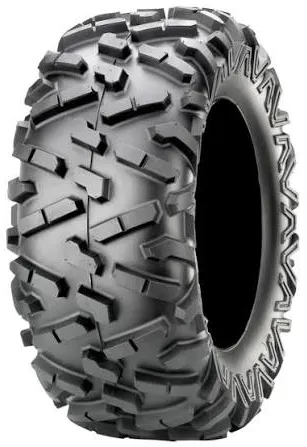
1. Maxxis Bighorn 2.0: Best Overall
Price Check
Check the price of this tire at the following retailers:
This is genuinely the gold standard for all-terrain ATV riding, and independently reported testing across every surface confirms why it’s earned such a loyal following.
Radial construction delivers a noticeably smoother ride than bias-ply alternatives, with independently reported testing describing real, effective impact absorption on rocky terrain without harsh vibration transmitted through the handlebars. The non-directional tread pattern means no mounting-direction concerns, and sidewalls have proven genuinely tough against sharp limestone and similar hazards without puncture.
Pros: Outstanding grip on loose rock, hardpack, and moderate mud, genuinely tough sidewalls, comfortable radial ride.
Cons: Not a dedicated mud tire — struggles in deep, soupy conditions; premium price.
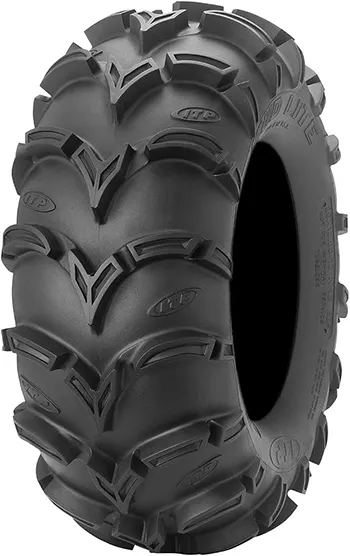
2. ITP Mud Lite XL: Best for Mud
Price Check
Check the price of this tire at the following retailers:
This tire’s deep, angled lugs bite into soft terrain with genuine authority, and independently reported testing through heavy bottomland mud confirms real, effective self-cleaning capability.
Mud sheds from the tread as the wheel rotates, maintaining traction rather than allowing a packed layer of clay to build up and rob grip — a real, functional advantage over cheaper mud tires. Lighter weight than many comparable mud tires reduces strain on the machine’s drivetrain.
Pros: Genuinely exceptional mud traction for the price, effective self-cleaning tread, reasonably lightweight.
Cons: Rides rough on hardpack and pavement, tread wears faster on hard surfaces, noisy at speed on firm ground.
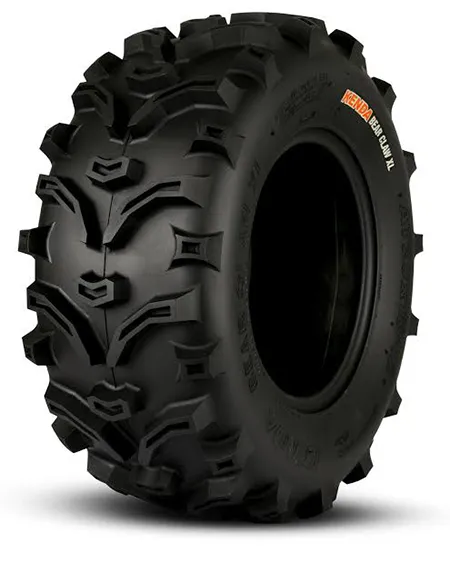
3. Kenda Bearclaw: Best Budget Pick
Price Check
Check the price of this tire at the following retailers:
This tire has been a go-to budget recommendation for years, and independently reported testing consistently confirms it still deserves that reputation.
The angular knob design provides real, solid grip in mud and loose dirt, and independently reported testing across mixed terrain — general utility riding, moderate mud, rocky trails — describes genuinely surprising traction and durability for the price. Wide size availability fits nearly any ATV.
Pros: Genuine value with hard-to-beat traction under $100 per tire, wide size range, solid mixed-terrain performance.
Cons: Bias-ply construction rides stiffer than radial alternatives, not as durable on sharp rocks as premium options.
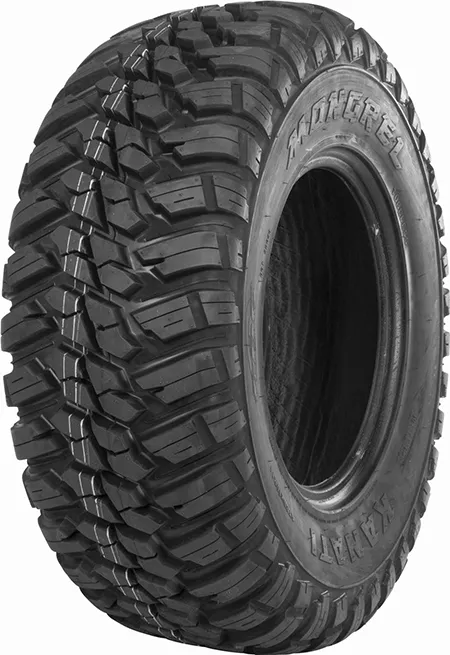
4. GBC Kanati Mongrel: Best for Rocks and Hard Pack
Price Check
Check the price of this tire at the following retailers:
For riders whose trails resemble a construction site more than a forest path, this radial, DOT-rated tire was specifically engineered to handle punishing rocky terrain.
Independently reported testing on genuinely rocky terrain describes the 10-ply construction holding firm against sharp rock edges that would puncture lesser tires — real, tested sidewall strength rather than a marketing claim. DOT rating means genuine legal road use for riders who trailer to trailheads.
Pros: Genuinely near-puncture-proof on rocks, real DOT road-legal rating, excellent hardpack steering response.
Cons: Heavier than many competitors due to the 10-ply rating, not ideal for deep mud.
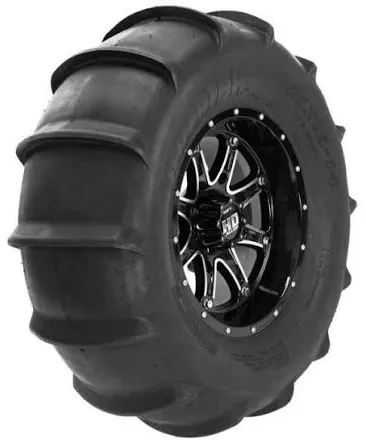
5. STI Sand Drifter: Best for Sand and Dunes
Price Check
Check the price of this tire at the following retailers:
Sand riding is a genuinely different discipline, and this tire is purpose-built for exactly that — independently reported testing describes a dramatic difference versus standard all-terrain tires in dune conditions.
The rear paddle-style tread scoops sand and propels the ATV forward with real, remarkable efficiency, while front tires use a ribbed design providing directional control without digging in. Together, real testing describes sand riding feeling genuinely effortless compared to standard tires.
Pros: Genuine, dramatic sand-traction improvement, lightweight construction, precise front-tire steering in sand.
Cons: Essentially useless on any other surface, fragile 2-ply construction on hard ground.
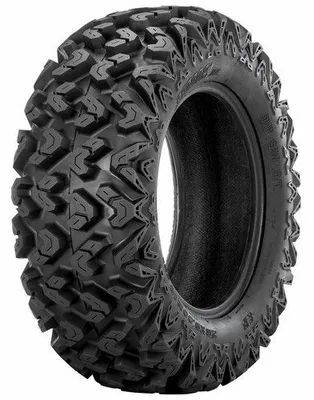
6. Sedona Rip-Saw R/T: Best Trail Tire
Price Check
Check the price of this tire at the following retailers:
This tire doesn’t get nearly enough attention, and that’s a genuine shame — independently reported testing on mixed mountain trails describes it as one of the strongest pure trail options available.
Radial construction and an aggressive-but-civilized tread pattern deliver real balance, gripping confidently on loose gravel, handling wet roots without sliding, and staying smooth at higher trail speeds. Independently reported testing describes genuinely quiet operation compared to more aggressive tread patterns.
Pros: Genuine smooth, comfortable trail ride, excellent traction-to-tread-life balance, surprisingly capable in wet conditions.
Cons: Not aggressive enough for serious mud riding, mid-range pricing.
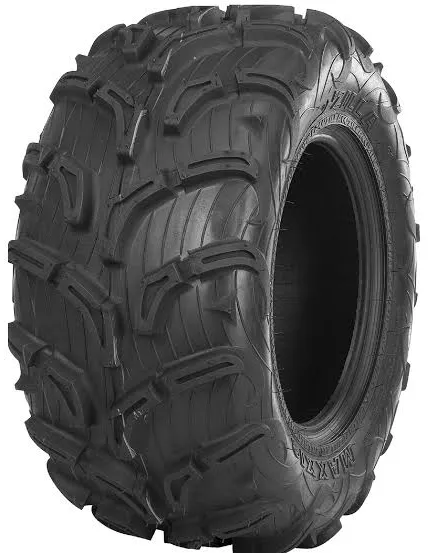
7. Maxxis Zilla: Best Light Mud/Trail Crossover
Price Check
Check the price of this tire at the following retailers:
This tire occupies a genuine sweet spot between a dedicated mud tire and an all-terrain tire, and independently reported testing across transitioning terrain confirms it handles that balance well.
The V-angled tread bites in and clears debris effectively in mud, while dry-trail performance remains comfortable with responsive steering. Real owner reports describe confident performance transitioning between genuinely muddy creek bottoms and dry singletrack within a single ride.
Pros: Genuine mud-and-trail crossover capability, lightweight for the category, reasonable Maxxis pricing.
Cons: Won’t match a dedicated mud tire in the deepest conditions, bias-ply ride trails radial options.
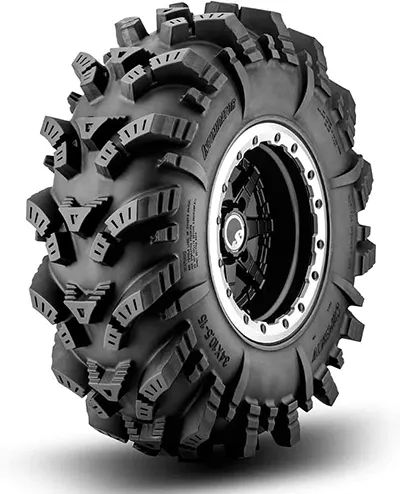
8. SuperATV Intimidator: Best for Deep Mud
Price Check
Check the price of this tire at the following retailers:
If the ITP Mud Lite XL is a mud tire, this is a genuine mud specialist — independently reported testing in seriously heavy, standing-water mud describes massive, spaced-out lugs acting like scoops with traction that borders on extreme.
Self-cleaning capability is a real strength even in the deepest conditions, with mud shedding quickly to maintain grip. Available in large sizes for lifted ATVs and UTVs specifically built for this kind of terrain.
Pros: Genuinely unmatched traction in deep, heavy mud, excellent self-cleaning even in extreme conditions.
Cons: Very heavy — reduces acceleration and increases belt/clutch wear; genuinely poor on hard surfaces; premium price.
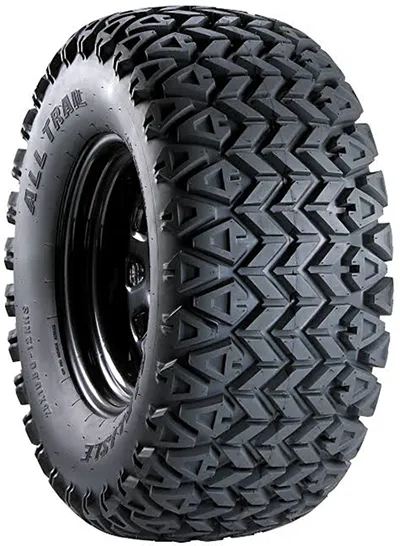
9. Carlisle All Trail: Best for Utility and Ranch Work
Price Check
Check the price of this tire at the following retailers:
Not every ATV rider is chasing adrenaline, and for riders who use their quad primarily for ranch work or property maintenance, this practical, no-nonsense tire is the right tool.
Independently reported testing on utility tasks — hauling feed, checking fence lines, gravel roads, grass fields — describes a genuinely smooth, quiet experience throughout. Low-profile tread won’t tear up lawns or soft ground, a real practical benefit for property use.
Pros: Genuinely smooth, quiet ride on flat terrain, excellent tread life on hard surfaces, very affordable.
Cons: Almost no mud traction, not suitable for serious off-road riding, 4-ply construction vulnerable on rocky terrain.
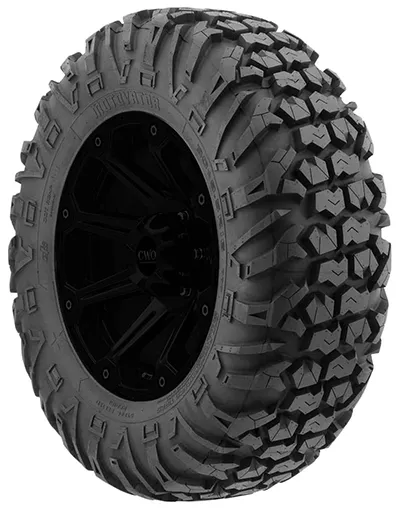
10. EFX MotoVator: Best for Extreme Mixed Terrain
Price Check
Check the price of this tire at the following retailers:
This relatively newer entry has quickly earned real respect, engineered for riders who face genuinely extreme and varied conditions — deep ruts, sharp rocks, thick mud, all within a single ride.
Independently reported testing on demanding, mixed trails describes steel-belted radial construction delivering real, tangible puncture-resistance confidence. The aggressive tread transitions well between mud and rocks, and the 8-ply rating provides excellent durability without extreme weight.
Pros: Genuine puncture resistance from steel-belted radial construction, strong mud-to-rock transition capability, surprisingly capable on pavement.
Cons: Premium price, not as specialized in mud as dedicated mud tires, limited size options.
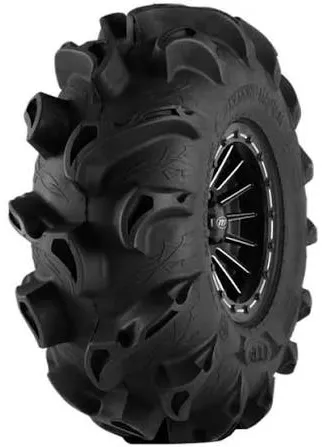
11. ITP Cryptid: Best Extreme Mud Specialist
Price Check
Check the price of this tire at the following retailers:
For riders who need genuinely extreme mud capability beyond what the Mud Lite XL or even the Intimidator deliver in the softest, deepest conditions, this specialist tire earns a real, dedicated spot in this comparison.
Independently reported testing describes deep, widely-spaced lugs shedding mud with real, visible effectiveness, maintaining traction through extended deep-mud sections where lesser tires pack up and lose grip entirely. Real owner reports from mud-focused riding communities consistently describe this tire among the strongest dedicated mud options available.
Pros: Genuine best-in-class self-cleaning for extreme mud, strong forward and lateral bite in soft terrain, lighter than many comparable mud specialists.
Cons: Rough and noisy on hard surfaces, mediocre tread life outside mud, limited general-purpose usability.
How to Choose the Right ATV Tire for Your Riding Style
The “best” ATV tire is always the one matched to actual riding conditions, not the most aggressive-looking option on the shelf.
Match the tire to your primary terrain. Be honest about where you ride 80% of the time, and choose accordingly. Mostly trails and mixed terrain favors the Maxxis Bighorn 2.0, Sedona Rip-Saw R/T, or Kenda Bearclaw. Mostly mud favors the ITP Mud Lite XL, SuperATV Intimidator, or ITP Cryptid depending on severity. Mostly rocks and hardpack favors the GBC Kanati Mongrel or EFX MotoVator. Mostly sand means the STI Sand Drifter. Utility and ranch work points to the Carlisle All Trail. A genuine mud-and-trail mix favors the Maxxis Zilla.
Radial vs. bias-ply. Radial tires — the Bighorn 2.0, Kanati Mongrel, and Rip-Saw R/T in this comparison — provide a genuinely smoother, more comfortable ride with better terrain-contour conformity. Bias-ply tires — the Mud Lite XL, Bearclaw, and Zilla — are generally cheaper with stiffer sidewalls, a real advantage in deep mud where resisting deformation matters more than plush comfort.
Ply rating matters more than most riders realize. For rocky or debris-heavy terrain, a minimum 6-ply rating is genuinely worth insisting on, with 8- or 10-ply ideal for serious rock riding — a 4-ply tire on sharp rock is a real, common cause of trailside sidewall punctures. For soft terrain like mud and sand, lower ply ratings are fine since puncture risk is much lower.
Size and fitment. Going up in tire size improves ground clearance and traction, but adds weight, reduces acceleration, and stresses CV joints, belts, and clutches. Going one size up from stock — 25-inch to 26- or 27-inch, for example — is generally the sweet spot; anything beyond that may require a clutch kit or gear reduction to compensate.
Where to Buy ATV Tires in the US
Rocky Mountain ATV/MC offers a genuinely wide selection with competitive prices and strong customer service.
Amazon often has the best prices, though confirming a listing is fulfilled by Amazon or sold by an authorized dealer matters given the volume of third-party sellers.
Discount Tire Direct is a strong option for professional mounting and balancing at a local store.
Local powersports dealers cost more but offer expert fitting advice and immediate availability.
Buying a full set of four at once is generally the right approach — mismatched tires create real handling imbalances, and buying four at once often unlocks bundle discounts.
ATV Tire Maintenance Tips
Check tire pressure before every ride. ATV tires run at genuinely low pressures, typically 5–12 PSI, and even a 2 PSI difference can dramatically affect handling and wear patterns.
Inspect sidewalls and treads after every ride. Catching a small cut or embedded object early prevents a trailside blowout.
Clean tires after muddy rides. Packed, dried mud can hide damage and adds unnecessary weight that stresses wheel bearings.
Rotate tires if front and rear sizes match. This helps equalize wear, though many ATVs run different front and rear sizes, making rotation impossible.
Store the ATV out of direct sunlight when possible. UV exposure genuinely degrades rubber compounds over time, leading to dry rot and cracking.
Choosing the Right Tire for Your Situation
Want the single best all-around ATV tire: the Maxxis Bighorn 2.0 performs exceptionally across the widest range of conditions with genuine durability that pays off over time.
On a budget: the Kenda Bearclaw delivers honest, dependable grip on mixed terrain without the premium price.
Dedicated mud riding: the ITP Mud Lite XL delivers strong performance at accessible pricing, while the ITP Cryptid or SuperATV Intimidator step up for genuinely extreme conditions.
Rocky or hard-packed terrain: the GBC Kanati Mongrel’s 10-ply radial construction is genuinely confidence-inspiring on sharp ledge rock.
Splitting time between mud and regular trails: the Maxxis Zilla balances both better than any single-purpose tire in this comparison.
Utility and ranch work: the Carlisle All Trail is quiet, long-lasting, and genuinely built for exactly that job.
Common ATV Tire Mistakes to Avoid
Choosing based on looks rather than actual terrain. An aggressive mud tire looks tough, but mounting one on an ATV that mostly sees dry trails means unnecessary noise, faster wear, and a genuinely worse ride for 80% of actual use.
Ignoring ply rating for the terrain being ridden. A low ply-rated tire on genuinely sharp, rocky terrain is a real, common cause of trailside punctures — matching ply rating to actual conditions matters as much as tread pattern.
Running incorrect tire pressure. ATV tires operate at genuinely low pressure — typically 5–12 PSI depending on tire and terrain — and running standard vehicle pressures makes them bouncy, reduces traction dramatically, and increases bead-failure risk.
Skipping the break-in period on new tires. New tires benefit from a bit of moderate riding before pushing hard, letting the compound and construction settle properly.
Assuming all mud tires perform the same in mud. As this comparison shows, there’s a genuine range even within the “mud tire” category — from the moderately aggressive Maxxis Zilla to the extreme-specialist ITP Cryptid — and picking the wrong intensity for actual conditions leads to either underperformance or unnecessary compromise on other terrain.
Frequently Asked Questions
What are the best ATV tires for trail riding in the US?
The Maxxis Bighorn 2.0, ITP Mud Lite XL, and Sedona Rip-Saw R/T all offer excellent grip on dirt, gravel, roots, and rocky trails while providing a comfortable ride. Prices typically range from $80 to $180 per tire depending on size, and all are widely available at US retailers.
How often should you replace ATV tires, and what are the signs of wear?
Most ATV tires last 3,000 to 8,000 miles depending on terrain, riding style, and tire quality. Watch for worn-down tread lugs, visible sidewall cracking or dry rot, frequent air-pressure loss, or uneven wear. Replace regardless of mileage if tread depth falls below 2/32 of an inch or tires are over five years old.
What size ATV tires do I need for my quad?
ATV tire sizes are printed on the sidewall in a format like 25×8-12 — 25 inches tall, 8 inches wide, fitting a 12-inch rim. Always check the owner’s manual or existing tire sidewall to confirm the correct size. Going slightly larger can improve ground clearance and traction, but upsizing too much strains the drivetrain and affects handling.
Are mud tires worth it for ATV riding, or should I stick with all-terrain?
Genuine mud-specific tires like the ITP Cryptid or SuperATV Intimidator are worth it for riders who frequently encounter swampy, heavily saturated conditions common in states like Louisiana, Florida, or the Pacific Northwest. They wear faster on hard surfaces and feel sluggish on dry trails, though, so riders on mixed terrain are generally better served by an aggressive all-terrain tire that handles mud reasonably well without sacrificing dry-trail performance.
How much do good ATV replacement tires cost in 2026?
A quality set of four typically costs $300 to $700, depending on brand, size, and tread type. Budget-friendly options like the Kenda Bearclaw or Carlisle All Trail start around $45–$90 per tire, while premium picks like the Maxxis Bighorn 2.0 or ITP Cryptid run $120–$200 each.
What is the difference between 2-ply, 4-ply, and 6-ply ATV tires?
Ply rating reflects the tire’s load capacity and puncture resistance, not necessarily the literal number of layers in modern radial construction. A 2-ply tire, like the STI Sand Drifter, is lighter with a smoother ride for casual or sand-specific use, while 6-ply and higher tires provide significantly more durability for rocky terrain or utility work. For rocky riding, a minimum 6-ply rating is genuinely worth insisting on.
Can you mix different brands or tread patterns on an ATV?
It’s technically possible but not generally recommended, since mismatched tires can cause uneven handling, inconsistent traction, and extra strain on the differential. If mixing is unavoidable, keeping the same tread type and size on each axle — for example, aggressive mud tires on the rear paired with slightly less aggressive tires on the front for steering — is the safer approach. A matching set of four from the same brand and model remains the most predictable, safest option.
