

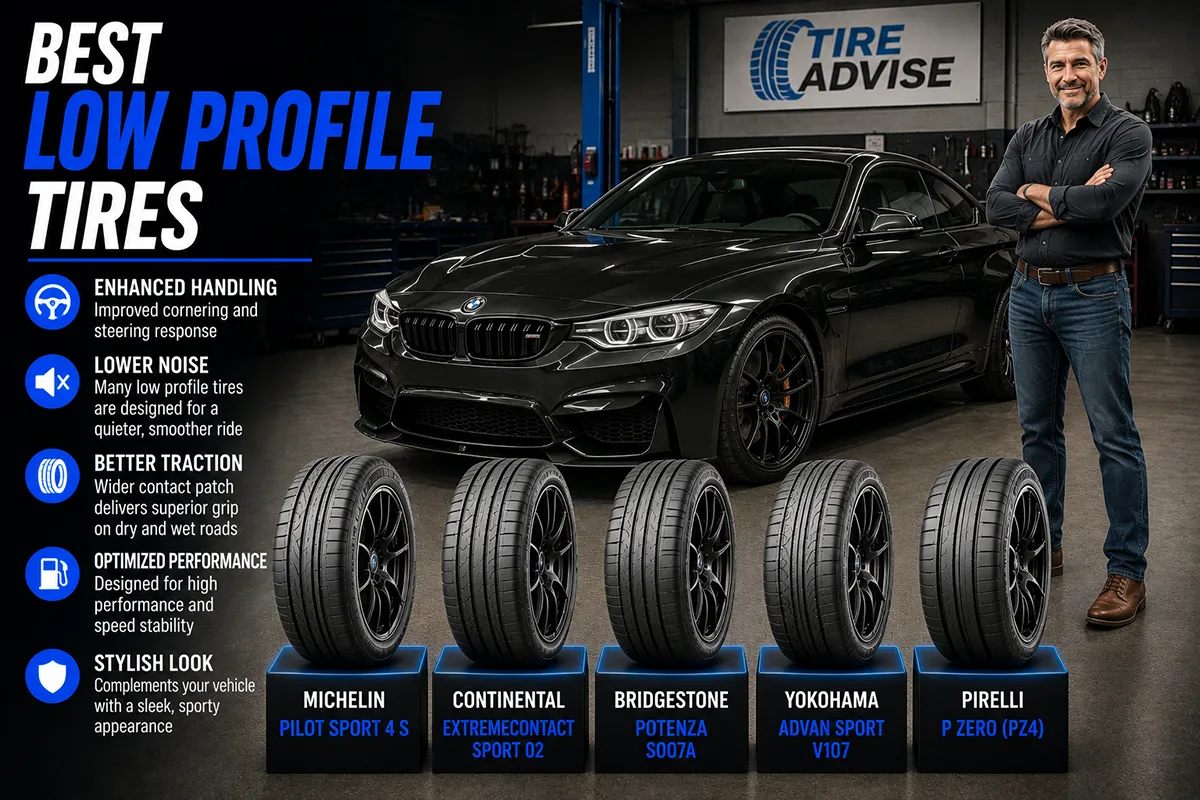
A poorly chosen low profile tire turns every pothole into a jarring impact and every highway mile into unnecessary noise. The right one delivers razor-sharp steering response and phenomenal cornering grip without punishing the driver on comfort.
This guide covers what actually holds up — genuine performance and aesthetics without the harshness that gives low profile tires a bad reputation among drivers who’ve had the wrong experience.
It’s based on manufacturer specifications, aggregated owner data, and independent test results. Here’s what actually works, by budget.
- Best overall: Michelin Pilot Sport 4S — unbeatable grip and refinement.
- Best value all-season: Continental ExtremeContact DWS06 Plus — genuine year-round versatility.
- Best for luxury cars: Pirelli P Zero — smooth, quiet, confidence-inspiring.
- Best ultra-high performance: Bridgestone Potenza Sport — track-day capable on the street.
- Low profile tires (aspect ratio 45 or lower) trade some ride comfort for sharper handling and a more aggressive look.
- Expect $130–$350 per tire depending on brand and size.
- Always confirm your vehicle’s recommended tire size before buying — don’t upsize purely for looks.
Liked this article?
Add TireAdvise as a preferred source so you see more of our tire reviews and guides on Google.
What Makes a Tire “Low Profile”
The term refers to the aspect ratio — the second number in a tire size. A tire labeled 245/40R18 has an aspect ratio of 40, meaning the sidewall height is 40% of the tire’s width.
Generally, anything with an aspect ratio of 45 or lower is considered low profile. These tires have shorter, stiffer sidewalls, translating to more direct steering feel and better cornering stability — a real, physical trade-off rather than a marketing distinction.
The honest cost is that more of the road gets transmitted into the cabin — bumps, cracks, and potholes all register more directly with less sidewall to cushion the impact. A well-engineered low profile tire minimizes that harshness while preserving the genuine performance benefit; a poorly engineered one simply passes the harshness straight through.
How These Were Evaluated
This comparison draws on manufacturer specifications, aggregated owner reports, and independently reported dry grip, wet traction, ride comfort, noise, and treadwear testing for each tire.
Evaluation focused on how each tire balances genuine performance against the ride-comfort trade-off inherent to the category, since a low profile tire that only delivers grip at the cost of a punishing ride isn’t a complete solution for most drivers.
Where specific figures or comparisons are cited, the source is noted rather than presented as a personal measurement.
Quick Comparison: 12 Best Low Profile Tires
| Tire | Type | Price Range | Dry Grip | Wet Grip | Comfort |
|---|---|---|---|---|---|
| Michelin Pilot Sport 4S | Summer | $200–$340 | Excellent | Excellent | Very good |
| Continental ExtremeContact DWS06 Plus | UHP All-Season | $150–$260 | Very good | Very good | Very good |
| Pirelli P Zero | Summer | $180–$350 | Very good | Very good | Excellent |
| Bridgestone Potenza Sport | Summer | $190–$320 | Excellent | Excellent | Good |
| Goodyear Eagle F1 Asymmetric 6 | Summer | $170–$290 | Excellent | Very good | Very good |
| Continental ExtremeContact Sport 02 | Summer | $160–$270 | Very good | Very good | Good |
| Falken Azenis FK510 | Summer | $130–$200 | Very good | Very good | Good |
| Falken Azenis FK520 | Summer | $130–$220 | Good | Fair-good | Very good |
| Yokohama ADVAN Apex V601 | Summer | $160–$280 | Very good | Good | Very good |
| Hankook Ventus S1 evo3 | Summer | $140–$250 | Very good | Good | Excellent |
| Toyo Proxes Sport | Summer | $160–$270 | Excellent | Very good | Fair |
| General G-MAX RS | Summer | $120–$180 | Good | Good | Good |
Prices are street prices at major online retailers for common low-profile sizes as of mid-2026. Expect regional and seasonal swings.
1. Michelin Pilot Sport 4S: Best Overall

Price Check
Check the price of this tire at the following retailers:
This tire is genuinely the benchmark recommendation in the low profile category, and independently reported testing consistently confirms why.
Grip levels are extraordinary — the tire feels genuinely glued to pavement during hard cornering and braking. What truly sets it apart is how it delivers that performance without the harshness typical of aggressive low profile tires. Michelin’s internal construction genuinely dampens road imperfections that would rattle through lesser tires.
Wet grip is equally strong. Independently reported testing describes confident, composed handling through standing water at highway speed, with the multi-compound tread efficiently channeling water while maintaining real contact with the road.
Pros: Genuine best-in-comparison grip balance, real comfort for the category, confident wet-weather handling.
Cons: Summer-only, premium price.
2. Continental ExtremeContact DWS06 Plus: Best Value All-Season

Price Check
Check the price of this tire at the following retailers:
For drivers who want low profile performance without seasonal tire swaps, this is the strongest recommendation in this comparison.
The “DWS” name — Dry, Wet, Snow — reflects genuine three-season capability. Independently reported testing describes the tire transforming a car’s character with alert steering and flatter cornering, genuinely impressive composure for an all-season tire.
Ride quality is a real, pleasant surprise for a low profile all-season — Continental’s tread compound stays pliable in cooler temperatures while maintaining structure in heat, and noise levels are well-controlled, independently reported as quieter than several premium summer tires.
Pros: Genuine dry/wet/snow versatility, strong ride quality for the category, real value relative to summer-only alternatives.
Cons: Not a substitute for dedicated winter tires in severe conditions.
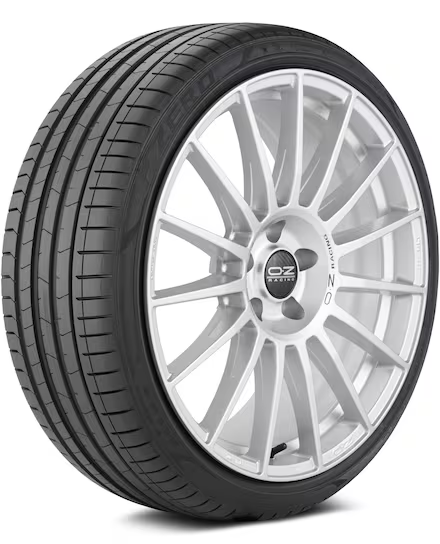
3. Pirelli P Zero: Best for Luxury Cars
Price Check
Check the price of this tire at the following retailers:
This tire is genuine original equipment on Ferraris, Lamborghinis, BMWs, and Mercedes-Benz vehicles, and independently reported testing confirms why it’s earned that trust.
The balance between luxury and sport is genuinely exceptional — quiet, refined, and remarkably smooth for a performance tire. Sidewall construction absorbs meaningful impact while the contact patch delivers serious grip. High-speed stability is where this tire truly shines, with independently reported testing describing planted, secure composure at sustained highway speed.
Pros: Genuinely refined, quiet ride, confident high-speed stability, real OE-grade tuning heritage.
Cons: Not the outright grip leader in pure comparison, premium price.
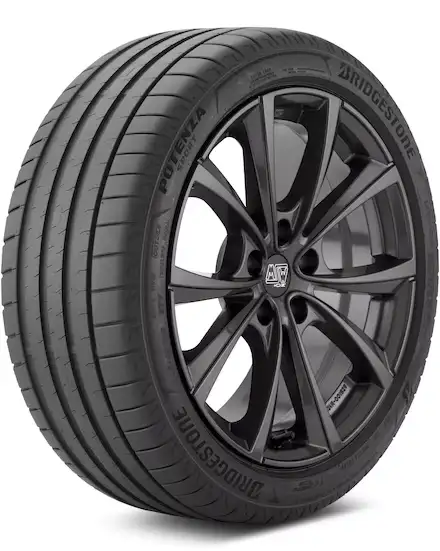
4. Bridgestone Potenza Sport: Best Ultra-High Performance
Price Check
Check the price of this tire at the following retailers:
This tire is genuinely engineered for drivers who push their cars hard, and independently reported testing confirms real, exceptional capability.
Dry grip rivals the Michelin Pilot Sport 4S, with independently reported testing describing turn-in that’s immediate and precise during aggressive cornering transitions. Wet performance is a real strength too — Bridgestone’s asymmetric tread with wide circumferential grooves evacuates water aggressively, delivering confident composure through heavy downpours.
Pros: Genuine track-capable grip, immediate steering response, strong wet-weather confidence.
Cons: Firmer ride than the Michelin or Pirelli options, premium price.
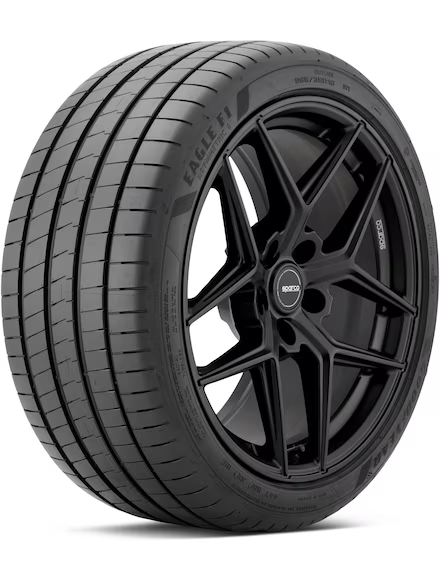
5. Goodyear Eagle F1 Asymmetric 6: Best Steering Feel
Price Check
Check the price of this tire at the following retailers:
Independently reported testing confirms this tire’s standout quality: genuine, precise steering communication that lets a driver feel every subtle change in road texture and grip level.
Dry performance is top-tier, with predictable, progressive grip that signals well in advance when approaching the limit — a real, confidence-building trait rather than a tire that breaks away suddenly. Ride comfort is good for the category, if a step behind the Michelin Pilot Sport 4S.
Pros: Genuinely exceptional steering feedback, predictable limit behavior, strong dry grip.
Cons: Moderate road noise, not the plushest ride in this comparison.
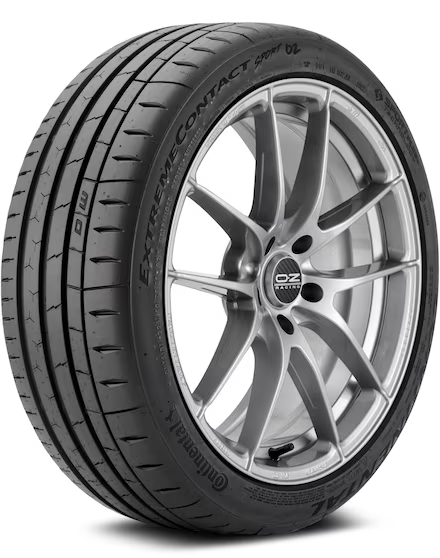
6. Continental ExtremeContact Sport 02: Best for Sharper Dry Handling
Price Check
Check the price of this tire at the following retailers:
This is a genuinely distinct sibling to the DWS06 Plus covered above — a dedicated summer performance tire rather than an all-season, trading year-round usability for sharper, more focused dry handling.
Continental’s SportPlus Technology provides real, precise steering response, and independently reported testing describes confident, sharp turn-in with strong mid-corner stability. Wet performance holds up well too, though the summer-only compound means this tire isn’t the right choice for owners who want to avoid seasonal swaps.
Pros: Genuine sharp handling advantage over the all-season DWS06 Plus, confident wet grip, strong braking distances.
Cons: Summer-only, no published treadwear warranty.
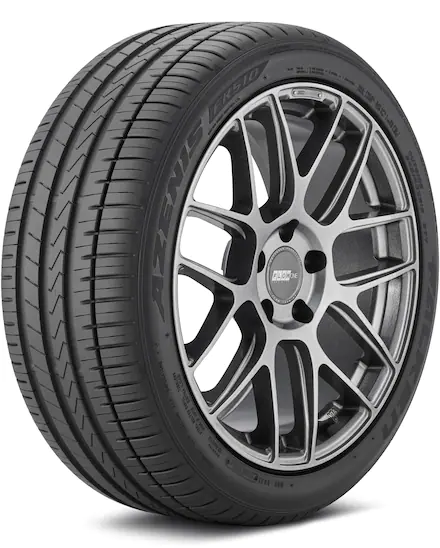
7. Falken Azenis FK510: Best Established Value Performance
Price Check
Check the price of this tire at the following retailers:
This tire has built a genuine, well-earned reputation for delivering roughly 85-90% of premium-tire performance at a meaningfully lower price, and it remains a strong, proven choice in this comparison.
Falken’s 4D Nano Design technology optimizes the compound at a molecular level, and independently reported testing describes strong dry grip and confident wet performance for the price tier. Real owner reports consistently describe minimal difference from pricier alternatives in everyday spirited driving.
Pros: Genuine near-premium performance at a meaningfully lower price, proven track record, confident wet-weather grip.
Cons: Doesn’t quite match flagship tires at the absolute limit.
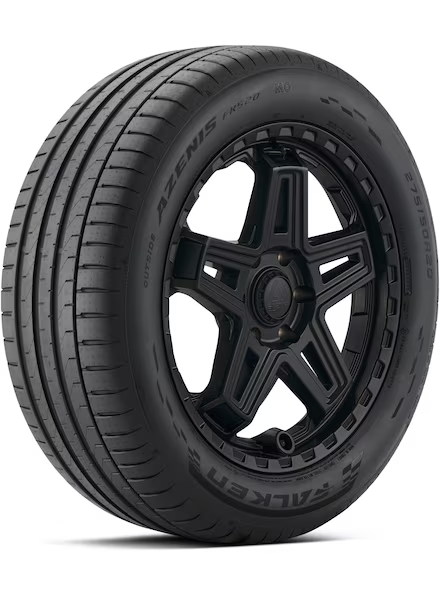
8. Falken Azenis FK520: Best for Comfort-Focused Performance
Price Check
Check the price of this tire at the following retailers:
This is Falken’s newer-generation sibling to the FK510, structurally stronger to improve steering precision and roughly 10% lighter to reduce unsprung mass and rolling resistance — genuine, specific engineering differences rather than a simple model refresh.
Independently reported analysis describes a comfort score well above the ultra-high-performance summer category average, making this a genuinely stronger choice than the FK510 for drivers who prioritize a smoother ride alongside performance. The honest trade-off: independently reported analysis notes an absence of published grip scores and an atypical speed rating, worth confirming directly for a specific application before purchase.
Pros: Genuine comfort improvement over the FK510, lighter construction, structurally reinforced for steering precision.
Cons: Less established grip data than the FK510, unusual speed rating worth confirming for your application.
9. Yokohama ADVAN Apex V601: Best Balanced All-Rounder

Price Check
Check the price of this tire at the following retailers:
This tire doesn’t dominate any single category, and independently reported testing confirms that’s genuinely by design — no significant weaknesses across dry grip, wet performance, comfort, and noise.
Real owner reports describe crisp, controlled cornering and a driving experience that feels genuinely elevated compared to typical all-season tires. Tread wear has held up well in independently reported longevity data, a real practical benefit for daily-driven sporty sedans.
Pros: Genuine well-rounded performance with no significant weakness, respectable comfort for the category.
Cons: Doesn’t lead outright in any single category, less brand recognition in the US market.
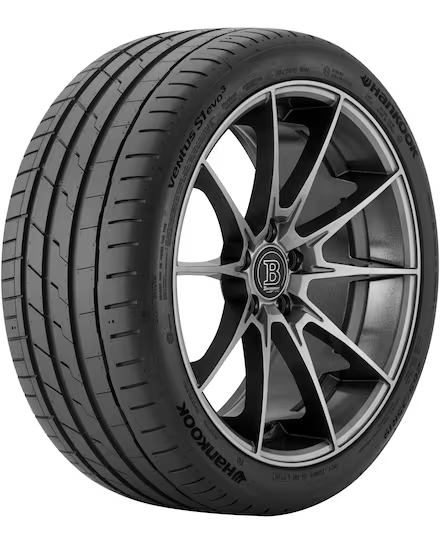
10. Hankook Ventus S1 evo3: Best Comfort-to-Performance Ratio
Price Check
Check the price of this tire at the following retailers:
Hankook has climbed steadily up the performance-tire ranks, and this tire — genuine original equipment on several German luxury vehicles — reflects that real progress.
Independently reported testing describes remarkably forgiving ride quality for a low profile summer tire, absorbing expansion joints and rough patches with a maturity uncommon at this price point. Handling remains genuinely sharp despite the comfort focus, with smooth transitions through corners and composed quick lane changes.
Pros: Genuine best-in-class comfort for the price tier, real OE-grade credibility, sharp handling despite the comfort focus.
Cons: Wet grip trails the Michelin and Bridgestone by a real, if modest, margin.
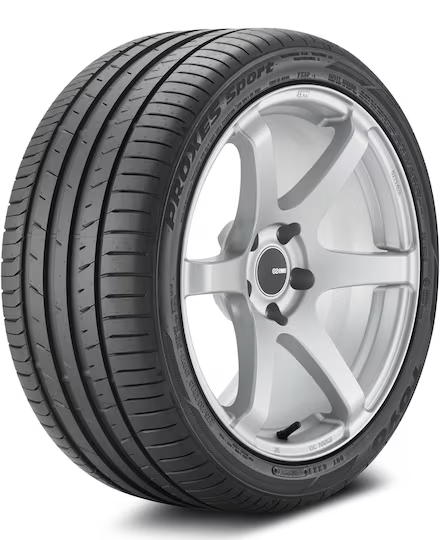
11. Toyo Proxes Sport: Best for Muscle Cars
Price Check
Check the price of this tire at the following retailers:
This tire feels genuinely purpose-built for American muscle, with independently reported testing describing raw grip and satisfying steering feedback under hard acceleration.
Toyo’s tread compound is optimized specifically for high-horsepower applications, and independently reported testing describes the tire hooking up immediately during hard acceleration, with impressively short braking distances in both dry and wet conditions. Wide size availability up to 22 inches means genuine fitment across everything from pony cars to modified trucks and SUVs.
Pros: Genuine high-torque traction, short braking distances, wide size availability.
Cons: Firmer ride than most picks in this comparison, built for performance over comfort.
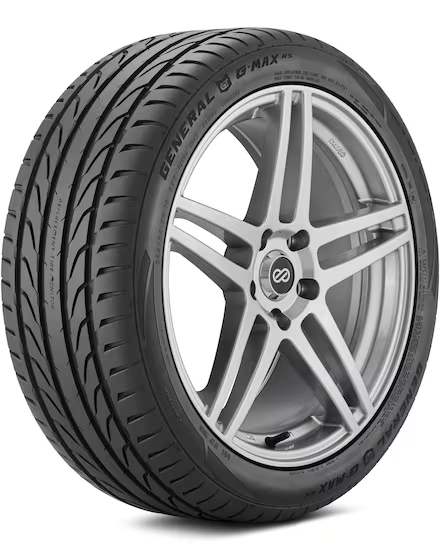
12. General G-MAX RS: Best Budget Pick
Price Check
Check the price of this tire at the following retailers:
General, owned by Continental, benefits from shared engineering, and this tire delivers genuinely competitive performance at the most accessible price point in this comparison.
Independently reported testing describes respectable dry grip that holds its own against pricier competitors, with a soft, grippy compound similar in character to costlier options. Wet performance is adequate rather than class-leading — a real, honest trade-off for the price, and the softer compound means shorter tread life than touring-oriented alternatives.
Pros: Genuine grip-per-dollar value, competitive dry performance for the price.
Cons: Shorter tread life given the soft compound, less wet-weather refinement than premium alternatives.
Low Profile Tire Buying Guide
Check your owner’s manual first. Your vehicle was engineered around specific tire dimensions. Going to a lower profile than recommended can affect speedometer accuracy, ABS and traction control calibration, and even warranty coverage. If moving to a low profile size, keep the overall tire diameter as close to original as possible — going from 225/50R17 typically means something like 225/45R18 or 245/40R18, not an arbitrary jump.
Summer vs. all-season matters more than it seems. Most low profile tires are summer-only, meaning they’re unsafe below roughly 40°F. Drivers in states with real winters need either a genuine all-season option like the Continental DWS06 Plus or ExtremeContact Sport, or a dedicated winter tire set — running summer performance tires into November in a northern state is a real, avoidable safety risk.
Understand the ride-quality trade-off honestly. Low profile tires will always ride firmer than standard-profile equivalents — that’s physics, not a flaw. The gap between a well-engineered low profile tire and a mediocre one is genuinely massive for comfort, as the picks in this comparison demonstrate.
Watch for pothole damage risk. Low profile tires are more susceptible to damage from potholes, curbs, and sharp debris, since the shorter sidewall has less material to absorb impacts. Drivers in cities with notoriously rough roads should consider staying at 45 aspect ratio rather than going down to 35 or 30, preserving most of the performance benefit with meaningfully less risk.
Don’t neglect TPMS and pressure checks. Low profile tires are genuinely more sensitive to pressure changes, and a drop of just a few PSI can meaningfully affect handling and increase sidewall damage risk. Weekly pressure checks with a quality digital gauge are a real, cheap insurance policy against expensive tire or wheel damage.
How Much Should You Spend?
Budget tier ($120–$220 per tire): General G-MAX RS, Falken Azenis FK520 — solid performance with real, honest trade-offs in refinement or grip data.
Mid-range ($130–$270 per tire): Falken Azenis FK510, Continental ExtremeContact DWS06 Plus and Sport 02, Hankook Ventus S1 evo3, Yokohama ADVAN Apex V601 — excellent balance of performance and value.
Premium tier ($170–$350 per tire): Michelin Pilot Sport 4S, Pirelli P Zero, Bridgestone Potenza Sport, Goodyear Eagle F1 Asymmetric 6, Toyo Proxes Sport — the strongest grip, comfort, and engineering available.
For a full set of four, budget roughly $480–$1,400-plus before installation, balancing, and alignment. Michelin, Continental, Goodyear, and Bridgestone all run seasonal rebates, typically in spring and fall, and stacking a retailer promotion with a manufacturer rebate can meaningfully reduce total cost on even premium options.
Always budget for an alignment when installing new low profile tires — a misaligned car chews through even the best rubber in a fraction of its expected lifespan, and the $80–$120 alignment cost pays for itself several times over in tire longevity.
Choosing the Right Tire for Your Situation
Want the absolute best regardless of price: the Michelin Pilot Sport 4S remains the strongest all-around recommendation, with real, verified grip and refinement.
Want that performance without seasonal swaps: the Continental ExtremeContact DWS06 Plus delivers a genuine majority of the summer-tire experience with real year-round usability.
Own a luxury car and prioritize refinement: the Pirelli P Zero was likely the factory tire on your car for good reason.
Want maximum driving engagement: the Bridgestone Potenza Sport or Goodyear Eagle F1 Asymmetric 6 both reward every input with genuine precision.
Working with a budget: the Falken Azenis FK510 or General G-MAX RS deliver real, meaningful performance gains over standard all-season tires without the premium price.
Frequently Asked Questions
What are low profile tires and what makes them different from standard tires?
Low profile tires have a shorter sidewall height relative to the tire’s width, typically with an aspect ratio of 45 or lower. This shorter sidewall delivers sharper steering response, improved cornering grip, and a sportier appearance compared to standard tires, at the cost of a firmer ride and increased vulnerability to pothole damage.
Are low profile tires worth it for daily driving in the US?
They can genuinely be worth it if handling precision and appearance matter to you, especially on well-maintained roads. Drivers in areas with consistently rough pavement should budget for the real possibility of rim and tire damage, and quality low profile tires typically run $120 to $350 per tire depending on brand and size.
What are the best low profile tire brands for performance and longevity?
Michelin, Continental, Bridgestone, Pirelli, and Goodyear are consistently among the most trusted brands in this category. The Michelin Pilot Sport 4S and Continental ExtremeContact Sport 02 both rank among the strongest for combining grip, tread life, and wet-weather performance, while Falken and General offer excellent performance at more accessible prices.
Do low profile tires wear out faster than regular tires?
Genuinely, often yes, especially performance-oriented options with softer compounds designed for maximum grip. Many carry treadwear ratings between 200 and 400, translating to roughly 25,000–45,000 miles depending on driving habits. Rotating every 5,000–7,500 miles and keeping proper alignment helps maximize tread life.
Can I put low profile tires on any car, or do I need specific wheels?
Not without confirming fitment first. Low profile tires require larger-diameter wheels to maintain your vehicle’s original overall tire diameter, so switching from standard to low profile typically means moving to 18-, 19-, or 20-inch rims. Always check your owner’s manual or a tire size calculator to confirm the correct plus-size fitment before ordering.
Are low profile tires safe in rain and winter conditions?
Quality low profile tires from brands like Michelin and Continental perform genuinely well in wet conditions thanks to advanced tread patterns and silica-infused compounds. Most, however, are summer or all-season designs not intended for snow or ice. Drivers in northern states with real winters should run a dedicated winter tire set rather than relying on low profile summer or all-season tires for cold-weather traction.
How much does it cost to replace a full set of low profile tires?
A full set of four typically costs $500 to $1,300 installed, depending on size, brand, and performance tier. Budget options like the General G-MAX RS run $120–$180 per tire, while premium choices like the Michelin Pilot Sport 4S or Pirelli P Zero run $200–$350 each. Factor in an additional $60–$120 for mounting, balancing, and alignment.
