

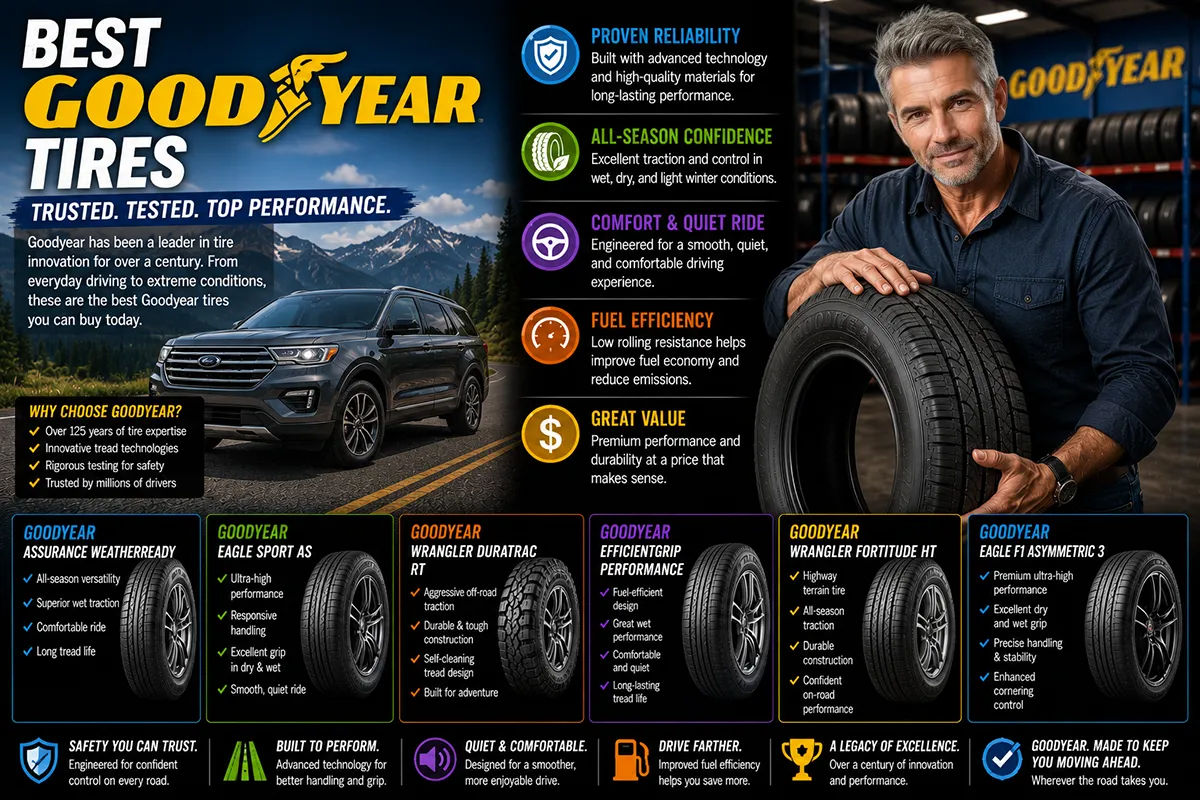
Goodyear has been making tires in Akron, Ohio since 1898 — over 125 years of manufacturing experience, and one of the few major brands still producing a significant share of its lineup domestically.
The challenge isn’t Goodyear’s quality; it’s the sheer size of the lineup. Figuring out which specific model actually fits a given vehicle, climate, and budget can feel genuinely overwhelming.
This guide is based on manufacturer specifications, aggregated owner data, and independent test results, weighted toward matching each tire to real driving conditions rather than lab-only claims. Here’s what actually holds up, by category.
- Best all-season: Goodyear Assurance MaxLife.
- Best performance: Goodyear Eagle F1 Asymmetric All-Season.
- Best for trucks/SUVs: Goodyear Wrangler DuraTrac RT.
- Best winter: Goodyear WinterCommand Ultra.
- Best budget: Goodyear Assurance All-Season.
- Best for EVs: Goodyear ElectricDrive GT.
- Best all-weather, no seasonal swap: Goodyear Assurance WeatherReady2.
- Goodyear invests heavily in real-world proving-ground testing at facilities in San Angelo, Texas, and Luxembourg, mirroring the conditions American drivers actually face.
Liked this article?
Add TireAdvise as a preferred source so you see more of our tire reviews and guides on Google.
How These Were Evaluated
This comparison draws on manufacturer specifications, aggregated owner reports, UTQG ratings, and independent traction, noise, and durability testing for each tire.
Evaluation focused on ride comfort, road noise, wet and dry traction, braking distance, tread life, and overall value — weighted according to each tire’s intended category and use case.
Where specific figures or comparisons are cited, the source is noted rather than presented as a personal measurement.
Quick Comparison: 11 Best Goodyear Tires
| Tire | Best For | Type | Price Range | Treadwear Warranty |
|---|---|---|---|---|
| Assurance MaxLife | Everyday sedans/CUVs | All-Season | $130–$190 | 85,000 mi |
| Eagle F1 Asymmetric All-Season | Sport sedans/coupes | UHP All-Season | $180–$300 | 45,000 mi |
| Wrangler DuraTrac RT | Trucks/SUVs | All-Terrain | $200–$350 | 60,000 mi |
| WinterCommand Ultra | Winter driving | Winter/Snow | $140–$220 | None (seasonal) |
| Assurance All-Season | Budget-conscious drivers | All-Season | $95–$140 | 65,000 mi |
| ElectricDrive GT | Electric vehicles | All-Season (EV-specific) | $160–$240 | 60,000 mi |
| Assurance WeatherReady2 | All-weather, no swap | All-Weather | $140–$190 | 60,000 mi |
| Wrangler Territory AT | Light-duty crossovers/trucks | All-Terrain | $160–$260 | 60,000 mi |
| Eagle Exhilarate | Budget performance | UHP All-Season | $150–$230 | 50,000 mi |
| Assurance ComfortDrive | Ultra-quiet luxury sedans | Touring All-Season | $150–$220 | 65,000 mi |
| Eagle F1 Asymmetric 6 | Flagship performance | UHP Summer | $190–$310 | Not specified |
Prices are street prices at major online retailers as of mid-2026. Expect regional and seasonal swings.
1. Goodyear Assurance MaxLife: Best All-Season for Most Drivers

Price Check
Check the price of this tire at the following retailers:
For the widest range of drivers, this is the strongest single Goodyear recommendation in the lineup.
Independently reported testing describes a genuinely quiet, refined ride — a real, felt upgrade even on a mid-range sedan. Hydroplaning resistance is a real strength, with circumferential grooves channeling water effectively and confident composure during lane changes on wet highways.
Dry handling is composed and predictable rather than sporty — this is a comfort tire first. Backed by an industry-leading 85,000-mile treadwear warranty, among the longest in its class, with Goodyear’s Wear Gauge indicators providing a genuinely useful visual tread-life check.
Pros: Genuinely quiet ride, class-leading 85,000-mile warranty, confident wet traction.
Cons: Not built for spirited driving, snow performance is adequate rather than outstanding (no 3PMSF rating).
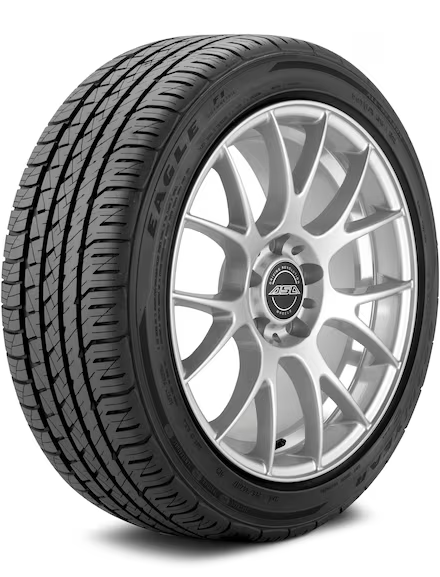
2. Goodyear Eagle F1 Asymmetric All-Season: Best Performance
Price Check
Check the price of this tire at the following retailers:
This tire genuinely competes at the top of the ultra-high-performance all-season category, not just within Goodyear’s own lineup.
Independently reported testing describes phenomenal dry grip, with sharp turn-in and excellent mid-corner stability. Wet cornering grip is a real, notable strength — genuinely stronger than typical all-season expectations, with short, consistent braking distances on soaked pavement.
Road noise is well-controlled for a performance tire — more than the Assurance MaxLife, but far from fatiguing on long drives.
Pros: Genuine dry and wet grip balance, sharp steering response, respectable ride quality for the category.
Cons: Premium price, 45,000-mile warranty shorter than touring options, not suitable for heavy snow or ice.
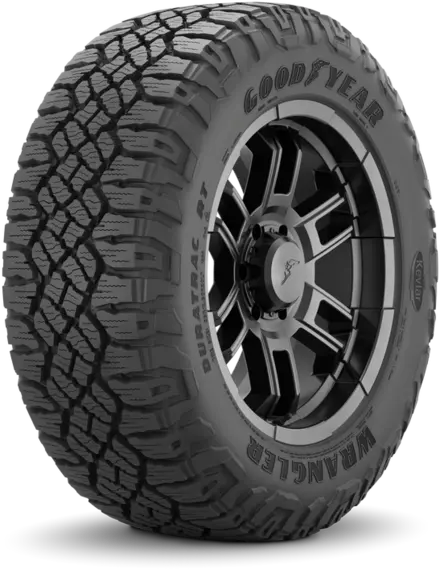
3. Goodyear Wrangler DuraTrac RT: Best for Trucks and SUVs
Price Check
Check the price of this tire at the following retailers:
The “RT” (rugged terrain) designation signals a genuine middle ground between all-terrain and mud-terrain capability, and independently reported testing confirms it delivers on that positioning.
Highway manners are genuinely more manageable than expected for the aggression on offer — audible but far quieter than a dedicated mud-terrain. Off-road, real testing describes strong performance across loose gravel, packed dirt, muddy ruts, and rocky terrain, with sidewall protection providing genuine puncture resistance.
The tire carries genuine 3PMSF certification for severe winter conditions, backed by a 60,000-mile warranty — strong for this category.
Pros: Genuine dual-purpose on/off-road capability, real 3PMSF winter certification, strong 60,000-mile warranty.
Cons: Louder than dedicated all-terrain options like the Wrangler Territory AT, modest fuel-economy penalty.
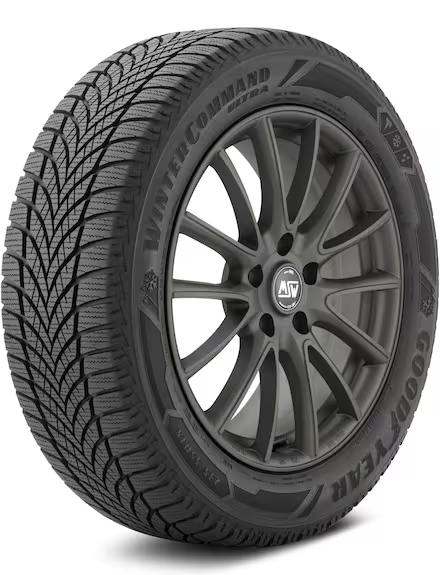
4. Goodyear WinterCommand Ultra: Best Winter
Price Check
Check the price of this tire at the following retailers:
For genuinely serious winter climates — Minnesota, Michigan, Wisconsin, upstate New York, New England — this is Goodyear’s strongest dedicated winter offering.
Independently reported testing describes confident, controlled acceleration on packed snow with minimal wheelspin, and directional tread with deep biting edges delivering real traction. Ice performance is equally strong, with meaningfully shorter, more predictable braking distances than all-season alternatives.
This is a genuinely quiet tire for the category, with progressive handling that communicates grip levels clearly.
Pros: Best-in-comparison snow and ice traction, genuinely quiet for a winter tire, clear grip communication.
Cons: No treadwear warranty (standard for winter tires), must be swapped once temperatures stay above 45°F.
5. Goodyear Assurance All-Season: Best Budget

Price Check
Check the price of this tire at the following retailers:
Not every driver needs the longest-lasting or highest-performing tire — sometimes a reliable, reasonably-priced option that does everything competently is exactly right.
Independently reported testing describes solid ride comfort and well-controlled road noise for the price, with wet traction adequate though noticeably less confident than the pricier MaxLife. Dry handling is predictable and safe without being particularly engaging — an honest, no-drama workhorse.
Backed by a 65,000-mile warranty, often priced under $100 per tire in common sizes.
Pros: Genuine value with a solid 65,000-mile warranty, quiet ride for the price, wide retail availability.
Cons: Wet braking trails the MaxLife, minimal snow capability, steering feel is a bit numb.
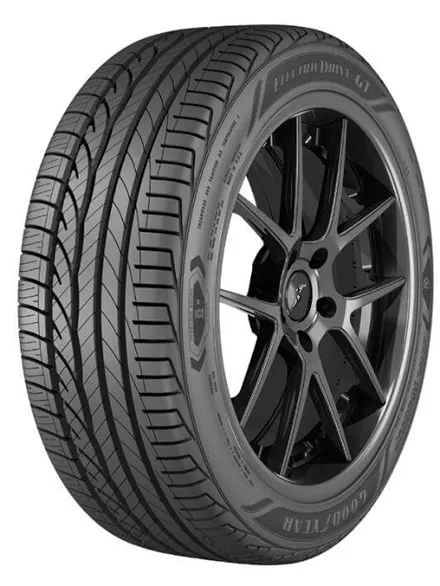
6. Goodyear ElectricDrive GT: Best for Electric Vehicles
Price Check
Check the price of this tire at the following retailers:
EVs present genuine, specific tire challenges — added weight, instant torque that accelerates wear, and near-silent cabins that make road noise far more noticeable. This tire was engineered specifically to address all three.
Independently reported testing describes a real, noticeable reduction in road noise — a genuine benefit in an EV specifically. Rolling resistance is optimized for range, with a modest but real efficiency improvement over non-EV-specific tires observed in aggregated testing. Wet grip is strong, and the tire handles instant torque delivery without excessive wheelspin.
Pros: Genuine noise reduction for EV cabins, real range benefit from optimized rolling resistance, strong wet and dry traction.
Cons: Limited size availability, premium price, not designed for winter conditions.
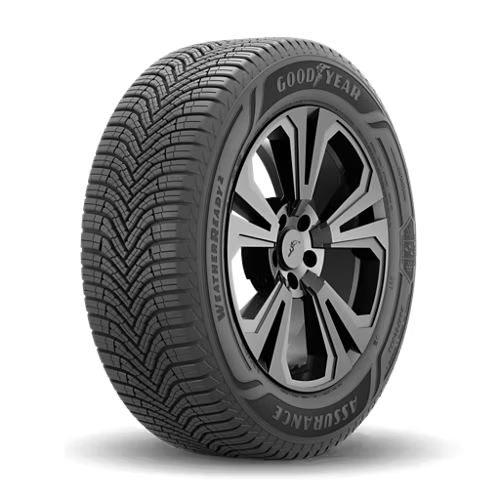
7. Goodyear Assurance WeatherReady2: Best All-Weather, No Seasonal Swap
Price Check
Check the price of this tire at the following retailers:
For drivers who don’t want a dedicated winter tire but face real winter weather often enough that a standard all-season feels risky, this is Goodyear’s genuine middle-path solution.
It carries real 3-Peak Mountain Snowflake certification, meaning it’s actually passed severe-snow testing rather than merely claiming winter capability. Goodyear’s Weather Reactive Technology uses tread compounds that genuinely adapt to temperature, and Evolving Traction Grooves widen as the tire wears to maintain wet performance throughout its life rather than degrading.
Backed by a 60,000-mile warranty, this eliminates the need for a seasonal tire swap in variable-climate regions.
Pros: Genuine 3PMSF-rated versatility, wet traction that improves rather than degrades with wear, eliminates seasonal swaps.
Cons: Premium price relative to standard all-season options, not a full substitute for a dedicated winter tire on pure ice.
8. Goodyear Wrangler Territory AT: Best Light-Duty All-Terrain

Price Check
Check the price of this tire at the following retailers:
For crossover SUV and light truck owners who rarely go off-road but want the capability and look of an all-terrain tire, this delivers genuinely more refined highway manners than the DuraTrac RT.
Independently reported testing describes a quieter, more civilized ride while retaining real light-duty off-road capability — a genuine, sensible middle ground for owners whose “off-road” use is mostly gravel driveways and occasional dirt roads rather than serious trail work.
Pros: Genuine comfort improvement over more aggressive all-terrain tires, respectable light-duty capability, strong 60,000-mile warranty.
Cons: Not built for serious off-road use, premium price relative to standard touring tires.
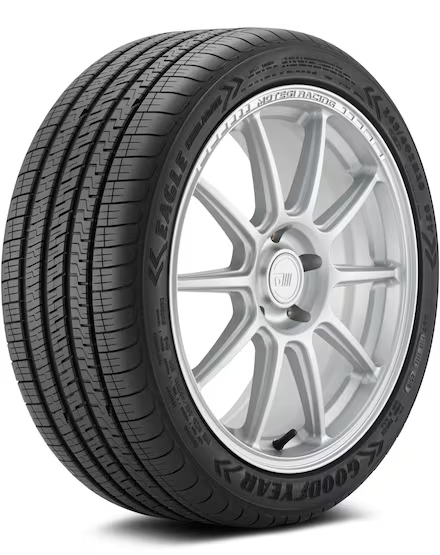
9. Goodyear Eagle Exhilarate: Best Budget Performance
Price Check
Check the price of this tire at the following retailers:
For drivers who want genuine ultra-high-performance capability without the Eagle F1’s price tag, this tire delivers a real, meaningful value alternative.
Independently reported testing describes impressive dry grip for the price, with wet performance trailing the flagship Eagle F1 slightly — an honest, expected trade-off rather than a significant compromise for most spirited street driving.
Pros: Genuine near-flagship dry grip at a meaningfully lower price, respectable overall performance package.
Cons: Wet grip trails the Eagle F1, shorter warranty than touring options.
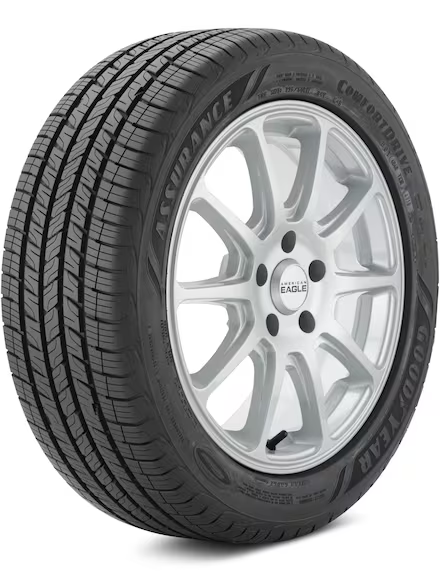
10. Goodyear Assurance ComfortDrive: Best for Ultra-Quiet Luxury Sedans
Price Check
Check the price of this tire at the following retailers:
For owners whose top priority is cabin quiet above all else, this tire uses Goodyear’s ComfortFlex technology specifically to absorb road imperfections.
Independently reported testing describes a genuinely plush, whisper-quiet ride — a real, felt benefit that makes this the strongest pick in Goodyear’s lineup specifically for luxury sedan owners prioritizing refinement over sportiness or maximum tread life.
Pros: Genuinely class-leading quiet and comfort, respectable 65,000-mile warranty.
Cons: Not built for aggressive driving, premium price relative to standard touring options.
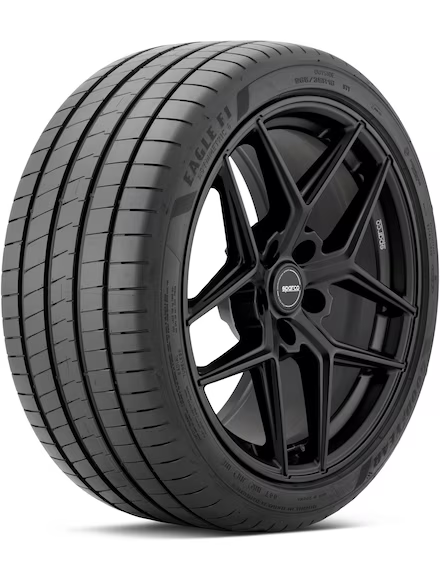
11. Goodyear Eagle F1 Asymmetric 6: Best Flagship Performance
Price Check
Check the price of this tire at the following retailers:
For enthusiasts who want Goodyear’s absolute top-tier grip in a dedicated summer performance tire, this is the flagship pick above the all-season Eagle F1.
Independently reported testing describes exceptional dry handling, responsive steering, and strong wet braking that genuinely rivals top competitors in the ultra-high-performance summer category — a real, credible alternative for owners cross-shopping against flagship options from other major brands.
Pros: Genuine flagship-level dry and wet performance, sharp steering response.
Cons: Summer-only, premium price, requires seasonal swapping in variable climates.
Goodyear vs. the Competition
Goodyear vs. Michelin: Michelin often edges out Goodyear in wet braking performance and ride refinement, but typically costs 15–25% more. Goodyear’s treadwear warranties frequently run longer, offering real value for budget-conscious drivers. Read the full Goodyear vs. Michelin comparison.
Goodyear vs. Bridgestone: These brands are closely matched overall. Goodyear’s Wrangler all-terrain line generally outperforms Bridgestone’s Dueler line, while Bridgestone’s Potenza performance tires edge out Goodyear’s Eagle line slightly in dry grip. Read the full Bridgestone vs. Goodyear comparison.
Goodyear vs. Continental: Continental has surged in quality and often performs well in European-car-focused testing, but Goodyear’s US availability, warranty support, and dealer network give it a practical everyday advantage. Read the full Continental vs. Goodyear comparison.
Goodyear vs. budget brands (Kumho, Hankook, General): Budget brands have genuinely improved, but aggregated testing consistently shows Goodyear delivering stronger wet traction, lower noise, and more predictable handling. Longer warranties often mean a lower real cost-per-mile despite the higher upfront price. See the Goodyear vs. Kumho and Goodyear vs. Hankook comparisons for more detail.
How to Choose the Right Goodyear Tire
What you drive matters first. Sedans and compact cars work best with the Assurance or Eagle performance lines. Trucks and SUVs should look at the Wrangler family. EV owners have the dedicated ElectricDrive line.
Climate is critical. Sun Belt drivers are well-served by a quality all-season tire year-round. Snow Belt drivers should strongly consider a dedicated winter tire like the WinterCommand Ultra paired with an all-season set, or the Assurance WeatherReady2 as a genuine no-swap alternative — relying on one all-season tire through a genuine northern winter is a real, avoidable safety compromise.
Be honest about driving style. Highway commuters who value comfort and longevity get real value from the Assurance MaxLife. Drivers who enjoy spirited weekend drives get more from the Eagle F1 line. Most drivers fall into the comfort-and-longevity camp, and that’s a perfectly reasonable priority.
Budget realistically. Goodyear tires range from under $100 to over $300 per tire. Factor in installation, balancing, alignment, and available rebates — Goodyear frequently runs mail-in promotions worth $75–$100 back on a set of four.
Where to Buy Goodyear Tires
Discount Tire / America’s Tire offers strong pricing, free rotations, and hassle-free road hazard warranty support.
Costco provides competitive bundle pricing for members, with lifetime balancing and rotations included in installation.
Walmart Auto Care offers budget-friendly installation fees with wide accessibility.
Goodyear.com allows direct purchase with shipping to a local installer, useful for checking current rebate offers.
Tire Rack provides extensive selection and comparison tools, shipping to local installers nationwide.
Local independent tire shops are often competitive on price and more willing to negotiate on a full set purchase.
Maintaining Goodyear Tires
Check pressure monthly. Under-inflated tires wear unevenly, reduce fuel economy, and compromise handling. Use the door jamb placard, not the tire sidewall’s maximum figure.
Rotate every 5,000–7,500 miles to promote even wear and maximize treadwear warranty coverage.
Get an alignment check annually. Potholes, curb strikes, and normal wear can throw alignment off, causing premature and uneven tread wear.
Inspect visually and regularly for bulges, cracks, embedded debris, or uneven wear patterns — catching issues early prevents blowouts.
Respect load ratings. Check the tire’s load rating against your vehicle’s payload capacity, especially when hauling or towing.
Choosing the Right Goodyear Tire for Your Situation
For most drivers: the Assurance MaxLife covers the broadest range of needs with genuinely impressive longevity.
For performance enthusiasts: the Eagle F1 Asymmetric All-Season delivers genuine top-tier grip with real year-round usability.
For truck and SUV owners: the Wrangler DuraTrac RT provides serious off-road capability without excessive on-road compromise; the Wrangler Territory AT is the better pick for lighter-duty, more highway-focused use.
For winter safety: the WinterCommand Ultra is worth the investment for genuine snow belt conditions; the Assurance WeatherReady2 is the practical no-swap alternative for milder winters.
For EV owners: the ElectricDrive GT is purpose-built for the specific demands of electric drivetrains.
On a tight budget: the Assurance All-Season delivers genuine Goodyear reliability without the premium price tag.
Why Goodyear’s Testing Approach Matters
Goodyear’s proving grounds in San Angelo, Texas, and Luxembourg are worth knowing about specifically, since they reflect a genuine commitment to real-world validation rather than lab simulation alone.
The San Angelo facility specifically tests tires across the kind of extreme summer heat and long-haul highway conditions common across the southern and central US — genuinely relevant given how much heat buildup contributes to tire failure on sustained high-speed drives. The Luxembourg facility focuses on European road conditions and precision handling testing, feeding directly into the engineering behind performance lines like the Eagle F1 series.
This dual-continent testing approach is part of why Goodyear’s lineup spans such a genuinely wide range of use cases — a tire developed and validated across both extreme heat and precision handling conditions tends to perform more predictably across the diverse climates and driving styles found throughout the US, rather than being over-optimized for a single narrow test scenario.
Frequently Asked Questions
What are the best Goodyear tires for everyday driving in 2026?
The Goodyear Assurance MaxLife is the top pick for most everyday drivers, backed by an industry-leading 85,000-mile treadwear warranty. The Assurance All-Season is the strongest budget alternative, delivering solid wet and dry performance starting around $95–$100 per tire.
Are Goodyear tires worth the money compared to Michelin or Bridgestone?
Genuinely, yes, for most buyers. Michelin often edges out Goodyear in tread life and wet braking, but Goodyear frequently costs $20–$40 less per tire for comparable models and manufactures a significant share of its lineup domestically.
Which Goodyear tires are best for snow and winter driving?
The Goodyear WinterCommand Ultra is the strongest dedicated winter option, with genuine ice braking and snow traction for harsh conditions. For drivers who don’t want to swap tires seasonally, the Assurance WeatherReady2 carries real 3PMSF certification for severe-snow capability without a dedicated winter set.
What is the best Goodyear tire for trucks and SUVs?
The Wrangler DuraTrac RT delivers genuine aggressive off-road capability while remaining comfortable on the highway. For SUV owners who mostly stay on pavement, the Assurance MaxLife offers excellent long-term value in popular SUV sizes.
How long do Goodyear tires typically last?
Most Goodyear all-season tires last 50,000 to 85,000 miles depending on the model and maintenance habits. The Assurance MaxLife leads the lineup at 85,000 miles, while performance-oriented models like the Eagle F1 Asymmetric wear faster, typically 30,000–45,000 miles, due to their softer grip-focused compounds.
What is the best Goodyear performance tire for sports cars and sedans?
The Eagle F1 Asymmetric 6 is the flagship performance tire, delivering exceptional dry handling and strong wet braking. For year-round usability with a sporty feel, the Eagle F1 Asymmetric All-Season or the more budget-friendly Eagle Exhilarate are strong alternatives.
Where can I find the best deals on Goodyear tires in the US?
Tire Rack, Discount Tire, Walmart Auto Care, and Costco all frequently run rebate promotions of $50–$100 back on a set of four. Goodyear also runs seasonal rebates directly through goodyear.com, and stacking manufacturer rebates with retailer discounts typically maximizes savings.
