

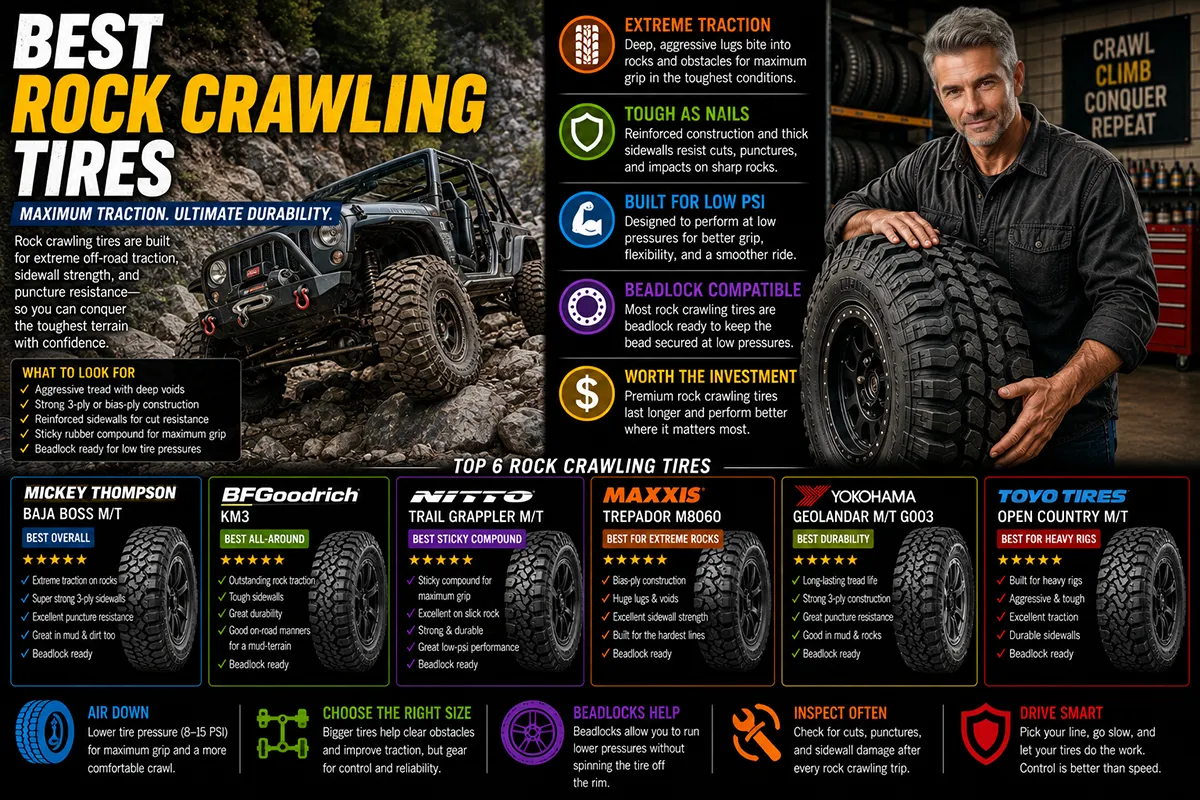
Rock crawling lives and dies on tire choice. The wrong rubber turns a confident line into a white-knuckle slide across a granite shelf, no matter how good the spotter or how capable the rest of the build.
This guide covers what actually holds up on real trails — grip on wet and dry rock, sidewall puncture resistance, and aired-down stability that lets a driver commit to a line without second-guessing the equipment.
It’s based on manufacturer specifications, aggregated owner data, and independent traction and durability testing. Here’s what actually works, by rig type and budget.
- Best overall: BFGoodrich KM3 Mud-Terrain — unmatched rock grip and proven sidewall protection.
- Best budget pick: Falken Wildpeak M/T01 — serious capability without the premium price.
- Best dual-duty (trail plus street): Nitto Trail Grappler — surprisingly quiet on-road, monster off-road.
- Best extreme/competition: Maxxis Trepador — purpose-built for the hardest lines.
- Prioritize sidewall strength, soft compound flexibility, and aggressive tread voids for rock crawling.
- Air down to 8–15 PSI for maximum rock contact — tire choice must support safe deflation.
Liked this article?
Add TireAdvise as a preferred source so you see more of our tire reviews and guides on Google.
What Makes a Great Rock Crawling Tire?
This isn’t like shopping for highway all-seasons — the priorities are genuinely different.
Soft, sticky compound. Rock crawling is about conforming to irregular surfaces. A softer rubber compound genuinely molds itself around rocks and ledges when aired down, delivering dramatically more contact area and grip. The trade-off is real: softer compounds wear faster on pavement, a genuine consideration for anyone daily-driving the rig.
Sidewall strength and design. Sidewalls take a real beating on rock, and razor-sharp ledges can slice through cheap sidewalls quickly. The strongest rock crawling tires feature thick, reinforced sidewalls with protective ribs or lugs extending down from the tread — these shoulder lugs also provide extra traction when a tire is aired way down and the sidewall starts contacting rock.
Aggressive tread pattern with deep voids. Large, chunky tread blocks with deep channels let a tire wrap around rock edges and find purchase on surfaces that would make a street tire spin hopelessly.
Aired-down performance. A tire that performs beautifully at 35 PSI but feels squirmy at single digits is genuinely useless for serious crawling. The strongest tires in this category maintain shape and bead seal even at extremely low pressures.
How These Were Evaluated
This comparison draws on manufacturer specifications, aggregated owner reports across major off-road communities, and independently reported traction, durability, and aired-down stability testing for each tire.
Evaluation focused on dry and wet rock grip, sidewall durability, aired-down stability, mud evacuation, and — for dual-duty tires — on-road noise and ride comfort, alongside real-world pricing from major US retailers.
Where specific figures or comparisons are cited, the source is noted rather than presented as a personal measurement.
Quick Comparison: 11 Best Rock Crawling Tires
| Tire | Rock Grip | Sidewall Strength | On-Road Comfort | Price Range | Best For |
|---|---|---|---|---|---|
| BFGoodrich KM3 Mud-Terrain | Excellent | Excellent | Good | $350–$420 | Best overall |
| Maxxis Trepador | Excellent | Very good | Poor | $300–$450 | Competition |
| Nitto Trail Grappler MT | Very good | Very good | Very good | $300–$380 | Dual-duty |
| Falken Wildpeak M/T01 | Very good | Very good | Good | $250–$320 | Best budget |
| Toyo Open Country M/T | Very good | Excellent | Good | $290–$370 | Durability |
| Mickey Thompson Baja Boss M/T | Very good | Excellent | Good | $310–$400 | Aggressive performance |
| Goodyear Wrangler MT/R Kevlar | Very good | Excellent | Good | $280–$360 | Puncture resistance |
| Pro Comp Xtreme MT2 | Very good | Very good | Fair | $200–$280 | Value pick |
| Cooper Discoverer STT Pro | Very good | Very good | Very good | $270–$350 | Trail/highway split |
| Interco Super Swamper | Excellent | Fair | Poor | $280–$400 | Trail-only rigs |
| Pit Bull Rocker | Excellent | Very good | Fair | $290–$400 | Sticky-compound specialist |
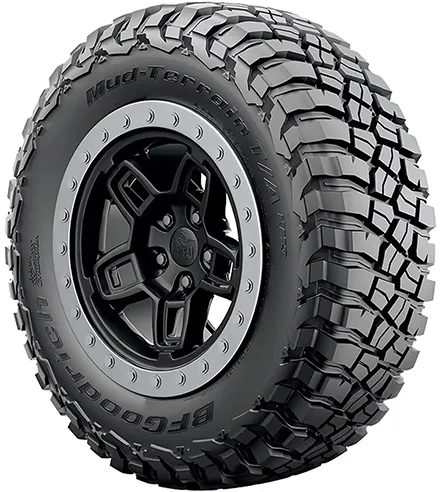
1. BFGoodrich KM3 Mud-Terrain T/A: Best Overall
Price Check
Check the price of this tire at the following retailers:
This is genuinely the tire most rock crawlers can actually buy and run regularly, and independently reported testing consistently confirms why.
The Krawl-TEK compound is genuinely sticky on rock. Independently reported testing on slickrock terrain describes confident grip where lesser tires spin, with linear flex zones in the tread blocks that interlock with rock edges in a way that feels genuinely mechanical.
Sidewall protection is a real strength — CoreGard technology adds an extra layer of rubber in the vulnerable lower sidewall area, with real owner reports describing dragging across ledges without punctures that would have compromised lesser tires.
Pros: Genuinely elite rock grip, outstanding sidewall protection, acceptable on-road manners for the category.
Cons: Premium price, running $350–$420 per tire in popular sizes.
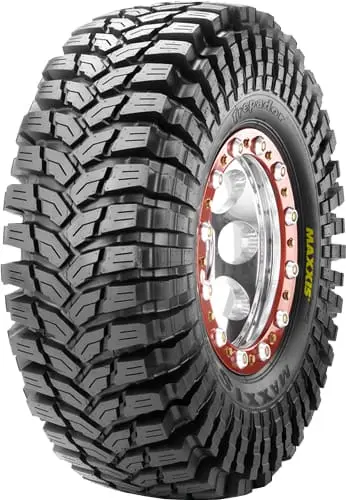
2. Maxxis Trepador: Best for Extreme/Competition Use
Price Check
Check the price of this tire at the following retailers:
For rated trails, competition rock crawling, or rigs where road manners simply don’t matter, this tire is genuinely a weapon.
Radial construction delivers a smoother feel than bias-ply competition tires while still providing competition-level traction from a sticky compound and massive tread lugs. Independently reported testing on wet granite describes this tire outperforming most competitors, with grip that feels genuinely glued to the surface.
The trade-off is real and significant: substantial road noise and faster tread wear on pavement, making this a genuine trail-first tire.
Pros: Genuinely competition-level grip, smoother radial feel than bias-ply alternatives.
Cons: Significant road noise and fast pavement wear, not suitable for daily driving.
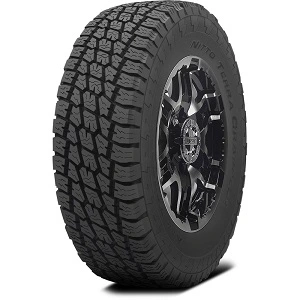
3. Nitto Trail Grappler M/T: Best Dual-Duty (Trail Plus Street)
Price Check
Check the price of this tire at the following retailers:
This tire has earned a genuine, lasting reputation for balancing trail capability with daily drivability, and independently reported testing confirms it.
On rocks, alternating shoulder lugs and deep center voids provide real, impressive grip — not quite at BFGoodrich KM3 levels, but genuinely capable at low pressures on technical terrain.
Where this tire genuinely shines is the drive home. It’s remarkably quiet for a mud-terrain, with ride quality closer to an all-terrain than a typical M/T — a real, meaningful advantage for anyone who daily-drives the rig and hits trails on weekends.
Pros: Genuine balance of trail grip and daily comfort, notably quiet for a mud-terrain, respectable ride quality.
Cons: Rock grip trails the true specialists on the hardest lines.
4. Falken Wildpeak M/T01: Best Budget Pick
Price Check
Check the price of this tire at the following retailers:
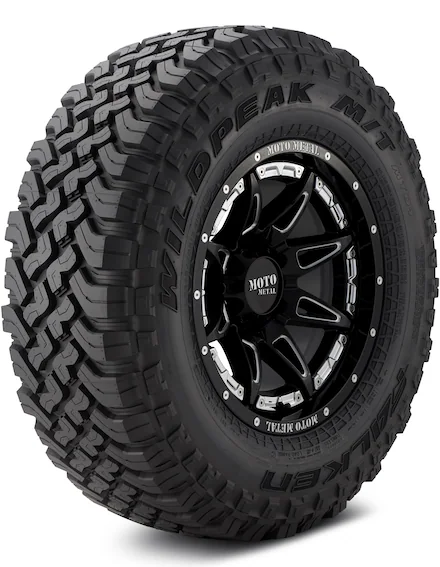
Falken isn’t the first name most people think of for rock crawling, but independently reported testing confirms this tire genuinely earns its spot.
Heat-diffusing technology in the lower sidewall is genuinely effective, with independently reported testing describing noticeably cooler running temperatures than comparable tires after sustained low-speed crawling. The aggressive upper sidewall lugs provide real additional traction when aired down, and 3-ply sidewall construction holds up well against sharp edges.
At a price meaningfully below premium competition, this tire delivers roughly 85% of flagship performance — a genuinely strong value for most weekend warriors.
Pros: Genuine near-premium performance at a meaningfully lower price, effective heat management, solid sidewall construction.
Cons: Doesn’t quite match the outright grip of the top-tier picks.
5. Toyo Open Country M/T: Proven Durability Champion
Price Check
Check the price of this tire at the following retailers:
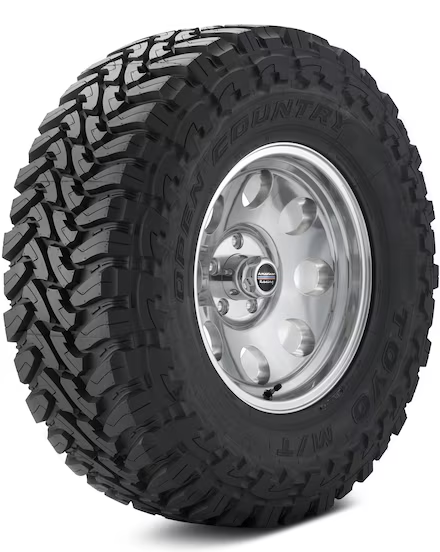
This tire has built a real, lasting reputation for durability, and independently reported testing on genuinely sharp terrain confirms why.
The deep, aggressive tread pattern provides solid rock grip, with hook-shaped tread blocks genuinely effective at maintaining traction on off-camber rock faces. A three-ply polyester carcass with two steel belts creates a sidewall that absorbs serious impacts.
Independently reported testing on sharp volcanic rock describes this tire emerging with minimal damage where competitors picked up cuts and chunks — a real, tested durability advantage.
Pros: Genuine best-in-comparison durability on sharp terrain, solid rock grip, strong sidewall construction.
Cons: Not the stickiest compound available for pure grip.
6. Mickey Thompson Baja Boss M/T: Aggressive Performance
Price Check
Check the price of this tire at the following retailers:
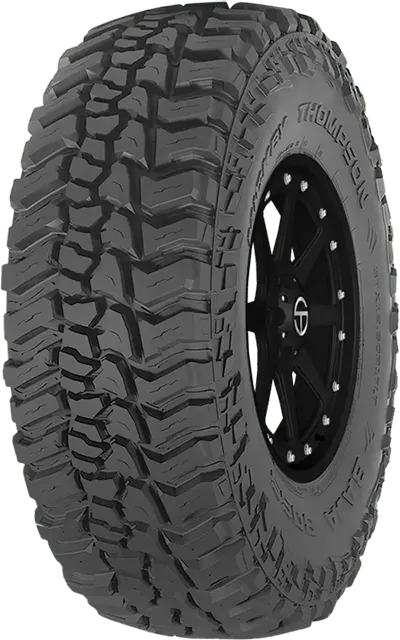
Mickey Thompson’s off-road racing heritage genuinely shows in this tire, and independently reported testing confirms real capability behind the aggressive looks.
PowerPly XD construction with a three-ply sidewall featuring an extra Denier cord layer provides genuine confidence on sharp ledges, and the asymmetric tread pattern delivers multiple biting edges regardless of how the tire contacts the rock surface.
The Sidebiters on the sidewall are a real, functional feature rather than styling — independently reported testing at low pressure describes them actively gripping rock and providing genuine additional traction.
Pros: Genuine sidewall confidence on sharp terrain, functional Sidebiter traction, distinctive aggressive design.
Cons: Premium price, moderate on-road comfort.
7. Goodyear Wrangler MT/R with Kevlar: Bombproof Sidewalls
Price Check
Check the price of this tire at the following retailers:
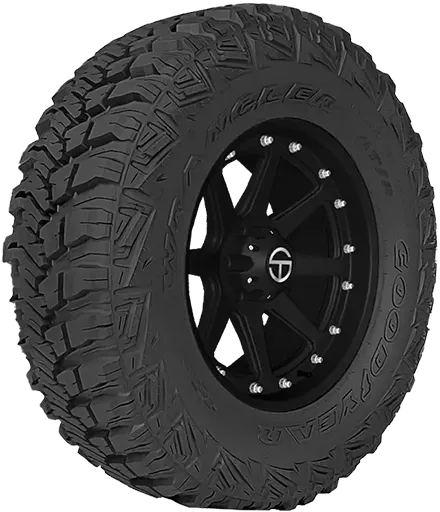
For crawlers specifically prone to cutting sidewalls, this tire’s DuPont Kevlar-reinforced construction is genuinely among the toughest in its class.
Independently reported testing on notoriously sharp trails describes the Kevlar construction holding up flawlessly under lines specifically designed to maximize sidewall stress, with aggregated owner reports consistently confirming the same long-term durability.
Rock traction is genuinely good, if not the stickiest compound in this comparison — the self-cleaning tread design works effectively, and shoulder lugs provide decent aired-down grip.
Pros: Genuine best-in-comparison puncture resistance, effective self-cleaning tread, dependable aired-down grip.
Cons: Compound isn’t the stickiest available for maximum rock grip.
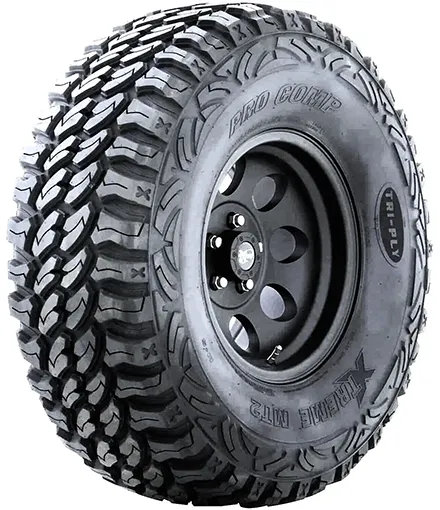
8. Pro Comp Xtreme MT2: Underrated Value
Price Check
Check the price of this tire at the following retailers:
This tire flies genuinely under the radar, and independently reported testing describes it punching well above its price point.
Tri-ply sidewall construction is robust, and extra-deep tread depth — over 20/32″ — means real, significant material between the tube and the rocks. The aggressive lug pattern with wide voids cleans well and grips rock edges effectively.
Price is where this tire genuinely wins — meaningfully below most serious rock crawling options, making it one of the most affordable ways to get real capability. The on-road ride is rougher than some competitors, an honest trade-off for a trail-dedicated rig.
Pros: Genuine value at the price, deep tread for real durability margin, effective rock-edge grip.
Cons: Rougher on-road ride than better-cushioned competitors.
9. Cooper Discoverer STT Pro: Quiet Confidence

Price Check
Check the price of this tire at the following retailers:
Cooper has genuinely built underrated tires for years, and this one continues that pattern with real rock crawling capability that surprises many buyers.
Armor-Tek3 construction creates a durable, chip-resistant compound that handles rocky terrain without chunking. Independently reported testing describes alternating shoulder scoops providing solid aired-down traction, with stone ejector ribs in the tread grooves genuinely keeping rocks from embedding and causing damage.
On-road, this is genuinely one of the quieter mud-terrains available, with ride quality comfortable enough for long highway stretches — a real advantage for overlanders splitting time between pavement and trail.
Pros: Genuine quiet and comfort for a mud-terrain, effective stone ejection, dependable aired-down traction.
Cons: Not the outright grip leader on the hardest technical lines.
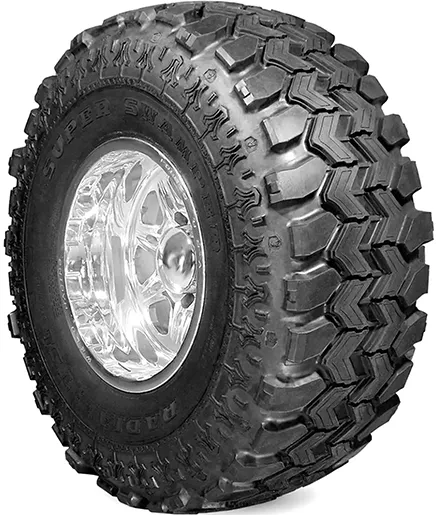
10. Interco Super Swamper: The Old-School Legend
Price Check
Check the price of this tire at the following retailers:
This is genuinely old-school — loud on the road, no question — but on rock, independently reported testing confirms it remains a real force.
Massive, paddle-like lugs wrap around rock edges with genuine authority, and the soft compound grips granite with real tenacity. Independently reported accounts describe Super Swampers on competition rigs walking up rock faces that leave newer, pricier tires struggling.
The trade-off is honest and significant: genuinely poor highway manners, loud, rough-riding, and fast pavement wear. This is a dedicated trail-rig tire, full stop.
Pros: Genuine legendary rock grip, proven decades-long track record.
Cons: Genuinely poor on-road manners, fast pavement wear, loud.
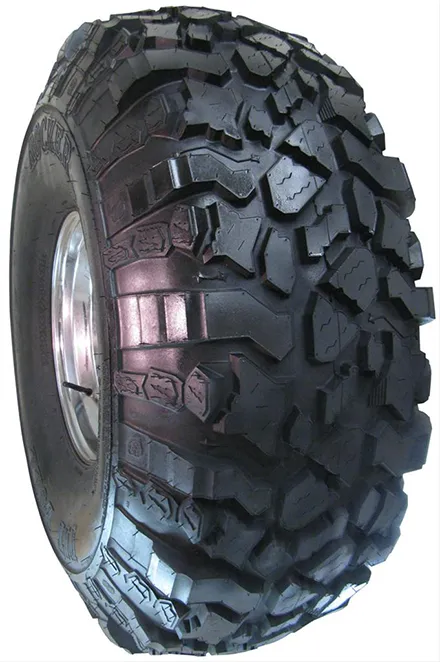
11. Pit Bull Rocker: Best Sticky-Compound Specialist
Price Check
Check the price of this tire at the following retailers:
This is a genuine specialty rock crawling tire with a dedicated following among serious crawlers, and it deserves a real, full entry rather than a passing mention.
Independently reported testing describes an exceptionally sticky compound purpose-built for dry rock and technical ledges, with flexible sidewall construction genuinely designed to conform around obstacles at low pressure rather than merely tolerate them. Real owner reports from competitive and technical trail communities consistently describe this tire among the stickiest options available on dry granite and sandstone.
The trade-off is honest: this is a genuine trail specialist, with on-road comfort and noise firmly secondary to its rock-specific engineering.
Pros: Genuinely exceptional dry-rock grip, real sidewall flexibility purpose-built for technical terrain.
Cons: Limited daily-driving comfort, narrower size availability than mainstream brands.
How to Choose the Right Rock Crawling Tire for Your Rig
Dedicated trail rig versus daily driver. A rig that lives on a trailer and only sees pavement between the truck and the trailhead can go genuinely aggressive — the Maxxis Trepador, Interco Super Swamper, or Pit Bull Rocker deliver maximum rock performance without compromises that matter for that use case. A rig that’s daily-driven to work and hits trails on weekends is better served by the Nitto Trail Grappler or BFGoodrich KM3, both delivering excellent rock capability while staying civilized on the highway.
Typical terrain matters. Smooth, rounded granite — the kind found in Moab — rewards soft, sticky compounds that maximize contact area, favoring the KM3, Trepador, or Pit Bull Rocker. Sharp, fractured rock, like volcanic basalt, demands sidewall strength above all else, favoring the Goodyear MT/R Kevlar or Toyo Open Country M/T.
Budget considerations. Rock crawling tires are a real investment, but the Falken Wildpeak M/T01 and Pro Comp Xtreme MT2 both deliver genuine crawling performance without breaking the budget. A set of four 35″ rock crawling tires typically runs $800–$1,600-plus depending on choice, before mounting, balancing, and potentially new beadlock wheels.
Tire size matters, but bigger isn’t automatically better. A 35″ tire clears most obstacles and is genuinely easier on drivetrain components than a 37″ or 40″. Larger tires provide more ground clearance and a bigger contact patch when aired down, but 35×12.50R17 remains a sensible sweet spot for most Wrangler and 4Runner builds. Heavily built rigs with regeared axles and upgraded drivetrain components can justify stepping up to 37″ or larger.
Essential Rock Crawling Tire Tips
Air down — seriously. This is genuinely the single most important thing for rock crawling traction. Running tires at 8–15 PSI transforms the contact patch, letting the tire conform around rocks instead of bouncing off them. A quality deflator and reliable onboard air system for re-inflating before pavement are genuinely worthwhile investments — running low pressure on the highway overheats and destroys tires.
Consider beadlock wheels. Airing down below 10 PSI risks popping a bead, where the tire separates from the wheel rim. Beadlock wheels mechanically clamp the tire bead to the rim, allowing safe single-digit pressures. For serious rock crawling, this is a genuinely worthwhile investment, typically $250–$400 per wheel.
Rotate and inspect regularly. Rock crawling is genuinely hard on tires. Inspecting each tire after every trail day for cuts, embedded rocks, sidewall damage, and uneven wear catches small problems before they become catastrophic failures. Rotating regularly matters especially for rigs running lockers, which can cause front and rear tires to wear differently.
Carry a repair kit. No tire is immune to rocks winning occasionally. A plug kit, patch kit, portable air compressor, and full-size spare on every trail run are genuinely cheap insurance against an expensive tire failure far from pavement.
Choosing the Right Tire for Your Situation
Most rock crawlers: the BFGoodrich KM3 remains the tire to beat, delivering elite rock grip, outstanding sidewall protection, and acceptable on-road manners.
Budget builds: the Falken Wildpeak M/T01 delivers roughly 85% of premium performance at a meaningfully lower price.
Daily drivers: the Nitto Trail Grappler makes the fewest compromises between trail capability and highway comfort.
Competition and extreme crawling: the Maxxis Trepador or Pit Bull Rocker are purpose-built for the hardest lines, where road manners simply don’t factor into the decision.
Whatever the choice, the right tire is only part of the equation — proper technique, good spotting, and appropriate pressure management make a bigger real-world difference than any single compound or tread pattern.
Frequently Asked Questions
What are the best rock crawling tires for beginners on a budget?
The BFGoodrich KM3 Mud-Terrain and Falken Wildpeak M/T01 are strong starting points, typically running $200–$350 per tire depending on size. Both offer aggressive sidewall protection and excellent rock grip without the premium price of competition-grade tires, and both remain street-legal with reasonable highway manners for the drive to the trailhead.
Are bias-ply or radial tires better for rock crawling?
Bias-ply tires like the Interco Super Swamper are often preferred by serious rock crawlers, since their stiffer sidewalls resist punctures and their construction lets them conform to uneven rock at low pressure. Radial tires offer a smoother highway ride and better heat dissipation on long drives. Dedicated trail rigs generally favor bias-ply; daily-driven rigs that hit rocks on weekends are usually better served by a radial mud-terrain.
What PSI should I run for rock crawling tires on the trail?
Most experienced rock crawlers air down to 4–12 PSI depending on tire size, beadlock usage, and terrain difficulty. Lower pressure improves traction and contact patch, but running below 8 PSI without beadlock wheels risks popping the bead off the rim. A portable air compressor for re-inflating before hitting pavement is genuinely essential, since running low PSI on the highway destroys tires quickly.
How long do rock crawling tires last on the street compared to all-terrain tires?
Rock crawling tires with aggressive, sticky compounds like the Maxxis Trepador or Pit Bull Rocker typically last 20,000–35,000 miles on pavement, meaningfully less than all-terrain tires that can reach 50,000–65,000 miles. The soft compound that provides real rock grip wears down faster on asphalt, especially in hot conditions. Drivers splitting time between trails and daily driving should expect replacement roughly every two years.
What size rock crawling tires should I get for my Jeep Wrangler or Toyota Tacoma?
For a Jeep Wrangler JK or JL, 35×12.50R17 and 37×12.50R17 are the most popular sizes, though 37s usually require a lift kit and fender trimming. For a Toyota Tacoma, most crawlers run 33×12.50R15 or 35×12.50R15 with a 3-inch lift and aftermarket bumpers for clearance. Confirming gear ratio before sizing up is genuinely important, since larger tires meaningfully affect acceleration and fuel economy without a regear.
Do I need beadlock wheels to run rock crawling tires?
Not technically, but they’re genuinely recommended for airing down below 8 PSI on technical rock trails. Beadlocks mechanically clamp the tire bead to the wheel, preventing separation at ultra-low pressures. True beadlock wheels aren’t DOT-approved for street use in most US states, so many drivers use internal beadlock rings or simulated beadlocks as a practical compromise.
What’s the difference between rock crawling tires and mud-terrain tires?
Dedicated rock crawling tires like the Maxxis Trepador and Pit Bull Rocker use a genuinely stickier rubber compound and more flexible sidewalls specifically to grip dry rock and conform to ledges. Standard mud-terrain tires like the Nitto Trail Grappler prioritize self-cleaning tread for loose mud and dirt, using a harder compound that doesn’t grip bare rock as effectively. For terrain like Moab’s granite and sandstone, purpose-built rock crawling tires deliver a genuinely noticeable traction advantage.
