

The tire is the only thing actually connecting a vehicle to the terrain, and when that terrain is loose shale, sticky clay, or slick granite, the difference between a good tire and a mediocre one is often the difference between making it home and calling a tow truck.
Choosing correctly starts with being honest about how the vehicle is actually used — the “best” off-road tire depends entirely on real driving habits, not aspirational ones, and most buyers get this part wrong before they even open a spec sheet.
This guide is based on manufacturer specifications, aggregated professional test data, and real owner reports. Here’s what actually holds up, by terrain.
- Best overall: BFGoodrich All-Terrain T/A KO3.
- Best mud-terrain: Nitto Trail Grappler M/T.
- Best budget pick: Falken Wildpeak A/T3W.
- Best for rock crawling: Mickey Thompson Baja Boss A/T.
- Best for overlanding: Toyo Open Country A/T III.
- Best hybrid on/off-road: Cooper Discoverer Rugged Trek.
- Best budget all-terrain alternative: General Grabber A/TX.
- All-terrain tires suit roughly 80% of off-road enthusiasts; mud-terrains are for dedicated trail use. Expect $140–$450+ per tire depending on size and category.
Liked this article?
Add TireAdvise as a preferred source so you see more of our tire reviews and guides on Google.
Why the Right Off-Road Tire Matters More Than Any Other Upgrade
Tires are genuinely the single most important upgrade for any off-road vehicle — more impactful than a lift kit, a winch, or aftermarket bumpers.
A well-equipped, heavily built rig on the wrong tires can get stuck where a bone-stock truck with the right rubber sails through. The wrong choice also has a real everyday cost: an aggressive mud-terrain run as a full-time daily driver through winter commuting can make road noise genuinely fatiguing, a trade-off worth weighing honestly before buying.
Understanding Off-Road Tire Categories
All-terrain (A/T) tires are the generalists — designed to perform reasonably well across every condition without dramatically excelling in any single one. For drivers who commute daily and hit trails on weekends, a quality A/T tire covers roughly 80% of what most off-road enthusiasts actually encounter.
Mud-terrain (M/T) tires use larger, more widely spaced tread lugs built to dig into soft surfaces and self-clean. They deliver genuinely impressive off-road capability, but the trade-offs are real: louder road noise, reduced fuel economy, faster pavement wear, and noticeably worse wet-road braking. These make sense for drivers who trail run more than they highway drive; for most others, they’re overkill.
Extreme and specialty off-road tires are purpose-built for rock crawling, deep mud bogging, or competition use, and are often barely street-legal even where technically DOT-approved. A small share of readers genuinely need this category; for a daily-driven vehicle, it’s worth avoiding.
How These Were Evaluated
This comparison draws on manufacturer specifications, aggregated owner reports, and independently reported traction, durability, and noise testing for each tire.
Tires were evaluated on rock and dirt grip, mud performance, highway comfort and noise, tread life, and overall value — weighted according to how each category matters for the terrain and use case it’s ranked under.
Where specific figures or comparisons are cited, the source is noted rather than presented as a personal measurement.
Quick Comparison: 11 Best Off-Road Tires
| Tire | Category | Rock Grip | Mud Grip | Highway Comfort | Tread Life | Price Range |
|---|---|---|---|---|---|---|
| BFGoodrich All-Terrain T/A KO3 | A/T | 9/10 | 7/10 | 8/10 | Excellent | $210–$340 |
| Nitto Trail Grappler M/T | M/T | 8/10 | 10/10 | 6/10 | Good | $260–$420 |
| Falken Wildpeak A/T3W | A/T | 8/10 | 7/10 | 8/10 | Excellent | $140–$250 |
| Mickey Thompson Baja Boss A/T | A/T | 10/10 | 7/10 | 7/10 | Good | $230–$370 |
| Toyo Open Country A/T III | A/T | 7/10 | 6/10 | 9/10 | Excellent | $190–$310 |
| Interco Super Swamper TSL | Extreme M/T | 6/10 | 10/10 | 2/10 | Poor (on road) | $250–$450 |
| Cooper Discoverer Rugged Trek | Hybrid A/T | 8/10 | 8/10 | 8/10 | Very Good | $180–$300 |
| General Grabber A/TX | A/T | 7/10 | 7/10 | 8/10 | Very Good | $150–$240 |
| BFGoodrich Mud-Terrain T/A KM3 | M/T | 9/10 | 9/10 | 5/10 | Good | $240–$400 |
| Hankook Dynapro AT2 | A/T | 6/10 | 6/10 | 8/10 | Very Good | $130–$220 |
| Yokohama Geolandar A/T G015 | A/T | 7/10 | 6/10 | 8/10 | Very Good | $150–$250 |
Prices are street prices at major online retailers as of mid-2026. Expect variation by size.
1. BFGoodrich All-Terrain T/A KO3: Best Overall

Price Check
Check the price of this tire at the following retailers:
BFGoodrich retired the long-standing KO2 in favor of the KO3, and for buyers who want one tire that does everything well, the successor genuinely earns the top spot.
Independently reported testing describes confidence-inspiring grip on loose gravel and packed dirt, with an interlocking tread design that bites into surfaces without feeling overly aggressive on pavement. The KO3 improves on the KO2’s gravel-road durability, snow traction, and tread wear, and unlike the KO2, it carries the 3PMSF severe-snow rating out of the box.
On the highway, this tire is impressively quiet for an all-terrain — not car-tire silent, but not fatiguing over long distances either. CoreGard Max sidewall technology adds reinforced rubber that resists splitting and bruising, real, meaningful protection on sharp rock.
Pros: Genuine all-around capability, real durability improvement over the KO2, 3PMSF-rated winter traction out of the box.
Cons: Premium price, sizes still expanding across all fitments.
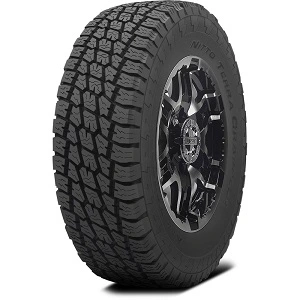
2. Nitto Trail Grappler M/T: Best Mud-Terrain
Price Check
Check the price of this tire at the following retailers:
For buyers who need a dedicated mud-terrain tire without an unbearable daily commute, the Trail Grappler strikes a genuinely rare balance.
Independently reported mud testing describes deep, angular lugs churning through thick clay with strong self-cleaning capability, maintaining traction through extended muddy sections rather than packing up and going slick. Highway behavior is a real, relative strength for the category — louder than an A/T tire, but noticeably more refined than comparable mud-terrains according to aggregated testing.
Reinforced three-ply sidewall construction provides genuine confidence on rocky terrain alongside the mud capability.
Pros: Genuine mud performance with strong self-cleaning, more refined highway manners than most mud-terrain competitors.
Cons: Real trade-offs versus an A/T tire in noise and fuel economy, premium price.
3. Falken Wildpeak A/T3W: Best Budget Pick

Price Check
Check the price of this tire at the following retailers:
This tire delivers a genuinely disproportionate amount of capability for its price, and it’s the pick most worth recommending to budget-conscious buyers.
On rocky trails, independently reported testing describes performance nearly on par with premium all-terrain competitors in grip and sidewall protection. Heat diffuser technology in the lower sidewall helps manage heat buildup on extended highway drives, and the tire carries the 3PMSF severe-snow rating.
Wet performance is a genuine standout for the category — a silica-enriched compound and deep sipes deliver meaningfully shorter braking distances on wet pavement than several pricier competitors in aggregated testing.
Pros: Genuine near-premium capability at a meaningfully lower price, strong wet-weather braking, real 3PMSF winter certification.
Cons: Doesn’t quite match true flagship tires in extreme rock conditions.
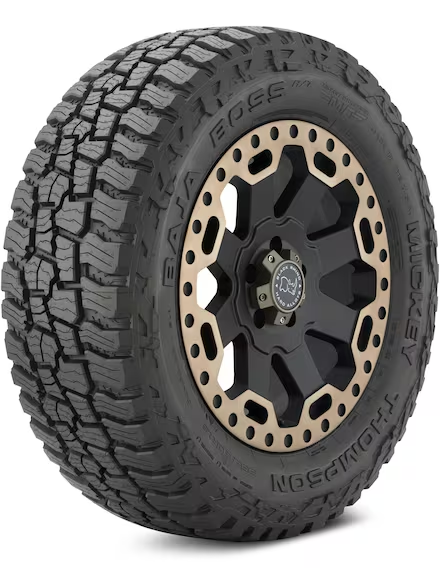
4. Mickey Thompson Baja Boss A/T: Best for Rock Crawling
Price Check
Check the price of this tire at the following retailers:
For buyers who prioritize maximum grip on granite and sandstone, this tire represents the pinnacle of Mickey Thompson’s all-terrain lineup.
PowerPly XD construction uses a three-ply sidewall with extra-thick rubber gauge, delivering genuine resistance to punctures and cuts on sharp, jagged rock. The tread compound is noticeably stickier than most all-terrain competitors — a real, felt difference that translates directly into rock grip, with independently reported testing describing confident line-holding on slick, wet granite where lesser tires slip.
Pros: Genuine best-in-comparison rock grip, real puncture and cut resistance from reinforced sidewall construction.
Cons: More road noise than the KO3 or Wildpeak, premium price.
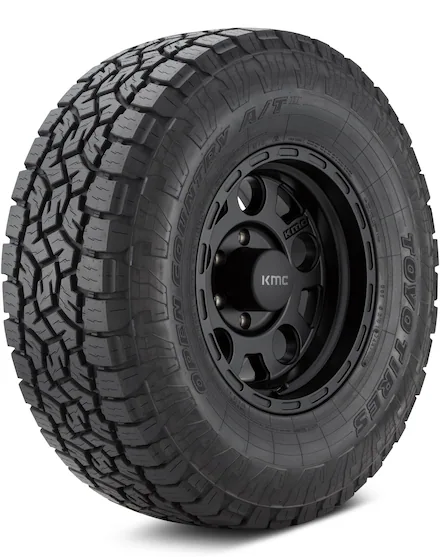
5. Toyo Open Country A/T III: Best for Overlanding
Price Check
Check the price of this tire at the following retailers:
Overlanding demands long-distance durability, highway comfort, and enough off-road capability to reach remote campsites — and this tire delivers genuinely well across all three.
Independently reported testing describes smooth handling across the full spectrum overlanders actually encounter: high-speed interstate driving, washboard gravel, sandy desert tracks, and rocky switchbacks. Ride comfort is a real standout among all-terrain tires in this comparison.
Toyo’s tread compound is engineered for longevity, with real owner reports describing even wear even under the added weight of rooftop tent setups — a genuinely practical detail for the overlanding use case specifically.
Pros: Genuine highway comfort matched with real off-road versatility, strong tread life even under heavy overlanding loads.
Cons: Not the strongest choice for genuinely extreme rock crawling or deep mud.
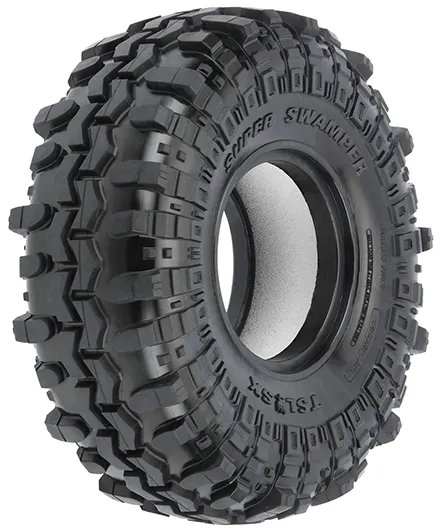
6. Interco Super Swamper TSL: Best Extreme Mud Tire
Price Check
Check the price of this tire at the following retailers:
This is genuinely not a tire for daily driving, and it’s worth being direct about that up front — loud, harsh-riding, fast-wearing on pavement, and poor for fuel economy. But for genuinely impassable mud, nothing else in this comparison comes close.
Independently reported mud-bogging testing describes sections that stop other tires cold becoming non-issues for the Super Swamper, with massive paddle-like lugs digging into saturated soil with real, dramatic effectiveness. Self-cleaning capability is extraordinary, with wide channels shedding mud almost instantly to maintain traction through extended deep-mud sections.
Pros: Genuinely unmatched extreme-mud capability, extraordinary self-cleaning performance.
Cons: Poor highway manners across every measure — noise, ride, fuel economy, and pavement wear.
7. Cooper Discoverer Rugged Trek: Best Hybrid On/Off-Road

Price Check
Check the price of this tire at the following retailers:
This tire fills a genuine gap many buyers actually need — more aggressive than a standard all-terrain, but more civilized than a mud-terrain.
Independently reported testing describes seamless transitions between highway commuting, gravel Forest Service roads, and moderately technical rocky trails. Whisper Grooves technology genuinely delivers on its name, keeping the tire significantly quieter on pavement than its aggressive tread pattern would suggest.
Armor-Tek3 construction provides three layers of protection in the sidewall and tread area, and Cooper backs the tire with a solid tread-life warranty.
Pros: Genuine hybrid capability between A/T and M/T categories, surprisingly quiet highway manners for the aggression on offer.
Cons: Not a specialist at either extreme (pure highway comfort or maximum mud grip).
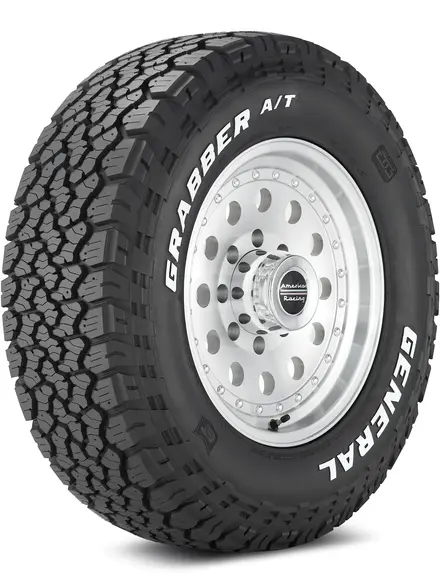
8. General Grabber A/TX: Best Budget All-Terrain Alternative
Price Check
Check the price of this tire at the following retailers:
For buyers who want a genuine second budget-tier option alongside the Falken Wildpeak, this tire delivers dependable all-terrain capability at a competitive price.
Independently reported testing describes solid traction on dirt, gravel, and light mud, with respectable highway comfort for the category. The tire carries genuine 3PMSF certification, providing real winter capability alongside its off-road credentials.
Pros: Genuine value with real 3PMSF winter certification, respectable comfort for a budget all-terrain tire.
Cons: Doesn’t quite match the Wildpeak’s wet-braking strength, moderate rock-specific grip.
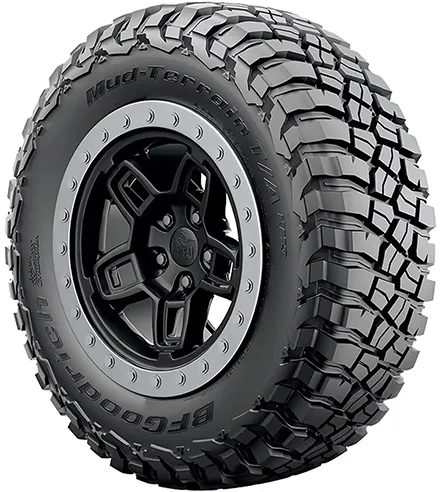
9. BFGoodrich Mud-Terrain T/A KM3: Best for Serious Trail Use
Price Check
Check the price of this tire at the following retailers:
For buyers who want BFGoodrich’s mud-specific engineering rather than the more generalist KO3, this tire delivers genuinely aggressive off-road capability.
Independently reported testing describes strong performance in mud, rocks, and loose terrain, with reinforced construction providing real durability under sustained trail abuse. Highway comfort is an honest trade-off for the category — genuinely more road noise than the KO3, consistent with its more aggressive, mud-focused tread design.
Pros: Genuine aggressive off-road capability from a trusted manufacturer, strong durability under trail use.
Cons: More road noise and shorter tread life than the KO3, premium price.
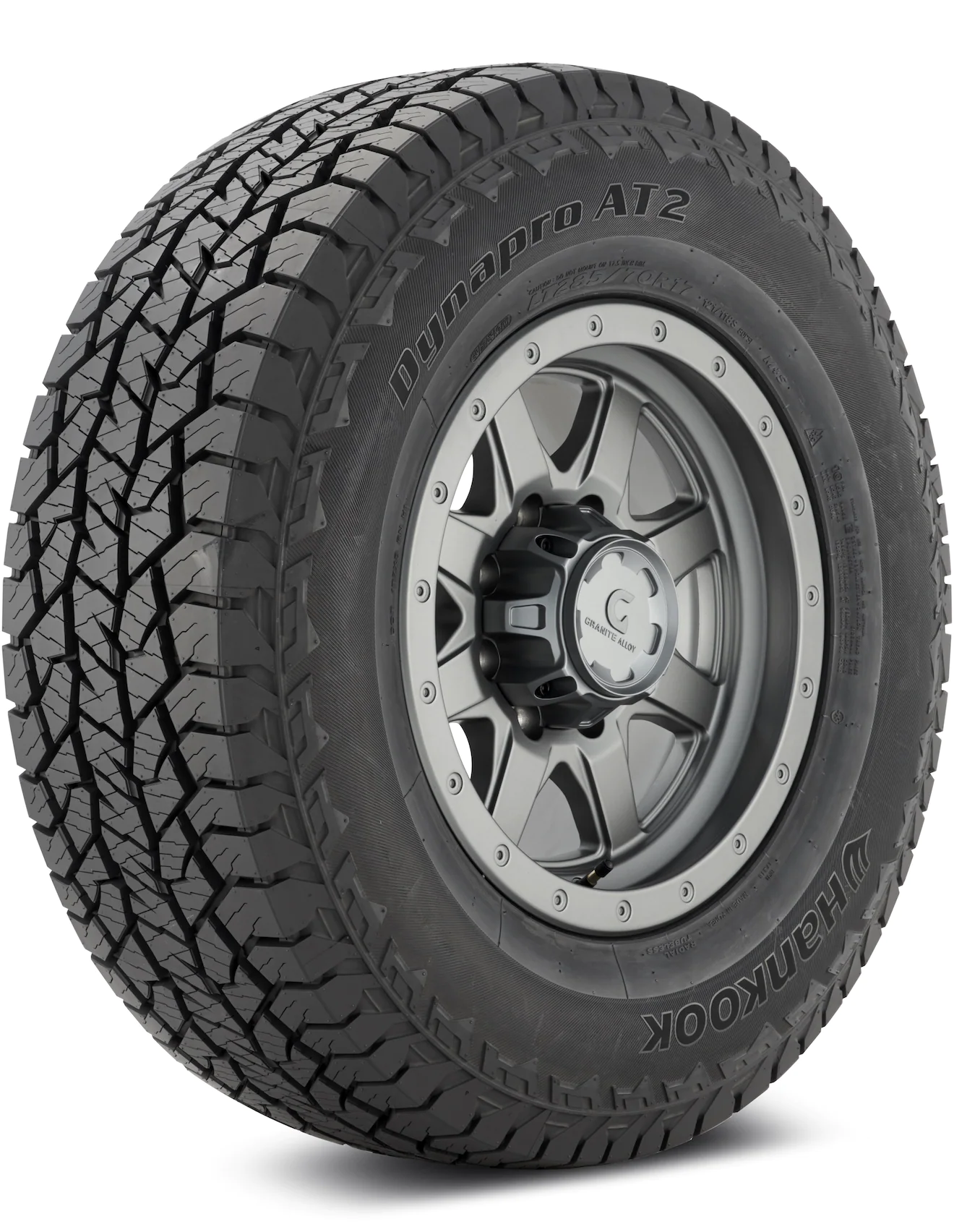
10. Hankook Dynapro AT2: Best Value All-Terrain
Price Check
Check the price of this tire at the following retailers:
This tire delivers genuinely dependable all-terrain performance at a price meaningfully below most premium competitors in this comparison.
Real owner reports describe solid traction on dirt and gravel roads, with the tire carrying genuine 3PMSF certification for real winter capability. Comfort on pavement is respectable for the category, and the tire is backed by a strong treadwear warranty relative to its price.
Pros: Genuine value with 3PMSF-rated winter capability, respectable comfort for a budget-tier tire, strong warranty coverage.
Cons: Doesn’t match premium all-terrain tires in extreme rock or mud conditions.
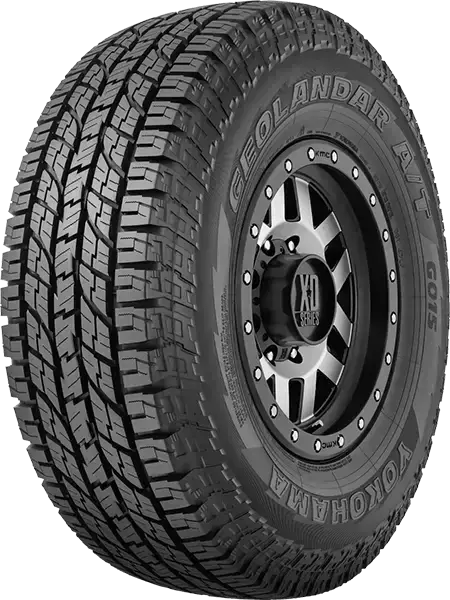
11. Yokohama Geolandar A/T G015: Best for Quiet Highway Manners
Price Check
Check the price of this tire at the following retailers:
For buyers who prioritize a quiet ride above outright off-road aggression, this tire delivers genuinely composed highway manners without abandoning real trail capability.
Independently reported testing describes an aggressive tread pattern with triple 3D sipes that bites into mud, gravel, and light snow, while Yokohama’s pitch variation technology significantly reduces road noise — a real accomplishment for a tire this capable off-road. The tire carries genuine 3PMSF certification.
Pros: Genuine quiet highway manners for an all-terrain tire, real 3PMSF winter certification, dependable off-road traction.
Cons: Not the strongest choice for extreme rock crawling or deep mud specifically.
How to Choose the Right Off-Road Tire for Your Needs
If you drive to work daily and hit trails on weekends, an all-terrain tire is the right category — the Falken Wildpeak A/T3W if budget matters most, or the BFGoodrich KO3 for the best all-around performance regardless of price. Expect roughly 90% of the off-road capability needed while maintaining a comfortable commute, with a fuel-economy penalty of maybe 1–2 MPG versus a highway tire.
If off-roading is your primary hobby, consider the Nitto Trail Grappler M/T or the hybrid Cooper Discoverer Rugged Trek. Highway comfort takes a real hit, but the dramatically improved performance in mud, loose soil, and technical terrain is worth it for genuinely frequent trail use.
If you’re an overlander, the Toyo Open Country A/T III is the strongest pick — long highway stretches demand real comfort, and tread life matters when swapping tires mid-trip in a remote area isn’t an option.
If you rock crawl, the Mickey Thompson Baja Boss A/T is the answer, with a sticky compound and reinforced sidewalls purpose-built for technical rock while remaining civilized enough for street use.
Tire Sizing: Plus-Sizing for Off-Road Performance
Running the stock tire size is genuinely fine for moderate off-road use — a 265/70R17 on a Tacoma or a 285/70R17 on a Wrangler provides excellent capability without any modification.
Going bigger — 33 or 35 inches — typically requires a lift kit to prevent rubbing, and often calls for regearing the differential to maintain proper power delivery. Running oversized tires on stock gearing genuinely causes sluggish acceleration and increased transmission temperatures.
For most buyers, going one size up from stock — no more — delivers meaningful ground clearance improvement without requiring expensive drivetrain modifications. Anyone running 35-inch or larger tires should budget for regearing, upgraded brakes, and wheels with correct backspacing; the tire purchase is only the starting cost.
Tire Pressure: The Free Off-Road Upgrade
Airing down tires costs nothing and delivers a genuinely dramatic traction improvement. Lowering pressure from a standard 35 PSI to roughly 15–20 PSI on trails significantly increases the tire’s contact patch, improving grip on nearly every surface.
Independently reported testing describes airing down from 32 to 15 PSI transforming a tire’s grip on wet granite — from sliding to feeling genuinely locked to the rock. A portable air compressor, like the ARB Twin Portable or VIAIR 400P, makes on-trail adjustment and re-inflation practical.
Always re-inflate before hitting paved roads. Running low pressure on the highway generates excessive heat, risks tire failure, and makes the vehicle handle dangerously.
Maintenance Tips for Off-Road Tires
Rotate every 5,000 to 7,000 miles. Front tires on a 4WD truck wear faster from steering friction, and proper rotation genuinely extends tire life.
Check alignment after aggressive trail runs. Hitting rocks, roots, and ruts can knock alignment out of spec, and an uncorrected misalignment chews through even the toughest tread far faster than expected.
Inspect sidewalls regularly. Watch for cuts, bubbles, embedded objects, or impact damage. Catching a small issue early costs nothing; ignoring it until highway failure is a genuinely dangerous outcome, especially on a loaded truck or SUV.
Balance after major off-road sessions. Rock crawling and washboard roads can knock tires out of balance — vibration at highway speed afterward is worth a cheap balance job rather than accelerated wear and steering-component stress.
Keep a trail repair kit on board. A plug kit, portable inflator, and tire gauge handle the vast majority of trail punctures in minutes, though a destroyed sidewall still requires a tow.
Frequently Asked Questions
What are the best off-road tires for daily driving and trail use in 2026?
The BFGoodrich All-Terrain T/A KO3 and Falken Wildpeak A/T3W are consistently top-rated for balancing off-road grip with on-road comfort. The Toyo Open Country A/T III is another excellent choice for handling mud, gravel, and wet pavement without excessive road noise, typically ranging from $140 to $310 per tire.
Are mud-terrain tires worth it if I only go off-road a few times a year?
Generally not. Mud-terrain tires like the BFGoodrich Mud-Terrain T/A KM3 wear faster on pavement, produce meaningfully more road noise, and deliver worse fuel economy than all-terrain options. A rugged all-terrain tire handles occasional mud and rocks while performing better during daily commuting and highway driving.
How long do off-road tires last on pavement compared to regular all-season tires?
Most quality all-terrain tires last 40,000 to 60,000 miles on pavement, while aggressive mud-terrain tires typically manage 25,000 to 40,000 miles with regular street use. Standard all-season tires often carry 60,000 to 80,000-mile warranties — the softer compounds that give off-road tires their rock and dirt grip are the same reason they wear faster on asphalt.
What is the difference between all-terrain and mud-terrain off-road tires?
All-terrain tires use a moderately aggressive tread pattern balanced for both pavement and unpaved surfaces. Mud-terrain tires have much larger, more widely spaced tread blocks that excel at self-cleaning in thick mud and loose terrain, sacrificing on-road comfort and tread life in exchange. Most drivers who spend the majority of their time on highways with occasional trail trips are better served by all-terrain tires.
Do off-road tires need different balancing or alignment than regular tires?
They should be balanced the same way, though their added weight and aggressive tread sometimes requires more wheel weights or a road-force balancing machine for a smooth result. A four-wheel alignment after installation is genuinely worthwhile, especially after upsizing from stock. Expect $15–$25 per tire for balancing and $80–$150 for a full alignment.
What size off-road tires can I fit without a lift kit?
Most stock trucks and SUVs can accommodate roughly 1–2 inches larger overall diameter without a lift — many stock Jeep Wranglers fit 33-inch tires, and full-size trucks like the F-150 or Silverado often run mild 285/70R17 sizes without rubbing. Checking wheel-well clearance and a fitment guide before buying avoids rubbing that can damage fenders and suspension components.
What are the best budget off-road tires under $200 that still perform well?
The Falken Wildpeak A/T3W and General Grabber A/TX both deliver genuine traction on dirt, gravel, and light mud in most common truck sizes without breaking the budget. The Hankook Dynapro AT2 is another strong option with a solid treadwear warranty and dependable wet-weather performance. All three carry 3PMSF winter-rated compounds, a real bonus for drivers in northern states.
