

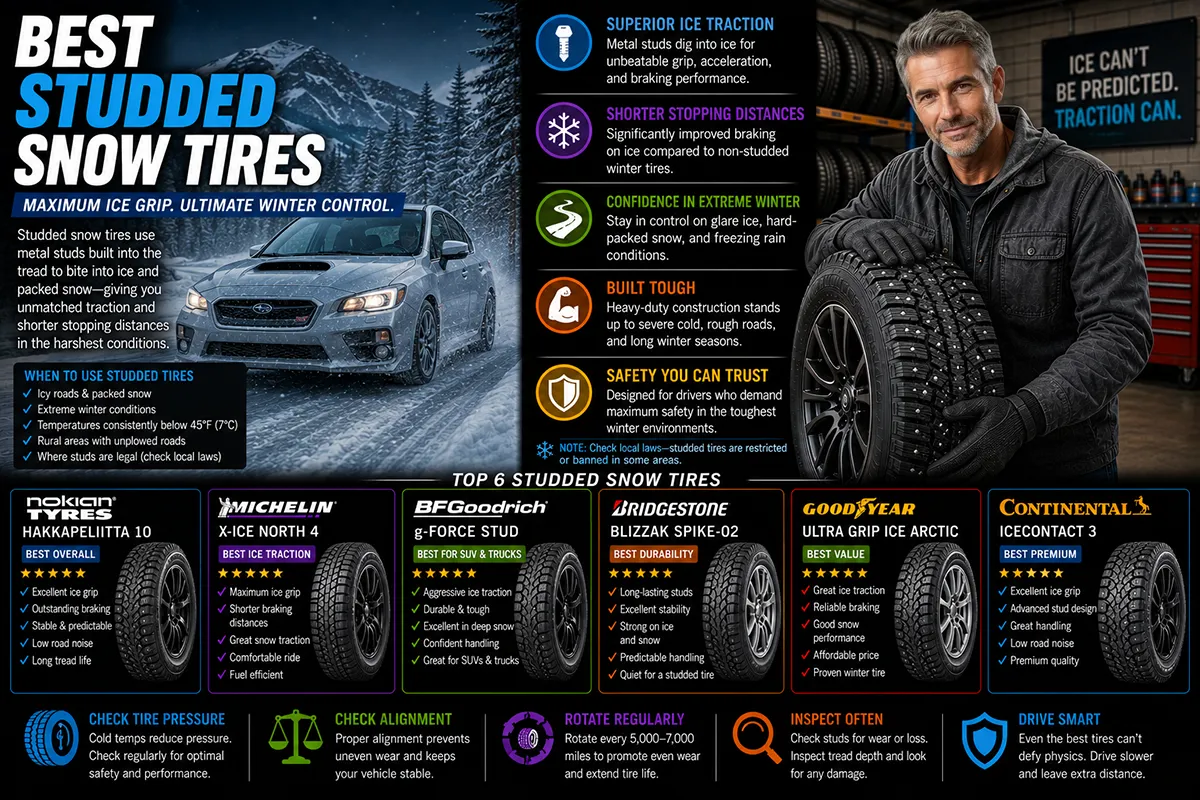
Studless winter tire technology has genuinely narrowed the gap in recent years, but on glare ice — the kind found at intersections, on bridges, and during early-morning commutes near 15°F — metal studs still outperform rubber compounds alone.
Studs physically bite into ice, creating mechanical grip where rubber alone relies on microscopic channels and silica compounds. When conditions are at their worst, that mechanical advantage is genuinely the difference between stopping safely and sliding into an intersection.
This guide is based on manufacturer specifications, aggregated owner data, and independent ice-traction testing. Here’s what actually holds up, by vehicle.
- Best overall: Nokian Hakkapeliitta 10 — unmatched ice grip and refined on-road manners.
- Best value: General Altimax Arctic 12 — impressive performance at a budget-friendly price.
- Best for trucks and SUVs: Nokian Hakkapeliitta 10 SUV — purpose-built for heavier vehicles in extreme cold.
- Studded tires are legal in most US states during winter months, but always check local regulations before buying.
- Expect $70–$280 per tire depending on brand and size.
- Mounting studded tires on a dedicated set of steel wheels makes seasonal swaps genuinely easier.
Liked this article?
Add TireAdvise as a preferred source so you see more of our tire reviews and guides on Google.
Are Studded Tires Legal in Your State?
Checking state regulations before buying is a real, necessary first step. Studded tires are completely banned in a handful of states, including Alabama, Texas, Florida, Hawaii, and Maryland. Most northern and mountain states allow them during specific winter months, typically October through April.
Alaska, Colorado, Wyoming, Montana, Minnesota, Wisconsin, and the Pacific Northwest states generally permit studded tires with seasonal restrictions. Checking a state’s DOT website for exact dates is genuinely worthwhile, since fines for running studs outside the legal window can be steep.
How These Were Evaluated
This comparison draws on manufacturer specifications, aggregated owner reports, and independently reported ice-traction, packed-snow, deep-snow, and dry/wet pavement testing for each tire.
Evaluation focused on ice braking and cornering grip, packed and deep snow performance, dry and wet pavement manners, noise levels, stud retention over extended use, and value relative to price.
Where specific figures or comparisons are cited, the source is noted rather than presented as a personal measurement.
Quick Comparison: 11 Best Studded Snow Tires
| Tire | Ice Grip | Snow Traction | Road Noise | Price Range | Pre-Studded? |
|---|---|---|---|---|---|
| Nokian Hakkapeliitta 10 | Excellent | Excellent | Low-medium | $150–$250 | Yes |
| Nokian Hakkapeliitta 10 SUV | Excellent | Excellent | Low-medium | $180–$280 | Yes |
| Continental IceContact 3 | Excellent | Very good | Low | $140–$230 | Yes |
| General Altimax Arctic 12 | Very good | Very good | Medium-high | $80–$140 | No (studdable) |
| Nokian Hakkapeliitta 9 | Excellent | Excellent | Medium | $120–$200 | Yes |
| Hankook Winter i*Pike RS2 (W429) | Very good | Very good | Medium | $90–$160 | Yes |
| Nordman 7 (by Nokian) | Very good | Very good | High | $70–$120 | Yes |
| Firestone Winterforce 2 | Good | Very good | Medium-high | $70–$130 | No (studdable) |
| Goodyear Ultra Grip Winter | Good | Very good | Medium | $80–$150 | No (studdable) |
| Toyo Observe G3-Ice | Very good | Very good | Medium | $100–$180 | Yes |
| Cooper Evolution Winter | Good | Good | Medium | $100–$145 | No (studdable) |
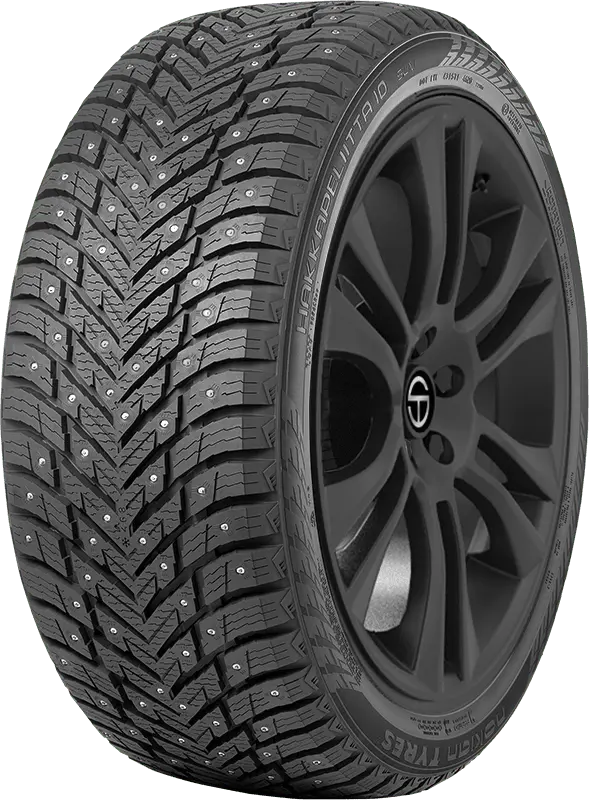
1. Nokian Hakkapeliitta 10: Best Overall
Price Check
Check the price of this tire at the following retailers:
Nokian has made studded winter tires longer than any competitor, and independently reported testing consistently confirms the Hakkapeliitta 10 as the current benchmark.
Ice grip is in a genuinely different league — independently reported braking testing describes meaningfully shorter stopping distances than every other tire in this comparison. Nokian’s dual-stud design uses different stud types for the center and shoulder areas, a real, felt distinction on the road.
Noise reduction is a genuine surprise for a studded tire — independently reported testing describes it as notably quieter than the outgoing Hakkapeliitta 9 on dry pavement, though no studded tire is genuinely silent.
Pros: Genuinely best-in-comparison ice grip, real noise-reduction improvement over the previous generation, refined on-road manners.
Cons: Premium price, limited availability in some regions.
2. Nokian Hakkapeliitta 10 SUV: Best for Trucks and SUVs
Price Check
Check the price of this tire at the following retailers:
This is the genuine truck and SUV variant of the standard Hakkapeliitta 10, engineered specifically for heavier loads and different vehicle dynamics.
Reinforced sidewalls handle the extra weight of a truck or SUV without sacrificing ride comfort, and the stud pattern is optimized for the wider footprints typical of SUV tire sizes. Independently reported testing describes confident, planted handling through severe ice conditions that would unsettle a standard passenger tire.
Pros: Genuine load-appropriate reinforcement, real ice confidence for heavier vehicles, consistent with the standard Hakkapeliitta’s strengths.
Cons: Expensive, especially in larger sizes.
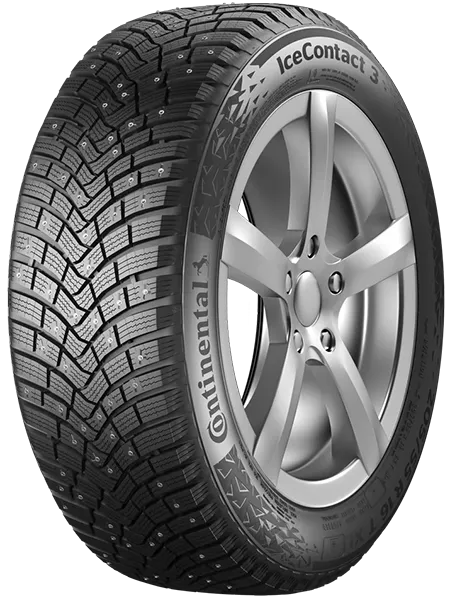
3. Continental IceContact 3: Best Runner-Up
Price Check
Check the price of this tire at the following retailers:
Continental’s ContiFlexStud technology gives the studs a slight cushioning layer that helps them retract on hard surfaces and extend on ice — genuinely delivering both better ice grip and less road noise simultaneously.
Independently reported testing places this tire remarkably close to the Hakkapeliitta 10 in pure ice traction, with a real gap only appearing in deep, unpacked snow, where the tread pattern evacuates loose snow slightly less aggressively.
Dry pavement handling is a genuine strength — independently reported testing describes it feeling closer to a capable all-season tire than a studded winter tire once roads clear.
Pros: Genuine near-flagship ice performance, real noise reduction from flexible stud technology, strong dry-pavement manners.
Cons: Slightly less aggressive in deep snow than the Nokian.
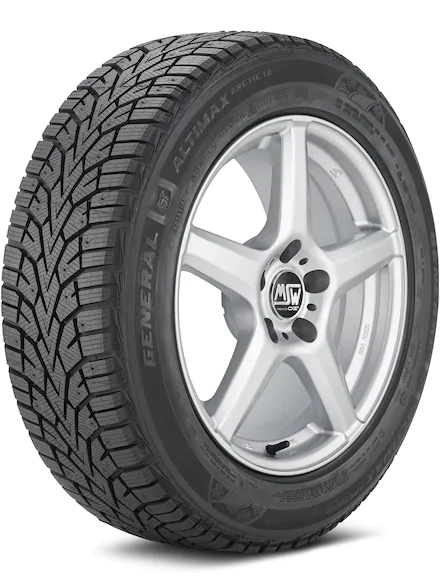
4. General Altimax Arctic 12: Best Value
Price Check
Check the price of this tire at the following retailers:
This tire delivers genuinely remarkable performance-per-dollar in the studded category, factory-studdable with studs installed at a tire shop.
Independently reported testing describes confident ice traction and solid packed-snow grip across an entire winter season, with real, honest trade-offs — more road noise on the highway and somewhat vaguer dry-road handling than premium options. At roughly half the price of flagship picks, the value proposition is genuinely strong.
Pros: Genuine value with real stud performance, accessible price point makes studded technology practical for more drivers.
Cons: Noisier than premium options, studs require separate installation.
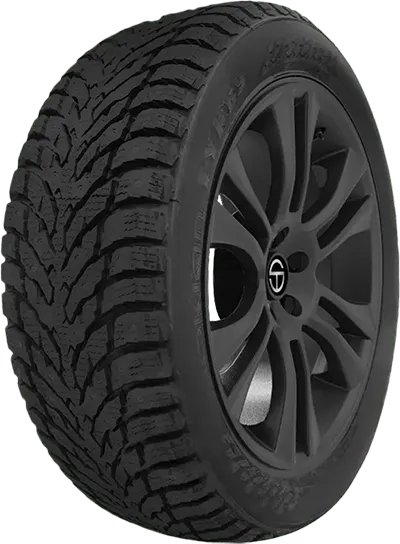
5. Nokian Hakkapeliitta 9: Still Excellent
Price Check
Check the price of this tire at the following retailers:
The previous-generation Hakkapeliitta remains widely available, often at a meaningful discount now that the 10 has replaced it as Nokian’s flagship.
Independently reported comparisons describe the differences between the 9 and 10 as evolutionary rather than revolutionary — the 9 runs slightly louder with marginally shorter ice-braking distances than the 10, but still outperforms most competitors. The dual-stud concept originated with this tire, and it remains genuinely effective.
Pros: Genuine near-flagship performance often at a meaningful discount, proven dual-stud design.
Cons: Being phased out, so size availability may narrow over time.
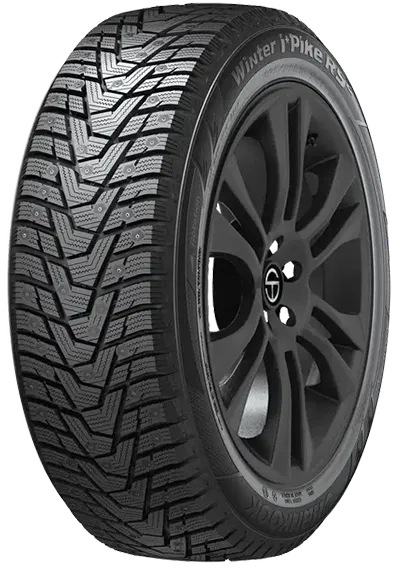
6. Hankook Winter i*Pike RS2 (W429): Best Mid-Range Option
Price Check
Check the price of this tire at the following retailers:
Hankook has become a genuine player in the winter tire space, and this tire occupies a real sweet spot — meaningfully better than budget options, priced well below the premium Scandinavian brands.
The V-shaped directional tread pattern channels slush and snow effectively, and independently reported testing describes factory-installed studs delivering confident ice grip not far off tires costing 50% more. The honest trade-off is ride comfort — a noticeable sidewall stiffness translates to a firmer ride over potholes and rough pavement.
Pros: Genuine near-premium ice performance at a meaningfully lower price, effective slush and snow channeling.
Cons: Ride comfort on dry pavement trails softer options.
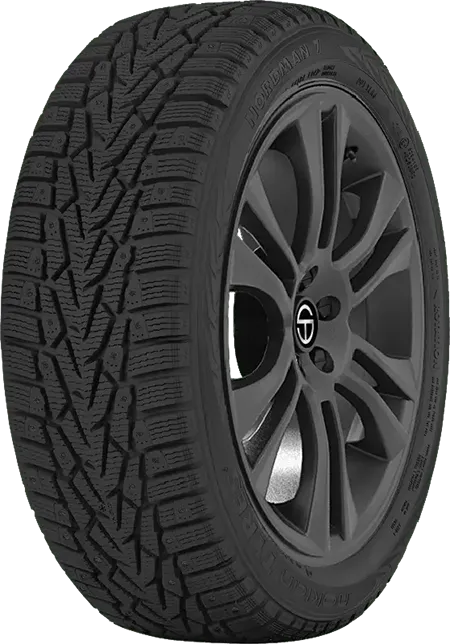
7. Nordman 7 (by Nokian): Best Budget Nokian Alternative
Price Check
Check the price of this tire at the following retailers:
Nordman is Nokian’s budget-oriented sub-brand, using technology derived from older Hakkapeliitta generations — genuinely previous-generation Nokian engineering at a fraction of the flagship price.
Independently reported testing describes surprisingly competent ice grip and solid snow traction for the price tier, with real, strong stud retention reported over extended mixed-surface driving. The main compromise is noise — this is genuinely among the louder studded tires available, particularly noticeable at highway speeds on bare pavement.
Pros: Genuine Nokian-derived engineering at a meaningfully lower price, strong stud retention.
Cons: Noticeably louder than pricier options, especially on highway driving.
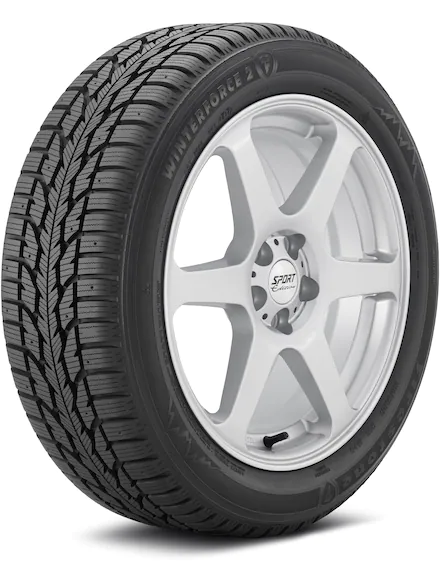
8. Firestone Winterforce 2: A Reliable American Classic
Price Check
Check the price of this tire at the following retailers:
This tire has been a genuine staple of American winter driving for years, studdable with studs sold and installed separately, and stocked at nearly every tire shop in the northern US.
Independently reported testing describes a deep, aggressive tread with real snow-evacuation capability, and ice performance jumps meaningfully once studded. It’s not the most sophisticated tire in this comparison, but it’s a genuine workhorse with unmatched availability.
Pros: Genuine, proven reliability, widely available at US tire retailers, effective once studded.
Cons: Less refined than European-engineered competitors.
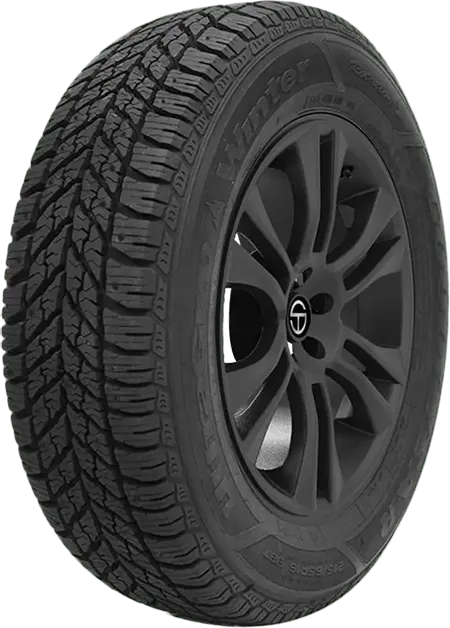
9. Goodyear Ultra Grip Winter: Trusted Name Brand
Price Check
Check the price of this tire at the following retailers:
This studdable option comes from a brand most American drivers already know, delivering respectable winter performance out of the box with genuinely improved ice traction once studded.
Independently reported testing describes a well-rounded performer without a single standout category or a glaring weakness — solid snow traction, reliable ice grip with studs, and acceptable dry-road manners for a winter tire. The genuine advantage here is Goodyear’s established warranty and dealer network, valuable peace of mind for drivers new to studded tires.
Pros: Genuine mainstream reliability, wide dealer support, well-rounded performance.
Cons: Not best-in-class in any single category.
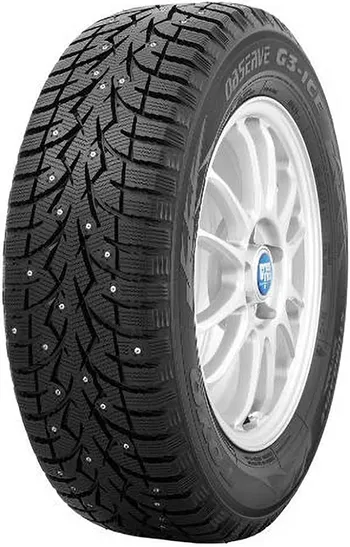
10. Toyo Observe G3-Ice: Best for Mixed Conditions
Price Check
Check the price of this tire at the following retailers:
This factory-studded tire incorporates walnut shell powder and bamboo charcoal into the compound — a real engineering approach, not a gimmick, creating additional microscopic biting edges on ice that work alongside the metal studs.
Independently reported testing describes this tire genuinely excelling in mixed winter conditions — the kind of day that includes dry pavement, wet roads, packed snow, and ice within a single commute — with smooth, predictable transitions between surface types. Stud retention is strong, and noise levels sit in a genuine middle ground.
Pros: Genuine strength across mixed, varying winter conditions, strong stud retention, moderate noise.
Cons: Limited size selection for some vehicle types.
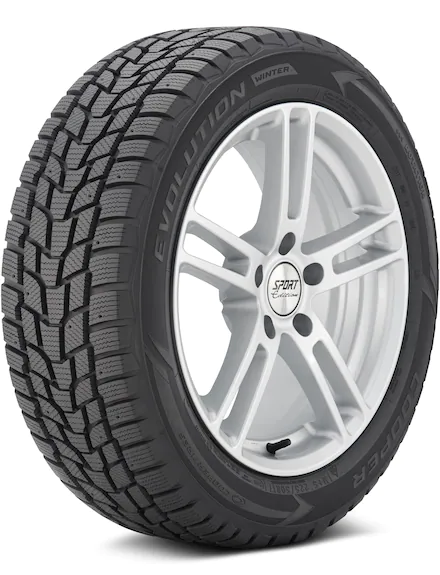
11. Cooper Evolution Winter: Best Budget Studdable for Trucks and SUVs
Price Check
Check the price of this tire at the following retailers:
Given the genuine popularity of studdable options for larger vehicles, this tire deserves a real, full entry rather than a passing FAQ mention — it fits popular US truck sizes and delivers dependable winter performance at an accessible price.
Independently reported testing describes a genuinely balanced personality across changing conditions, with solid snow traction and composed dry handling for a studdable winter tire. Once studded, ice performance improves meaningfully, making this a sensible choice for truck and SUV owners who want real winter capability without premium pricing.
Pros: Genuine value for truck and SUV applications, well-rounded performance, studdable flexibility.
Cons: Doesn’t match premium tires in outright ice grip, tread wears faster than top-tier options.
Studded vs. Studless: When Do You Actually Need Studs?
Studded tires aren’t for everyone — they come with real trade-offs, including increased road noise, accelerated pavement wear, legal restrictions, and typically shorter tread life than studless alternatives.
Studded tires make sense for drivers who: live in areas that regularly see temperatures below 15°F with black ice, have a commute including hills, bridges, or infrequently-treated rural roads, live in Alaska, the upper Midwest, northern New England, or mountain communities, or face roads that are more ice than snow.
Studless winter tires are generally better for drivers who: live in a milder winter climate where snow is more common than ice, do most driving on plowed and treated highways, value a quieter, more comfortable ride, or live in a state where studs are restricted or banned.
The drivers who benefit most from studs are genuinely those in severe ice climates — upstate New York, Minnesota, Wisconsin, Montana, and Alaska are strong candidates. Drivers in Maryland or Virginia dealing with occasional snow are generally better served by a quality studless winter tire.
Pre-Studded vs. Studdable: What’s the Difference?
Pre-studded tires — like the Nokian Hakkapeliitta 10 or Hankook i*Pike RS2 — arrive ready to mount and drive, with studs installed during manufacturing under precise machine control. Independently reported data describes generally better stud retention and more consistent performance from factory-studded tires compared to shop-studded ones.
Studdable tires — like the General Altimax Arctic 12, Firestone Winterforce 2, or Cooper Evolution Winter — offer real flexibility: run them without studs as a standard winter tire, or have studs installed at a local tire shop, typically $15–$20 per tire. Studs must be installed in new tires; a tire that’s already been driven on can’t be retrofitted.
The general recommendation: if studs are the goal from the outset, a pre-studded tire is generally the more reliable, consistent choice.
Tips for Getting the Most Out of Studded Tires
Break them in properly. New studded tires need a genuine break-in period — keeping speed moderate and avoiding harsh acceleration or braking for the first several days lets the studs fully seat into the rubber.
Use a dedicated wheel set. A set of inexpensive steel wheels makes seasonal swaps dramatically easier, letting a swap happen in about 30 minutes instead of unmounting and remounting tires twice a year — the wheels genuinely pay for themselves in saved mounting fees over a few seasons.
Remove them promptly when winter ends. Running studded tires on warm, dry pavement accelerates stud wear, damages the road surface, and delivers worse traction than a summer or all-season tire. Once temperatures consistently stay above 40°F and the ice threat is gone, swap them out.
Store them properly. Stack studded tires horizontally in a cool, dry location away from direct sunlight and ozone sources like furnaces or electrical motors — proper storage genuinely extends winter tire life.
Watch highway speed. Most manufacturers recommend a maximum speed around 118 mph, well above normal driving, but sustained high-speed driving above 80 mph does accelerate stud wear — keeping speeds reasonable on highway commutes preserves stud life.
Road Damage and Noise: The Honest Trade-Offs
Studded tires are genuinely louder than studless options and do cause measurable wear to paved roads — the reason many states restrict or ban them.
The noise difference is most noticeable on bare, dry pavement at highway speed — the audible “tick-tick-tick” of studs on asphalt can be genuinely fatiguing on long drives. The premium tires in this comparison, particularly the Hakkapeliitta 10 and IceContact 3, have made real strides in noise reduction, though none are silent.
Modern studs are designed to protrude less than older designs and use harder materials that reduce road wear while still gripping ice effectively. Where a state allows them and conditions genuinely warrant them, the safety benefit outweighs the pavement-wear concern — provided they’re removed promptly when winter ends.
Choosing the Right Studded Tire
Serious ice country, passenger vehicle: the Nokian Hakkapeliitta 10 is the clear top pick, full stop.
Truck or SUV owner: the Nokian Hakkapeliitta 10 SUV for maximum capability, or the Cooper Evolution Winter for a genuinely budget-conscious alternative.
Tighter budget: the General Altimax Arctic 12 delivers real-world ice safety at roughly half the price of premium options.
Middle ground between budget and flagship: the Continental IceContact 3 or Hankook Winter i*Pike RS2 both offer genuine premium-adjacent capability without the full Nokian price tag.
Frequently Asked Questions
Are studded snow tires worth it for everyday winter driving in the US?
Genuinely, yes, for drivers who regularly face icy or hard-packed snow roads, especially in northern states like Minnesota, Michigan, Wisconsin, and Alaska. Metal studs bite into ice in ways even the best studless winter tires can’t fully match, delivering shorter stopping distances and better cornering grip. In milder, mostly-wet winter climates, a good studless winter tire is often a more practical, quieter choice.
How much do the best studded snow tires cost in 2026?
Most top-rated studded snow tires run roughly $70 to $250 per tire depending on brand, size, and stud configuration. Budget options like the General Altimax Arctic 12 start around $80–$140, while premium picks like the Nokian Hakkapeliitta 10 run $150–$250 or more. Factoring in mounting, balancing, and a second set of wheels can add $400–$800 to the total seasonal setup.
What states allow studded snow tires and when can you legally use them?
Studded tire laws vary by state. Alabama, Texas, Florida, and Hawaii ban them entirely due to road-damage concerns. Most northern and mountain states permit them during specific winter months, typically October or November through March or April. Always check a specific state’s DOT regulations before buying, since using studs outside the legal window can result in fines.
What is the difference between studded and studless winter tires for ice traction?
Studded tires use small metal pins that physically dig into ice and hard-packed snow, providing real mechanical grip on the slickest surfaces. Studless winter tires rely on advanced rubber compounds and specialized tread patterns with biting edges to grip cold, icy roads without metal studs. On pure ice, studded tires consistently outperform studless options in braking and acceleration testing, but studless tires tend to be quieter and perform better on bare or wet pavement.
How long do studded snow tires last compared to regular winter tires?
Most high-quality studded snow tires last 3 to 5 winter seasons when used only during cold months and stored properly in the off-season. Studs themselves wear down faster with frequent driving on bare asphalt, which is why mounting them only when sustained winter conditions arrive genuinely matters. Premium studded tires from brands like Nokian or Continental commonly deliver 25,000–30,000 winter-only miles before studs lose effectiveness.
Do studded snow tires damage roads, and are there alternatives that perform almost as well?
Yes, studded tires cause measurable wear to paved road surfaces, the main reason several US states restrict or ban them. Where studs are restricted, top studless alternatives like the Bridgestone Blizzak WS90 or Michelin X-Ice Snow come impressively close to studded performance across most winter surfaces. Nothing fully matches studs on genuine glare ice, though — where states allow them and conditions warrant it, studded tires remain the gold standard.
Which studded snow tire is best for trucks and SUVs in the US?
The Nokian Hakkapeliitta 10 SUV is the top overall pick for trucks and SUVs, with reinforced sidewalls and stud placement optimized for wider footprints and heavier loads. For a more budget-conscious option that fits popular US truck sizes, the Cooper Evolution Winter delivers dependable studdable performance at a meaningfully lower price.
