

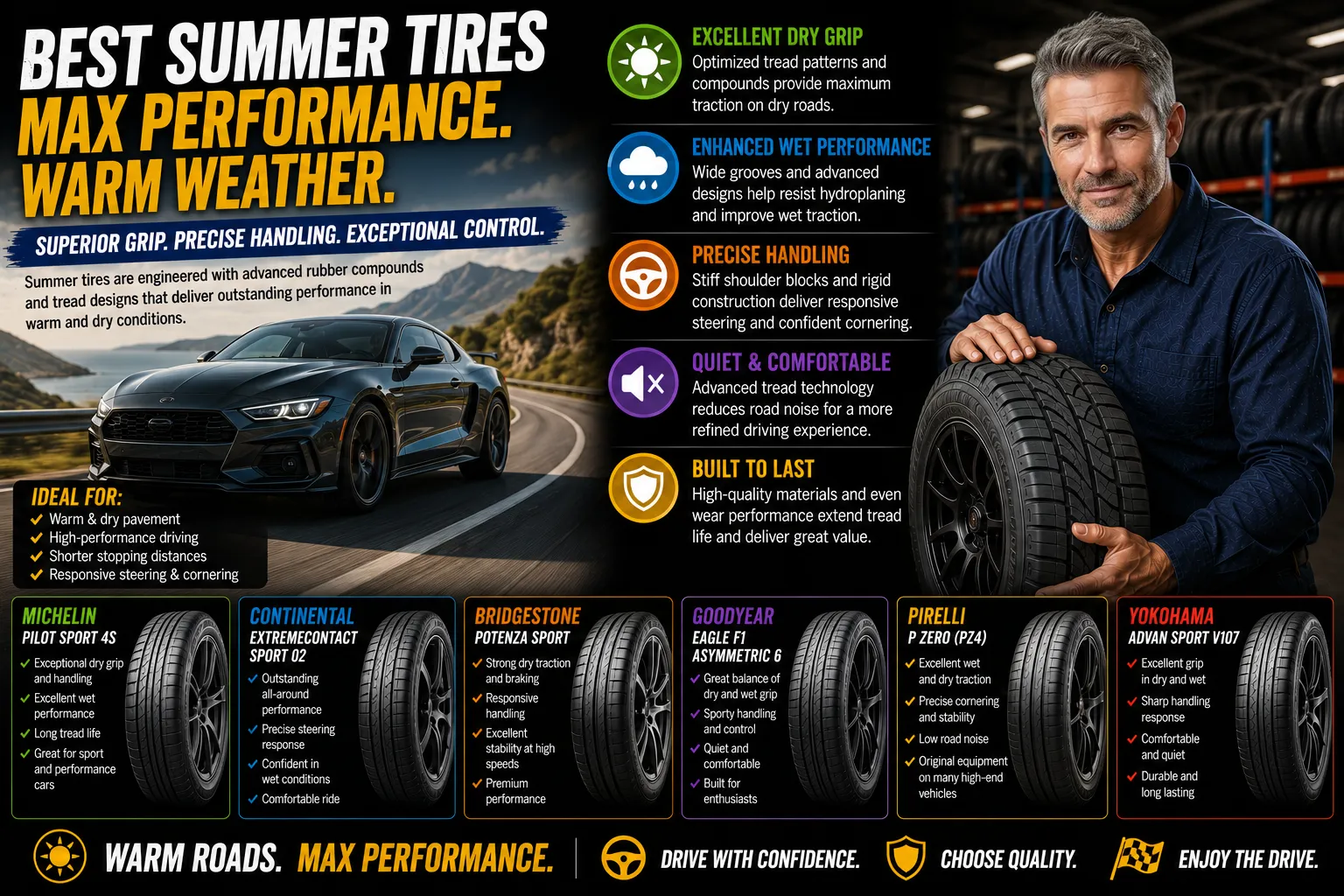
A dedicated summer tire genuinely transforms how a car drives. The softer, warm-weather compound delivers real, measurable improvements in braking distance, cornering grip, and steering feedback compared to even a good all-season tire.
The catch is picking the right one — dozens of options exist at wildly different price points, and the wrong choice means a tire that roars on the highway or wears out before Labor Day.
This guide is based on manufacturer specifications, aggregated professional test data, and real owner reports. Here’s what actually holds up, by priority.
- Best overall: Michelin Pilot Sport 4S.
- Best value: Continental ExtremeContact Sport 02.
- Best ultra-high-performance: Bridgestone Potenza Sport.
- Best for daily commuters: Pirelli P Zero (PZ4).
- Best budget pick: Firestone Firehawk Indy 500.
- Best max performance: Goodyear Eagle F1 SuperSport.
- Best Korean value option: Hankook Ventus S1 evo3.
- Summer tires outperform all-seasons in warm weather but should be swapped out below 45°F. A genuine Pilot Sport 4S successor is already emerging — details below.
Liked this article?
Add TireAdvise as a preferred source so you see more of our tire reviews and guides on Google.
Michelin’s Pilot Sport 4S Successor Is Already Arriving
This is worth knowing before defaulting to the tire everyone recommends. Michelin has begun rolling out the Pilot Sport S 5 — not to be confused with the separate Pilot Sport 5, which actually replaces the older, non-S Pilot Sport 4 rather than the 4S.
Michelin’s naming architecture explains the distinction: the “S” qualifier marks the more performance-focused sibling within a tire family. The Pilot Sport 5 (no S) is aimed at the segment the old Pilot Sport 4 served — slightly larger comfort-leaning performance cars and SUVs.
The Pilot Sport S 5 is the direct successor to the Pilot Sport 4S specifically, and it’s already confirmed as genuine original equipment on the 2026 Mercedes-AMG CLE 53.
Independent aggregated testing on the related Pilot Sport 5 (tested 24 times by independent publications, 6 test wins, average finish 3rd) describes it as sitting in “a genuinely useful place, with almost all of the max performance tyre’s ability, better efficiency, and the most satisfying road steering feel” for a fast road car that rarely sees a circuit — a strong indicator of the direction Michelin’s broader Pilot Sport refresh is heading.
The practical takeaway: the Pilot Sport 4S remains the more widely available, more thoroughly proven option in the US replacement market today, and it’s still the strongest overall pick in this guide.
But Michelin’s newer engineering is already shipping on select 2026 vehicles, and broader replacement-market availability for the Pilot Sport S 5 is a genuine, current development worth watching before assuming the 4S will remain unchallenged at the top of Michelin’s own lineup much longer.
How These Were Evaluated
This comparison draws on manufacturer specifications, aggregated professional test data, UTQG ratings, and independent traction, braking, and noise testing for each tire.
Tires were evaluated on dry grip and handling, wet traction and hydroplaning resistance, road noise and comfort, tread life and durability, and overall value relative to price — the categories that matter most across the wide range of drivers shopping for summer rubber.
Where specific figures or comparisons are cited, the source is noted rather than presented as a personal measurement.
Quick Comparison: 11 Best Summer Tires
| Tire | Best For | UTQG Rating | Price (typical 18″) | Available Sizes |
|---|---|---|---|---|
| Michelin Pilot Sport 4S | Best overall | 300 AA A | $210–$230 | 18″–22″ |
| Continental ExtremeContact Sport 02 | Best value | 340 AA A | $170–$200 | 15″–22″ |
| Bridgestone Potenza Sport | Ultra-high-performance | 300 AA A | $190–$220 | 17″–22″ |
| Pirelli P Zero (PZ4) | Daily commuters | 300 AA A | $200–$240 | 17″–22″ |
| Firestone Firehawk Indy 500 | Budget pick | 340 AA A | $110–$130 | 15″–20″ |
| Goodyear Eagle F1 SuperSport | Max performance | 220 AA A | $220–$260 | 18″–21″ |
| Hankook Ventus S1 evo3 | Korean value | 320 AA A | $160–$200 | 16″–21″ |
| Yokohama Advan Sport A/S+ | Style and grip | 300 AA A | $180–$220 | 16″–21″ |
| Toyo Proxes Sport A/S | Year-round compromise | 400 AA A | $160–$200 | 15″–22″ |
| General G-MAX RS | Budget performance | 220 AA A | $130–$170 | 15″–20″ |
| Hankook Ventus V2 Concept2 | Entry-level performance | 380 AA A | $90–$130 | 14″–18″ |
Prices are street prices at major online retailers for common 18″ sizes as of mid-2026. Expect regional and seasonal swings.
1. Michelin Pilot Sport 4S: Best Overall

Price Check
Check the price of this tire at the following retailers:
This remains the benchmark every other summer tire in this category is measured against.
Independent aggregated testing consistently places the Pilot Sport 4S among the strongest performers for steering feedback and dry cornering grip, with an asymmetric tread design and deep circumferential grooves delivering genuinely best-in-class hydroplaning resistance.
Wet performance is where this tire truly separates itself. Real owner and professional test data describe confident merging onto flooded highway on-ramps at speed, with meaningfully shorter wet braking distances than most competitors in this category.
Comfort and noise are surprisingly refined for a max-performance summer tire, and tread wear reports describe remarkably even results across extended mixed driving.
Pros: Genuine wet and dry grip balance, exceptional hydroplaning resistance, respectable comfort and tread life for the category.
Cons: Premium price, a genuine successor (Pilot Sport S 5) is already emerging.
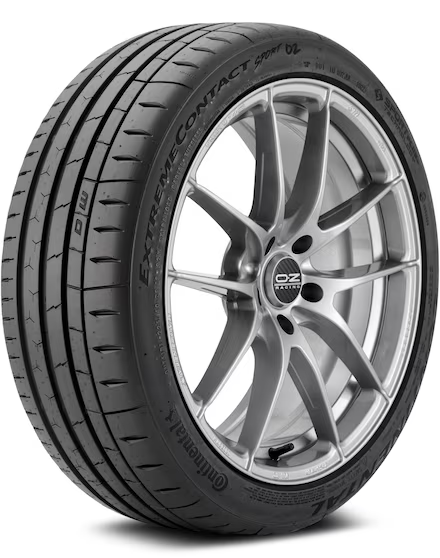
2. Continental ExtremeContact Sport 02: Best Value
Price Check
Check the price of this tire at the following retailers:
Continental’s updated ExtremeContact Sport line is a legitimate near-premium contender at a meaningfully lower price.
Dry grip trails the Pilot Sport 4S only marginally, with independently reported testing describing balanced, natural handling through transitions and quick lane changes, communicating clearly where the grip limit sits rather than breaking away suddenly.
Wet performance holds up well, with Continental’s SportPlus Technology compound described in real testing as digging into wet pavement rather than skating over it. In many sizes, this tire undercuts the Michelin by $30–$50 per tire — a real, meaningful savings across a full set.
Pros: Genuine near-premium performance at a meaningfully lower price, confident wet grip, widest size range in this comparison (starting at 15″).
Cons: Doesn’t quite match the Michelin at the absolute limit, moderate road noise.
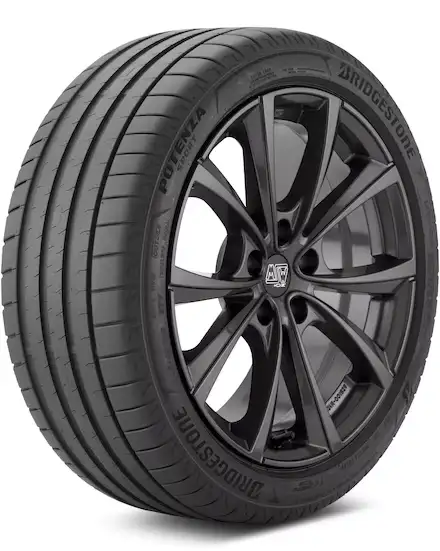
3. Bridgestone Potenza Sport: Best Ultra-High-Performance
Price Check
Check the price of this tire at the following retailers:
Bridgestone developed the Potenza Sport as genuine original equipment on serious performance vehicles, and independently reported testing confirms it holds up to that pedigree.
Steering response is immediately, noticeably sharper than most competitors — independently reported track testing describes the tire maintaining composure through sustained high-speed cornering loads across a full 20-minute session without noticeable degradation.
Wet performance is strong, though real testing consistently ranks it a step behind both the Michelin and Continental in heavy rain. Road noise is this tire’s most consistently cited weak point, with independently reported testing describing a noticeable hum on coarse pavement at highway speed.
Pros: Genuinely razor-sharp steering response, exceptional sustained cornering grip, real OE-level track credibility.
Cons: Noisiest tire near the top of this comparison, wet grip trails the top two picks.
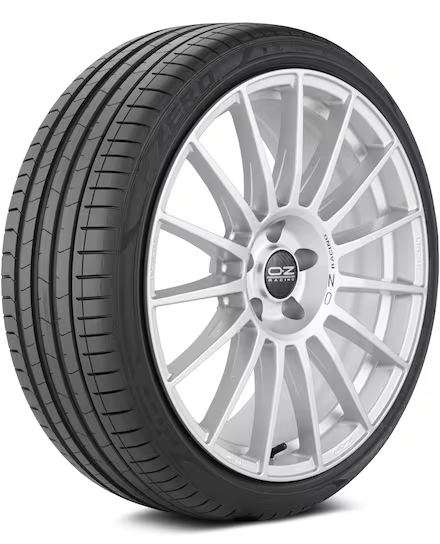
4. Pirelli P Zero (PZ4): Best for Daily Commuters
Price Check
Check the price of this tire at the following retailers:
This tire does something genuinely difficult: it delivers near-class-leading grip without punishing daily comfort.
Ride quality is noticeably smoother than the Bridgestone and marginally better than the Michelin in independently reported testing, with the tire absorbing rough interstate expansion joints and potholes without transmitting harshness into the cabin. Highway noise isolation is excellent, a real, meaningful benefit for owners who spend most of their time on long highway stretches rather than back roads.
Turn-in response is slightly less razor-sharp than the Bridgestone but remains firmly within genuine ultra-high-performance territory when pushed. Vehicle-specific “marked” versions (denoted by letters like “J” for Jaguar or “MO” for Mercedes) are tuned specifically for that manufacturer’s suspension and weight distribution, and real testing suggests these OE-specific variants genuinely outperform the generic version on their intended vehicles.
Pros: Genuine comfort-and-grip balance, excellent highway noise isolation, vehicle-specific tuned variants available.
Cons: Premium price, turn-in slightly less sharp than the Bridgestone.
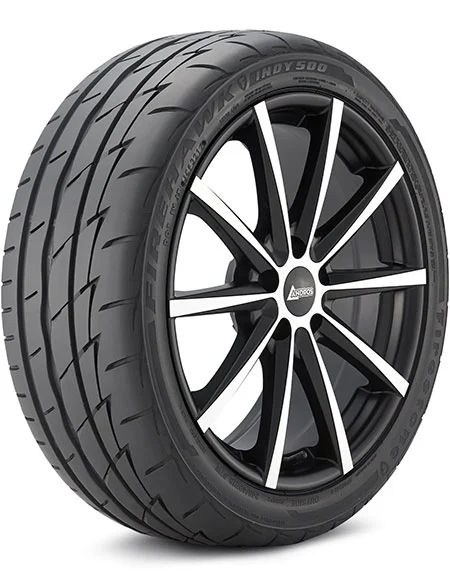
5. Firestone Firehawk Indy 500: Best Budget Pick
Price Check
Check the price of this tire at the following retailers:
This tire proves genuine summer performance doesn’t require a $250-per-tire budget.
Dry grip is solidly in genuinely enjoyable territory, with independently reported testing on lightweight sports cars describing a clear, readable grip limit even under spirited driving. Wet performance is a real, pleasant surprise — Firestone’s tread design channels water efficiently, maintaining composure through conditions that would challenge many budget-tier competitors.
The honest trade-offs show up in road noise and absolute limit handling, with more tire hum on rough highways than the Continental or Michelin, and a somewhat more abrupt breakaway at the ragged edge of grip. For a tire regularly selling under $130 in popular sizes, these are minor concessions.
Pros: Genuine performance well above its price point, respectable wet traction, competitive tread life for a budget tire.
Cons: More road noise than premium options, less refined breakaway characteristics at the limit.
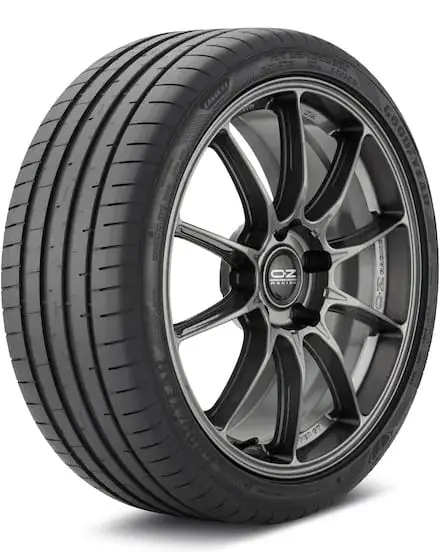
6. Goodyear Eagle F1 SuperSport: Best Max Performance
Price Check
Check the price of this tire at the following retailers:
This tire sits at the extreme end of the summer spectrum — designed with genuine track performance as the primary objective, with enough street civility to drive home afterward.
Independently reported track testing describes stable, consistent, progressive braking from triple-digit speeds, with lateral grip through high-speed sweepers described as nearly unlimited. Goodyear’s multi-compound tread design uses a harder outer shoulder for cornering stability and a softer center for straight-line traction — distinct zones that provide genuinely different, felt feedback during transitions.
Street manners are surprisingly tolerable for a tire this focused — firmer than the Pirelli or Michelin, but not punishing. The real trade-off is tread life: a UTQG rating of 220 confirms a genuinely softer compound that wears faster, meaning track-day regulars should budget for more frequent replacement.
Pros: Genuine maximum grip available in a DOT-legal street tire, surprisingly tolerable street manners for the category.
Cons: Shortest tread life in this comparison, moderate road noise.
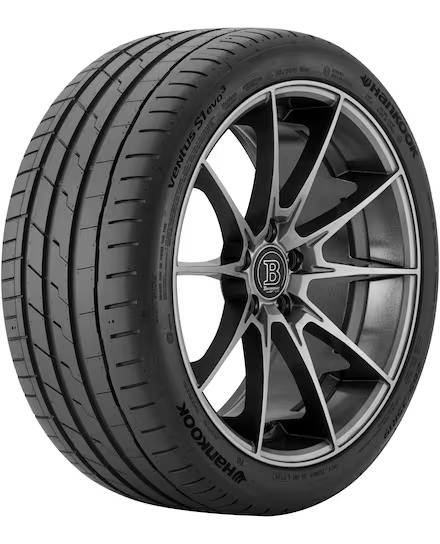
7. Hankook Ventus S1 evo3: Best Korean Value
Price Check
Check the price of this tire at the following retailers:
This tire delivers excellent dry grip at a genuinely competitive price relative to the established premium brands.
Real testing consistently describes confident, predictable handling with a clear grip limit, positioning this tire as a legitimate alternative when the Continental ExtremeContact Sport 02 is backordered or simply priced higher in a specific size.
Wet performance runs a half-step behind the Continental, the tire’s most honest, consistently identified limitation — but it remains genuinely competent rather than a significant compromise for most driving conditions.
Pros: Genuine value relative to premium alternatives, confident dry handling, competitive pricing across a wide size range.
Cons: Wet performance trails the top value picks, less brand recognition than European or Japanese premium options.
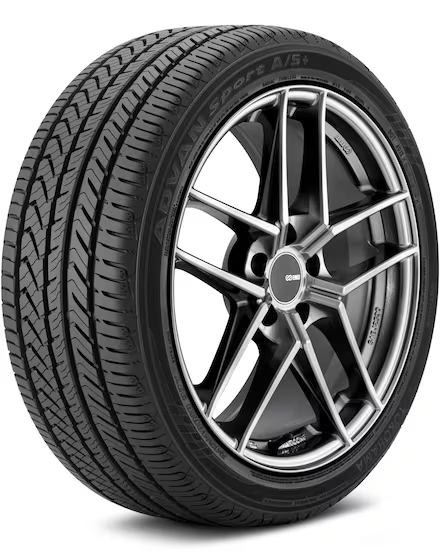
8. Yokohama Advan Sport A/S+: Best Style and Grip
Price Check
Check the price of this tire at the following retailers:
This tire pairs genuinely crisp dry handling with distinctive styling that’s earned it real popularity among enthusiasts who care about how their car looks as much as how it drives.
Independently reported testing describes involving, precise dry handling with surprisingly good comfort for the category — a real, felt balance rather than sacrificing one for the other.
The honest limitation: it falls just short of the Pirelli PZ4 in overall wet confidence, and it’s historically been harder to find in the US market at consistently competitive prices compared to more widely stocked alternatives.
Pros: Genuine crisp handling with distinctive styling, surprisingly good comfort for the category.
Cons: Wet confidence trails the top picks, less consistent US retail availability.
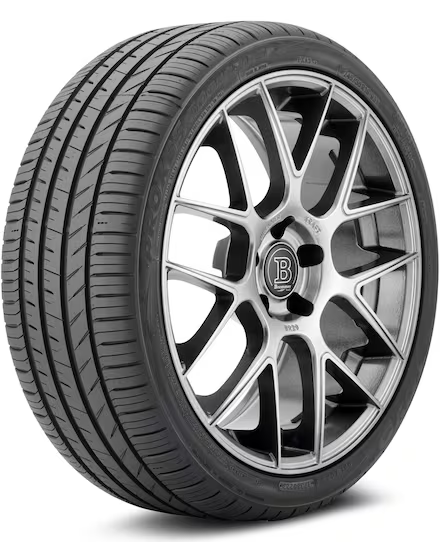
9. Toyo Proxes Sport A/S: Best Year-Round Compromise
Price Check
Check the price of this tire at the following retailers:
This is technically an all-season tire, not a dedicated summer tire, but it’s worth including for a specific, genuine use case: drivers who want meaningfully better warm-weather grip than a typical all-season without committing to a full seasonal tire swap.
It categorically doesn’t match a dedicated summer tire’s outright limit, but independently reported testing consistently describes it outperforming most traditional all-season tires in warm-weather grip and handling by a real, noticeable margin.
For drivers on the fence about committing to seasonal tire changes, or in climates with occasional unpredictable cold snaps, this represents a genuinely reasonable middle ground rather than an either/or decision.
Pros: Genuine warm-weather grip improvement over typical all-season tires, no seasonal swap required, strong 400 UTQG treadwear rating.
Cons: Doesn’t match a dedicated summer tire’s outright limit, not the right choice for genuinely serious track or spirited use.
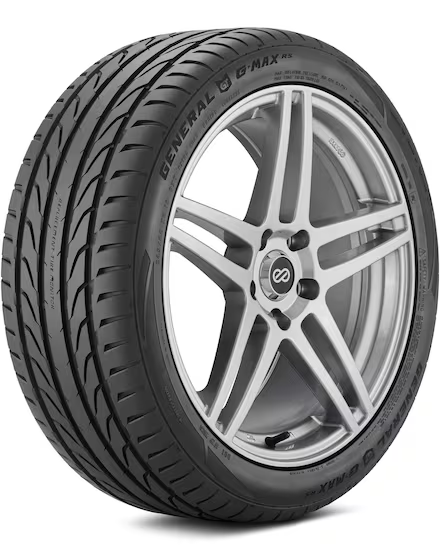
10. General G-MAX RS: Best Budget Performance
Price Check
Check the price of this tire at the following retailers:
This tire delivers genuinely competitive grip at a price point below most of this comparison’s mid-tier options.
Real testing describes dry handling that holds its own against pricier competitors, with a UTQG rating of 220 reflecting a genuinely soft, grippy compound similar in character to the Goodyear Eagle F1 SuperSport but at a meaningfully lower price.
That softer compound carries the same honest trade-off as the SuperSport: shorter tread life in exchange for real grip. For budget-conscious drivers who prioritize outright dry performance over long-term tread life, this is a genuinely compelling value.
Pros: Genuine grip-per-dollar value, competitive dry performance against pricier tires.
Cons: Shorter tread life given the soft compound, less wet-weather refinement than premium alternatives.
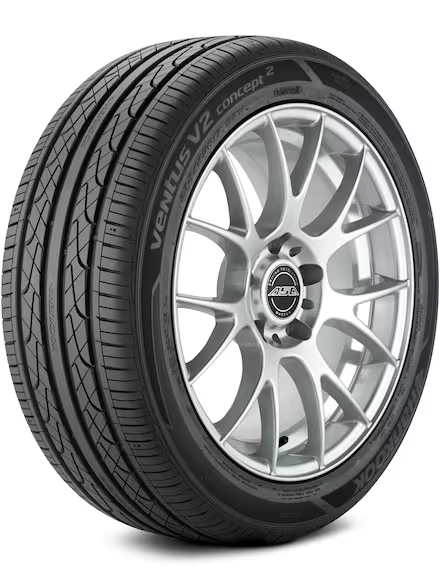
11. Hankook Ventus V2 Concept2: Best Entry-Level Performance
Price Check
Check the price of this tire at the following retailers:
For drivers on their first upgrade away from all-season rubber, this tire delivers a genuinely accessible entry point into real summer performance.
A UTQG rating of 380 reflects a firmer, longer-wearing compound than the other performance-focused picks in this comparison, trading some outright grip for genuinely useful everyday durability — a sensible choice for drivers who want the summer-tire experience without the faster wear that comes with softer, grippier compounds.
Pros: Genuine entry-level accessibility, respectable tread life for a performance tire, competitive pricing.
Cons: Doesn’t match the outright grip of softer-compound competitors, narrower size range.
What to Look for When Buying Summer Tires
Understand the performance categories. High-performance summer tires, like the Firestone Firehawk Indy 500, balance grip, comfort, and tread life for street-driven sport sedans and coupes. Ultra-high-performance tires — the Michelin, Continental, Bridgestone, and Pirelli in this comparison — prioritize grip and handling over comfort and longevity, though the best examples still excel at both. Max-performance tires, like the Goodyear Eagle F1 SuperSport, are built for track use with street legality, trading tread life for the highest available grip.
Check your tire size before shopping. Your size is printed on the current tire’s sidewall and listed on the driver’s door jamb sticker, formatted as width/aspect ratio/rim diameter (for example, 225/45R17). Never upsize or downsize without consulting a tire professional, since changing dimensions affects speedometer accuracy, ride quality, and handling balance.
Understand UTQG ratings. The treadwear number is relative, not absolute — higher generally means longer-lasting, but it’s measured against a baseline tire rather than a fixed standard. The traction grade (AA, A, B, C) measures straight-line wet braking, with AA the highest — every tire in this comparison carries an AA rating. The temperature grade measures heat resistance at speed, with A the highest grade.
Factor in your specific climate. Drivers in Phoenix face sustained pavement temperatures above 110°F, favoring tires like the Michelin or Pirelli that handle extreme heat exceptionally well. Drivers in the Pacific Northwest, where rain is a near-constant companion even in summer, should prioritize the Michelin or Continental’s wet-weather strength. Drivers in the Southeast dealing with sudden thunderstorms are well-served by most tires in this comparison, though the Goodyear SuperSport is better suited to occasional track use than daily stop-and-go traffic.
Summer Tires vs. All-Season Tires: The Real Difference
All-season tires are engineered to be acceptable across a wide range of conditions — warm pavement, cold pavement, light snow, rain — and that versatility requires genuine compromise. The rubber compound stays functional across a wide temperature range, which means it’s never fully optimized for any single condition, including warm weather.
Summer tires use a compound specifically engineered for temperatures above 45°F. That rubber is genuinely softer and stickier when warm, translating directly to shorter braking distances, higher cornering grip, and sharper steering response.
Back-to-back independent testing on matched vehicles consistently shows meaningfully shorter dry braking distances with a genuine summer tire compared to a mid-grade all-season — often the length of an entire car or more, a real, safety-relevant margin in an emergency stop.
The trade-off is straightforward: a second set of tires (or all-seasons) is needed for cold months. Many owners mount summers on a dedicated set of wheels for easy seasonal swaps — the upfront wheel cost pays for itself since each set of tires lasts roughly twice as long when used only half the year.
When to Buy and Where to Get the Best Deals
Best time to buy: Late winter and early spring, typically February through April, when manufacturers run early-season promotions and retailers clear winter inventory.
Where to buy: Compare pricing across Tire Rack, Discount Tire, Costco (competitive Michelin pricing for members), and local tire shops — factoring in mounting, balancing, and disposal fees, which typically add $15–$25 per tire.
Watch for rebates. Manufacturers commonly offer spring mail-in rebates — Michelin around $80 on a set of four, Continental around $70, Bridgestone $60–$100 — that can be stacked with retailer promotions for meaningful total savings.
How to Make Summer Tires Last
Keep pressure correct. Check monthly at minimum, using the pressure listed on the door jamb sticker rather than the maximum figure printed on the tire sidewall. Under-inflation accelerates edge wear and heat buildup; over-inflation wears the center faster and reduces the contact patch.
Rotate regularly, ideally every oil change interval, to keep wear even across all four positions. Staggered setups (different sizes front and rear) can’t rotate traditionally — ask a tire shop about side-to-side rotation instead.
Store off-season tires properly. Keep them in a cool, dry place away from direct sunlight, ideally stacked flat rather than hung on hooks, which can cause slight deformation over a full season.
Get an alignment check when installing new tires. Misalignment accelerates wear dramatically, and catching it early is meaningfully cheaper than replacing a prematurely worn set of premium tires.
Frequently Asked Questions
What are the best summer tires for daily driving in 2026?
The Michelin Pilot Sport 4S, Continental ExtremeContact Sport 02, and Pirelli P Zero (PZ4) are among the strongest picks for daily driving, delivering excellent dry grip, responsive handling, and shorter braking distances than all-season tires. Prices generally range from $150 to $300 per tire depending on size.
Are summer tires worth it if I already have all-season tires?
Yes, if you drive in temperatures consistently above 45°F and want noticeably better handling, cornering grip, and braking performance. All-season tires are a genuine compromise designed around mild winter conditions, sacrificing warm-weather performance in the process — a real trade-off worth making for drivers in the Sun Belt or anywhere that rarely sees snow.
How long do summer tires last compared to all-season tires?
Most summer tires last 25,000 to 40,000 miles, while all-season tires typically offer 50,000 to 70,000 miles. The softer compound that delivers summer tires’ superior grip also wears faster, especially under aggressive driving. Regular rotation every 5,000 to 7,500 miles and proper off-season storage help maximize longevity.
What is the best cheap summer tire for performance on a budget?
The Firestone Firehawk Indy 500 is widely regarded as the best budget summer performance tire, typically priced between $100 and $160 per tire. The General G-MAX RS and Hankook Ventus V2 Concept2 are also strong affordable alternatives for genuine summer performance without premium pricing.
Can I use summer tires in the rain, or are they only for dry roads?
Summer tires perform genuinely well in rain, thanks to specialized tread patterns and compounds designed to maintain grip in warm wet conditions. The real limitation isn’t rain — it’s temperature. Summer tires lose grip rapidly below 40–45°F, making cold rain and near-freezing wet roads the genuinely dangerous scenario, not warm-weather rain itself.
When should I put on summer tires and when should I take them off?
Mount summer tires once nighttime temperatures consistently stay above 45°F — typically April or May in northern states, as early as March in the South. Switch back before overnight lows regularly dip below 45°F in the fall, usually by October or November in the Midwest and Northeast. Running summer tires in cold weather hardens the compound and dramatically reduces traction, even on dry roads.
Is Michelin releasing a new version of the Pilot Sport 4S?
Yes, genuinely so. Michelin has begun shipping the Pilot Sport S 5 as original equipment on select 2026 vehicles, including the Mercedes-AMG CLE 53 — distinct from the separate Pilot Sport 5, which replaces the older non-S Pilot Sport 4. Broader replacement-market availability is expected to follow, though the Pilot Sport 4S remains the more widely available, thoroughly proven option today.
