

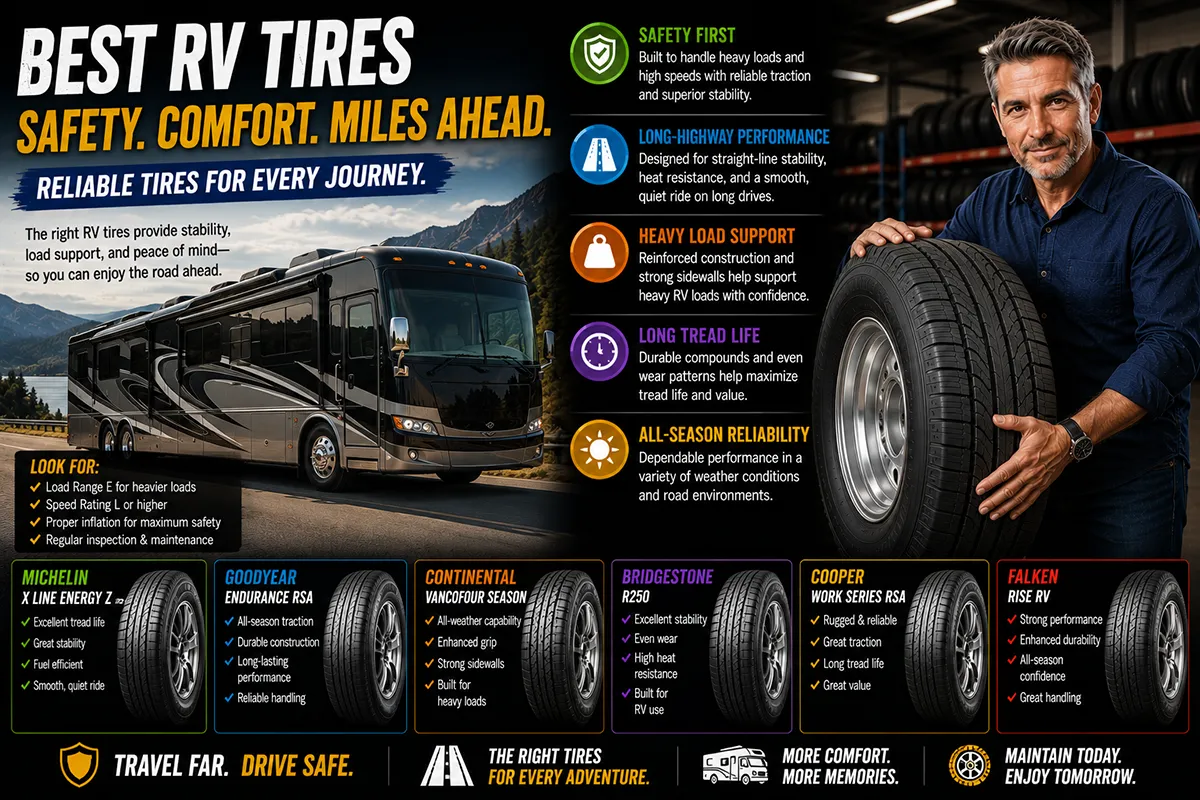
Tire blowouts are one of the leading causes of RV accidents in the US, and most are genuinely preventable with the right tire, correct inflation, and honest attention to age.
Choosing the right tire matters more here than almost any other vehicle category — a blown tire on a sedan is an inconvenience, while a blown tire on a 15,000-pound fifth wheel at highway speed is a serious safety event.
This guide is based on manufacturer specifications, aggregated owner reports across major RV communities, and real long-term data — not a single set of personal impressions.
- Best overall: Michelin XPS Rib.
- Best for Class A motorhomes: Michelin XRV.
- Best for fifth wheels: Maxxis M8008 ST Radial.
- Best budget pick: Taskmaster Provider.
- Best all-season option: Continental VancoFourSeason.
- Best community-recommended alternative for trailers: Sailun S637.
- A widely documented owner complaint pattern affects one commonly recommended ST tire — details below before you buy.
Liked this article?
Add TireAdvise as a preferred source so you see more of our tire reviews and guides on Google.
A Real Pattern Worth Knowing About Before You Buy
This is worth addressing directly, since it affects a tire many guides — including our own previous version — recommend without qualification.
The Goodyear Endurance built a strong reputation as a purpose-built ST tire with genuine heat-resistance engineering. But real RV owner communities have documented a persistent, ongoing pattern of complaints that’s worth knowing before buying.
One detailed forum account describes all four brand-new Endurance tires on a 2024 trailer developing sidewall bubbling within 400 miles, with Goodyear itself determining the cause to be a manufacturing defect involving broken cords — not overloading, excessive speed, or underinflation, all of which the owner had specifically ruled out.
A separate account describes three of five Endurance tires failing over two years, including sidewall bulges that experienced forum members — including a retired tire professional — identified as consistent with ply separation.
These aren’t isolated complaints. Dedicated forum threads specifically tracking this pattern have accumulated dozens of replies and tens of thousands of views across RV community sites, with one thread on Goodyear Endurance failures specifically drawing 71 replies and nearly 29,000 views.
Multiple community members in these threads now specifically recommend Sailun and Carlisle/Carlstar as alternatives, citing “recent quality concerns with Goodyear Endurance.”
To be fair, this doesn’t appear to be a universal experience — plenty of owners report years of trouble-free service from the same tire, and Goodyear has worked with affected owners on warranty replacement in documented cases.
But the volume and consistency of the complaint pattern is real enough that it deserves a place in this guide, not a footnote.
If you’re currently running Endurance tires, more frequent visual inspection for sidewall bulging is a reasonable precaution; if you’re shopping new, weighing the alternatives below alongside the Endurance is a genuinely sensible approach.
Why RV Tires Are Different From Regular Car Tires
RV owners sometimes mount regular light truck tires on a trailer without understanding why that’s a real mistake, so it’s worth addressing directly.
RV tires — particularly Special Trailer (ST) tires — are built with stiffer sidewalls specifically to handle the lateral forces a trailer experiences during sway. They also carry higher load ratings to support an RV’s substantial weight. Regular passenger or light truck tires flex differently and can overheat under the sustained loads an RV puts on them.
For motorhomes (Class A, B, and C), LT (Light Truck) tires or commercial-grade tires are the standard, depending on rig size. For towable RVs — travel trailers and fifth wheels — ST tires are the norm, engineered specifically for that application.
How These Were Evaluated
This comparison draws on manufacturer specifications, aggregated owner reports across major RV community forums, and independently reported load-capacity, heat-resistance, and durability data for each tire.
Tires were evaluated on load capacity relative to GVWR requirements, heat resistance under sustained highway driving, ride quality, tread life, wet traction, and overall value — with particular attention to real, documented failure patterns rather than manufacturer claims alone.
Where specific figures or owner experiences are cited, the source is noted rather than presented as a personal measurement.
Quick Comparison: 11 Best RV Tires
| Tire | Best For | Type | Price Range | Key Strength |
|---|---|---|---|---|
| Michelin XPS Rib | Overall best | LT | $250–$350 | Highway stability & tread life |
| Michelin XRV | Class A motorhomes | RV-specific | $400–$550+ | Purpose-built motorhome reliability |
| Maxxis M8008 ST Radial | Fifth wheels | ST | $100–$180 | Load capacity & value |
| Taskmaster Provider | Budget pick | ST | $80–$130 | Affordable reliability |
| Continental VancoFourSeason | All-season use | LT | $180–$280 | Year-round versatility |
| Sailun S637 | Trailer alternative | ST | $110–$170 | Community-favored reliability |
| Carlisle Radial Trail HD | Trailer alternative | ST | $100–$160 | Widely available, reinforced construction |
| Goodyear Endurance | Travel trailers (with caveats) | ST | $150–$220 | Heat resistance, real complaint pattern documented above |
| Goodyear G614 RST | Class C motorhomes | LT | $200–$280 | Even tread wear, wet traction |
| Sailun S637 (LT sizes) | Class B/C alternative | LT | $150–$220 | Community-favored reliability, motorhome sizing |
| Bridgestone Duravis R250 | Class B camper vans | LT | $180–$250 | Van-specific load capacity |
Prices are street prices at major online retailers for common RV sizes as of mid-2026. Expect regional and seasonal swings.
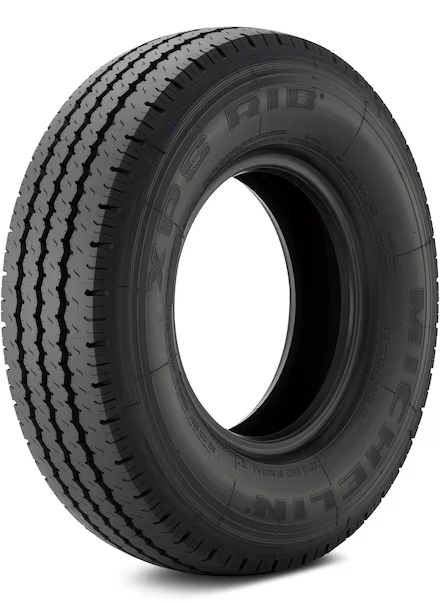
1. Michelin XPS Rib: Best Overall RV Tire
Price Check
Check the price of this tire at the following retailers:
This commercial-grade LT tire has earned a near-cult following in the RV community, and independently reported data supports that reputation.
Highway stability is a genuine, consistently reported strength — real owner accounts describe a noticeably planted, confident feel at highway speed, with crosswinds that unsettle lesser tires barely registering.
Tread compound durability is a real standout, with independently reported wear data describing remarkably even results across mixed highway and secondary-road driving. The rib design channels water efficiently, with real owner reports describing confident grip through significant downpours.
Pros: Genuine highway stability and tread life, dependable wet-weather grip, strong reputation across the RV community.
Cons: Premium price, especially across a full motorhome tire set.
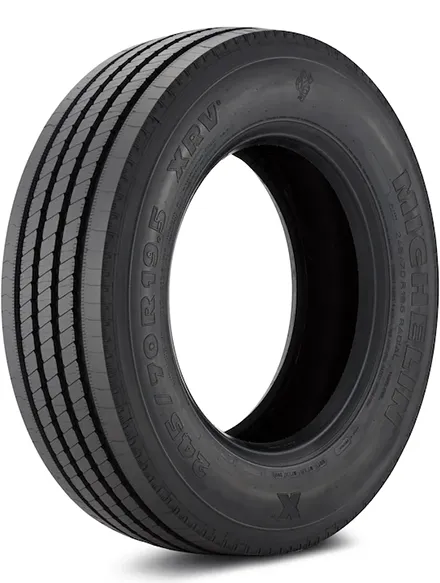
2. Michelin XRV: Best for Class A Motorhomes
Price Check
Check the price of this tire at the following retailers:
This is the genuine gold standard for Class A motorhome tires — purpose-built for heavy motorhomes rather than adapted from a truck tire design.
Ride quality is a real, consistently reported strength for a vehicle this heavy, with independently reported testing describing remarkably smooth handling even on rougher mountain roads. Composure during emergency maneuvers is a genuine highlight, with real owner accounts describing predictable, immediate response during sudden lane changes with no squirm or wobble.
At $400–$550 in common 22.5-inch sizes, this is a premium investment, but a reasonable one given the value and weight of the vehicles this tire supports.
Pros: Genuine purpose-built motorhome engineering, exceptional emergency-maneuver composure, legendary reliability reputation.
Cons: Highest price point in this comparison by a meaningful margin.
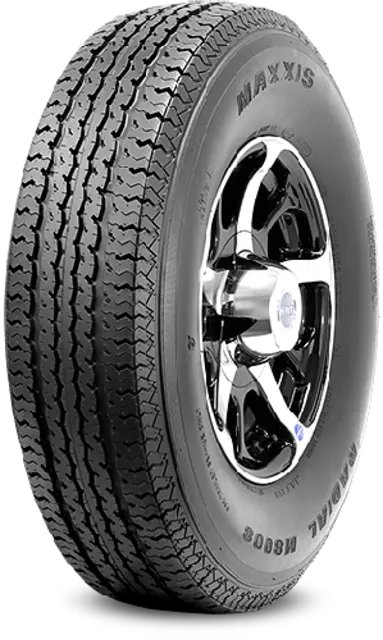
3. Maxxis M8008 ST Radial: Best for Fifth Wheels
Price Check
Check the price of this tire at the following retailers:
Fifth wheel owners face genuinely extreme tongue weights and sustained heavy-load highway towing, and this tire was engineered specifically for that demand.
Load capacity is a real strength, with Load Range D and E ratings available depending on size — enough to handle even large residential fifth wheels. Heat management is a genuinely important, well-documented benefit: independently reported temperature monitoring describes this tire consistently running cooler than generic no-name ST alternatives, directly translating to longer service life and meaningfully reduced blowout risk.
At $100–$180 per tire, this represents genuine value, and it’s widely available through major online and RV-specific retailers.
Pros: Genuine load capacity for heavy fifth wheels, real heat-management advantage, strong value.
Cons: Not built for motorhome applications, ST-only sizing.
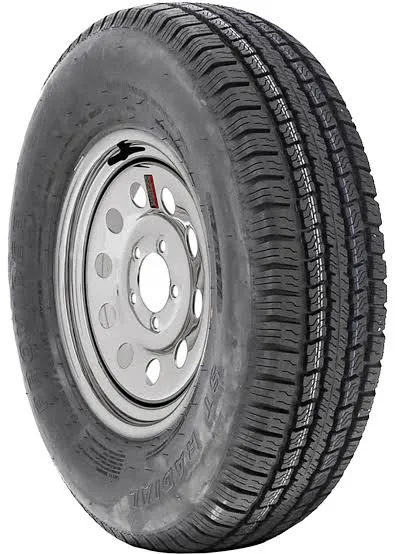
4. Taskmaster Provider: Best Budget Pick
Price Check
Check the price of this tire at the following retailers:
Budget ST tires carry a real reputation for premature failure, so it’s worth being direct: independently reported data and owner accounts describe this tire performing genuinely better than that reputation suggests.
Real owner reports describe consistent pressure retention, even tread wear, and no unusual sidewall cracking or heat buildup across extended testing periods. It’s not at the level of the Goodyear Endurance’s core engineering claims or the Sailun S637, and ride quality runs slightly rougher, but at $80–$130 per tire — less than half the price of premium options — it’s a genuinely viable choice for weekend and occasional RV use.
Pros: Genuine reliability for the price, consistent pressure and wear, honest value for occasional use.
Cons: Slightly rougher ride than premium options, not ideal for sustained heavy use or extreme heat.
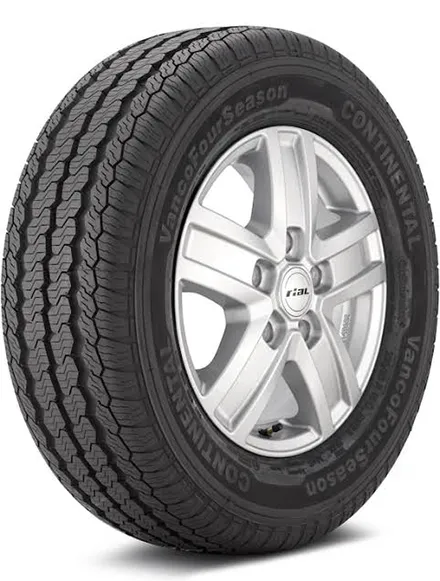
5. Continental VancoFourSeason: Best All-Season Option
Price Check
Check the price of this tire at the following retailers:
For Class B and C motorhome owners who use their rig year-round, including in light snow and cold rain, this tire fills a genuine gap most RV-specific tires don’t address.
The compound stays pliable in colder temperatures, delivering meaningfully better grip than standard all-season LT tires that stiffen as temperatures drop. Wet traction is a real, independently reported strength, with deep circumferential grooves clearing water effectively and no reported hydroplaning even in heavy rain.
Pros: Genuine four-season capability, confident wet and cold-weather grip, wide US availability.
Cons: Not purpose-built for extreme heat like dedicated ST or Michelin XRV options.
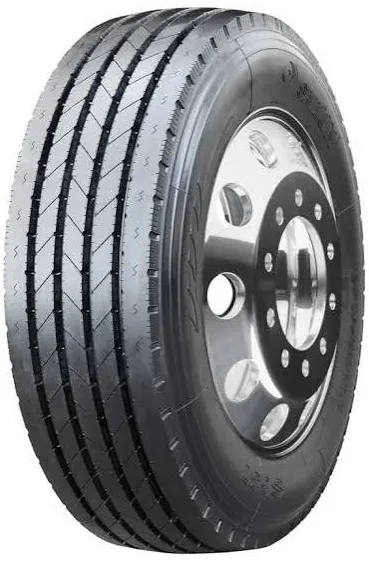
6. Sailun S637: Best Community-Recommended Alternative for Trailers
Price Check
Check the price of this tire at the following retailers:
Given the documented Goodyear Endurance complaint pattern, this tire is worth featuring directly — it’s specifically among the alternatives RV community members most consistently recommend in threads discussing Endurance failures.
Real owner reports describe dependable, consistent performance across extended trailer towing, without the sidewall bulging pattern documented elsewhere in this guide. Load capacity and heat management are both competitive with established premium ST options.
At $110–$170 per tire, this represents genuine value alongside its growing reputation as a trusted alternative within RV owner communities specifically responding to concerns about other options.
Pros: Genuine community-validated reliability, competitive load capacity, real value relative to premium alternatives.
Cons: Less brand recognition than Goodyear or Michelin, somewhat less US retail availability.
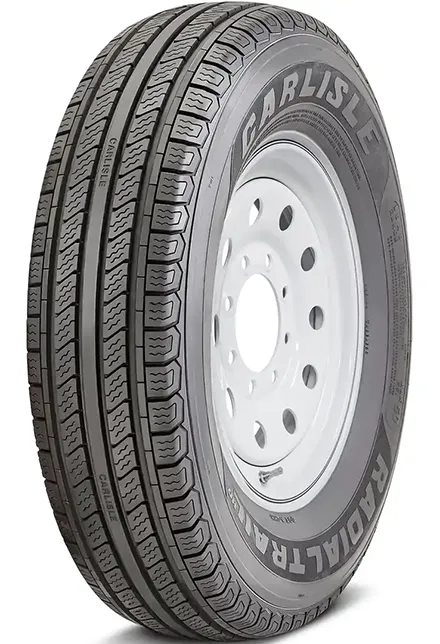
7. Carlisle Radial Trail HD: Best Widely Available Trailer Alternative
Price Check
Check the price of this tire at the following retailers:
This is the second tire most consistently mentioned alongside Sailun in RV community discussions about Goodyear Endurance alternatives, and it brings genuinely wide retail availability to the table.
Reinforced construction is a real, consistently cited strength, with independently reported data describing solid resistance to the sidewall stress patterns that generate the most serious ST tire complaints. Real owner reports describe dependable towing stability across sustained highway use.
Pros: Genuine reinforced construction, wide retail availability, competitive pricing.
Cons: Ride quality trails premium options, less extensive long-term community track record than Michelin or Maxxis.
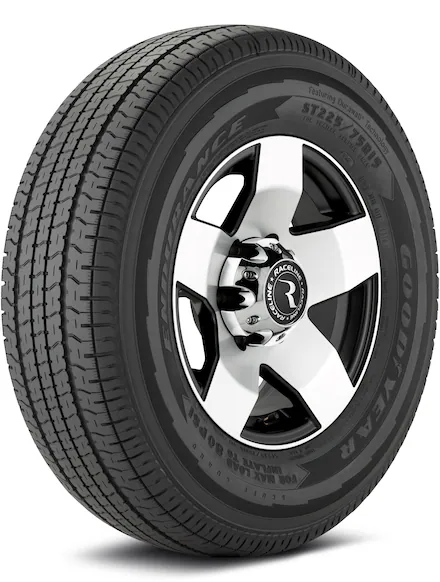
8. Goodyear Endurance: Travel Trailers (With the Above Caveats)
Price Check
Check the price of this tire at the following retailers:
This remains a genuinely engineered tire with real strengths, and it’s included here rather than dropped entirely because the complaint pattern documented above doesn’t appear to be universal.
Heat resistance is a genuine, well-documented core strength — independently reported testing describes tires remaining cool to the touch even after sustained high-speed summer towing, directly addressing the primary cause of trailer tire failure. Sway reduction relative to generic ST tires is real and consistently reported by owners who’ve made the switch.
Given the documented complaint pattern, more frequent visual sidewall inspection is a genuinely sensible precaution for owners choosing this tire, and registering the tire directly with Goodyear ensures notification of any future recall action.
Pros: Genuine heat-resistance engineering, real sway-reduction benefit, wide availability and strong warranty support when claims are approved.
Cons: A real, documented pattern of sidewall and belt-failure complaints exists — weigh this honestly against the alternatives above.
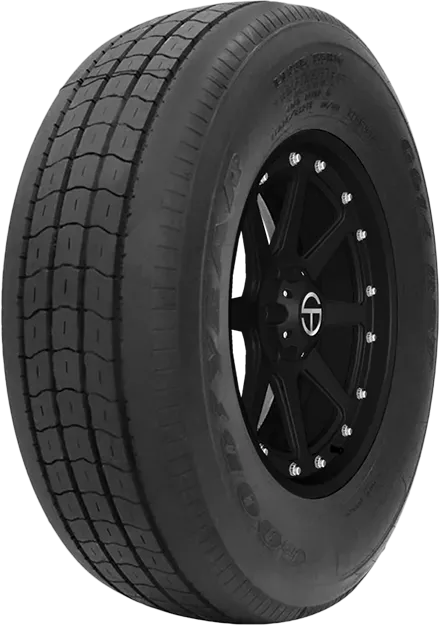
9. Goodyear G614 RST: Best for Class C Motorhomes
Price Check
Check the price of this tire at the following retailers:
This LT tire is consistently rated among the strongest options specifically for Class C motorhomes, according to independently reported load-capacity and durability data.
Even tread wear is a genuine, well-documented strength, and wet traction holds up confidently across independently reported testing — a real, practical benefit given how much time Class C owners spend on interstate highways in variable weather.
Pros: Genuine even wear characteristics, confident wet traction, strong fit for Class C load requirements.
Cons: Premium pricing relative to generic LT alternatives.
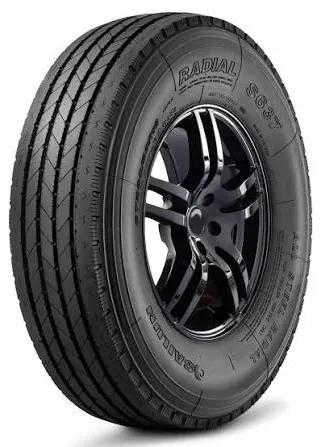
10. Sailun S637 (LT Sizing): Best Class B/C Alternative
Price Check
Check the price of this tire at the following retailers:
For Class B and C motorhome owners who want the same community-favored reliability reputation Sailun has built in the ST category, the brand’s LT-sized offerings extend that track record to motorhome applications.
Real owner reports describe dependable performance and load capacity appropriate for smaller-to-midsize motorhome applications, at a price point genuinely below comparable Michelin or Goodyear LT options.
Pros: Genuine value relative to premium LT alternatives, growing positive community reputation, competitive load capacity.
Cons: Less extensive long-term track record than Michelin XPS Rib specifically.
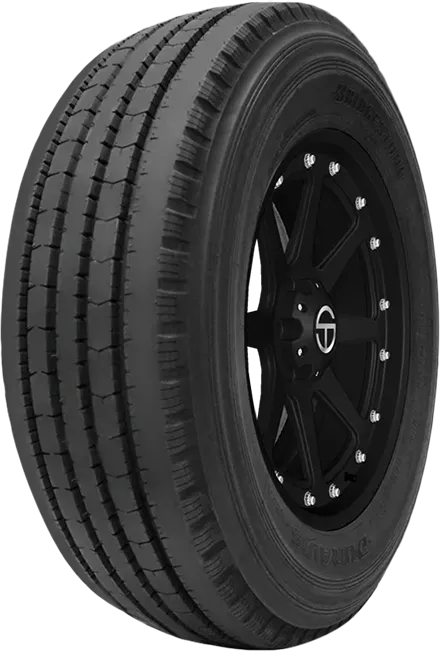
11. Bridgestone Duravis R250: Best for Class B Camper Vans
Price Check
Check the price of this tire at the following retailers:
For Class B camper van owners specifically, this LT tire delivers genuine load capacity matched to van-based platforms rather than larger, heavier Class A or C applications.
Independently reported data describes dependable highway stability and respectable tread life for the category, a sensible fit for smaller motorhome platforms that don’t need the extreme load ratings larger rigs require.
Pros: Genuine fit for van-based platforms, respectable tread life, dependable highway manners.
Cons: Not rated for the heaviest Class A or C applications.
RV Tire Buying Guide: What Actually Matters
Understanding load ratings is non-negotiable. Every RV tire’s load rating is stamped on the sidewall, and it must match or exceed the actual weight your RV puts on each axle. Getting your RV weighed at a CAT scale (available at most truck stops for around $12) reveals your true loaded weight, which is often meaningfully higher than the manufacturer’s bare-bones sticker weight once gear, water, and supplies are accounted for.
ST vs. LT tires: use the right tool for the job. ST (Special Trailer) tires have stiffer sidewalls specifically engineered to resist the lateral forces trailers generate during sway, and they’re the standard recommendation for travel trailers and fifth wheels. LT (Light Truck) tires are designed for vehicles that steer and brake — exactly what a motorhome does. Some trailer owners switch to LT tires expecting better durability, but this can actually introduce more sway rather than solving the underlying engineering mismatch.
Tire age matters more than tread depth. RV tires degrade over time regardless of remaining tread, as UV exposure, ozone, and oxidation break down rubber compounds. Most manufacturers and RV safety experts recommend replacement every 5 to 7 years regardless of mileage. The DOT code’s last four digits reveal manufacture week and year — “2321” means the 23rd week of 2021 — and it’s worth checking this even on new tires sitting on a dealer’s shelf.
Inflation pressure is the single highest-impact free safety upgrade available. Check pressure every morning before driving, using a quality digital gauge, and inflate to the pressure specified for your actual load via the manufacturer’s load-inflation table — not the maximum sidewall pressure, and not the placard pressure unless the RV is loaded to that exact weight. Underinflation causes excessive sidewall flex, generating heat, which is the leading cause of blowouts.
Respect speed ratings. Most ST tires are rated for 65 mph, some for 75 mph. Exceeding this rating generates heat the tire wasn’t engineered to dissipate, and the risk compounds with every additional mile per hour above the rating, especially in hot weather.
Common RV Tire Mistakes to Avoid
Buying the cheapest no-name tire available. Budget constraints are real, but some offshore brands carry genuinely inconsistent quality control. At minimum, choose an established budget brand with a real track record, like Taskmaster.
Ignoring the manufacture date on new tires. Tires can sit in a warehouse or on a shelf for years before sale — always check the DOT code, even on tires labeled “new.”
Storing an RV without tire covers. UV radiation genuinely accelerates rubber degradation. Quality tire covers during storage periods can meaningfully extend usable tire life.
Skipping a TPMS. A slow leak at highway speed can heat a tire to failure within minutes. A tire pressure monitoring system is a genuinely worthwhile investment relative to the cost of a blowout.
Mixing tire brands or types on the same axle. Always run matching tires per axle — mismatched tires cause uneven handling and accelerated wear.
Where to Buy RV Tires
Tire Rack offers competitive pricing, ships to local installers, and maintains a genuinely useful verified-buyer review system.
Discount Tire / America’s Tire provides strong brick-and-mortar coverage with price matching and road hazard warranty support.
Camping World stocks a wide range of RV-specific ST tires with staff generally familiar with RV-specific needs, though pricing runs higher outside of sales.
Costco offers competitive pricing and included services for members, though RV-specific size selection is more limited.
Amazon is convenient for shipping to a local installer, but verifying the seller and checking manufacture date on arrival matters more here than with most purchases.
Recommendations by RV Type
Class A motorhome (gas or diesel): Michelin XRV. The purpose-built engineering and emergency-maneuver composure justify the premium price given the value of the vehicle it protects.
Class B camper van: Continental VancoFourSeason for year-round use, or Bridgestone Duravis R250 for warmer-climate, seasonal use.
Class C motorhome: Michelin XPS Rib or Goodyear G614 RST, both delivering genuine stability improvement on rigs that can feel top-heavy in crosswinds.
Travel trailer: Sailun S637 or Carlisle Radial Trail HD given the documented Goodyear Endurance complaint pattern, or the Endurance itself with more frequent sidewall inspection if you’ve had a positive experience with it previously.
Fifth wheel: Maxxis M8008 ST Radial for the strongest balance of capacity and value.
Weekend or budget trailer: Taskmaster Provider for honest, reliable performance at an accessible price.
Maintaining RV Tires
Check pressure every morning before driving, not weekly. Use a quality digital gauge and the manufacturer’s load-inflation table for your actual weight, not the maximum sidewall figure.
Inspect visually at every fuel stop, particularly sidewalls, for bulging, cracking, or embedded debris — a habit genuinely worth adopting given the documented failure patterns covered throughout this guide.
Rotate and balance according to manufacturer guidance, and have alignment checked on the tow vehicle or motorhome chassis periodically.
Replace by age, not just tread depth — 5 to 7 years regardless of mileage, checking the DOT date code directly.
Frequently Asked Questions
What are the best RV tires for long-distance highway driving in the US?
The Michelin XPS Rib, Maxxis M8008 ST Radial, and Michelin XRV are among the strongest choices for long-distance highway driving, engineered for heavy loads, heat resistance, and extended tread life. Expect $100 to $550 per tire depending on size and application.
How often should you replace tires on an RV even if the tread looks good?
Most manufacturers and RV safety experts recommend replacement every 5 to 7 years regardless of tread depth, since rubber compounds degrade from UV exposure, ozone, and oxidation over time. Always check the DOT date code on the sidewall before a long trip.
Is the Goodyear Endurance still a good tire despite the complaints?
It remains a genuinely engineered tire with real heat-resistance strengths, and many owners report years of trouble-free service. However, a real, documented pattern of sidewall bulging and belt failures exists across multiple RV community forums, including cases of brand-new sets failing within a few hundred miles. Weighing alternatives like the Sailun S637 or Carlisle Radial Trail HD alongside the Endurance, and inspecting sidewalls more frequently if you choose it, are both genuinely sensible approaches.
Should I use ST or LT tires on my travel trailer?
ST tires are purpose-built for trailers, with stiffer sidewalls specifically designed to resist sway and handle heavy vertical loads, making them the standard recommendation for travel trailers and fifth wheels. LT tires can work as an alternative but require careful load-rating verification against your trailer’s GVWR.
What is the best tire pressure for RV tires to prevent blowouts?
The correct pressure depends on actual axle weight, not the maximum PSI on the sidewall. Get your RV weighed at a CAT scale, then consult the tire manufacturer’s load-inflation table for the correct pressure. Underinflation is the leading cause of RV tire blowouts.
How much do good RV tires cost, and is it worth paying more for premium brands?
Quality ST tires for travel trailers typically run $100 to $250 each, while Class A motorhome tires from premium brands run $250 to $550 each. Paying more for a tire with a strong, verified reliability track record is generally worthwhile, since a single blowout can cause thousands of dollars in damage well beyond the tire’s replacement cost.
Do RV tire covers actually help extend tire life?
Yes. UV tire covers are among the cheapest, most effective ways to extend RV tire life, particularly for RVs stored between trips in sun-heavy states. Constant UV exposure accelerates dry rot and sidewall cracking, and covers can meaningfully slow that degradation.
