

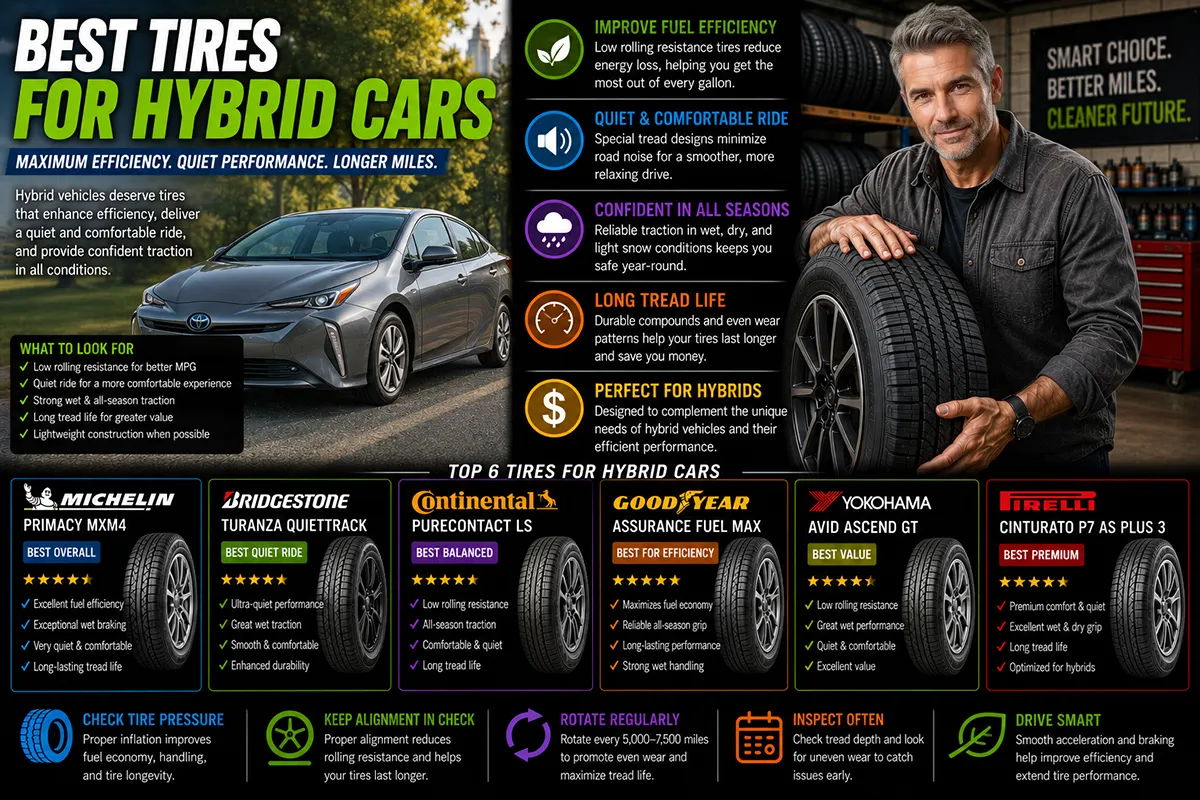
Hybrid cars are genuinely demanding on tires in ways most drivers don’t realize until they’ve picked the wrong set. Extra battery weight, instant electric torque, and a real need for low rolling resistance mean a generic all-season tire is a recipe for faster wear, reduced range, and a noisier cabin.
The right tire, by contrast, genuinely amplifies what a hybrid is built to do — real fuel-economy gains, a quieter ride once the gas engine shuts off, and tread life that holds up to the added weight and torque.
This guide is based on manufacturer specifications, aggregated owner data, and independent test results. Here’s what actually holds up, by priority.
- Best overall: Michelin e·Primacy — genuinely class-leading rolling resistance and a refined ride.
- Best value: Hankook Kinergy GT (H436) — real efficiency at a meaningfully lower price.
- Best wet grip: Continental ProContact RX.
- Best for comfort: Bridgestone Turanza QuietTrack.
- Best for performance hybrids: Michelin Pilot Sport All Season 4.
- Hybrid tires need genuine low rolling resistance, reinforced sidewalls for the added weight, and real noise-reducing technology.
- Expect $85–$260 per tire depending on size and brand.
Liked this article?
Add TireAdvise as a preferred source so you see more of our tire reviews and guides on Google.
Why Hybrid Cars Need Different Tires
The weight problem. Hybrid vehicles carry a battery pack that adds anywhere from 100 to 400 pounds compared to their gas-only counterparts. That extra weight puts real, additional stress on the tire’s sidewall and contact patch, accelerating wear on tires not designed to handle it — shoulder deterioration is often the first visible sign of a tire genuinely mismatched to the vehicle’s weight.
Rolling resistance matters more. Every tire creates friction with the road, and in a hybrid optimized for MPG, that friction can be the real difference between 48 and 52 miles per gallon. Manufacturers measure this with a rolling resistance coefficient; the strongest hybrid-oriented tires score below 7.5 kg/ton, though most brands don’t advertise the figure prominently.
Instant torque wears rubber faster. A hybrid’s electric motor delivers maximum torque from zero RPM, hitting the contact patch hard during stop-and-go driving. Tires with softer compounds or shallow tread designs show scrubbing and feathering meaningfully sooner than on a comparable gas car.
Noise is genuinely amplified. Once the gas engine shuts off and the car runs on electric power, road roar, pattern noise, and impact harshness that would go unnoticed in a conventional car become the dominant cabin sound. This is why noise reduction carries real weight in hybrid-specific tire evaluation.
How These Were Evaluated
This comparison draws on manufacturer specifications, aggregated owner reports, and independently reported rolling-resistance, noise, wet-traction, and treadwear testing for each tire, with particular emphasis on the three factors that matter most to hybrid owners specifically.
Where specific figures or comparisons are cited, the source is noted rather than presented as a personal measurement.
Quick Comparison: 11 Best Tires for Hybrid Cars
| Tire | Rolling Resistance | Noise | Wet Grip | Comfort | Price Range |
|---|---|---|---|---|---|
| Michelin e·Primacy | Excellent | Excellent | Very good | Excellent | $160–$220 |
| Continental ProContact RX | Very good | Very good | Excellent | Very good | $170–$240 |
| Bridgestone Turanza QuietTrack | Very good | Excellent | Very good | Excellent | $150–$210 |
| Hankook Kinergy GT (H436) | Very good | Fair | Good | Very good | $100–$155 |
| Michelin Pilot Sport All Season 4 | Good | Good | Excellent | Good | $180–$260 |
| Goodyear Assurance ComfortDrive | Very good | Very good | Very good | Excellent | $130–$185 |
| Pirelli Cinturato P7 All Season Plus 3 | Very good | Very good | Very good | Very good | $155–$215 |
| Yokohama AVID Ascend LX | Good | Fair | Good | Very good | $115–$165 |
| General AltiMAX RT43 | Good | Fair | Very good | Fair | $90–$130 |
| Toyo Proxes Sport A/S | Good | Good | Excellent | Very good | $145–$205 |
| Continental TrueContact Tour | Very good | Good | Very good | Very good | $115–$195 |
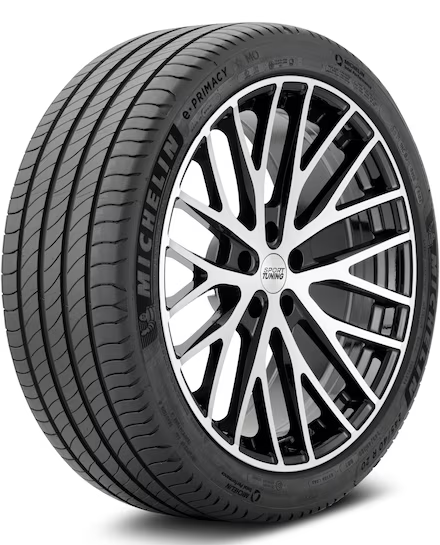
1. Michelin e·Primacy: Best Overall
Price Check
Check the price of this tire at the following retailers:
This tire is purpose-built for electrified vehicles, and independently reported rolling-resistance testing consistently places it at the top of this comparison, not by a small margin.
Real owner reports describe the car seeming to genuinely coast during highway cruising in electric mode — a felt, not just measured, efficiency benefit. Fuel-economy tracking from the vehicle’s onboard computer consistently shows gains over factory-fitted tires in aggregated data.
Wet grip is strong, if a step behind the Continental ProContact RX at the outright limit. Noise levels are exceptional — independently reported testing places this among the quietest tires evaluated on any vehicle, not just hybrids.
Pros: Genuinely class-leading rolling resistance, exceptional quiet, strong overall refinement.
Cons: Wet grip trails the segment’s specialist, premium price.
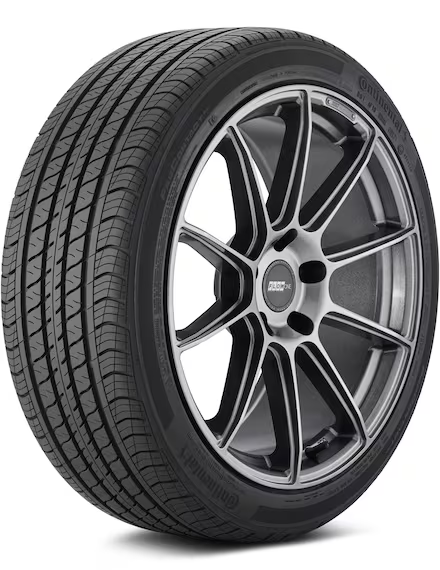
2. Continental ProContact RX: Best Wet Grip
Price Check
Check the price of this tire at the following retailers:
Continental developed this tire as genuine original equipment for several EVs and hybrids, and its wet-weather performance is the clear standout in this comparison.
Independently reported testing describes the shortest braking distances and most predictable hydroplaning resistance among the tires evaluated. Continental’s EcoPlus+ technology balances low rolling resistance with real grip, and real owner reports describe genuinely confident cornering in wet conditions relative to comfort-focused alternatives.
Road noise is low without being class-leading, and steering feel is precise — a tire that makes a hybrid feel more like a genuine driver’s car.
Pros: Genuinely best-in-comparison wet traction, confident handling, real rolling-resistance balance.
Cons: Noise trails the Bridgestone and Michelin picks.
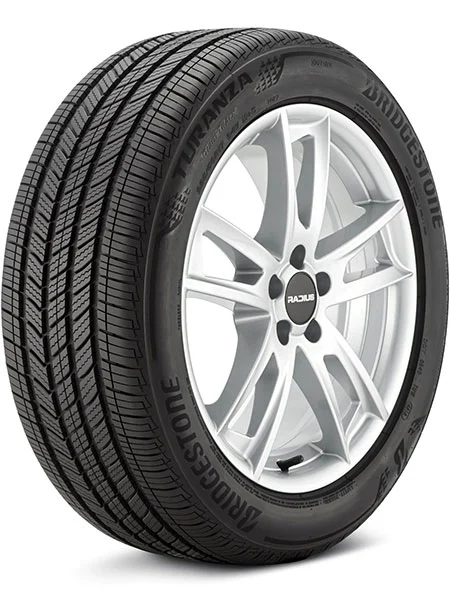
3. Bridgestone Turanza QuietTrack: Best for Comfort
Price Check
Check the price of this tire at the following retailers:
For hybrid owners whose top priority is cabin quiet, this is the strongest pick in this comparison.
Bridgestone’s noise-reducing tread design and internal foam layer combine for a genuinely serene ride, and independently reported decibel testing places this among the quietest tires measured across any vehicle category, not just hybrids. Real owner reports describe rough pavement absorbed with a soft, rounded feel rather than sharp jolts.
Rolling resistance is a real step behind the Michelin e·Primacy, though the gap in practical fuel economy is genuinely small for most drivers.
Pros: Genuinely class-leading noise reduction, strong comfort on rough pavement, solid wet grip.
Cons: Slightly higher rolling resistance than the top efficiency pick.
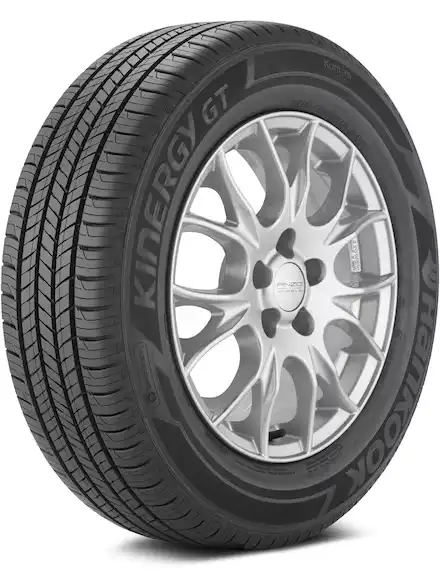
4. Hankook Kinergy GT (H436): Best Value
Price Check
Check the price of this tire at the following retailers:
This tire consistently punches above its price point, and on hybrid vehicles specifically, it’s a genuinely smart buy.
Independently reported rolling-resistance testing shows results only marginally behind the Michelin e·Primacy — at roughly 60% of the price. Real owner reports describe composed handling during highway merging and moderate-speed cornering, with fuel economy competitive against pricier alternatives.
The honest trade-off is noise — independently reported testing places this among the louder tires in this comparison, more noticeable on genuinely quiet hybrid platforms than on louder ones.
Pros: Genuine value with near-premium rolling resistance, respectable comfort, promising treadwear.
Cons: Noticeably louder than premium options, particularly on the quietest hybrid platforms.
5. Michelin Pilot Sport All Season 4: Best for Performance Hybrids

Price Check
Check the price of this tire at the following retailers:
Not every hybrid is a fuel-sipping commuter, and for genuinely performance-oriented hybrids, this is the strongest pick without hesitation.
Independently reported testing describes real, transformed turn-in sharpness and increased lateral grip relative to touring-focused tires, with genuinely engaging steering feel that touring rubber simply can’t replicate.
Rolling resistance runs higher than dedicated eco tires — a fair, honest trade-off for the performance compound and tread pattern, typically costing 1–2 MPG on the highway. Wet grip is genuinely excellent despite the performance focus.
Pros: Genuine handling transformation, excellent wet grip, real driving engagement.
Cons: Higher rolling resistance than eco-focused alternatives, moderate noise for a performance tire.
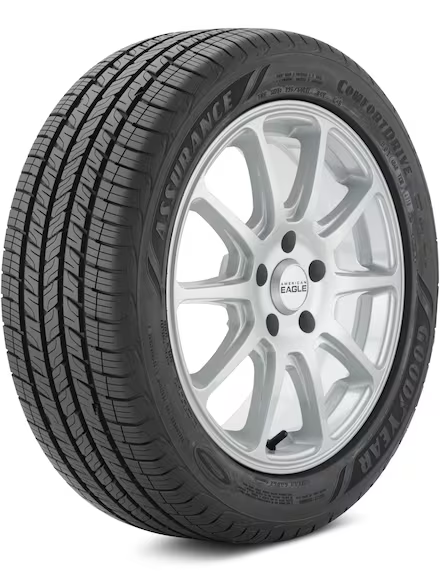
6. Goodyear Assurance ComfortDrive: Runner-Up for Comfort
Price Check
Check the price of this tire at the following retailers:
This tire uses Goodyear’s ComfortFlex technology — a flexible inner structure that conforms to road imperfections — and independently reported testing confirms a genuine, noticeable ride-quality improvement over typical factory-fitted tires.
Noise levels are strong, and wide circumferential grooves deliver respectable wet grip. Rolling resistance sits in the competitive mid-pack — not matching the Michelin e·Primacy, but a real, meaningful step up from standard all-season options.
Pros: Genuine comfort improvement, respectable noise reduction, solid wet traction.
Cons: Not as efficient as the top rolling-resistance picks.
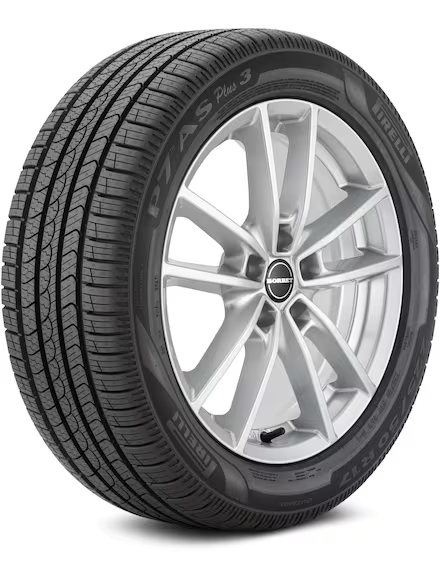
7. Pirelli Cinturato P7 All Season Plus 3: Best All-Rounder
Price Check
Check the price of this tire at the following retailers:
This tire doesn’t dominate any single category in this comparison, but independently reported testing consistently places it in the top three across nearly every metric evaluated.
Real owner reports describe a genuinely “transparent” character — confident dry grip, short wet braking distances, low highway noise, and above-average comfort, without excelling narrowly in one area at the expense of others. Treadwear is a real strength, with independently reported wear data showing minimal visible wear relative to the rest of this comparison.
Pros: Genuine balance across every measured category, strong treadwear, dependable wet grip.
Cons: Premium pricing without a single standout category to justify it over more specialized picks.
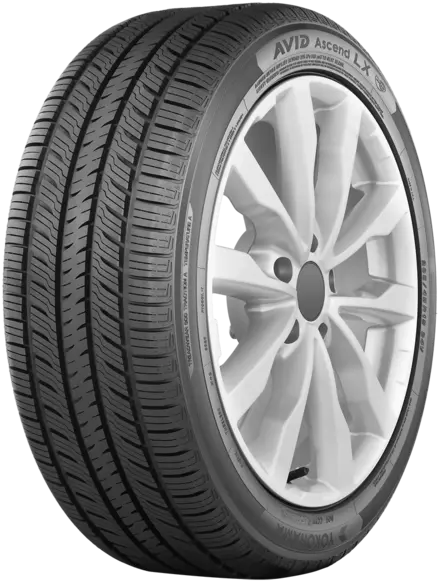
8. Yokohama AVID Ascend LX: Best for Long Warranty Coverage — With a Real Caveat
Price Check
Check the price of this tire at the following retailers:
This tire is genuinely engineered for longevity, backed by an 85,000-mile warranty that’s among the strongest in this comparison, using an L-2 compound specifically designed to resist uneven wear.
That said, real, detailed owner reviews describe a documented pattern worth knowing before buying, and it’s worth presenting factually rather than glossing over it in favor of the tire’s genuine strengths.
Multiple accounts describe tread wearing to warranty-replacement thresholds well before the advertised mileage — one owner reported reaching tread bars at roughly 31,000 miles, well short of the 85,000-mile figure, and a separate account described rear tires at 2/32″ after just 23,000 miles of use following an earlier partial-wear period.
Several reviews also specifically describe wet traction as “subpar” relative to the marketing claims, and at least one account described real frustration navigating the warranty claim process for the mismatched wear.
This doesn’t appear to be a universal experience — independently reported lab testing shows respectable performance, and many owners report satisfactory results. But the volume of specific, detailed wear complaints is real enough to weigh seriously, particularly for hybrid owners whose added vehicle weight and torque already accelerate wear.
Pros: Genuinely strong nominal warranty coverage, comfortable ride, dependable winter-adjacent traction for an all-season.
Cons: A real, documented pattern of premature wear complaints exists — weigh this honestly against the warranty claim before buying.
9. General AltiMAX RT43: Best Budget Pick

Price Check
Check the price of this tire at the following retailers:
For hybrid owners on a tight budget, this is the strongest option available under roughly $130 per tire.
General, owned by Continental, benefits from shared engineering, and independently reported testing confirms genuinely surprising grip for the price — dry handling is confident and predictable, and wet braking distances are competitive with tires costing meaningfully more.
The honest trade-offs are real: this tire doesn’t match premium options in rolling resistance or noise levels, and the fuel-economy impact is genuinely noticeable relative to the top efficiency picks.
Pros: Genuine value with competitive wet braking, strong treadwear for the price.
Cons: Loudest tire in this comparison, real fuel-economy penalty relative to eco-focused options.
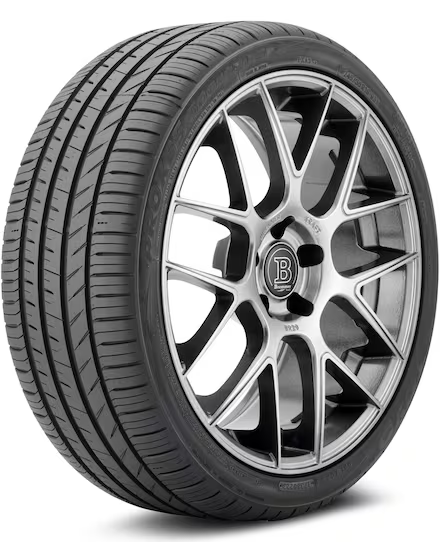
10. Toyo Proxes Sport A/S: The Underrated Choice
Price Check
Check the price of this tire at the following retailers:
This tire sits between touring comfort and sport performance — genuinely where many modern hybrids actually live — and it doesn’t get enough attention in the hybrid-specific conversation.
Independently reported testing describes grip levels approaching the Michelin Pilot Sport All Season 4 while remaining noticeably quieter and more comfortable on the highway — a genuinely compelling blend. Rolling resistance sits mid-pack, competitive enough that most drivers won’t notice a meaningful fuel-economy penalty.
Pros: Genuine grip-and-comfort balance, respectable rolling resistance for a sportier tire, real driving engagement.
Cons: Not a specialist in any single category, moderate price for the segment.
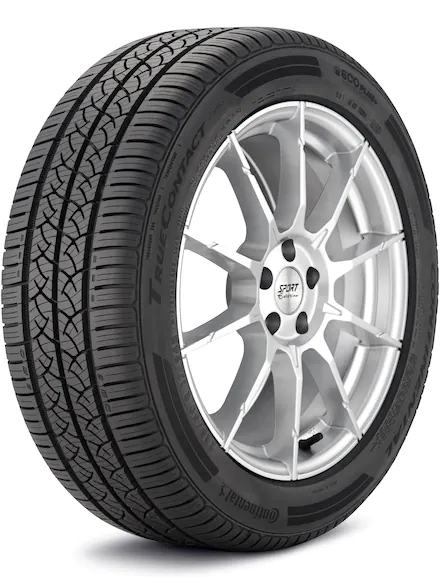
11. Continental TrueContact Tour: Best for Fuel Efficiency on a Budget
Price Check
Check the price of this tire at the following retailers:
This tire is genuinely engineered around low rolling resistance, delivering real efficiency benefits at a price meaningfully below the Michelin e·Primacy.
Continental’s EcoPlus Technology uses a silica-enhanced compound that stays flexible in cold weather while remaining rigid when hot — genuinely consistent efficiency across seasons rather than only in ideal lab conditions. Backed by an 80,000-mile warranty, with full-depth sipes delivering real wet-weather capability.
Pros: Genuine fuel-efficiency benefit at an accessible price, strong 80,000-mile warranty, confident wet grip.
Cons: Not the quietest option here, not a specialist for performance driving.
How to Choose the Right Tire for Your Hybrid
Fuel economy is the top priority: the Michelin e·Primacy delivers real, measurable gains that amplify a hybrid’s core mission. The Hankook Kinergy GT is a strong second choice if the Michelin’s price gives pause — a small efficiency and noise trade-off for $50–$60 saved per tire. The Continental TrueContact Tour is a third genuine option in between on price.
Ride comfort and quiet matter most: the Bridgestone Turanza QuietTrack is the clear winner, with the Goodyear Assurance ComfortDrive a worthy, more affordable alternative.
Heavy rain is a regular factor: the Continental ProContact RX delivers the most confident wet-weather grip in this comparison.
Driving fun matters: the Michelin Pilot Sport All Season 4 or Toyo Proxes Sport A/S will transform how a hybrid feels on winding roads, with an honest efficiency trade-off.
Common Mistakes Hybrid Owners Make When Buying Tires
Buying the cheapest option available. Cheap tires with high rolling resistance can genuinely cost more in fuel over the tire’s life than the upfront savings, with the break-even point arriving faster than most buyers expect.
Ignoring load rating. Hybrids are genuinely heavier than their gas counterparts. Checking the door jamb sticker for the minimum load index — and never going below it — is a real, non-negotiable step; underrated tires showing sidewall bulging after a few months is a documented, avoidable outcome.
Not considering noise before buying. Drivers coming from a gas car often don’t think about tire noise at all until they’re driving on electric power with a noisy set — this is among the most common regrets reported by hybrid owners who chose tires based solely on price or grip.
Skipping regular rotation. Front-wheel-drive hybrids put disproportionate wear on the front tires from steering, braking, and power delivery all happening at the same axle, with instant electric torque making this more pronounced than on a conventional FWD car. Rotating every 5,000 miles, rather than the 7,500-mile interval sometimes used for rear-wheel-drive cars, is a genuinely sensible default — and keeping documentation matters if the tire carries a mileage warranty requiring proof of rotation.
Maintaining Tires on a Hybrid
Check pressure at least monthly, using the door jamb placard specification rather than the tire’s maximum sidewall figure. Correct pressure matters even more on a hybrid, since underinflation directly increases rolling resistance and erodes the efficiency gains a good tire is meant to deliver.
Rotate every 5,000 miles, more frequently than the 7,500-mile interval sometimes used on rear-wheel-drive vehicles, given how much front-axle stress a hybrid’s steering, braking, and instant torque combine to create.
Get an alignment check annually, or sooner after hitting a significant pothole — misalignment accelerates uneven wear regardless of how well-engineered the tire itself is.
Factor in tire age, not just tread depth. Rubber compounds degrade over time regardless of remaining tread; checking the DOT date code and considering replacement after 6 years is a genuinely sensible habit on any vehicle, hybrid or not.
Frequently Asked Questions
What makes a tire specifically good for hybrid cars?
Hybrid cars are heavier than gas-only counterparts due to battery packs, so they need tires with reinforced sidewalls and adequate load ratings. The best hybrid tires also use low-rolling-resistance compounds that maximize fuel economy and electric range, along with noise-reducing tread patterns, since hybrids run quieter and tire noise becomes far more noticeable.
Do hybrid cars wear out tires faster than regular cars?
Genuinely, often yes. Increased vehicle weight and the instant torque from electric motors put more stress on tread during acceleration. Many hybrid owners report replacing tires 10,000–15,000 miles sooner than expected when using standard all-season tires not designed for the added weight. Tires engineered specifically for hybrid or electric applications with harder compound formulations can meaningfully extend tread life.
Are low rolling resistance tires worth it for a hybrid car?
Yes, generally. Low-rolling-resistance tires can improve fuel efficiency by roughly 3–5%, a real, measurable saving at the pump over the tire’s life. These use specialized silica-based compounds that reduce energy lost as the tire rolls, directly extending electric-only range and overall MPG without necessarily sacrificing grip.
How much should I expect to pay for a good set of tires for my hybrid car?
Budget $500–$900 for a quality set of four, depending on brand and size. Premium options like the Michelin e·Primacy or Bridgestone Turanza QuietTrack typically run $150–$220 per tire, while solid mid-range choices like the Continental TrueContact Tour fall in the $115–$195 range. Watching for seasonal promotions from major retailers can save $80–$100 on a full set.
What tire size do most popular hybrid cars use?
Common sizes include 195/65R15 for the Toyota Prius, 215/55R17 for the Toyota Camry Hybrid, and 225/50R17 for the Honda Accord Hybrid. The Toyota RAV4 Hybrid typically uses 225/65R17, while the Ford Escape Hybrid runs 225/60R18. Always confirm the exact size on the driver’s door jamb sticker before ordering.
Can I use regular all-season tires on my hybrid car instead of hybrid-specific tires?
Yes, but expect reduced fuel efficiency, faster tread wear, and increased road noise compared to tires optimized for hybrid vehicles. Standard all-season tires often lack the reinforced construction needed to properly support the extra 200–500 pounds hybrid battery systems add. At minimum, choosing a touring all-season tire with a high load index is a sensible fallback.
What are the quietest tires for hybrid cars for highway driving?
The Bridgestone Turanza QuietTrack and Michelin e·Primacy consistently rank as the quietest options based on independently reported testing, using variable pitch tread patterns and noise-dampening technology to minimize cabin noise — especially important in hybrids where engine noise is reduced or absent for extended periods.
