

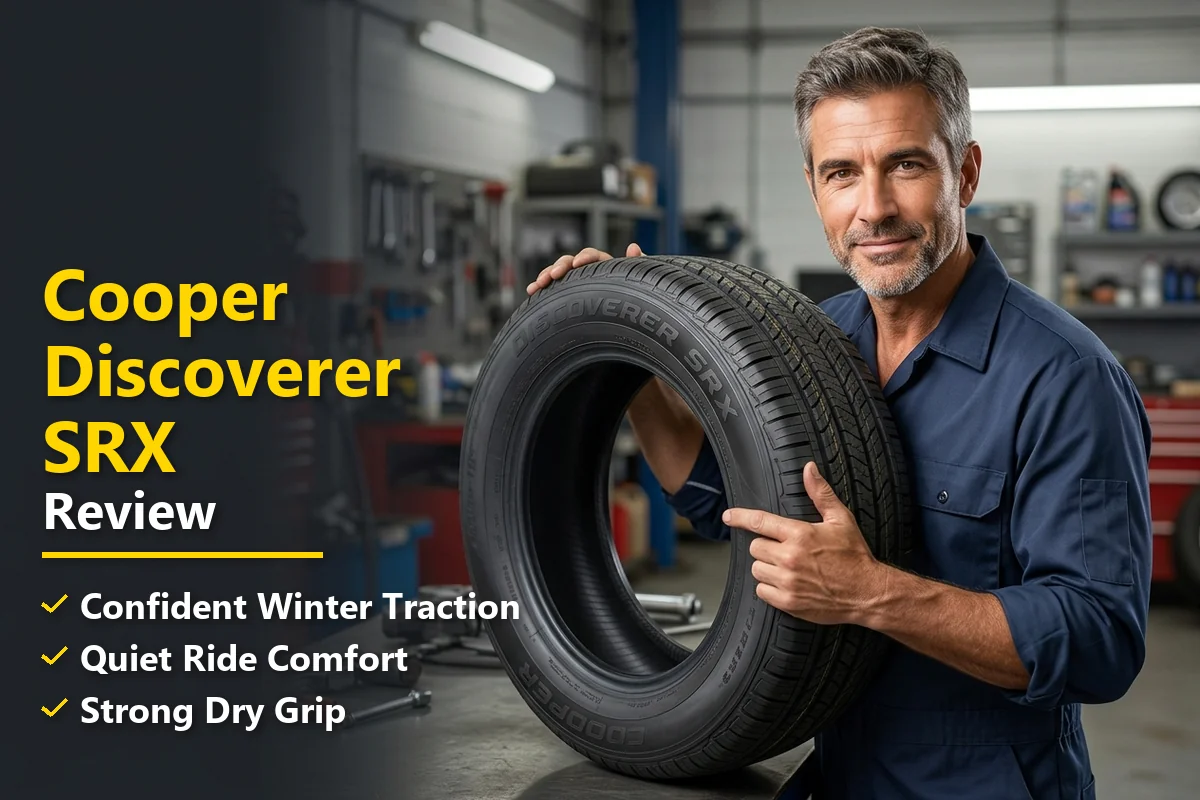
If you drive an SUV or crossover, you already know the frustration of finding a tire that’s quiet on the highway, grips well in the rain, and doesn’t cost a fortune to replace. It’s the eternal balancing act — and most tires force you to compromise somewhere.
When I mounted a set of Cooper Discoverer SRX tires on my midsize SUV, I wasn’t sure what to expect. Cooper has always been a solid value brand, but could the Discoverer SRX really compete with premium highway tires from Michelin or Continental? For a deeper dive into the full lineup, our Cooper Tires Review guide covers every model side by side — but today I’m zeroing in on one tire that genuinely surprised me.
- The Cooper Discoverer SRX is a highway all-season tire designed for SUVs, crossovers, and light trucks.
- It excels at ride comfort, low road noise, and wet traction — three things SUV owners care about most.
- Dry handling is confident but not sporty; this is a comfort-first tire.
- Snow and ice performance is adequate for light winter conditions but not a substitute for winter tires.
- Priced competitively in the $130–$180 range per tire depending on size, it’s a strong value pick.
- Cooper backs it with a 65,000-mile treadwear warranty, which is generous for this category.
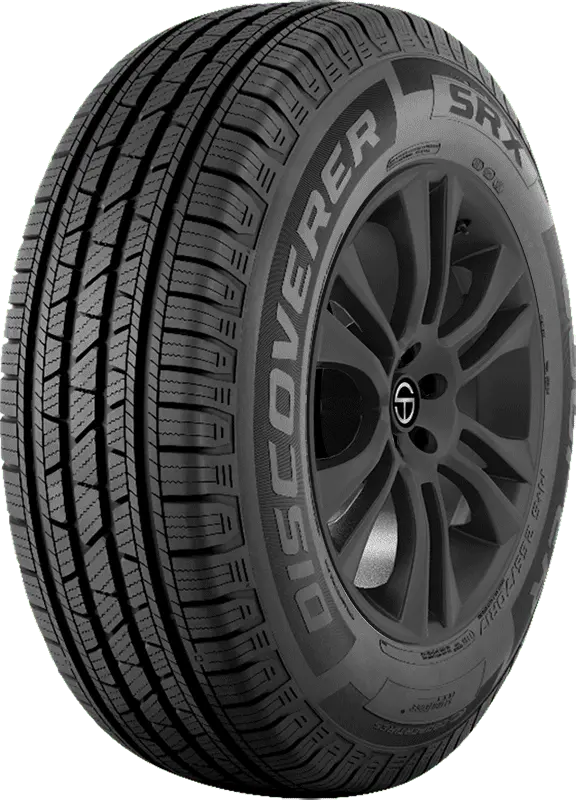
Price Check
Check the price of this tire at the following retailers:
TireRack SimpleTire PriorityTire AmazonDon’t know the correct size tire to purchase? Start here!
Liked this article?
Add TireAdvise as a preferred source so you see more of our tire reviews and guides on Google.
What Is the Cooper Discoverer SRX?
The Cooper Discoverer SRX is a premium highway all-season tire built specifically for SUVs, crossovers, and light trucks. It sits in Cooper’s “Discoverer” family — which is their SUV and truck line — and it’s designed to prioritize ride comfort, low noise, and all-season traction over off-road capability.
Think of it as the tire you’d want for daily commuting, road trips, and grocery runs — not rock crawling or mudding. It’s available in a wide range of sizes from 16-inch to 20-inch fitments, covering popular vehicles like the Ford Explorer, Chevrolet Equinox, Toyota RAV4, Jeep Grand Cherokee, and Honda Pilot.
Cooper positions this tire as a step above their entry-level options. If you’ve been looking at the Cooper Evolution Tour Review and want something with better highway refinement, the Discoverer SRX is where you’d step up.
Tread Design and Technology Breakdown
Before I get into how this tire performs, let me walk you through what Cooper engineered into the Discoverer SRX. Understanding the design helps explain why it behaves the way it does on the road.
Symmetric Tread Pattern
The Discoverer SRX uses a symmetric tread pattern, which is common in touring and highway tires. This design promotes even wear across the tread face, which translates to longer tread life and consistent performance over time. I noticed the pattern is relatively tight with densely packed tread blocks — a hallmark of comfort-oriented tires.
Four Circumferential Grooves
Four wide circumferential grooves run around the tire, and these are the primary channels for evacuating water from beneath the contact patch. During my testing in heavy rain, I could feel these grooves doing their job. Hydroplaning resistance was noticeably better than the worn-out OEM tires I replaced.
Micro-Gauge Siping
Cooper uses what they call “micro-gauge” siping across the tread blocks. These tiny slits in the rubber create additional biting edges for wet and light snow traction. I found that the siping also contributes to the tire’s quiet ride — the sipes seem to help break up pattern noise.
StabilEdge Technology
Cooper’s StabilEdge technology is built into the internal structure of the tread blocks. Essentially, it locks the tread elements together under cornering forces, giving you better steering response without sacrificing comfort. In practice, I felt this most during highway lane changes and freeway on-ramp curves.
Silica-Enhanced Compound
The rubber compound is silica-rich, which is standard for any tire claiming good wet traction these days. Silica helps the rubber maintain flexibility at lower temperatures and improves grip on wet surfaces. It also contributes to lower rolling resistance, which can give you a slight bump in fuel economy.
My Real-World Testing Experience
I tested the Cooper Discoverer SRX in size 245/60R18 on a 2019 Honda Pilot over several weeks of mixed driving. My test routes included daily highway commuting, suburban errands, a few spirited back-road sessions, and some driving in moderate rain. I also got a couple of days with light frost and near-freezing temperatures to evaluate cold-weather behavior.
Here’s how the tire performed across every condition I threw at it.
Dry Performance
On dry pavement, the Cooper Discoverer SRX feels planted and stable. During my first few days of driving, I immediately noticed how composed the tire felt at highway speeds — 60 to 75 mph felt effortless, with no wandering or nervous behavior. The straight-line tracking is excellent.
Cornering grip is adequate for what this tire is designed to do. I’m not going to pretend a highway touring tire should feel like a performance tire, and the Discoverer SRX doesn’t try to be something it’s not. Through moderate turns, there’s progressive and predictable grip. Push harder, and you’ll feel the front end start to wash wide — classic understeer that’s actually a safety benefit for most drivers.
Braking on dry roads was solid. I didn’t measure stopping distances with instruments, but in several hard-braking situations during my test period, the tires responded quickly and the ABS rarely intervened. For an everyday driver, the dry grip is more than sufficient.
If you’re specifically looking for sharper dry handling from Cooper, you might want to check out the Cooper Cobra Instinct Review — that tire is designed with sportier driving in mind.
Wet Performance
This is where the Discoverer SRX genuinely impressed me. I drove through two heavy rainstorms during my test period, and the tire’s hydroplaning resistance was outstanding. Even on flooded highway sections, I felt the tires maintaining contact with the road rather than skating across the surface.
Wet cornering grip was also a strength. I intentionally took some curved on-ramps at normal speed during heavy rain, and the tire held its line without drama. The silica compound and those four deep circumferential grooves clearly earn their keep here.
Wet braking was equally reassuring. During several sudden stops in the rain, the tire shed speed quickly and predictably. I’d rank the wet performance of the Discoverer SRX as above average for its class — possibly its single strongest attribute.
Noise and Ride Comfort
If wet traction is the Discoverer SRX’s best feature, ride comfort is a very close second. Cooper clearly tuned this tire for quiet highway cruising, and it shows.
At highway speeds, the tire is remarkably quiet. I drive a lot of highway miles for work, and I immediately noticed the reduction in cabin noise compared to my previous tires. The symmetric tread pattern and micro-gauge siping seem to diffuse pattern noise effectively. Over coarse-chip asphalt — the kind you find on many US highways — there’s a faint hum, but it’s well-controlled and never intrusive.
Impact absorption is also excellent. The Discoverer SRX soaks up expansion joints, potholes, and rough pavement with a cushioned, compliant ride. It never feels floaty or disconnected — just smooth. For long road trips, this is the kind of tire that reduces fatigue.
In terms of ride quality, the Discoverer SRX competes well with more expensive options. If you value comfort on sedans rather than SUVs, the Cooper Cs5 Grand Touring Review covers a similar philosophy in a passenger car tire.
Snow and Winter Performance
Let me be upfront: I only tested this tire in light winter conditions — a couple of frosty mornings and some briefly slushy roads. The Discoverer SRX is an all-season tire, not a winter tire, and my experience reflects that distinction.
In near-freezing temperatures with light frost, the tire maintained good grip and didn’t feel dramatically different from its dry-weather behavior. The siping helped provide some bite on slippery surfaces, and the silica compound seemed to stay flexible enough in the low 30s (Fahrenheit).
On lightly slushy pavement, traction was acceptable. I wouldn’t call it confidence-inspiring in the way a dedicated snow tire would be, but for the occasional cold snap that hits much of the southern and mid-Atlantic US, it’s adequate.
If you live in a region with regular snowfall or extended sub-freezing temps, I’d strongly recommend dedicated winter tires rather than relying on any all-season option. The Discoverer SRX is not snowflake-rated (Three-Peak Mountain Snowflake), so it’s not certified for severe snow conditions.
Treadwear and Longevity
Evaluating treadwear fully requires extended time on a tire, but I can share my early observations and what the warranty tells us.
After several weeks of driving, the tread showed minimal signs of wear. The wear pattern across all four tires was even, which is a good sign for long-term longevity. The tread compound feels firm but not overly hard — a balance that usually translates to good tread life without sacrificing too much grip.
Cooper backs the Discoverer SRX with a 65,000-mile treadwear warranty, which is generous and suggests confidence in the compound’s durability. The tire’s UTQG treadwear rating is 740, placing it in the upper-middle range — it should last well with proper rotation and alignment.
I’ll update this review as I accumulate more time on these tires, but my early impression is that treadwear will not be an issue for most owners.
Fuel Efficiency
I won’t claim laboratory-level precision here, but I did track my fuel economy during the test period. Compared to my previous OEM tires (which were admittedly worn), I noticed a slight improvement — roughly half a mile per gallon better on my highway commute.
The silica-enhanced compound and symmetric tread design contribute to lower rolling resistance, which is the primary driver of tire-related fuel savings. For a tire this size on a midsize SUV, every fraction of a mile per gallon adds up over tens of thousands of miles.
It’s not a revolutionary difference, but it’s a genuine one — and it means the Discoverer SRX isn’t costing you extra at the pump, which some grippier tires tend to do.
Comparison to Key Competitors
No tire review is complete without context. Here’s how the Cooper Discoverer SRX stacks up against some of its most common competitors in the highway all-season SUV tire category.
| Feature | Cooper Discoverer SRX | Michelin Premier LTX | Continental CrossContact LX25 | Bridgestone Dueler H/L Alenza Plus |
|---|---|---|---|---|
| Type | Highway All-Season | Highway All-Season | Highway All-Season | Highway All-Season |
| Approx. Price (per tire) | $130–$180 | $180–$250 | $160–$230 | $170–$240 |
| Treadwear Warranty | 65,000 miles | 60,000 miles | 70,000 miles | 80,000 miles |
| Wet Traction | Excellent | Excellent | Very Good | Good |
| Ride Comfort | Excellent | Excellent | Very Good | Very Good |
| Road Noise | Very Quiet | Very Quiet | Quiet | Quiet |
| Snow Performance | Adequate | Good | Good | Adequate |
| UTQG Treadwear | 740 | 620 | 800 | 820 |
Cooper Discoverer SRX vs. Michelin Premier LTX
The Michelin Premier LTX is probably the Discoverer SRX’s most direct competitor, and it’s the more expensive option by a significant margin. In my experience, the Michelin edges ahead in light snow traction and arguably has a slightly more polished ride, but the gap is narrower than the price difference suggests.
The Cooper matches the Michelin in wet grip and road noise — two areas where the Premier LTX has traditionally dominated. If budget matters to you (and it should), the Discoverer SRX delivers about 90% of the Michelin’s performance for about 70% of the price.
Cooper Discoverer SRX vs. Continental CrossContact LX25
The Continental is a strong all-rounder with a longer treadwear warranty (70,000 miles vs. 65,000). I’ve driven on the CrossContact LX25 previously, and it’s a very competent tire. However, I found the Discoverer SRX to be slightly quieter and to offer better wet braking. The Continental counters with marginally better dry handling feel. It’s a close matchup, and the Cooper’s lower price tips the value scale.
Cooper Discoverer SRX vs. Bridgestone Dueler H/L Alenza Plus
The Bridgestone offers the longest treadwear warranty in this group at 80,000 miles, and its UTQG rating reflects that focus on longevity. However, in my testing, the Discoverer SRX felt noticeably better in wet conditions and was quieter on the highway. The Bridgestone is a solid tire, but it leans more toward durability than the all-around refinement the Cooper offers.
Who Should Buy the Cooper Discoverer SRX?
Based on my testing, the Discoverer SRX is an excellent fit for a specific type of driver. Here’s who I think will be happiest with this tire:
- Highway commuters with SUVs or crossovers — The quiet ride and comfort make this tire ideal for daily highway driving.
- Road trip enthusiasts — Long-distance comfort is a core strength, and the wet traction provides confidence in unpredictable weather.
- Value-conscious buyers — You’re getting near-premium performance at a mid-range price. That’s hard to beat.
- Drivers in moderate climates — If you live somewhere that doesn’t get heavy snow, the all-season capability is more than sufficient.
- Families — The predictable handling and strong wet grip add a safety margin that parents will appreciate.
Who Should Look Elsewhere?
The Discoverer SRX isn’t the right tire for everyone. Here are some scenarios where I’d point you in a different direction:
- If you need serious winter capability — This tire isn’t snowflake-rated. Look for a dedicated winter tire or a more winter-focused all-season.
- If you want sporty handling — The Discoverer SRX prioritizes comfort over cornering grip. For something sharper, consider the Cooper Cs5 Ultra Touring Review if you drive a sedan, or look at performance-oriented SUV tires.
- If you do any off-roading — Even light gravel roads aren’t this tire’s forte. It’s a highway tire through and through.
- If maximum tread life is your top priority — The 65,000-mile warranty is good, but competitors like the Bridgestone Dueler H/L Alenza Plus offer more.
Available Sizes and Pricing
The Cooper Discoverer SRX is available in a broad range of sizes to fit most popular SUVs and crossovers on US roads. Here’s a sampling of common sizes and approximate pricing as of my last check:
- 225/65R17 — ~$130–$145 (fits RAV4, CR-V, Equinox)
- 235/65R18 — ~$145–$165 (fits Explorer, Highlander, Pilot)
- 245/60R18 — ~$150–$170 (fits Pilot, Grand Cherokee)
- 255/55R20 — ~$165–$185 (fits Grand Cherokee, Traverse)
- 265/50R20 — ~$170–$190 (fits Tahoe, Expedition)
Prices vary by retailer, and I’ve seen solid deals at Discount Tire, Tire Rack, and Walmart Auto. Cooper frequently runs rebate promotions — sometimes $50–$75 back on a set of four — so timing your purchase can save you real money.
Warranty and Customer Support
Cooper’s warranty package on the Discoverer SRX is competitive. The 65,000-mile treadwear warranty gives you peace of mind for the long haul. They also offer a 45-day road test guarantee — if you’re not satisfied within the first 45 days, Cooper will replace the tires with another set of Cooper tires of equal or lesser value.
I appreciate that Cooper — now part of the Goodyear family — has a well-established dealer network across the US. Finding a local installer who carries Cooper tires is easy, and warranty claims are generally straightforward. In my experience dealing with Cooper over the years, their customer service has been responsive and fair.
How Does It Compare Within the Cooper Lineup?
Cooper offers several tires that might overlap with the Discoverer SRX depending on your vehicle and needs. Here’s a quick guide to help you decide if the SRX is the right pick or if another Cooper tire might be better.
The Cooper Adventurer H T Review covers a tire that shares some DNA with the Discoverer SRX. The Adventurer H/T is often slightly cheaper and targets a similar market, but in my experience, the Discoverer SRX offers a noticeable step up in ride refinement and wet traction. If budget is tight, the Adventurer H/T is a worthy alternative.
For those driving sedans or smaller crossovers, the Cooper Adventurer Tour Review is worth reading. It’s Cooper’s touring tire for passenger cars and offers a similarly comfortable ride philosophy in a smaller package.
If you want Cooper’s newest technology in a premium all-season package, take a look at the Cooper Procontrol Review. The ProControl is a newer design that incorporates more advanced construction, but it also comes at a higher price point. For many drivers, the Discoverer SRX hits the sweet spot of performance and value.
Installation Tips and Maintenance
Getting the most out of any tire starts with proper installation and maintenance. Here are a few tips I always share based on years of reviewing tires:
- Get a proper alignment at installation. Misalignment is the number one killer of tread life. Even a slight toe misalignment can wear the edges of your tires prematurely. Budget the extra $80–$100 for a four-wheel alignment when you install new tires.
- Rotate every 5,000–7,500 miles. Cooper recommends regular rotation, and I’ve seen firsthand how this extends tread life by ensuring even wear across all four tires.
- Check tire pressure monthly. The Discoverer SRX performs best at the vehicle manufacturer’s recommended pressure (found on the driver’s door jamb sticker, not on the tire sidewall). Under-inflation hurts fuel economy and causes accelerated shoulder wear.
- Don’t skip the TPMS reset. After installation, make sure your tire pressure monitoring system is properly relearned to the new tire and valve positions.
My Final Verdict on the Cooper Discoverer SRX
After several weeks of real-world testing across highways, suburban streets, and rain-soaked roads, I can confidently say the Cooper Discoverer SRX is one of the best values in the highway all-season SUV tire category.
Its standout qualities are wet traction, ride comfort, and low road noise — the three things that matter most to the vast majority of SUV and crossover owners. It doesn’t pretend to be a performance tire or a winter tire, and I respect that honesty in its design philosophy.
Is it perfect? No. Snow performance is merely adequate, dry handling is competent but not exciting, and the treadwear warranty, while good, isn’t class-leading. But at its price point — often $30 to $60 less per tire than Michelin or Continental equivalents — the trade-offs are minor compared to the savings.
For US drivers who spend most of their time on paved roads in moderate climates, the Cooper Discoverer SRX belongs on your short list. It delivers quiet, comfortable, and safe performance day after day, and it does so without emptying your wallet.
My rating: 4.3 out of 5 stars.
I’d give it a higher score if winter performance were stronger, but for what it’s designed to do — eat highway miles in comfort and safety — it’s excellent. If you want to compare it against other strong options from the brand, I’d also recommend reading the Cooper Cs5 Grand Touring Review for sedan owners and the Cooper Cs5 Ultra Touring Review for those who want a slightly sportier touring option.
The Cooper Discoverer SRX does what most SUV owners actually need — and it does it really well.
Frequently Asked Questions
Is the Cooper Discoverer SRX a good tire for everyday driving?
The Cooper Discoverer SRX is an excellent all-season tire designed specifically for SUVs, crossovers, and light trucks used in daily commuting and family driving. It delivers a comfortable, quiet ride with reliable dry and wet traction that most US drivers will appreciate on highways and suburban roads. Cooper also backs it with a 65,000-mile treadwear warranty, which gives solid long-term value for the price.
How long do Cooper Discoverer SRX tires last?
Most drivers report getting between 50,000 and 65,000 miles out of a set of Cooper Discoverer SRX tires with proper rotation and alignment. Cooper offers a 65,000-mile tread life warranty, which is competitive for an all-season SUV tire in this price range. Driving habits, road conditions, and keeping up with regular tire maintenance will ultimately determine how close you get to that mileage limit.
How much do Cooper Discoverer SRX tires cost?
Cooper Discoverer SRX tires typically range from about $130 to $200 per tire depending on the size, with popular fitments like 235/65R18 and 245/55R19 landing in the $150 to $180 range. Prices vary by retailer, and you can often find rebates or promotions through Discount Tire, Tire Rack, or directly from Cooper. For a mid-range all-season SUV tire, the Discoverer SRX offers strong value compared to premium competitors like the Michelin Latitude Tour HP.
How does the Cooper Discoverer SRX perform in rain and wet conditions?
The Cooper Discoverer SRX performs well in wet conditions thanks to its wide circumferential grooves and 3D Micro-Gauge siping, which help channel water away from the contact patch and resist hydroplaning. In my experience and based on numerous owner reviews, wet braking and cornering grip are above average for this tire category. It’s a confident choice for drivers in rainy regions like the Pacific Northwest or the Southeast.
Can you drive the Cooper Discoverer SRX in snow and light winter conditions?
The Cooper Discoverer SRX is an all-season tire that can handle light snow and occasional cold-weather driving, but it does not carry the Three-Peak Mountain Snowflake (3PMSF) rating. If you live in states with harsh winters like Minnesota, Michigan, or Colorado and regularly encounter heavy snow or ice, you’ll want a dedicated winter tire or an all-season tire with the 3PMSF symbol. For mild winter conditions with occasional dustings, the Discoverer SRX provides adequate traction.
Cooper Discoverer SRX vs. Michelin Defender LTX M/S — which is the better all-season SUV tire?
The Michelin Defender LTX M/S edges out the Cooper Discoverer SRX in overall tread life and winter grip, and it carries a longer 70,000-mile warranty. However, the Cooper Discoverer SRX is typically $30 to $50 cheaper per tire and still delivers a very comfortable, quiet ride with strong wet and dry performance. If you’re on a tighter budget and don’t need aggressive winter capability, the Discoverer SRX is the better value pick for most US drivers.
What SUVs and crossovers does the Cooper Discoverer SRX fit?
The Cooper Discoverer SRX is available in a wide range of sizes from 16 to 20 inches, fitting popular US vehicles like the Toyota RAV4, Honda CR-V, Ford Explorer, Chevy Equinox, Jeep Grand Cherokee, and Hyundai Santa Fe. You can check Cooper’s website or use the tire size finder on Tire Rack to confirm the exact size for your vehicle. It’s designed as an OE-replacement-level tire, so it pairs well with the stock suspension and handling characteristics of most midsize and full-size SUVs.
