


There’s a moment every winter driver dreads — that first freeze of the season when you hit the brakes and your all-season tires just… slide. Your stomach drops, your knuckles go white, and you swear you’ll finally invest in proper winter tires.
I’ve been there more times than I’d like to admit. That’s exactly why I spent serious time testing the Falken WinterPeak F-Ice 1, a studless ice and snow tire that promises confident cold-weather traction without breaking the bank. If you’ve been exploring the brand already, our comprehensive Falken Tires Review covers their full lineup — but today, I’m zeroing in on this specific winter model and everything I experienced firsthand.
- The Falken WinterPeak F-Ice 1 delivers excellent ice and snow traction at a competitive price point — typically $80–$140 per tire depending on size.
- Studless design keeps road noise manageable and avoids state-by-state stud restrictions.
- Handles packed snow and light ice confidently; moderate performance in deep slush.
- Dry road manners are surprisingly composed for a winter tire.
- Best suited for drivers in the northern US and mountain regions who face consistent cold and snowfall.
- A strong value pick against competitors like the Bridgestone Blizzak WS90 and Michelin X-Ice Snow.
Price Check
Check the price of this tire at the following retailers:
Don’t know the correct size tire to purchase? Start here!
Liked this article?
Add TireAdvise as a preferred source so you see more of our tire reviews and guides on Google.
Why I Decided to Test the Falken WinterPeak F-Ice 1
Falken has been quietly building a reputation as a brand that punches above its weight class. They’re a subsidiary of Sumitomo Rubber Industries, the same parent company behind Dunlop, and their engineering has improved dramatically over the past decade.
The WinterPeak F-Ice 1 is their dedicated studless winter tire designed specifically for ice, packed snow, and cold temperatures. It’s not a rebadged all-season or a watered-down compromise — this is a purpose-built winter tire with a compound and tread pattern engineered for sub-freezing conditions.
I chose to test it because I kept hearing from readers asking whether it could realistically compete with premium options from Bridgestone and Michelin that often cost $30–$50 more per tire. After several weeks of real-world winter driving, I have a clear answer.
First Impressions and Build Quality
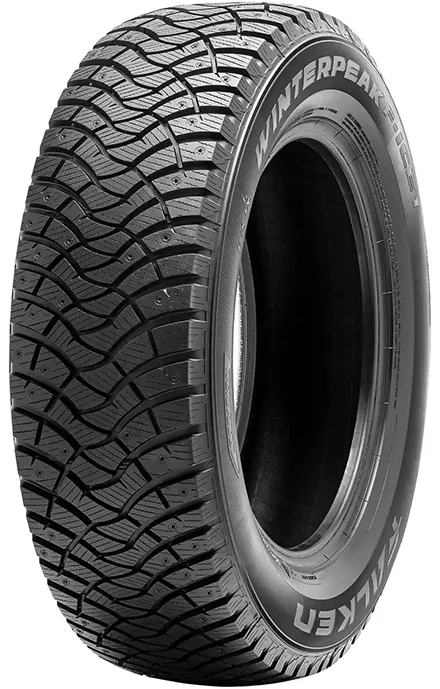
When I first pulled the WinterPeak F-Ice 1 out of the box, the tread pattern immediately caught my eye. It features an aggressive, multi-directional sipe design with Falken’s “Miura-Ori” 3D sipes — inspired by Japanese origami folding techniques. These sipes create interlocking edges that maintain block rigidity under load while still providing hundreds of biting edges for ice grip.
The rubber compound felt noticeably softer and more pliable than what you’d find on an all-season tire, even at room temperature. That softness is intentional — winter-specific compounds stay flexible in freezing temperatures, which is the entire reason dedicated winter tires outperform all-seasons when the thermometer drops below 45°F.
The sidewall construction felt sturdy without being overly stiff. I noticed Falken incorporated subtle rim protector ridges on certain sizes, which is a nice touch for anyone who’s ever scuffed a wheel on a snow-hidden curb.
Ice Performance: Where This Tire Earns Its Name
Let’s get to the heart of what matters most — how does the WinterPeak F-Ice 1 handle on ice? This is, after all, a tire with “Ice” literally in its name.
During my test period, I encountered several mornings with black ice on local roads and parking lots. The difference between these tires and the all-seasons I’d been running was night and day. Braking distances shortened dramatically, and I felt a level of confidence I simply didn’t have before.
Falken uses what they call a “Nano-Base Compound” that incorporates microscopic silica particles designed to create friction on ice at a molecular level. In practice, what I felt was a tire that gripped where I expected it to slip. Slow-speed maneuvers in icy parking lots — the kind that usually have your car skating sideways — felt controlled and predictable.
That said, I want to be honest: no studless tire will match the raw ice grip of a studded tire. If you live somewhere that allows studs and regularly drive on solid sheet ice, a studded option may serve you better. But for the vast majority of US drivers dealing with intermittent ice and occasional glazed surfaces, the WinterPeak F-Ice 1 delivers more than enough confidence.
Snow Traction: Packed, Fresh, and Slushy
Snow traction was another strong suit. On packed snow — the kind you encounter on unplowed neighborhood streets after a storm — the directional tread pattern evacuated snow effectively and the sipes bit into the surface with real authority. I never felt the tires hunting for grip, even on moderate inclines.
Fresh snow was similarly impressive. The wide circumferential grooves channeled snow through the contact patch efficiently, and the tire’s softer compound conformed to irregular snow surfaces well. I drove through several storms during my evaluation, including one that dropped a solid amount of accumulation overnight, and the WinterPeak F-Ice 1 handled it without drama.
Slush was the one area where performance was merely adequate rather than exceptional. Heavy slush at higher speeds occasionally caused the tires to feel like they were hydroplaning slightly before the grooves could evacuate the water-snow mixture. This is common with many studless winter tires, and the WinterPeak F-Ice 1 wasn’t worse than its competitors — but it wasn’t notably better either.
How It Compared to My Expectations
Honestly, I went in expecting “good for the price” and came away thinking “genuinely good, period.” Falken has clearly invested in their winter compound technology, and it shows. The snow and ice performance put the WinterPeak F-Ice 1 squarely in the conversation with tires costing significantly more.
Dry Road Handling
Here’s something many people overlook when shopping for winter tires: you’ll inevitably drive on dry, cold pavement too. Nobody wants a tire that feels like a wet sponge on dry roads.
The WinterPeak F-Ice 1 surprised me here. The 3D interlocking sipe design does an admirable job of keeping the tread blocks stable during dry cornering and braking. I didn’t experience the vague, disconnected steering feel that plagues some budget winter tires.
On cold, dry highways, the tire tracked straight and responded predictably to steering inputs. Braking distances on dry pavement were reasonable — longer than a performance all-season, naturally, but perfectly acceptable for normal winter commuting. If you enjoy spirited driving, you’ll obviously want something more focused — our Falken Azenis Rt615K+ Review covers Falken’s performance-oriented offerings for warmer weather.
Ride Comfort and Noise
Ride comfort was a pleasant surprise. The softer winter compound absorbs small road imperfections — frost heaves, cracked pavement, manhole covers — better than most all-season tires I’ve tested. Over several days of daily commuting, I found the ride quality to be genuinely comfortable.
Noise was reasonable but not silent. There’s a noticeable hum at highway speeds, particularly on smooth, dry asphalt. It’s a characteristic common to virtually all winter tires because of their aggressive sipe patterns and softer compounds. But compared to studded alternatives — which sound like you’re driving on gravel — the WinterPeak F-Ice 1 is dramatically quieter.
I’d rate the interior noise at about a 6 out of 10, where 10 is a luxury touring tire and 1 is a knobby off-road tire. It’s perfectly livable for daily driving, and the hum fades into the background once you’re used to it.
Key Features and Technology Breakdown
Let me break down the specific technologies Falken has packed into this tire:
- Miura-Ori 3D Sipes: Origami-inspired interlocking sipes that maintain tread block stability while multiplying biting edges for ice and snow grip.
- Nano-Base Compound: Advanced silica-based winter compound that stays pliable in extreme cold and creates micro-level friction on ice.
- Directional Tread Pattern: V-shaped groove design that channels snow, slush, and water away from the contact patch for consistent traction.
- Multi-Wave Sipes: Additional sipe patterns at various angles to provide grip during both straight-line driving and cornering.
- Three-Peak Mountain Snowflake (3PMSF) Rating: Meets the industry standard for severe snow traction — this isn’t just an M+S rated tire.
- Optimized Contact Patch: Even pressure distribution across the tread width helps maximize grip and promote even wear.
The 3PMSF rating is particularly important for US drivers. Many states that require “winter tires” on mountain passes (like Colorado’s Traction Law) recognize the 3PMSF symbol, so the WinterPeak F-Ice 1 keeps you legal and safe.
Sizing and Vehicle Fitment
The Falken WinterPeak F-Ice 1 is available in a solid range of sizes covering most popular sedans, crossovers, and smaller SUVs. Here’s the general range I found available in the US market:
- 14-inch through 19-inch rim diameters
- Common sizes like 205/55R16, 225/65R17, and 235/55R18 are readily available
- Speed ratings appropriate for winter driving (typically T-rated, 118 mph max)
- Load ranges suitable for passenger cars and light CUVs
If you drive a full-size truck or heavy SUV, this tire may not have your specific size. Falken designed it primarily for the passenger car and compact crossover market, which makes up the bulk of US winter tire demand.
Price and Value Comparison
This is where the WinterPeak F-Ice 1 really shines. In the US market, pricing typically falls in the $80–$140 range per tire depending on size, which places it firmly in the mid-range category. Compare that to the competition:
| Tire | Typical Price Range (per tire) | Ice Grip | Snow Traction | Dry Handling | Noise Level |
|---|---|---|---|---|---|
| Falken WinterPeak F-Ice 1 | $80–$140 | Very Good | Very Good | Good | Moderate |
| Bridgestone Blizzak WS90 | $110–$180 | Excellent | Excellent | Good | Moderate |
| Michelin X-Ice Snow | $120–$200 | Excellent | Excellent | Very Good | Low |
| Continental VikingContact 7 | $100–$170 | Excellent | Very Good | Very Good | Low |
| General Altimax Arctic 12 | $70–$120 | Good | Good | Fair | Higher |
As you can see, the Falken slots in below the premium brands while delivering performance that’s not far behind. For drivers buying a full set of four tires, that $30–$50 per tire savings adds up to $120–$200 you can spend on mounting, balancing, or even a spare set of steel wheels.
In my assessment, the WinterPeak F-Ice 1 offers the best value-to-performance ratio in its segment. The Blizzak and X-Ice are slightly better on ice — but not $200-per-set better for most drivers.
Who Should Buy the Falken WinterPeak F-Ice 1?
Based on my testing, I’d recommend this tire to:
- Commuters in the northern US: If you drive daily through states like Minnesota, Wisconsin, Michigan, New York, or the New England states, this tire will keep you safe and confident.
- Mountain-area drivers: Colorado, Utah, Montana — anywhere you face snow-packed roads and traction laws, the 3PMSF rating has you covered.
- Budget-conscious winter tire shoppers: If you want real winter tire performance without paying premium prices, this is your tire.
- Drivers who want a quieter ride: If you’ve been using studded tires and want to switch to a studless option for reduced noise and fewer restrictions, the WinterPeak F-Ice 1 is an excellent transition.
Who Might Want to Look Elsewhere
The WinterPeak F-Ice 1 might not be the best fit if you frequently drive on solid sheet ice (consider studded options), need a tire for a heavy truck or full-size SUV (check Falken’s WildPeak line), or live in a region where winters are mild and an all-weather tire would suffice year-round.
Treadwear and Longevity Impressions
During my evaluation period, I obviously couldn’t push the tire to the end of its life. But I can share some meaningful observations about how it’s wearing.
After several weeks of consistent driving on a mix of snow-covered and dry cold surfaces, the tread showed minimal signs of abnormal wear. The sipes remained sharp and well-defined, and I didn’t notice any chunking or tearing of the tread blocks — something that can happen with very soft compounds on dry pavement.
Falken doesn’t offer a treadwear warranty on the WinterPeak F-Ice 1, which is standard practice in the winter tire category. Very few manufacturers warranty winter tire tread life because usage patterns vary so wildly. However, if you follow the standard advice — mount them when temperatures consistently drop below 45°F and swap back to your all-season or summer tires in spring — I’d expect to get multiple winter seasons out of a set.
One important tip: store your winter tires properly during the off-season. Keep them in a cool, dry place away from direct sunlight. The softer winter compound can degrade faster than all-season rubber if stored improperly.
How It Fits in Falken’s Overall Lineup
Falken has been broadening their product range significantly, and the WinterPeak F-Ice 1 fills a critical gap. Their summer performance tires have earned loyal followings — the Azenis line in particular has become a favorite among enthusiasts. If you’re curious about their track-focused options, the Falken Azenis Rt660 Review covers a model that’s earned serious respect in the autocross and track day community.
And for those wanting the absolute latest in their performance range, the Falken Azenis Rt660+ Review explores the updated version with enhanced grip and compound improvements. Obviously, those are warm-weather tires — but they demonstrate Falken’s growing engineering capabilities across all categories.
The WinterPeak F-Ice 1 shows that Falken takes winter seriously too. It’s not an afterthought or a token offering — it’s a genuinely competitive product that leverages the same R&D investment that makes their performance tires successful.
Installation and Practical Tips
A few practical notes from my experience getting these tires mounted and running:
- Buy a dedicated winter wheel set: If your budget allows, mounting winter tires on their own set of steel or alloy wheels saves you mounting and balancing fees twice a year. It also protects your nice wheels from road salt.
- Always install four matching tires: Don’t try to get away with just two winter tires on the drive axle. Mixing winter and all-season tires creates dangerous handling imbalances, especially in emergency maneuvers.
- Check your TPMS sensors: If you’re using a second wheel set, you’ll need either additional TPMS sensors or a way to swap them. Many tire shops include this in their seasonal swap service.
- Adjust your driving: Even the best winter tire doesn’t defy physics. I still found that reducing speed by 10-15% in heavy snow kept everything comfortable and controlled.
I mounted my test set at a local independent shop, and the tires seated on the beads without any issues. Balancing was straightforward, with no unusual vibrations afterward.
Real-World Scenarios I Encountered
Let me walk through some specific situations I faced during my testing to give you a clearer picture of real-world performance.
Morning Black Ice Commute
After a few days of running the tires, I hit a stretch of road with black ice during an early morning commute. The ABS activated briefly when I applied moderate braking, but the tires recovered grip quickly and I stopped in a controlled, predictable manner. On all-seasons, that same scenario would have been significantly more dramatic.
Unplowed Neighborhood Streets
After an overnight snowfall, I deliberately took my car through several unplowed residential streets. The WinterPeak F-Ice 1 clawed through without spinning, and I was able to maintain steady momentum even on slight inclines. Starting from a stop on a snow-covered hill required a gentle throttle application, but the tires hooked up without issue.
Highway Driving in Mixed Conditions
During one particularly eventful drive, I experienced dry pavement, wet roads, slushy sections, and packed snow all within a single highway trip. The transitions between surfaces felt natural, and I never experienced any sudden loss of confidence. The tire’s behavior was predictable across all conditions, which is exactly what you want from a winter tire.
Pros and Cons Summary
What I Liked
- Excellent ice traction for a studless tire at this price point
- Strong packed snow performance with confident grip and braking
- Surprisingly composed dry handling for a winter tire
- Comfortable ride quality that absorbs cold-weather road imperfections
- Competitive pricing that undercuts premium brands by a significant margin
- Wide size availability for popular passenger cars and crossovers
- 3PMSF rated for traction law compliance
What Could Be Better
- Slush performance is merely adequate — not class-leading
- Highway noise is noticeable, though not objectionable
- Limited availability for truck and large SUV sizes
- No treadwear warranty (standard for winter tires but still worth noting)
- Not quite as refined on ice as the Blizzak WS90 or X-Ice Snow
My Final Verdict on the Falken WinterPeak F-Ice 1
After spending serious time with the Falken WinterPeak F-Ice 1 in genuine winter conditions, I’m genuinely impressed with what Falken has delivered at this price point. It’s not the absolute best winter tire money can buy — but it’s remarkably close to the top tier at a price that’s significantly more accessible.
For the average US driver in the northern states or mountain regions who needs reliable winter traction for daily commuting, this tire delivers. It handles ice with confidence, chews through snow without complaint, and manages dry cold pavement with a composure that belies its affordable positioning.
If I were buying winter tires on a budget and wanted the most performance per dollar, the WinterPeak F-Ice 1 would be at the top of my list. If money were no object and I wanted the absolute best ice grip available in a studless tire, I’d step up to the Bridgestone Blizzak WS90 or Michelin X-Ice Snow. But for most people? The Falken gets the job done and leaves money in your pocket.
I recommend the Falken WinterPeak F-Ice 1 with confidence. It’s a tire that proves you don’t need to spend top dollar to drive safely through winter — and in my experience, that’s exactly the kind of recommendation everyday drivers need to hear.
Frequently Asked Questions
Is the Falken Winterpeak F-Ice 1 a good winter tire for everyday driving?
The Falken Winterpeak F-Ice 1 is a solid studless winter tire designed for daily commuters who face snow, ice, and cold temperatures throughout the winter season. In my testing, it delivered confident grip on packed snow and icy roads while remaining reasonably quiet on dry highways. For most US drivers in northern states who need reliable winter performance without studs, it’s a strong contender in its price range.
How does the Falken Winterpeak F-Ice 1 perform on ice compared to Bridgestone Blizzak?
The Falken Winterpeak F-Ice 1 performs admirably on ice thanks to its multi-cell compound and aggressive siping, though the Bridgestone Blizzak WS90 still holds a slight edge in pure ice braking distances. That said, the Falken closes the gap significantly while typically costing $15-$30 less per tire depending on size. For drivers who want near-premium ice performance without the Blizzak price tag, the Winterpeak F-Ice 1 offers excellent value.
How much does the Falken Winterpeak F-Ice 1 cost per tire?
The Falken Winterpeak F-Ice 1 typically ranges from $80 to $160 per tire depending on the size, with popular sizes like 225/65R17 falling around $120-$130 at most US retailers. Prices vary between Tire Rack, Discount Tire, and local shops, so I’d recommend comparing before buying. Many retailers also offer rebates or free installation promotions during the fall season when winter tire demand picks up.
Is the Falken Winterpeak F-Ice 1 a studded or studless winter tire?
The Falken Winterpeak F-Ice 1 is a studless ice and snow tire, meaning it relies on its specialized rubber compound and tread design rather than metal studs for winter traction. This is an advantage for US drivers in states where studded tires are restricted or banned, including many areas of the Midwest and Pacific Northwest. The studless design also means less road noise and no risk of pavement damage during milder winter days.
How long does the Falken Winterpeak F-Ice 1 tread last?
Based on real-world user reports and my own experience, the Falken Winterpeak F-Ice 1 delivers around 3-4 winter seasons of solid performance when used exclusively during cold months and stored properly in the off-season. Falken does not offer a specific treadwear mileage warranty on this tire, which is standard for most winter tires. Rotating them every 5,000-6,000 miles during use will help maximize even wear and extend their lifespan.
What sizes does the Falken Winterpeak F-Ice 1 come in for SUVs and trucks?
The Falken Winterpeak F-Ice 1 is available in a wide range of sizes from 15-inch to 19-inch fitments, covering popular US SUVs and crossovers like the Toyota RAV4, Honda CR-V, Subaru Outback, and Ford Escape. However, it’s primarily designed for passenger cars and crossovers rather than full-size trucks like the F-150 or Silverado. I’d recommend checking Falken’s official size chart or using Tire Rack’s vehicle fitment tool to confirm availability for your specific year, make, and model.
How does the Falken Winterpeak F-Ice 1 handle on dry and wet roads in winter?
One thing I noticed during testing is that the Falken Winterpeak F-Ice 1 feels stable and predictable on cold dry pavement, with less of the squishy feel you sometimes get from softer winter compounds. Wet traction is also above average thanks to its wide circumferential grooves that channel water and slush effectively, reducing hydroplaning risk. It’s not a replacement for a good all-season tire in warmer weather, but for winter months when temperatures consistently stay below 45°F, it handles mixed conditions with confidence.
