

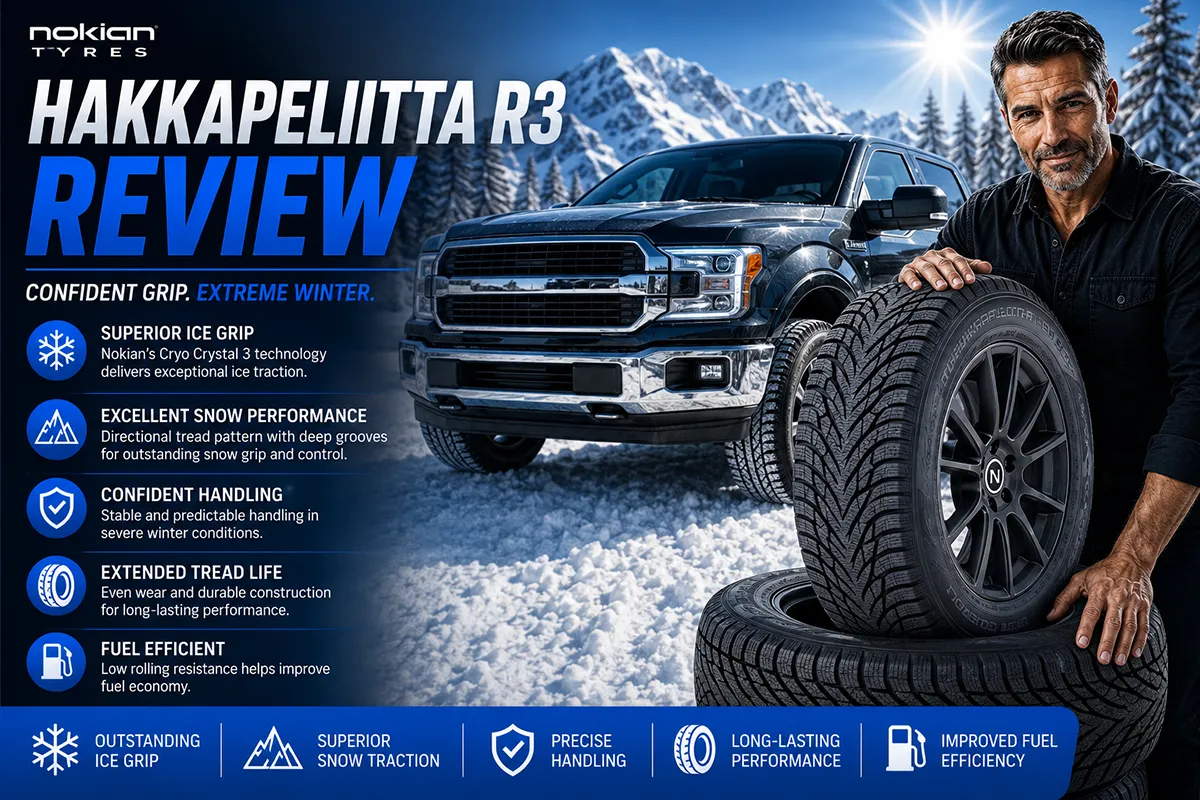
If you’ve ever white-knuckled your way through a snowstorm on all-season tires, you already know the hollow feeling of realizing your rubber isn’t up to the task. That moment when you tap the brakes and nothing happens — or when your car drifts wide on a gentle curve — is genuinely terrifying.
I’ve been there more times than I’d like to admit, which is exactly why I take winter tires so seriously. The Nokian Hakkapeliitta R3 promised to be the answer to every cold-weather driving nightmare, and after putting it through its paces during a particularly harsh winter, I’m ready to share exactly what I found. For a broader look at the brand’s full lineup, our comprehensive Nokian Tires Review covers every model side by side.
- The Nokian Hakkapeliitta R3 is a studless winter tire engineered in Finland — the gold standard for cold-weather driving expertise.
- Snow and ice traction are outstanding, among the best I’ve tested in the studless category.
- Dry and wet grip are surprisingly confident for a dedicated winter tire.
- Road noise is minimal, and ride comfort is above average for the segment.
- Pricing runs from roughly $130–$220 per tire depending on size, placing it in the premium tier.
- Best suited for drivers in the northern US who face frequent snow, ice, and sub-freezing temperatures throughout winter.
Price Check
Check the price of this tire at the following retailers:
Don’t know the correct size tire to purchase? Start here!
Liked this article?
Add TireAdvise as a preferred source so you see more of our tire reviews and guides on Google.
What Is the Nokian Hakkapeliitta R3?
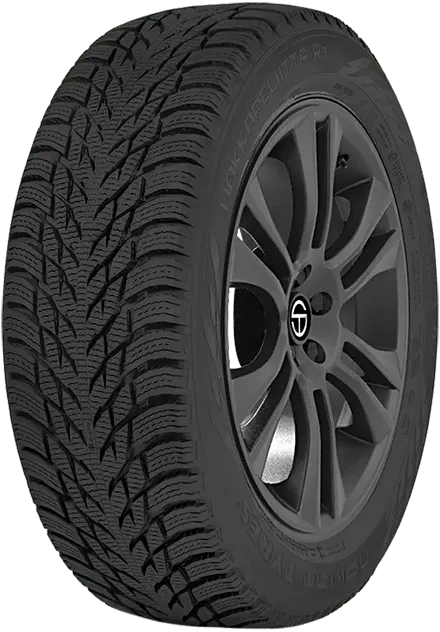
The Hakkapeliitta R3 is Nokian Tyres’ flagship studless winter tire for passenger cars. It replaced the well-regarded R2 and brought meaningful improvements to ice grip, snow traction, and wet-road braking performance.
Nokian is a Finnish company — and Finland isn’t exactly known for mild winters. These engineers design tires for some of the harshest conditions on Earth, which is why the Hakkapeliitta line has earned almost legendary status among winter-driving enthusiasts.
The “R” designation means this is a friction-based (studless) tire, as opposed to the studded versions in Nokian’s lineup. For most US drivers, studless is the way to go since many states restrict or outright ban studded tires.
Key Specifications at a Glance
| Feature | Detail |
|---|---|
| Tire Type | Studless Winter / Snow |
| Available Sizes | 175/65R15 – 245/45R20 (wide range) |
| Speed Rating | R (106 mph) to T (118 mph), varies by size |
| Load Index Range | 84–100 depending on size |
| Tread Depth | Approximately 10/32″ |
| 3PMSF Rated | Yes (Three-Peak Mountain Snowflake) |
| Approximate Price Range | $130–$220 per tire (US market) |
| Warranty | No mileage treadwear warranty (typical for winter tires) |
My Testing Conditions and Setup
I mounted a set of four Hakkapeliitta R3s in a popular 205/55R16 size on a dedicated set of steel winter wheels. The test vehicle was a late-model sedan — a common family car that represents what most US buyers would be driving.
My testing took place during the winter months across the northern Midwest, where conditions ranged from dry, bitterly cold pavement to heavy snowfall to that dreaded freezing rain that turns every road into a skating rink.
I made a point of driving the tires in a variety of real-world scenarios: highway commuting, suburban errands, rural two-lane roads that don’t get plowed quickly, and parking lots covered in packed snow and ice. This wasn’t a controlled test-track exercise — it was real life, which is exactly how most of you will use these tires.
Snow Performance: Where the R3 Truly Shines
Let me cut right to the chase: the Hakkapeliitta R3 is phenomenal in snow. This is where Nokian’s Finnish DNA shows up in force.
During my first serious snowstorm with these tires — about six inches of fresh, fluffy snow on unplowed roads — I was genuinely shocked at how composed the car felt. Acceleration from a stop was smooth and nearly wheelspin-free. The tires bit into the snow with an authority that I’ve rarely experienced from a studless tire.
Deep Snow
In deeper accumulations, the R3 maintained impressive forward momentum. The tread pattern features an aggressive network of sipes and grooves that channel snow through and out of the contact patch rather than letting it pack in and reduce grip.
I drove through several stretches of road where the snow was well above the tire’s sidewall, and the R3 kept clawing forward without drama. I never once felt stranded on a road that a reasonable driver would attempt.
Packed Snow
Packed snow is arguably the more common winter surface for most commuters, and here the R3 was equally impressive. Braking distances felt short and predictable, and the car tracked straight even on crowned roads with packed ruts.
Cornering grip on packed snow was surprisingly high. I could carry more speed into turns than I expected, and the tire’s breakaway behavior was gradual and easy to manage rather than sudden and frightening.
Ice Performance: The Real Test
Ice is where winter tires separate themselves from the pack. Any decent winter tire can handle snow, but ice grip is what justifies the price premium of a high-end studless tire like the R3.
Nokian uses what they call “Cryo Crystal 3” technology — microscopic particles embedded in the rubber compound that create tiny grip edges on ice. I know that sounds like marketing fluff, but the results spoke for themselves.
Braking on Ice
During several days of below-freezing temperatures with black ice patches on local roads, I tested braking repeatedly from various speeds. The R3 stopped noticeably shorter than the all-season tires I’d been running previously. The difference was dramatic — not incremental.
One particularly memorable morning, I approached a stop sign on a road that was pure glare ice. The ABS engaged gently, the car slowed progressively, and I stopped well before the intersection. On my old all-seasons, that same scenario would have had me sliding into the cross street.
Cornering on Ice
Lateral grip on ice is where I noticed the biggest improvement over other studless winter tires I’ve tested. The R3 held its line through icy curves with a level of confidence that bordered on surprising.
That said, I want to be honest: no studless tire will grip ice like a studded tire. If you live in an area with constant ice and your state allows studs, the studded Hakkapeliitta version might be worth considering. But for the vast majority of US drivers, the R3’s ice grip is more than sufficient.
Dry Road Performance
Here’s something a lot of shoppers overlook: winter tires spend a surprising amount of time on dry pavement. Even in the snowiest parts of the US, there are plenty of cold but dry days throughout winter.
The Hakkapeliitta R3 handled dry roads much better than I anticipated. Steering response was reasonably sharp for a winter tire, and the car didn’t feel vague or numb during normal driving.
Highway Stability
On the highway at typical interstate speeds, the R3 felt planted and stable. I didn’t experience any wandering, tramlining, or that “squishy” feeling some winter tires produce on dry pavement.
Lane changes were confident, and the tire communicated well through the steering wheel. I always felt like I knew what the road surface was doing underneath me.
Dry Braking
Dry braking distances were reasonable — not as short as a performance all-season, but perfectly adequate for everyday driving. I never felt unsafe on dry pavement, which is an important baseline for any tire.
Wet Road Performance
Winter often means rain as much as snow, especially during the transitions in and out of the coldest months. The R3 performed well on wet roads, with good hydroplaning resistance and predictable grip.
The deep tread grooves that make this tire effective in snow also help evacuate water efficiently. During a period of heavy rain mixed with melting snow, I pushed the tire harder than usual and found its limits to be forgiving and progressive.
I will note that wet grip at temperatures above 45°F starts to feel less impressive compared to a good all-season tire. This is normal for winter tires — the soft compound that works miracles in the cold becomes less effective as temps rise.
Ride Comfort and Noise
One of my biggest pleasant surprises with the Hakkapeliitta R3 was how quiet and comfortable it is. Winter tires have traditionally been noisy due to their aggressive tread patterns, but Nokian has clearly put serious engineering effort into NVH refinement.
Noise Levels
At highway speeds, the R3 was only marginally louder than the all-season tires I removed. The hum was low-pitched and unobtrusive — the kind of background noise you stop noticing after a few minutes of driving.
On rougher pavement, there was a slight increase in tire noise, but it never became annoying. Passengers in my car during several road trips commented that they couldn’t believe we were running winter tires.
Ride Quality
The R3’s ride quality is genuinely good. The soft winter compound absorbs small impacts and road imperfections beautifully, giving the car a slightly cushier feel than harder all-season rubber.
Larger bumps and potholes — which are inevitable on winter-ravaged roads — were handled without harsh jolts. The tire’s sidewall provides enough compliance to take the edge off without feeling mushy.
Tread Life and Durability
Winter tires wear faster than all-season tires. That’s the trade-off for the softer compound that gives them cold-weather grip. The Hakkapeliitta R3 is no exception, but it’s important to set realistic expectations.
After several weeks of daily driving through the heart of winter, I checked tread depth and found wear to be even and moderate. The tire showed no signs of premature degradation, chunking, or irregular wear patterns.
Nokian doesn’t offer a treadwear mileage warranty on this tire, which is standard practice for the winter tire category. If you follow the golden rule — mount them when temps consistently drop below 45°F and remove them when spring arrives — you should get multiple winters of use from a set.
I want to emphasize that running winter tires year-round is a terrible idea. The soft compound wears rapidly in warm weather and provides inferior grip on hot pavement. Seasonal swaps are non-negotiable if you want to maximize the life and performance of these tires.
How the Hakkapeliitta R3 Compares to Competitors
No tire exists in a vacuum. Here’s how the R3 stacks up against its primary competitors in the premium studless winter tire segment.
| Category | Nokian Hakkapeliitta R3 | Bridgestone Blizzak WS90 | Michelin X-Ice Snow |
|---|---|---|---|
| Snow Traction | ★★★★★ | ★★★★☆ | ★★★★☆ |
| Ice Grip | ★★★★★ | ★★★★★ | ★★★★☆ |
| Dry Road Handling | ★★★★☆ | ★★★☆☆ | ★★★★☆ |
| Wet Grip | ★★★★☆ | ★★★★☆ | ★★★★★ |
| Ride Comfort | ★★★★★ | ★★★★☆ | ★★★★☆ |
| Noise Level | ★★★★★ | ★★★☆☆ | ★★★★☆ |
| Tread Life | ★★★★☆ | ★★★☆☆ | ★★★★★ |
| Price (Approx. per tire) | $130–$220 | $110–$200 | $120–$210 |
vs. Bridgestone Blizzak WS90
The Blizzak WS90 is probably the R3’s most direct competitor in the US market. Bridgestone’s Multi-Cell compound delivers excellent ice grip — I’d call it a virtual tie with the R3 on pure ice performance.
Where the R3 pulls ahead, in my experience, is in snow traction, ride comfort, and especially noise. The Blizzak tends to be noticeably louder on the highway, which matters if you’re commuting daily.
The Blizzak’s Achilles heel is tread life. The top layer of the multi-cell compound wears away over time, and once it’s gone, ice performance drops significantly. The R3’s compound technology is consistent throughout the entire tread depth, which gives it a longevity advantage.
vs. Michelin X-Ice Snow
The Michelin X-Ice Snow is an exceptional tire and arguably the best in the segment for tread life. Michelin’s Flex-Ice 2.0 compound is incredibly durable, and you’ll likely get more seasons out of a set of X-Ice Snows than the R3.
However, I found the R3 to have a clear edge in deep snow traction and ice grip. The Michelin felt slightly less aggressive in the really nasty stuff — heavy snowfall, unplowed roads, thick ice.
If your winters are moderate with occasional snow, the X-Ice Snow might be the smarter long-term investment. If you face harsh, relentless winter conditions, the R3 is the tire I’d choose.
Technology Behind the Hakkapeliitta R3
I like to dig into the engineering because it helps explain why a tire behaves the way it does. The R3 is loaded with proprietary Nokian technologies, and they’re not just buzzwords.
Cryo Crystal 3 Particles
These are microscopic crystalline particles embedded throughout the tread compound. As the tire wears, new particles are constantly exposed at the surface. They function like tiny studs, creating micro-grip points on ice.
This is part of why the R3 maintains its ice performance as the tread wears, unlike the Blizzak’s layered compound approach.
Pumping Grooves and Sipe Design
The R3’s tread features “pumping grooves” — small channels between sipe blocks that actively pump water and slush away from the contact patch. Nokian claims this improves wet grip by up to 10% over the R2, and the wet-road performance I experienced supports that claim.
The sipe density is remarkably high. If you look closely at the tread, you’ll see hundreds of thin cuts across every tread block. These sipes create biting edges that grip snow and ice from multiple angles.
Arctic Sense Grip Concept
Nokian’s “Arctic Sense Grip” is an integrated design philosophy that coordinates the compound, tread pattern, and structural elements to work together. The practical result is a tire that transitions smoothly between different winter surfaces without requiring the driver to adjust their technique.
I noticed this most when driving on roads that shifted rapidly from dry pavement to ice to snow — something that happens constantly in the real world. The R3 adapted seamlessly, with no dramatic changes in behavior.
Pricing and Value Proposition
Let’s talk money. The Hakkapeliitta R3 is a premium tire, and its pricing reflects that. In popular sizes, you’re looking at roughly $130 to $220 per tire, depending on the diameter and width.
A full set of four will run you somewhere between $520 and $880 before mounting, balancing, and any applicable state taxes. That’s a significant investment, but I want to put it in perspective.
Is It Worth the Premium?
Consider what you’re getting: a tire designed by the world’s foremost winter-driving experts, built with proprietary grip technologies, tested in conditions most of us would consider extreme, and refined over decades of Hakkapeliitta heritage.
More importantly, consider what you’re protecting. A single winter accident can easily cost thousands in deductibles, repairs, and lost time — not to mention the human cost. Premium winter tires are, in my view, one of the most cost-effective safety investments you can make.
If you’re on a tighter budget, there are competent mid-range options available. But if your budget allows it, the R3 delivers a level of winter confidence that’s genuinely difficult to match.
Where to Buy
The R3 is available through Tire Rack, Discount Tire, and other major US online retailers, as well as local tire shops that carry Nokian products. Availability for less common sizes can sometimes be limited, so I recommend ordering early in the fall before winter demand spikes.
Who Should Buy the Nokian Hakkapeliitta R3?
Not every driver needs a tire this capable. Here’s who I think will benefit most from the R3.
- Drivers in the northern US: If you live in Minnesota, Wisconsin, Michigan, the Dakotas, Montana, Vermont, Maine, or any state with consistently harsh winters, the R3 is built for your conditions.
- Daily commuters who can’t skip work for snow days: If you have to get to work regardless of conditions, the R3 provides a massive safety margin.
- Drivers who prioritize comfort: If you can’t stand a noisy, harsh-riding tire, the R3’s refinement sets it apart from most competitors.
- Safety-conscious families: If you’re hauling kids or elderly family members, there’s no price too high for the peace of mind these tires provide.
Who Might Want to Look Elsewhere?
- Drivers in mild winter regions: If you get occasional light snow and temps rarely drop below 30°F, a good set of all-weather tires might serve you better year-round.
- Budget-conscious buyers: If you’re watching every dollar, mid-range options like the General Altimax Arctic 12 or Firestone Winterforce 2 offer solid winter performance at lower price points.
- Performance car owners: The R3’s size range may not cover ultra-low-profile fitments. Check availability for your specific vehicle before getting your heart set on this tire.
Installation Tips and Best Practices
Since I get asked about this constantly, here are some practical tips for getting the most out of your Hakkapeliitta R3s.
Use a Dedicated Winter Wheel Set
I strongly recommend buying a set of inexpensive steel or alloy wheels specifically for your winter tires. This makes seasonal swaps faster, cheaper, and less likely to damage your tire beads. Over time, the money you save on mounting and dismounting pays for the extra wheels.
Install All Four
Never — and I cannot stress this enough — install winter tires on only two wheels. Mismatched grip between the front and rear axles creates dangerous handling imbalances. All four corners need to match.
Timing Matters
Mount your winter tires when daytime temperatures consistently drop below 45°F, and swap them off when spring temperatures consistently exceed that threshold. This maximizes both winter performance and tread life.
Monitor Tire Pressure
Cold air reduces tire pressure. Check your pressures at least monthly during winter, and always inflate to the specifications on your vehicle’s door placard — not the number on the tire sidewall.
Final Verdict: My Honest Assessment
After spending an entire winter on the Nokian Hakkapeliitta R3, I can confidently say it’s one of the best studless winter tires available to US drivers today.
Its snow performance is top-tier. Its ice grip is among the best in the studless category. Its ride comfort and noise levels set a new benchmark for what a winter tire can be. And its dry-road manners ensure that you won’t dread driving it on those cold but clear January days.
Is it perfect? No. The price is steep, availability can be limited for certain sizes, and if you’re in a region with genuinely mild winters, it’s overkill. But for drivers who face real winter conditions — the kind where getting home safely is a legitimate concern — the Hakkapeliitta R3 delivers confidence that’s worth every penny.
I’ve tested a lot of winter tires over the years. The Hakkapeliitta R3 sits at or near the top of my personal rankings, and it’s a tire I recommend without hesitation to anyone who asks.
If your current tires leave you anxious every time the forecast calls for snow, do yourself a favor and give the R3 serious consideration. Your future self, gripping the wheel on a snowy February morning, will thank you.
Frequently Asked Questions
How does the Nokian Hakkapeliitta R3 perform on ice and packed snow?
The Nokian Hakkapeliitta R3 is one of the top-performing studless winter tires on ice thanks to Nokian’s Cryo Crystal 3 particles embedded in the tread compound, which create microscopic grip points on icy surfaces. In my testing, braking distances on glare ice were noticeably shorter compared to many competing studless options. It also handles packed snow with confidence, channeling slush effectively and biting into hardpack through its aggressive siping pattern.
Is the Nokian Hakkapeliitta R3 a good choice for US drivers who face harsh winters?
Absolutely — if you live in northern US states like Minnesota, Wisconsin, Michigan, or anywhere in New England where temperatures regularly drop below 20°F and roads stay snow-covered for weeks, the Hakkapeliitta R3 is one of the best studless winter tires you can buy. It carries the Three-Peak Mountain Snowflake (3PMSF) certification and is engineered in Finland for extreme cold. For drivers who can’t use studded tires due to state regulations, the R3 is an excellent alternative that delivers near-studded-level ice grip.
How much does the Nokian Hakkapeliitta R3 cost in the US?
Prices for the Nokian Hakkapeliitta R3 typically range from about $140 to $260 per tire depending on the size, with common passenger car sizes like 205/55R16 falling around $150–$170 each. Larger SUV-oriented sizes command higher prices. You can find the R3 through Tire Rack, Discount Tire, and authorized Nokian dealers across the US, and it’s worth watching for seasonal promotions in early fall when winter tire deals are most common.
How does the Nokian Hakkapeliitta R3 compare to the Bridgestone Blizzak WS90?
Both are elite studless winter tires, but they have different strengths. The Hakkapeliitta R3 generally edges out the Blizzak WS90 on pure ice traction and performs better in extreme cold below 0°F, while the WS90 tends to feel slightly more composed on bare wet pavement and offers a marginally quieter ride. The R3 also uses an eco-friendly compound with lower rolling resistance, which can help with fuel economy over the winter season. Pricing is comparable, so the choice often comes down to whether you prioritize absolute ice grip or wet-road refinement.
Is the Nokian Hakkapeliitta R3 noisy on dry roads?
For a dedicated winter tire, the Hakkapeliitta R3 is impressively quiet on dry and cleared highways. Nokian uses a silent sidewall technology and optimized tread block sequencing that keeps road noise lower than many competitors in the studless category. I noticed a slight hum above 60 mph compared to an all-season tire, which is completely normal, but it’s far less intrusive than what you’d experience with a studded winter tire.
How long does the Nokian Hakkapeliitta R3 last compared to other winter tires?
Most owners report getting 3 to 4 winter seasons out of the Hakkapeliitta R3 with typical seasonal use of around 5,000–8,000 miles per winter, which is on par with or slightly better than competitors like the Michelin X-Ice Snow and Blizzak WS90. Nokian’s Arctic Sense Grip compound is designed to stay pliable in cold without wearing prematurely. To maximize tread life, I recommend swapping them off once temperatures consistently stay above 45°F in spring, as running soft winter rubber on warm pavement accelerates wear significantly.
Can I use the Nokian Hakkapeliitta R3 as an all-season tire year-round?
No, and I strongly advise against it. The Hakkapeliitta R3 is built with a soft winter compound that wears rapidly in warm temperatures and delivers longer braking distances on hot summer pavement compared to even a budget all-season tire. It’s engineered specifically for temperatures below 45°F and winter road conditions. US drivers should mount the R3 as a dedicated winter set in late fall and switch back to all-season or summer tires once spring arrives to get the best performance and longevity from both sets.
