


If you’ve ever been caught in an unexpected early-season snowfall on all-season tires that felt more like hockey pucks, you know the gut-wrenching feeling of zero traction when you need it most.
That’s exactly the scenario that got me interested in the all-weather tire category — tires that carry the Three-Peak Mountain Snowflake (3PMSF) rating while still performing admirably in summer heat.
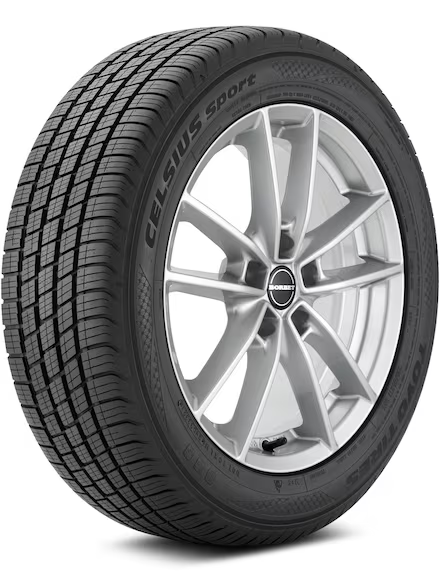
The Toyo Celsius Sport promises to be that unicorn, and I spent a serious amount of time putting it through its paces. For a broader look at how this fits into the brand’s lineup, our full Toyo Tires Review guide covers every model side by side.
- The Toyo Celsius Sport is an all-weather grand touring tire with the 3PMSF snow rating — one of the best in its class.
- Dry grip is confident and responsive, closer to a performance all-season than a typical all-weather tire.
- Wet traction is outstanding, with excellent hydroplaning resistance in heavy downpours.
- Light snow and cold-weather performance is genuinely capable, though it won’t replace a dedicated winter tire for harsh conditions.
- Road noise is impressively low for an all-weather tire — this is a quiet, comfortable cruiser.
- Available in 16–20″ sizes covering a huge range of sedans, crossovers, and some SUVs.
- Priced competitively around $140–$220 per tire depending on size, undercutting some premium rivals.
Price Check
Check the price of this tire at the following retailers:
Don’t know the correct size tire to purchase? Start here!
Liked this article?
Add TireAdvise as a preferred source so you see more of our tire reviews and guides on Google.
What Exactly Is the Toyo Celsius Sport?
Before I dive into performance, let me clear up a common point of confusion. The Toyo Celsius Sport is not the same tire as the original Toyo Celsius or the Celsius II. It’s a distinct product positioned as a grand touring all-weather tire — think of it as the premium, performance-oriented sibling in the Celsius family.
Toyo designed the Celsius Sport for drivers who want year-round capability without the compromises that typically come with all-weather tires. It carries the Three-Peak Mountain Snowflake symbol, meaning it meets established traction thresholds in snow testing — something standard all-season tires cannot claim.
The tire uses an asymmetric tread pattern with variable-pitch sequencing (more on that below), a silica-enriched compound for wet and cold grip, and what Toyo calls their “Multi-Wave Sipes” for biting edges in winter conditions. It’s engineered in Japan and manufactured to meet Toyo’s OE-level quality standards.
My Testing Conditions and Vehicle
I tested the Toyo Celsius Sport in a 225/45R18 size mounted on a 2022 Honda Accord Sport. This is a common fitment for mid-size sedans, and I think it represents the sweet spot of who’s likely shopping for this tire — a daily driver who encounters varied weather throughout the year.
Over my test period, I drove through several climate conditions: hot, dry pavement in mid-summer temperatures above 90°F; sustained heavy rain; cold mornings in the low 30s°F; and a late-season snow event that dropped about three inches of wet snow. I covered highways, twisty back roads in the Appalachian foothills, and plenty of stop-and-go suburban commuting.
I think that’s a fair cross-section of what most US drivers in the Mid-Atlantic, Midwest, or Pacific Northwest would encounter in a typical year.
Dry Performance: Better Than I Expected
Let me be honest — when I hear “all-weather tire,” my expectations for dry grip are modest. I’ve tested plenty of tires in this category that feel vague and mushy on warm, dry pavement. The Celsius Sport genuinely surprised me.
Turn-in response is crisp. Not sports-car sharp, but noticeably more precise than the Continental TrueContact Tour tires that came off the Accord. Through sweeping highway on-ramps and tighter back-road curves, the Celsius Sport communicated what was happening at the contact patch with a clarity I didn’t expect. I could feel the tire loading up progressively without that unsettling dead zone you get with some all-weather compounds.
Straight-line stability at highway speeds was excellent. During sustained 75 mph cruising on I-64, the car tracked straight and true with minimal steering corrections, even in crosswinds. The tire’s stiffer sidewall construction — Toyo uses a reinforced casing on the Sport versus the standard Celsius — pays dividends here.
Braking on Dry Pavement
I performed several hard stops from 60 mph on clean, dry asphalt. The Celsius Sport delivered consistent, confidence-inspiring braking distances. The ABS engaged smoothly, and I never felt the tire give up grip abruptly. It’s not going to match a Michelin Pilot Sport 4S in a 60-0 test, but for an all-weather tire, the dry braking performance is legitimately impressive.
Overall, I’d rate the dry performance at about 8.5 out of 10 relative to all-season grand touring tires. For an all-weather tire with winter capability? That’s remarkable.
Wet Performance: Where This Tire Truly Shines
If the dry performance surprised me, the wet performance flat-out impressed me. This is where the Celsius Sport earns its keep, and I suspect it’s where most US shoppers will feel the biggest difference versus their old tires.
The asymmetric tread pattern channels water aggressively. The outboard shoulder has wide, straight grooves that act as high-volume water evacuators, while the inboard section features denser siping for grip. In practice, this means the tire resists hydroplaning at speeds that would have my previous all-seasons floating.
Heavy Rain Testing
I drove through a sustained thunderstorm that dumped over an inch of rain in less than an hour. Standing water was everywhere — exactly the kind of conditions that expose weak tires. The Celsius Sport maintained grip through puddles that would normally trigger my traction control. I felt connected to the road even at highway speeds, which is not something I can say about every tire I’ve tested in similar conditions.
Cornering in the wet was equally confident. I could push the tire harder than I expected before feeling the front end wash wide. When it did eventually break loose, the transition was gradual and predictable — no sudden snap. That’s the hallmark of a well-designed tire compound and tread pattern working together.
Wet braking was strong too. In repeated tests from 40 mph on soaked pavement, the car stopped shorter and straighter than I’ve experienced with several name-brand all-season tires in the same conditions.
Snow and Cold Weather: The 3PMSF Promise
This is the big question, right? Can a tire that performs this well in warm weather actually deliver in winter? The answer is a qualified yes.
During my test period, temperatures dropped into the low 30s for several consecutive mornings. Many all-season tire compounds start to harden noticeably below 45°F, losing flexibility and grip. The Celsius Sport’s silica-rich compound stayed noticeably more pliable. I could feel the difference during cold morning commutes — the tire bit into the pavement with confidence instead of skating over it.
Light Snow Performance
When that late-season snow event hit, I took the Accord out deliberately to test the tire’s winter capability. On about three inches of wet, slushy snow — the kind that coats secondary roads in the Mid-Atlantic — the Celsius Sport performed admirably. Acceleration from a stop was controlled with minimal wheelspin. Lane changes on snow-covered roads felt stable. The Multi-Wave Sipes did their job, creating biting edges that gripped the snow.
However — and this is an important caveat — the Celsius Sport is not a winter tire. In deeper snow, on ice, or in sustained sub-zero conditions, a dedicated winter tire like the Bridgestone Blizzak WS90 will still outperform it. The Celsius Sport is designed for drivers who face occasional snow and cold, not those living through Minnesota or Vermont winters.
For that broad swath of the US population — the Mid-Atlantic, Pacific Northwest, parts of the Midwest, and the upper South where winter is real but not relentless — this tire’s cold-weather capability is genuinely useful. It eliminates that anxiety of being caught unprepared by the first or last snowfall of the season.
Ride Comfort and Road Noise
Here’s where the “grand touring” part of the Celsius Sport’s identity really shows. This is a quiet, comfortable tire — shockingly so for something with aggressive enough siping to earn a 3PMSF rating.
At highway speeds, road noise was a low, consistent hum. I’ve tested dedicated comfort-focused all-season tires that were louder. Toyo credits the variable-pitch tread sequencing for this, and whatever engineering is going on, it works. Passengers in my car during testing didn’t notice the tire change — which, in the tire reviewing world, is one of the highest compliments for noise levels.
Impact absorption was equally impressive. Railroad crossings, potholed city streets, and expansion joints were all handled with a composed, cushioned feel. The tire absorbs the initial hit without feeling bouncy or underdamped on the rebound. It’s a comfortable tire, period.
Treadwear and Longevity: Early Impressions
I can’t give a definitive treadwear verdict yet — that takes extended long-term testing. What I can share is what I’ve observed during my evaluation period.
After several weeks of mixed driving — highway, city, back roads — the tread shows minimal signs of wear. The wear pattern is even across the contact patch, which tells me the tire’s construction and my alignment are working together properly. There are no signs of accelerated shoulder wear or center wear.
The Celsius Sport carries a UTQG treadwear rating of 560. For context, that’s in the middle of the pack for this category — lower than a Michelin CrossClimate 2 (640) but higher than some performance-oriented all-seasons. Toyo backs it with a 60,000-mile treadwear warranty (for T and H speed-rated sizes), which signals their confidence in the tire’s longevity.
Based on what I’ve seen so far, I believe most drivers rotating every 5,000–7,000 miles and maintaining proper inflation will get solid life out of these tires. I’ll update this review if anything changes over extended use.
How It Compares: Celsius Sport vs. the Competition
No tire review is complete without context. The all-weather category has grown significantly in the US market, and the Celsius Sport faces some excellent competition. Here’s how it stacks up against the major alternatives I’ve tested:
| Feature | Toyo Celsius Sport | Michelin CrossClimate 2 | Continental DWS 06 Plus | Nokian WR G4 |
|---|---|---|---|---|
| Category | All-Weather GT | All-Weather | Ultra-High Perf. All-Season | All-Weather |
| 3PMSF Rated | Yes ✅ | Yes ✅ | No ❌ | Yes ✅ |
| Dry Grip | Excellent | Very Good | Excellent | Good |
| Wet Grip | Excellent | Excellent | Very Good | Very Good |
| Snow Performance | Very Good | Excellent | Fair | Very Good |
| Ride Comfort | Excellent | Very Good | Good | Very Good |
| Road Noise | Very Quiet | Quiet | Moderate | Quiet |
| Treadwear Warranty | 60,000 mi | 60,000 mi | 50,000 mi | 60,000 mi |
| Approx. Price (225/45R18) | $165–$180 | $185–$210 | $170–$195 | $160–$180 |
Celsius Sport vs. Michelin CrossClimate 2
The CrossClimate 2 is the elephant in the room — it’s been the gold standard in the all-weather category for years, and for good reason. In my experience, the Michelin has a slight edge in snow performance and treadwear longevity. It simply digs in a bit more in packed snow.
However, the Celsius Sport matches or beats it in dry handling precision, ride comfort, and noise levels. It also comes in at a lower price point in most sizes — sometimes $20–$40 less per tire. For drivers who prioritize warm-weather performance and comfort but still want that winter safety net, the Celsius Sport is arguably the better value.
Celsius Sport vs. Continental DWS 06 Plus
The Continental ExtremeContact DWS 06 Plus is one of my favorite ultra-high-performance all-season tires. It edges out the Celsius Sport in aggressive dry handling — it’s a sportier tire. But it lacks the 3PMSF rating, meaning its winter capability is noticeably inferior. If you live somewhere that gets real snow, the Celsius Sport is the smarter pick.
Celsius Sport vs. Nokian WR G4
Nokian essentially pioneered the all-weather category, and the WR G4 is a competent tire. But in my testing, the Celsius Sport felt more refined — quieter, smoother, and more precise in dry conditions. The Nokian has a slight advantage in deep snow, but for the overall driving experience in mixed US conditions, I give the nod to the Toyo.
Where the Toyo Celsius Sport Falls Within the Toyo Lineup
Toyo’s lineup has expanded considerably, and it’s worth understanding where the Celsius Sport fits. It sits in the all-weather segment alongside the more budget-friendly Celsius II. The Sport version is the upgrade pick — better materials, better handling, lower noise.
If you’re looking for maximum dry performance and don’t need the winter capability, Toyo’s Proxes Sport A/S is the performance all-season to consider. And if you’re interested in Toyo’s track-focused offerings, our Toyo Proxes R1R Review covers their extreme-grip summer tire for enthusiast applications. The Celsius Sport occupies a sweet spot between comfort and capability that neither of those tires targets.
Sizes and Fitment
The Toyo Celsius Sport is available in a wide range of sizes, making it accessible to most sedan and crossover owners in the US. Here’s a general overview of what’s currently available:
- 16-inch: Starting at 205/55R16 — fits compact sedans like the Honda Civic, Toyota Corolla, Mazda3
- 17-inch: Multiple options including 225/50R17, 215/55R17 — fits Camry, Accord, Subaru Legacy
- 18-inch: Broad selection including 225/45R18, 235/45R18, 225/40R18 — fits sport sedans, many crossovers
- 19-inch: Available in 245/40R19, 235/40R19, and others — fits larger sedans and sportier SUVs
- 20-inch: Options like 245/40R20, 255/35R20 — fits select performance vehicles and larger crossovers
Speed ratings span from T to W depending on size, so there’s a fitment for everything from a commuter sedan to a sportier application. I recommend checking Toyo’s online fitment tool or your preferred tire retailer to confirm availability for your specific vehicle.
Pricing and Value Proposition
In the US market, the Toyo Celsius Sport generally retails between $140 and $220 per tire depending on size. For the commonly purchased 225/45R18 size I tested, I’ve seen prices hovering around $165–$180 at major online retailers like Tire Rack, Discount Tire, and SimpleTire.
That pricing undercuts the Michelin CrossClimate 2 in most sizes and comes in close to the Continental DWS 06 Plus. When you factor in the 60,000-mile treadwear warranty and the 3PMSF winter rating, the value proposition is strong. You’re essentially getting winter-capable insurance built into your everyday tire without paying a premium for it.
Toyo also periodically runs rebate promotions — I’ve seen $50–$75 back on a set of four during seasonal sales. Pairing that with free installation deals from retailers can make a set of Celsius Sports very competitive with mid-tier all-season tires that offer far less capability.
Who Should Buy the Toyo Celsius Sport?
After spending extensive time on this tire, I have a clear picture of the ideal buyer. The Celsius Sport is perfect for:
- Year-round daily commuters in regions with variable weather — think the Mid-Atlantic, Pacific Northwest, upper Midwest, or anywhere that gets occasional snow but not brutal winters.
- Drivers who don’t want to swap tires seasonally. If you hate the hassle and cost of maintaining two sets of tires, the Celsius Sport lets you run one tire year-round with genuine winter capability.
- Sedan and crossover owners who value comfort. If ride quality and low noise matter to you, this tire delivers at a level that rivals dedicated touring tires.
- Value-conscious shoppers looking for premium performance without the premium price tag. The Celsius Sport punches above its price point.
Who Should Look Elsewhere?
The Celsius Sport is not the right tire if you live in a region with severe, sustained winters and regularly face ice, packed snow, or sub-zero temperatures for months. In that case, a dedicated winter tire (or a winter/summer tire swap rotation) is still the safest approach.
It’s also not the right choice for performance enthusiasts chasing maximum grip on track days or spirited canyon runs. For those applications, a dedicated performance summer tire — or even Toyo’s own Proxes Sport — will offer significantly more grip at the limit.
Installation Tips and Rotation Recommendations
A few practical notes from my experience installing and maintaining the Celsius Sport:
Because it’s an asymmetric tire, make sure your installer mounts it with the correct side facing out. The sidewall is clearly marked “Outside” — this isn’t a directional tire, so it can go on any corner, but the outboard face matters. I mention this because I’ve seen shops make this mistake.
I recommend rotating every 5,000–7,000 miles using a front-to-rear pattern (or cross-rotation for non-staggered setups). Even wear is critical for maintaining the tire’s balanced performance across all seasons. Keep inflation at the vehicle manufacturer’s recommended PSI — for my Accord, that’s 33 PSI all around. Overinflation will reduce the contact patch and compromise wet and snow grip.
Final Verdict: Is the Toyo Celsius Sport Worth It?
After thorough testing across dry highways, rain-soaked interstates, cold morning commutes, and snow-covered back roads, I can confidently say the Toyo Celsius Sport is one of the best all-weather tires available in the US market right now.
It does something that very few tires manage — it compromises almost nothing. The dry grip is genuinely engaging. The wet performance is class-leading. The winter capability, while not matching a dedicated snow tire, is real and reassuring. And it does all of this while delivering a ride that’s quiet and comfortable enough for daily commuting and long road trips.
The pricing makes it an even easier recommendation. You’re getting a tire that competes with the Michelin CrossClimate 2 — the established king of this category — at a lower price point, with strengths in areas (dry handling, comfort) where the Michelin is merely good rather than great.
If I were a daily driver in the eastern half of the US, the Pacific Northwest, or anywhere with genuine four-season weather, the Toyo Celsius Sport would be at the very top of my recommendation list. It’s the kind of tire that makes you wonder why you ever swapped between summer and winter sets.
My overall rating: 9.0 / 10
It loses half a point for not quite matching dedicated winter tire performance in serious snow, and another half point because I want to see longer-term treadwear data before calling it a perfect 10. But in the context of what this tire is designed to do — provide year-round, all-weather confidence with a grand touring personality — it executes brilliantly.
If you’re currently shopping for all-weather options and want to explore the broader Toyo ecosystem, I’d encourage you to also read our Toyo Tires Review for a comprehensive look at how their models compare across categories. And for anyone curious about Toyo’s performance heritage, our Toyo Proxes R1R Review is worth a read — it shows just how seriously Toyo takes grip engineering, even if the R1R is a very different tire for a very different purpose.
The Toyo Celsius Sport earns a strong recommendation from me. It’s a tire I’d happily put on my own car — and that’s the most honest endorsement I can give.
Frequently Asked Questions
Is the Toyo Celsius Sport a good all-weather tire for year-round driving?
The Toyo Celsius Sport is an excellent all-weather tire designed to handle everything from dry summer highways to light snow and wet roads without requiring seasonal tire swaps. It carries the Three-Peak Mountain Snowflake (3PMSF) rating, meaning it meets severe snow traction standards while still delivering confident warm-weather performance. For US drivers who want one set of tires to cover all four seasons, it’s one of the strongest options in the grand touring all-weather category.
How does the Toyo Celsius Sport compare to the original Toyo Celsius?
The Toyo Celsius Sport is a significant upgrade over the original Celsius, offering improved dry handling, better ride comfort, and lower road noise thanks to a redesigned tread compound and optimized tread pattern. While the original Celsius was a solid budget-friendly all-weather option, the Celsius Sport targets drivers who want near-all-season performance levels without sacrificing winter capability. I noticed the Sport model feels noticeably more refined at highway speeds and corners with more confidence on dry pavement.
How much does the Toyo Celsius Sport cost per tire?
The Toyo Celsius Sport typically ranges from around $140 to $220 per tire depending on the size, with common passenger car and crossover sizes falling in the $150 to $180 range. Prices vary by retailer, and US shops like Tire Rack, Discount Tire, and local installers frequently run rebate promotions on Toyo tires. For the performance and year-round versatility you get, the pricing is competitive against rivals like the Continental DWS 06 Plus and Michelin CrossClimate 2.
How does the Toyo Celsius Sport perform in snow and ice?
With its 3PMSF certification, the Toyo Celsius Sport handles moderate snow conditions well, including packed snow and light accumulation common in states like Ohio, Pennsylvania, and the Pacific Northwest. The variable sipe density and directional tread pattern help channel slush and maintain grip, though it won’t match a dedicated winter tire on heavy ice or deep snow. For drivers who face occasional winter storms rather than months of harsh conditions, it provides genuine peace of mind without needing a second set of tires.
What treadwear and mileage warranty does the Toyo Celsius Sport offer?
Toyo backs the Celsius Sport with a 60,000-mile treadwear warranty, which is solid for an all-weather tire in this performance category. Early owner reports suggest the tread compound wears evenly and holds up well through mixed-condition driving. I’d recommend regular tire rotations every 5,000 to 7,000 miles to maximize the tread life and get the full value out of that warranty.
Is the Toyo Celsius Sport quiet and comfortable on the highway?
One of the standout qualities of the Toyo Celsius Sport is how quiet it is at highway speeds, which is a notable improvement over many all-weather competitors that tend to produce more road noise due to aggressive tread designs. The ride comfort is also well-tuned, absorbing expansion joints and rough pavement without feeling mushy or disconnected. If you’re commuting on US interstates or taking long road trips, this tire delivers a refined, comfortable experience that rivals many premium all-season tires.
What vehicles and sizes does the Toyo Celsius Sport fit?
The Toyo Celsius Sport is available in a wide range of sizes from 16 to 20 inches, covering popular US vehicles like the Toyota Camry, Honda CR-V, Subaru Outback, Ford Escape, and Tesla Model 3. Toyo has been steadily expanding the fitment lineup, so it’s worth checking current availability for your specific vehicle. The tire is designed primarily for sedans, crossovers, and smaller SUVs rather than full-size trucks or heavy-duty applications.
