


If you’ve ever white-knuckled your way through a hairpin at a track day and thought, “I need more grip — a lot more grip,” you already know the frustration of tires that fade when you push them hardest.
The Toyo Proxes R888R sits in that razor-thin space between a full-blown race slick and a street-legal tire, and after spending serious time with a set on my car, I can tell you it does things to your confidence behind the wheel that regular performance tires simply cannot.
For a deeper look at how this model fits into the broader lineup, our full Toyo Tires Review guide covers every model side by side.
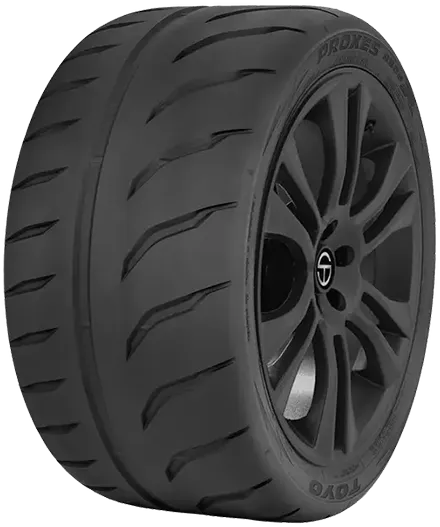
- The Toyo Proxes R888R is a DOT-legal, extreme-performance tire designed primarily for track use and competitive autocross.
- Dry grip is absolutely phenomenal — among the best I’ve experienced in any 200-treadwear tire.
- Wet performance is manageable but limited; this is not a rain tire by any stretch.
- Tread life is short by design — expect to replace them after a season or two of regular track use.
- Street comfort and noise are rough; daily driving is possible but far from pleasant.
- Pricing ranges from roughly $150–$350+ per tire depending on size, which is competitive for this category.
- Best suited for: dedicated track cars, autocross competitors, and weekend canyon carvers who prioritize grip above all else.
Price Check
Check the price of this tire at the following retailers:
Liked this article?
Add TireAdvise as a preferred source so you see more of our tire reviews and guides on Google.
What Exactly Is the Toyo Proxes R888R?
Let me set the stage before I dive into my experience. The Toyo Proxes R888R is a DOT-compliant competition tire — meaning it’s technically street-legal, but it’s engineered from the ground up for track performance. It carries a 200 treadwear rating, which puts it firmly in the “extreme performance summer” category.
This tire is the successor to the well-regarded Proxes R888, and Toyo made some significant improvements in the R888R version. The updated compound uses a higher silica content, and the construction features a stiffer sidewall with improved casing rigidity. These aren’t marketing buzzwords — I felt the differences immediately.
The R888R comes in a wide range of sizes, from 185/60R13 all the way up to 325/30ZR19, covering everything from lightweight Miatas to wide-body Corvettes. That versatility is one reason this tire has become a staple in the amateur racing community across the US.
My Test Setup and Conditions
I ran the Toyo Proxes R888R in 255/40ZR17 on my modified 2015 Ford Mustang GT, which I use as a dual-purpose car — weekend track days and occasional spirited street driving. The car has coilovers, upgraded brake pads, and an aftermarket sway bar, so it’s a reasonably well-sorted track platform.
During my test period, I put these tires through multiple track sessions at two different circuits, several spirited canyon runs, and yes, some everyday street driving to see how they hold up in the real world. I experienced temperatures ranging from the low 50s to the upper 90s Fahrenheit, which gave me a good picture of how the compound behaves across a useful range.
I also drove through one unexpected rain shower, which — spoiler alert — was an eye-opening experience. More on that later.
Dry Grip Performance: Where This Tire Lives
This is the headline feature of the R888R, and I’ll say it plainly: the dry grip is extraordinary. From the very first session on track, I felt an immediate, dramatic difference compared to the 300-treadwear street performance tires I’d been running previously.
Turn-in response was sharper and more precise. The front end just bit into the pavement with a level of confidence that let me carry significantly more speed through corners. I was consistently hitting faster lap times within my first few sessions, and the tire communicated beautifully through the steering wheel about exactly how much grip was left.
Lateral Grip
Lateral grip is where the R888R truly shines. In sustained high-speed corners, the tire felt planted and progressive. There was no sudden breakaway — when the limit approached, the tire would gradually slide, giving me time to adjust inputs. This progressive behavior is hugely confidence-inspiring, especially for intermediate-level track drivers.
I recorded noticeably higher sustained g-forces through sweeping corners compared to my previous tires. The improvement was not subtle. It was the kind of difference that makes you grin inside your helmet.
Braking Performance
Braking zones tightened up considerably with the R888R. I was able to brake later and harder into corners without locking up, which tells me the longitudinal grip is right up there with the lateral grip. The tire gave excellent feedback under heavy braking, and I never once felt that vague, greasy sensation that less aggressive tires produce under repeated hard stops.
Heat Cycling and Consistency
One thing I paid close attention to was how the R888R responded to heat over multiple sessions. Fresh out of the wrapper, the tire felt good but not at its absolute best. After the first heat cycle — one full session of hard driving followed by a cool-down — the grip actually improved. The compound seemed to “wake up” and deliver even more consistent traction.
Over subsequent sessions, the grip remained remarkably stable. I didn’t notice significant degradation until the tires had been through many heat cycles, and even then, the falloff was gradual rather than cliff-like. That’s a big deal for anyone running these at multi-day track events.
Wet Performance: Proceed With Caution
Here’s where I need to be completely honest. The Toyo Proxes R888R is not a wet-weather tire. The tread pattern has minimal siping, and the groove depth is shallow compared to even an aggressive street performance tire.
During the rain shower I encountered while driving home from a canyon run, I immediately noticed reduced grip. Hydroplaning became a real concern at highway speeds, and braking distances increased significantly. I slowed down dramatically and drove with extreme caution until I could pull over and wait for conditions to improve.
To be fair, Toyo doesn’t market this as a wet-weather tire, and anyone buying it should understand this limitation upfront. If you live somewhere with frequent rain, plan accordingly. Either have a second set of wheels with proper all-season or wet-weather tires, or simply don’t drive the R888R-equipped car in the rain.
Street Comfort and Noise
I’ll admit — I drove these on the street more than most R888R owners probably do, partly out of necessity and partly because I wanted to give you an honest assessment of daily livability.
Ride Quality
The ride is firm. Very firm. The stiff sidewall that makes this tire so responsive on track translates to a harsh, chattery ride on broken pavement. Every expansion joint, pothole, and rough patch was transmitted directly into the cabin. On smooth highways, it was tolerable. On the pothole-riddled streets of my city, it was genuinely unpleasant over extended drives.
If you’re considering daily driving on these, I’d strongly advise against it unless your commute is very short and your roads are very smooth. This is a competition tire that happens to be street-legal, not a street tire that happens to be good on track.
Noise Levels
Tire roar on the highway is noticeable. The aggressive tread pattern generates a constant hum that becomes especially prominent above 60 mph. It’s not unbearable — I’ve driven on louder off-road tires — but it’s a clear step up from any regular performance tire. You’ll find yourself turning up the stereo.
At lower speeds around town, the noise is less of an issue. But combined with the harsh ride, the overall street experience is a constant reminder that you’re wearing race rubber.
Tread Life and Wear Patterns
Let’s talk about the elephant in the room. A 200-treadwear tire is not going to last long, and the R888R is no exception. Over my test period, which included multiple track sessions and regular street driving, I observed noticeable tread wear, particularly on the outer shoulders from hard cornering.
The wear was even across both front tires and both rear tires, which tells me the tire wears predictably when alignment and pressures are dialed in correctly. I ran 32 psi cold on the street and dropped to 28-30 psi hot on track after some experimentation, and those pressures produced a nice, even contact patch.
If you’re using these exclusively for weekend track days and autocross events, you can realistically expect to get a season or two of use depending on how aggressively you drive. If you daily drive them, the tread will disappear much faster. Just factor replacement costs into your motorsport budget.
Toyo Proxes R888R vs. Competitors
I’ve run several tires in this competitive 200-treadwear class, so let me give you some context on how the R888R stacks up against the alternatives that US drivers are most likely considering.
| Feature | Toyo Proxes R888R | BFGoodrich Rival S 1.5 | Nitto NT01 | Hankook Ventus R-S4 |
|---|---|---|---|---|
| Treadwear Rating | 200 | 200 | 100 | 200 |
| Dry Grip | Excellent | Excellent | Excellent+ | Very Good |
| Wet Grip | Poor | Fair | Very Poor | Fair |
| Tread Life | Short | Moderate | Very Short | Moderate |
| Street Comfort | Poor | Fair | Poor | Fair |
| Approx. Price (per tire, common sizes) | $150–$350 | $160–$320 | $170–$330 | $140–$300 |
| Size Range | Very Wide | Moderate | Limited | Wide |
vs. BFGoodrich Rival S 1.5
The Rival S 1.5 is probably the R888R’s closest competitor in the US market. In my experience, the Rival S offers slightly better wet-weather capability and marginally longer tread life. The R888R, however, edges it out in raw dry grip and turn-in sharpness, especially after the compound has been heat-cycled. If your priority is absolute lap time in the dry, the R888R gets my nod. If you want a slightly more versatile package, the Rival S is worth considering.
vs. Nitto NT01
The NT01 is a 100-treadwear tire, so it’s even more aggressive than the R888R. It offers marginally more grip at the limit but wears much faster and is even less suitable for street use. Interestingly, Nitto is a subsidiary of Toyo, so there’s shared engineering DNA between the two. If you’re running a dedicated race car that never sees the street, the NT01 might be worth the trade-off. For anyone who drives to the track, the R888R is the smarter choice.
vs. Hankook Ventus R-S4
The R-S4 is a solid budget-friendly alternative. It offers good grip and slightly better street manners than the R888R, but it doesn’t match the Toyo’s outright track performance. I’d recommend the R-S4 for drivers who are newer to track days and want a more forgiving tire, while the R888R is better suited for experienced drivers chasing faster lap times.
How the R888R Compares Within Toyo’s Own Lineup
It’s worth understanding where the R888R sits relative to other Toyo performance tires, because the lineup can be confusing if you’re new to the brand.
If you’re looking for something with more street-friendliness while still offering sharp handling, the Proxes R1R is a step down in aggression but a step up in daily livability. I covered that tire in detail in my Toyo Proxes R1R Review, and it’s a great option for enthusiasts who want performance without fully committing to a competition compound.
Above the R888R, Toyo offers the Proxes RR and the full racing slick Proxes RS1, but those are purpose-built race tires that aren’t street-legal. The R888R is essentially the most aggressive tire Toyo makes that you can legally drive on public roads.
Tire Pressure Tips for the R888R
Getting tire pressures right on a 200-treadwear tire is critical, and I spent a fair amount of time experimenting. Here’s what I found works best:
- Street driving: I ran 32-34 psi cold all around. This provided the best balance of ride quality (such as it is) and even wear.
- Track driving (starting pressure): I started sessions at 28 psi cold and checked temperatures across the tread face after each session using a pyrometer.
- Hot target: I aimed for 32-34 psi hot on track, with temperatures even across the inside, middle, and outside of the tread.
- Autocross: For short, intense autocross runs, I dropped to 26-28 psi cold since the tires don’t get as much time to build heat.
Your ideal pressures will vary depending on your car’s weight, alignment settings, and driving style. Use a pyrometer and adjust in small increments. The R888R rewards precise pressure management with noticeably better grip and more even wear.
Break-In Period: What to Expect
The R888R has a mold-release compound on the surface when brand new, just like most tires. I noticed the tires felt slightly slippery during my first few easy street drives. After several days of normal street driving, the surface compound wore off and the full grip of the tire revealed itself.
I’d strongly recommend against going to a track day on brand-new R888Rs without at least a gentle break-in session first. Take it easy for the first session, gradually building speed, and let the tires come up to temperature naturally. You’ll feel them transform from “good” to “incredible” as the surface scrubs in.
Who Should Buy the Toyo Proxes R888R?
This tire is purpose-built for a specific type of driver. Let me be clear about who it’s ideal for and who should look elsewhere.
The R888R Is Perfect For:
- Track day enthusiasts who want maximum grip from a DOT-legal tire
- Autocross competitors running in classes that require 200-treadwear tires
- Time attack drivers looking for consistent, repeatable performance
- Weekend canyon carvers who trailer their car or have a short drive to their favorite roads
- Drivers with a dedicated track/fun car that doesn’t need to serve daily duty
The R888R Is NOT For:
- Daily commuters — the ride quality and noise will wear you down
- Drivers in rainy climates — wet performance is genuinely poor
- Budget-conscious buyers looking for long tread life — these wear fast
- Anyone who needs winter capability — this is a summer-only tire, period
- First-time track participants — the grip can outpace your skill level and mask bad habits; learn on less aggressive rubber first
Pricing and Where to Buy
In the US market, the Toyo Proxes R888R typically ranges from around $150 per tire for smaller sizes (like 205/50R15) up to $350 or more for larger fitments (like 305/30ZR19). That pricing is competitive within the 200-treadwear category and actually undercuts some rivals in popular sizes.
I found the best prices through online retailers like Tire Rack, Discount Tire Direct, and Amazon. Many of these retailers offer free shipping and mounting/balancing partnerships with local shops, which can save you an additional $60-$100 on installation.
Toyo also occasionally runs rebate promotions — usually $50-$100 back on a set of four — which can make the deal even sweeter. I’d recommend signing up for email alerts from your preferred retailer to catch these offers.
Mounting and Balancing Notes
One thing worth mentioning: the R888R is a directional tire, so make sure your installer mounts them with the rotation arrows pointing the correct way. I’ve heard stories of shops getting this wrong, so double-check before you leave.
The tire balanced without issue on my setup, requiring only minimal wheel weights. The bead seated easily on my aftermarket wheels with no problems. Overall, it was a straightforward installation with no surprises.
Long-Term Durability Observations
Over my extended test period, the R888R showed no signs of chunking, blistering, or unusual degradation — issues that can plague some competition tires when driven hard repeatedly. The compound held together well even through multiple intense track sessions in 90°F+ ambient temperatures.
I did notice the tread depth decreasing at a steady, predictable rate. There were no sudden drops in performance as the tread wore down — the tire remained confidence-inspiring even as it approached the end of its usable life. That predictability is something I really value in a track tire.
One caveat: if you leave these tires sitting for long periods between uses, the compound can harden and lose some of its grip. If your car sits in the garage for months between track days, you might notice the tires need a session to “re-activate” before they’re at their best. Heat cycling them gently at the start of your first session back usually does the trick.
My Final Verdict on the Toyo Proxes R888R
After spending extensive time with the Toyo Proxes R888R in a variety of conditions, I’m genuinely impressed. This tire does exactly what it promises — delivers massive amounts of grip on dry pavement with a level of consistency and predictability that inspires confidence at the limit.
Is it perfect? No. The wet-weather performance is a real limitation, the ride quality on the street is punishing, and the tread life is short. But these aren’t flaws — they’re trade-offs that come with the territory of a competition tire. Every tire in this category makes similar sacrifices.
What sets the R888R apart is its combination of outright grip, progressive handling characteristics, wide size availability, and competitive pricing. It hits a sweet spot that makes it one of the best 200-treadwear tires available in the US market right now.
If you’re serious about track performance and you want a tire that will help you find your car’s limits safely and repeatably, the Toyo Proxes R888R belongs on your shortlist. It earned its place on mine, and I’ll be buying another set when these wear out.
For those who want similar Toyo DNA but in a more street-friendly package, don’t overlook the Toyo Proxes R1R Review — it’s a compelling alternative for drivers who split their time more evenly between the street and the track.
Frequently Asked Questions
Is the Toyo Proxes R888R a good tire for street driving?
The Toyo Proxes R888R is primarily a DOT-legal competition tire, so while you can technically drive it on the street, it’s not ideal for daily commuting. The soft compound wears quickly on regular pavement, and wet-weather grip is limited compared to street-focused performance tires. I’d recommend it for drivers who spend most of their time at track days or autocross events and only need occasional street legality to trailer or drive to the venue.
How long do Toyo Proxes R888R tires last on track?
Tread life on the Toyo Proxes R888R depends heavily on your driving style, vehicle weight, and track surface, but most drivers report getting between 3 to 6 full track days before the tires are worn past their competitive window. Aggressive drivers in heavier cars like Corvettes or Mustangs tend to see faster wear, while lighter platforms like Miatas and BRZs stretch the life further. Keep in mind that heat cycling management and proper tire pressures play a huge role in maximizing tread life.
How much do Toyo Proxes R888R tires cost in the US?
Prices for the Toyo Proxes R888R typically range from around $160 to $350 per tire depending on the size, with common fitments like 245/40R17 sitting around $200-$230 each. You can find them at major US retailers like Tire Rack, Discount Tire, and Amazon, and pricing is competitive against rivals like the Nitto NT01 and BFGoodrich g-Force Rival. Buying a full set usually runs between $700 and $1,200 before mounting and balancing.
What is the difference between the Toyo Proxes R888R and the older R888?
The Toyo Proxes R888R is the updated version of the original R888, featuring a revised tread compound and slightly modified tread pattern that delivers better dry grip and improved lap times. Toyo also improved the tire’s consistency through heat cycles, meaning the R888R holds its performance level longer over multiple track sessions. If you’re still running the older R888, the R888R is a worthwhile upgrade with noticeably better turn-in response and mid-corner confidence.
How does the Toyo Proxes R888R compare to the Nitto NT01 for track use?
Both tires are excellent DOT-legal track options, but the Toyo Proxes R888R tends to offer slightly better initial grip and sharper turn-in, while the Nitto NT01 is often praised for more predictable wear and longer tread life across multiple track days. The R888R generally performs better in warmer temperatures and aggressive driving styles, whereas the NT01 can be more forgiving for intermediate drivers still building speed. Price-wise they’re very close in the US market, so the choice often comes down to your car’s setup and your driving level.
What tire pressures should I run on Toyo Proxes R888R at the track?
Most drivers start with cold pressures between 28-32 PSI on the Toyo Proxes R888R and adjust based on tire temperature readings across the tread surface. A good baseline is 30 PSI cold for front tires and 28 PSI cold for rears on a rear-wheel-drive car, then fine-tune from there using a pyrometer to ensure even heat distribution. Running pressures too high can reduce the contact patch and hurt grip, while too low can cause excessive shoulder wear and sloppy handling response.
What sizes are available for the Toyo Proxes R888R in the US?
The Toyo Proxes R888R is available in a wide range of sizes in the US market, covering 13-inch wheels all the way up to 20-inch fitments, which makes it suitable for everything from spec Miata builds to high-powered muscle cars and GT cars. Popular sizes include 205/50R15, 245/40R17, 275/35R18, and 305/30R19, covering most common track car setups. I’d recommend checking Tire Rack or Toyo’s official US site for the full size chart, as availability can fluctuate depending on demand during peak track season.
