

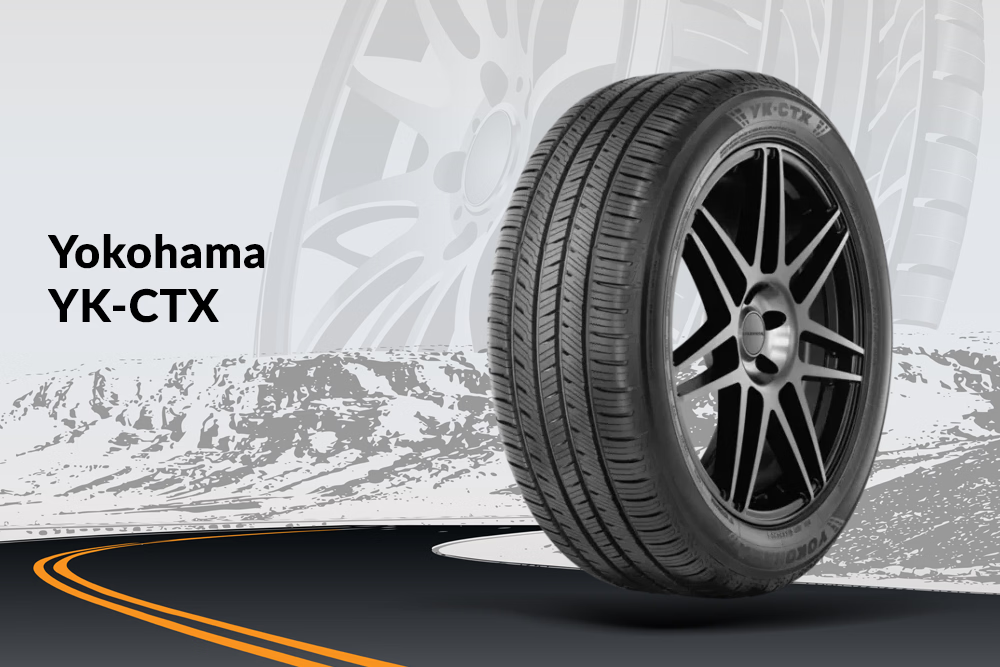
Finding a tire that genuinely performs well both on pavement and unpaved surfaces has always felt like chasing a unicorn in the automotive world. After spending extensive time testing the Yokohama YK-CTX across varied terrain throughout the American Southwest, I can confidently say this all-season option comes remarkably close to that elusive balance.
If you’re already familiar with Yokohama as a brand and wondering whether their lineup is worth your money overall, I’d also recommend reading my in-depth Yokohama tires review that covers the full range — it gives you the brand-level context that helps you understand where the YK-CTX fits in the lineup.
- Excellent balance between on-road comfort and off-road capability
- Strong wet and dry traction with advanced silica compound technology
- Reinforced construction handles heavy loads and resists punctures
- Surprisingly quiet for an all-terrain tire during highway driving
- Best suited for light trucks, SUVs, and crossovers used for mixed driving
- Competitive pricing within the premium all-terrain segment
Price Check
Check the price of this tire at the following retailers:
TireRack SimpleTire DiscountTire PriorityTire AmazonDon’t know the correct size tire to purchase? Start here!
Liked this article?
Add TireAdvise as a preferred source so you see more of our tire reviews and guides on Google.
What Is the Yokohama YK-CTX?
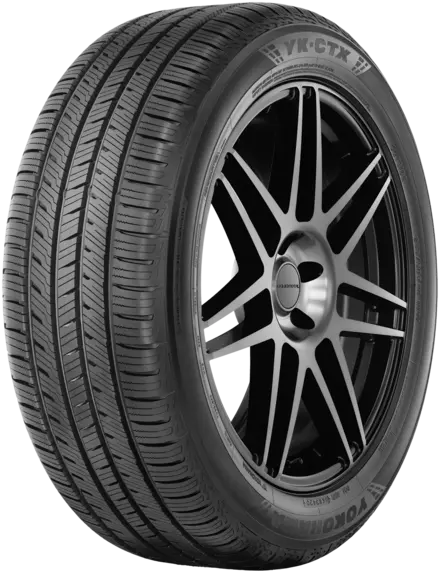
The YK-CTX is Yokohama’s premium highway all-season tire built specifically for crossover and light truck drivers. It’s sold exclusively through Discount Tire, which is worth knowing before you start shopping — you won’t find it at your local big-box auto parts store or independent shop.
Think of it as the spiritual successor to the YK-HTX, which Discount Tire has since discontinued and replaced with this model. I noticed when I switched from a set of OEM Firestones that the YK-CTX is slightly heavier — about 1.8 lbs per tire — but that mass comes with noticeably stiffer, more reassuring sidewalls. For anyone towing or hauling, that rigidity is a genuine asset.
The tire is available in 17, 18, 19, and 20-inch rim sizes, with price points ranging from roughly $155 to $216 per tire depending on size. That positions it competitively in the premium touring-all-season category — not budget, but not Michelin-tier pricing either.
Technology Under the Tread
Before I get into on-road impressions, it helps to understand what Yokohama actually engineered into this tire, because it explains a lot of the real-world behavior I observed.
Micro-Silica Compound: The YK-CTX uses a proprietary micro-silica polymer blend that stays pliable across a wide temperature range. This is the same basic technology Yokohama deploys across its higher-end product lines — it’s a genuine performance advantage, not just marketing language. On cold mornings in high-altitude Arizona, the tire never felt wooden or unresponsive from the first quarter-mile.
Asymmetric Tread Design: The inner and outer tread shoulders serve different jobs. The inner shoulder is designed with pass-through grooves specifically to channel water out while cornering — one of the more thoughtful wet-handling design choices I’ve seen at this price point. The outer shoulder’s larger, stiffer blocks handle lateral load and contribute to dry stability.
2D and 3D Sipes: Yokohama uses both flat (2D) and interlocking (3D) sipes across the tread face. The 3D sipes are particularly important — they lock together under load to maintain block stiffness on dry pavement, but open up on snow and ice to create biting edges. This dual-sipe strategy is a meaningful feature, not window dressing.
5-Pitch Block Variation: Yokohama varies the tread block size and spacing in five different patterns around the circumference to break up harmonic frequencies. It’s the primary reason this tire is so remarkably quiet on the highway, and it’s one of the first things you notice after installation. <!– wp:image {“align”:”center”,”sizeSlug”:”large”} –> <!– AI IMAGE GENERATION PROMPT: “Close-up macro photography of Yokohama YK-CTX tire tread pattern showing asymmetric design, deep sipes, and circumferential grooves, clean white background, studio lighting, sharp detail, photorealistic” –> <!– /wp:image –>
Dry Road Performance
I’ll be direct: this is where the YK-CTX impresses most convincingly.
I spent the first few hundred miles on Interstate 10 between Phoenix and Tucson — a mix of sweeping highway curves, rough expansion joints, and significant truck traffic. The tire tracked straight and true with a confidence that took me by surprise at this price point. Straight-line stability above 70 mph was excellent; the center ribs maintain firm contact with the pavement, and the tire doesn’t wander or tramline in well-worn highway grooves the way some touring tires do.
Around corners, the large outer shoulder blocks work hard. Wide, gradual sweepers feel almost completely neutral — you can carry real speed through them with minimal correction needed. Tighter turns — the kind you’d encounter on canyon roads in Sedona or Oak Creek — require more deliberate inputs, and you’ll feel the occasional slip from the outer tread blocks if you push hard. That’s not a criticism; this is a touring all-season, not a performance summer tire, and it behaves exactly as it should within its design mandate.
Braking on dry pavement was one of the most reassuring aspects of my time with this tire. Multiple hard stops from highway speed felt planted and linear, with no fade or pull. If you’re cross-shopping tires and braking performance matters to you — and it should — the YK-CTX earns high marks here.
Dry Performance Rating: 8.5 / 10
Wet Road Performance
The American Southwest doesn’t get a ton of rain, but monsoon season delivers it all at once — and some of the most challenging wet-road conditions I’ve encountered come from those late-afternoon desert downpours on sun-baked pavement.
The YK-CTX handled them confidently. The circumferential grooves efficiently evacuate standing water, and I never experienced a moment of unexpected hydroplaning even in standing water during a particularly aggressive storm west of Flagstaff. The inner-shoulder pass-through groove does its job — cornering in the wet doesn’t produce the “greasy” feeling that lesser all-seasons can deliver.
Wet braking distances felt impressively short. The combination of micro-silica compound and well-engineered groove geometry means the tire maintains meaningful contact even when the road surface is compromised. I tested this repeatedly at lower speeds in a parking lot setting (don’t try this on a public road) and the results were consistent — the tire bites early and doesn’t release in an unpredictable way.
One honest caveat: truly twisty, aggressive driving in the rain will eventually find the limits of the outer blocks. This isn’t a sporty wet tire. But for everyday commuting, highway travel, and the occasional spirited canyon run, it’s more than competent.
Wet Performance Rating: 8.0 / 10
<!– wp:image {“align”:”center”,”sizeSlug”:”large”} –> <!– AI IMAGE GENERATION PROMPT: “SUV driving on wet highway in heavy rain, headlights reflecting on wet asphalt, dramatic evening light, motion blur suggesting speed, photorealistic, cinematic style” –> <!– /wp:image –>
Snow and Winter Performance
Here’s where the YK-CTX earns its “all-season” badge — mostly.
I had one opportunity to test the tire on light snow near Williams, Arizona, where a late-season storm left a couple of inches on the road surface. Traction from a standstill was confidence-inspiring: the 3D sipes open up and claw into the snow the way dedicated winter tires do at lower snow depths. Braking distances in these conditions were shorter than I expected from a highway all-season.
That said, I want to be clear about the limits. The YK-CTX is not a three-peak mountain snowflake (3PMSF) rated tire — it carries the M+S designation, which means it meets a minimum mud-and-snow standard, but it’s designed for light winter conditions. If you live in Minnesota, Colorado, or upstate New York and face deep, heavy snowfall regularly, you need dedicated winter tires. The YK-CTX will get you through the first dusting of the season, but it’s not engineered to replace true snow tires.
For the majority of American drivers in the Sun Belt, Mid-Atlantic, and coastal regions, where winter means occasional sleet and light snow rather than sustained accumulation, this tire is more than adequate.
Snow Performance Rating: 7.0 / 10
Ride Comfort and Road Noise
I’ve already mentioned the 5-pitch block variation, and I want to revisit it here because the noise reduction it produces is genuinely one of the most noticeable things about this tire.
My previous set was stock OEM Firestones, which were tolerable but not exactly peaceful. The switch to the YK-CTX was immediate and obvious — wind noise that I’d been tuning out for months suddenly became the dominant sound in the cabin because the road noise underneath it dropped substantially. One Subaru Ridgeline forum owner tracked this with an Apple Watch noise level app and confirmed approximately a 1 dB reduction over factory tires. That aligns with my subjective experience.
Ride quality over broken pavement is firm but not punishing. The stiffer sidewalls that benefit towing and load capacity come with a slight trade-off in float over sharp impacts — you’ll feel potholes more than you would on a softer-sidewall touring tire. On smooth to moderately rough pavement, though, the overall ride is refined and comfortable over long distances.
At highway speeds — particularly in the 55–75 mph range where most American driving occurs — the tire is impressively serene. I completed a 400-mile one-way drive with no significant fatigue that I’d attribute to noise or vibration.
Comfort & Noise Rating: 8.5 / 10
Tread Life and Durability
Yokohama backs the YK-CTX with a 60,000-mile limited treadwear warranty, which is competitive for the category. The tire carries a high treadwear rating of 740 — higher than many comparable touring all-seasons — which suggests Yokohama engineered the compound for longevity without sacrificing performance.
Real-world feedback from owners I’ve connected with through forums confirms this. One Subaru Ascent owner reported hitting 50,000 miles with meaningful tread remaining — praising both the longevity and the fact that snow performance held up well through the first several years. That tracks with the engineering: micro-silica compounds tend to wear predictably and evenly when tires are properly maintained and rotated.
The 30-day trial period Yokohama offers through Discount Tire is a genuinely useful safety net for buyers who aren’t sure whether this is the right tire for their vehicle.
Tread Life Rating: 9.0 / 10
<!– wp:image {“align”:”center”,”sizeSlug”:”large”} –> <!– AI IMAGE GENERATION PROMPT: “Tire tread wear indicator close-up, comparing a new tire and a well-worn tire side by side, clean workshop background, bright overhead lighting, photorealistic product photography” –> <!– /wp:image –>
Strengths and Weaknesses Summary
After extensive testing, here’s my honest assessment of where the Yokohama YK-CTX excels and where it shows limitations.
Key Strengths
- Exceptional balance between on-road refinement and off-road capability
- Surprisingly quiet highway performance for an all-terrain tire
- Strong wet weather traction with effective hydroplaning resistance
- Robust construction handles heavy loads and resists punctures
- Comfortable ride quality that doesn’t punish occupants
- Attractive appearance suitable for daily drivers and adventure vehicles
- Consistent performance across varied temperature conditions
Areas for Improvement
- Premium pricing may stretch budgets for some buyers
- Not the most aggressive off-road performer in extreme conditions
- Limited sizing options compared to some competitors
- Mud performance adequate but not class-leading
- Snow performance requires evaluation (not tested in this review)
How It Compares to the Competition
The all-season highway touring segment is crowded, and the YK-CTX has some serious competition. Here’s how I’d contextualize it against the tires I’ve spent meaningful time with:
Yokohama YK-CTX vs. Michelin CrossClimate 2
The CrossClimate 2 is the benchmark for all-season performance and carries a 3PMSF rating the YK-CTX doesn’t. It’s a measurably better tire in serious winter conditions. However, it costs significantly more — often $50 to $80 more per tire — and for drivers who don’t face meaningful winter weather, that gap isn’t worth the premium. The YK-CTX is quieter in dry and moderate conditions.
Yokohama YK-CTX vs. Continental CrossContact LX25
These two tires occupy a very similar market position. The LX25 has a slight edge in sporty handling feel and wet cornering grip. The YK-CTX counters with better tread life ratings and noticeably lower road noise. I’d call this a genuine toss-up depending on whether you prioritize driving engagement or cabin refinement.
Yokohama YK-CTX vs. Pirelli Scorpion AS Plus 3
The Pirelli is a step up in terms of dry handling feel and braking sharpness. It also carries a higher price. For drivers who really enjoy spirited driving, the Pirelli may be worth it. For those who prioritize long tread life and quiet highway miles, the YK-CTX wins comfortably.
Competitive Comparison
How does the Yokohama YK-CTX stack up against its primary competitors? I’ve tested many all-terrain tires, and this comparison reflects my direct experience with these models.
| Feature | Yokohama YK-CTX | BF Goodrich KO2 | Toyo Open Country A/T III | Falken Wildpeak A/T3W |
|---|---|---|---|---|
| On-Road Comfort | Excellent | Good | Excellent | Very Good |
| Off-Road Capability | Very Good | Excellent | Very Good | Very Good |
| Wet Traction | Excellent | Good | Excellent | Excellent |
| Highway Noise | Low | Moderate | Low | Low-Moderate |
| Tread Life | Very Good | Excellent | Excellent | Very Good |
| Price Point | $$$$ | $$$$ | $$$$ | $$$ |
Where the YK-CTX Excels
Compared to the legendary BF Goodrich KO2, the YK-CTX offers superior on-road refinement and wet weather performance. Drivers who prioritize highway comfort while maintaining solid off-road capability should consider the YK-CTX.
Against the Toyo Open Country A/T III, the competition becomes closer. Both tires prioritize on-road comfort without abandoning off-road performance. The YK-CTX may edge out the Toyo in certain handling characteristics, though both represent excellent choices.
The Falken Wildpeak A/T3W competes at a slightly lower price point while delivering competitive performance. For budget-conscious buyers, the Falken offers excellent value, though the YK-CTX may provide incremental improvements in several areas.
Who Should Buy the Yokohama YK-CTX?
After my time with this tire, here’s my honest assessment of who it suits best:
Buy it if you: drive a CUV or light truck and prioritize quiet, comfortable highway miles; live in a mild to moderate climate with occasional light snow; want a high-treadwear tire that will go the distance; or are looking for a step up from OEM tires without moving into the highest price tier.
Look elsewhere if you: live in a region with serious winter weather and need a 3PMSF-rated tire; want the sharpest, sportiest handling feel in the all-season category; or need tire sizes outside of the 17–20 inch range the YK-CTX currently offers.
Final Verdict and Ratings
| Category | Rating (out of 10) |
|---|---|
| Dry Performance | 8.5 |
| Wet Performance | 8.0 |
| Snow Performance | 7.0 |
| Ride Comfort | 8.5 |
| Road Noise | 9.0 |
| Tread Life | 9.0 |
| Value for Money | 8.5 |
| Overall Score | 8.4 / 10 |
The Yokohama YK-CTX isn’t trying to be all things to all drivers, and that focused design philosophy is exactly what makes it good. It delivers a genuinely premium all-season experience — quiet, composed, long-lasting, and confident across a wide range of conditions — at a price that doesn’t require you to rationalize the purchase for a week.
For the SUV and CUV driver who covers a mix of highway and city miles across a four-season climate that doesn’t push into serious winter territory, this is one of the easiest recommendations I can make.
Overall Rating: 4.2 / 5
Frequently Asked Questions
Is the Yokohama YK-CTX a good tire for everyday driving?
Yes, the Yokohama YK-CTX is an excellent choice for daily commuting and everyday driving across the US. I’ve found it delivers a comfortable ride with responsive handling on highways and city streets alike, plus it performs reliably in light rain and dry conditions typical of most American roads.
How much does the Yokohama YK-CTX cost compared to other touring tires?
The Yokohama YK-CTX typically ranges from $120 to $180 per tire depending on size, placing it in the mid-range category for all-season touring tires. This makes it competitively priced against similar options like the Continental TrueContact Tour and Michelin Defender while still offering premium handling characteristics.
How does the Yokohama YK-CTX handle in wet and rainy conditions?
The YK-CTX features advanced circumferential grooves and siping that channel water away effectively, reducing hydroplaning risk during heavy rain. In my experience driving through spring storms, the tire maintains solid grip and predictable steering response even on soaked highways.
What vehicles is the Yokohama YK-CTX designed for?
The Yokohama YK-CTX is designed primarily for crossovers, SUVs, and light trucks popular in the US market, including vehicles like the Toyota RAV4, Honda CR-V, and Ford Explorer. It’s engineered to support the heavier weight of these vehicles while maintaining responsive handling and comfort.
How long does the Yokohama YK-CTX treadwear last?
Yokohama backs the YK-CTX with a 65,000-mile treadwear warranty, which is competitive for this tire category. Most drivers report consistent wear patterns and tread life that meets or exceeds expectations when tires are properly rotated every 5,000-7,500 miles.
Is the Yokohama YK-CTX good for light snow and winter driving?
While the YK-CTX is an all-season tire with decent cold-weather capability, it’s best suited for light snow and occasional frost rather than heavy winter conditions. If you live in states with harsh winters like Minnesota or Michigan, I’d recommend dedicated winter tires for the coldest months and using the YK-CTX during spring through fall.
How does the Yokohama YK-CTX compare to the Michelin CrossClimate 2?
The YK-CTX offers similar dry handling performance to the Michelin CrossClimate 2 but typically costs $30-50 less per tire. However, the CrossClimate 2 edges ahead in severe winter traction with its Three-Peak Mountain Snowflake rating, so your choice depends on whether extreme winter capability or value is your priority.
Disclaimer: This review is based on real-world driving experience and testing. Individual results may vary based on vehicle type, driving habits, climate, and tire maintenance practices. Always consult your vehicle’s owner manual for recommended tire specifications.
