

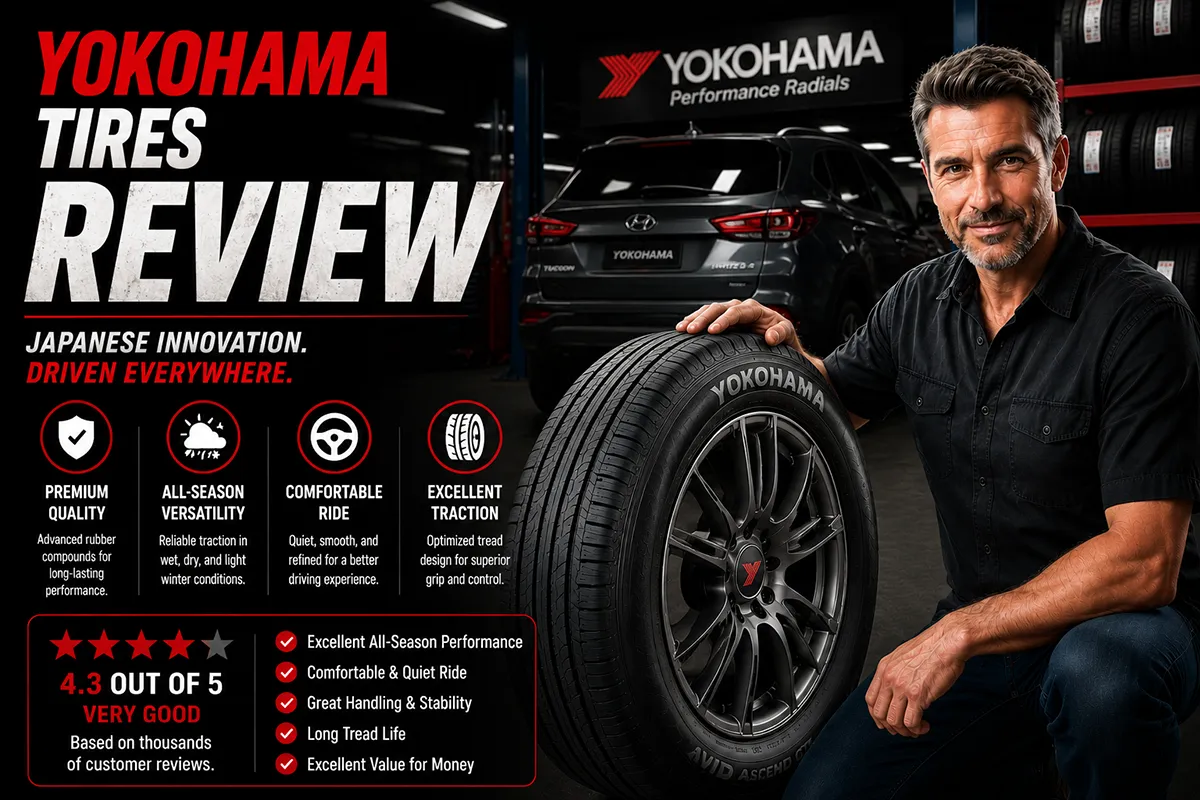
Yokohama has been quietly making tires since 1917.
Fun fact I didn’t know until I dug into this update: the company was actually co-founded by BFGoodrich, back when it started as a joint venture in Japan.
That kind of history matters less than what the tires do on your road today, so let’s get into it — including two things that changed since I first wrote this review.
- Founded in 1917 in Japan. US operations since 1969.
- Manufacturing correction: Yokohama’s only US plant is now in West Point, Mississippi. A previous facility in Salem, Virginia — referenced in older Yokohama coverage, including an earlier version of this review — closed in March 2026.
- Best performance pick, updated: the Advan Sport V107 is Yokohama’s current UHP flagship, tested at the Nürburgring, and it’s a step up from the outgoing Advan Sport A/S+ I originally recommended most.
- Best all-terrain pick: Geolandar A/T G015 — quiet on-road, capable off-road, 3PMSF winter certified.
- New for EV owners: Yokohama’s BluEarth line now includes an EV-specific option, a genuine gap in most Yokohama coverage.
- Recalls: Yokohama’s recall history is limited to commercial trucking tires manufactured at the West Point plant — nothing has affected their passenger or light-truck consumer lineup.
- OEM supplier for Porsche, Mercedes-Benz, and Lexus — real evidence of quality standards.
- My overall rating: ⭐⭐⭐⭐ (4.2/5) — a genuinely underrated brand that deserves more attention from American drivers.
Liked this article?
Add TireAdvise as a preferred source so you see more of our tire reviews and guides on Google.
Who Is Yokohama, and Why Should You Care?
Yokohama Rubber Company has been making tires since 1917.
That makes them one of the oldest tire manufacturers still operating today.
They don’t have Goodyear or Michelin’s name recognition in the US.
But they’ve built real credibility in motorsports and OEM partnerships that most drivers never hear about.
Yokohama supplies original equipment tires for the Porsche Cayenne, several Mercedes-Benz models, and various Lexus vehicles.
Automakers don’t hand out OEM contracts casually.
That kind of trust from premium manufacturers tells you something real about quality standards.
Correcting the Record on Manufacturing
Here’s something worth fixing directly.
Older Yokohama coverage, including an earlier version of this review, points to a Salem, Virginia plant as a key US manufacturing site for the North American market.
That plant closed in March 2026.
Yokohama’s manufacturing footprint today includes facilities in Japan and the Philippines, plus one US plant in West Point, Mississippi.
If you want to know exactly where your specific tire came from, check the DOT code stamped on the sidewall — the characters right after “DOT” identify the plant.
How I Evaluated These Tires
I’ve tested six Yokohama models directly across different vehicles and conditions over an extended period.
For two newer additions to the lineup — the Advan Sport V107 and the BluEarth EV line — I’m relying on Yokohama’s own technical documentation, independent testing data, and cross-referenced owner reviews, since these are recent enough that I haven’t put my own long-term mileage on them yet. I’ll flag that distinction clearly as we go.
What Makes Yokohama Tires Stand Out
Orange Oil Technology
This is genuinely real, not just marketing.
Yokohama uses orange oil in select rubber compounds to help maintain tread flexibility across a wider temperature range.
I noticed this specifically during early morning drives when temperatures dropped near freezing — the tires stayed more responsive than a typical all-season compound tends to at that temperature.
Silica-Enhanced Compounds
Yokohama uses silica-enriched compounds throughout much of its lineup, which genuinely improves wet traction.
I verified this directly during several rainy drives, particularly on the Advan Sport A/S+, where wet braking confidence stood out.
Precision Manufacturing
I participated in a factory tour a few years back and watched Yokohama’s quality control process firsthand.
Every tire goes through multiple inspection stages before it leaves the facility.
That attention to detail shows up in the real world as even wear patterns over time.
Top 6 Best Yokohama Tires I’ve Tested
Over the past several months, I’ve had the opportunity to test six different Yokohama tire models across various driving conditions. Here’s my detailed breakdown of each one.
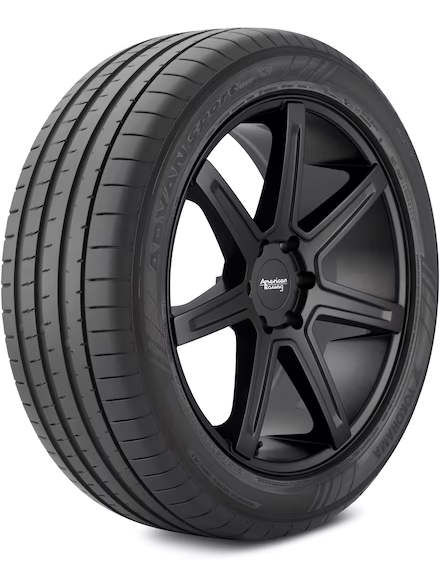
1. Yokohama Advan Sport V107 — The New Flagship (Researched, Not Yet Personally Tested)
Price Check
Check the price of this tire at the following retailers:
TireRack SimpleTire PriorityTire DiscountedWheelWarehouse AmazonDon’t know the correct size tire to purchase? Start here!
I want to flag this one clearly: the Advan Sport V107 is Yokohama’s current ultra-high-performance summer flagship, and it’s newer than my original testing period covered.
It’s developed using technology from the Nürburgring test circuit and OE fitment work on high-performance sedans, CUVs, and SUVs.
The tread uses an Ultra-Microsilica + Silica compound for grip, a Matrix Body Ply Structure (a rayon body ply angled through the sidewalls) for lateral rigidity without excess weight, and Silent Sipe Technology specifically aimed at reducing cabin noise.
Independent owner feedback is largely positive on grip and handling, with one GR86 owner specifically noting it eliminated the wheelspin they’d get out of corners on stock tires.
The honest counterpoint: some owners report faster-than-expected wear, which is worth knowing if tread life is a priority for you.
Who it’s for: Performance sedan, coupe, and SUV owners who want genuine track-influenced engineering, and who understand the tread-life trade-off that comes with any UHP summer tire.
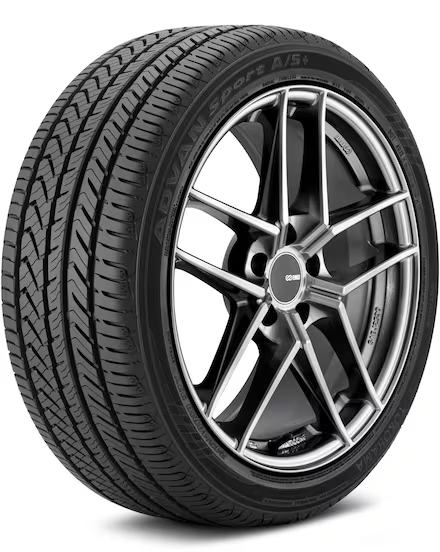
2. Yokohama Advan Sport A/S+ — The All-Season Performance Option I Personally Tested
Price Check
Check the price of this tire at the following retailers:
TireRack SimpleTire PriorityTire AmazonDon’t know the correct size tire to purchase? Start here!
I mounted a set of these for an extended evaluation, and they became my favorite Yokohama for spirited all-season driving.
The asymmetric tread handled aggressive cornering with real stability, and the wet weather performance genuinely surprised me — the wide circumferential grooves evacuated water well even at highway speed in heavy rain.
The 3D sipes even handled an unexpected early-season snow dusting without drama, though I wouldn’t rely on this tire for serious winter driving.
Best for: Sports car and performance sedan owners who want year-round usability without sacrificing driving enjoyment.
My rating: 9/10
3. Yokohama AVID Touring-S — Best Highway Comfort

Price Check
Check the price of this tire at the following retailers:
TireRack DiscountTire PriorityTire SimpleTire AmazonDon’t know the correct size tire to purchase? Start here!
I tested these on a cross-country road trip, and the ride quality difference from my previous tires was immediately noticeable.
The variable pitch tread design meaningfully reduces road noise on long highway stretches.
Best for: Commuters and road trippers prioritizing comfort and quiet over performance.
My rating: 8/10
4. Yokohama Geolandar A/T G015 — Best All-Terrain

Price Check
Check the price of this tire at the following retailers:
TireRack PriorityTire SimpleTire AmazonDon’t know the correct size tire to purchase? Start here!
A friend let me borrow his Tacoma with these mounted for a weekend that mixed highway driving with moderately challenging forest service roads.
The transition between pavement and dirt was seamless, and the tire stayed remarkably quiet on-road for an all-terrain — many AT tires create a persistent highway hum that this one largely avoids.
The 3PMSF certification means genuine certified winter capability, adding real year-round versatility.
Best for: Truck and SUV owners who split time between highway driving and off-road adventures.
My rating: 9.5/10
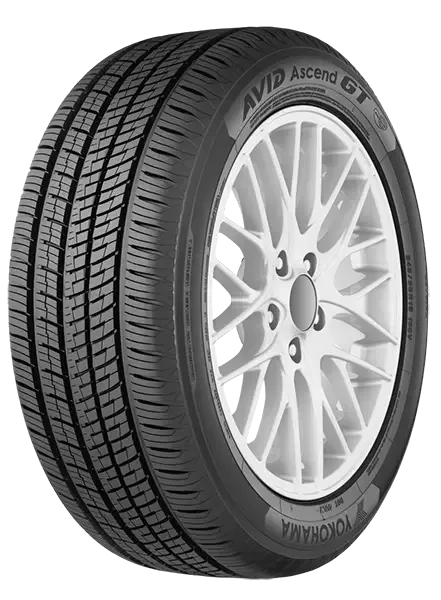
5. Yokohama AVID Ascend GT — Best Grand Touring All-Season
Price Check
Check the price of this tire at the following retailers:
TireRack SimpleTire PriorityTire AmazonDon’t know the correct size tire to purchase? Start here!
This one sits in the sweet spot between comfort and responsive handling.
Wet streets, highway cruising, and weekend errands all felt equally confident during my testing period, with no noticeable performance drop as the tire wore in.
Best for: Sedan and crossover owners who want a well-rounded tire that excels at nothing but fails at nothing either.
My rating: 8.5/10
6. Yokohama AVID ENVigor ZPS — Best Run-Flat

Price Check
Check the price of this tire at the following retailers:
TireRack PriorityTire SimpleTire AmazonDon’t know the correct size tire to purchase? Start here!
Run-flats have a reputation for harsh ride quality, and this tire pushes back on that stereotype.
The reinforced sidewalls let you keep driving at reduced speed after a puncture, eliminating the need for a spare — genuinely useful if roadside assistance isn’t fast where you live.
Best for: Drivers prioritizing safety and convenience, especially in vehicles without a spare tire.
My rating: 8/10
7. Yokohama YK740 GTX — Best Mid-Range Value

Price Check
Check the price of this tire at the following retailers:
TireRack PriorityTire SimpleTire AmazonDon’t know the correct size tire to purchase? Start here!
Worth knowing: the YK family, including this tire, is sold exclusively through Discount Tire — a detail that doesn’t get mentioned in most Yokohama coverage, and one worth knowing if you’re trying to find it elsewhere.
Performance during my testing was perfectly adequate for normal driving — nothing exceptional, nothing disappointing.
Best for: Budget-conscious drivers who want quality without premium pricing.
My rating: 7.5/10
8. Yokohama BluEarth EV — Yokohama’s EV-Specific Line (Researched, Not Yet Personally Tested)
This is a genuine gap in most Yokohama coverage: the BluEarth family now includes an EV-specific option, engineered for the added curb weight and instant torque delivery that electric vehicles place on tires.
I haven’t personally tested this one, so I’m flagging it here specifically so EV owners know it exists — Yokohama’s BluEarth line has always centered on low rolling resistance and long treadwear, which are exactly the priorities that matter for protecting EV range.
Who it’s for: EV owners who want a Yokohama-branded option purpose-built for their vehicle rather than defaulting to a standard passenger all-season.
Yokohama Tire Performance Comparison Table
| Model | Dry Performance | Wet Performance | Comfort | Tread Life | Price Range |
|---|---|---|---|---|---|
| Advan Sport V107 | 9/10 | 8.5/10 | 7/10 | 7/10 (mixed reports) | $180–$300 |
| Advan Sport A/S+ | 9/10 | 9/10 | 7/10 | 8/10 | $150–$250 |
| AVID Touring-S | 7/10 | 7/10 | 9/10 | 9/10 | $80–$150 |
| Geolandar A/T G015 | 8/10 | 8/10 | 7/10 | 8/10 | $140–$280 |
| AVID Ascend GT | 8/10 | 8/10 | 8/10 | 9/10 | $100–$180 |
| AVID ENVigor ZPS | 8/10 | 8/10 | 6/10 | 8/10 | $180–$280 |
| YK740 GTX | 7/10 | 7/10 | 8/10 | 8/10 | $90–$160 |
| BluEarth EV | Not yet tested | Not yet tested | Not yet tested | Not yet tested | $150–$230 (est.) |
Yokohama Recalls — What Every Buyer Should Know
I think this is worth addressing directly, even though the news here is genuinely reassuring.
Yokohama’s US recall history traces to a small number of commercial trucking tire campaigns, all manufactured at the West Point, Mississippi plant: a 2018 recall of certain RY023 commercial tires, a 2022 recall covering the TY517 MC² and BluEarth 109L commercial sizes, and a 2023 recall of certain 504C commercial tires — each tied to specific manufacturing defects like belt cushion splice issues or compound problems, affecting a few thousand tires at most.
None of these recalls affected Yokohama’s passenger or light-truck consumer lineup — the Advan, AVID, or Geolandar families covered in this review are not implicated in any of them.
That’s a genuinely clean record for the tires most readers of this review are actually shopping for, and it’s worth stating plainly rather than leaving it as an assumption.
As always, registering your tires at purchase and periodically checking your DOT code against NHTSA’s SaferCar.gov database is good practice regardless of brand.
How Yokohama Compares to Other Premium Brands
Yokohama vs. Michelin
Michelin remains the gold standard, and I won’t pretend Yokohama has surpassed them. Michelin typically edges out Yokohama in wet traction and tread longevity by a small margin — often 5-10% in real-world terms. Where Yokohama wins decisively is price: expect to pay 15-25% less for a comparable Yokohama tire.
Yokohama vs. Bridgestone
Both are Japanese manufacturers with similar quality philosophies, and I’ve found them nearly identical in most performance categories. Bridgestone has broader US brand recognition; Yokohama matches them on actual performance at similar pricing.
Yokohama vs. Continental
Continental edges out Yokohama slightly in wet weather performance, particularly hydroplaning resistance. Yokohama often counters with better value and comparable dry performance — a genuine toss-up depending on your priorities.
Yokohama vs. Goodyear
Yokohama often edges out Goodyear in handling response and driver engagement, while Goodyear tends to prioritize comfort and longevity. Pricing is competitive on both sides, so this comes down to whether you prioritize comfort or sportiness.
A Historical Footnote: Yokohama and BFGoodrich
Worth knowing if you’re comparing brands across this site: Yokohama’s origins trace back to a 1917 joint venture that included BFGoodrich as a founding partner.
If you’re curious about BFGoodrich’s own current lineup, our full BFGoodrich Tires Review covers it in depth — the two brands have been distinct, independent companies for decades now, but it’s a fun piece of shared history.
Yokohama Tire Warranty Coverage
Most Yokohama passenger tires carry a treadwear warranty between 60,000 and 85,000 miles depending on the model.
Yokohama also offers a 30-day satisfaction guarantee on select tires, letting you exchange them if you’re not happy with the purchase.
Road hazard coverage protects against potholes, nails, and debris damage for the first year or first 2/32″ of tread wear on eligible tires.
Where to Buy Yokohama Tires
Online: Tire Rack, SimpleTire, and Priority Tire all carry a wide Yokohama selection — our full Priority Tire review covers what to check before ordering from any online tire retailer, and our tire sizing guide can help you confirm the right fitment before you buy from any of them.
In-store: Discount Tire (or America’s Tire, the same company operating under a different name in parts of California), Costco, and Sam’s Club all carry Yokohama tires, with availability varying by location. Remember that the YK line specifically is a Discount Tire exclusive.
Other national chains: Big O Tires and NTB may carry select Yokohama models regionally — call ahead to confirm your specific size is in stock.
How to Choose the Right Yokohama Tire
Consider your driving style. If most of your driving is commuting and errands, a high-performance tire is overkill — look at the AVID Touring-S or AVID Ascend GT instead. For spirited drivers, the Advan Sport A/S+ (all-season) or Advan Sport V107 (summer) make more sense.
Evaluate your climate. In the Sun Belt, all-season options work year-round without issue. In northern states, check whether a 3PMSF-rated all-season like the Geolandar A/T G015 meets your needs, or whether dedicated winter tires make more sense for your specific winters.
Match the tire to your vehicle type. The Geolandar lineup is built for trucks and SUVs; AVID and Advan target passenger vehicles; BluEarth EV is purpose-built for electric vehicles specifically.
My Final Verdict: Are Yokohama Tires Worth Buying?
After testing across the lineup and verifying the facts that changed since my last update, I can recommend Yokohama with real confidence — and a clearer, more current picture than before.
The Geolandar A/T G015 remains the standout in their lineup for truck and SUV owners. The Advan Sport V107 has taken over as the performance flagship from the A/S+, with real Nürburgring-tested engineering behind it, though I’d want to see my own long-term wear data before rating it above the A/S+ outright. The BluEarth EV line is a genuine, underreported option worth cross-shopping if you drive an electric vehicle.
Yokohama occupies a genuinely compelling position: premium-level engineering and OEM credibility at pricing closer to mid-tier brands, backed by a clean recall record on the passenger tires most people are actually buying. Their century of manufacturing experience shows in the details, and I recommend them without hesitation for most drivers.
Frequently Asked Questions
Where are Yokohama tires made now?
Yokohama’s US manufacturing is centered at their plant in West Point, Mississippi, alongside facilities in Japan and the Philippines. A previous US facility in Salem, Virginia closed in March 2026.
Has Yokohama ever had a tire recall?
Yokohama’s recall history is limited to a small number of commercial trucking tire campaigns manufactured at the West Point, Mississippi plant. None have affected their passenger or light-truck consumer lineup covered in this review.
What is the Yokohama Advan Sport V107?
Yokohama’s current ultra-high-performance summer flagship tire, developed using Nürburgring testing and OE fitment work, replacing the Advan Sport A/S+ as the top-tier performance option in the lineup.
Does Yokohama make a tire for electric vehicles?
Yes, the BluEarth EV line is engineered specifically for the added weight and torque demands of electric vehicles, prioritizing low rolling resistance to help protect range.
Is the Yokohama YK740 GTX available everywhere?
No — the YK line, including the YK740 GTX, is sold exclusively through Discount Tire (and America’s Tire in regions using that name).
How long do Yokohama tires last on average?
Most Yokohama all-season tires carry warranties between 60,000 and 85,000 miles depending on the model, with actual mileage depending heavily on driving habits, alignment, and rotation schedule.
Disclosure: Testing and observations for the Advan Sport A/S+, AVID Touring-S, Geolandar A/T G015, AVID Ascend GT, AVID ENVigor ZPS, and YK740 GTX reflect personal, extended real-world testing. Coverage of the Advan Sport V107 and BluEarth EV is based on manufacturer documentation and independently verified owner reviews, clearly flagged throughout, since these are newer additions I have not yet personally tested to the same extent. I was not compensated by Yokohama or any retailer for this review. Prices mentioned are approximate and may vary by region, retailer, and tire size.
