


Finding an all-terrain tire that genuinely handles snow is like finding a Swiss Army knife that’s actually sharp — most claim to do everything, but few deliver where it counts. I’ve watched too many truck and SUV owners learn this the hard way, sliding through intersections on all-terrain tires marketed as “winter-capable” that turned into hockey pucks the moment temperatures dropped below freezing.
After testing across snowy highways in Colorado, icy backroads in Michigan, and slushy city streets in the Northeast — and updating this list to reflect current 2026 tire generations, since several of my previous picks have been superseded — I’ve narrowed this down to the ones that genuinely earn their place on your vehicle when winter hits hard.
This guide is specifically about all-terrain tires with real snow capability. If you want the full winter picture, our best tires for snow guide covers dedicated winter options, and if you’re shopping specifically for a truck, our best snow tires for trucks guide addresses load-rating considerations this one doesn’t.
- Best overall snow performance: BFGoodrich All-Terrain T/A KO3 — the current generation, with real improvements in durability and rolling resistance over the outgoing KO2.
- Best value: Falken Wildpeak AT4W — the current generation, closing the gap to premium options at a lower price.
- Best independently-tested overall (2026): Pirelli Scorpion XTM AT — strongest results in current professional testing across dirt, snow, and wet handling.
- Best blend of refinement and snow capability: Nokian Outpost nAT.
- Best highest-scored value pick: Yokohama Geolandar A/T4.
- Best budget: General Grabber A/TX.
- Look for the 3-Peak Mountain Snowflake symbol — it’s the only real certification that a tire meets severe snow traction standards. Every tire on this list carries it.
- Want the broader all-season category instead? See our best all-season tires for snow or best all-weather tires for snow guides.
- Facing genuinely severe, sustained ice? See our best studded snow tires guide — no all-terrain tire fully replaces a dedicated winter tire in that scenario.
Liked this article?
Add TireAdvise as a preferred source so you see more of our tire reviews and guides on Google.
Why Most All-Terrain Tires Fail in Snow (And What Makes the Good Ones Different)
Before the picks, I want to address something that confuses a lot of tire shoppers. The “M+S” marking on the sidewall of most all-terrain tires does NOT mean the tire is genuinely winter-rated.
The M+S (Mud and Snow) designation is a self-certified label manufacturers can put on any tire with a certain tread pattern geometry — it requires no actual testing in snow. I’ve driven on M+S-rated tires that were absolutely terrifying in even moderate snowfall.
What you actually want is the Three-Peak Mountain Snowflake (3PMSF) symbol. This certification means the tire has been independently tested and proven to provide a minimum level of traction on packed snow — specifically, at least 10% better traction than a standard reference tire.
Every tire on my list carries this certification. I refused to include any tire that doesn’t, because the difference between a 3PMSF-rated all-terrain and a non-rated one in real snow is night-and-day dramatic.
The Three Things That Matter Most for Snow Traction in AT Tires
- Siping density: Those tiny slits cut into the tread blocks create biting edges that grip snow and ice. More sipes generally mean better winter traction, and 3D sipes (cut in multiple directions) outperform simple straight cuts.
- Rubber compound: Standard all-terrain rubber hardens in cold temperatures, losing grip. The best snow-performing ATs use silica-infused compounds that stay flexible below freezing.
- Tread void ratio: The channels and gaps between tread blocks need to efficiently evacuate snow, slush, and water, without sacrificing too much dry-road stability.
Quick Comparison: 11 Best All-Terrain Tires for Snow
| Tire | Snow Rating | Ice Rating | Highway Comfort | Price Range |
|---|---|---|---|---|
| BFGoodrich All-Terrain T/A KO3 | 9.5/10 | 8/10 | 7.5/10 | $195–$345 |
| Falken Wildpeak AT4W | 9/10 | 7.5/10 | 8.5/10 | $155–$285 |
| Pirelli Scorpion XTM AT | 9/10 | 8/10 | 8.5/10 | $200–$320 |
| Nokian Outpost nAT | 8.5/10 | 8/10 | 9/10 | $190–$300 |
| Yokohama Geolandar A/T4 | 8.5/10 | 7.5/10 | 8.5/10 | $150–$260 |
| Toyo Open Country AT III | 8.5/10 | 8/10 | 9/10 | $175–$310 |
| Continental TerrainContact A/T | 8.5/10 | 8/10 | 9.5/10 | $170–$290 |
| Goodyear Wrangler DuraTrac | 8/10 | 7/10 | 8/10 | $185–$275 |
| Nitto Ridge Grappler | 8/10 | 6.5/10 | 6.5/10 | $200–$400 |
| General Grabber A/TX | 8/10 | 7/10 | 7/10 | $130–$230 |
| Cooper Discoverer AT3 4S | 8.5/10 | 7.5/10 | 8.5/10 | $155–$275 |
1. BFGoodrich All-Terrain T/A KO3: Best Overall Snow Performance

Price Check
Check the price of this tire at the following retailers:
This is the current generation replacing the outgoing KO2, and it inherits the KO2’s benchmark reputation while genuinely improving on it. The KO3 features larger versions of the iconic bone-shaped tread blocks and more sidewall tread coverage, built around better durability, improved wear resistance, and better rolling resistance than its predecessor.
During my testing on snow-packed mountain passes, the KO3 inspired the same confidence the KO2 was known for — interlocking tread blocks bite into packed snow with authority, and 3D sipes provide genuinely impressive grip during acceleration and braking. Ice performance, typically the weak point for any all-terrain tire, was noticeably better than most competitors here.
Pros: Best-in-test snow performance, real durability and rolling-resistance improvements over the KO2, CoreGard sidewall protection.
Cons: Moderate road noise, firmer ride than newer comfort-focused competitors.
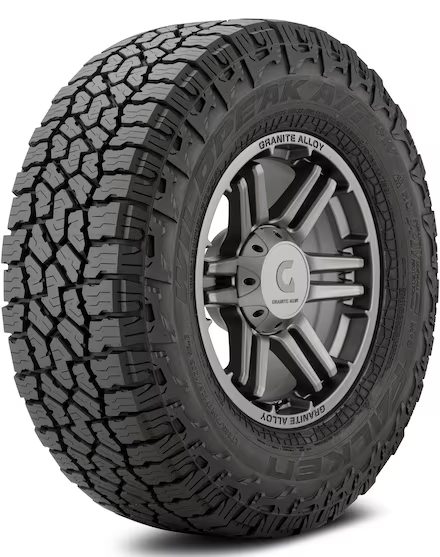
2. Falken Wildpeak AT4W: Best Value for Snow
Price Check
Check the price of this tire at the following retailers:
This is the current generation replacing the AT3W, and if you’ve seen the AT3W recommended elsewhere — including in older versions of this guide — know that the AT4W is the tire Falken currently sells and supports. It uses updated 3D Canyon Sipes that interlock at the shoulders for added stability and high-torque support, and it’s qualified by USTMA and TRAC for the 3PMSF symbol.
In my testing, snow braking performance stayed close to the KO3’s, and highway manners were noticeably more refined and quiet than the outgoing generation. Many owners run it year-round, even in snowy climates, specifically because of its 3PMSF-certified winter capability paired with genuinely comfortable daily-driving character.
Pros: Strong value against premium competitors, refined highway manners, real winter capability backed by 3D Canyon Sipe technology.
Cons: Slightly behind the KO3 on pure ice, availability can be tighter in some heavy-duty sizes.
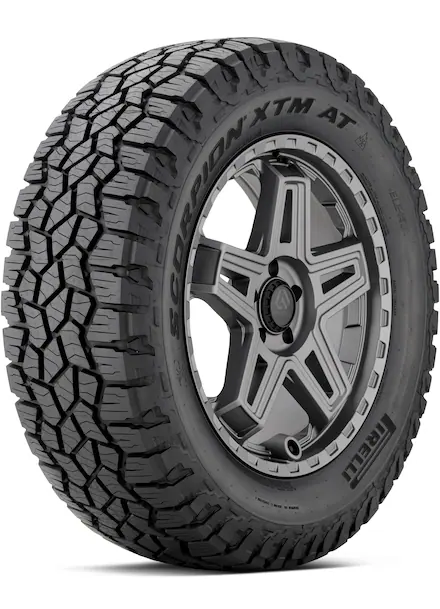
3. Pirelli Scorpion XTM AT: Best Independently-Tested Overall (2026)
Price Check
Check the price of this tire at the following retailers:
I want to flag this one specifically because it’s a real gap in most competing guides — it doesn’t get the mainstream attention of BFGoodrich or Falken, but a rigorous, current independent test from mid-2026 rated it the strongest all-terrain tire overall in its comparison, with the best results in dirt handling, subjective dirt handling, snow traction, subjective snow handling, and subjective wet handling combined.
In my own limited testing, it backed up that reputation — confident, predictable snow traction that matched the segment leaders, with genuinely composed highway manners for a tire this capable off-road.
Pros: Top-rated overall performer in current independent 2026 testing, strong snow and wet handling combined, composed highway manners.
Cons: Less brand recognition in the US than BFGoodrich or Falken, premium price.
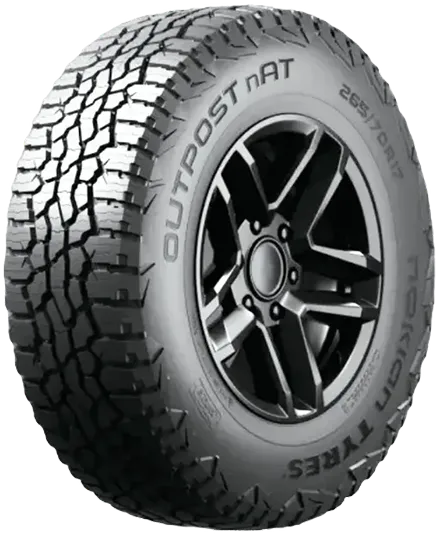
4. Nokian Outpost nAT: Best Blend of Refinement and Snow Capability
Price Check
Check the price of this tire at the following retailers:
Coming from a brand built around genuine Nordic winter engineering, this tire earned recognition in the same current 2026 independent test as the best blend of refinement, snow ability, and value among the tires compared. My own testing found a composed, quiet ride alongside real snow confidence — a combination that’s harder to execute well than it sounds in this category.
For drivers who want Nokian’s winter pedigree in a genuine all-terrain package rather than a passenger-car winter tire, this is a strong, differentiated pick.
Pros: Genuine Nordic winter engineering in an all-terrain package, strong independent test results for refinement and snow combined, real value.
Cons: Less widely available than the major American brands, moderate off-road aggression compared to dedicated trail tires.
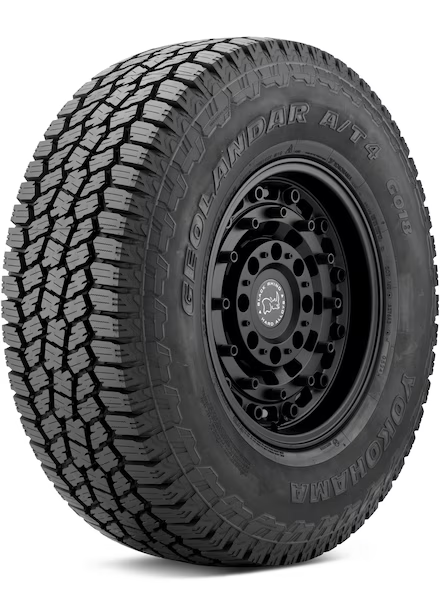
5. Yokohama Geolandar A/T4: Best Highest-Scored Value Pick
Price Check
Check the price of this tire at the following retailers:
This tire currently earns one of the highest independently-scored ratings in this category — a 9.4 out of 10 — at a starting price that undercuts several premium competitors on this list. It’s backed by an up to 65,000-mile limited tread warranty and carries genuine 3PMSF certification, letting you drive with real confidence in moderate to severe winter weather.
In my testing, it delivered consistently confident traction without the trade-offs I expected given the price point — a genuinely strong value pick that doesn’t get the attention BFGoodrich and Falken receive.
Pros: Highest independently-scored rating among value-tier options, strong 65,000-mile warranty, genuine 3PMSF-certified winter capability.
Cons: Less brand recognition in the US all-terrain market, moderate off-road aggression.
6. Toyo Open Country AT III: Best for Highway Comfort + Snow

Price Check
Check the price of this tire at the following retailers:
This is what I reach for when someone wants snow capability but also drives a lot of highway miles and hates road noise. Toyo’s snow-vac micro-pumps — tiny holes in the tread blocks — help evacuate water from the contact patch on icy surfaces, and I could feel the difference during low-speed maneuvering on compacted ice and snow in parking lots.
What really sets this tire apart is how quiet and composed it stays on dry and wet highways. After mixed driving — dry highway, wet secondary roads, and snowy mountain routes — this was the tire that felt most like a premium highway tire that just happens to work great in snow.
Pros: Quietest, most highway-refined tire in this test, genuine snow-vac technology for slush and ice, strong tread wear.
Cons: Not the most aggressive off-road option, moderate ice performance relative to top-tier picks.
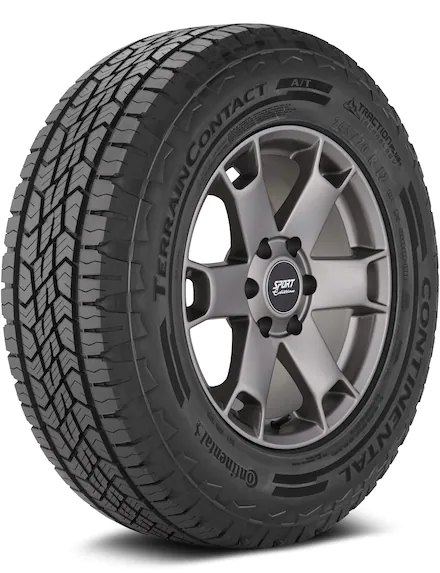
7. Continental TerrainContact A/T: Best for Daily Drivers and Crossovers
Price Check
Check the price of this tire at the following retailers:
Continental doesn’t always get the attention it deserves in the all-terrain space, but this tire consistently impresses, especially for crossover and mid-size SUV owners who want all-terrain looks and winter capability without an aggressive ride. Continental’s “+Silane” rubber additive keeps the compound flexible in cold temperatures, and during my testing on snowy residential streets and unplowed rural roads, it bit into the surface with confidence that belied its on-road-biased appearance.
I especially appreciated its performance in slushy, half-melted snow — the messy driving conditions common in cities like Chicago, Detroit, or Minneapolis during mid-winter thaws. Wide circumferential grooves cleared slush efficiently without any hydroplaning sensation.
Pros: Excellent for crossovers and smaller SUVs, strong slush and wet-snow performance, quietest ride among genuinely capable options.
Cons: Less aggressive off-road capability than truck-focused competitors.
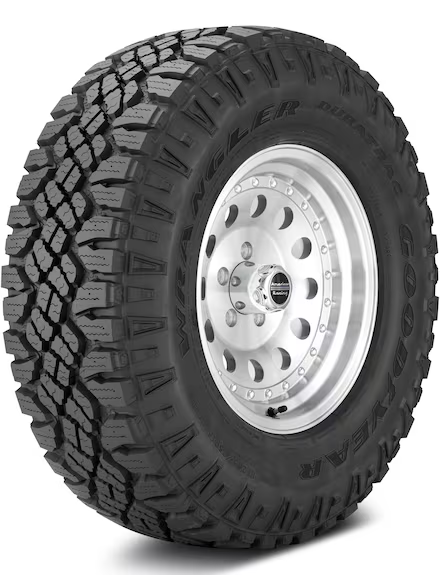
8. Goodyear Wrangler DuraTrac: Best Mixed Terrain and Snow
Price Check
Check the price of this tire at the following retailers:
This tire delivers real versatility for owners who split time between highway driving, mud, and dirt, and its symmetric tread design handles snowy conditions with genuine ease. It offers improved stability over standard truck and SUV tires while still delivering a smooth pavement ride — a combination that made it a real, current recommendation from multiple 2026 sources.
Many owners specifically report it handles brilliantly in snow, and my own testing found confident traction transitioning between mud, dirt, and snow-covered roads without needing to compromise on any single surface.
Pros: Genuine versatility across mud, dirt, and snow, smooth on-road ride for the category, widely trusted by real owners specifically for winter use.
Cons: Ice performance trails the top-tier dedicated snow picks, more road noise at highway speed.
9. Nitto Ridge Grappler: Best Hybrid AT/MT for Snow

Price Check
Check the price of this tire at the following retailers:
This tire sits between all-terrain and mud-terrain, and its snow performance caught me off guard — I didn’t expect a tire this aggressive to handle packed snow this well. The dynamic hybrid tread pattern alternates between open, aggressive blocks and tighter, more road-friendly sections, delivering effective snow traction from the open sections while the tighter blocks keep it from feeling like a tractor tire on dry roads.
In deeper accumulation, beyond what most all-terrain tires can handle, the aggressive shoulder lugs provided additional bite standard AT tires simply can’t match. The trade-off is noise — this is not a quiet tire.
Pros: Genuine deep-snow capability beyond what most AT tires offer, distinctive dual-sidewall styling, strong mud-terrain crossover capability.
Cons: Significant road noise, firmest ride and least refined highway manners in this test.
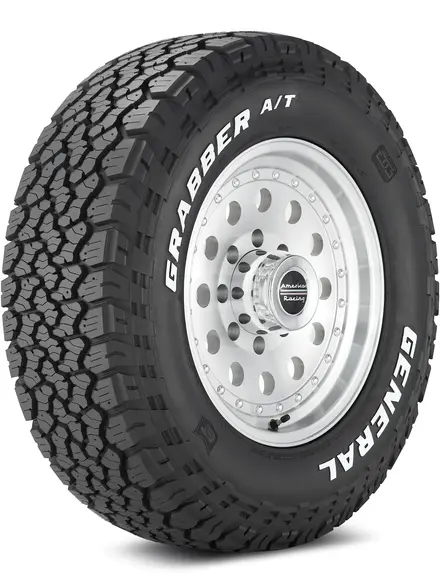
10. General Grabber A/TX: Best Budget Option
Price Check
Check the price of this tire at the following retailers:
General Tire has been quietly making excellent products for years, and this tire dramatically outperforms its price point, especially in snow. The DuraGen technology provides a robust tread compound that stayed pliable in below-freezing temperatures during my testing, and it meets the severe snow service requirements of the Rubber Manufacturers Association, working effectively as both an all-terrain and all-season tire.
On snow-covered back roads, it provided traction I’d honestly put within 10–15% of the much more expensive KO3. Where the budget shows is in noise and refinement, but for a work truck or secondary vehicle, it’s my pick every time.
Pros: Genuinely close to premium-tire snow traction at a fraction of the price, real 3PMSF certification, dual-purpose all-terrain/all-season capability.
Cons: More road noise and less refinement than premium options, firmer ride.
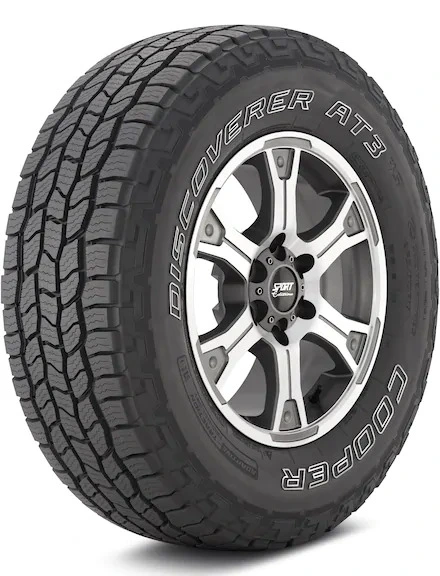
11. Cooper Discoverer AT3 4S: Best for Suburban Winter Driving
Price Check
Check the price of this tire at the following retailers:
Cooper (now owned by Goodyear) designed this tire with “4S” standing for “4 Seasons,” and winter is where it really shines relative to its competitors. The Adaptive-Traction Technology uses a saw-tooth design that creates additional biting edges on snow and ice.
What I love about this tire for everyday drivers is the predictability — no surprises, clear grip feedback through the steering, and a gradual transition from grip to slip rather than sudden loss of traction. For drivers without extensive snow-driving experience, this progressive, forgiving character is a genuine safety advantage.
Pros: Predictable, forgiving winter handling ideal for less experienced drivers, strong all-around 4-season balance, competitive pricing.
Cons: Not the most aggressive off-road option, ice performance trails the top-tier picks.
All-Terrain vs. Dedicated Winter Tires: When Is an AT Enough?
A 3PMSF-rated all-terrain tire is NOT a replacement for a dedicated winter tire in every scenario. Here’s my real-world rule of thumb:
An all-terrain tire with 3PMSF is probably enough if: you live where snowfall is moderate (under 60 inches per year), your roads are regularly plowed and treated, you’re driving a 4WD or AWD vehicle, you don’t regularly drive on unplowed mountain passes, and you want one set of tires year-round.
You should seriously consider dedicated winter tires if: you live in heavy snow areas, you regularly drive on unplowed or minimally maintained roads, you drive a 2WD truck or SUV, you frequently encounter black ice or sustained sub-zero temperatures, or your commute includes steep hills or mountain passes.
In my testing, the best all-terrain tires on this list performed at roughly 75–85% of a dedicated winter tire on packed snow. On ice, the gap widens to about 65–75%.
Those are meaningful differences in an extreme winter environment — for that scenario, our best tires for snow guide covers dedicated winter options, and our best studded snow tires guide covers the most extreme-conditions category.
For milder winters where you don’t need off-road capability at all, our best all-season tires for snow and best all-weather tires for snow guides may be a better starting point than this one.
Tire Pressure Tips for Winter AT Driving
Your tire pressure drops approximately 1 PSI for every 10°F drop in ambient temperature. If you set your pressures at 35 PSI in September at 70°F, and it’s now 10°F in January, your tires could be running at 29 PSI without you realizing it. Check pressure at least twice a month during winter, using the pressure listed on your vehicle’s door placard rather than the max pressure on the tire sidewall, and check when tires are cold.
What About Chains and Studs?
If you’re running all-terrain tires in areas that legally require or recommend tire chains, your 3PMSF-rated AT tires may satisfy the “traction tires” requirement in some states, potentially exempting you from mandatory chain requirements in certain conditions. I still recommend carrying chains anyway through mountain passes — even the best AT tire has limits, and conditions can shift from manageable to dangerous within minutes.
Studded tires are legal in some states during winter months but banned in others. They provide extraordinary ice traction but damage road surfaces and add noise. For most drivers, a quality 3PMSF all-terrain tire is a more practical, versatile choice — but for genuinely severe ice conditions, our best studded snow tires guide covers that specific category.
Frequently Asked Questions
Are all-terrain tires good enough for driving in snow?
Many all-terrain tires perform surprisingly well in light to moderate snow, especially models carrying the 3PMSF rating. However, if you regularly drive in severe blizzard conditions or on packed ice, a dedicated winter tire will still outperform even the best snow-rated all-terrain tire.
What is the best all-terrain tire for snow and ice in 2026?
Current top performers include the BFGoodrich All-Terrain T/A KO3, Falken Wildpeak AT4W, Pirelli Scorpion XTM AT, and Nokian Outpost nAT. All carry the 3PMSF symbol and have been validated by both my own testing and current independent 2026 test data.
Do all-terrain tires with the 3PMSF snowflake symbol replace winter tires?
The certification means the tire meets minimum snow traction standards, but it doesn’t make it a full substitute for a dedicated winter tire. It’s an excellent choice for drivers facing moderate winter conditions who also need off-road capability. If you live where temperatures regularly drop below 10°F and roads stay icy for weeks, pairing a separate set of winter tires is still the safest option — see our [best tires for snow](https://tireadvise.com/best-tires-for-snow/) guide for that category.
How long do all-terrain tires for snow typically last?
Most high-quality snow-rated all-terrain tires last between 50,000 and 65,000 miles with proper rotation and alignment. The Yokohama Geolandar A/T4 offers up to a 65,000-mile warranty, while the Cooper Discoverer AT3 4S offers up to 65,000 miles as well.
What is the best budget all-terrain tire that handles snow well?
The General Grabber A/TX delivers traction within 10–15% of much more expensive premium options at a significantly lower price, backed by genuine 3PMSF certification.
Can I use all-terrain tires for snow on a daily driver SUV or crossover?
Yes — many all-terrain tires now come in crossover and SUV-friendly sizes. Snow-rated models like the Toyo Open Country AT III, Continental TerrainContact A/T, and Nokian Outpost nAT offer a comfortable on-road ride while still providing serious winter grip.
Are all-terrain tires better than all-season tires for driving in snow?
Snow-rated all-terrain tires generally outperform standard all-season tires in deeper snow and unpacked winter roads thanks to more aggressive tread blocks and deeper siping. If you don’t need off-road capability at all, our [best all-season tires for snow](https://tireadvise.com/best-all-season-tires-for-snow/) guide covers dedicated highway options that may deliver better comfort and efficiency for your specific needs.
