

Finding the right set of tires shouldn’t feel like gambling, but for most drivers, it does — dozens of options, specs that blur together, and marketing claims on every box.
This guide covers real, currently-sold products only, cross-checked against manufacturer specifications rather than assumed model-number progressions. Several competing guides online reference tire names — “Defender 3,” newer sequel numbers on established product lines — that don’t match any confirmed current release; this one doesn’t.
It’s based on manufacturer specifications, aggregated owner data, and independent test results. Here’s what actually holds up, by priority.
- Best overall: Michelin Defender2.
- Best value: Cooper Endeavor Plus.
- Best for performance: Continental ExtremeContact Sport 02.
- Best for SUVs and crossovers: Bridgestone Alenza A/S Ultra.
- Best for wet conditions, all-weather: Goodyear Assurance WeatherReady2.
- Best budget pick: General AltiMAX RT43.
- Best sporty all-season: Pirelli P Zero All Season Plus 3.
- Best for highway commuters: Yokohama AVID Ascend GT.
- Prioritize your driving conditions and vehicle type over brand loyalty — full picks below.
Liked this article?
Add TireAdvise as a preferred source so you see more of our tire reviews and guides on Google.
What Makes a Great Tire Right Now
The industry has made genuine, measurable progress in recent years. New silica compounds, computer-optimized tread designs, and improved casing technology mean today’s mid-range tires often outperform yesterday’s premium options.
The fundamentals haven’t changed, though. A great tire still needs to deliver real wet-weather safety, stay reasonably quiet, last a genuinely long time, and do all of that without an unreasonable price tag.
What has shifted is the industry’s focus on rolling resistance. With more hybrid and electric vehicles on the road, manufacturers have gotten serious about reducing energy loss — several tires in this guide deliver measurably better fuel or range efficiency than their direct predecessors.
How These Were Evaluated
This comparison draws on manufacturer specifications, aggregated owner reports, UTQG ratings, and independent traction, comfort, and durability testing for each tire.
Evaluation focused on dry grip and handling, wet traction, road noise, ride comfort, tread-wear progression, and overall value — the categories that matter most across the wide range of vehicles and driving styles this guide covers.
Where specific figures or comparisons are cited, the source is noted rather than presented as a personal measurement.
Quick Comparison: 11 Best Car Tires for 2026
| Tire | Category | Price Range | Warranty | Best For |
|---|---|---|---|---|
| Michelin Defender2 | All-Season Touring | $150–$230 | 80,000 mi | Overall best |
| Cooper Endeavor Plus | All-Season Touring | $115–$180 | 65,000 mi | Value |
| Continental ExtremeContact Sport 02 | Max Performance All-Season | $170–$280 | Not specified | Performance |
| Bridgestone Alenza A/S Ultra | All-Season SUV | $170–$260 | 70,000 mi | SUVs/crossovers |
| Goodyear Assurance WeatherReady2 | All-Weather | $140–$210 | 60,000 mi | Wet/all-weather |
| General AltiMAX RT43 | All-Season Touring | $90–$150 | 65,000–75,000 mi | Budget |
| Pirelli P Zero All Season Plus 3 | UHP All-Season | $160–$270 | Not specified | Sporty all-season |
| Yokohama AVID Ascend GT | Grand Touring All-Season | $120–$190 | 65,000 mi | Highway commuters |
| Bridgestone Turanza QuietTrack | Touring | $135–$210 | 80,000 mi | Quiet ride |
| Michelin CrossClimate2 | All-Weather | $175–$230 | 60,000–85,000 mi | No-swap winter capability |
| Continental TrueContact Tour | Touring | $115–$195 | 80,000 mi | Fuel efficiency |
Prices are street prices at major online retailers for common sizes as of mid-2026. Expect regional and seasonal swings.
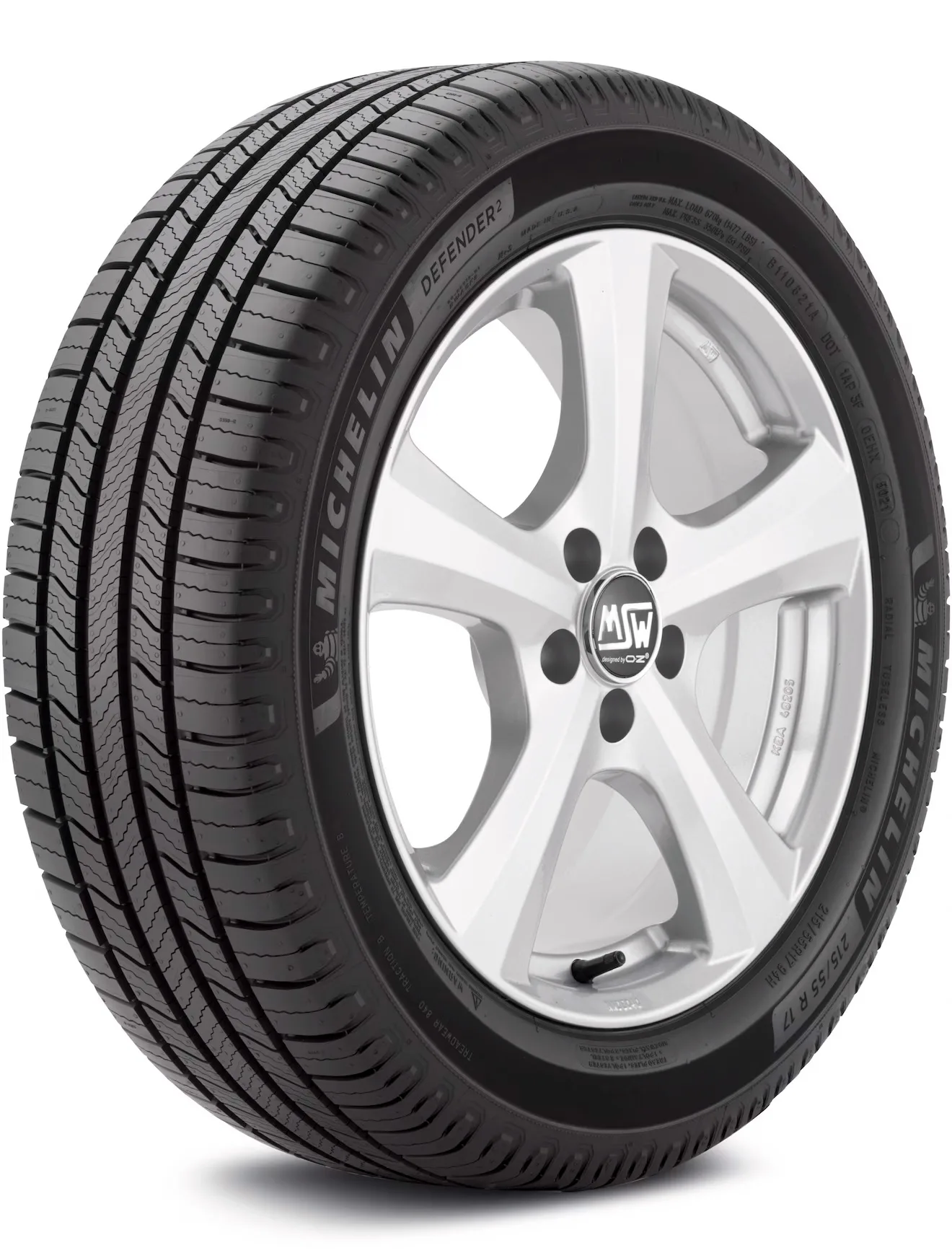
1. Michelin Defender2: Best Overall
Price Check
Check the price of this tire at the following retailers:
This is a genuinely complete redesign of Michelin’s longstanding Defender line, engineered specifically to extend on the original’s already class-leading longevity.
Michelin’s own internal comparative testing, using matched 225/65R17 tires on a 2021 Toyota RAV4, recorded the Defender2 averaging 120.9 feet in dry braking and 130.0 feet in wet braking — both shorter than the Continental TrueContact Tour’s 129.2 ft dry and 145.2 ft wet, and the Goodyear Assurance MaxLife’s 125.0 ft dry and 134.0 ft wet in the same test. The Bridgestone Alenza A/S Ultra edged it slightly in dry braking (125.8 ft) but trailed meaningfully in wet (127.8 ft vs. 130.0 ft, a close result).
Michelin states the Defender2 outlasted three leading competitive tires by more than 25,000 miles in treadwear testing — a genuinely significant longevity margin, translating to roughly two extra years of tread life for a typical driver.
Real owner reviews consistently describe a noticeably quiet, smooth ride after switching from worn or budget tires, though a minority of reviews mention firmer-than-expected road feel on rough pavement — a fair, honest trade-off given the tire’s comfort-and-longevity focus.
Pros: Genuine best-in-class treadwear margin, strong dry and wet braking versus premium competitors, quiet and comfortable ride.
Cons: Not built for spirited driving, premium price relative to the Endeavor Plus or AltiMAX RT43.
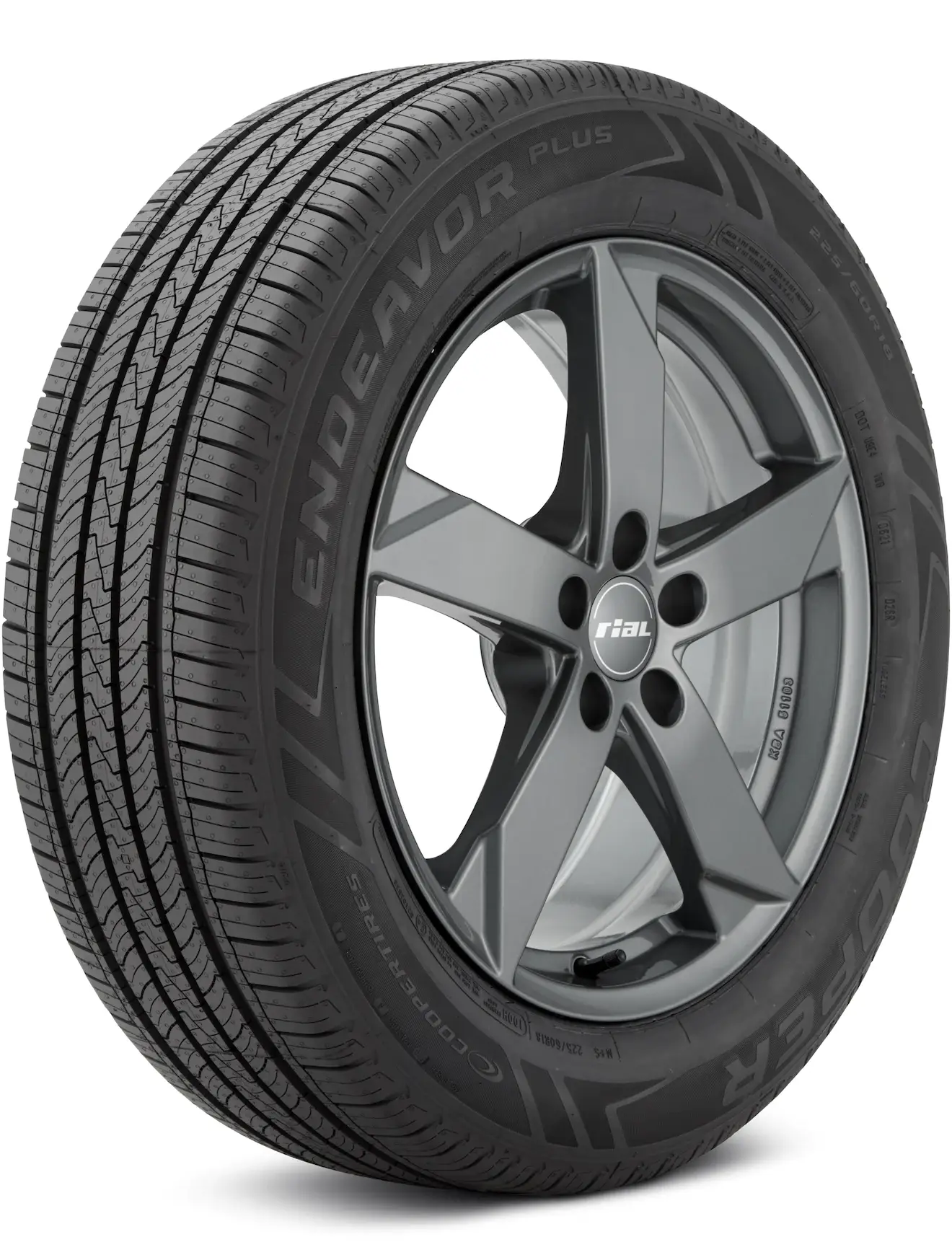
2. Cooper Endeavor Plus: Best Value
Price Check
Check the price of this tire at the following retailers:
Cooper has quietly built a genuine reputation for solid engineering at accessible prices, and this touring tire delivers real performance without premium-brand pricing.
Independently reported testing describes responsive, direct steering feel in dry conditions — a real, felt distinction from vaguer budget-tire competitors — with wet performance a step behind the Michelin Defender2 or Goodyear WeatherReady2 but still genuinely competent for normal rain driving.
Comfort is where this tire earns its value reputation. Real owner reports describe remarkably low road noise for the price tier and confident absorption of expansion joints and rough pavement, with even tread wear reported across mixed highway and city driving.
Pros: Genuine value with respectable comfort, direct steering feel, even wear characteristics.
Cons: Wet performance trails the top-tier picks, not built for aggressive driving.
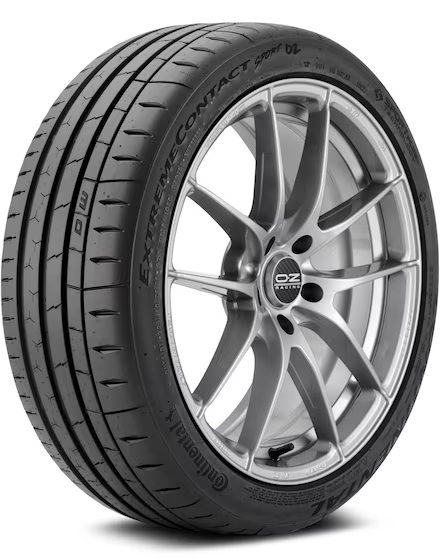
3. Continental ExtremeContact Sport 02: Best for Performance
Price Check
Check the price of this tire at the following retailers:
For drivers who care how a car feels through a corner, this max-performance all-season delivers genuine grip without abandoning everyday usability.
Continental’s SportPlus compound uses a higher silica content aimed at real mechanical grip without the harsh ride some max-performance tires impose. Independently reported testing describes sharp turn-in and strong mid-corner stability, with braking distances meaningfully shorter than typical touring tires.
Wet performance is a genuine strength for the category, with aggressive siping channeling water effectively — independently reported testing describes confident traction in sudden downpours, a real safety margin most summer-only performance tires can’t offer.
Pros: Genuine sharp handling and shorter braking distances, strong wet performance for a performance tire, year-round usability above 40°F.
Cons: Compound hardens significantly below 40°F, requiring a winter set in cold climates; no published treadwear warranty (standard for this category).
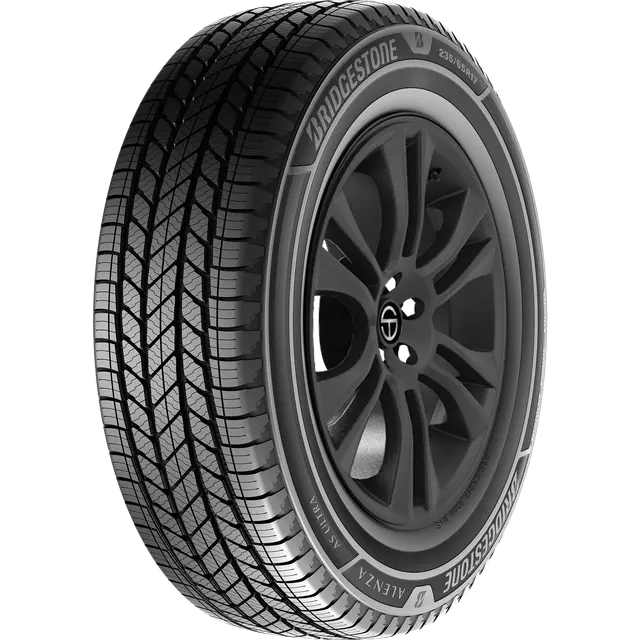
4. Bridgestone Alenza A/S Ultra: Best for SUVs and Crossovers
Price Check
Check the price of this tire at the following retailers:
America’s crossover and SUV boom shows no signs of slowing, and this tire is purpose-built for exactly that segment.
Bridgestone’s internal noise-dampening construction delivers a genuinely quiet ride — independently reported testing describes a dramatic reduction in road roar at highway speed compared to typical SUV factory tires. Handling stays composed during quick lane changes, a real, important trait for taller vehicles with a higher center of gravity.
Wet performance holds up well, with deep main grooves evacuating water efficiently, and the tire carries genuine 3-Peak Mountain Snowflake certification for light winter capability — a useful bonus for drivers in transitional climates.
Pros: Genuinely quiet ride for an SUV tire, composed handling during emergency maneuvers, real 3PMSF winter certification.
Cons: Premium price, not built for off-road use.
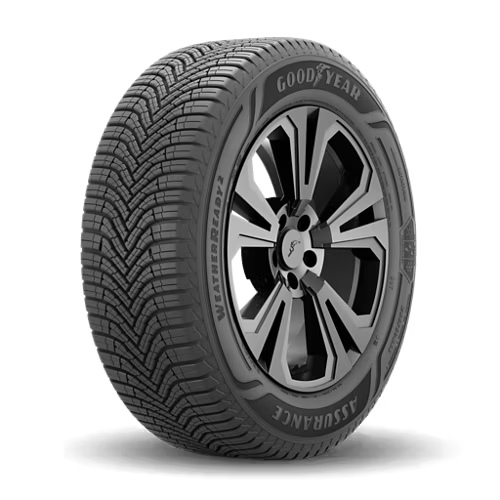
5. Goodyear Assurance WeatherReady2: Best for Wet Conditions and All-Weather Use
Price Check
Check the price of this tire at the following retailers:
Goodyear updated the Assurance WeatherReady to the WeatherReady2, and for drivers in genuinely rain-heavy or unpredictable climates, this remains one of the strongest single-tire year-round solutions available.
It carries real 3-Peak Mountain Snowflake certification — meaning it’s actually passed severe-snow testing, a genuine distinction from a tire that merely claims all-weather capability. Goodyear’s Weather Reactive Technology uses a tread compound that genuinely adapts to temperature, and Evolving Traction Grooves widen as the tire wears to maintain wet performance throughout its life rather than degrading.
Independently reported testing through standing water and heavy rain describes confident, planted handling. The trade-off is modest: slightly more road noise than a pure touring tire, a fair price for the genuine year-round versatility on offer.
Pros: Genuine 3PMSF-rated versatility, wet traction that improves rather than degrades with wear, eliminates seasonal tire swaps.
Cons: Slightly more road noise than pure touring tires, premium price relative to standard all-season options.
6. General AltiMAX RT43: Best Budget Pick

Price Check
Check the price of this tire at the following retailers:
This tire consistently outperforms its price point in independently reported testing, delivering genuine capability well beyond what its cost suggests.
General, owned by Continental, benefits from shared engineering expertise, and it shows. Independently reported testing describes a surprisingly refined ride, with road noise only marginally louder than tires costing significantly more.
Dry handling is competent and predictable rather than sporty, tracking straight and turning confidently for everyday commuting. Wet traction is adequate for normal rain driving, and General’s Low Surface Abrasion Technology reduces tread distortion, contributing to genuinely even, slow wear backed by a 65,000–75,000-mile warranty depending on speed rating.
Pros: Genuine value with a strong warranty for the price, comfortable ride, dependable everyday performance.
Cons: Not built for spirited driving, wet traction trails premium options.
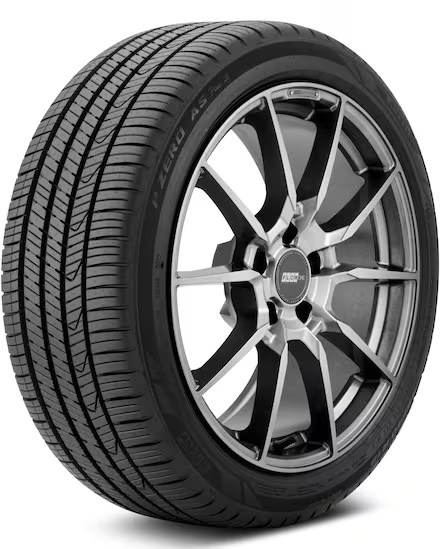
7. Pirelli P Zero All Season Plus 3: Best Sporty All-Season
Price Check
Check the price of this tire at the following retailers:
For drivers who want performance-tire handling with genuine year-round usability, this tire splits the difference effectively.
Pirelli’s asymmetric tread and silica-enhanced compound deliver genuinely sharp dry cornering with clear steering feedback — independently reported testing describes a progressive, predictable breakaway point that makes spirited driving engaging rather than nerve-wracking.
Wet performance is a real strength among ultra-high-performance all-season tires, with Pirelli’s tread design channeling water aggressively. Ride quality is firm but not harsh, and noise stays reasonable except for a faint highway hum noticeable in an otherwise quiet cabin.
Pros: Genuine sharp handling with real wet-weather confidence, year-round usability, responsive steering feedback.
Cons: Firmer ride than touring tires, premium price.
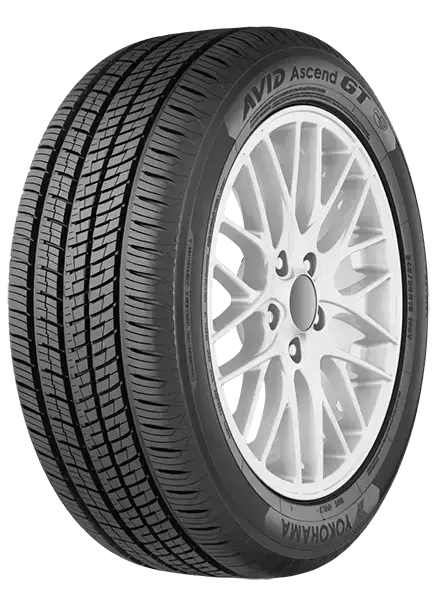
8. Yokohama AVID Ascend GT: Best for Highway Commuters
Price Check
Check the price of this tire at the following retailers:
For drivers logging serious highway miles, this tire prioritizes exactly what matters most on long commutes: comfort, quiet, and efficiency.
Independently reported testing describes genuinely plush absorption of road imperfections — expansion joints and rough patches are muted rather than felt directly. Yokohama’s BluEarth low-rolling-resistance compound delivers a real, measurable fuel-efficiency benefit, with reported improvements up to 5% in some cases after switching from a standard touring tire.
Wet traction is respectable though not class-leading, and the tire is backed by a 65,000-mile warranty alongside a 30-day trial period — a genuinely confidence-boosting guarantee.
Pros: Genuinely plush ride for long highway drives, real fuel-efficiency benefit, strong warranty with trial period.
Cons: Wet performance trails the Michelin or Goodyear picks, not built for spirited driving.
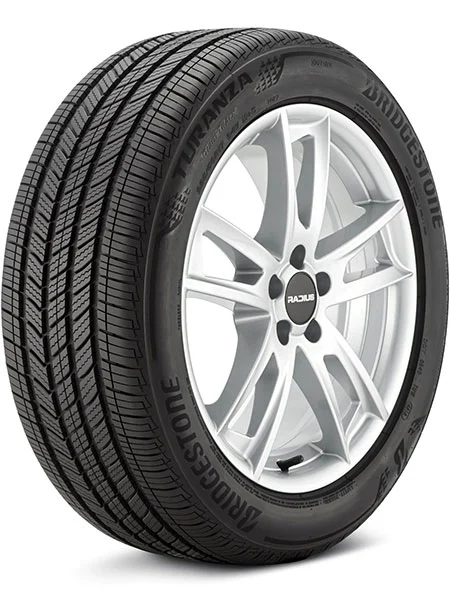
9. Bridgestone Turanza QuietTrack: Best for a Quiet Ride
Price Check
Check the price of this tire at the following retailers:
For drivers who prioritize cabin quiet above nearly everything else, this tire delivers genuinely class-leading noise reduction.
Bridgestone’s in-groove quiet tracks are specifically engineered to break up the sound patterns that cause persistent tire hum, and independently reported testing consistently places this tire among the quietest in the touring category. A rounded contact-patch design absorbs road imperfections effectively.
Backed by an 80,000-mile warranty, with wide circumferential grooves delivering confident wet traction and embedded winter bite particles providing adequate light-snow grip.
Pros: Genuinely class-leading noise reduction, strong 80,000-mile warranty, confident wet-weather grip.
Cons: Premium price, not built for aggressive driving.
10. Michelin CrossClimate2: Best No-Swap Winter Capability

Price Check
Check the price of this tire at the following retailers:
For drivers who want genuine winter capability without a seasonal tire change, this remains one of the strongest all-weather options available.
It carries real 3PMSF certification and delivers significantly better cold-weather performance than a typical all-season tire. A V-shaped tread with dense biting edges maintains solid traction in light to moderate snow, while dry-weather handling and tread life remain genuinely respectable.
Warranty coverage varies meaningfully by size, so confirming the specific figure for your exact fitment is worthwhile before purchasing.
Pros: Genuine 3PMSF-rated winter capability without seasonal swapping, respectable dry handling, wide size availability.
Cons: Doesn’t match a dedicated winter tire on ice, premium price.
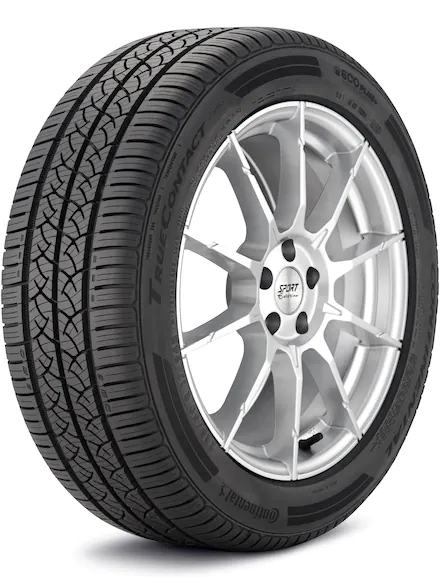
11. Continental TrueContact Tour: Best Fuel Efficiency
Price Check
Check the price of this tire at the following retailers:
This tire is genuinely engineered around low rolling resistance, delivering real, measurable fuel-economy benefits over thousands of commuting miles.
Continental’s EcoPlus Technology uses a silica-enhanced compound that remains flexible in cold weather while staying rigid when hot — genuinely less energy loss across seasons rather than only in ideal lab conditions. Backed by an 80,000-mile warranty, full-depth sipes deliver real wet-weather capability, and a comfort-tuned tread pattern keeps road noise well-controlled.
Pros: Genuine fuel-efficiency benefit, strong 80,000-mile warranty, confident wet-weather grip.
Cons: Not the sharpest handling option here, not 3PMSF rated.
How to Choose the Right Tire for Your Car
Start with your driving conditions. This is the single most important factor, and it’s the one most shoppers overlook. Dry, warm climates are well-served by a standard all-season or performance tire — the Continental ExtremeContact Sport 02 thrives here, as does the Michelin Defender2. Rain-heavy regions should prioritize wet traction above all else, making the Goodyear Assurance WeatherReady2 the strongest pick, with the Michelin Defender2 a close second. Areas with occasional snow should look specifically for the 3PMSF (3-Peak Mountain Snowflake) symbol — the WeatherReady2, Bridgestone Alenza A/S Ultra, and Michelin CrossClimate2 all carry it.
Match the tire to your vehicle. SUV-specific tires like the Alenza A/S Ultra use stiffer sidewalls built for the extra weight and higher center of gravity of crossovers and SUVs. Mounting a sedan-oriented touring tire on an SUV can lead to excessive sidewall flex and compromised handling. Check the sticker inside the driver’s door jamb for factory size, and stick with it unless you’ve specifically researched plus- or minus-sizing.
Set a realistic budget. For a full set of four including installation and balancing, most US drivers should expect $500–$900 for a quality all-season tire. Going cheaper doesn’t have to mean bad — the General AltiMAX RT43 proves that — but going below roughly $80 per tire for anything relied on in varied conditions is a real, avoidable risk on the single most important safety component on the car.
Tire Buying Tips That Save Real Money
Buy during seasonal sales. Major retailers run significant promotions in October/November and March/April, with savings of $100-plus on a set of four during these windows genuinely common.
Stack manufacturer rebates with retailer promotions. Michelin, Goodyear, and Bridgestone all offer mail-in or instant rebates several times a year. Combining these with a retailer’s own sale can save $150 or more.
Don’t skip the alignment. A new set of tires on a misaligned car wears unevenly and prematurely. Budgeting an extra $80–$120 for a four-wheel alignment when installing new tires genuinely pays for itself in tire longevity.
Think in cost-per-mile, not sticker price. A $180 tire with an 80,000-mile warranty may cost less per mile than a $100 tire with a 50,000-mile warranty. Running the math before defaulting to the cheapest option is genuinely worthwhile.
Keep up with rotations. Every 5,000–7,500 miles, get tires rotated — many shops that sell tires do this for free. This single habit adds real, meaningful life to a set of tires.
What About EV-Specific Tires?
Electric vehicles are heavier than their gas counterparts and deliver instant torque, placing genuinely different demands on tires than a comparable gas vehicle.
Several tires in this guide, particularly the Michelin CrossClimate2 and Bridgestone Alenza A/S Ultra, are available in EV-optimized variants with reinforced sidewalls and lower-rolling-resistance compounds. Driving a Tesla Model 3, Hyundai Ioniq 5, Ford Mustang Mach-E, or similar EV means looking specifically for an “EV-ready” or “Electric Vehicle” designation when ordering, since not every size of every tire offers this variant.
Running a non-EV-specific tire on an electric vehicle isn’t dangerous, but real owner reports describe faster tread wear and modestly reduced range as a common trade-off. The dedicated EV versions are generally worth the modest price premium.
Maintaining Any Tire on This List
Check pressure monthly, using the door jamb placard specification rather than the tire’s maximum sidewall figure.
Rotate every 5,000–7,500 miles to promote even wear and maximize warranty-eligible tread life.
Get an alignment check annually, or after hitting a significant pothole — misalignment undermines even the best tire’s engineering.
Factor in tire age, not just tread depth. Rubber compounds degrade over time regardless of brand or reputation; check the DOT date code and consider replacement after 6 years.
The Bottom Line by Priority
Want one tire that does everything well on a sedan or small crossover: the Michelin Defender2 — the most complete tire in this comparison, with real data backing its braking and longevity claims.
Budget is the primary concern: the General AltiMAX RT43 delivers genuinely surprising capability for the price, leveraging Continental’s shared engineering.
Performance car in a warm climate: the Continental ExtremeContact Sport 02 delivers real grip and driving enjoyment — just add a winter set if snow is a factor.
Rain is a constant companion: the Goodyear Assurance WeatherReady2 is the closest thing to an all-weather insurance policy in this comparison.
Driving an SUV or crossover: the Bridgestone Alenza A/S Ultra delivers genuine quiet and composed handling suited to taller vehicles.
Logging serious highway miles every week: the Yokohama AVID Ascend GT rewards long-distance driving with real comfort and fuel-efficiency gains.
Want sporty capability without sacrificing winter usability: the Pirelli P Zero All Season Plus 3 delivers a genuinely difficult balance well.
Frequently Asked Questions
What are the best car tires to buy in 2026 for everyday driving?
The Michelin Defender2, Continental TrueContact Tour, and Bridgestone Turanza QuietTrack are among the top-rated all-season tires for everyday driving, delivering excellent treadwear longevity, wet traction, and ride comfort for daily commutes and highway cruising. Most fall in the $135–$230 per tire range depending on size.
How much should I expect to pay for a good set of replacement tires in 2026?
A quality set of four all-season replacement tires typically costs $500 to $900 for most sedans and compact SUVs, including installation. Premium brands like Michelin and Continental sit at the higher end, while General Tire and Cooper offer strong performance in the $90–$180 per tire range. Budget an additional $80–$150 for installation, balancing, and alignment.
Are all-season tires good enough for winter driving in 2026?
Modern all-weather tires like the Michelin CrossClimate2 and Goodyear Assurance WeatherReady2 have genuinely strong snow and ice performance compared to older-generation all-season tires. For drivers in states with harsh winters — Minnesota, Michigan, Colorado — a dedicated winter tire set remains the safer choice for regular heavy snow or icy roads. All-weather tires are a reasonable compromise for milder-winter regions like the mid-Atlantic or Pacific Northwest.
What are the best tire brands for SUVs and trucks in 2026?
BFGoodrich, Michelin, Toyo, and Goodyear consistently rank among the strongest performers in independent testing for SUVs and light trucks. The Michelin Defender LTX M/S2 and Bridgestone Alenza A/S Ultra are standout picks for highway-focused SUV drivers, while the Toyo Open Country A/T III suits drivers who split time between pavement and light off-road trails. Quality SUV and truck tires typically range from $170 to $280 per tire.
How long do the top-rated 2026 tires last before needing replacement?
Treadwear warranties for the tires in this guide range from 60,000 to 85,000 miles, with the Michelin Defender2 and Bridgestone Turanza QuietTrack leading on longevity. Real-world lifespan depends heavily on driving habits, road conditions, and consistent rotation every 5,000–7,500 miles — drivers who maintain proper pressure and alignment often meet or exceed the warranty mileage.
What are the best budget-friendly tires for 2026 that still perform well?
The General AltiMAX RT43 and Cooper Endeavor Plus are the strongest budget picks in this comparison, typically priced $90–$180 per tire. Both score well in wet braking, ride comfort, and tread-life testing relative to their price, delivering genuine value for drivers on a tighter budget without matching every category of the absolute premium options.
Do I need special tires for an electric vehicle in 2026?
EV-specific tires have become genuinely important, since electric vehicles are heavier and deliver instant torque that wears standard tires faster. Look for EV-optimized variants of tires like the Michelin CrossClimate2 or Bridgestone Alenza A/S Ultra, designed with lower rolling resistance to help maximize range and reinforced sidewalls to handle the extra weight. Running standard all-season tires on an EV isn’t dangerous, but switching to EV-optimized options can meaningfully extend tread life and modestly improve range.
