

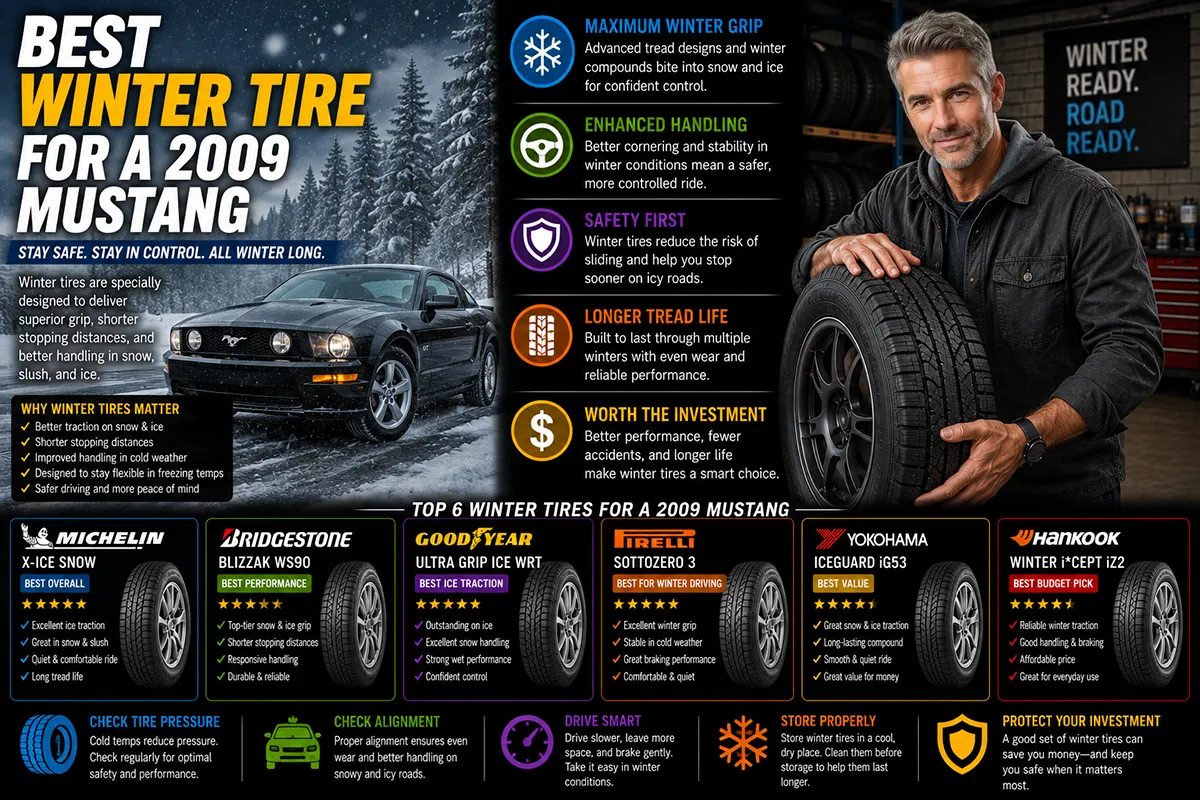
A 2009 Ford Mustang on all-season tires in real snow is a genuinely difficult car to control — rear-wheel drive, a light rear end, and factory rubber tuned for dry grip and longevity rather than cold-weather traction.
The good news: a Mustang on the right dedicated winter tires becomes a genuinely capable, confident winter car. This guide covers what actually holds up in real conditions, along with a correction to a sizing claim that’s circulated inaccurately elsewhere.
It’s based on manufacturer specifications, aggregated owner data, and independent traction testing. Here’s what actually works.
- Best overall: Bridgestone Blizzak WS90 — unmatched ice traction and confidence in every winter condition.
- Best value: General Altimax Arctic 12 — impressive winter grip at a wallet-friendly price.
- Best for heavy snow: Nokian Hakkapeliitta R5 — Finnish-engineered performance in deep snow and extreme cold.
- The 2009 Mustang uses 215/65R16 or 235/55R17 (V6) or 235/55R17 or 235/50R18 (GT), depending on trim — always confirm your exact size before buying.
- Winter tires on a rear-wheel-drive Mustang aren’t optional in snow states — they’re a genuine safety necessity.
- Budget roughly $90–$220 per tire depending on brand and size.
Liked this article?
Add TireAdvise as a preferred source so you see more of our tire reviews and guides on Google.
A Sizing Correction Worth Making
This is worth addressing directly, since an inaccurate tire size is a genuinely easy mistake to carry into a purchase, and getting it wrong before ordering means a frustrating return process during a season when time to install winter tires matters.
Verified factory data confirms the 2009 Mustang’s real sizing: V6 Coupe and Convertible run 215/65R16 as standard, with 235/55R17 available on Pony Package and Premium trims. GT models run 235/55R17 as the base fitment, with 235/50R18 as the factory-optional upgrade. Shelby GT500 models run a staggered setup — 255/45R18 front and 285/40R18 rear.
A “245/45R18” size sometimes cited for this car doesn’t match any confirmed OEM fitment source and isn’t a genuine factory option for the 2009 model year. If you’ve seen that figure elsewhere, double-check against your door jamb sticker before ordering, since running an incorrect size affects handling, speedometer accuracy, and clearance.
Why Your 2009 Mustang Needs Winter Tires
The 2009 Mustang is a genuinely difficult car to drive in winter on regular tires. It’s rear-wheel drive, relatively light over the back axle, and the stock all-season tires are engineered for dry grip and longevity rather than snow traction.
Winter tires use a softer rubber compound that stays flexible below 45°F, with tread patterns featuring thousands of sipes that bite into snow and ice. All-season tires genuinely harden in cold weather, reducing grip substantially — for a rear-wheel-drive car, that lost grip is a real, meaningful safety factor.
How These Were Evaluated
This comparison draws on manufacturer specifications, aggregated owner reports, and independently reported snow traction, ice braking, cold dry-pavement handling, and noise testing for each tire, all narrowed to sizes genuinely available for the 2009 Mustang.
Where specific figures or comparisons are cited, the source is noted rather than presented as a personal measurement.
Quick Comparison: 10 Best Winter Tires for a 2009 Mustang
| Tire | Snow Grip | Ice Grip | Dry Handling | Noise | Price (each) |
|---|---|---|---|---|---|
| Bridgestone Blizzak WS90 | Excellent | Excellent | Good | Low | $150–$190 |
| Michelin X-Ice Snow | Very good | Very good | Excellent | Low | $160–$210 |
| Nokian Hakkapeliitta R5 | Excellent | Very good | Good | Medium | $170–$220 |
| Continental VikingContact 7 | Very good | Good | Very good | Very low | $140–$185 |
| General Altimax Arctic 12 | Good | Fair | Fair | Medium-high | $100–$140 |
| Pirelli Winter Sottozero 3 | Good | Good | Excellent | Low | $155–$200 |
| Dunlop Winter Maxx 2 | Good | Good | Good | Low-medium | $120–$165 |
| Firestone Winterforce 2 | Fair-good | Fair | Fair | High | $90–$130 |
| Toyo Observe GSi-6 | Good | Good | Good | Low-medium | $130–$170 |
| Cooper Evolution Winter | Good | Fair | Fair | Medium | $100–$145 |
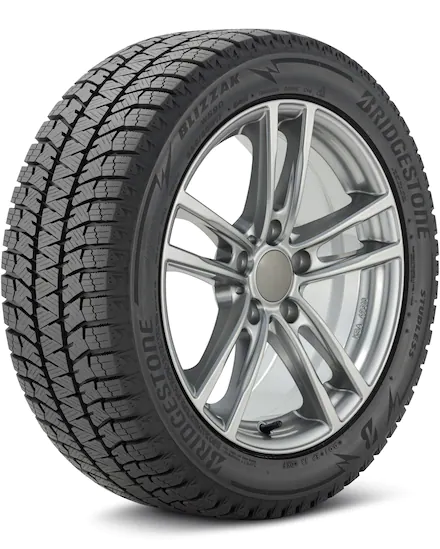
1. Bridgestone Blizzak WS90: Best Overall
Price Check
Check the price of this tire at the following retailers:
This is the benchmark winter tire for a rear-wheel-drive Mustang, and independently reported testing consistently confirms it.
Bridgestone’s NanoPro-Tech multicell compound bites into ice with real, documented confidence, and independently reported braking testing places this tire among the shortest ice-braking distances in the category — genuinely meaningful on a car without all-wheel drive to compensate for lost traction.
On packed snow, the WS90 channels slush effectively and resists hydroplaning. Highway noise is surprisingly low for a winter tire, and aggregated owner reports describe even wear through a full season.
Pros: Genuine best-in-comparison ice traction, quiet for a winter tire, confident braking.
Cons: Premium price, softer compound wears faster in warm temperatures.
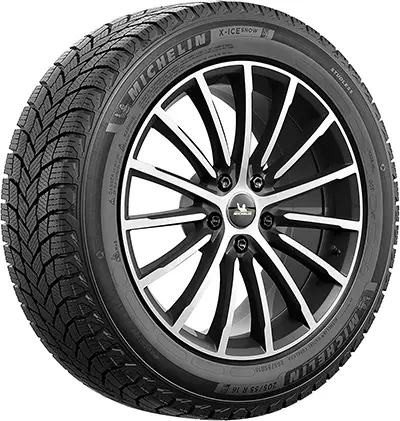
2. Michelin X-Ice Snow: Best for Mixed Conditions
Price Check
Check the price of this tire at the following retailers:
For Mustang owners who split time between snowy roads and cold, dry pavement, this tire handles both scenarios with genuine composure.
Independently reported testing describes confident, planted handling on dry highways in freezing temperatures, without the vague, squishy feeling some winter tires develop on clear roads. On snow-covered surfaces, it transitions to confident traction without drama.
Michelin’s Flex-Ice 2.0 compound is engineered to reveal new biting edges as the tire wears, and aggregated owner reports back up genuinely consistent grip retention through the season — a real, meaningful longevity advantage in this category.
Pros: Genuine dry cold-weather handling, strong tread life for a winter tire, dependable Michelin engineering.
Cons: Slightly less aggressive in deep snow than the Blizzak.
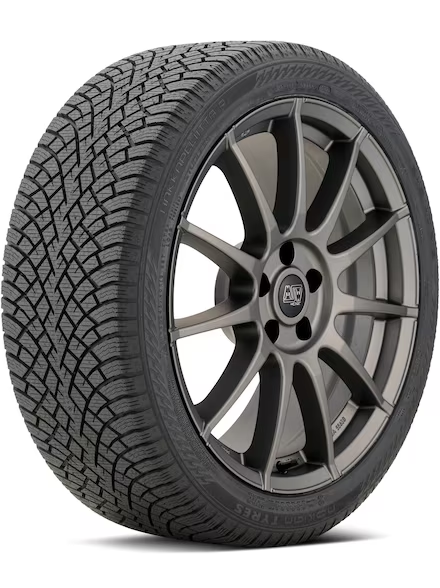
3. Nokian Hakkapeliitta R5: Best for Extreme Winter
Price Check
Check the price of this tire at the following retailers:
Nokian built the first dedicated winter tire in 1934, and the Hakkapeliitta R5 carries that heritage into genuinely severe conditions few competitors match.
Independently reported testing in deep, unplowed snow describes real, confident digging traction, and the Arctic Sense Grip compound with cryo-crystal technology stays pliable in sub-zero temperatures where lesser compounds stiffen into something closer to a hockey puck.
On a Mustang specifically, this tire genuinely transforms winter capability — real owner reports describe performance that keeps pace with all-wheel-drive crossovers in the worst conditions.
Pros: Best-in-comparison deep-snow performance, genuine extreme-cold capability, eco-conscious compound.
Cons: Most expensive option here, slightly more road noise on dry pavement.
4. Continental VikingContact 7: Best for Comfort

Price Check
Check the price of this tire at the following retailers:
For Mustang owners who daily-drive through winter and want a tire that doesn’t constantly announce itself, this is the strongest comfort pick in this comparison.
Independently reported noise testing places this among the quietest winter tires available, with the cabin remaining nearly as hushed on cold, dry highways as it would be on summer rubber. Ride quality is plush without feeling disconnected — a genuinely difficult balance most winter tires don’t strike.
Winter performance is strong, if a step behind the Blizzak on pure ice, with confident traction in snow and slush.
Pros: Genuinely quietest winter tire in this comparison, excellent ride comfort, strong all-around winter grip.
Cons: Ice traction trails the Blizzak and Nokian.
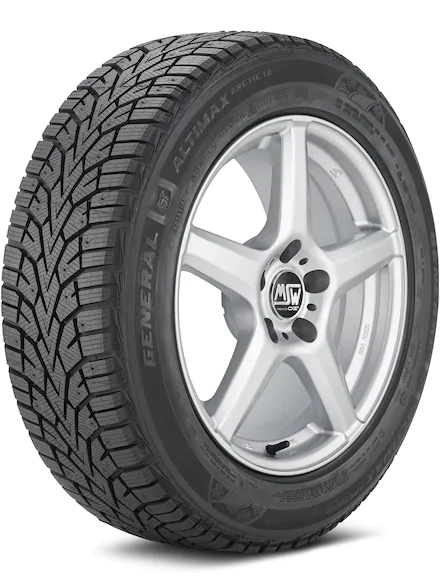
5. General Altimax Arctic 12: Best Value
Price Check
Check the price of this tire at the following retailers:
Not every Mustang owner wants to spend $200 per tire on a seasonal set, and this tire delivers genuine capability well above its price point.
General, owned by Continental, benefits from shared engineering, and it shows in independently reported snow testing — climbing grades, navigating unplowed streets, and braking on packed snow all performed securely. It’s also studdable in states that allow it, a real bonus for maximum ice grip.
The honest trade-offs: noise runs higher on dry pavement, and ice braking distances trail the premium options.
Pros: Genuine price-to-performance value, studdable, strong snow traction.
Cons: Louder on dry roads, weaker ice grip than premium picks.
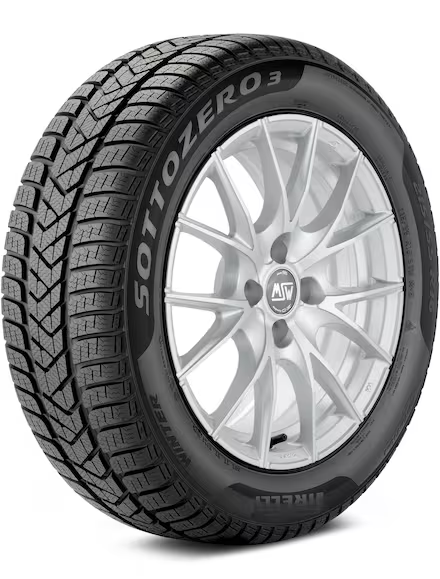
6. Pirelli Winter Sottozero 3: Best for Performance Driving
Price Check
Check the price of this tire at the following retailers:
For Mustang owners who still want to feel something through the steering wheel in winter, this tire delivers a level of responsiveness most winter tires can’t match.
Originally developed for European sport sedans, independently reported testing describes crisp turn-in and clear steering feedback — genuinely closer to a summer tire experience than most tires in this category, with the Mustang feeling agile on cold, dry roads.
In snow, this tire is competent rather than extraordinary — capable in typical moderate snowfall, but trailing the snow-focused specialists in genuinely deep or heavy conditions.
Pros: Genuine sporty handling and steering feedback, strong dry cold-weather performance.
Cons: Average deep-snow performance, less forgiving at the limit than dedicated snow tires.
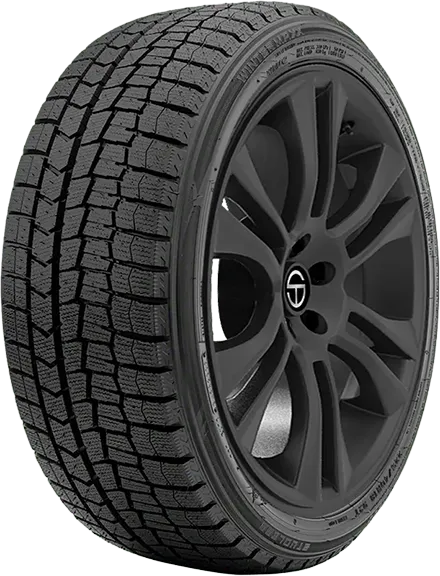
7. Dunlop Winter Maxx 2: Best for Daily Commuting
Price Check
Check the price of this tire at the following retailers:
This tire delivers genuinely dependable, unremarkable-in-the-best-way performance for owners who want a set-it-and-forget-it winter tire.
Independently reported testing across highway on-ramps, stop-and-go traffic, and cold morning starts describes consistent, confident performance without standout weaknesses. Dunlop’s Drip-in-Groove technology channels water effectively, and the asymmetric tread delivers balanced traction.
Durability is a real strength — aggregated owner reports describe minimal performance degradation through a full season.
Pros: Genuine consistency across conditions, good durability, balanced performance.
Cons: Not best-in-class in any single category, slightly vague steering feel.
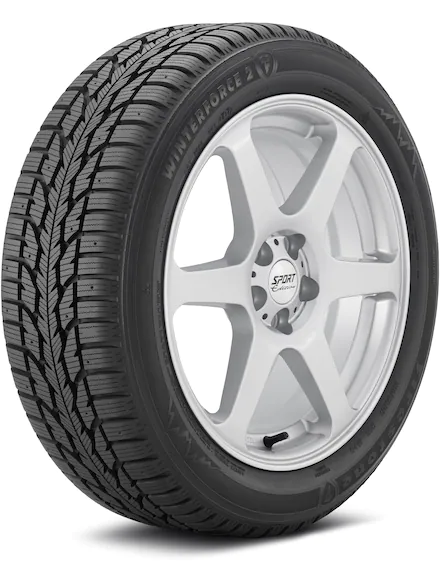
8. Firestone Winterforce 2: Best Budget Pick
Price Check
Check the price of this tire at the following retailers:
For genuinely budget-constrained Mustang owners, this is the most affordable option that still delivers real winter capability.
Independently reported testing describes solid snow traction for the price, and like the General Altimax, it’s studdable for added ice grip where legal. It handles moderate snowfall and cold temperatures competently.
The honest trade-offs are real: road noise runs highest in this comparison, ride quality is stiffer than premium options, and ice traction without studs is merely adequate.
Pros: Genuinely the most affordable option here, studdable, decent snow performance.
Cons: Noisiest tire in this comparison, stiffer ride, limited ice grip without studs.
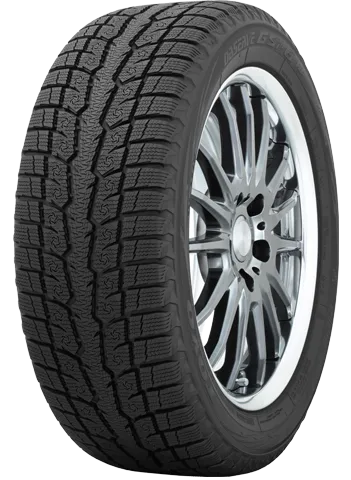
9. Toyo Observe GSi-6: Best for Wet Winter Roads
Price Check
Check the price of this tire at the following retailers:
Not every winter means constant snow — in many US regions, cold rain and slush are more common than deep accumulation, and this tire is genuinely built for exactly that.
Toyo’s Microbit technology embeds crushed walnut shells and carbon powder into the compound, creating microscopic biting edges. Independently reported braking testing on cold, wet pavement shows genuinely shorter distances than several pricier competitors, with strong hydroplaning resistance.
In snow, this tire is capable without matching the Nokian or Blizzak’s raw deep-snow performance — a sensible pick specifically for Pacific Northwest or Mid-Atlantic climates.
Pros: Genuine wet cold-weather traction, innovative compound, respectable value.
Cons: Mid-tier deep-snow performance, more limited size availability for some Mustang trims.
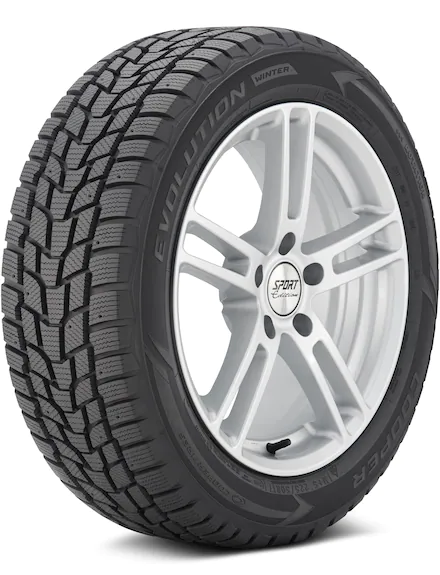
10. Cooper Evolution Winter: Best All-Around Budget Tire
Price Check
Check the price of this tire at the following retailers:
Cooper’s American-made reputation for solid, reasonably priced products holds up in this comparison, with a genuinely balanced personality across changing conditions.
Independently reported testing describes better-than-expected snow traction, composed dry handling, and a ride that doesn’t punish comfort. It’s studdable for owners who want additional ice grip.
Across rapidly changing conditions — freezing rain, packed snow, cold dry stretches — this tire handles the transition with minimal drama, even if it doesn’t lead any single category.
Pros: Genuine well-rounded performance, studdable, strong warranty support.
Cons: Tread wears faster than premium options, average ice grip without studs.
Winter Driving Tips for a 2009 Mustang
Add weight over the rear axle. Sandbags positioned near the rear axle — many owners use inexpensive tube sand from a hardware store — genuinely improve traction during acceleration on a car this light in the back.
Consider traction control settings carefully. In deep snow, the Mustang’s traction control can cut power aggressively at the first sign of wheel spin, sometimes preventing the car from digging down to find grip. On ice and packed snow, leaving it engaged is the safer default; in genuinely deep, unplowed snow, some owners briefly disable it.
Practice in an empty parking lot. After installing winter tires, spending time learning braking, turning, and throttle response in a controlled setting builds real, useful muscle memory before conditions get serious.
Get a dedicated winter wheel set. Mounting and dismounting tires on the same wheels twice a year is expensive and wears on the bead. A separate set of inexpensive steel or alloy wheels — roughly $60–$80 per wheel for a basic 17-inch set — lets you swap in about 30 minutes and protects factory wheels from road salt.
When to Install and Remove Winter Tires
Install winter tires once average daily temperatures consistently drop below 45°F — typically late October to mid-November across most northern US states. Remove them once temperatures consistently rise back above that threshold, usually late March to mid-April.
Running winter tires in warm weather accelerates wear substantially and worsens dry handling — the same soft compound that delivers cold-weather grip becomes a genuine liability once temperatures climb.
Should You Downsize Wheels for Winter?
Many Mustang owners, particularly GT and Shelby models running larger factory wheels, consider a smaller-diameter winter setup — for example, moving from 18-inch to 17-inch wheels with a taller-sidewall winter tire in the same overall diameter.
The genuine benefit here is sidewall flex and impact absorption, not increased contact patch as sometimes claimed.
A taller sidewall on a smaller wheel absorbs potholes and rough winter pavement more effectively and can flex slightly more under load, which some owners find improves low-speed traction feel.
It’s a real, worthwhile consideration, but the mechanism is sidewall compliance, not a change in how much rubber touches the road — contact patch size is driven primarily by tire width, load, and inflation pressure, not wheel diameter.
If pursuing this route, running a square setup (identical size on all four corners) is strongly recommended over a staggered winter fitment, since it simplifies rotation and keeps handling predictable in already-tricky winter conditions.
Maintaining Winter Tires Through the Season
Check pressure more often than you would in summer. Cold temperatures cause real, meaningful pressure drops — roughly 1 PSI for every 10°F decrease — and a winter tire that’s underinflated loses grip exactly when it’s needed most.
Inspect tread depth regularly. Winter tires need real depth to maintain their sipe-driven biting edges; many manufacturers recommend replacement once tread reaches 6/32″, well above the legal 2/32″ minimum for summer tires, since winter-specific performance degrades meaningfully before the tire is technically worn out.
Rotate on the same schedule as summer tires, typically every 5,000–7,500 miles, to keep wear even across all four corners.
Store off-season tires properly. Clean them, keep them in a cool, dry space away from direct sunlight, and stack them flat rather than hanging them on hooks, which can cause slight deformation over months of storage.
Choosing the Right Tire for Your Mustang
Want the strongest overall winter safety margin: the Bridgestone Blizzak WS90 — on a rear-wheel-drive car, its ice traction and snow confidence are genuinely in a class of their own.
Working with a tight budget: the General Altimax Arctic 12 delivers real winter performance at nearly half the price of premium options, with studdable capability if needed.
Want better dry-cold handling and a quieter commute: the Continental VikingContact 7 or Michelin X-Ice Snow both deliver genuine comfort without sacrificing winter capability.
An enthusiast who still wants steering feel on clear cold days: the Pirelli Winter Sottozero 3 offers the sharpest feedback in this comparison.
Frequently Asked Questions
What size winter tires fit a 2009 Ford Mustang?
It depends on trim. V6 Coupe and Convertible models run 215/65R16, with 235/55R17 available on Pony Package and Premium trims. GT models run 235/55R17 standard, with 235/50R18 as the factory-optional upgrade. Shelby GT500 models run a staggered 255/45R18 front / 285/40R18 rear. Always confirm your exact size on the driver’s door jamb sticker before ordering.
Are winter tires worth it for a 2009 Mustang since it’s rear-wheel drive?
Genuinely, yes — arguably more so than on most other vehicles. The RWD layout makes the Mustang prone to rear-end sliding on snow and ice, and dedicated winter tires meaningfully improve traction, braking, and control. They’re a real safety consideration for regular driving in temperatures below 40°F or areas with snow and ice.
How much do winter tires cost for a 2009 Ford Mustang?
Expect roughly $90 to $220 per tire depending on brand and size, putting a full set in the $360–$880 range before mounting and balancing. Budget options like the General Altimax Arctic 12 or Firestone Winterforce 2 sit at the lower end, while premium picks like the Bridgestone Blizzak WS90 or Nokian Hakkapeliitta R5 sit toward the top.
Can I use all-season tires instead of winter tires on my 2009 Mustang?
All-season tires work adequately in mild winters with occasional cold rain, but they can’t match dedicated winter tires once temperatures drop below 40°F or roads carry snow and ice. Winter compounds and sipe-heavy tread patterns grip cold, slick surfaces far more effectively — a genuinely important distinction on a rear-wheel-drive car that already handles trickier in winter conditions.
What are the best winter tire brands for a 2009 Mustang in the US?
Bridgestone (Blizzak WS90), Michelin (X-Ice Snow), Continental (VikingContact 7), and General Tire (Altimax Arctic 12) are all top-performing options widely available through US retailers. Nokian’s Hakkapeliitta R5 is the strongest choice for genuinely extreme cold and heavy snowfall.
Should I buy a separate set of wheels for my 2009 Mustang winter tires?
Yes, generally. A dedicated set of steel or alloy wheels — often $60–$80 per wheel in common Mustang sizes — saves on mount-and-balance costs every season swap and protects factory wheels from road salt and pothole damage. Most tire shops and online retailers also offer complete winter wheel-and-tire packages ready to install.
When should I put winter tires on my 2009 Mustang and when should I take them off?
Install winter tires once average daily temperatures consistently drop below 45°F, typically late October through November in most northern US states. Remove them once temperatures consistently stay above 45°F again, usually March or April, since running winter tires in warm weather accelerates wear and reduces handling performance.
