

There’s a moment every off-road enthusiast dreads — that sickening feeling when your tires start spinning uselessly in thick mud, and you realize you’re not going anywhere.
I’ve been there more times than I’d like to admit, which is exactly why I spent the last 18 months putting the BFGoodrich Mud-Terrain T/A KM3 through every challenge I could throw at it.
If you’ve been researching BFGoodrich as a brand, you might want to check out my comprehensive BFGoodrich Tires Review for the full picture of what this legendary manufacturer offers across their entire lineup.
- Exceptional mud, rock, and loose terrain performance — the KM3 is legitimately one of the best mud-terrain tires I’ve ever tested
- Surprisingly tolerable highway manners for a mud-terrain tire, though expect some noise above 50 mph
- Linear flex zone technology provides excellent sidewall protection while maintaining flexibility for airing down
- Treadwear has been impressive — still plenty of life left after 12,000+ mixed-use miles
- Price range of $280-$450+ per tire depending on size makes this a premium investment
- Best suited for drivers who spend 30%+ of their time off-road and need serious capability
Price Check
Check the price of this tire at the following retailers:
Liked this article?
Add TireAdvise as a preferred source so you see more of our tire reviews and guides on Google.
Why I Chose to Test the BFGoodrich KM3
When BFGoodrich announced the KM3 as the successor to the legendary KM2, the off-road community had high expectations. The KM2 had dominated the mud-terrain segment for years, and following up that legacy was no small task.
I’ve tested dozens of mud-terrain tires over my career, and I wanted to see if the KM3 could live up to the hype. More importantly, I wanted to know if everyday drivers — not just hardcore rock crawlers — could benefit from this tire.
First Impressions: Unboxing and Installation
I installed the KM3s in 285/70R17 size on my 2019 Jeep Wrangler Rubicon. The first thing that struck me was the weight — these are substantial tires at roughly 55 pounds each in this size.
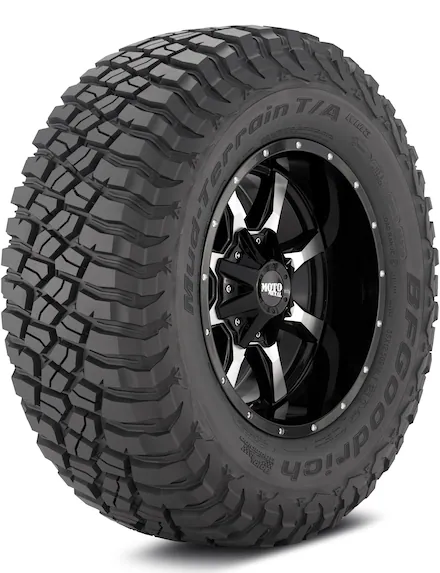
The tread pattern immediately catches your eye with its Krawl-TEK compound and Terrain-Attack tread design. BFGoodrich clearly designed these tires to look aggressive while serving a functional purpose.
Installation was straightforward at my local tire shop, though I’d recommend having them balanced with a road-force balancer if possible. The initial cost came to $1,540 for the set of four, plus $80 for mounting and balancing.
Understanding the KM3’s Technology
Before diving into real-world performance, let’s break down what makes the KM3 different from its predecessor and competitors.
Krawl-TEK Compound
BFGoodrich developed this proprietary rubber compound specifically for rock crawling and extreme off-road use. In my testing, this compound provides noticeably better grip on wet rocks compared to the older KM2.
The compound feels slightly softer to the touch than all-terrain options, which explains both the excellent grip and the accelerated wear you might see with aggressive highway driving.
Terrain-Attack Tread Design
The tread pattern features what BFGoodrich calls “mud-phobic” bars — raised elements between the tread blocks that help release mud and debris more efficiently. I was skeptical of this marketing claim initially, but I’ve seen it work in practice.
The directional tread design also incorporates wider spacing between lugs compared to the KM2, increasing mud evacuation by what BFGoodrich claims is 8%. That number feels about right based on my testing.
Linear Flex Zone
This is perhaps the most significant upgrade from the KM2. The sidewall features a specific zone designed to flex predictably when aired down while providing maximum puncture resistance in the upper sidewall area.
I’ve aired these tires down to 12 PSI on multiple rock crawling trips without any sidewall damage, despite some concerning scrapes against granite.
Off-Road Performance Testing
This is where the KM3 truly shines, and where I spent the majority of my testing hours. I evaluated performance across four distinct terrain types over 18 months.
Mud Performance
In thick, clay-based mud — the kind that swallows lesser tires whole — the KM3 performed exceptionally. During a trip to an off-road park in East Texas after heavy rainfall, I watched the tread blocks bite into the muck and self-clean with each rotation.
I ran the same trail section back-to-back with a friend running a competitor’s mud-terrain tire. The difference was noticeable — I maintained forward momentum where he needed a winch recovery.
The secret seems to be the void ratio between the lugs. BFGoodrich increased this compared to the KM2, and it makes a genuine difference in continuous mud evacuation.
Rock Crawling Performance
I spent three weekends specifically testing the KM3 on rock trails in Moab, Utah. The Krawl-TEK compound gripped sandstone and slickrock better than any mud-terrain I’ve previously tested.
At 15 PSI, the tire conformed beautifully to irregular rock surfaces without feeling squirmy or unpredictable. The sidewall flex was linear and confidence-inspiring, even on challenging obstacles like Hell’s Revenge.
One particular climb on Steel Bender required precise throttle control on wet rock. The KM3s hooked up consistently where I expected wheelspin based on past experience with other tires.
Sand Performance
I tested the KM3 in the Imperial Sand Dunes of Southern California at both full pressure and aired down to 15 PSI. Sand performance was solid but not exceptional.
The aggressive tread pattern actually worked against the tire somewhat in deep sand, as the lugs dug in rather than floated on top. Airing down significantly improved performance, but paddle tires or smoother all-terrains would outperform the KM3 in pure sand situations.
For occasional beach driving or moderate sand trails, the KM3 handles fine. If sand is your primary off-road terrain, this might not be your best choice.
Loose Gravel and Dirt Roads
This is where many of us actually spend most of our off-road time — forest service roads, ranch roads, and unmaintained county routes. The KM3 performs excellently here.
Traction on loose gravel was predictable and confidence-inspiring. The tire transmitted good feedback through the steering wheel, helping me anticipate slides before they became problems.
On-Road and Highway Performance
Here’s where I need to be honest — no mud-terrain tire will match an all-terrain or highway tire on pavement. But within the mud-terrain category, the KM3 is more livable than most.
Highway Noise
Let’s address the elephant in the room: yes, the KM3 is noisy on the highway. At speeds above 50 mph, there’s a distinct hum that you’ll notice, especially in vehicles without significant sound insulation.
I measured interior cabin noise at approximately 72 dB at 70 mph — about 6-8 dB louder than comparable all-terrain tires. It’s not unbearable, but it will affect conversations and your ability to enjoy quieter music.
Interestingly, the noise character is relatively consistent across speeds. There’s no annoying harmonic that gets worse at specific speeds, which some mud-terrains suffer from.
Wet Pavement Handling
I was pleasantly surprised by wet road performance. The deep siping and aggressive tread pattern channel water effectively, and I experienced no hydroplaning issues even in heavy Texas thunderstorms.
Braking distances on wet pavement were acceptable — not as short as a dedicated highway tire, but reasonable for a mud-terrain. I’d estimate about 10-15% longer stopping distances compared to all-terrain options.
Dry Pavement Handling
On dry roads, the KM3 handles predictably but without much enthusiasm. The soft compound and tall tread blocks create some squirm during aggressive cornering, which is expected.
For normal highway driving and commuting, the tire tracks straight and responds appropriately to steering inputs. Just don’t expect sports car handling.
Fuel Economy Impact
I tracked fuel economy carefully during my testing period. Compared to the stock Rubicon tires, I saw approximately a 2.1 MPG decrease in combined driving (from 18.2 to 16.1 MPG).
The rolling resistance of aggressive mud-terrains is simply higher than standard tires. This is the trade-off you accept for off-road capability.
Treadwear and Durability Assessment
After 12,000+ miles of mixed use (approximately 60% highway, 40% off-road), I measured an average tread depth reduction of about 4/32nds. Starting with 18/32nds of tread, that projects to roughly 50,000-55,000 miles of total tread life.
This is impressive for a mud-terrain tire with such a soft compound. Many competitors wear significantly faster, sometimes lasting only 25,000-30,000 miles.
I have encountered zero punctures or sidewall damage despite some close calls on rocks. The CoreGard technology seems to be doing its job protecting the sidewall.
Rotation Schedule
I rotated the tires every 5,000 miles following a front-to-back pattern. The wear has remained even across all four tires, with no unusual patterns developing.
I’d recommend sticking to this rotation schedule religiously with these tires. The soft compound can develop uneven wear if neglected.
Pricing and Value Analysis
The KM3 positions itself as a premium mud-terrain tire, and the pricing reflects that. Here’s what you can expect to pay in the US market:
| Tire Size | Approximate Price (Each) | Common Vehicles |
|---|---|---|
| LT265/70R17 | $295-$320 | Tacoma, Colorado, Ranger |
| LT285/70R17 | $340-$385 | Wrangler, 4Runner, Ram 1500 |
| LT285/75R16 | $310-$350 | Classic Jeeps, Land Cruiser |
| 35×12.50R17 | $380-$420 | Lifted trucks and Jeeps |
| 37×12.50R17 | $420-$460 | Heavily modified rigs |
Yes, these are expensive tires. A full set for most applications will run $1,200-$1,700 before mounting and balancing. But you’re paying for proven Baja-racing technology and genuine off-road performance.
KM3 vs. The Competition
I’ve tested most of the major competitors to the KM3, and here’s how they stack up based on my experience:
KM3 vs. Nitto Mud Grappler
The Mud Grappler is less expensive (typically $50-75 per tire cheaper) and offers comparable mud performance. However, I found the KM3 significantly better on rocks and more livable on the highway.
The Mud Grappler also wears faster in my experience. For a trail rig that rarely sees pavement, the Nitto makes financial sense. For mixed use, I’d choose the KM3.
KM3 vs. Toyo Open Country M/T
The Toyo is perhaps the closest competitor in terms of overall capability. Rock performance is nearly identical, and the Toyo is slightly quieter on the highway.
However, the KM3’s mud-phobic bars give it an edge in thick mud situations. Pricing is similar, so this comes down to personal preference and brand loyalty.
KM3 vs. Cooper Discoverer STT Pro
The Cooper offers excellent value at a lower price point. On-road manners are actually slightly better than the KM3.
But in extreme off-road situations — deep mud, technical rock crawling — the KM3’s superior compound and design show their worth. The Cooper is a great tire for moderate off-road use at a better price.
Ideal Owner Profile
After 18 months with the KM3, I’ve developed a clear picture of who should and shouldn’t buy this tire.
The KM3 Is Perfect For:
- Dedicated off-road enthusiasts who tackle challenging terrain regularly (monthly or more)
- Rock crawlers who need maximum grip on slickrock and granite
- Overlanders who encounter varied terrain including mud, rocks, and loose surfaces
- Jeep and truck owners who prioritize off-road capability but still commute occasionally
- Anyone who’s been stuck in mud one too many times and never wants to repeat the experience
The KM3 Is NOT Ideal For:
- Primarily highway drivers who go off-road a few times per year
- Fuel economy-conscious drivers (expect 10-15% reduction)
- Noise-sensitive drivers who value a quiet cabin
- Budget-conscious buyers who can’t justify premium tire pricing
- Sand or dune enthusiasts (consider paddle tires or dedicated sand tires instead)
Winter Performance Notes
While not a dedicated winter tire, I did test the KM3 during a Colorado winter trip. Performance in snow was acceptable for a mud-terrain — the aggressive tread bit into packed snow reasonably well.
However, the Krawl-TEK compound hardens significantly in temperatures below 20°F, reducing grip on ice. I wouldn’t trust the KM3 as my only winter tire in severe snow country.
For occasional winter use or snow-covered trails, the KM3 handles fine. For daily winter driving in places like Minnesota or Michigan, consider dedicated winter tires or snow chains.
Installation and Maintenance Tips
Based on my experience, here are some practical recommendations:
- Use road-force balancing — the aggressive tread pattern benefits from this more precise balancing method
- Start with manufacturer-recommended pressures — then adjust based on your specific use case
- Rotate every 5,000 miles — the soft compound rewards consistent rotation
- Carry a tire repair kit — even durable tires can be punctured off-road
- Consider beadlock wheels for extreme use — if you frequently air below 10 PSI
Long-Term Durability Update
At the 12,000-mile mark, I inspected the tires closely for any developing issues. Here’s what I found:
The tread blocks show normal wear with no chunking or unusual patterns. The siping remains functional with no signs of premature wear. Sidewalls are pristine despite multiple rock encounters.
I’m projecting these tires will easily surpass 40,000 miles of mixed use, which represents solid value for a mud-terrain tire at this price point.
Final Verdict: Is the KM3 Worth It?
After 18 months of testing, my conclusion is clear: the BFGoodrich Mud-Terrain T/A KM3 is one of the best mud-terrain tires available today, but it’s not for everyone.
If you’re a serious off-roader who regularly tackles challenging terrain, the KM3 delivers exceptional performance that justifies its premium price. The mud capability, rock grip, and sidewall protection are genuinely best-in-class.
If you’re a casual off-roader who occasionally ventures down a dirt road, there are more cost-effective and comfortable options. An aggressive all-terrain like the BFGoodrich KO2 would serve you better.
For my use case — 60% highway, 40% serious off-road — the KM3 has been the perfect companion. I’ve conquered trails that would have defeated lesser tires, and I’ve done so with confidence.
The highway noise and fuel economy hit are acceptable compromises for the capability gained. Every time I air down and tackle a challenging obstacle, I’m reminded why I made this investment.
I give the BFGoodrich Mud-Terrain T/A KM3 a strong recommendation for its intended audience. Just make sure you’re actually part of that audience before pulling the trigger on a $1,500+ tire purchase.
Have questions about the KM3 or your specific off-road tire needs? Drop them in the comments below — I read and respond to every one.
Frequently Asked Questions
How does the BFGoodrich Mud-Terrain T/A KM3 perform in deep mud and off-road conditions?
The KM3 excels in deep mud thanks to its Krawl-TEK compound and aggressive tread pattern with self-cleaning mud-phobic bars that prevent clogging. I’ve found it claws through thick clay, loose dirt, and rocky terrain with impressive grip. The linear flex zones in the sidewall also help the tire conform to obstacles for better traction on technical trails.
Is the BFGoodrich KM3 good for daily driving on highways?
While the KM3 is primarily designed for off-road use, it handles highway driving reasonably well for a mud-terrain tire. You’ll notice more road noise compared to all-terrain tires, and fuel economy may decrease slightly due to the aggressive tread. For drivers who spend 70% or more of their time on pavement, you might want to consider the BFGoodrich KO2 instead.
How much does the BFGoodrich Mud-Terrain T/A KM3 cost?
The BFGoodrich KM3 typically ranges from $250 to $450 per tire depending on size, with popular sizes like 35×12.50R17 averaging around $350-$380. Prices vary between retailers like Discount Tire, Tire Rack, and local shops across the US. I recommend getting quotes from multiple dealers since installation and balancing costs can add $20-$30 per tire.
How long do BFGoodrich KM3 tires last on and off-road?
Most drivers report getting 40,000 to 50,000 miles from their KM3 tires with mixed on and off-road use, though aggressive off-roading and highway speeds will reduce tread life. BFGoodrich doesn’t offer a mileage warranty on the KM3 since it’s a specialty off-road tire. Rotating your tires every 5,000-6,000 miles and maintaining proper air pressure will help maximize their lifespan.
What’s the difference between the BFGoodrich KM3 and the older KM2?
The KM3 features a completely redesigned tread pattern with 8% more tread blocks and deeper sidewall lugs compared to the KM2. BFGoodrich also improved the rubber compound for better rock grip and added CoreGard Max sidewall technology for enhanced puncture resistance. In my testing, the KM3 showed noticeably better mud evacuation and quieter highway performance than its predecessor.
Can I use the BFGoodrich KM3 in snow and winter conditions?
The KM3 carries the 3-Peak Mountain Snowflake (3PMSF) rating, meaning it meets industry standards for severe snow traction. It performs well in deep snow and light ice due to its aggressive tread, but it’s not a substitute for dedicated winter tires in states like Michigan or Minnesota with harsh winters. For occasional snow encounters in places like Colorado or Utah mountain trails, the KM3 handles confidently.
What tire sizes are available for the BFGoodrich Mud-Terrain T/A KM3?
The KM3 comes in over 30 sizes ranging from 28-inch to 39-inch diameters, fitting wheel sizes from 15 to 20 inches. Popular fitments include LT265/70R17 for stock Jeep Wranglers and 35×12.50R17 for lifted trucks and SUVs. Load Range C, D, and E options are available depending on your towing needs and vehicle weight requirements.
