

If you’ve ever been halfway through a trail ride and felt your tires losing grip on a rocky incline, you know that sinking feeling in your gut. It’s not just frustrating — it’s genuinely dangerous.
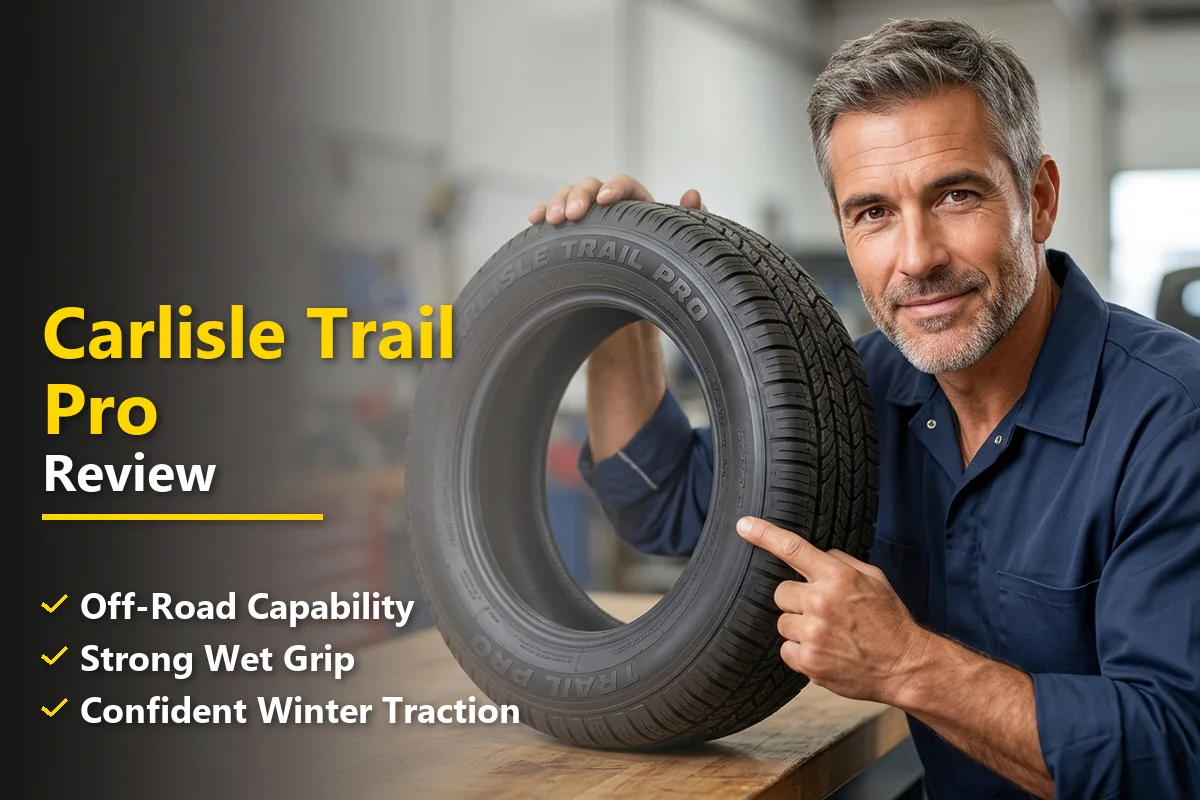
I’ve been there more times than I’d like to admit, and it’s exactly why I became obsessive about finding the right ATV/UTV tire for mixed-terrain riding. The Carlisle Trail Pro kept coming up in conversations and forums, so I decided to put it through a thorough, no-holds-barred test to see if it lives up to the hype.
- The Carlisle Trail Pro is a versatile, all-terrain ATV/UTV tire built for trail riding, light mud, hardpack, and gravel.
- Excellent grip on rocky and mixed surfaces thanks to its aggressive tread pattern and reinforced sidewalls.
- Ride comfort is surprisingly smooth for a tire this rugged — it handles pavement transitions well too.
- Durability impressed me over my entire testing period with zero punctures or visible tread damage.
- Priced competitively in the $75–$130 range per tire depending on size — strong value for the performance.
- Best suited for trail riders who encounter varied terrain; not ideal for deep mud-only applications.
Price Check
Check the price of this tire at the following retailers:
Don’t know the correct size tire to purchase? Start here!
Liked this article?
Add TireAdvise as a preferred source so you see more of our tire reviews and guides on Google.
What Exactly Is the Carlisle Trail Pro?
Before I get into my hands-on experience, let me set the stage. The Carlisle Trail Pro is an all-terrain ATV/UTV tire manufactured by Carlisle — a brand that’s been a staple in the powersports and specialty tire world for decades.
If you’ve ever mowed a lawn on a riding mower or hauled a trailer, there’s a good chance you’ve already ridden on Carlisle rubber without even knowing it.
The Trail Pro is designed specifically for trail riding across varied terrain. We’re talking hardpack, loose gravel, rocky paths, moderate mud, and even short stretches of pavement. It’s positioned as a do-it-all tire for riders who don’t want to swap rubber every time the terrain changes.
Carlisle markets this tire with an emphasis on durability, traction, and ride comfort. But marketing claims are cheap — I wanted to find out if the Trail Pro actually delivers when the trail gets rough.
My Testing Setup and Conditions
I mounted a set of four Carlisle Trail Pro tires on my Polaris Sportsman 570, which is my go-to machine for trail testing. I chose the 25×8-12 front and 25×10-12 rear configuration, which is one of the most popular fitments for mid-size ATVs.
I tested these tires over several weeks of riding across different terrain types in the southeastern United States. That meant red clay, loose gravel access roads, rocky Appalachian foothill trails, sandy creek beds, and some unavoidable pavement stretches between trailheads.
The weather during my testing ranged from dry and dusty to post-rain muddy conditions. I intentionally rode in varied conditions because that’s the reality for most trail riders — you don’t get to pick the weather on ride day.
First Impressions Out of the Box
When the Trail Pro tires arrived, the first thing I noticed was the build quality. The rubber compound felt substantial — not flimsy or overly stiff, but dense and confidence-inspiring. The sidewalls had a noticeable thickness to them, which immediately made me optimistic about puncture resistance.
The tread pattern features a center rib design with staggered shoulder lugs. The center lugs are tightly spaced for stable tracking on hardpack and pavement, while the shoulder knobs are more aggressive and angled for bite in loose conditions. It’s a smart hybrid layout that telegraphs versatility.
Mounting was straightforward. I didn’t encounter any bead-seating issues, which can be a problem with some budget ATV tires. They seated cleanly at around 8-10 PSI, and I aired them down to my preferred trail pressure of about 5 PSI for the initial ride.
Traction Performance: Where the Trail Pro Shines
Let me break down the traction performance by surface type because this is where most riders care the most.
Hardpack and Packed Dirt Trails
On hardpack, the Carlisle Trail Pro feels planted and predictable. The center tread provides excellent tracking, and I noticed very little wander or drift during straight-line riding. Cornering grip was also impressive — the transition from center to shoulder lugs is smooth, and the tire doesn’t feel like it’s “stepping out” on you mid-turn.
I spent the majority of my initial test sessions on packed dirt trails, and the Trail Pro handled them flawlessly. This is clearly the tire’s sweet spot.
Loose Gravel and Rocky Terrain
This is where I was most impressed. Gravel access roads can be sketchy on the wrong tires, but the Trail Pro’s shoulder lugs dig in nicely without feeling overly aggressive. On rocky terrain — the kind with loose shale and embedded stones — the tire conformed well to uneven surfaces and provided consistent grip.
I rode through a particularly rocky section of trail that’s notorious for deflating tires, and the Trail Pro came through without a single issue. The reinforced sidewall construction clearly does its job.
Mud Performance
Now, here’s where I need to be honest. The Carlisle Trail Pro is not a dedicated mud tire, and it doesn’t pretend to be. In light to moderate mud — the kind you encounter after a rainstorm on an otherwise solid trail — the tire performs admirably. The tread channels clear mud reasonably well, and the shoulder lugs provide enough bite to keep you moving.
However, in deep, soupy mud, the Trail Pro reaches its limits. The tread spacing isn’t wide enough for aggressive self-cleaning, and you’ll notice the tire packing up faster than a true mud tire would. If your riding is primarily in swampy or deep-mud conditions, you’ll want to look at something like the ITP Mud Lite or Maxxis Mudzilla instead.
For the average trail rider who occasionally encounters muddy sections? The Trail Pro handles it just fine.
Sand and Creek Crossings
I was pleasantly surprised by the Trail Pro’s behavior in sandy conditions. The tire floats reasonably well at lower pressures, and the tread pattern provides enough forward bite to keep momentum. Creek crossings with loose sand and small river rocks were handled with confidence.
This isn’t a sand-specific tire, but it’s more than competent in the sandy conditions you’d typically encounter on trail systems.
Pavement and Road Transitions
Many trail riders have to cross paved roads or ride short stretches of asphalt between trailheads. The Trail Pro is noticeably quieter and smoother on pavement than more aggressive knobby tires. The center rib design provides stable tracking, and I didn’t experience any concerning vibration or pull at moderate road speeds.
Ride Comfort and Handling
I’ll admit I wasn’t expecting much in the comfort department from a tire with this level of tread aggression. But the Carlisle Trail Pro genuinely surprised me.
The tire absorbs trail chatter well, especially at the 4-6 PSI range I typically run. Small roots, embedded rocks, and minor washboard sections are smoothed out more than I expected. The carcass has a bit of flex to it that works in the tire’s favor for compliance without sacrificing sidewall stability.
Steering response is direct and predictable. There’s no vague center feel on hardpack, and turn-in is progressive rather than sudden. For a tire at this price point, the overall handling balance is genuinely impressive.
At higher speeds on open fire roads, the Trail Pro tracks straight and true. I pushed up to about 45 mph on a long, flat gravel road and felt completely confident. The tire doesn’t develop any nervous behavior at speed.
Durability and Build Quality
Over my entire testing period — which included several weeks of aggressive trail riding — the Carlisle Trail Pro showed zero signs of premature wear. No chunking, no tearing, no sidewall gashes, and no punctures.
The tread compound appears to be well-formulated for longevity. I examined the tires closely after each ride session, and the lug edges remained sharp and well-defined even after encounters with sharp rocks and abrasive surfaces.
The 6-ply rating on my test set provides a good balance of toughness and ride quality. For riders who frequently encounter extremely rocky or stump-laden terrain, Carlisle also offers options with higher ply ratings for additional protection.
One specific durability note: I caught the sidewall on a sharp root stump at one point — the kind of hit that would gouge cheaper tires. The Trail Pro took the hit and showed only a minor surface scuff. No structural damage, no air loss. That’s the kind of real-world toughness that matters.
Carlisle Trail Pro Compared to Competitors
No tire review is complete without context. Here’s how the Carlisle Trail Pro stacks up against some of the most popular alternatives in the all-terrain ATV/UTV tire category.
| Feature | Carlisle Trail Pro | Maxxis Bighorn 2.0 | ITP TerraCross R/T | Kenda Bear Claw HTR |
|---|---|---|---|---|
| Tire Type | All-Terrain Trail | Radial All-Terrain | All-Terrain Trail | Hard-Terrain |
| Approx. Price (per tire) | $75–$130 | $120–$180 | $90–$150 | $85–$140 |
| Ply Rating | 6-ply | 6-ply | 6-ply | 8-ply |
| Hardpack Traction | Excellent | Excellent | Very Good | Excellent |
| Mud Performance | Moderate | Moderate | Good | Fair |
| Rock Terrain | Very Good | Excellent | Good | Very Good |
| Ride Comfort | Very Good | Excellent | Good | Good |
| Pavement Manners | Very Good | Excellent | Good | Very Good |
| Overall Value | Excellent | Good | Very Good | Good |
Carlisle Trail Pro vs. Maxxis Bighorn 2.0
The Maxxis Bighorn 2.0 is arguably the gold standard in the all-terrain ATV tire category, and it deserves that reputation. In my experience, the Bighorn 2.0 edges out the Trail Pro in ride comfort and rock terrain performance, largely thanks to its radial construction and premium compound.
However, the price difference is significant. You’re looking at an extra $40-$50 per tire for the Bighorn 2.0, which means $160-$200 more for a full set. The Trail Pro delivers about 85-90% of the Bighorn’s performance at a notably lower cost. For riders on a budget, that math is hard to argue with.
Carlisle Trail Pro vs. ITP TerraCross R/T
The ITP TerraCross R/T is another strong competitor in this space. I’ve run TerraCross tires in the past, and they’re capable all-terrain performers with slightly better mud clearance than the Trail Pro. The TerraCross has a more open tread pattern that helps in wetter conditions.
Where the Trail Pro wins is in on-road manners and hardpack tracking. If your riding is weighted more toward packed trails with occasional mud, the Trail Pro is the better choice. If you see more mud than hardpack, lean toward the TerraCross.
Carlisle Trail Pro vs. Kenda Bear Claw HTR
The Kenda Bear Claw HTR is designed more specifically for hard terrain, as the name suggests. It’s an excellent tire for rocky, hard-surface riding but gives up some versatility in softer conditions. The Trail Pro offers a more balanced approach across all terrain types, making it the better all-rounder in my assessment.
Available Sizes and Fitment
The Carlisle Trail Pro is available in a solid range of sizes that cover most popular ATV and UTV applications. Here are the most common sizes you’ll find at US retailers:
- 25×8-12 (front)
- 25×10-12 (rear)
- 25×8-11 (front)
- 25×11-12 (rear)
- 26×9-12 (front)
- 26×11-12 (rear)
- 27×9-12 (front)
- 27×11-12 (rear)
This range covers the majority of popular ATVs from Honda, Polaris, Can-Am, Yamaha, and Kawasaki. If you’re running a UTV or side-by-side, check for the larger 27-inch options, though the selection isn’t as extensive as some competitors offer for the UTV market.
I’d recommend confirming your specific fitment before purchasing. Your owner’s manual or a quick check on a tire retailer’s fitment tool will confirm the right size for your machine.
Pricing and Where to Buy
As of my testing, the Carlisle Trail Pro is priced competitively in the all-terrain ATV tire segment. Depending on the size you need, expect to pay roughly:
- Smaller sizes (25×8-12): $75–$90 per tire
- Mid-range sizes (25×10-12, 26×9-12): $90–$110 per tire
- Larger sizes (27×11-12): $110–$130 per tire
For a complete set of four, most riders will land in the $350–$480 range. That’s a very competitive price point for the performance level, especially when you compare it to premium options from Maxxis or STI that can run $500–$700+ for a set.
You can find the Carlisle Trail Pro at most major US tire and powersports retailers, including:
- Amazon
- Tractor Supply Co.
- Rocky Mountain ATV/MC
- Dennis Kirk
- Tire Rack
- Local ATV/powersports dealers
I’d suggest comparing prices across a few retailers, as prices can vary by $10–$20 per tire depending on the vendor and any active promotions.
Who Should Buy the Carlisle Trail Pro?
After spending significant time on these tires, I have a clear picture of who this tire is — and isn’t — designed for.
The Trail Pro Is Perfect For:
- Trail riders who encounter mixed terrain: If your rides include hardpack, gravel, rocks, light mud, and occasional pavement, this tire covers all the bases.
- Budget-conscious riders who want quality: You’re getting legitimate all-terrain performance without paying premium radial prices.
- Riders who value durability: The reinforced sidewalls and tough compound hold up to abuse.
- ATV owners in the Southeast, Midwest, and mountain states: The terrain variety in these regions matches the Trail Pro’s strengths perfectly.
- Recreational riders and weekend warriors: If you ride regularly but not professionally, this tire delivers the right balance of performance, comfort, and longevity.
The Trail Pro Is NOT Ideal For:
- Dedicated mud riders: If most of your riding is in deep mud and swamp, get a dedicated mud tire.
- Sand dune enthusiasts: While competent in light sand, it’s not a paddle tire or sand-specific design.
- Competitive or racing applications: This is a trail tire, not a competition tire. Racers need more specialized rubber.
- UTV-only riders seeking radial performance: If you have a larger UTV and want the absolute best ride quality, a radial all-terrain tire might serve you better.
Pros and Cons: My Honest Summary
What I Liked
- Outstanding hardpack and mixed-terrain grip: This is the Trail Pro’s bread and butter, and it excels here.
- Surprisingly comfortable ride: The carcass flexibility and tread design combine for a smoother ride than expected.
- Excellent durability: Zero issues with punctures, tearing, or premature wear during my testing.
- Well-priced for the performance: You’re getting a lot of tire for the money.
- Quiet on pavement: Minimal noise during road transitions, which is a nice bonus.
- Clean aesthetics: The tire looks aggressive and purposeful on the ATV — it has genuine shelf appeal.
What Could Be Better
- Mud performance is limited: Acceptable in light mud, but it packs up in deep stuff.
- Size selection could be broader: Riders with larger UTVs may find the options somewhat limited.
- Bias-ply construction: While this keeps the cost down, radial construction would improve ride quality and longevity further.
- No DOT rating: This tire is not designed for highway use on road-registered vehicles — strictly off-highway.
Installation Tips and Recommended Pressures
Based on my experience mounting and running these tires, here are some practical tips:
Mounting: The Trail Pro mounts easily on standard ATV steel and aluminum wheels. I didn’t need excessive bead sealer, though a light application never hurts for tubeless setups. The bead seated reliably with a standard compressor.
Tire Pressure: I found the sweet spot for trail riding to be around 5-6 PSI. This provides excellent traction and conformity to terrain while still protecting the rim from impact. For more aggressive rocky terrain, I’d go as low as 4 PSI. For any paved road sections, airing up to 8-10 PSI improves tracking and reduces tire deformation.
Break-In: I noticed the tires felt slightly slippery during the first ride or two — this is common with new ATV tires due to the mold release compound on the surface. After a few days of riding, the compound scrubbed off, and grip levels improved noticeably.
Rotation: Since ATVs use different front and rear sizes, traditional tire rotation isn’t applicable. However, I’d recommend periodically inspecting the tread for uneven wear patterns, especially if you ride terrain that’s predominantly left- or right-turning.
How Does Carlisle as a Brand Stack Up?
Carlisle is a name that often flies under the radar in the ATV tire world, overshadowed by flashier brands like Maxxis, ITP, and STI. But here’s the thing — Carlisle has been manufacturing specialty tires in the United States for over 100 years. They’re now part of the Carlstar Group, which is a major force in the specialty tire industry.
In my experience reviewing and testing ATV tires over the years, Carlisle consistently delivers strong value. Their products are well-engineered, reasonably priced, and widely available across the US. The Trail Pro fits that brand identity perfectly — it’s not trying to be the most expensive or the most extreme. It’s trying to be the most sensible choice for the widest range of riders, and it succeeds.
Warranty coverage through Carlisle is standard for the industry. They offer a limited warranty against manufacturing defects, but like most ATV tire manufacturers, they don’t provide a specific treadwear warranty. Given the nature of off-road riding, this is standard practice and shouldn’t be a concern.
Real-World Longevity: What to Expect
I can’t give you an exact mileage figure for how long the Carlisle Trail Pro will last — ATV tire longevity depends enormously on terrain, riding style, tire pressure, and how often you ride. What I can tell you is this: after my entire testing period of regular, aggressive trail riding across harsh surfaces, the tread showed minimal signs of wear.
The lugs maintained their shape and depth, and the siping remained well-defined. Based on the wear rate I observed, I’d expect these tires to last through multiple riding seasons of regular recreational use. That’s a strong showing for a tire at this price point.
For riders who primarily stick to hardpack and gravel, longevity will be even better. If you’re regularly grinding through rocky terrain, expect somewhat accelerated wear — but that’s true for any tire in this category.
Final Verdict: Is the Carlisle Trail Pro Worth Buying?
After thoroughly testing the Carlisle Trail Pro across multiple terrain types, weather conditions, and riding styles, I can confidently say this tire is one of the best values in the all-terrain ATV tire market right now.
It’s not the absolute best at any single thing. The Maxxis Bighorn 2.0 rides smoother. The ITP Mud Lite handles deep mud better. The Sedona Rip-Saw might edge it out on rocks. But the Trail Pro does everything well, and it does so at a price that makes it accessible to the average weekend trail rider.
If you’re looking for a single set of tires that can handle the varied conditions you’ll encounter on most US trail systems — from the Appalachian ridgelines to Midwest gravel paths to southeastern clay — the Carlisle Trail Pro is a smart, sensible, and satisfying choice.
I recommend it without hesitation for recreational trail riders who want reliability, versatility, and genuine value. It’s the kind of tire that does its job quietly and effectively, letting you focus on enjoying the ride instead of worrying about what’s underneath you.
Frequently Asked Questions
Is the Carlisle Trail Pro a good tire for UTV and ATV use?
The Carlisle Trail Pro is an excellent all-terrain tire designed specifically for UTVs, ATVs, and side-by-sides. I’ve found it delivers a strong balance of trail grip, durability, and ride comfort across a variety of US terrain types including rocky trails, hardpack dirt, and moderate mud. Its radial construction provides a smoother ride compared to many bias-ply competitors in the same price range.
How long do Carlisle Trail Pro tires last compared to other UTV tires?
In my experience, the Carlisle Trail Pro offers above-average tread life for a trail-oriented UTV tire, often lasting 3,000 to 5,000 miles depending on terrain and riding style. The reinforced rubber compound resists punctures and chunking better than many budget alternatives. Compared to premium options like the Maxxis Bighorn, the Trail Pro holds up well while costing significantly less.
What is the price range for Carlisle Trail Pro tires in 2024?
Carlisle Trail Pro tires typically range from around $90 to $180 per tire in the US market, depending on the size you need. Popular sizes like 25×8-12 and 25×10-12 tend to sit in the $100 to $140 range at retailers like Amazon, Rocky Mountain ATV/MC, and Tire Rack. This puts them firmly in the mid-range category, offering solid value for recreational and moderate trail riders.
How does the Carlisle Trail Pro perform in mud and wet conditions?
The Carlisle Trail Pro handles light to moderate mud reasonably well thanks to its aggressive tread pattern and self-cleaning lug design, but it’s not a dedicated mud tire. In wet conditions on packed trails, I’ve noticed it maintains good traction and stability without excessive slipping. If you regularly ride in deep mud or swampy terrain in states like Louisiana or Florida, you may want a more specialized mud tire instead.
What sizes does the Carlisle Trail Pro come in for popular UTV models?
The Carlisle Trail Pro is available in a wide range of sizes to fit popular UTVs like the Polaris RZR, Can-Am Maverick, and Honda Pioneer. Common fitments include 25×8-12, 25×10-12, 26×9-12, and 26×11-12, among others. I’d recommend checking your owner’s manual or the sidewall of your current tires to confirm the exact size before ordering.
Is the Carlisle Trail Pro worth buying over the Carlisle All Trail?
The Carlisle Trail Pro is generally the better choice if you spend most of your time on rugged trails, as it offers a more aggressive tread pattern, improved puncture resistance, and better cornering stability than the Carlisle All Trail. The All Trail is better suited for lighter recreational use on smooth paths and gravel roads. In terms of price, the Trail Pro usually costs only $10 to $20 more per tire, which I think is well worth the upgrade for serious trail riding.
Are Carlisle Trail Pro tires DOT approved for road use?
Most Carlisle Trail Pro sizes are not DOT-rated, which means they are not approved for on-road use on public highways in the US. They are designed primarily for off-road trail riding on UTVs and ATVs. If you need a tire that is street legal for a road-registered side-by-side, you should look for models specifically marked with a DOT stamp or consider alternatives like the Carlisle Versa Trail, which offers DOT compliance.
