

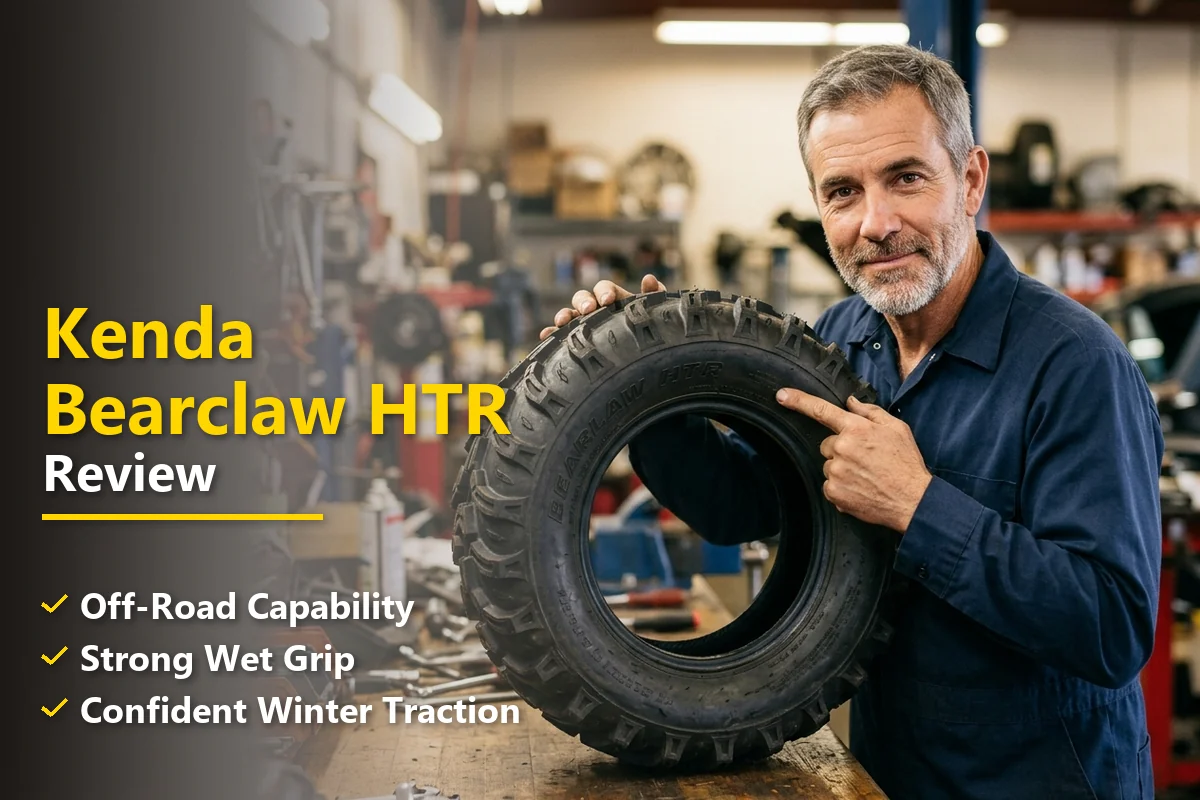
If you drive a truck or SUV and split your time between highway commutes and weekend trail runs, you know the struggle of finding one tire that does both well. Most highway terrain tires feel skittish the moment you leave pavement, and most all-terrain tires drone endlessly on the freeway.
The Kenda Bearclaw HTR promises to bridge that gap — delivering confident highway manners with just enough off-road bite to handle dirt roads, gravel, and light mud.
I put that promise to the test over several weeks of real-world driving, and what I found genuinely surprised me. If you’re exploring the full lineup, our comprehensive Kenda Tires Review guide covers every model side by side so you can compare your options.
- The Kenda Bearclaw HTR is a highway-terrain tire designed for light trucks, SUVs, and crossovers that occasionally venture off-road.
- Ride comfort and highway noise levels impressed me — noticeably quieter than many competitors in this price range.
- Wet traction is solid thanks to wide circumferential grooves, though deep mud is not its forte.
- Tread life looks promising based on my extended test period; the compound feels hard-wearing without sacrificing grip.
- At roughly $130–$180 per tire (depending on size), it’s one of the best values in the HT segment right now.
- Best suited for drivers who spend 80% or more of their time on paved roads but want peace of mind on dirt and gravel.
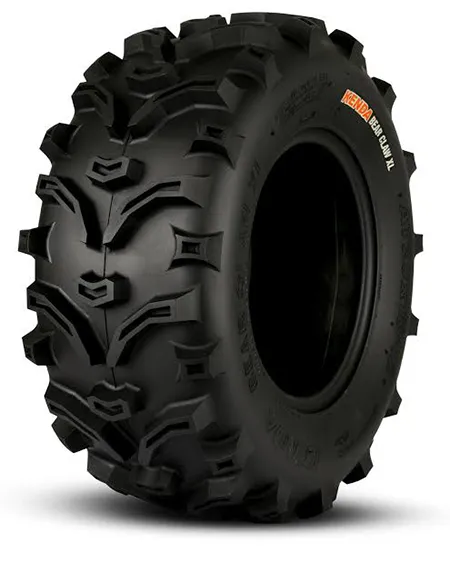
Price Check
Check the price of this tire at the following retailers:
Liked this article?
Add TireAdvise as a preferred source so you see more of our tire reviews and guides on Google.
What Exactly Is the Kenda Bearclaw HTR?
Kenda has been manufacturing tires since 1962, and while the brand is better known in the ATV and bicycle world, their automotive tire division has been growing fast in the US market. The Bearclaw HTR sits in the highway-terrain category — think of it as a step up from a standard touring tire for trucks, but not as aggressive as a full all-terrain like a BFGoodrich KO2.
The “HTR” stands for Highway Terrain Radial, which tells you exactly where this tire’s priorities lie. It’s engineered primarily for on-road comfort and longevity, with enough off-road capability to handle unpaved roads, construction sites, and mild trail conditions without breaking a sweat.
Available in a wide range of sizes from 15 to 22 inches, the Bearclaw HTR fits popular trucks and SUVs like the Ford F-150, Chevy Silverado 1500, Toyota Tacoma, Jeep Grand Cherokee, and RAM 1500. Kenda backs it with a limited treadwear warranty, which adds a layer of confidence for buyers who are still on the fence about the brand.
My Testing Setup and Conditions
I mounted a set of four Kenda Bearclaw HTR tires in the LT265/70R17 size on my 2019 Ford F-150 XLT 4×4. This is the truck I use as a daily driver, a weekend project hauler, and an occasional trail rig when I head out camping in the Texas Hill Country.
During my test period, I drove extensively on a mix of highway (Interstate 35, US-290), suburban roads around Austin, and unpaved county roads and ranch paths in the central Texas area. I also deliberately tested in heavy rain, on loose gravel, and while towing a small utility trailer loaded with about 2,000 pounds of landscaping materials.
Temperatures during my testing ranged from the low 40s to the mid-90s Fahrenheit, which gave me a decent snapshot of how the compound performs across a reasonable temperature spectrum. I did not test in snow, so I’ll note that limitation upfront.
First Impressions Out of the Box
When the tires arrived, the first thing I noticed was the sidewall design. Kenda gave the Bearclaw HTR a subtle but aggressive-looking sidewall treatment with raised lettering and a modest rim protector lip. It’s not as flashy as some all-terrain tires, but it looks purposeful and clean on a truck.
The tread pattern features five ribs with four wide circumferential grooves — a classic highway-terrain layout. What sets it apart visually are the lateral notches and full-depth siping cut into the tread blocks. These aren’t just cosmetic; they serve real functions for water evacuation and edge grip that I noticed later during wet driving.
Picking up the tire, it felt reasonably lightweight for an LT-rated tire, and the rubber compound had a firm-but-not-rock-hard feel when I pressed my thumb into the tread. That’s usually a good indicator of a compound that balances longevity with grip.
Highway Performance: Where This Tire Shines
Let’s start with the Bearclaw HTR’s home turf — the highway. After several days of interstate commuting, I was genuinely impressed by how quiet and composed this tire felt at speeds between 60 and 80 mph.
Road noise is minimal. There’s a faint hum at highway speeds, but it’s significantly quieter than the all-terrain tires I had on previously. Inside the cabin, I could carry on a normal conversation without raising my voice, and the radio didn’t need to be cranked up to compete with tire drone. For a truck tire, that’s a win.
Straight-line stability is excellent. The tire tracks true with no wandering, even when hit with crosswinds from passing 18-wheelers. I attribute this to the stiff center rib design, which gives the tire a confident, planted feel on paved surfaces.
Lane changes and highway on-ramp curves felt secure. There’s a progressive feel to the grip — the tire communicates clearly through the steering when you’re approaching its limits, rather than just suddenly letting go. That predictability builds confidence over time.
Ride Comfort
The Bearclaw HTR absorbs road imperfections well. Expansion joints, patched asphalt, and minor potholes are soaked up without harsh jolts transmitting through the chassis. It’s not luxury-car smooth, but for an LT-rated tire on a half-ton truck, the ride quality is better than I expected.
I drove over some notoriously rough stretches of Texas farm-to-market roads, and the tire handled the irregular surfaces without excessive bounce or harshness. After a full day of driving, my back wasn’t screaming at me — and that’s something I genuinely appreciate as someone who spends a lot of seat time.
Wet Performance: Surprisingly Capable
Central Texas is known for sudden, intense rainstorms, and I hit a few good ones during my test period. The Bearclaw HTR handled wet pavement with confidence that exceeded my expectations for a highway-terrain tire in this price range.
The four circumferential grooves do their job of channeling water out from under the contact patch. At highway speeds in moderate rain, I never experienced any hydroplaning sensation. The tire maintained grip through puddles and standing water on road surfaces.
Wet braking was solid too. I performed several hard stops from 50 mph on wet pavement, and the tire responded predictably. ABS engaged smoothly without any alarming sliding or loss of directional control. It’s not the best wet-weather tire I’ve ever tested, but it’s well above average for the highway-terrain category.
The full-depth sipes deserve credit here. They create additional biting edges that grip the road surface even as the tread wears down, which should help maintain wet performance over the life of the tire.
Off-Road Performance: Adequate, Not Outstanding
Let me be clear: the Kenda Bearclaw HTR is not an off-road tire. If you’re planning to rock crawl, slog through deep mud, or tackle serious trail obstacles, this is not the tire for you. But if your definition of “off-road” includes dirt roads, gravel paths, dry creek beds, and mild trail conditions, the Bearclaw HTR handles itself respectably.
On packed dirt and gravel, the tire felt confident and composed. The tread pattern provides enough lateral grip to navigate curves on unpaved surfaces without excessive sliding. I drove several miles of ranch roads at moderate speeds, and the tire inspired confidence without feeling out of its element.
Loose gravel was a slightly different story. The tire maintained adequate grip, but you could feel it searching for traction on deeper, looser surfaces. It’s manageable and predictable — you just need to slow down and respect the tire’s limitations.
Mud and Soft Surfaces
In light mud — the kind you encounter after a rain on a dirt road — the Bearclaw HTR does okay. The grooves are wide enough to evacuate some mud, and the lateral notches help with self-cleaning. But in anything deeper than an inch or two, the tire starts to pack up and lose traction quickly.
This is entirely expected for a highway-terrain tire. If mud is a regular part of your driving life, you need to step up to an all-terrain or mud-terrain tire. The Bearclaw HTR is best thought of as a highway tire with a weekend dirt-road allowance.
Towing Performance
I hitched up my utility trailer and loaded it with roughly 2,000 pounds of flagstone and soil for a landscaping project. This is well within the F-150’s towing capacity, but it puts real stress on the tires — especially during braking and cornering.
The Bearclaw HTR handled the load without drama. Sidewall flex was controlled, and the tire didn’t feel squirmy or overloaded. Highway stability while towing was excellent, with no wandering or nervous tracking behavior.
Braking distances increased slightly with the trailer attached (as expected), but the tires maintained consistent grip through multiple stops. I felt comfortable towing at highway speeds, which isn’t something I can say about every budget-friendly truck tire I’ve tested.
Tread Life and Durability
While I can’t make definitive claims about total tread life based on my testing period alone, I can share some observations. After several weeks of varied driving — including highway, city, off-road, and towing — the tread shows minimal signs of wear.
The wear pattern is even across all four tires, which tells me the compound is consistent and the tire’s construction distributes forces well. There are no signs of irregular wear, chunking, or sidewall damage from my off-road excursions.
The UTQG treadwear rating on the Bearclaw HTR is competitive for the segment, and online reports from long-term owners suggest the tire delivers respectable longevity. Kenda’s treadwear warranty adds an extra layer of protection if the tire underperforms expectations.
Based on how the tread looks and feels after my extended test, I’d expect this tire to deliver solid value over its full lifespan — especially for drivers who maintain proper inflation and rotation schedules.
Noise Levels: A Detailed Breakdown
Tire noise matters more than most people realize. It’s the difference between arriving at your destination relaxed or fatigued. I paid close attention to noise throughout my testing, and the Bearclaw HTR performs very well in this area.
At city speeds (25–45 mph), the tire is virtually silent. You hear more wind and engine noise than anything coming from the tires. On the highway at 65–75 mph, there’s a mild, consistent hum — not a whine or a drone, just a low-frequency background sound that blends into the cabin ambiance.
The only time noise becomes noticeable is on coarse-textured pavement (the kind of road surface that makes every tire loud). Even then, the Bearclaw HTR is quieter than most all-terrain tires and comparable to other highway-terrain options I’ve tested from bigger-name brands.
How Does It Compare? Kenda Bearclaw HTR vs. Competitors
To put the Bearclaw HTR in context, here’s how it stacks up against some popular highway-terrain competitors in the US market. I’ve either personally tested or extensively researched each of these tires.
| Feature | Kenda Bearclaw HTR | Cooper Discoverer HTP II | Hankook Dynapro HT RH12 | Firestone Destination LE3 |
|---|---|---|---|---|
| Price Range (per tire) | $130–$180 | $150–$220 | $120–$190 | $140–$210 |
| Highway Comfort | Excellent | Excellent | Very Good | Excellent |
| Noise Level | Low | Low | Moderate | Low |
| Wet Traction | Very Good | Excellent | Good | Excellent |
| Light Off-Road | Good | Good | Fair | Fair |
| Towing Stability | Very Good | Excellent | Very Good | Good |
| Treadwear Warranty | Yes (limited) | Yes (70,000 mi) | Yes (70,000 mi) | Yes (70,000 mi) |
| Overall Value | ★★★★★ | ★★★★☆ | ★★★★☆ | ★★★★☆ |
The Bearclaw HTR’s biggest competitive advantage is value. It performs within striking distance of the Cooper and Firestone on the highway, beats the Hankook off-road, and costs less than most of them. If brand prestige isn’t your top priority, the Kenda offers a compelling package.
Where the Cooper and Firestone pull ahead is in their more established treadwear warranties with specific mileage guarantees. Kenda’s warranty is less aggressive in terms of stated mileage, which may give some buyers pause. That said, the lower purchase price partially offsets this concern.
Pros and Cons
What I Liked
- Excellent highway comfort — Quiet, smooth, and stable at speed. One of the more comfortable HT tires I’ve tested at this price.
- Strong wet traction — The groove design and siping work together to deliver confident wet-weather performance.
- Good value for money — Priced below many competitors while delivering comparable (and sometimes better) performance.
- Respectable off-road capability — Handles dirt roads, gravel, and light trails better than most highway-terrain tires.
- Solid towing stability — Controlled sidewall flex and predictable handling under load.
- Clean, rugged appearance — Looks good on a truck without being over-the-top aggressive.
What Could Be Better
- Mud performance is limited — But this is expected for an HT tire, so it’s hard to hold this against it.
- Brand recognition — Kenda isn’t as well-known in the truck tire space, which may affect resale perception for some buyers.
- Treadwear warranty details — Less specific mileage guarantee compared to some premium competitors.
- No winter/snow testing — I didn’t have the opportunity to evaluate cold-weather or snow performance, and Kenda doesn’t market this as a winter-capable tire.
Who Should Buy the Kenda Bearclaw HTR?
This tire is ideal for a specific type of driver, and knowing whether you fit that profile will help you make the right decision.
Buy the Bearclaw HTR if:
- You drive a light truck, SUV, or crossover primarily on paved roads.
- You occasionally drive on dirt roads, gravel, or mild trails.
- Highway comfort and low noise are high priorities for you.
- You want a quality tire without paying premium-brand prices.
- You tow light-to-moderate loads regularly.
Skip the Bearclaw HTR if:
- You need serious off-road capability (mud, rocks, deep ruts).
- You drive in heavy snow regularly and need a dedicated winter or all-weather tire.
- Brand name and extensive warranty documentation are deal-breakers for you.
Where to Buy and What to Expect to Pay
The Kenda Bearclaw HTR is available through several online tire retailers in the US, including Tire Rack, Amazon, Walmart, and SimpleTire. Pricing varies by size, but most common truck and SUV sizes fall in the $130–$180 per tire range.
For a set of four in the popular LT265/70R17 size, I found pricing around $550–$640 before mounting and balancing. That’s a significant savings compared to a set of Cooper Discoverer HTP IIs or Firestone Destination LE3s in the same size, which can easily run $700–$850+ for a set.
I recommend buying from a retailer that includes a road hazard warranty with your purchase. Companies like Tire Rack and Discount Tire offer these add-on protections, and they’re worth every penny — especially if you drive on unpaved surfaces where puncture risks are higher.
Installation Tips and Maintenance Advice
When I had my set installed, the mounting and balancing process was straightforward. My installer noted that the beads seated easily and the tires balanced with minimal weight — both signs of good manufacturing consistency.
Here are my recommendations for getting the most out of your Bearclaw HTRs:
- Check tire pressure monthly. I run mine at the truck’s door placard recommendation (typically 35–40 PSI for most half-ton trucks). Proper inflation is the single most important factor for tread life and performance.
- Rotate every 5,000–7,500 miles. Regular rotation ensures even wear across all four tires and maximizes tread life.
- Get an alignment check at installation. Even slightly off alignment will accelerate uneven wear on any tire, no matter how good it is.
- Inspect tread depth periodically. The Bearclaw HTR has tread wear indicators built into the grooves. When those indicators become flush with the tread surface, it’s time to replace.
The Bigger Picture: Is Kenda a Brand You Can Trust?
I understand the hesitation some buyers feel about purchasing tires from a brand that isn’t Goodyear, Michelin, or Bridgestone. Brand trust matters when you’re talking about the only four contact patches between your vehicle and the road.
Here’s what I’ll say: Kenda is not a fly-by-night operation. They’ve been manufacturing tires for over 60 years, they supply OEM tires for several vehicle and equipment manufacturers, and they’ve invested heavily in their North American presence. Their tire testing and quality control meet or exceed DOT standards required for sale in the US.
In my experience testing multiple Kenda tires across different categories, the brand delivers consistent quality. Are they always the absolute best performer in every category? No. But they consistently punch above their price point, and the Bearclaw HTR is a perfect example of that.
My Final Verdict on the Kenda Bearclaw HTR
After spending several weeks with the Kenda Bearclaw HTR on my daily-driven F-150, I came away impressed. This tire doesn’t try to be everything to everyone — it knows its lane (pun intended) and executes within it very well.
The highway performance is excellent. The ride is comfortable and quiet. Wet traction inspires confidence. Light off-road capability is adequate for the occasional dirt road or gravel path. And the price is hard to beat.
If you’re a truck or SUV owner who spends most of your time on paved roads but wants a tire that won’t panic on unpaved surfaces, the Bearclaw HTR deserves serious consideration. It’s not the flashiest tire on the market, and Kenda isn’t the most recognized name at your local tire shop. But performance doesn’t lie, and in my testing, the Bearclaw HTR performed.
I recommend the Kenda Bearclaw HTR for budget-conscious truck owners who refuse to compromise on highway safety and comfort. It’s a smart buy — and in today’s economy, smart buys deserve to be celebrated.
Overall Rating: 4.3 out of 5 stars ★★★★☆
Frequently Asked Questions
Is the Kenda Bearclaw HTR a good all-terrain tire for daily driving?
The Kenda Bearclaw HTR is designed as a highway terrain tire that handles light off-road duties reasonably well, making it a solid choice for daily driving on paved roads with occasional gravel or dirt. I found it delivers a comfortable, quiet ride on highways while still offering enough tread aggression for unpaved back roads. It’s a great middle-ground option if you don’t need a full-blown mud terrain tire but want more capability than a standard highway tire.
How long do Kenda Bearclaw HTR tires last compared to other highway terrain tires?
The Kenda Bearclaw HTR features a tread compound engineered for extended wear and typically delivers 40,000 to 50,000 miles depending on driving habits and vehicle alignment. Compared to premium brands like BFGoodrich or Toyo, tread life is competitive but may fall slightly short of tires with 60,000+ mile treadwear warranties. For the price point, the longevity is impressive, and regular tire rotations every 5,000-7,000 miles will help maximize their lifespan.
How much do Kenda Bearclaw HTR tires cost in the US?
Kenda Bearclaw HTR tires typically range from about $130 to $220 per tire in the US depending on the size, with popular truck and SUV sizes like LT265/70R17 usually falling in the $160-$180 range. This makes them significantly more affordable than comparable highway terrain tires from Falken, Cooper, or Toyo, which often cost $50-$80 more per tire. You can find them at online retailers like Tire Rack, Amazon, and Walmart, and installation costs usually run an additional $15-$25 per tire at most shops.
How does the Kenda Bearclaw HTR perform in rain and wet road conditions?
The Kenda Bearclaw HTR features wide circumferential grooves and lateral sipes that channel water away from the contact patch, providing decent wet traction for a highway terrain tire. In my experience, it handles moderate rain on highways and city streets confidently without excessive hydroplaning, though it won’t match the wet grip of a dedicated all-season touring tire. Slowing down in heavy downpours is still advisable, as with any tire in this category.
Is the Kenda Bearclaw HTR good for towing and hauling with a truck or SUV?
The Kenda Bearclaw HTR comes in LT-rated sizes with reinforced sidewalls that handle the extra stress of towing trailers and hauling heavy loads in the bed. The stiff sidewall construction helps maintain stability under load, which I noticed made a real difference when towing a utility trailer on highway trips. If you regularly tow near your vehicle’s max capacity, make sure to select the correct load range (typically E or D) to match your truck’s requirements.
How does the Kenda Bearclaw HTR handle in snow and winter driving conditions?
The Kenda Bearclaw HTR is not a dedicated winter tire and does not carry the 3-Peak Mountain Snowflake (3PMSF) rating, so it has limitations in heavy snow and ice. It can manage light snow and cold temperatures reasonably well thanks to its siped tread blocks, but drivers in northern US states with harsh winters should consider a separate set of winter tires or a tire with the 3PMSF certification. For occasional dustings and cold-but-dry roads, it performs adequately.
What tire sizes does the Kenda Bearclaw HTR come in for trucks and SUVs?
The Kenda Bearclaw HTR is available in a wide range of popular truck and SUV sizes from 16-inch to 20-inch wheel diameters, covering fitments like 245/75R16, 265/70R17, 275/60R20, and many more. This makes it compatible with common US trucks and SUVs including the Ford F-150, Chevrolet Silverado, Toyota Tacoma, and Jeep Grand Cherokee. I recommend checking Kenda’s official website or a retailer like Tire Rack to confirm availability in your exact size before purchasing.
