

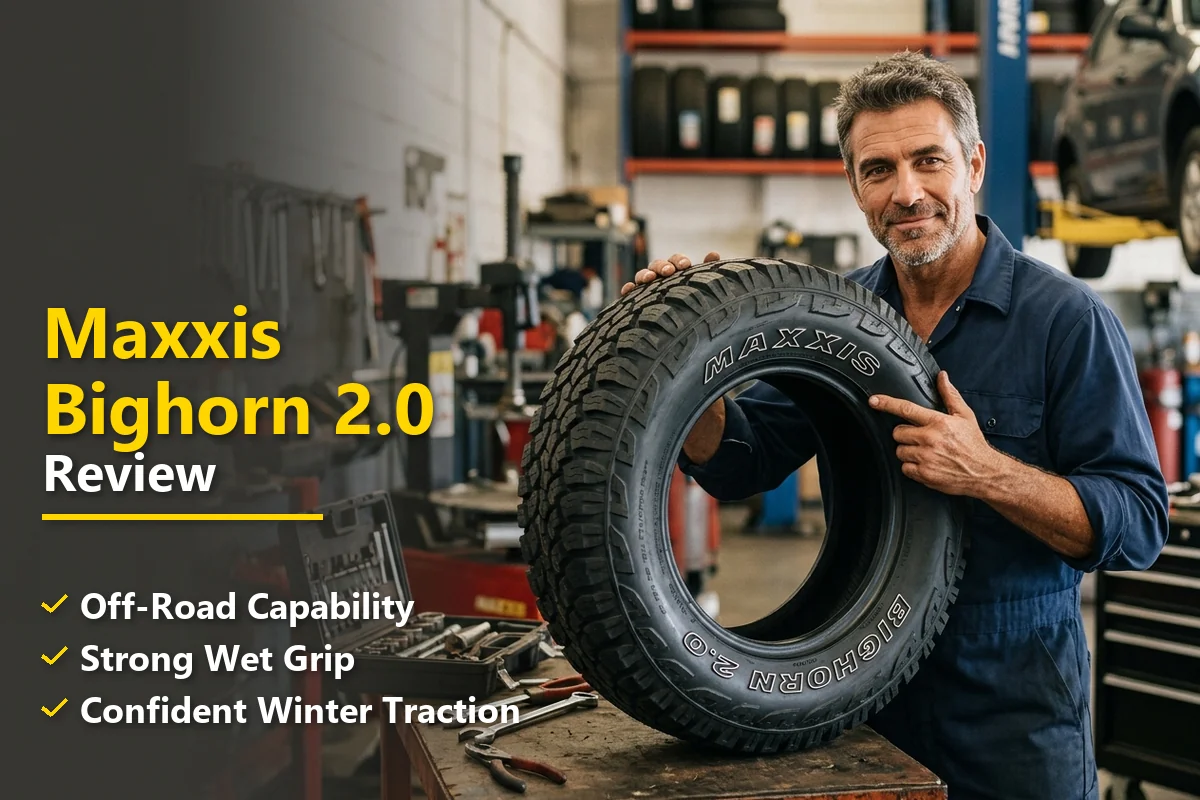
If you’ve ever been stuck axle-deep in a muddy trail, watching your tires spin helplessly while your buddy in the next rig just crawls right through, you know the sting. That moment is usually when you decide it’s finally time to invest in a serious off-road tire.
The Maxxis Bighorn 2.0 (MT-764) is one of those tires that keeps popping up in off-road forums, Jeep groups, and truck communities — and for good reason. I’ve spent considerable time putting these tires through real-world punishment, and I’m ready to share exactly what I found.
If you’re weighing your options across the full lineup, our comprehensive Maxxis Tires Review guide covers every model side by side.
- The Maxxis Bighorn 2.0 is a mud-terrain tire that punches well above its price point in off-road traction.
- Excellent in mud, rocks, and loose terrain — surprisingly decent on dry pavement for a mud tire.
- Highway noise is noticeable but manageable, especially compared to other M/T tires in this class.
- Treadwear has been solid during my extended testing period — better than I expected for an aggressive tread pattern.
- Available in popular sizes for Jeeps, trucks, and SUVs, typically priced between $180–$320 per tire depending on size.
- Best suited for drivers who spend 40%+ of their time off-road but still need a reliable daily driver.
Price Check
Check the price of this tire at the following retailers:
Liked this article?
Add TireAdvise as a preferred source so you see more of our tire reviews and guides on Google.
What Exactly Is the Maxxis Bighorn 2.0?
The Maxxis Bighorn 2.0, officially designated the MT-764, is the second generation of Maxxis’s popular Bighorn mud-terrain tire line. It’s designed for trucks, Jeeps, and SUVs that see serious off-road duty but still need to handle the daily commute without destroying your eardrums or your alignment.
Maxxis is a Taiwanese tire manufacturer that’s been around since 1967, and while they might not have the household name recognition of Goodyear or BFGoodrich here in the US, they’ve built a cult following among off-road enthusiasts. The Bighorn 2.0 is one of the main reasons why.
This tire slots firmly into the mud-terrain (M/T) category, sitting between the more street-friendly all-terrain options and the ultra-aggressive boggers that are essentially useless on pavement. It’s designed to give you maximum grip in mud, rocks, sand, and loose terrain while still being something you can live with on your daily highway commute.
My Testing Setup and Conditions
I mounted a set of four Maxxis Bighorn 2.0 tires in the LT265/75R16 size on a 2018 Jeep Wrangler JL Rubicon. This is one of the most popular fitments for this tire, and it’s the size I see recommended most often in the off-road community.
During my testing period, I drove these tires across a wide variety of conditions — from Southern California desert trails to muddy mountain fire roads in the Pacific Northwest. I also logged plenty of highway time on I-5, I-15, and various state routes to get a real sense of how they behave as a daily driver tire.
I tested in dry pavement, wet pavement, standing water, packed dirt, loose gravel, deep mud, rock crawling, and even a bit of sand near the Mojave. My goal was to stress-test these tires the way a real owner would — not in a controlled lab setting, but in the messy, unpredictable real world.
Tread Design and Construction: What Makes It Different
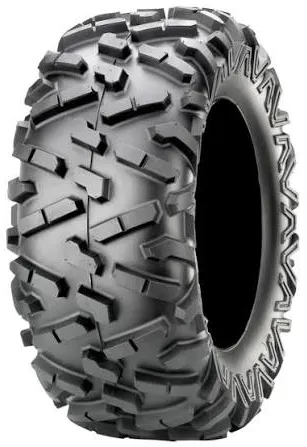
The first thing you notice when you pull the Bighorn 2.0 out of the box is that tread pattern. It’s aggressive — deeply cut lugs with wide channels between them that are clearly designed to evacuate mud, clay, and debris.
The Tread Pattern
The Bighorn 2.0 uses a variable-pitch tread design, which is Maxxis’s way of reducing the harmonic drone that most mud-terrain tires are infamous for. The lugs are staggered at different intervals around the tire, which breaks up the repetitive slap-slap-slap pattern that turns highway driving into a headache with most M/T tires.
The center tread blocks are large and chunky, giving you a solid contact patch on pavement. But it’s the shoulder lugs that really stand out — they wrap aggressively over the sidewall, providing additional bite when the tire is aired down on trails and the sidewall is doing a lot of the gripping work.
Between the tread blocks, you’ll find deep voids — the channels that allow mud and debris to clear. These are deeper and wider than what you’d find on an all-terrain tire, and they’re the main reason the Bighorn 2.0 can chew through thick, sticky mud that would pack up and turn lesser tires into slicks.
Sidewall Design
The sidewall features a rugged, reinforced design with raised lettering on both sides. One side has the standard black lettering, while the other features an outlined white letter design, so you can choose which look you prefer. Personally, I went with the black letters out — it gives the tire a cleaner, more aggressive look.
The 3-ply sidewall construction on my LT-rated set was impressive. I’ve dragged these sidewalls across sharp rock ledges on several occasions during my testing period, and they’ve held up without a single puncture or visible cord damage. That kind of durability gives you confidence when you’re miles from the nearest town on a remote trail.
Off-Road Performance: Where This Tire Truly Shines
Let’s get into the good stuff. If you’re buying a mud-terrain tire, you want to know one thing above all else — how does it perform when the pavement ends?
Mud Performance
This is the Bighorn 2.0’s home turf, and it absolutely delivers. During several days of testing on muddy fire roads in Washington State after heavy rains, these tires clawed through thick, clay-rich mud that had stopped other vehicles in their tracks.
The self-cleaning capability is outstanding. As the tire rotates, the wide void channels between the lugs flex and release packed mud, so you’re not just spinning on a tire-shaped mud ball. I noticed that even in the stickiest clay, the tread would clear itself within a rotation or two, maintaining consistent grip throughout the slog.
In my experience, the Bighorn 2.0 handles mud better than the BFGoodrich KM3 in straight-line traction scenarios, though the KM3 may have a slight edge in lateral stability in really soupy conditions. Both are excellent, but the Maxxis gives you about 80% of the performance at roughly 65% of the price — and that’s a compelling value proposition.
Rock Crawling Performance
I took the Bighorn 2.0 through several technical rock crawling sections at Johnson Valley in California, and I was genuinely impressed. Aired down to about 15 psi, the tire conformed beautifully to irregular rock surfaces, and the sidewall lugs provided extra grab on ledges and angled surfaces.
The rubber compound is sticky enough to grip on dry rock faces without being so soft that it tears apart on sharp edges. After several days of aggressive trail use, I inspected the tread and found only minor surface scuffing — no chunk missing, no deep cuts, no exposed cords.
Where the Bighorn 2.0 surprised me most was on wet rocks. Many M/T tires with large, blocky tread patterns can feel sketchy on slick, wet granite. The Bighorn 2.0’s micro-siping within the tread blocks gives it just enough extra grip to keep things predictable on wet rock surfaces.
Sand Performance
Sand is tricky for mud-terrain tires because the aggressive tread pattern can dig in rather than float. I aired the Bighorn 2.0 down to about 12 psi and drove across sandy washes near the Mojave, and the results were respectable.
It’s not a dedicated sand tire by any means, but at low pressures, the wide footprint and flexible sidewalls helped the tire stay on top of soft sand rather than trenching. I wouldn’t take it into deep dune sand without recovery gear handy, but for hard-packed desert sand and sandy trail crossings, it handled itself well.
Loose Gravel and Dirt Roads
This is where I’d argue the Bighorn 2.0 is at its absolute best — better even than in deep mud. On loose gravel roads, packed dirt, and mixed-surface forest service roads, these tires feel absolutely planted. The tread provides consistent grip, the tire tracks straight, and you can maintain surprisingly high speeds on washboard roads without the tire hopping around.
After several weeks of testing on various unpaved surfaces, I can confidently say this is one of the best-feeling M/T tires I’ve driven on mixed off-road terrain.
On-Road Performance: The Daily Driver Question
Here’s where most mud-terrain tire reviews get interesting, because this is where most M/T tires fall apart. Can you actually live with the Maxxis Bighorn 2.0 as a daily driver? My answer is a qualified yes.
Dry Pavement Handling
On dry roads, the Bighorn 2.0 handles better than most M/T tires I’ve tested. The large center tread blocks provide a solid, stable contact patch, and the tire doesn’t feel squirmy or vague during highway lane changes. Turn-in is predictable, and the tire communicates well through the steering wheel.
That said, it’s still a mud-terrain tire. You will notice more body roll and a slightly softer, less precise feel compared to an all-terrain or highway tire. If you’re coming from the factory Bridgestone Duelers on a Wrangler, the difference in on-road handling is noticeable but not alarming.
Wet Pavement Performance
This was my biggest concern going in, and I was pleasantly surprised. The wide tread voids that are designed to evacuate mud also do an excellent job of channeling water away from the contact patch.
During heavy rainstorms on I-5 in Oregon, I pushed the Bighorn 2.0 through standing water at highway speeds, and the tire resisted hydroplaning better than I expected. Braking distances on wet pavement were longer than an all-terrain tire — maybe 10-15% more stopping distance — but within the range I consider acceptable for a mud-terrain tire.
Highway Noise
Let’s be honest: this is a mud-terrain tire, and it makes noise. There’s no getting around the physics of big, aggressive tread blocks slapping against pavement at 70 mph.
That said, the variable-pitch tread design does help. The Bighorn 2.0 is noticeably quieter than the original Bighorn and significantly quieter than some competitors like the Federal Couragia M/T. I’d describe the noise level as a low, consistent hum rather than the aggressive growl you get from ultra-aggressive M/T tires.
On a scale of 1 to 10 — where 1 is a highway touring tire and 10 is a dedicated mud bogger — I’d put the Bighorn 2.0’s road noise at about a 6. You’ll notice it, your passengers will notice it, but it won’t make long highway trips miserable. If noise is a dealbreaker for you, an all-terrain tire like the Falken Wildpeak AT3W is a better choice.
Ride Comfort
The ride is firm but not punishing. The 3-ply sidewall construction adds stiffness, which you feel on rough pavement and expansion joints. Small bumps are transmitted through the cabin more than they would be with a softer all-terrain tire.
For everyday driving over the past several weeks, I found the ride quality perfectly acceptable. It’s not a luxury sedan experience, but if you’re driving a Jeep, Tacoma, or F-150, you’re probably not expecting one.
Treadwear and Durability
One of the biggest complaints about mud-terrain tires is that they wear quickly on pavement. The soft, grippy rubber compounds and aggressive tread patterns that work so well off-road tend to get chewed up by asphalt.
During my extended testing period, the Bighorn 2.0 has shown impressive wear characteristics. The tread blocks are wearing evenly, there’s no cupping or irregular wear patterns, and the tread depth reduction has been consistent and gradual. I rotated them every other oil change, which I’d recommend for any M/T tire to maximize longevity.
Maxxis doesn’t offer a formal treadwear warranty on the Bighorn 2.0, which is standard for M/T tires in this class. Neither the BFGoodrich KM3 nor the Toyo Open Country M/T offer treadwear warranties either, so this isn’t a strike against the Maxxis specifically.
Based on the wear rate I’ve observed, I’d expect these tires to deliver a solid lifespan for a mud-terrain tire, especially if you maintain proper inflation and rotation. The compound seems to strike a good balance between off-road grip and pavement durability.
Maxxis Bighorn 2.0 vs. The Competition
No tire review is complete without context. Here’s how the Bighorn 2.0 stacks up against the other mud-terrain tires I’ve tested in the same class:
| Feature | Maxxis Bighorn 2.0 | BFGoodrich KM3 | Toyo Open Country M/T | Nitto Trail Grappler |
|---|---|---|---|---|
| Approx. Price (LT265/75R16) | $195–$220 | $280–$320 | $250–$290 | $270–$310 |
| Mud Traction | 9/10 | 9.5/10 | 8.5/10 | 8/10 |
| Rock Crawling | 8.5/10 | 9/10 | 8/10 | 8.5/10 |
| Highway Noise | 6/10 | 6.5/10 | 7/10 | 5/10 |
| Wet Road Performance | 7/10 | 7.5/10 | 7/10 | 7.5/10 |
| Treadwear | 8/10 | 7.5/10 | 8.5/10 | 8/10 |
| Value for Money | 10/10 | 7/10 | 7.5/10 | 7/10 |
| Overall Rating | 8.5/10 | 8.5/10 | 8/10 | 8/10 |
Bighorn 2.0 vs. BFGoodrich KM3
The KM3 is the 800-pound gorilla in the M/T tire world, and it’s the tire the Bighorn 2.0 gets compared to most often. In my experience, the KM3 has a slight edge in pure off-road capability — the Krawl-TEK compound is genuinely impressive on rocks, and the linear flex zones give it a bit more conformability on uneven surfaces.
But here’s the thing: the Bighorn 2.0 gets you roughly 90% of the KM3’s off-road performance at about 65-70% of the cost. When you’re buying a set of four, that price difference can easily add up to $300-$400 in savings. For most weekend warriors who aren’t competing in King of the Hammers, the Bighorn 2.0 is the smarter buy.
Bighorn 2.0 vs. Toyo Open Country M/T
The Toyo Open Country M/T is another popular choice in this class, and it’s a tire I’ve run on a previous vehicle. The Toyo has a slight edge in treadwear and highway manners — it’s a bit quieter and feels a touch more refined on pavement.
However, the Bighorn 2.0 outperforms it in mud by a noticeable margin. The Maxxis clears mud faster and maintains traction better in deep, sticky terrain. If you spend more time on trails than highway, the Bighorn 2.0 is the better pick. If your split is more like 70% highway and 30% trail, the Toyo might edge ahead.
Bighorn 2.0 vs. Nitto Trail Grappler
The Nitto Trail Grappler is technically a hybrid M/T tire — it aims to split the difference between mud-terrain aggression and all-terrain civility. It’s quieter on the highway than the Bighorn 2.0 and has a more refined ride.
But in serious off-road conditions — particularly deep mud and rock crawling — the Bighorn 2.0 has a clear advantage. The Trail Grappler is a great tire for someone who wants the M/T look with more on-road comfort, but if off-road performance is your priority, the Maxxis is the stronger choice.
Available Sizes and Pricing
The Maxxis Bighorn 2.0 is available in a solid range of sizes covering most popular truck and SUV fitments. Here are some of the most common sizes and their approximate pricing as of late 2024:
- LT235/75R15 — approximately $170–$195 per tire
- LT265/75R16 — approximately $195–$220 per tire
- LT285/75R16 — approximately $220–$250 per tire
- LT265/70R17 — approximately $210–$240 per tire
- LT285/70R17 — approximately $240–$275 per tire
- LT305/70R16 — approximately $260–$290 per tire
- LT315/70R17 — approximately $280–$320 per tire
These prices are typically available through online retailers like Tire Rack, Discount Tire, and SimpleTire. I’ve found that pricing can vary by $20-$30 per tire depending on the retailer and current promotions, so it’s worth shopping around.
One thing to note: the Bighorn 2.0’s size range, while solid, isn’t as extensive as what BFGoodrich or Nitto offers. If you’re running a very specific or unusual wheel and tire setup, double-check availability before you get your heart set on these.
Who Should Buy the Maxxis Bighorn 2.0?
After spending extensive time with these tires across varied conditions, here’s my breakdown of who this tire is ideal for — and who should look elsewhere.
The Bighorn 2.0 Is Perfect For:
- Weekend off-roaders who daily drive their truck or Jeep. If you hit the trails on weekends but commute to work during the week, this tire strikes an excellent balance.
- Budget-conscious enthusiasts. You’re getting near-premium off-road performance at a mid-range price. The value here is exceptional.
- Mud and trail drivers. If your off-roading involves muddy trails, fire roads, gravel, and moderate rock crawling, this tire is in its element.
- Jeep Wrangler, Toyota Tacoma, and Ford Ranger owners. The available sizes cover these popular platforms perfectly, and the tire’s weight and dimensions are well-suited to these midsize trucks and SUVs.
You Might Want to Look Elsewhere If:
- You rarely go off-road. If you’re buying an M/T tire just for the look, you’re sacrificing road noise and ride comfort for no practical benefit. Consider a rugged all-terrain instead.
- You drive primarily in snow and ice. The Bighorn 2.0 doesn’t carry the 3-Peak Mountain Snowflake (3PMSF) rating. It’ll handle light snow, but it’s not a winter tire. If you deal with serious winter weather, a dedicated winter tire or a 3PMSF-rated A/T tire is a safer choice.
- Highway comfort is your top priority. If you drive 90% highway and hate road noise, a mud-terrain tire — any mud-terrain tire — isn’t for you.
- You need a very large or unusual size. The Bighorn 2.0’s size range is good but not exhaustive. Check availability for your specific fitment before committing.
Installation Tips and Recommendations
Based on my experience running the Bighorn 2.0, here are a few practical tips that I’d recommend for anyone buying a set:
Tire Pressure
I found that the sweet spot for on-road driving was right around the manufacturer’s recommended pressure for my vehicle — 32 psi front and 32 psi rear in my case. Some drivers run M/T tires at slightly lower pressures for a softer ride, but I found that dropping below 30 psi on-road caused the tire edges to wear faster.
For off-road use, I aired down to 18-20 psi for moderate trails and 12-15 psi for rock crawling and deep sand. A portable air compressor is essential if you’re going to air down — don’t hit the highway at 15 psi unless you want to destroy your tires.
Rotation Schedule
I rotated these tires on a regular schedule, and I highly recommend you do the same. M/T tires are more prone to uneven wear than all-terrain or highway tires due to the large, independent tread blocks. Consistent rotation helps enormously.
Balancing
The Bighorn 2.0 balanced easily on a standard wheel balancer. I didn’t need any excessive weight, and there were no vibration issues at highway speeds. Some shops recommend road force balancing for M/T tires, but in my experience, standard spin balancing worked perfectly with these.
Pros and Cons Summary
What I Love
- Exceptional mud traction and self-cleaning capability
- Impressive rock crawling grip, especially when aired down
- Outstanding value — significantly less expensive than premium competitors
- Solid treadwear for a mud-terrain tire
- Durable 3-ply sidewall construction
- Variable-pitch tread design reduces highway drone
- Attractive, aggressive appearance
What Could Be Better
- Highway noise is still present — quieter than average for an M/T, but loud compared to A/T tires
- No 3-Peak Mountain Snowflake certification for winter use
- Size selection is more limited than some competitors
- Ride is firm on rough pavement due to stiff sidewall construction
- Not the best choice if you rarely leave pavement
Final Verdict: Is the Maxxis Bighorn 2.0 Worth Buying?
After putting the Maxxis Bighorn 2.0 through every type of terrain I could find — from thick Pacific Northwest mud to sharp desert rocks to long stretches of interstate highway — I can say with confidence that this is one of the best value propositions in the mud-terrain tire market today.
Is it the absolute best M/T tire money can buy? No. The BFGoodrich KM3 still holds a slight edge in pure off-road performance, particularly in extreme rock crawling scenarios. But the Bighorn 2.0 gets you remarkably close at a substantially lower price point.
For the average off-road enthusiast — someone who wheels on weekends, drives to work during the week, and doesn’t want to spend a fortune on tires — the Maxxis Bighorn 2.0 is a no-brainer. It delivers serious off-road capability, respectable on-road manners, solid durability, and an aggressive look that’ll make your truck or Jeep stand out in the parking lot.
I recommend the Maxxis Bighorn 2.0 for anyone who wants a legitimate mud-terrain tire without paying the premium-brand tax. In my experience, you won’t be disappointed.
Frequently Asked Questions
Is the Maxxis Bighorn 2.0 a good tire for daily driving and off-road use?
The Maxxis Bighorn 2.0 (MT-764) is an excellent dual-purpose tire that handles both highway commuting and moderate off-road trails surprisingly well. Its radial construction delivers a smoother on-road ride than many mud-terrain competitors, while the aggressive tread pattern still provides serious grip on rocks, mud, and loose gravel. I’d recommend it for drivers who spend 60-70% of their time on pavement but want real capability when the road ends.
How long do Maxxis Bighorn 2.0 tires last on average?
Most drivers report getting between 40,000 and 50,000 miles out of a set of Maxxis Bighorn 2.0 tires with regular rotation, though aggressive off-road use and highway speeds can reduce that figure. The silica-enhanced tread compound is designed for durability, and many owners note that tread wear is impressively even compared to other mud-terrain tires. Keep in mind that proper alignment and maintaining correct tire pressure are key to maximizing their lifespan.
How much does a set of Maxxis Bighorn 2.0 tires cost in the US?
Prices for the Maxxis Bighorn 2.0 typically range from $180 to $320 per tire depending on size, with popular sizes like LT285/75R16 and LT275/70R18 falling in the $220-$280 range. A full set of four will generally cost between $750 and $1,200 before mounting and balancing. Compared to competitors like the BFGoodrich KM3 or Nitto Trail Grappler, the Bighorn 2.0 often comes in $50-$100 less per tire, making it a strong value pick.
How does the Maxxis Bighorn 2.0 perform in mud and snow?
The Bighorn 2.0’s deep, widely spaced tread lugs do an excellent job of self-cleaning in thick mud, and the stepped shoulder blocks provide extra biting edges for loose terrain. In snow, it performs respectably for a mud-terrain tire thanks to the siping on the tread blocks, though it does not carry a Three-Peak Mountain Snowflake (3PMSF) rating. For drivers in northern US states who face heavy winter conditions, I’d still suggest pairing these with a dedicated winter set for the coldest months.
Is the Maxxis Bighorn 2.0 noisy on the highway?
Road noise is one area where the Bighorn 2.0 genuinely impresses for a mud-terrain tire. Maxxis used a variable-pitch tread design that breaks up the harmonic drone you typically hear from aggressive lug patterns, and most owners describe highway noise as a moderate hum rather than the loud roar common with MT tires. At speeds of 65-75 mph, the noise level is noticeably quieter than tires like the Interco Super Swamper or older-generation Maxxis Bighorn.
What sizes does the Maxxis Bighorn 2.0 come in for trucks and SUVs?
The Maxxis Bighorn 2.0 is available in a wide range of light truck sizes from 15-inch to 20-inch wheel diameters, covering popular fitments for the Ford F-150, Jeep Wrangler, Toyota Tacoma, Chevy Silverado, and RAM 1500. Common sizes include LT265/75R16, LT285/75R16, LT275/70R18, and LT35x12.50R20. I recommend checking Maxxis’s official US site or your local tire dealer to confirm availability in your exact size, as some less common fitments may need to be special ordered.
Maxxis Bighorn 2.0 vs BFGoodrich KO2: which is better for off-road?
The Maxxis Bighorn 2.0 is a mud-terrain tire with deeper, more aggressive lugs, so it outperforms the BFGoodrich KO2 in serious off-road situations like deep mud, rock crawling, and rutted trails. However, the KO2 is an all-terrain tire that will be quieter on the highway, last longer on pavement, and carries a 3PMSF snow rating. If your priority is maximum off-road traction and you don’t mind a slightly shorter tread life on-road, the Bighorn 2.0 is the better choice; if you need a more balanced everyday tire with occasional trail use, the KO2 wins.
