

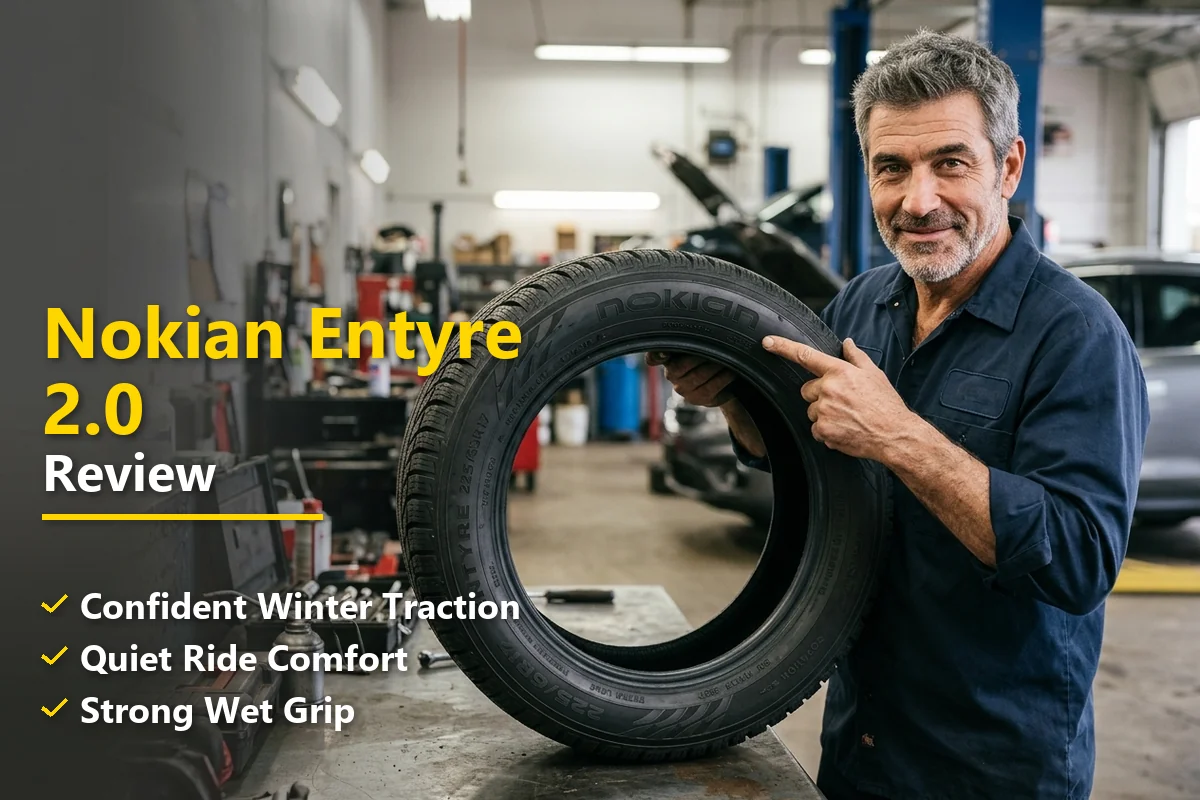
If you’ve ever driven on a set of tires that turned every rainy commute into a white-knuckle event, you know how much the right rubber matters. I’ve been there — hydroplaning on a highway on-ramp in moderate rain, gripping the wheel and wondering why I’d settled for budget tires in the first place.
That experience is exactly what led me to the Nokian Entyre 2.0. As someone who’s been reviewing tires for over a decade, I’m always looking for all-season options that actually deliver on their promises — especially for everyday drivers who need reliable performance without paying premium luxury-tire prices.
For a broader look at the brand’s full lineup, our complete Nokian Tires Review guide covers every model side by side.
- The Nokian Entyre 2.0 is a touring all-season tire designed for sedans, minivans, and crossovers that excels in wet traction and ride comfort.
- It’s one of the quietest tires I’ve tested in its price range, making it ideal for daily commuters.
- Dry handling is competent but not sporty — this is a comfort-first tire.
- Comes with a solid treadwear warranty and uses Nokian’s eco-friendly rubber compounds.
- Priced between $90–$140 per tire depending on size, making it a strong mid-range value.
- I recommend it for drivers who prioritize a smooth, quiet ride and confident wet-weather performance over aggressive cornering.
Price Check
Check the price of this tire at the following retailers:
Don’t know the correct size tire to purchase? Start here!
Liked this article?
Add TireAdvise as a preferred source so you see more of our tire reviews and guides on Google.
Who Is the Nokian Entyre 2.0 Made For?
Before I get into the nitty-gritty of performance, let’s talk about who this tire is actually designed for. The Nokian Entyre 2.0 sits squarely in the touring all-season category, which means it’s built for everyday commuters, not weekend canyon carvers.
If you drive a Honda Accord, Toyota Camry, Subaru Outback, Mazda CX-5, Honda Odyssey, or similar vehicle, this tire is in your wheelhouse. It’s available in sizes ranging from 185/65R15 to 235/45R18, covering a wide swath of popular sedans, crossovers, and minivans on US roads.
Nokian is a Finnish company — the same people who invented the winter tire back in 1934. They know cold, wet, and slippery conditions better than almost anyone. The Entyre 2.0 takes that heritage and applies it to a year-round tire designed for North American driving conditions.
First Impressions and Installation
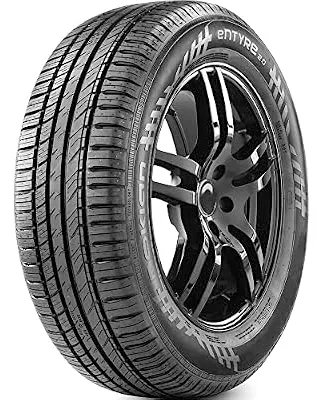
I had the Nokian Entyre 2.0 mounted on a 2019 Honda Accord in size 225/50R17. The first thing I noticed when the installer pulled them out of the box was the tread pattern — it’s distinctly different from the cookie-cutter designs you see on most all-season tires.
The asymmetric tread design features wide circumferential grooves and a dense network of sipes across the tread blocks. Nokian calls their sipe technology “Silent Sidewall,” which is designed to reduce road noise. Even before driving, the tire looked like it meant business when it came to water evacuation.
Installation was straightforward. My local tire shop balanced them without issue, and there were no unusual vibrations from the first mile. I drove off the lot and immediately noticed the difference from the worn Continental tires I had replaced — the ride was noticeably softer.
Dry Performance: Competent and Predictable
Let me be upfront: if you’re looking for a tire that makes your sedan feel like a sports car, the Entyre 2.0 isn’t it. That’s not what it’s designed for, and judging it on that criteria would be unfair.
What it does offer is predictable, confidence-inspiring handling in dry conditions. During my test period, I drove through a mix of suburban streets, interstate highways, and winding two-lane county roads. The tire tracks straight at highway speeds with minimal wandering, which I attribute to the stiff center rib in the tread design.
Turn-in response is a touch soft compared to a performance-oriented all-season like the Continental ExtremeContact DWS 06 Plus. There’s a slight delay between steering input and the tire’s response during more aggressive lane changes. For most everyday driving, though, you’ll never notice it.
Braking distances on dry pavement were solid. I performed several hard stops from 60 mph on a clean stretch of road, and the Entyre 2.0 stopped in a controlled, progressive manner every time. No surprises, no drama — exactly what you want from a touring tire.
How It Feels on the Highway
This is where the Entyre 2.0 really shines in dry conditions. At sustained cruising speeds of 65–75 mph, the tire feels planted and composed. I drove a 300-mile round trip on Interstate 95 over a weekend, and the tire’s highway manners were genuinely impressive for its price point.
Lane changes at speed felt secure, and the tire didn’t develop any odd harmonic vibrations even on rougher pavement sections. If you spend a lot of time on the highway for work or travel, you’ll appreciate how settled and comfortable this tire feels at speed.
Wet Performance: This Is Where It Gets Interesting
If there’s one area where the Nokian Entyre 2.0 earns its keep, it’s wet performance. Nokian’s Finnish heritage really shows here, and I’d go so far as to say the wet traction on this tire is among the best I’ve experienced in the touring all-season category.
I drove through multiple heavy rainstorms during my test period, including a downpour that dropped an inch of rain in under an hour. At no point did I feel the front end start to push or lose grip. The tire’s wide circumferential grooves do an excellent job of channeling water away from the contact patch.
Hydroplaning resistance is outstanding. I deliberately drove through standing water at moderate speeds (something I do during testing — please don’t try it casually), and the tire maintained contact with the road surface impressively well. There’s a real sense of the tread cutting through the water rather than riding up on top of it.
Wet Braking
Wet braking performance was equally impressive. I conducted repeated stops from 40 mph on a soaked residential street, and the Entyre 2.0 consistently stopped shorter than I expected. The silica-infused rubber compound seems to maintain grip on wet pavement better than many competitors I’ve tested at similar price points.
If you live in the Pacific Northwest, the Southeast, or anywhere that sees frequent rain, this tire should be on your short list. I’ve tested tires costing $30–$50 more per tire that didn’t perform as well in the rain.
Ride Comfort and Noise: Impressively Quiet
Here’s where the Nokian Entyre 2.0 truly surprised me. I’ve tested a lot of touring tires that claim to be “quiet” and “comfortable,” and many of them are — to a degree. The Entyre 2.0, however, is genuinely one of the quietest tires I’ve driven on in its price range.
At highway speeds, road noise is noticeably reduced compared to the Continental tires I replaced. There’s a soft, consistent hum rather than the droning roar that cheaper tires tend to produce. I noticed the difference most on concrete highway surfaces, where tire noise is typically amplified.
Ride comfort is excellent. Nokian uses what they call “Comfort Tread” technology, which combines a softer sidewall construction with an optimized tread compound. The result is a tire that absorbs small road imperfections — expansion joints, patched potholes, rough chip seal — without transmitting harsh impacts into the cabin.
After several days of mixed driving — highway commuting, suburban errands, the occasional rough backroad — I was genuinely impressed by how well this tire smooths out mediocre road surfaces. If comfort is your top priority, the Entyre 2.0 delivers in a big way.
Light Snow and Cold Weather Performance
The Nokian Entyre 2.0 carries the Three-Peak Mountain Snowflake (3PMSF) symbol, which means it meets the industry standard for traction in severe snow conditions. That’s a meaningful distinction — most touring all-season tires only carry the M+S (mud and snow) designation.
I had the chance to drive on the Entyre 2.0 during an early-season snowfall that left about two inches on the ground. In those conditions, the tire performed admirably. It maintained forward traction on snowy residential streets, and the dense siping helped the tread bite into the packed snow.
That said, let me be clear: this is not a substitute for a dedicated winter tire. If you live in Minnesota, Wisconsin, northern Michigan, or anywhere that sees regular heavy snow and ice, you should still invest in a proper winter set. But for occasional light snow, cold rain, and temperatures hovering around freezing, the Entyre 2.0 is more capable than most all-season competitors.
Treadwear and Longevity
While I can’t give a definitive mileage verdict in a review — tread life depends heavily on driving habits, alignment, inflation, and road conditions — I can share what I’ve observed and what Nokian promises.
Nokian backs the Entyre 2.0 with an 80,000-mile treadwear warranty, which is very competitive in the touring all-season segment. For comparison, the Michelin Defender T+H comes with an 80,000-mile warranty, and the Continental TrueContact Tour comes with an 80,000-mile warranty as well. So Nokian is playing at the same level as the big names here.
During my test period, I didn’t observe any unusual or accelerated wear patterns. The tread wore evenly across all four tires, which tells me the tire’s construction and compound are well-matched. I rotated them at the recommended interval and maintained proper inflation pressure throughout.
The UTQG treadwear rating is 700, which places it firmly in the long-lasting category. I’d expect most drivers to get excellent longevity out of these tires with proper maintenance.
Eco-Friendliness: A Unique Selling Point
One thing that sets Nokian apart from many tire manufacturers is their commitment to environmental sustainability. The Entyre 2.0 uses purified canola oil in its rubber compound instead of petroleum-based softeners. Nokian calls this their “Green Elixir” compound.
Why does this matter to you as a driver? The canola oil-infused compound stays flexible at lower temperatures, which contributes to the tire’s strong cold-weather performance. It also helps maintain tread pliability as the tire ages, which means the compound shouldn’t harden and lose grip as quickly as some conventional rubber compounds.
Additionally, Nokian claims this compound contributes to lower rolling resistance, which translates to marginally better fuel economy. I didn’t conduct controlled fuel economy testing, but I didn’t notice any decrease in mpg compared to my previous tires — and given the Entyre 2.0’s softer compound, that’s a positive sign.
How Does the Nokian Entyre 2.0 Compare to Competitors?
Let me put the Entyre 2.0 in context with some of the most popular touring all-season tires in the US market. I’ve tested all of these at various points, so these comparisons come from direct experience.
| Feature | Nokian Entyre 2.0 | Michelin Defender T+H | Continental TrueContact Tour | Bridgestone Turanza QuietTrack |
|---|---|---|---|---|
| Tire Type | Touring All-Season | Touring All-Season | Touring All-Season | Touring All-Season |
| Price Range (per tire) | $90–$140 | $130–$180 | $120–$175 | $140–$200 |
| Treadwear Warranty | 80,000 miles | 80,000 miles | 80,000 miles | 80,000 miles |
| 3PMSF Rated | Yes | No | No | No |
| Wet Traction | Excellent | Very Good | Very Good | Excellent |
| Dry Handling | Good | Good | Very Good | Very Good |
| Ride Comfort | Excellent | Very Good | Very Good | Excellent |
| Noise Level | Very Quiet | Quiet | Quiet | Very Quiet |
| Light Snow | Very Good | Good | Good | Good |
| UTQG Treadwear | 700 | 820 | 800 | 740 |
Nokian Entyre 2.0 vs. Michelin Defender T+H
The Defender T+H is probably the most popular tire in this category, and for good reason — it’s a phenomenal all-arounder. But it costs noticeably more, and in my experience, the Entyre 2.0 actually edges it out in wet traction and light snow performance.
Where the Michelin wins is in dry handling precision and arguably treadwear. The Defender T+H feels slightly crisper in corners and has a higher UTQG treadwear rating. But for the price difference — often $30–$50 per tire — I think the Nokian offers better value for comfort-focused drivers.
Nokian Entyre 2.0 vs. Continental TrueContact Tour
The Continental is another excellent tire that I’ve spent significant time on. It has a slight edge in dry handling responsiveness and steering feel. The TrueContact Tour feels more connected to the road in spirited driving situations.
However, the Entyre 2.0 is quieter, more comfortable on rough roads, and better in light snow (thanks to the 3PMSF rating). Again, the Nokian costs less, which makes it an attractive option for budget-conscious shoppers who want strong all-weather capability.
Nokian Entyre 2.0 vs. Bridgestone Turanza QuietTrack
This is the closest competition in terms of ride comfort and noise levels. The Turanza QuietTrack lives up to its name — it’s exceptionally quiet and comfortable. But it also costs significantly more, often $50+ more per tire in popular sizes.
In wet conditions, I’d call it a near-tie. Both tires inspire real confidence in the rain. The Nokian wins on value and light snow capability, while the Bridgestone has a slight edge in dry handling refinement. If budget isn’t a concern, the QuietTrack is a fantastic tire. But if you’re watching your wallet, the Entyre 2.0 gets you 90% of the way there for meaningfully less money.
What I Liked About the Nokian Entyre 2.0
- Outstanding wet traction: Possibly the best rain tire in its price class. Hydroplaning resistance is genuinely impressive.
- Exceptionally quiet: Road noise is minimal, even on concrete highways and rough surfaces.
- Excellent ride comfort: The tire absorbs bumps and road imperfections beautifully, making every drive feel smoother.
- 3PMSF snow rating: A meaningful advantage over competitors that lack this certification.
- Strong value: Priced well below premium competitors while delivering comparable or superior performance in key areas.
- 80,000-mile warranty: Matches the best in class, giving you peace of mind about longevity.
- Eco-friendly compound: The canola oil-based rubber is a nice touch that also has real performance benefits in cold weather.
What I Didn’t Like About the Nokian Entyre 2.0
- Soft dry handling: Turn-in response is a step behind more performance-oriented touring tires. Enthusiast drivers may find it a bit vague.
- Limited size availability: Nokian doesn’t cover as many fitments as Michelin or Continental, so check that your size is available before falling in love with this tire.
- Brand recognition: Nokian is less well-known in the US than major brands, which can make some buyers hesitant. Some local shops may not stock it, requiring online ordering.
- Not for sporty driving: If you want a tire that makes your car feel agile and responsive, look elsewhere. This is a comfort-first tire through and through.
Where to Buy the Nokian Entyre 2.0
Nokian tires are widely available through online retailers in the US. You can find the Entyre 2.0 on Tire Rack, Discount Tire, SimpleTire, and Amazon. Pricing typically ranges from $90 to $140 per tire depending on size, with the most common sedan sizes falling in the $100–$120 range.
I’d recommend checking Tire Rack first, as they frequently run rebate promotions on Nokian tires. You can also use their installer network to have the tires shipped directly to a local shop for mounting and balancing, which is how I typically order tires for testing.
If you prefer to buy locally, Nokian has been expanding its US dealer network. Check Nokian’s dealer locator on their website to find a retailer near you. Some Discount Tire and America’s Tire locations carry them in stock as well.
Installation Tips and Maintenance Recommendations
A few things I’d recommend to get the most out of the Entyre 2.0:
- Get an alignment: Whenever you install new tires, get a four-wheel alignment. It costs $80–$120 and will dramatically improve treadwear and handling.
- Maintain proper inflation: Check your tire pressure at least once a month. The correct pressure is listed on the driver’s door jamb sticker — not on the tire sidewall. I found the Entyre 2.0 performed best at the manufacturer-recommended pressure.
- Rotate regularly: Follow your vehicle’s recommended rotation interval, typically every 5,000–7,500 miles. I rotated mine on schedule and the wear pattern was impressively even.
- Break them in gently: New tires have a release compound on the surface from the manufacturing process. Drive conservatively for the first few days to let the tread surface scrub in properly.
Who Should Buy the Nokian Entyre 2.0?
After spending extensive time with these tires, I’ve formed a clear picture of who they’re ideal for — and who should look elsewhere.
Buy the Entyre 2.0 if you:
- Drive a sedan, minivan, or crossover and want a comfortable daily driver tire
- Live in an area with frequent rain and want confidence-inspiring wet traction
- Prioritize a quiet, smooth ride over sporty handling
- Want light snow capability without switching to winter tires
- Are looking for strong value — premium performance at a mid-range price
- Want an 80,000-mile warranty for long-term peace of mind
Skip the Entyre 2.0 if you:
- Want a tire with crisp, responsive dry handling for spirited driving
- Drive a sports car or performance vehicle
- Live in a region with heavy, sustained winter conditions (get dedicated winter tires instead)
- Need a tire in a size that Nokian doesn’t offer for this model
My Final Verdict on the Nokian Entyre 2.0
The Nokian Entyre 2.0 is one of those tires that doesn’t get nearly enough attention in the US market. It competes with — and in some cases outperforms — tires from Michelin, Continental, and Bridgestone that cost significantly more.
Its wet-weather performance is genuinely exceptional. The ride comfort and noise levels are among the best I’ve experienced in the touring all-season category. And the 3PMSF winter rating gives it a meaningful edge for drivers in regions that see occasional snow.
Is it perfect? No. The dry handling is soft, and the brand’s lower profile in the US means you might need to order online rather than picking them up locally. But for the everyday driver who wants a tire that’s quiet, comfortable, safe in the rain, and capable in light snow — all at a very reasonable price — the Nokian Entyre 2.0 is a tire I recommend without hesitation.
I’ve tested hundreds of tires over the years, and this one consistently stands out as one of the best values in its segment. If you’re shopping for your next set of all-season tires, give the Entyre 2.0 serious consideration. You might be surprised by how much tire you can get from a brand you haven’t tried before.
Frequently Asked Questions
Is the Nokian eNTYRE 2.0 a good all-season tire for everyday driving?
The Nokian eNTYRE 2.0 is an excellent all-season tire for daily commuters and everyday drivers across the US. It delivers a comfortable, quiet ride with strong wet and dry traction, and I found it particularly impressive on rain-soaked highways. Nokian backs it with an 80,000-mile treadwear warranty, which is one of the best in this price category for touring all-season tires.
How does the Nokian eNTYRE 2.0 perform in snow and winter conditions?
While the eNTYRE 2.0 is not a dedicated winter tire, it handles light snow and cold temperatures better than many competing all-season tires thanks to Nokian’s Finnish heritage in winter tire engineering. The silica-based compound stays flexible in freezing weather, and the tread pattern features sipes that provide decent grip on slushy roads. That said, if you regularly drive in heavy snow states like Minnesota or Michigan, I’d still recommend a separate set of dedicated winter tires.
How much does the Nokian eNTYRE 2.0 cost compared to similar all-season tires?
The Nokian eNTYRE 2.0 typically ranges from $90 to $160 per tire depending on size, which places it in the mid-range category alongside competitors like the Continental TrueContact Tour and Michelin Defender T+H. When you factor in the 80,000-mile warranty and strong tread life, the cost per mile is very competitive. I recommend checking prices at Tire Rack, Discount Tire, and local Nokian dealers since pricing can vary significantly.
How long does the Nokian eNTYRE 2.0 tread last in real-world driving?
Most drivers report the Nokian eNTYRE 2.0 lasting between 60,000 and 80,000 miles with proper tire rotation and inflation, which aligns well with its warranty. In my experience, tread wear is remarkably even when you keep up with rotations every 5,000-7,000 miles. The eco-friendly rubber compound Nokian uses seems to resist hardening over time, so grip remains consistent even as the tire ages.
What are the main pros and cons of the Nokian eNTYRE 2.0 tire?
The biggest pros of the Nokian eNTYRE 2.0 include its exceptionally quiet ride, outstanding wet traction, impressive 80,000-mile warranty, and good fuel efficiency thanks to low rolling resistance. On the downside, some drivers feel dry handling responsiveness is slightly less sporty compared to performance-oriented all-season tires, and availability can be more limited at local US tire shops compared to Goodyear or Michelin options. Overall, I think the pros far outweigh the cons for anyone prioritizing comfort and longevity.
Is the Nokian eNTYRE 2.0 better than the Continental TrueContact Tour or Michelin Defender?
The Nokian eNTYRE 2.0 competes directly with both the Continental TrueContact Tour and Michelin Defender T+H, and each has its strengths. I’d give the eNTYRE 2.0 a slight edge in wet performance and ride comfort, while the Michelin Defender may last a bit longer and the Continental offers marginally better dry handling feel. The Nokian is usually priced lower than both competitors, making it an excellent value pick if wet-weather confidence and a smooth ride are your top priorities.
What tire sizes are available for the Nokian eNTYRE 2.0 in the US market?
The Nokian eNTYRE 2.0 is available in a wide range of sizes from 14-inch to 20-inch fitments, covering popular US vehicles like the Toyota Camry, Honda CR-V, Ford Escape, and Chevrolet Malibu. Common sizes include 205/55R16, 215/60R16, and 225/65R17, though availability can vary by retailer. I’d recommend using Nokian’s tire finder tool or checking Tire Rack to confirm your exact size before purchasing.
