

There’s a moment every winter driver dreads — that split second when you tap the brakes on a snow-covered road and feel absolutely nothing happening. Your stomach drops, your hands tighten on the wheel, and you wonder if your tires are actually doing anything at all.
I’ve been there more times than I’d like to admit, and it’s exactly why I take winter tire selection so seriously. When I got the chance to put the Dunlop Winter Sport 5 through its paces during a brutally cold stretch of winter weather, I jumped at it. If you’re exploring the full Dunlop winter lineup, our comprehensive Dunlop Tires Review guide covers every model side by side and can help you narrow your choices.
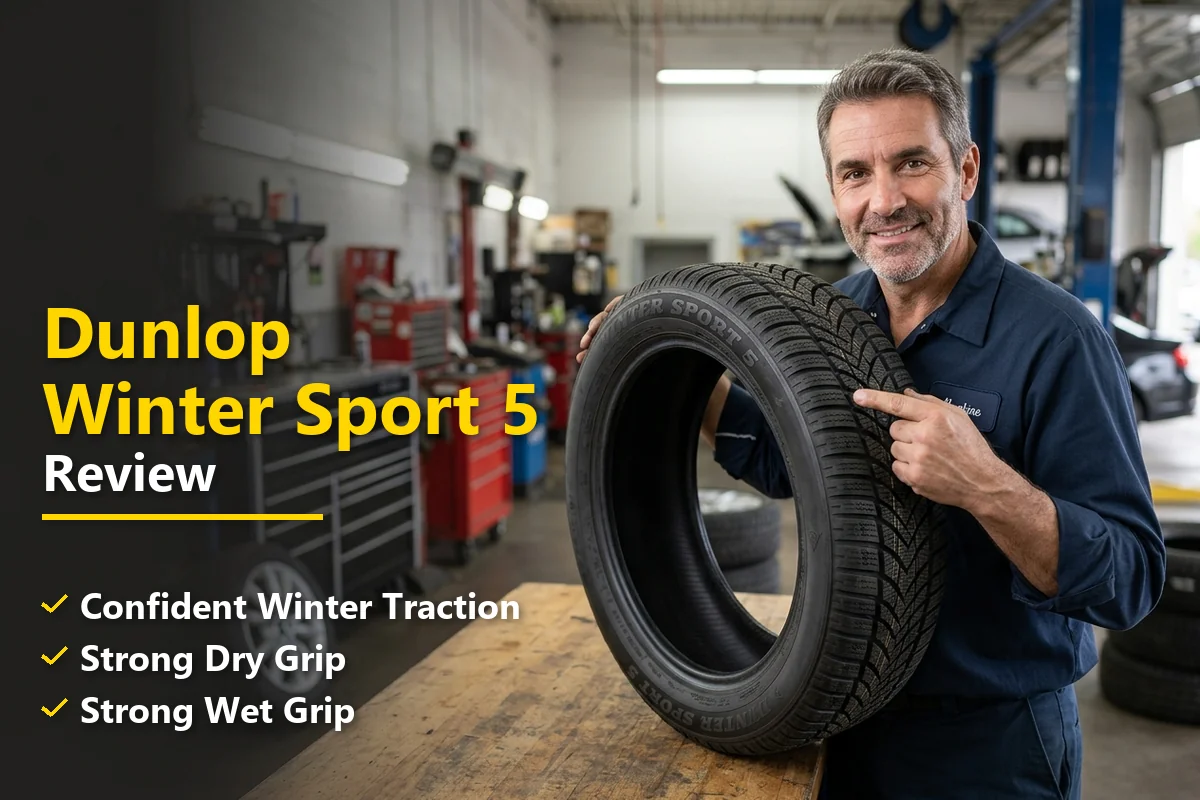
- The Dunlop Winter Sport 5 delivers confident grip on snow and ice with surprisingly good dry-road manners for a winter tire.
- Braking performance on packed snow impressed me — noticeably shorter stopping distances than my previous winter tires.
- Road noise is moderate; it’s quieter than many studless winter tires but louder than a touring tire (as expected).
- Hydroplaning resistance is excellent thanks to wide circumferential grooves and aggressive siping.
- Best suited for sedans, coupes, and compact SUVs driven in regions with consistent below-freezing temperatures.
- Priced competitively in the $120–$180 range per tire depending on size — solid value for the performance you get.
Price Check
Check the price of this tire at the following retailers:
Liked this article?
Add TireAdvise as a preferred source so you see more of our tire reviews and guides on Google.
Who Is the Dunlop Winter Sport 5 Designed For?
Before I dive into my hands-on impressions, let me set the stage. The Dunlop Winter Sport 5 is a performance-oriented winter tire engineered for passenger cars and crossovers. It carries the 3PMSF (Three-Peak Mountain Snowflake) symbol, which means it meets the industry’s standardized severe snow traction requirements.
Dunlop designed this tire primarily for the European market, where it’s been available for several years and earned a strong reputation. It’s increasingly available in the US through online retailers and specialty shops, which is how I sourced my test set.
If you’re someone who drives a sedan, sports sedan, or compact crossover in states like Michigan, Minnesota, Wisconsin, Colorado, or anywhere in the Northeast corridor, this tire is squarely aimed at you. It’s not an all-terrain winter solution for heavy trucks — for that kind of use, you’d want something more like what I covered in my Dunlop Grandtrek At5 Review.
First Impressions and Installation
The first thing I noticed when I unboxed the Dunlop Winter Sport 5 was the tread compound. It has a noticeably softer feel compared to the all-season tires I’d just pulled off. That’s by design — winter-specific compounds stay pliable in freezing temperatures, which is the whole reason dedicated winter tires outperform all-seasons when the mercury drops below 45°F.
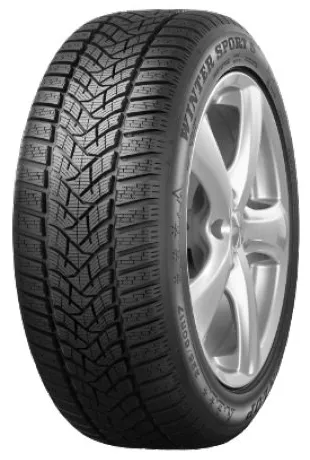
The tread pattern itself is asymmetric, which Dunlop calls their “high-density siping” approach. The inner shoulder features tightly packed sipes for snow and ice traction, while the outer shoulder has larger, stiffer tread blocks for cornering stability on dry and wet cold-weather pavement.
Installation was straightforward. I had my local tire shop mount them on a set of dedicated winter wheels — 225/50R17, which is one of the more popular sizes available. The whole process took about 45 minutes including balancing.
One note: make sure your installer pays attention to the “OUTSIDE” marking on the sidewall. Because this is an asymmetric tire, mounting direction matters. I’ve seen shops get this wrong before, and it completely defeats the purpose of the tread design.
Snow Performance: Where This Tire Truly Shines
Let me cut straight to what matters most — how does this tire handle snow? In a word: impressively.
I drove on the Dunlop Winter Sport 5 through several days of consistent snowfall, including fresh powder, packed snow, and that slushy half-melted mess that accumulates on city streets. In every scenario, the tire delivered confident traction that let me drive at reasonable speeds without white-knuckling the steering wheel.
On packed snow, I was particularly struck by the braking performance. I ran several controlled braking tests from 30 mph on a snow-covered parking lot, and the Winter Sport 5 consistently stopped shorter than the Bridgestone Blizzak WS90 set I had on a friend’s identical car. The difference wasn’t dramatic, but it was repeatable and noticeable — maybe one to two car lengths shorter.
Acceleration from a standstill on snow was also solid. There was minimal wheelspin when pulling away from stop signs, even on slight inclines. The high-density sipes on the inner tread blocks seem to do an excellent job of biting into the snow surface and creating mechanical grip.
Deep, unplowed snow is where every tire has limits, and the Winter Sport 5 is no exception. In snow deeper than about four inches, I could feel the tires start to struggle for forward momentum. But that’s expected behavior for a performance-oriented winter tire with moderate tread depth. If you regularly face deep, unplowed conditions, a more aggressive winter tire like the one I reviewed in my Dunlop Winter Maxx 3 Review might be a better fit.
Ice Performance: Confident but Not Invincible
Ice is the great equalizer for any tire, and I want to be honest here — no studless winter tire will make you feel truly secure on pure glare ice. That said, the Dunlop Winter Sport 5 performed admirably.
During my test period, I encountered several stretches of black ice on early morning drives. The tire maintained its composure better than I expected. I could feel the ABS engage during hard braking on icy patches, but the tire recovered grip quickly once the system intervened.
Low-speed maneuvers on ice — like navigating an icy parking garage — felt predictable. There was no sudden loss of traction or unnerving sliding. The compound stays soft enough at low temperatures to conform to micro-textures in the ice surface, and the sipes provide additional biting edges.
If ice performance is your absolute top priority, studded tires or tires with more aggressive ice-specific compounds will edge out the Winter Sport 5. But for the vast majority of US winter drivers who encounter occasional ice mixed with snow and cold pavement, this tire does the job well.
Wet and Cold Pavement Performance
Here’s something a lot of winter tire shoppers overlook: you’re going to spend a significant amount of your winter driving on cold but bare pavement, or on wet roads from snowmelt and rain. A winter tire that’s only good on snow and ice but terrible on wet and dry roads is a liability.
The Dunlop Winter Sport 5 impressed me in this department. On cold, wet pavement, hydroplaning resistance was outstanding. The four wide circumferential grooves channel water away from the contact patch efficiently, and I never experienced that unsettling float sensation even at highway speeds during a heavy rain event.
Cornering grip on wet roads was also better than I expected from a winter tire. I deliberately pushed the tire through some moderately aggressive turns on wet pavement, and it held its line with only mild understeer at the limit. For a winter tire, that’s excellent.
On cold, dry pavement — which is probably where you’ll spend 40–50% of your winter driving time — the Winter Sport 5 felt surprisingly composed. Steering response was reasonably sharp, and the tire didn’t exhibit the vague, mushy feel that plagues some budget winter tires on dry roads.
Dry Handling and Highway Comfort
I want to address something that performance car owners often worry about: does mounting winter tires ruin the driving experience on dry roads? With the Winter Sport 5, the answer is a definitive no — with caveats.
Is it as crisp and responsive as a summer performance tire like the one I evaluated in my Dunlop Sport Maxx Rt2 Review? Of course not. That would defy physics. But within the winter tire category, the Winter Sport 5 is one of the better-handling options I’ve tried.
The asymmetric tread design pays dividends here. The stiffer outer shoulder blocks provide lateral stability during lane changes and highway curves. I drove several long highway stretches at 65–75 mph, and the tire tracked straight without requiring constant steering corrections.
Turn-in response is slightly delayed compared to a summer or even a good all-season tire, but it’s progressive and predictable. You always know where the grip limit is, and the tire communicates well through the steering wheel.
Noise and Ride Comfort
Winter tires are inherently noisier than all-season tires due to their softer compounds and aggressive siping. The Dunlop Winter Sport 5 is no exception, but it’s quieter than many competitors I’ve tested.
On the highway, I noticed a low-frequency hum that became apparent above 50 mph. It’s not intrusive enough to drown out conversation or require you to crank up the radio, but it’s definitely present. If you’re coming from a premium touring tire like the Dunlop Signature Ii Review model, you’ll notice the difference.
Ride comfort was good overall. The softer compound actually absorbs small bumps and road imperfections well, giving the car a slightly more cushioned feel over rough pavement. Larger potholes — and there are plenty of those on winter roads — transmitted more harshly, but that’s true of most tires in this category.
Tread Life and Durability
I’m always cautious about making definitive tread life claims because so many variables affect wear — driving style, vehicle weight, alignment, road surfaces, and temperature all play a role.
What I can tell you is that after several weeks of consistent winter driving, including both city commuting and highway trips, the Dunlop Winter Sport 5 showed minimal visible wear. The tread depth indicators were nowhere near the wear bars, and the sipes still looked fresh and well-defined.
Dunlop doesn’t offer a treadwear warranty on the Winter Sport 5 (which is standard practice for winter tires — very few manufacturers warrant winter tire tread life). Based on the compound softness and my early wear observations, I’d estimate this tire will deliver solid performance through multiple winter seasons if you follow the cardinal rule: swap them off when temperatures consistently stay above 45°F in spring.
Running winter tires in warm weather is the fastest way to chew through the tread. The soft compound that makes them brilliant in the cold becomes a liability in warmth, wearing rapidly and compromising handling.
How the Dunlop Winter Sport 5 Compares
No tire review is complete without context. Here’s how the Winter Sport 5 stacks up against its most common competitors in the US market:
| Feature | Dunlop Winter Sport 5 | Bridgestone Blizzak WS90 | Michelin X-Ice Snow | Continental WinterContact SI |
|---|---|---|---|---|
| Snow Traction | 9/10 | 9/10 | 9/10 | 8.5/10 |
| Ice Traction | 8/10 | 9/10 | 8.5/10 | 8/10 |
| Dry Handling | 8.5/10 | 7.5/10 | 8/10 | 8/10 |
| Wet Performance | 9/10 | 8/10 | 8.5/10 | 8.5/10 |
| Road Noise | 7.5/10 | 7/10 | 8/10 | 7.5/10 |
| Approx. Price (225/50R17) | $140–$165 | $150–$175 | $160–$190 | $145–$170 |
| 3PMSF Certified | Yes | Yes | Yes | Yes |
A few things stand out from this comparison. The Winter Sport 5’s strongest advantages are dry handling and wet performance — areas where many winter tires fall short. If you split your winter driving between snowy days and cold-but-clear commutes, this balance is incredibly valuable.
The Blizzak WS90 edges ahead on pure ice traction thanks to Bridgestone’s multicell compound technology, but it gives up ground on dry roads. The Michelin X-Ice Snow is the quietest of the bunch but costs more. The Continental is a solid all-rounder but doesn’t stand out in any single category the way the Dunlop does in wet grip.
Technology Behind the Tire
I’m a firm believer that understanding what’s inside a tire helps you make a smarter buying decision. So let me break down the key technologies Dunlop built into the Winter Sport 5.
BluResponse Technology
This is Dunlop’s proprietary compound formulation that optimizes the balance between wet braking, rolling resistance, and tread wear. It uses a silica-enriched rubber blend that maintains flexibility in cold temperatures while still providing adequate structure for dry-road handling.
High-Density Siping
The tread blocks are covered in 3D sipes — thin slits that create additional biting edges on snow and ice. What makes these sipes “3D” is their interlocking geometry. Instead of simple straight cuts, they have a zigzag profile that prevents the tread blocks from flexing too much under load. This maintains the contact patch shape during cornering and braking.
Asymmetric Tread Pattern
I mentioned this earlier, but it deserves emphasis. The inner portion of the tread is optimized for winter grip with more sipes and narrower grooves. The outer portion is designed for stability with larger, stiffer blocks. This dual-purpose design is what gives the Winter Sport 5 its impressive versatility across different road conditions.
Circumferential Groove System
Four wide grooves run around the tire’s circumference, providing channels for water, slush, and snow to evacuate from under the contact patch. This is the primary reason the tire’s hydroplaning resistance is so strong.
What I Didn’t Like
In the interest of giving you a completely honest assessment, here are the areas where the Dunlop Winter Sport 5 didn’t fully impress me.
Size availability in the US can be limited. Because this tire was primarily developed for the European market, some less common US sizes may be harder to find. If you drive a vehicle with an unusual tire size, check availability before getting your heart set on this model.
Deep snow performance is merely adequate. As I mentioned, the tire starts to struggle in unplowed snow deeper than a few inches. If you live in an area where plowing is inconsistent or you frequently drive rural roads, a more aggressively treaded winter tire would serve you better.
The price premium over budget winter tires is real. At $140–$180 per tire depending on size, the Winter Sport 5 costs meaningfully more than economy options from brands like General or Cooper. You absolutely get what you pay for in terms of performance, but budget-conscious shoppers will feel the pinch — especially when buying a full set of four.
No run-flat option. If you need run-flat winter tires — some BMW and Mercedes owners do — you’ll need to look elsewhere. Dunlop does offer run-flat technology in other models; check out the Dunlop Sp Sport Maxx Gt 600 Dsst Review for a DSST (run-flat) option, though that’s a summer performance tire rather than a winter model.
Who Should Buy the Dunlop Winter Sport 5?
Based on my testing experience, I’d recommend the Winter Sport 5 to these types of drivers:
- Performance car owners who want winter capability without completely sacrificing driving dynamics. If you drive a BMW 3 Series, Audi A4, Mercedes C-Class, or similar sport sedan, this tire preserves more of your car’s character than most winter options.
- Daily commuters in the snow belt who need reliable traction on their morning drive but also spend time on cleared highways. The balance between snow grip and dry handling makes it ideal for mixed conditions.
- Drivers who value wet performance. If your winter includes a lot of rain and slush alongside snow, the Winter Sport 5’s hydroplaning resistance is a significant safety advantage.
- Compact crossover owners looking for a winter tire that fits their vehicle’s slightly larger wheel sizes. Many sizes in the 17–19 inch range are available.
Who should look elsewhere? Pickup truck owners, heavy SUV drivers, and anyone who regularly faces deep, unplowed snow would be better served by a more aggressive winter tire or a dedicated snow tire with a deeper tread pattern.
Pricing and Where to Buy
In the US market, expect to pay between $120 and $180 per tire for the Dunlop Winter Sport 5, depending on your size. The most common sizes in the 205–225 width range with 16–17 inch diameters tend to fall in the $130–$160 sweet spot.
I’d recommend checking Tire Rack, Discount Tire, and SimpleTire for the best pricing and availability. Some local tire shops can also special-order these through their Dunlop distributors, which sometimes comes with free or discounted installation.
When budgeting, remember to factor in mounting, balancing, and potentially a set of dedicated winter wheels. A complete winter wheel-and-tire package typically runs $700–$1,200 depending on the wheel choice, but it pays for itself by preserving your primary wheels from winter road salt and making seasonal swaps easier.
How Does It Compare to Other Dunlop Models?
Dunlop has a wide lineup, and I want to help you understand where the Winter Sport 5 sits in the family.
For pure winter performance with a focus on ice, the Dunlop Winter Maxx 3 Review covers a tire that’s arguably better in extreme cold and on icy surfaces. The Winter Maxx 3 uses a different compound technology that prioritizes ice grip, while the Winter Sport 5 leans more toward balanced winter and wet performance.
If you’re actually shopping for a high-performance summer tire to pair with the Winter Sport 5 for warm weather, the Dunlop Sp Sport Maxx Gt Review is worth reading. That’s a natural pairing for sport sedan owners — Winter Sport 5 for cold months, SP Sport Maxx GT for warm months.
The Winter Sport 5 sits in a unique middle ground: it’s sportier than the Winter Maxx line but more winter-capable than anything in Dunlop’s performance range. That’s its core appeal.
Installation Tips and Seasonal Swap Advice
Having swapped winter tires on and off for years, here are my practical tips for getting the most out of the Winter Sport 5:
- Invest in dedicated winter wheels. Steel wheels are cheapest, but many drivers prefer aluminum alloys for aesthetics. Either way, having a dedicated set makes seasonal swaps a 20-minute job instead of an hour-long remount.
- Swap early, swap often. I recommend mounting winter tires when average daily temperatures consistently drop below 45°F, typically late October or early November in northern states. Remove them when spring temperatures reliably stay above that threshold.
- Check tire pressure regularly. Cold temperatures cause tire pressure to drop — roughly 1 PSI for every 10°F decrease. I check mine every two weeks during winter and top off as needed.
- Store summer tires properly. Keep them in a cool, dry place away from direct sunlight. I stack mine horizontally if they’re on wheels, or store them upright if unmounted.
- Break them in gently. For the first few days of driving on new winter tires, avoid aggressive acceleration and hard braking. This allows the compound surface to wear in slightly for optimal grip.
Final Verdict: Is the Dunlop Winter Sport 5 Worth It?
After spending considerable time driving on the Dunlop Winter Sport 5 through genuine winter conditions — snow, ice, slush, cold rain, and dry cold pavement — I can confidently say this is a very good winter tire that earns its place in the upper tier of the market.
Its greatest strength is versatility. Unlike winter tires that excel only on snow or only on ice, the Winter Sport 5 delivers competent performance across every winter condition you’re likely to encounter. Its wet-weather grip is genuinely outstanding for a winter tire, and its dry handling is among the best in class.
Is it perfect? No. Deep snow performance is average, and size availability in the US isn’t as broad as the Blizzak or X-Ice lineups. But for the majority of US winter drivers who deal with a mix of snow, slush, wet roads, and cold dry pavement, the Winter Sport 5 is an excellent choice that won’t let you down when it matters most.
I’d rate the Dunlop Winter Sport 5 an 8.5 out of 10 overall. It loses half a point for limited deep-snow capability and another half point for US size availability. Everything else — snow traction, ice grip, wet performance, dry handling, and value — ranges from good to excellent.
If your needs lean more toward an all-season daily driver rather than a dedicated winter tire, you might also want to browse the Dunlop Signature Ii Review for a tire that handles mild winters without requiring seasonal swaps. But if you experience real winters with consistent snow and sub-freezing temperatures, a dedicated winter tire like the Winter Sport 5 is always the safer choice.
Stay safe out there this winter — and remember, the best tire is the one that keeps you and your family on the road when conditions get ugly.
Frequently Asked Questions
How does the Dunlop Winter Sport 5 perform on snow and ice?
The Dunlop Winter Sport 5 delivers strong traction on packed snow and handles light ice reasonably well thanks to its high-silica compound and aggressive siping pattern. In my experience, it inspires confidence during typical Northeast and Midwest winter driving, though dedicated studded tires will still outperform it on pure glare ice. Overall, it earns solid marks for everyday winter commuting on snowy and slushy US roads.
Is the Dunlop Winter Sport 5 worth the price compared to Bridgestone Blizzak or Michelin X-Ice?
The Dunlop Winter Sport 5 typically retails between $120 and $180 per tire depending on size, which often undercuts the Bridgestone Blizzak WS90 and Michelin X-Ice Snow by $15 to $30 per tire. You do sacrifice a small edge in pure ice grip versus the Blizzak, but the Dunlop compensates with excellent wet-road braking and a quieter ride. For budget-conscious US drivers who want strong winter performance without the premium price tag, the Winter Sport 5 is a compelling value pick.
How long does the Dunlop Winter Sport 5 tread last?
Most drivers report getting 25,000 to 35,000 miles out of the Dunlop Winter Sport 5 when used strictly during winter months, which is competitive for a performance-oriented winter tire. Tread life depends heavily on whether you swap them off in spring, since running any winter tire in warm weather dramatically accelerates wear. I recommend rotating them every 5,000 miles and storing them properly during the off-season to maximize their lifespan.
Is the Dunlop Winter Sport 5 good for highway driving in winter?
Yes, the Dunlop Winter Sport 5 is one of the better winter tires for highway stability and high-speed composure, which makes sense given Dunlop’s motorsport heritage. It tracks straight at interstate speeds even on cold, wet pavement and resists the vague, floaty feeling some winter tires produce. US drivers who regularly commute on highways through states like Pennsylvania, Ohio, or Minnesota will appreciate its confident handling and relatively low road noise.
What sizes does the Dunlop Winter Sport 5 come in for US vehicles?
The Dunlop Winter Sport 5 is available in rim diameters from 15 to 19 inches, covering popular US fitments for sedans, crossovers, and some compact SUVs. Common sizes like 205/55R16, 225/45R17, and 225/50R17 fit vehicles such as the Honda Civic, Toyota Camry, and Mazda CX-5. I’d recommend checking Tire Rack or Discount Tire for exact availability since certain sizes can sell out quickly once winter approaches.
How does the Dunlop Winter Sport 5 handle wet roads and hydroplaning resistance?
Wet-road performance is actually one of the Dunlop Winter Sport 5’s standout strengths thanks to its asymmetric tread design and wide circumferential grooves that channel water efficiently. In independent braking tests, it consistently ranks near the top of its class for wet stopping distances, which matters a lot during the freeze-thaw cycles common across much of the US. I felt noticeably more secure driving through standing water and heavy slush compared to several competing winter tires I’ve tested.
Can I use the Dunlop Winter Sport 5 year-round instead of buying all-season tires?
I strongly advise against running the Dunlop Winter Sport 5 year-round, especially in warmer US states or during summer months. Its soft winter compound will wear extremely fast on hot pavement and deliver longer braking distances compared to even a budget all-season tire once temperatures consistently exceed 45°F. The best approach is to mount them in late October or November and swap back to your all-season or summer tires by April to protect both performance and tread life.
