


You’re staring at a quote from your local tire shop, and the number makes your stomach drop. You need four new tires, but you’re not willing to sacrifice safety just to save a few bucks. Sound familiar?
That’s exactly the situation I found myself in when I first mounted a set of Hankook Ventus V2 Concept2 tires. They promised sporty performance at a price point that wouldn’t wreck my budget — and I wanted to see if that promise held up on real roads. For a broader look at how this model fits into the lineup, our complete Hankook Tires Review guide covers every model side by side.
- The Hankook Ventus V2 Concept2 (H457) is a high-performance all-season tire aimed at budget-conscious drivers who still want responsive handling.
- Dry grip and cornering feel are genuinely impressive for the price — closer to a mid-tier tire than an entry-level one.
- Wet traction is adequate but not class-leading; hydroplaning resistance could be better in heavy downpours.
- Road noise is moderate — quieter than many competitors at this price, louder than premium options.
- Tread life is fair; expect solid longevity if you rotate regularly, but it won’t match a dedicated touring tire.
- Best suited for compact cars, sedans, and coupes driven primarily in warm-to-mild climates.
- Typical US pricing ranges from $65 to $110 per tire depending on size, making it one of the best values in the high-performance all-season category.
Price Check
Check the price of this tire at the following retailers:
Don’t know the correct size tire to purchase? Start here!
Liked this article?
Add TireAdvise as a preferred source so you see more of our tire reviews and guides on Google.
What Exactly Is the Hankook Ventus V2 Concept2?
The Hankook Ventus V2 Concept2, also known by its model code H457, is a high-performance all-season tire designed for coupes, sedans, and compact vehicles. It sits in Hankook’s performance-oriented Ventus family but at a more accessible price point than its sportier siblings.
Hankook positions this tire as an upgrade from standard all-season rubber for drivers who want sharper handling and a more connected feel without jumping to a full summer tire. It’s available in sizes ranging from 14 to 18 inches, covering a huge swath of popular vehicles on US roads — everything from Honda Civics to Volkswagen Jettas to Hyundai Elantras.
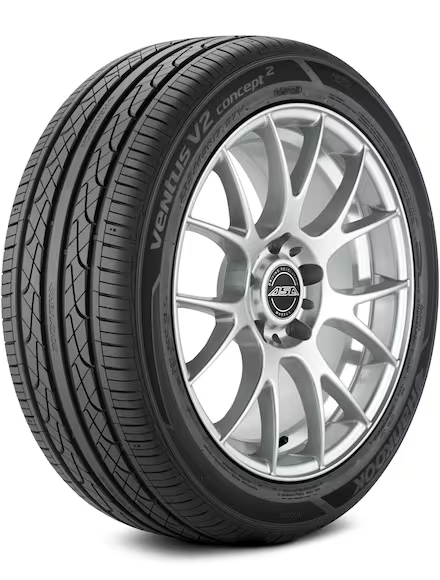
The tire features an asymmetric tread design with wide circumferential grooves for water evacuation, a jointless nylon reinforcement belt for high-speed stability, and a silica-enhanced compound that Hankook says improves wet grip while keeping rolling resistance in check. On paper, it’s a compelling package. But how does it actually feel on the road?
My Testing Setup and Conditions
I ran the Ventus V2 Concept2 in size 215/45R17 on a 2019 Honda Civic sedan — one of the most popular cars in America and a perfect testbed for a tire like this. I kept them inflated to the manufacturer-recommended 32 PSI and rotated them at the intervals suggested by both Hankook and Honda.
My testing covered a mix of highway commuting, suburban stop-and-go driving, and some spirited runs on twisty back roads in the mid-Atlantic region. I experienced everything from dry summer heat to cold autumn rain, and even some early-morning frost — conditions that mirror what millions of US drivers deal with throughout the year.
I also drove back-to-back with a set of Continental ContiProContact tires that had been on the car previously, so I had a direct point of comparison in terms of ride feel, noise, and grip.
Dry Performance: Where This Tire Really Shines
Let me cut to the chase: dry grip on the Ventus V2 Concept2 is genuinely good. Not “good for the price” good — just plain good. From the very first on-ramp after installation, I noticed the front end felt sharper and more responsive than I expected.
Turn-in response is crisp. When you rotate the steering wheel, the tire reacts almost immediately with very little squirm or delay. For a tire that costs under $100 in most sizes, that kind of communication between the road and the steering wheel is a pleasant surprise.
During harder cornering on my favorite local backroad loop, the Ventus V2 Concept2 held its line well. The breakaway point is progressive rather than sudden — the tire lets you know it’s approaching its limit with a gentle slide rather than a snap. That’s a confidence-inspiring trait, especially for less experienced drivers who might occasionally push a bit too hard in a turn.
Straight-Line Stability
Highway driving was equally impressive. At interstate speeds, the tire tracks straight and true with no wandering or tramlining over grooved pavement. I drove several long stretches of I-95 and I-81 where road surfaces varied wildly, and the Ventus V2 Concept2 handled each transition without drama.
Braking performance on dry pavement was strong. Panic-stop drills from 60 mph produced reassuringly short stopping distances, and the ABS intervention felt smooth and controlled. This is one area where cheap tires often fall flat, and the Hankook earned my respect.
Wet Performance: Adequate but Not Exceptional
Wet traction is where the Ventus V2 Concept2’s budget roots start to show. Don’t get me wrong — it’s not a dangerous tire in the rain. But if you’re coming from premium all-season rubber, you’ll notice a slight difference in how confident the tire feels on soaked roads.
In light to moderate rain, the tire performs well. The four wide circumferential grooves do their job of channeling water away from the contact patch, and I had no issues maintaining traction during normal driving speeds and cornering loads.
However, during heavy downpours — the kind where standing water accumulates on the highway — I did notice a slight sense of floating at higher speeds. It wasn’t alarming enough to trigger any loss of control, but I could feel the tire working harder to maintain contact with the pavement. Reducing speed by 5-10 mph eliminated the sensation entirely.
Wet Braking
Wet braking distances were longer than what I experienced on the Continental ContiProContact tires. I’d estimate the difference at roughly one car length from 60 mph, which is meaningful in an emergency situation. It’s a compromise you’re making in exchange for the lower price.
If you live somewhere with frequent heavy rain — think Florida, the Gulf Coast, or the Pacific Northwest — and wet performance is your top priority, you might want to look at a tire that specializes in hydroplaning resistance. But for the vast majority of US drivers who deal with occasional rain, the Ventus V2 Concept2 is perfectly serviceable.
Comfort and Noise: Better Than Expected
Road noise was one of the most pleasant surprises during my test period. Performance-oriented tires at this price often sound like you’re driving on a cheese grater, but the Ventus V2 Concept2 keeps cabin noise at a genuinely acceptable level.
On smooth asphalt, the tire is nearly silent at city speeds. Highway drone is present but muted — it blends into the background rather than demanding your attention. I’d put the noise level roughly on par with a mid-tier touring tire, which is impressive for a performance-focused model.
Ride Quality
The ride is firm but not harsh. You feel more of the road surface texture compared to a plush touring tire, but the Ventus V2 Concept2 never punishes you over expansion joints, potholes, or rough patches. It strikes a nice balance between sporty feel and everyday livability.
I drove several passengers during my test period, and none of them complained about ride harshness or excessive noise. That’s the real-world litmus test — if your passengers don’t notice the tires, they’re doing their job well.
Tread Life and Durability
The Ventus V2 Concept2 comes with a UTQG treadwear rating of 500, which places it in the middle of the pack for high-performance all-season tires. It doesn’t carry a mileage warranty from Hankook, which is worth noting if tread life is your primary concern.
Over my testing period, tread wear was even across all four tires, which tells me the compound is well-formulated and the tread pattern distributes forces effectively. I checked tread depth regularly with a gauge, and the wear rate was consistent and predictable.
That said, if you’re the kind of driver who wants to squeeze every last mile out of a set of tires, a dedicated touring tire like the Hankook Kinergy GT would be a better fit. The Kinergy GT prioritizes longevity and comfort over sporty handling, and it comes with a mileage warranty to back it up.
Shoulder Wear Observations
I did notice slightly accelerated wear on the outer shoulders, which is typical of performance-oriented tires with stiffer sidewall construction. Regular rotations are essential to keep wear even, and I’d recommend checking your alignment when the tires are installed to maximize their lifespan.
Winter and Cold Weather Performance
Let me be blunt: this is not a winter tire, and it shouldn’t be treated as one. The Ventus V2 Concept2 is an all-season tire, but its performance compound leans toward warm weather. Once temperatures drop below about 40°F consistently, the rubber starts to stiffen noticeably.
I drove on the tires during some chilly autumn mornings with light frost, and grip was notably reduced compared to warm-weather driving. The tire felt skittish on cold, damp surfaces in a way it never did in summer or early fall.
If you live in the northern half of the US or anywhere that regularly sees snow and ice, plan on switching to a dedicated winter tire set once cold weather arrives. Using the Ventus V2 Concept2 year-round in Minnesota, Michigan, or upstate New York would be a mistake.
How It Compares: Ventus V2 Concept2 vs. the Competition
No tire review is complete without context. Here’s how the Ventus V2 Concept2 stacks up against some of the tires it’s most likely to compete with in the US market:
| Feature | Hankook Ventus V2 Concept2 | General Altimax RT43 | Kumho Ecsta PA51 | Cooper Zeon RS3-G1 |
|---|---|---|---|---|
| Type | HP All-Season | Standard All-Season | HP All-Season | UHP All-Season |
| Avg. Price (205/55R16) | $75–$90 | $90–$110 | $80–$95 | $100–$125 |
| UTQG Treadwear | 500 | 700 | 500 | 500 |
| Dry Grip | Very Good | Good | Very Good | Excellent |
| Wet Grip | Good | Good | Good | Very Good |
| Comfort | Good | Very Good | Good | Good |
| Noise Level | Moderate | Low | Moderate | Moderate |
| Mileage Warranty | None | 75,000 mi | 45,000 mi | 50,000 mi |
The General Altimax RT43 is a strong alternative if you prioritize tread life and comfort over sporty handling. It’s a traditional all-season tire rather than a performance-focused one, so the driving feel is softer and less engaging — but it’ll last significantly longer.
The Kumho Ecsta PA51 is probably the closest direct competitor. It offers similar performance and pricing, and in my experience, the two tires are neck and neck in most categories. The Kumho has a slight edge in wet conditions, while the Hankook feels a touch sharper in dry cornering.
The Cooper Zeon RS3-G1 steps up a tier in terms of performance and price. If your budget can stretch a bit, the Cooper offers noticeably better wet grip and comes with a mileage warranty. It’s worth the premium if wet-weather driving is a regular part of your life.
Where It Fits in the Hankook Lineup
Understanding where the Ventus V2 Concept2 sits within Hankook’s own family helps you decide if it’s the right tire or if you should look up or down the range.
If you want more aggressive track-ready performance, the Hankook Ventus R-S4 is a step up into extreme grip territory. It’s a competition-focused tire designed for autocross and track days — total overkill for daily driving, but spectacular if you have a weekend car you push hard.
For the driver who wants the best Hankook has to offer in ultra-high-performance street tires, the Hankook Ventus V12 Evo2 is the flagship. It’s a summer tire with phenomenal dry and wet grip, but it costs more and gives up all-season versatility. If you live somewhere warm year-round, it’s worth considering.
The Ventus V2 Concept2 occupies the sweet spot below those options: real performance feel, all-season flexibility, and a price that makes sense for daily drivers. Think of it as the gateway drug to Hankook’s sportier offerings.
Tread Design Deep Dive
The asymmetric tread design on the Ventus V2 Concept2 is one of its defining features. The inner portion of the tread uses denser sipe patterns for wet traction, while the outer shoulder features larger, more rigid blocks for dry cornering stability.
Four wide circumferential grooves run the length of the tire, creating channels that route water away from the contact patch. These grooves are generously wide — wider than what I typically see on budget tires — which helps explain the respectable wet traction despite the tire’s value-oriented positioning.
The center rib is continuous and solid, which contributes to the tire’s excellent straight-line tracking and responsive steering feel. There’s no center block squirm, even under hard acceleration or braking. This design choice prioritizes driving feel over pure water evacuation, which aligns with the tire’s performance-first philosophy.
Compound Technology
Hankook uses a silica-infused compound that they claim improves wet grip while reducing rolling resistance. In practice, I didn’t notice any meaningful change in fuel economy compared to the previous tires — but I also didn’t see a decrease, which means the rolling resistance claim likely holds some water.
The compound does feel slightly softer than comparable tires from Falken and Sumitomo, which might explain both the strong dry grip and the moderate tread life. Softer compounds grip harder but wear faster — that’s the eternal trade-off in tire engineering.
Available Sizes and Fitment
The Ventus V2 Concept2 is available in a solid range of sizes covering most compact and midsize vehicles popular in the US market. Here’s a summary of what’s available:
- 14-inch: 185/60R14, 185/65R14, 195/60R14
- 15-inch: 195/50R15, 195/55R15, 195/65R15, 205/65R15
- 16-inch: 195/50R16, 195/55R16, 205/55R16, 215/55R16, 225/50R16
- 17-inch: 205/40R17, 205/45R17, 205/50R17, 215/45R17, 215/50R17, 225/45R17, 225/50R17, 235/45R17, 245/45R17
- 18-inch: 215/40R18, 225/40R18, 225/45R18, 235/40R18, 235/45R18, 245/40R18, 245/45R18
This means the tire fits common vehicles like the Honda Civic, Toyota Corolla, Hyundai Elantra, Mazda3, Volkswagen Jetta, Kia Forte, Nissan Sentra, and many others. The larger 17 and 18-inch options also cover midsize sedans like the Honda Accord and Toyota Camry.
Speed ratings are V (149 mph) or W (168 mph) depending on the size, which is more than adequate for any legal driving in the US. The load index varies by size, so always verify your specific fitment requirements before purchasing.
Pricing and Value Proposition
In the US market, the Hankook Ventus V2 Concept2 typically retails between $65 and $110 per tire, depending on size. Most popular sizes in the 16-17 inch range fall between $75 and $95 per tire.
For a full set of four with mounting, balancing, valve stems, and disposal fees, you’re looking at roughly $400 to $550 all-in at most tire shops. That’s significantly less than comparable offerings from Continental, Michelin, or Bridgestone, and roughly on par with Kumho and Falken alternatives.
The value here is undeniable. You’re getting legitimate performance-tier handling characteristics at a price that competes with basic all-season tires. If you’re on a tight budget but refuse to settle for wooden, disconnected steering feel, the Ventus V2 Concept2 is one of the best options available.
Where to Buy
I recommend checking prices at Tire Rack, Discount Tire, and Walmart’s online tire shop before buying. Prices can vary by $10-15 per tire between retailers, and seasonal promotions or manufacturer rebates can sweeten the deal further. Hankook regularly runs $50-$80 rebate promotions on sets of four, which brings the per-tire cost down to genuinely unbeatable levels.
Who Should Buy the Hankook Ventus V2 Concept2?
Based on my extensive time with these tires, here’s who I think should seriously consider the Ventus V2 Concept2:
- Budget-conscious enthusiasts: If you enjoy driving and want a tire that communicates what the road is doing, but you can’t justify premium prices, this tire delivers real feedback at a fraction of the cost.
- Compact and midsize sedan owners: The size range is perfectly suited to the most popular cars in America. If you drive a Civic, Corolla, Mazda3, Elantra, or similar, this is a natural fit.
- Warm-climate drivers: The tire’s strengths are most apparent in dry conditions and moderate rain. If you live in the Sun Belt, southern California, or the mid-Atlantic, you’ll get the best experience.
- Drivers replacing worn OEM tires: If your car came with boring, numb original equipment rubber, the Ventus V2 Concept2 is a meaningful upgrade in driving feel without a meaningful increase in cost.
Who Should Look Elsewhere?
The Ventus V2 Concept2 isn’t the right tire for everyone. Here’s who I’d point in a different direction:
- Northern drivers who need winter capability: If you deal with regular snow, ice, and sustained temperatures below freezing, this tire is not designed for your conditions. Get a dedicated winter set or at minimum a true all-weather tire.
- Maximum tread life seekers: Without a mileage warranty and with a treadwear rating of 500, this isn’t the tire for people who prioritize longevity above all else. A touring tire will serve you better.
- Heavy rain commuters: If your daily drive frequently involves standing water and heavy rain, the wet traction, while adequate, isn’t the tire’s strongest suit. Consider spending a bit more for a tire with superior hydroplaning resistance.
- SUV and truck owners: The size range only covers passenger cars. If you drive a CUV, SUV, or pickup, this tire isn’t made for you.
Installation Tips and Recommendations
A few practical tips from my experience that will help you get the most out of the Ventus V2 Concept2:
Get an alignment. Seriously. A $75-$100 alignment when you install new tires can add thousands of miles to their lifespan and ensure even wear. Given that this tire lacks a mileage warranty, protecting your investment with proper alignment is especially important.
Note the asymmetric design. These tires have an “inside” and “outside” marking on the sidewall. Make sure your installer mounts them correctly — the outer shoulder blocks are specifically designed for cornering grip and must face outward. Any reputable shop will know this, but it doesn’t hurt to verify.
Rotate every 5,000-7,500 miles. Consistent rotation is the single best thing you can do to maximize tread life on any tire. I recommend front-to-rear rotation (not cross-rotation) for this tire pattern.
Check pressures monthly. The Ventus V2 Concept2 is sensitive to inflation pressure — underinflation will accelerate shoulder wear and degrade handling, while overinflation will reduce the contact patch and hurt grip. Stick to your vehicle’s placard pressure.
My Final Verdict
After spending extensive seat time with the Hankook Ventus V2 Concept2, I came away impressed by what it offers for the money. This is a tire that punches above its weight class in dry performance and driving feel, and it does so without making you suffer through a harsh ride or obnoxious road noise.
Is it perfect? No. Wet traction is adequate rather than exceptional, tread life won’t win any endurance awards, and it’s essentially a warm-weather tire masquerading as an all-season. But those are the compromises you make at this price point, and Hankook has chosen to compromise in the right places — keeping the driving experience engaging while giving up some longevity and wet-weather heroics.
For the average US driver who wants their daily commute to feel a little more alive without spending $150+ per tire, the Ventus V2 Concept2 is one of the smartest buys in the tire market today. I’d rate it an 8 out of 10 for its target audience — budget performance seekers who drive in predominantly dry climates.
If you’re still deciding between Hankook models or considering alternatives from other brands, I encourage you to read through the comparison reviews linked throughout this article. The right tire depends on your specific car, climate, driving style, and budget — and taking the time to research pays off every single day you’re behind the wheel.
Frequently Asked Questions
Is the Hankook Ventus V2 Concept2 a good tire for daily driving?
The Hankook Ventus V2 Concept2 is an excellent choice for daily commuters who want a balance of sporty handling and everyday comfort. It delivers responsive steering on US highways and city streets while keeping road noise at a reasonable level. For the price point, typically ranging from $70 to $120 per tire depending on size, it punches well above its weight in the all-season performance category.
How long does the Hankook Ventus V2 Concept2 last in real-world driving?
Most drivers report getting between 40,000 and 50,000 miles from the Hankook Ventus V2 Concept2, though this depends heavily on driving habits, alignment, and rotation schedule. Hankook does not offer a treadwear mileage warranty on this tire, which is typical for high-performance all-season models. I recommend rotating every 5,000 to 7,000 miles and keeping your alignment checked to maximize tread life.
How does the Hankook Ventus V2 Concept2 perform in rain and wet roads?
Wet traction is one of the standout strengths of the Ventus V2 Concept2, thanks to its wide circumferential grooves and silica-enhanced compound that channels water efficiently. In moderate to heavy rain conditions common across the US Southeast and Pacific Northwest, this tire maintains confident grip during braking and cornering. It’s noticeably better in the wet than many budget competitors in the same price range.
Is the Hankook Ventus V2 Concept2 good for light snow and winter driving?
The Ventus V2 Concept2 is an all-season tire, but it is not designed for serious winter driving and does not carry the Three-Peak Mountain Snowflake (3PMSF) symbol. It can handle light dustings and cold pavement reasonably well, but drivers in northern US states like Minnesota, Michigan, or Wisconsin should absolutely switch to dedicated winter tires. If you only see occasional flurries, the V2 Concept2 will get you through, but I wouldn’t rely on it for icy or packed-snow conditions.
How does the Hankook Ventus V2 Concept2 compare to the Continental ContiProContact?
The Continental ContiProContact offers slightly better ride comfort and a longer treadwear warranty, but it typically costs $20 to $40 more per tire than the Ventus V2 Concept2. Where the Hankook shines is in sportier handling response and better dry grip at a more budget-friendly price point. If you prioritize value and enjoy a more engaging driving feel on your sedan or coupe, the V2 Concept2 is the stronger pick.
What vehicles and sizes does the Hankook Ventus V2 Concept2 fit?
The Hankook Ventus V2 Concept2 is available in a wide range of sizes from 14-inch to 18-inch rim diameters, fitting popular US vehicles like the Honda Civic, Toyota Corolla, Hyundai Elantra, Ford Focus, and Mazda3. It’s primarily designed for compact cars, sedans, and coupes rather than SUVs or trucks. I recommend checking Hankook’s official fitment guide or using Tire Rack’s vehicle search to confirm your exact size before purchasing.
Is the Hankook Ventus V2 Concept2 worth buying over cheaper budget tires?
In my experience, the Ventus V2 Concept2 is absolutely worth the modest price bump over no-name budget tires because you get significantly better wet braking, more predictable handling, and improved tread life. Budget tires often lose grip quickly in emergency maneuvers and wear unevenly, costing you more in the long run. At roughly $80 to $110 per tire for most common sizes, the V2 Concept2 sits in a sweet spot where you get genuine Hankook engineering and quality without paying premium-brand prices.
