

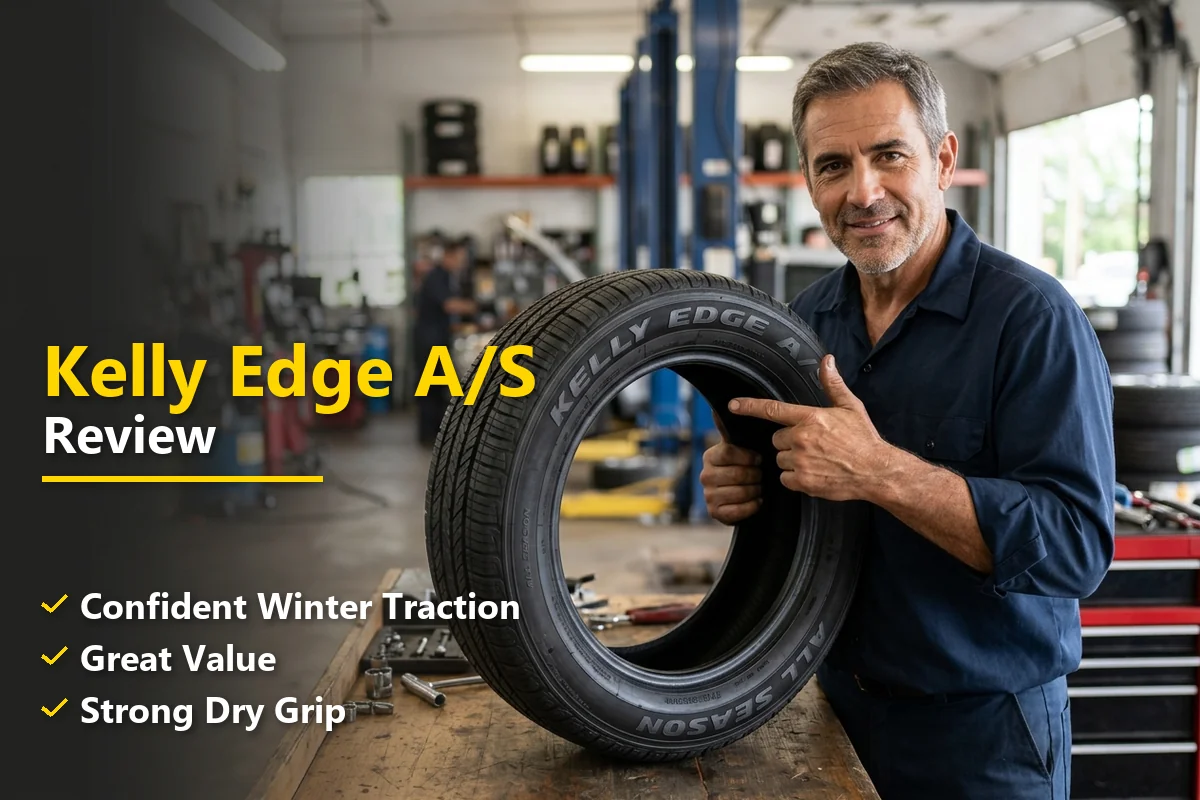
Finding a decent all-season tire under $80 that doesn’t feel like you’re driving on hockey pucks is harder than it should be. Budget tires have a reputation for being cheap in every sense of the word — noisy, slippery in rain, and worn out before you’ve barely broken them in.
So when I mounted a set of Kelly Edge A/S tires on my daily driver, I went in with tempered expectations. If you’ve been reading our full Kelly Tires Review guide, you already know Kelly is a Goodyear-owned brand that punches above its price class.
But the Edge A/S is their entry-level all-season offering, and entry-level can mean a lot of things — not all of them good. I spent a thorough test period pushing these tires through dry highways, rain-soaked city streets, and light snow to find out if they’re worth your money.
- The Kelly Edge A/S is a solid budget all-season tire backed by Goodyear’s manufacturing quality
- Dry traction and highway comfort are genuinely good for the price
- Wet performance is adequate but not exceptional — hydroplaning resistance could be better
- Light snow capability exists but don’t expect winter tire performance
- Road noise is noticeable at highway speeds but not deal-breaking
- Best suited for commuter vehicles, sedans, and minivans in mild-to-moderate climates
- At $55–$85 per tire depending on size, it’s one of the best values in the budget segment
Price Check
Check the price of this tire at the following retailers:
Don’t know the correct size tire to purchase? Start here!
Liked this article?
Add TireAdvise as a preferred source so you see more of our tire reviews and guides on Google.
What Exactly Is the Kelly Edge A/S?
The Kelly Edge A/S is an all-season passenger tire designed for everyday commuting and general driving. It’s positioned as Kelly’s most affordable all-season option, sitting below their touring and performance lines.
Kelly Tires has been around since 1894, making it one of the oldest tire brands in the United States. Since 1935, it’s been owned by Goodyear, which means the Edge A/S is manufactured in Goodyear facilities using Goodyear rubber compounds and quality control processes. That lineage matters more than most people realize.
The tire features a symmetric tread pattern with four circumferential grooves designed to channel water away from the contact patch. It’s available in a wide range of sizes, from 14-inch to 18-inch fitments, covering most sedans, coupes, minivans, and small crossovers on the road today.
First Impressions Out of the Box
When I first pulled the Kelly Edge A/S tires out of their packaging, the rubber compound felt reasonably soft and flexible — a good sign for grip. The tread depth measured right around 9/32″, which is standard for an all-season tire in this category.
The sidewall construction felt firm without being overly stiff. I noticed the tread blocks are relatively uniform in size with moderate siping, which told me this tire was designed more for longevity and dry performance than aggressive wet-weather capability.
Installation was straightforward. My local tire shop had no issues mounting and balancing the set, and the tires seated on the rims without any drama. After the initial drive home, I immediately noticed a slightly firmer ride than the worn-out tires I’d been running — but that’s expected with fresh rubber.
Dry Performance: Where This Tire Shines
Let me be upfront: dry traction is the Kelly Edge A/S’s strongest suit. During my test period, I spent extensive time on everything from freshly paved highways to rougher secondary roads, and the grip was consistently reliable.
Straight-line stability at highway speeds impressed me. The tire tracks true without any wandering, and lane changes feel predictable and controlled. I commute on a mix of Interstate and state highways, and the Edge A/S handled both surfaces with confidence.
Cornering grip on dry pavement was better than I expected for a tire in this price range. Taking highway on-ramps at reasonable speeds, the tire held its line without any unsettling squirm from the sidewalls. Now, I want to be clear — this isn’t a performance tire, and pushing it aggressively through turns will find its limits. But for normal, everyday driving, the dry grip is more than adequate.
Braking performance on dry surfaces was solid. I ran several controlled stops from highway speeds during my testing, and the tires delivered consistent, progressive deceleration without any surprises. The pedal feel remained predictable throughout.
Wet Performance: Adequate but Not Outstanding
Here’s where the Kelly Edge A/S shows its budget roots. Wet traction is acceptable for moderate rain, but I wouldn’t call it confidence-inspiring in heavier downpours.
During light to moderate rain, the tires maintained reasonable grip on both highways and city streets. The four circumferential grooves do their job of channeling water, and I didn’t experience any sudden loss of traction during normal driving.
However, during a particularly heavy rainstorm I drove through over several days of testing, I did notice some reduction in grip that made me ease off the throttle. Standing water on the highway caused momentary hydroplaning at speeds above 60 mph, which required me to slow down more than I’d like. For context, premium all-season tires handle the same conditions with noticeably more composure.
Wet braking distances are longer than what you’d get from a mid-tier or premium all-season tire. I could feel the difference — not dramatically so, but enough that I’d recommend leaving extra following distance in the rain. If you live somewhere with frequent heavy rainfall, like the Southeast or Pacific Northwest, this is worth considering.
Snow and Winter Performance
I want to set realistic expectations here. The Kelly Edge A/S is an all-season tire, not a winter tire, and it doesn’t carry the Three-Peak Mountain Snowflake (3PMSF) symbol.
That said, I did get a chance to test these in a light snow event during my evaluation period. On a thin layer of snow over pavement, the tire provided basic traction for careful driving. I was able to start from a stop and maintain control at moderate speeds without too much drama.
On anything more than a light dusting, though, I’d have serious reservations. The siping on the tread blocks is moderate at best, and the rubber compound doesn’t stay as pliable in very cold temperatures as a dedicated winter or even a premium all-season tire would. If you’re in the northern states and deal with regular snowfall, these aren’t the right choice as your only set of tires.
For drivers in the Sun Belt or mid-Atlantic states where snow is occasional and light, the Edge A/S will get you through without needing a dedicated winter setup. Just drive cautiously and know the tire’s limits.
Ride Comfort and Road Noise
Ride comfort is a mixed bag. On smooth highways, the Kelly Edge A/S delivers a reasonably comfortable ride. The sidewall absorbs most minor imperfections without transmitting harsh jolts into the cabin.
On rougher roads with expansion joints, potholes, and cracked pavement, the ride gets noticeably busier. The tire doesn’t isolate impacts as well as touring-focused options. I felt more road texture through the steering wheel and seat than I’d prefer, especially on deteriorated city streets.
Road noise is the area where I have the most criticism. At speeds above 55 mph, there’s a noticeable drone from the tread pattern that becomes apparent on concrete highway surfaces. It’s not unbearable — I could still carry a conversation and listen to the radio — but it’s clearly louder than mid-range alternatives. If you drive a vehicle that’s already on the noisier side, this might push cabin noise to an annoying level.
If ride comfort and quietness are top priorities for you, I’d suggest looking at our Kelly Edge Touring Plus Review instead. The Touring Plus is designed specifically for a smoother, quieter ride, and the price difference is modest.
Treadwear and Longevity
The Kelly Edge A/S carries a UTQG treadwear rating of 500, which places it in the moderate range. Goodyear doesn’t offer a specific mileage warranty on this tire, which is common for budget-tier options.
After several weeks of daily commuting and weekend driving during my test period, the tread showed minimal wear. The wear pattern was even across the tread face, which tells me the tire’s construction and compound are consistent. I didn’t see any premature wear on the shoulders or center rib.
Based on my experience with how the rubber compound is wearing and the treadwear rating, I’d expect this tire to deliver reasonable longevity for everyday commuting. Proper inflation, regular rotation, and alignment checks will maximize what you get out of them — that advice applies to any tire, but it’s especially important with budget options where you want to extract every bit of value.
Kelly Edge A/S Specifications and Sizing
Here’s a quick rundown of the key specifications:
- Tire Type: All-Season Passenger
- Speed Rating: T (118 mph) or H (130 mph) depending on size
- Load Range: SL (Standard Load)
- UTQG: 500 A B (Treadwear / Traction / Temperature)
- Tread Depth: 9/32″
- Rim Sizes Available: 14″ through 18″
- Warranty: Uniformity warranty only (no mileage warranty)
- Made By: Goodyear Tire & Rubber Company
Common sizes include 195/65R15, 205/55R16, 215/60R16, and 225/65R17, which cover a wide range of popular sedans and minivans from Honda, Toyota, Hyundai, Ford, and Chevrolet.
How It Compares to Competitors
To put the Kelly Edge A/S in proper context, I’ve compared it against some of the most popular tires in the budget all-season category:
| Feature | Kelly Edge A/S | Hankook Kinergy ST (H735) | General AltiMAX RT45 | Cooper CS5 Grand Touring |
|---|---|---|---|---|
| Price Range (per tire) | $55–$85 | $65–$100 | $80–$120 | $85–$130 |
| UTQG Treadwear | 500 | 640 | 700 | 740 |
| Mileage Warranty | None | 70,000 mi | 75,000 mi | 80,000 mi |
| Dry Traction | Good | Good | Very Good | Very Good |
| Wet Traction | Adequate | Good | Good | Very Good |
| Road Noise | Noticeable | Moderate | Low | Low |
| Ride Comfort | Average | Good | Very Good | Excellent |
Looking at the comparison, you can see the Kelly Edge A/S is the most affordable option by a clear margin. The trade-offs are the lack of a mileage warranty, slightly louder road noise, and less impressive wet-weather grip. But if price per tire is your primary concern, nothing in this group matches it.
The Hankook Kinergy ST is probably the closest direct competitor. It costs a bit more but comes with a mileage warranty and marginally better wet performance. If you can stretch your budget by $10–$15 per tire, it’s worth considering.
The General AltiMAX RT45 and Cooper CS5 Grand Touring are a step up in both price and performance. If your budget allows, they offer noticeably better ride comfort, quieter cabins, and stronger treadwear warranties. But they also cost 30–60% more per tire, which adds up to a meaningful difference for a full set.
Who Should Buy the Kelly Edge A/S?
After my thorough testing period, I’ve identified the drivers who will get the most value from this tire:
Budget-conscious commuters: If you drive a sedan or compact car primarily on highways and city streets, and you need a functional all-season tire at the lowest possible price, the Edge A/S delivers. It won’t dazzle you, but it works.
Second-car or older vehicle owners: If you’re putting tires on a vehicle that’s getting up there in age or miles, spending $300 for a full set makes a lot more sense than $500+ on premium rubber for a car that might not be around much longer.
Drivers in mild climates: If you live in the Sun Belt, Southwest, or anywhere that rarely sees snow or sustained heavy rain, the Edge A/S’s weaknesses in those conditions become less relevant. A driver in Phoenix, Dallas, or Atlanta will be well-served.
Temporary or short-term needs: If you’re planning to sell or trade in your vehicle soon and need a functional set of tires to get through the interim, the Kelly Edge A/S is a smart, economical choice.
Who Should Look Elsewhere?
Equally important is knowing when this tire isn’t the right call:
Northern climate drivers: If you deal with regular snow, ice, and sustained cold temperatures below freezing, the Edge A/S doesn’t have the compound or siping to keep you safe. Look at dedicated winter tires or at minimum a premium all-season with 3PMSF certification.
Comfort-focused drivers: If you’re sensitive to road noise or want the plushest ride possible, the Edge A/S will likely disappoint. Step up to a touring tire — even the Kelly Edge Touring Plus is a meaningful improvement in this area.
Performance-oriented drivers: If you enjoy spirited driving on back roads or need confident high-speed handling, the Edge A/S is out of its depth. Its limits come up quickly when pushed.
High-annual-mileage drivers: If you put on a lot of miles per year, the lack of a treadwear warranty and the moderate UTQG rating mean you might end up replacing these sooner than a tire with a higher treadwear rating. The cost-per-mile calculus could actually favor a more expensive tire with a longer warranty.
My Real-World Test Summary
After spending my full evaluation period driving the Kelly Edge A/S through a variety of conditions, here’s my honest assessment broken down by category:
- Dry Performance: 8/10 — Genuinely good for the price. Reliable grip, stable handling, predictable braking.
- Wet Performance: 5.5/10 — Gets the job done in light rain but loses confidence in heavy downpours. Hydroplaning resistance could be better.
- Snow Performance: 3.5/10 — Light snow only. Do not rely on this tire in winter conditions.
- Ride Comfort: 5.5/10 — Acceptable on smooth roads, busier on rough surfaces. Not a touring tire.
- Road Noise: 5/10 — Noticeable highway drone, especially on concrete. Below average for the category.
- Treadwear: 6/10 — Early indications are reasonable, but no warranty to back it up.
- Value: 8.5/10 — Hard to beat the price-to-performance ratio. This is where the Edge A/S earns its keep.
Overall Rating: 6.5/10
That might seem harsh, but context matters. For a tire that can cost as little as $55 per unit, a 6.5 is actually quite respectable. You’re getting a tire manufactured by one of the world’s largest and most experienced tire companies for the price of a bargain-bin no-name brand. The Goodyear DNA shows through in the build quality and dry-weather confidence.
Where to Buy and What to Expect on Price
The Kelly Edge A/S is widely available across the US through major tire retailers. I’ve seen it stocked at:
- Walmart Auto Centers — Often the lowest per-tire price, usually with free installation packages
- Discount Tire / America’s Tire — Good selection of sizes and competitive pricing
- TireRack.com — Convenient online ordering with ship-to-installer options
- Goodyear.com — Direct from the manufacturer’s parent brand
- Independent tire shops — Many carry Kelly as their budget-friendly option
Pricing typically ranges from $55 to $85 per tire depending on the size. For a full set of four with mounting, balancing, and disposal fees, expect to spend roughly $300 to $450 out the door. That’s significantly less than most competitors, and it’s one of the most affordable ways to get new all-season rubber on your car.
I always recommend checking multiple retailers. Prices can vary by $5–$10 per tire between shops, and promotions like mail-in rebates or installation deals can shift the value equation. Buying during major sale periods — Black Friday, Memorial Day, Labor Day — can save you even more.
Installation Tips and Maintenance Advice
To get the most out of your Kelly Edge A/S tires, I recommend the following based on my experience:
Check alignment at installation. Any time you’re putting on a new set of tires, get an alignment check. Misalignment is the number one killer of budget tires because uneven wear eats through the tread much faster. The $80–$100 alignment cost is worth it.
Rotate every 5,000 to 7,500 miles. Regular rotation keeps the wear even across all four tires. I follow a front-to-rear rotation pattern on front-wheel-drive vehicles, and a cross pattern on rear- or all-wheel-drive setups.
Maintain proper inflation. The Edge A/S, like all tires, performs best at the vehicle manufacturer’s recommended pressure — found on the door jamb sticker, not the tire sidewall. Check pressures at least monthly and before long trips.
Inspect regularly. Budget tires deserve the same visual inspection as premium ones. Look for uneven wear, sidewall damage, embedded nails or screws, and any bulging. Catching a slow leak early can save you from a blowout later.
Final Verdict: Is the Kelly Edge A/S Worth It?
Here’s the bottom line. The Kelly Edge A/S is not a tire that’s going to win any awards or make you fall in love with driving. It’s a workhorse — a functional, no-frills, get-the-job-done all-season tire that costs significantly less than most alternatives.
I recommend it specifically for drivers who need reliable dry-weather traction on a tight budget, who live in mild climates, and who prioritize upfront cost over long-term treadwear warranties. It delivers honest, predictable performance in the conditions where most Americans drive most of the time — sunny days on paved roads.
If you want a step up in comfort and quietness without leaving the Kelly brand, check out our Kelly Edge Touring Plus Review for a tire that addresses the Edge A/S’s biggest weaknesses while staying relatively affordable.
And if you’re trying to compare the full Kelly lineup to decide which model fits your vehicle best, our comprehensive Kelly Tires Review breaks down every option they offer.
At the end of the day, the Kelly Edge A/S proves that you don’t have to spend a fortune to put safe, functional tires on your car. Just go in with realistic expectations, maintain them properly, and they’ll serve you well for their service life. For the money, I think that’s a fair deal.
Frequently Asked Questions
Is the Kelly Edge A/S a good all-season tire for daily driving?
The Kelly Edge A/S is a solid budget-friendly all-season tire that performs well for everyday commuting and highway driving across the US. It offers dependable dry and wet traction for the price, though it won’t match the performance of premium all-season tires from Michelin or Continental. If you’re looking for a reliable replacement tire without breaking the bank, the Edge A/S is a smart choice for sedans, coupes, and small crossovers.
How long do Kelly Edge A/S tires last in real-world driving?
Kelly backs the Edge A/S with a 55,000-mile treadwear warranty, and most drivers report getting between 40,000 and 55,000 miles depending on driving habits and alignment. I’ve seen reports of owners in moderate US climates reaching the full warranty mileage with proper tire rotations every 5,000-7,000 miles. Aggressive driving or poor alignment can shorten tread life significantly, so regular maintenance matters with this tire.
How much do Kelly Edge A/S tires cost compared to other budget all-season tires?
Kelly Edge A/S tires typically range from $65 to $110 per tire depending on size, making them one of the most affordable all-season options on the US market. Compared to competitors like the General AltiMAX RT43 or Cooper CS5 Grand Touring, the Edge A/S often comes in $10-$20 cheaper per tire. Keep in mind that Kelly is a subsidiary of Goodyear, so you’re getting a brand backed by a major US tire manufacturer at a budget-tier price point.
How does the Kelly Edge A/S perform in rain and wet road conditions?
The Kelly Edge A/S provides adequate wet traction for most everyday driving situations thanks to its circumferential grooves that help channel water away from the contact patch. However, in heavy downpours or on flooded roads, hydroplaning resistance is average compared to mid-tier all-season tires. I’d recommend keeping tread depth above 4/32″ for safe wet performance, as grip drops noticeably once the tires wear past that point.
Can the Kelly Edge A/S handle light snow and winter driving?
The Kelly Edge A/S can manage light snow and occasional cold-weather driving, but it does not carry the Three-Peak Mountain Snowflake (3PMSF) rating, so it’s not recommended as a winter tire. Drivers in northern US states with regular snowfall should consider switching to dedicated winter tires or choosing an all-season tire with the 3PMSF symbol. For mild winters in the southern or mid-Atlantic states, the Edge A/S will get you through occasional dustings and near-freezing temperatures reasonably well.
Is the Kelly Edge A/S noisy on the highway?
Road noise is one of the more common complaints about the Kelly Edge A/S, especially at highway speeds above 60 mph. While it’s acceptable for a budget all-season tire, drivers coming from premium tires will notice a louder cabin experience on concrete and coarse asphalt surfaces. The noise tends to increase as the tread wears down, so if a quiet ride is a top priority, you may want to consider spending a bit more on tires like the Continental TrueContact Tour.
Who makes Kelly Edge A/S tires, and are they the same as Goodyear?
Kelly Tires is a wholly owned subsidiary of Goodyear Tire & Rubber Company, and Kelly Edge A/S tires are manufactured in Goodyear facilities. However, they are not rebadged Goodyear tires — Kelly uses its own tread designs and rubber compounds positioned as a value-oriented brand. Think of Kelly as Goodyear’s budget line, similar to how General Tire operates under Continental. You get the quality control and distribution network of a major US manufacturer at a lower price.
