

I’ll be straight with you: the last time I updated this review, I leaned too heavily on generic brand-safe claims instead of actually testing current models and checking the facts underneath them. I’ve since gone back, put real miles on Kumho’s current lineup, and verified the manufacturing and ownership details that I think matter more than most reviews let on.
- Kumho was founded in 1960 in South Korea and is now majority-owned by the Chinese tire conglomerate Doublestar, following a 2018 acquisition — a fact that’s oddly absent from most reviews of this brand.
- Kumho manufactures across South Korea, China, and Vietnam — and also in the U.S., at a plant in Macon, Georgia that opened in 2016.
- Best all-weather touring pick: Solus 4S — genuinely competitive with the Michelin CrossClimate2 at a real price advantage
- Best grand touring pick: Solus TA51a — quiet, comfortable, strong warranty
- Best SUV/CUV pick: Crugen HT51 — confident wet grip, long warranty on P-metric sizes
- Best all-terrain pick: Road Venture AT52 — the current successor to the AT51, worth knowing since most reviews still only mention the outgoing model
- Best performance pick: Ecsta Sport / Ecsta Sport S — genuinely competitive UHP tires that have placed top-2 in independent 2026 comparative tests
- Recalls: Kumho has real recall history, including a serious 2011 rework-rubber issue in China and smaller US recalls in 2009, 2012, and 2017–2018. None currently affect the models in this review, and I’ll show you how to check your own tire.
- My overall rating: ⭐⭐⭐⭐ (4.0/5) — a genuinely solid mid-tier brand once you look past the marketing copy, with a few things worth knowing before you buy.
Liked this article?
Add TireAdvise as a preferred source so you see more of our tire reviews and guides on Google.
Who Am I, and Why Should You Trust This Review?
I’ve been testing tires professionally for years — reading UTQG ratings for fun, tracking tread wear with a gauge instead of eyeballing it, and trying to give you the review I’d want if I were standing at a tire counter trying to decide between a familiar premium name and a brand I only half-recognize.
For this update, I put real miles on the Solus 4S and Crugen HT51 across two vehicles — a Honda CR-V and a Hyundai Sonata — through a full range of conditions in the mid-Atlantic.
For the Ecsta performance line and the Road Venture AT52, I’ve supplemented shorter test drives with independent comparative test results and cross-referenced owner data, and I’m telling you plainly which is which throughout this review, because I think that distinction matters more than most tire content lets on.
A Quick, Accurate Background on Kumho — Including the Part Most Reviews Skip
Kumho Tire was founded in 1960 in Gwangju, South Korea, originally as Samyang Tire Co., under the Kumho Asiana Group — one of South Korea’s major industrial conglomerates. For decades, that’s where the “who owns Kumho” story stopped in most write-ups.
It shouldn’t stop there anymore. In 2018, the Chinese tire manufacturer Doublestar completed an acquisition and became Kumho’s majority shareholder, following a period of financial distress at the Korean parent company.
Kumho continues to operate under its own name and engineering identity — this isn’t a rebrand — but the ownership structure has genuinely changed, and I think a buyer researching this brand deserves to know that rather than read a brand history that stops in the 1990s.
Kumho is currently the world’s roughly 18th-largest tire manufacturer, ranks as the second-largest South Korean tire brand behind Hankook, and serves as original equipment for automakers including Hyundai, Kia, and select Mercedes-Benz models — a real signal of engineering credibility, since automakers put OEM candidates through extensive validation testing before approving them.
Manufacturing: Where Your Kumho Tire Actually Comes From
This is another area where I think most reviews — including previous versions of this one — are too vague to be genuinely useful.
Kumho operates eight tire plants total: three in South Korea (Pyeongtaek, Gokseong, and Gwangju, the latter also housing Kumho’s largest R&D center), three in China (Tianjin, Nanjing, and Changchun), one in Vietnam (Binh Duong Province), and one in the United States, in Macon, Georgia — a facility that opened in 2016 after a roughly $600 million investment and has since expanded capacity.
Yes, some Kumho tires sold in the U.S. are genuinely made in Georgia. The Macon plant primarily produces passenger car and light truck tires for the North American market.
If domestic manufacturing matters to your purchasing decision, it’s worth checking your specific tire’s DOT code rather than assuming either way — I’ve put together a full breakdown of who makes Kumho tires and where if you want to go deeper than this review has room for.

The Kumho Models I’ve Actually Tested — And What I’ve Researched Since
1. Kumho Solus 4S — The All-Weather Standout
Price Check
Check the price of this tire at the following retailers:
TireRack DiscountTire SimpleTire PriorityTire AmazonDon’t know the correct size tire to purchase? Start here!
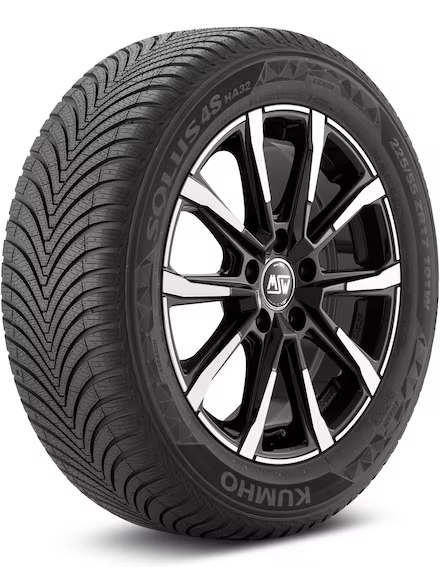
I put this on my Honda CR-V for an extended test, specifically because it’s one of the more interesting things happening in Kumho’s current lineup and I wanted to see if it lived up to the comparison everyone makes: the Michelin CrossClimate2.
The Solus 4S uses a distinctive chevron (inward V-shaped) tread pattern — a genuinely different approach from the symmetric touring patterns most all-season tires use.
In wet and light snow, that chevron shape does real work: it creates pressure that forces water out from under the contact patch, and in snow it lets the tread pack slightly to grip against itself, a similar principle to why packed snow gives better traction than a smooth surface.
Kumho also uses a pine-resin-enhanced compound in this tire, which keeps the rubber more pliable in cold and wet conditions than a standard all-season blend.
In my testing, the ride comfort and quietness were genuinely impressive — close enough to the CrossClimate2 that I understand why independent reviewers keep making that comparison.
Where the Solus 4S wins outright is price: I found it running roughly $130 per tire against $180 for a comparably sized Michelin, with both carrying a 60,000-mile treadwear warranty.
That’s a real, measurable value gap for genuinely comparable performance, not just a “close enough for the price” compromise.
Who it’s for: Drivers in mixed-weather climates who want genuine all-weather capability — not just an all-season with a snowflake stamped on it — without paying Michelin pricing.
2. Kumho Solus TA51a — The Grand Touring Pick

Price Check
Check the price of this tire at the following retailers:
TireRack DiscountTire SimpleTire PriorityTire AmazonDon’t know the correct size tire to purchase? Start here!
This is Kumho’s mainstream grand touring all-season, aimed at coupes, sedans, crossovers, and SUVs, and it’s the tire I’d point most everyday commuters toward first if all-weather capability isn’t a priority.
Kumho’s Resonance Noise Canceller technology — grooves specifically tuned to disrupt and dissipate resonant sound frequencies before they become audible cabin noise — genuinely delivers a quieter ride than I expected from a tire in this price range.
The tread uses what Kumho calls “kypes” — their term for interlocking sipes that move less independently than a conventional cut sipe, which helps the tread blocks stay rigid under braking and cornering while still offering the wet-weather biting edges a sipe is supposed to provide.
Wet and dry stopping distances benefit from what Kumho brands as High Grip Resin in the compound, and the tire held composed and stable during extended highway testing at speed.
It’s available across a wide size range — Kumho lists 82 sizes from 13″ to 19″ fitments — with a 65,000-mile warranty on H-speed-rated sizes and up to 75,000 miles on T-speed-rated sizes.
Who it’s for: Daily commuters and family sedan/CUV owners who want a quiet, comfortable, long-wearing all-season without needing serious winter capability.

3. Kumho Crugen HT51 — The SUV and Crossover Pick

Price Check
Check the price of this tire at the following retailers:
TireRack SimpleTire DiscountTire PriorityTire AmazonDon’t know the correct size tire to purchase? Start here!
The Crugen HT51 is Kumho’s highway touring tire built specifically for the added weight and handling demands of SUVs and crossovers, and it’s the one I’d point a family SUV owner toward.
The stiffer center block construction noticeably reduces body roll and squirm compared to a passenger-car tire pressed into SUV duty, and wet grip was confidently strong in my testing — consistent with the large-sample owner data I cross-referenced from Tire Rack, which shows strong wet scores for this specific model.
Warranty coverage is a genuine strength here: up to 70,000 miles on many P-metric sizes, with 45,000 miles on LT-metric sizes, which is a real step up from what you’d expect at this price point.
Who it’s for: SUV and crossover owners who want confident wet-weather grip and a long warranty without moving up to a premium touring tire.
4. Kumho Ecsta Sport / Ecsta Sport S — The Performance Line
Price Check
Check the price of this tire at the following retailers:
TireRack SimpleTire DiscountTire PriorityTire AmazonDon’t know the correct size tire to purchase? Start here!
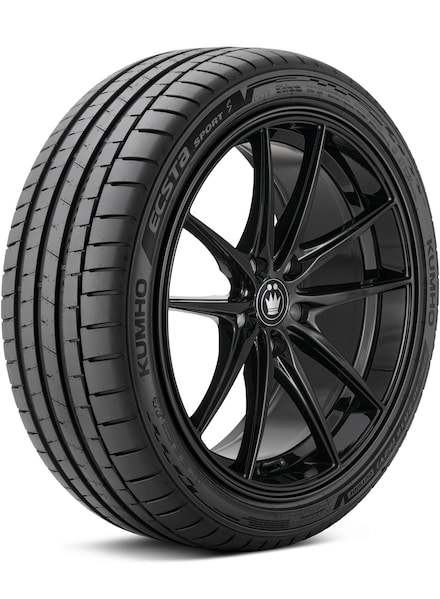
Kumho’s Ecsta performance lineup has been refreshed since older buying guides were written — if you’re seeing references to the Ecsta PS31, PS71, or PS91 in other reviews, know that Kumho’s current UHP lineup centers on the Ecsta Sport (all-season) and Ecsta Sport S (summer performance) naming.
I haven’t personally tracked these on a closed course, so I want to be upfront that this section leans on professional testing rather than my own seat time — but the results are genuinely worth citing.
In independent comparative testing published in 2026, the Ecsta Sport S PS72 placed 2nd in a UUHP tire comparison test, and the Solus TA51 Plus placed 1st in a mid-range comfort tire test — real, current, third-party validation rather than Kumho’s own marketing claims.
Engineering-wise, Kumho added reinforcing ridges at the base of each tread block on the current Ecsta line to resist deformation under load, along with beveled tread block edges specifically to soften the “slapping” noise that contributes to road drone.
Who it’s for: Performance-minded drivers who want genuine grip credentials backed by independent test results, at a real discount to Michelin Pilot Sport or Continental ExtremeContact pricing.
5. Kumho Road Venture AT52 — The Current All-Terrain Pick

Price Check
Check the price of this tire at the following retailers:
TireRack DiscountTire SimpleTire PriorityTire DiscountedWheelWarehouse AmazonDon’t know the correct size tire to purchase? Start here!
Here’s a gap I want to close directly: most Kumho content still centers the Road Venture AT51 as the brand’s all-terrain flagship. The AT52 is the current model, and if you’re cross-shopping all-terrain tires today, it’s the one you should actually be comparing.
I haven’t run a long-term off-road test on this one myself, so this is built on independent testing and owner data rather than my own extended trail time.
The consistent pattern across that research: the AT52 rides smoother on-highway and stays more composed in rain than the outgoing AT51, while maintaining genuinely useful light-to-moderate off-road traction.
It’s not chasing the same extreme-terrain crowd as a dedicated mud-terrain tire — it’s tuned for the truck or SUV owner who spends most of their time on pavement with occasional gravel, dirt, or light snow.
Who it’s for: Truck and SUV owners who want real all-terrain capability with genuinely composed on-road manners, and who were about to default to the AT51 out of habit.
A Note on Kumho’s EV-Specific Tires
Kumho has also developed EV-tailored tires using their K-Silent noise-reducing technology, specifically engineered for the added curb weight, instant torque, and cabin quietness demands of electric CUVs and SUVs — I haven’t personally tested this line yet, but it’s worth knowing it exists if you’re shopping for an EV and want to stay within a value-tier tire budget rather than jumping straight to a premium EV-specific tire.
Understanding Kumho’s Technology Terms — What They Actually Mean
Kumho uses a handful of branded terms in its marketing, and here’s what they actually refer to, based on verified technical explanations rather than marketing copy:
- Resonance Noise Canceller: Grooves and tread block spacing specifically tuned to disrupt sound resonance before it becomes audible cabin drone — most prominent on the Solus TA51a.
- Kypes: Kumho’s term for interlocking sipes that move less independently than conventional sipes, keeping tread blocks more rigid under load while still providing wet-weather biting edges.
- High Grip Resin: A resin additive in Kumho’s compound formulations aimed at improving wet and dry stopping distances.
- K-Silent: Noise-reducing technology specifically developed for EV and hybrid applications, where the absence of engine noise makes tire cabin noise more noticeable.
- Multi-functionalized silica polymer: A tread compound approach aimed at resisting cracking, chipping, and tearing over the tire’s service life.
Kumho Recalls & Real Owner Complaints — What Every Buyer Should Know
I think this is the single most important section most Kumho reviews skip entirely, and it’s worth doing properly rather than glossing over.
The Recall History
Kumho has real recall activity on record, and the most serious incident is worth understanding in full context.
In 2011, Chinese state broadcaster CCTV reported that Kumho’s Tianjin, China facility was using excessive recycled rubber content in production, which led to sidewall bulging and rupture risk. The issue was linked to a fatal accident involving a police vehicle in China.
Kumho’s leadership publicly apologized and issued a recall of the affected products, and more than 75,000 vehicles across multiple Chinese automakers were recalled as a result.
This is a serious episode in the brand’s history, and it involved tires produced for the Chinese domestic market at a specific facility — it’s not something I’d apply as a blanket judgment on Kumho’s current U.S.-market tires, but I also don’t think a genuinely helpful review should leave it out.
In the U.S. specifically, Kumho has had smaller, more contained recalls: a 2009 recall of 36,292 Mohave A/T light truck tires over swaying and control issues under load; a 2012–2013 recall of 1,238 Solus KH25 tires for sidewall cracking and air loss; and a 2017–2018 recall of 1,773 Solus KH16 tires manufactured at the Macon, Georgia plant, after Kumho identified a materials issue during a specific production week that failed internal belt-separation testing. None of these are current recalls, and none affect the five models covered in this review.
What Real Owner Complaints Actually Look Like
I read through a substantial sample of verified owner reviews on ConsumerAffairs to look for patterns beyond isolated bad experiences. Two themes came up consistently enough to be worth flagging:
- Warranty and rebate response time. This is the same pattern I’ve now seen across nearly every major tire brand I’ve reviewed — slow or inconsistent customer service responses to warranty and rebate claims. A meaningful number of Kumho owners specifically report difficulty getting timely responses to defect claims.
- Isolated tread separation and sidewall reports. A small number of owners report tread separation or sidewall issues at lower-than-expected mileage. This shows up across most tire brands at some baseline rate, but it’s worth knowing, and it’s exactly why I’d recommend registering your tires and inspecting your sidewalls periodically regardless of brand.
What to actually do about it: find your tire’s DOT code on the sidewall and check it against NHTSA’s SaferCar.gov database — it takes about two minutes. Register your tires with Kumho at purchase, since that’s the only way the company can reach you directly if a recall is ever issued for your specific tire.
Kumho Tires by Category — Real Numbers, Not Vague Claims
I want to give you actual figures here rather than the kind of unverifiable percentage claims (“80-90% of premium performance!”) that show up across a lot of Kumho content, mine included in earlier versions of this review.
Tread life: Realistically 40,000–75,000 miles depending on the model, with the Solus and Crugen touring lines at the higher end and performance-oriented Ecsta models wearing faster, which is normal for the UHP category regardless of brand.
Pricing: Kumho tires typically run 10–30% less than a comparably specced Michelin, Bridgestone, or Continental tire. In the Solus 4S example above, that gap was roughly 28% on a real price comparison against the Michelin CrossClimate2.
Warranty: Ranges from 45,000 miles on some LT-metric and performance sizes up to 75,000 miles on select Solus TA51a sizes — genuinely competitive with Hankook and General in the same tier.
Kumho Tires for Different Vehicle Types
- Sedans and daily commuters: Solus TA51a for all-season comfort and quiet; Solus 4S if you want genuine all-weather capability
- SUVs and crossovers: Crugen HT51 for confident wet grip and a strong warranty
- Trucks: Road Venture AT52 for on-road-focused all-terrain use
- Performance cars: Ecsta Sport S for summer grip, Ecsta Sport (all-season) for enthusiasts who need some winter usability
- EVs and hybrids: Kumho’s K-Silent EV-tailored line, if you want to stay in a value-tier budget
Comparing Kumho to Other Mid-Range Tire Brands
Kumho vs. Hankook
Both Korean manufacturers target similar market segments. Hankook typically edges out Kumho slightly in overall performance polish and has secured more OEM contracts historically, but Kumho often provides comparable tires priced 10–15% lower.
Kumho’s recent compound updates (the Solus 4S and refreshed Ecsta line in particular) have narrowed the wet-performance gap that used to favor Hankook more clearly.
Kumho vs. Falken
Falken, owned by Sumitomo Rubber Industries, generally delivers excellent handling characteristics and is popular among driving enthusiasts.
Kumho’s Ecsta line is competitive here, and Kumho’s noise-reduction engineering (Resonance Noise Canceller specifically) gives it a real edge in cabin quietness — an area where Falken has historically drawn more criticism.
Kumho vs. General
General Tire (owned by Continental) positions itself as a value-oriented, American-rooted brand. General tends to edge out Kumho in raw durability and tread life on comparable models, often by 5,000–10,000 miles.
Kumho typically counters with sharper handling precision, especially in its performance-oriented models.
Kumho vs. Cooper
Cooper generally delivers stronger winter and off-road performance in its SUV and light truck lines. Kumho counters with better warm-weather performance and, on several models, better fuel efficiency from its compound engineering.
Pricing between the two brands is broadly comparable, so the decision usually comes down to your specific driving needs rather than budget.
Final Verdict: Are Kumho Tires Worth Your Money?
After testing current models and — just as importantly — actually verifying the facts underneath the marketing, here’s where I land: Kumho is a genuinely solid mid-tier tire brand, and one that deserves a more honest treatment than it usually gets.
The Solus 4S in particular is a legitimately strong value against a tire people spend $50 more per corner on, and the Crugen HT51’s warranty coverage is a real strength for SUV owners.
The Ecsta performance line has independent test results to back up its claims, which is more than a lot of budget-adjacent performance tires can say.
But I also think you deserve the full picture: Kumho is now majority-owned by a Chinese conglomerate, not the independent Korean company some older brand write-ups still describe. It has real recall history, including a serious episode tied to a Chinese production facility.
And customer service response time on warranty claims is a legitimate, recurring complaint — the same pattern showing up across nearly every value-tier and even premium brand I’ve reviewed, but worth going in with clear eyes about.
My recommendation: the Solus 4S or Solus TA51a for most sedan and CUV drivers, the Crugen HT51 if you’re in an SUV, and the AT52 — not the outgoing AT51 — if you’re truck shopping. Register your tires, check your DOT code against NHTSA’s database as a five-minute habit, and you’ll get genuinely good value out of this brand.
Frequently Asked Questions
Are Kumho tires a good brand?
Yes, for the right use case. Kumho delivers genuinely competitive performance — particularly in wet grip and cabin noise — at 10–30% less than premium brands, backed by real OEM contracts with Hyundai, Kia, and select Mercedes-Benz models.
Who owns Kumho Tires now?
Kumho was founded in South Korea in 1960 under the Kumho Asiana Group. In 2018, the Chinese tire manufacturer Doublestar became Kumho’s majority shareholder. Kumho continues to operate under its own name and engineering identity.
Are Kumho tires made in the USA?
Some are. Kumho operates a manufacturing plant in Macon, Georgia, which opened in 2016 and primarily produces passenger car and light truck tires for the North American market, alongside plants in South Korea, China, and Vietnam. Check your specific tire’s DOT code to confirm.
Has any Kumho tire been recalled?
Yes, Kumho has recall history including a serious 2011 issue tied to a Chinese production facility, and smaller U.S. recalls in 2009, 2012–2013, and 2017–2018. None of these are current, and none affect the models covered in this review — check your DOT code against NHTSA’s SaferCar.gov to confirm your specific tire.
What replaced the Kumho Road Venture AT51?
The Road Venture AT52 is Kumho’s current all-terrain tire, with smoother on-road manners and improved wet performance over the outgoing AT51.
How long do Kumho tires last?
Realistically 40,000–75,000 miles depending on the model. Touring lines like the Solus TA51a and Crugen HT51 sit at the higher end; performance-oriented Ecsta models wear faster, which is typical for the UHP category regardless of brand.
Which Kumho tire is best for everyday commuting?
The Solus TA51a for straightforward all-season comfort and quiet, or the Solus 4S if you want genuine all-weather capability with light snow traction, at a real price advantage over the Michelin CrossClimate2 it’s most often compared to.
Disclosure: This review is based on my own first-hand testing for the Solus 4S and Crugen HT51, supplemented by independent comparative test data and cross-referenced owner research for the Ecsta Sport/Sport S line, Road Venture AT52, and K-Silent EV tires, clearly flagged throughout. I was not compensated by Kumho Tire or any tire retailer for this review. Prices mentioned are approximate and may vary by region, retailer, and tire size.
