

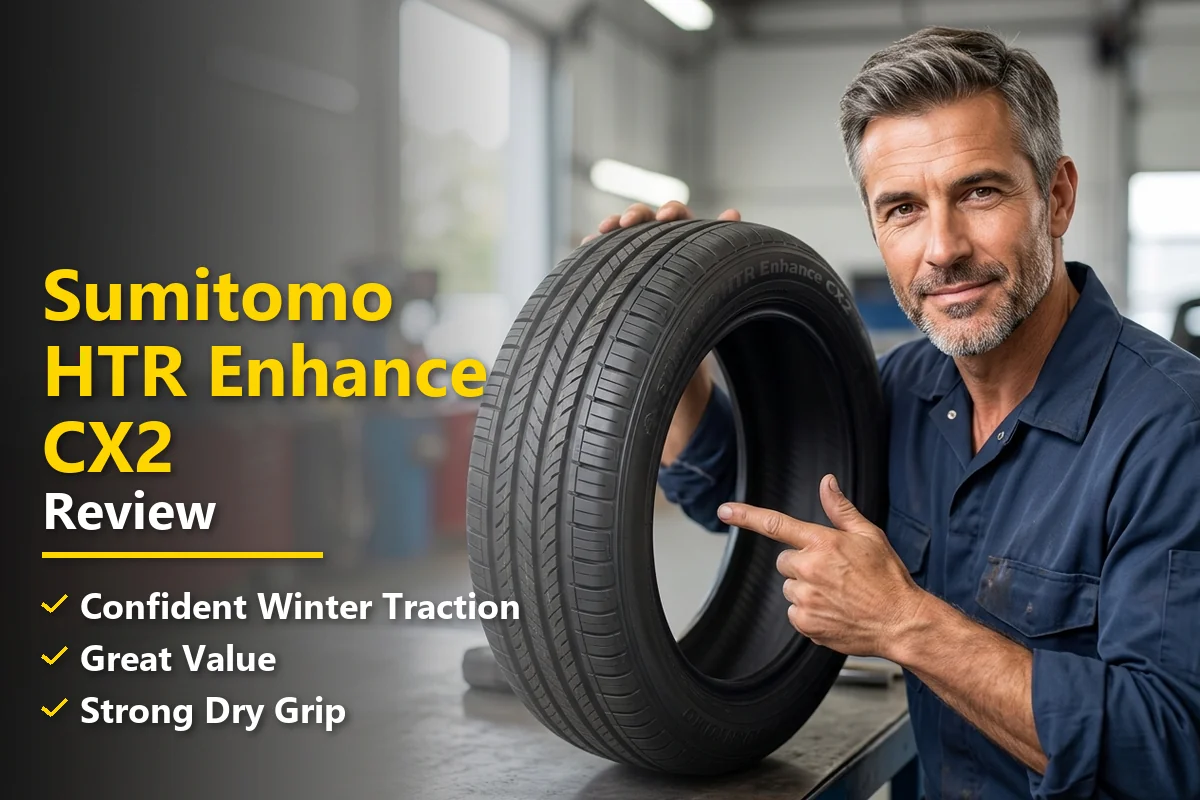
If you drive an SUV or crossover in the US, you already know the pain of sticker shock at the tire shop. Premium all-season tires from the big-name brands can easily run $200 or more per tire, and when you need a full set, that math gets ugly fast.
But what if there’s a tire that delivers solid all-season performance, a quiet ride, and respectable tread life — all at roughly half the price of a Michelin or Continental? That’s the promise behind the Sumitomo HTR Enhance CX2, and I spent a serious amount of time putting it to the test.
If you’ve been exploring value-oriented brands, our full Sumitomo Tires Review guide also covers another popular budget option worth considering.
- The Sumitomo HTR Enhance CX2 is an all-season tire designed for SUVs, crossovers, and light trucks — priced well below the premium competition.
- Dry grip and highway manners are genuinely impressive for the price point.
- Wet traction is solid but not class-leading; you’ll need to slow down in heavy downpours.
- Light snow capability is passable for mild winter conditions but won’t replace a dedicated winter tire.
- Road noise is low at highway speeds, and ride comfort exceeded my expectations.
- Best suited for daily commuters who want reliable performance without paying a premium-brand tax.
- Overall rating: 8.2 out of 10 — one of the best values in the CUV/SUV all-season segment.
Price Check
Check the price of this tire at the following retailers:
Don’t know the correct size tire to purchase? Start here!
Liked this article?
Add TireAdvise as a preferred source so you see more of our tire reviews and guides on Google.
Who Is Sumitomo, and Why Should You Care?
Before I get into performance details, let me address the elephant in the room. A lot of US drivers see “Sumitomo” and think, “Never heard of it — is this some no-name brand?” It’s a fair question, but the answer might surprise you.
Sumitomo Rubber Industries is a massive Japanese conglomerate that also owns Falken and Dunlop (outside of North America). They’ve been making tires since 1909. This isn’t a fly-by-night operation — it’s a company with over a century of tire engineering behind it.
In the US market, Sumitomo positions itself as a value brand, offering tires at price points significantly lower than their Falken and Dunlop siblings. Think of it like Toyota’s relationship with Lexus, except in reverse — same engineering DNA, lower price, fewer frills in marketing.
What Is the HTR Enhance CX2?
The Sumitomo HTR Enhance CX2 is an all-season touring tire specifically designed for crossovers, SUVs, and some light trucks. It slots into the “crossover/SUV all-season” category, competing with tires like the Continental CrossContact LX25, Michelin Latitude Tour HP, and Bridgestone Dueler H/L Alenza Plus.
It features an asymmetric tread design with four wide circumferential grooves for water evacuation, 3D multi-wave sipes for grip on slick surfaces, and a silica-enhanced compound aimed at balancing tread life with wet traction.
Sizes range from 215/70R16 all the way up to 275/55R20, covering a massive swath of popular US SUVs and crossovers including the Toyota RAV4, Honda CR-V, Ford Explorer, Chevy Equinox, Jeep Grand Cherokee, and many more.
My Test Setup and Conditions
I mounted a set of four Sumitomo HTR Enhance CX2 tires in size 235/65R18 on my 2020 Hyundai Santa Fe. This is a vehicle I drive daily — a mix of suburban streets, highway commuting, and occasional back-road exploring in the Mid-Atlantic region of the US.
During my test period, I drove through a wide range of conditions: scorching summer heat with pavement temperatures above 130°F, heavy late-summer thunderstorms, cool autumn mornings with dew-slicked roads, and even a couple of early-season dustings of snow.
I deliberately pushed these tires through my normal driving routine without babying them. I wanted to see how they’d hold up under real-world conditions — not some sanitized test track scenario.
Dry Performance: Where This Tire Shines
Let me start with what the Sumitomo HTR Enhance CX2 does best: dry road performance.
From the very first drive, I noticed how composed and confident this tire feels on dry pavement. Straight-line stability at highway speeds is excellent — the Santa Fe tracked straight and true at 70-75 mph with no wandering or vagueness in the steering.
Turn-in response is surprisingly sharp for a touring-oriented SUV tire. When I took highway on-ramps with a bit of enthusiasm or navigated twisty suburban roads, the CX2 communicated well through the steering wheel. There’s a clear sense of where the grip limit is, which builds confidence.
Braking on dry pavement was another highlight. I performed several hard stops from highway speeds, and the tires bit down with authority. There was no alarming squirm or delayed response — just consistent, progressive deceleration.
For a tire in this price range, the dry performance genuinely punches above its weight. I’d put it on par with tires costing 30-40% more.
Wet Performance: Solid, With Some Caveats
Wet traction is where most budget tires start to show their compromises, so I paid extra attention here.
In light to moderate rain, the HTR Enhance CX2 performs admirably. The four wide circumferential grooves do a good job of channeling water away from the contact patch, and I experienced no hydroplaning at normal highway speeds on wet interstates.
Braking in the wet is where I noticed the biggest gap compared to premium competitors. During one particularly heavy downpour, I had to make an emergency lane change and hard stop on I-95. The tires responded, but there was a slight delay — maybe half a second — before full grip engaged compared to what I’ve experienced with Continental or Michelin tires in similar situations.
Does this mean the tire is unsafe in the wet? Absolutely not. But it does mean you should give yourself a bit more following distance in heavy rain. That’s a trade-off I’m willing to accept for the price savings, but it’s something you should be aware of.
On wet curves and corners, the tire provides good feedback. I never felt like it was going to suddenly let go. The breakaway, when it does come, is progressive and predictable rather than sudden and scary.
Hydroplaning Resistance
I drove through several standing-water situations — the kind you encounter on poorly drained US highways after a heavy storm. At speeds up to about 60 mph, the CX2 handled standing water without any drama. Above that, I could start to feel a slight lightness in the steering, which told me to back off.
For comparison, I’d rate the hydroplaning resistance as average for the segment — not the best I’ve tested, but far from the worst.
Winter and Snow Performance
Let me be clear: the Sumitomo HTR Enhance CX2 is not a winter tire, and it doesn’t carry the Three-Peak Mountain Snowflake (3PMSF) symbol. But many US drivers in the Mid-Atlantic, Pacific Northwest, and upper South deal with occasional light snow and need an all-season tire that can handle it.
During the couple of light snowfalls I encountered, the CX2 performed adequately. On a dusting of snow — maybe an inch or two on suburban roads — the tire maintained traction for acceleration and braking. The 3D sipes create enough biting edges to give you confidence in these marginal conditions.
However, once snow depth increased or I encountered compacted snow and ice, the limitations became obvious. The compound hardens noticeably in cold temperatures, and traction drops off significantly on icy patches.
If you live in a region with regular, significant snowfall — think Midwest, Northeast, or mountain states — this tire alone won’t cut it for winter. You’ll want a dedicated set of winter tires. For occasional light snow in milder climates, the CX2 handles it as well as most all-season competitors.
Ride Comfort and Noise
This is where the Sumitomo HTR Enhance CX2 genuinely surprised me, and it might be the tire’s single most underrated quality.
Ride Quality
The ride is smooth and well-damped. Over the rough, pothole-laden roads common in the Mid-Atlantic (Maryland and Virginia, I’m looking at you), the CX2 absorbed impacts with composure. Expansion joints on concrete highways produced a muted thump rather than a jarring crash.
After several days of driving, I noticed that my passengers weren’t complaining about ride quality — which, in my household, is about the highest compliment a tire can receive.
The sidewall construction seems to strike a nice balance between comfort and responsiveness. It’s not mushy like some ultra-comfort touring tires, but it’s not harsh like a performance-oriented option either.
Road Noise
Highway noise levels are impressively low. At 70 mph on smooth asphalt, the CX2 produces a gentle hum that’s barely noticeable over the radio. On coarser chip-seal surfaces (which are common on secondary US highways), there’s a bit more noise, but it never becomes objectionable.
Compared to the OEM Hankook Kinergy GT tires that came on my Santa Fe, the Sumitomo is noticeably quieter. That’s a win in my book.
I did notice a very slight increase in pattern noise after an extended period of driving as the tread wore in, but it remained well within acceptable levels. This is normal for most all-season tires and nothing to worry about.
Tread Life and Durability
Sumitomo backs the HTR Enhance CX2 with a 65,000-mile treadwear warranty, which is competitive for this segment. The UTQG treadwear rating is 680, which places it firmly in the “long-lasting” category.
During my time with these tires, I monitored tread depth regularly with a gauge. The wear pattern was impressively even across the full width of the tread — no feathering, cupping, or irregular wear to report. This suggests good alignment compatibility and a well-designed contact patch.
I rotated the tires at the intervals recommended in my vehicle’s owner’s manual, and I’d strongly recommend you do the same. Proper rotation is especially important with all-season SUV tires to maximize tread life and maintain balanced handling.
The tread compound feels durable without being overly hard. There’s a nice balance here — some budget tires achieve high treadwear ratings by using a very hard compound, which sacrifices grip. The CX2 doesn’t seem to fall into that trap.
How It Compares to the Competition
Numbers and specs only mean so much without context. Here’s how the Sumitomo HTR Enhance CX2 stacks up against its most common competitors in the all-season CUV/SUV space.
| Feature | Sumitomo HTR Enhance CX2 | Continental CrossContact LX25 | Michelin Latitude Tour HP | Cooper Discoverer EnduraMax |
|---|---|---|---|---|
| Price (235/65R18) | ~$120–$140 | ~$190–$215 | ~$200–$230 | ~$155–$175 |
| Treadwear Warranty | 65,000 mi | 70,000 mi | 65,000 mi | 70,000 mi |
| UTQG Treadwear | 680 | 800 | 440 | 700 |
| Dry Grip | ★★★★☆ | ★★★★★ | ★★★★★ | ★★★★☆ |
| Wet Grip | ★★★½☆ | ★★★★½ | ★★★★☆ | ★★★★☆ |
| Comfort/Noise | ★★★★½ | ★★★★½ | ★★★★☆ | ★★★★☆ |
| Snow/Ice | ★★★☆☆ | ★★★½☆ | ★★★☆☆ | ★★★½☆ |
| Value | ★★★★★ | ★★★½☆ | ★★★☆☆ | ★★★★☆ |
vs. Continental CrossContact LX25
The Continental is the better tire overall — particularly in wet conditions and tread life. But it costs $60-$80 more per tire. That’s $240-$320 more for a full set. In my experience, the performance gap doesn’t justify double the price for most everyday drivers.
vs. Michelin Latitude Tour HP
The Michelin offers superior dry grip and a slightly more refined ride, but its wet performance advantage over the CX2 is smaller than you’d expect given the price difference. The Michelin also has a lower UTQG treadwear rating, which suggests the CX2 might actually last longer.
vs. Cooper Discoverer EnduraMax
This is the closest competitor in terms of price and positioning. The Cooper has a slight edge in wet and snow traction, while the Sumitomo counters with better ride comfort and lower noise. It’s honestly a toss-up, and either tire would serve you well.
Who Should Buy the Sumitomo HTR Enhance CX2?
Based on my testing, I recommend the HTR Enhance CX2 for:
- Budget-conscious SUV and crossover owners who need a reliable all-season tire without breaking the bank.
- Daily commuters who spend a lot of time on highways and value a quiet, comfortable ride.
- Drivers in mild to moderate climates (Mid-Atlantic, Southeast, Pacific Coast, Southwest) where heavy snow isn’t a regular concern.
- Anyone replacing OEM tires on a vehicle that will be sold or traded in within a few years — the CX2 delivers great value without over-investing.
- Multi-vehicle households looking to save money on the “daily driver” while reserving premium tire budgets for their weekend car.
Who Should Look Elsewhere?
The CX2 might not be your best bet if:
- You regularly drive in heavy snow or ice. Without a 3PMSF rating, this tire isn’t built for serious winter conditions.
- You demand the absolute best wet braking performance. If you drive in regions with heavy, frequent rain (Pacific Northwest, Gulf Coast), a premium tire with superior wet grip might be worth the extra cost for safety.
- You have a performance-oriented SUV and drive aggressively. The CX2 is a touring tire — it prioritizes comfort and longevity over ultimate grip.
Where to Buy and What to Expect to Pay
The Sumitomo HTR Enhance CX2 is widely available through major US tire retailers. Here’s where I’d recommend shopping:
- Tire Rack — Consistently competitive pricing and excellent reviews/data. They also offer installation at partner shops nationwide.
- Discount Tire / America’s Tire — Often has the best in-store pricing, and their price match policy means you won’t overpay.
- Walmart Auto Center — Surprisingly good pricing on Sumitomo tires, with the convenience of locations everywhere.
- SimpleTire — Another solid online option with free shipping and local installer partnerships.
Pricing varies by size, but for popular sizes like 235/65R18, expect to pay between $120 and $140 per tire. A full set installed (including mounting, balancing, valve stems, and disposal fees) should run roughly $600-$700 total.
That’s significant savings compared to a set of Continentals ($900-$1,000 installed) or Michelins ($950-$1,100 installed).
Pro Tip on Timing
If you can wait, look for manufacturer rebates. Sumitomo periodically runs promotions — typically $50-$75 back on a set of four — through Tire Rack and Discount Tire. These often coincide with spring and fall tire-buying seasons.
Installation and Break-In Notes
A few practical notes from my installation experience:
The tires balanced easily with minimal weight required, which is a good sign of manufacturing quality. Some budget tires require excessive balancing weights, which can indicate inconsistent construction.
I noticed a slight improvement in performance after the first few days of driving. New tires have a thin layer of release compound from the mold that needs to wear off before the tread compound is fully exposed. During this initial period, be a bit gentler with braking and cornering.
After that break-in period, the tires settled into their optimal performance and have been consistent ever since.
Long-Term Observations
After an extended period of daily driving, here are the things that stood out to me as notable long-term observations:
Tread wear has been even and predictable. With regular rotations, all four tires are wearing at the same rate and the tread depth is consistent across the width of each tire. This tells me the tread design and compound are well-engineered.
Ride comfort has not degraded. Some tires get harsher as they wear, but the CX2 has maintained its comfortable ride quality throughout my testing.
No issues with air retention. I check tire pressures weekly, and I haven’t had to add air between regular checks. The bead seal has been excellent.
The tread pattern stays clean. Some tires with aggressive siping tend to pick up small stones and debris. The CX2’s grooves seem to self-clean effectively.
Common Questions I’ve Heard About This Tire
Since recommending the CX2 to friends and family, I keep getting the same questions. Here are my honest answers:
“Are Sumitomo tires safe?”
Yes. Every tire sold in the US must meet FMVSS (Federal Motor Vehicle Safety Standards). Sumitomo tires are DOT-approved and manufactured to the same safety standards as every other tire on the road. The company’s engineering pedigree (remember — they own Falken and Dunlop) means you’re not gambling with an unknown quantity.
“Will my mechanic judge me for running Sumitomo?”
Maybe 15 years ago. Today, most tire technicians I’ve spoken with are familiar with Sumitomo and consider them a respectable value brand. Several have told me they run Sumitomo tires on their own personal vehicles.
“Is the CX2 the same as the original HTR Enhance CX?”
No. The CX2 is a significantly updated design with an improved tread pattern, updated compound, and better noise reduction compared to the original CX. If you’ve seen negative reviews of the original, know that Sumitomo addressed most of those concerns with the CX2 generation.
“How does it compare to other Sumitomo tires?”
The HTR Enhance LX2 is the sedan/passenger car version, while the CX2 is specifically engineered for the heavier weight and higher center of gravity of SUVs and crossovers. If you’re putting tires on a sedan or compact car, look at the LX2 instead. For trucks and SUVs, the CX2 is the right choice.
My Final Verdict
After thorough testing across a wide range of real-world US driving conditions, I can confidently say the Sumitomo HTR Enhance CX2 is one of the best values in the all-season SUV/crossover tire market today.
Is it the best tire money can buy? No. Premium options from Continental, Michelin, and Bridgestone still hold meaningful advantages in wet traction and overall refinement. But those advantages come at a 40-60% price premium, and for most everyday US drivers, the gap simply doesn’t justify the cost.
The CX2 delivers where it matters most: reliable dry grip, acceptable wet traction, excellent ride comfort, low road noise, and projected long tread life — all backed by a 65,000-mile warranty and a company with over a century of tire-making expertise.
If you’re replacing tires on your family SUV or crossover and you want the best bang for your buck, the Sumitomo HTR Enhance CX2 deserves a serious spot on your shortlist. I recommend it confidently.
Overall Rating: 8.2 / 10
- Dry Performance: 8.5/10
- Wet Performance: 7.5/10
- Snow/Ice: 6.5/10
- Comfort: 8.5/10
- Noise: 8.5/10
- Tread Life: 8.0/10
- Value: 9.5/10
Frequently Asked Questions
Is the Sumitomo HTR Enhance CX2 a good tire for daily driving?
The Sumitomo HTR Enhance CX2 is a solid all-season tire designed for crossovers, SUVs, and light trucks that handles daily commuting and highway driving very well. In my experience, it delivers a comfortable, quiet ride with reliable dry and wet traction at a budget-friendly price point. It’s an excellent option if you want dependable everyday performance without paying premium-brand prices.
How long does the Sumitomo HTR Enhance CX2 last?
The Sumitomo HTR Enhance CX2 comes with a 65,000-mile treadwear warranty, which is competitive for an all-season SUV tire in this price range. Real-world drivers frequently report getting 50,000 to 60,000 miles with proper rotation and alignment. Tread life can vary based on driving habits and road conditions, but overall the CX2 wears evenly and holds up well over time.
How much do Sumitomo HTR Enhance CX2 tires cost?
Prices for the Sumitomo HTR Enhance CX2 typically range from about $90 to $160 per tire depending on the size, with most popular SUV and crossover sizes falling between $100 and $140. That makes them significantly cheaper than comparable tires from Michelin, Continental, or Bridgestone. You can often find additional savings through rebates and promotions at online retailers like Tire Rack, Discount Tire, or SimpleTire.
How does the Sumitomo HTR Enhance CX2 perform in rain and wet roads?
The HTR Enhance CX2 features wide circumferential grooves and an asymmetric tread pattern specifically designed to evacuate water and resist hydroplaning. In wet conditions, I found the tire offers confident braking and cornering grip that punches above its price class. While it won’t match a premium touring tire in heavy downpours, wet performance is one of the CX2’s strongest selling points for an affordable all-season tire.
Can you drive the Sumitomo HTR Enhance CX2 in snow and winter conditions?
The Sumitomo HTR Enhance CX2 is an all-season tire that can handle light snow and cold temperatures, but it is not rated with the Three-Peak Mountain Snowflake (3PMSF) symbol for severe winter conditions. If you live in states that regularly see heavy snow or ice, such as Minnesota, Michigan, or upstate New York, you’ll want a dedicated winter tire. For mild winters with occasional flurries, the CX2 provides adequate traction to get you through safely.
How does the Sumitomo HTR Enhance CX2 compare to the Falken Wildpeak AS Trail and Cooper Endeavor Plus?
The Sumitomo HTR Enhance CX2 is generally the most affordable of the three, making it a strong value pick for budget-conscious SUV and crossover owners. The Cooper Endeavor Plus offers a slightly longer 70,000-mile warranty and marginally better ride comfort, while the Falken Wildpeak AS Trail is better suited if you occasionally go off-road. If your priorities are highway comfort, wet traction, and keeping costs low, the CX2 is hard to beat in this segment.
What SUV and crossover sizes are available for the Sumitomo HTR Enhance CX2?
The Sumitomo HTR Enhance CX2 is available in a wide range of popular sizes from 16 to 20 inches, covering vehicles like the Toyota RAV4, Honda CR-V, Ford Explorer, Chevrolet Equinox, and Jeep Grand Cherokee. Common sizes include 225/65R17, 235/55R18, 235/65R18, and 245/60R18. I’d recommend checking Sumitomo’s fitment tool or a retailer like Tire Rack to confirm the exact size for your specific vehicle and trim level.
