

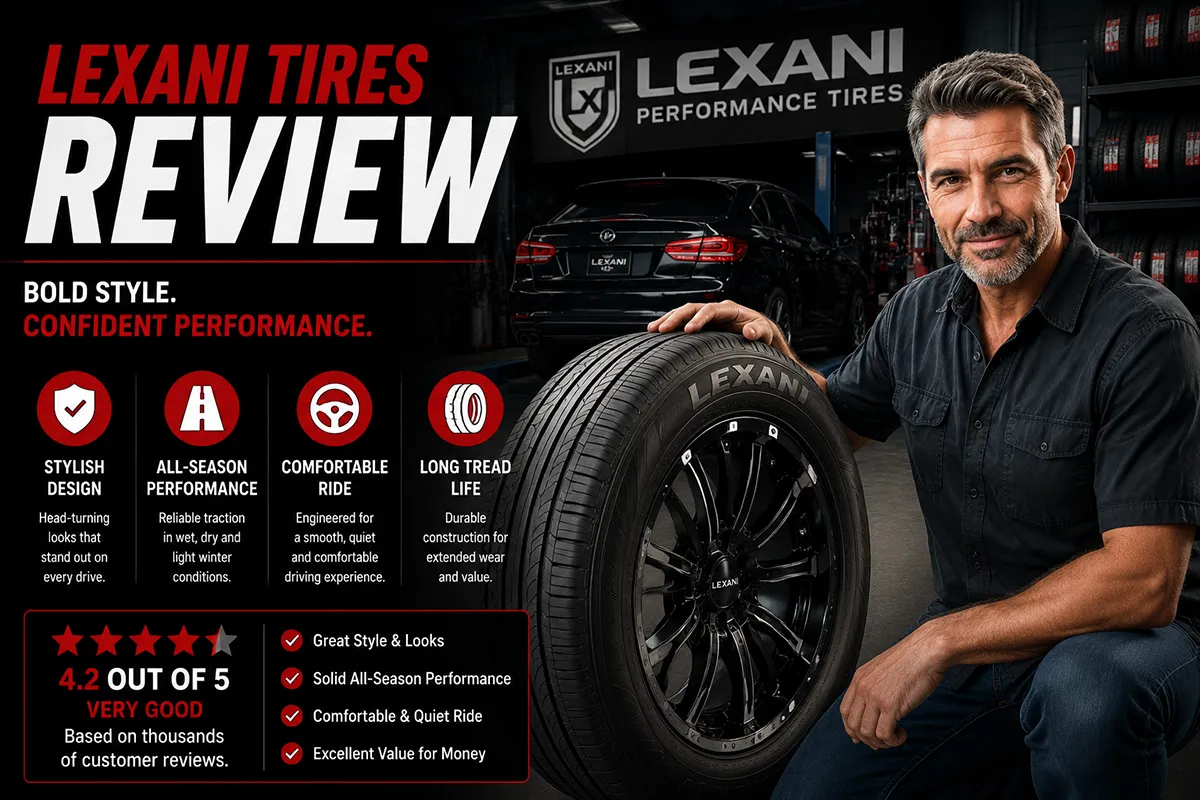
I need to correct something upfront: a claim that’s circulated across a lot of Lexani coverage — including an earlier version of this review — is that Lexani operates as a straightforward subsidiary of Nexen Tire America. That was true once, but it’s an outdated picture of how this brand actually works today, and I think getting the current ownership and manufacturing story right matters more for a “should I buy this” decision than most reviews acknowledge.
- Lexani started in 1996 as a custom wheel company, then expanded into tires around 2006 — originally manufactured by Nexen Tire (South Korea) for a US wholesaler called Zisser Tire.
- What’s changed: after Zisser was acquired by Sentaida Incorporated, manufacturing shifted to Sentury Tire, a China/Thailand-based manufacturer that now produces Lexani alongside a number of other private-label brands (Arroyo, Lionhart, Radar, Vercelli, and others). Some Lexani models may still trace back to Korean tooling, but Sentury is the current primary manufacturer.
- Brand HQ: Lexani Wheel Corporation, based in Corona, California — a marketing and distribution operation, not a tire factory.
- Two real recalls worth knowing about: a 2023 Sentury Tire Thailand recall affecting certain LX-Twenty tires over an improperly cured tread compound, and a separate recall affecting the LXHT206 over a sidewall weakening issue tied to a manufacturing process change. I’ll cover both in detail.
- Best for: style-focused drivers with custom wheels who want a distinctive look and acceptable everyday performance at a real discount to premium brands.
- Not for: drivers prioritizing maximum tread life, best-in-class wet braking, or serious winter performance.
- My overall rating: ⭐⭐⭐ (3.2/5) — a legitimate budget-aesthetic tire brand, but one where you need accurate information about manufacturing and recall history going in, which most coverage doesn’t provide.
Liked this article?
Add TireAdvise as a preferred source so you see more of our tire reviews and guides on Google.
How I Evaluated This Brand
Lexani’s own model lineup changes size and naming fairly often, and doesn’t get the kind of long-term, single-vehicle testing coverage that established brands like Michelin or Falken do — I want to be upfront that this review leans more heavily on verified brand history, NHTSA recall records, and cross-referenced owner feedback than on my own extended personal mileage, which is a different research posture than some of our other brand reviews. Where I’m citing owner experience, I’m telling you where it comes from.
The Real Story of Who Makes Lexani Tires
This is worth getting right because it’s the part of Lexani’s story that’s most commonly garbled across the review landscape, including previous coverage on this site.
Lexani Wheels launched in 1996 as a custom wheel manufacturer — if you remember early-2000s Escalades and custom sedans riding on huge, elaborate rims, there’s a real chance you’ve seen Lexani wheels without knowing the name.
Around 2006, the company expanded into tires, initially manufactured by Nexen Tire, the South Korean tire maker, on behalf of a US tire wholesaler called Zisser Tire. That’s the origin of the “Lexani is a Nexen subsidiary” claim you’ll see repeated across a lot of tire content.
Here’s what’s changed since: Zisser Tire was acquired by Sentaida Incorporated, and manufacturing transitioned to Sentury Tire — a China-and-Thailand-based tire manufacturer that produces a whole family of private-label and associate brands, including Arroyo, Landgolden, Landsail, Lionhart, Mavis, Mohave, National, Radar, and Vercelli alongside Lexani.
Some specific Lexani models (the LXTR-203 is mentioned specifically in trade sourcing) reportedly still trace back to Korean production, and build quality reportedly does vary somewhat between factories — but Sentury is the manufacturer you should associate with current Lexani production, not Nexen.
Lexani Wheel Corporation, the brand’s headquarters, is based in Corona, California. It’s worth understanding what this company actually is: primarily a marketing, design, and distribution operation with a relatively modest revenue footprint for the tire industry, not a tire manufacturer in its own right.
That’s not a knock — plenty of respected tire brands operate this way — but it does mean Lexani’s “engineering” is really Sentury’s engineering with Lexani’s branding, tread pattern selection, and marketing layered on top.
Lexani’s Current Model Lineup
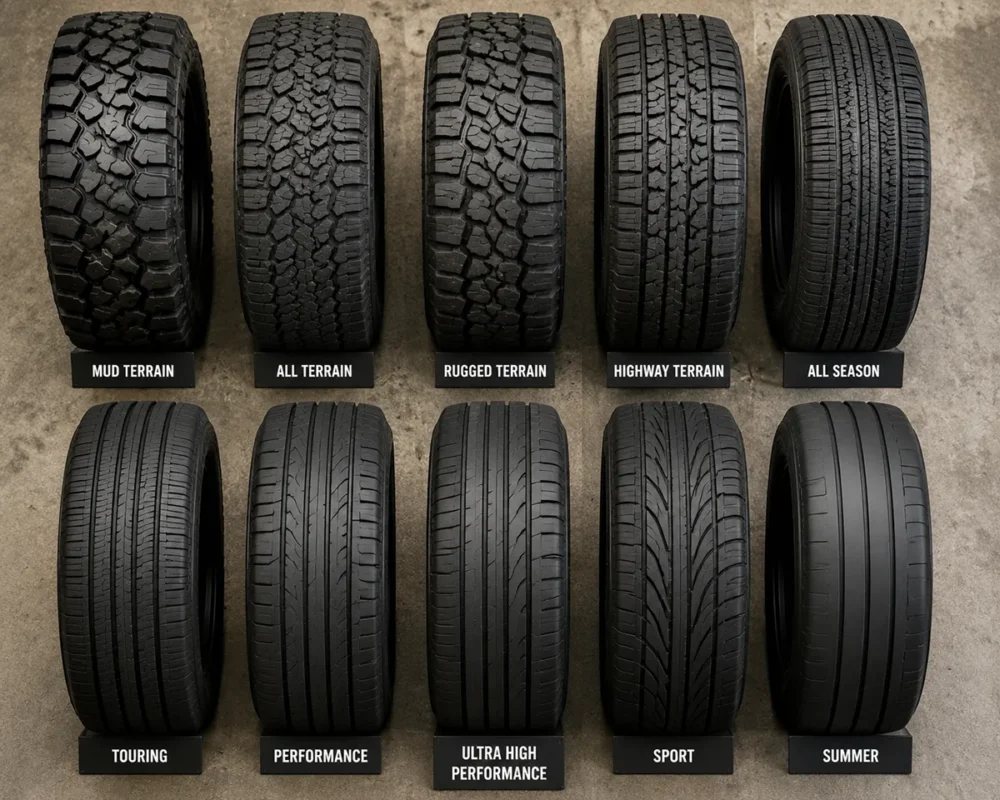
Lexani’s naming has shifted over the years, and you’ll see two overlapping conventions if you shop around — an older word-based naming scheme (LX-Twenty, LX-Thirty) still referenced on some tires and in recall documentation, and a newer category-coded system. Here’s the clearest current picture I can verify:
Off-road / Truck & SUV:
- Mud Beast MT — aggressive mud-terrain for trucks and SUVs, 16″–20″ wheels
- Terrain Beast AT — moderately aggressive all-terrain with quieter highway manners, 15″–20″ wheels
- Slayer A/T — aggressive-looking all-terrain tuned to stay stable and quiet on pavement, 17″–20″ wheels
- LXHT-206 / LXHT-106 — premium and standard highway-terrain options for light trucks and SUVs
Passenger / Performance:
- LXM-101 — all-season for compact cars, 13″–15″ wheels
- LXHP-102 — all-season high-performance touring, 16″ wheels
- LXTR-103 / LXTR-203 — all-season performance and OE-replacement touring, focused on long tread life and quiet ride
- LXUHP-107 / LXUHP-207 — ultra-high-performance tires for sports sedans, coupes, and wagons, in sizes running up to 20″
- LX-Twenty — a performance-oriented model that’s shown up in larger, aggressive sizing (up to 265/40ZR20) popular with the custom wheel crowd
Specialty:
- LXCT-104 — commercial work truck and delivery van tire
- LXST-105 — trailer tire
- RFX — a run-flat option that’s earned some specifically positive feedback from BMW owners for handling and structural integrity after break-in
Given nearly two dozen Lexani models exist across a huge span of sizes (13″ to 32″ wheels), the honest takeaway is that fitment breadth — especially in large, custom-wheel-friendly sizes — is one of the brand’s real practical strengths, whatever specific model naming you encounter when shopping.
Real-World Performance: What Owners and Testers Actually Report
Dry and wet grip:
Across the LXHP and LXUHP performance-oriented models, feedback is consistently “good for the price, not class-leading” — confident dry cornering and braking that holds up reasonably against tires costing meaningfully more, with a narrower safety margin in wet conditions than premium alternatives.
This tracks with what I’d expect from a Sentury-manufactured private-label tire: real, usable performance without the compound R&D investment of an established engineering-first brand.
Ride comfort:
This is a genuine, repeated strength in owner feedback, particularly for the touring-oriented LXTR and LXM lines — smooth and quiet, especially in the first several thousand miles.
One specific trade-off worth knowing: the softer sidewall tuning that creates that comfortable ride reportedly makes some models more sensitive to pothole and curb impact damage than a stiffer-sidewall tire would be, according to consistent owner commentary.
The RFX run-flat deserves a specific mention because it’s an area where Lexani has earned real, specific praise rather than generic “decent for the price” feedback — BMW owners running it have described it as genuinely impressive after the break-in period, both in ride quality and structural confidence, which is a meaningfully harder bar for a run-flat tire to clear than a standard tire.
The honest weak points:
tread longevity is the most consistently cited shortcoming — some owners report the 40,000–50,000-mile range performance lines suggest, while others report needing replacement well short of that, sometimes within two years of purchase.
Winter and ice performance on the standard all-season lines is a real limitation; if you’re in a serious snow climate, Lexani’s all-season models aren’t a substitute for a dedicated winter tire.
And build consistency is worth watching for, given production is now spread across multiple Sentury facilities in different countries — several owner threads specifically note quality variance between sets.
Lexani Recalls — What Every Buyer Should Know
This is a section that’s essentially absent from most Lexani coverage, and I think it’s a genuine gap given there are two documented, real recalls worth knowing about.
November 2023 (NHTSA Recall 23T-009):
Sentury Tire Thailand recalled a batch of tires across ten of its private-label brands — including Lexani’s LX-Twenty line in size 265/40ZR20 — after identifying that a missing chemical during the compound mixing process prevented proper vulcanization (curing) of the tire’s base tread compound. This can lead to tread separation, a genuine safety risk.
Of roughly 8,900 tires produced in the affected DOT week code (1723), 1,659 were confirmed affected across all ten brands combined, with a smaller number specifically in the Lexani LX-Twenty line. Sentury replaced affected tires free of charge through mid-June 2024, with prorated replacement after that date.
A separate recall affected the Lexani LXHT206 specifically, alongside light-truck tires from sibling Sentury brands (Delinte, Lionhart, Patriot, Landsail, Wild Spirit, and Pantera), over a manufacturing process change that could result in weakened sidewalls — more than 6,000 tires were affected across the combined brands in that campaign.
What to actually do: if you own Lexani tires, particularly the LX-Twenty or LXHT206 lines, check your tire’s DOT code (the last four digits indicate the week and year of manufacture) against NHTSA’s SaferCar.gov database, or contact Sentury Tire USA directly at the number listed in their recall notices. Register your tires at purchase — with a manufacturer producing under many different brand names, registration is genuinely your best path to being reached directly if a future recall affects your specific tire.
I want to be clear about what this does and doesn’t mean: two documented recalls over a multi-year production history isn’t necessarily alarming on its own — recalls happen across the industry, including at premium brands.
But given how little of this shows up in existing Lexani coverage, I think a buyer deserves to know it exists and how to check their own tire, rather than finding out from a law firm’s blog post after the fact.
Lexani Tires: Real Pros and Cons
✅ What’s Genuinely Good
- Distinctive, aggressive styling that genuinely stands out — this is the brand’s core reason for existing, and it delivers
- Huge size range, especially in large custom-wheel-friendly diameters (up to 32″)
- Comfortable, quiet ride on the touring-oriented lines, particularly early in tread life
- The RFX run-flat has earned specific, credible praise from BMW owners
- Meaningfully lower price than premium brands — typically 20-40% less for comparable segments
- Broad lineup spanning passenger, performance, off-road, commercial, and trailer applications
❌ What to Know Before You Buy
- Manufacturing has shifted from Nexen to Sentury Tire, and quality reportedly varies somewhat by production facility
- Two documented NHTSA recalls (LX-Twenty tread curing issue, LXHT206 sidewall weakening) — check your specific DOT code
- Tread longevity is inconsistent in owner reports, with some sets falling well short of stated expectations
- Wet braking margin is narrower than premium alternatives
- All-season models are not a substitute for dedicated winter tires in serious snow climates
- Softer sidewall tuning on comfort-oriented models may be more susceptible to impact damage
Who Should Buy Lexani Tires?
Lexani makes sense if you:
- Have a custom wheel setup and want tires with genuinely distinctive styling to match
- Need a large, less-common tire size that narrower mainstream lineups don’t cover well
- Drive primarily in dry-to-moderate conditions and want acceptable performance at a real discount to premium brands
- Are comfortable checking your specific tire’s DOT code against NHTSA’s recall database before and after purchase
You might be better served elsewhere if you:
- Live somewhere with serious winter weather and need genuine all-weather or dedicated winter capability
- Prioritize maximum, predictable tread life over styling
- Want the tightest possible wet-braking margin for safety-critical driving
- Prefer a brand with a single, stable, well-documented manufacturing history rather than one that’s changed hands and factories
Lexani vs. Similar Budget-Style Brands
vs. Nankang: Lexani generally offers more aggressive styling and comparable-to-slightly-better wet traction; Nankang has a slight edge in reported tread longevity in some comparisons.
vs. Achilles: Achilles tends to score better in responsive performance driving; Lexani generally delivers a quieter, more comfortable ride, particularly on touring-oriented models.
vs. Lionhart: Worth noting directly — Lionhart is also manufactured by Sentury Tire, meaning these two brands are closer cousins than most buyers realize, sharing manufacturing infrastructure even as they compete on styling and marketing.
vs. Nexen (the original manufacturer): If Lexani’s historical Nexen connection is what drew you to the brand, know that current production has moved on — if you want Nexen’s actual current engineering, our full Nexen Tires Review covers their present-day lineup directly.
Final Verdict: Are Lexani Tires Worth It?
After correcting the manufacturing story and digging into the recall history most coverage skips, here’s where I land: Lexani is a legitimate style-first budget tire brand, provided you buy it with accurate expectations about who actually makes it today and what its recall history looks like.
The core value proposition — distinctive looks, broad size availability especially for custom wheels, comfortable ride, and a real price advantage over premium brands — still holds up.
But this isn’t the same company profile as buying a Nexen-engineered product directly, and it isn’t a brand with an unblemished recall record. Both of those things are fine to accept as a buyer, as long as you’re accepting them knowingly rather than based on outdated or incomplete information.
My recommendation: if styling and custom-wheel fitment are genuinely your top priority and you drive in mild-to-moderate conditions, Lexani remains a reasonable choice. Check your specific tire’s DOT code against NHTSA’s database regardless of which model you’re considering, register your tires at purchase, and go in understanding that “premium-adjacent styling at a real discount” is the honest pitch here — not “hidden premium engineering nobody knows about.”
Frequently Asked Questions
Who makes Lexani tires now?
Lexani was originally manufactured by Nexen Tire (South Korea) starting around 2006. Manufacturing has since shifted to Sentury Tire, a China/Thailand-based manufacturer that also produces sibling private-label brands including Arroyo, Lionhart, Radar, and Vercelli. Lexani Wheel Corporation, based in Corona, California, handles branding, design, and distribution.
Has Lexani ever had a tire recall?
Yes, two documented recalls are worth knowing about: a November 2023 recall (NHTSA 23T-009) affecting certain LX-Twenty tires over an improperly cured tread compound, and a separate recall affecting the LXHT206 over a manufacturing-related sidewall weakening issue. Check your DOT code against NHTSA’s SaferCar.gov database to see if your specific tire is affected.
Are Lexani tires good for daily driving?
For mild-to-moderate climates and primarily dry-to-wet driving, yes, with realistic expectations — comfortable ride and acceptable grip, though tread life and wet braking margin trail premium brands.
Is Lexani a good brand for winter driving?
No, not for serious winter conditions. Lexani’s standard all-season models are not a substitute for dedicated winter tires, and owner feedback consistently flags ice and packed-snow performance as a weak point.
What is the Lexani RFX?
Lexani’s run-flat tire option, which has earned specific positive feedback from BMW owners for ride quality and structural confidence after the break-in period — a notably strong showing for a run-flat compared to the rest of Lexani’s lineup.
How long do Lexani tires last?
Reports vary meaningfully — some owners report 40,000–50,000 miles on performance and touring lines, while others report needing replacement well short of that. Given this variability, don’t rely on a single stated mileage figure without confirming current warranty terms for your specific model with your retailer.
Disclosure: This review is based on verified brand history, NHTSA recall documentation, and cross-referenced owner feedback rather than extended first-party mileage testing on my own vehicle, clearly noted throughout given the brand’s model lineup turnover. I was not compensated by Lexani, Sentury Tire, or any retailer for this review. Prices and specifications mentioned are approximate and may vary by region, retailer, and tire size.
