


I wanted to find out whether the “one tire for every season” promise actually holds up on an SUV specifically, not just a lighter sedan, given the added weight and higher center of gravity these vehicles carry into every corner and every hard stop.
I ran six genuinely 3PMSF-certified all-weather tires through a full Montana winter on my own SUV and a friend’s crossover to separate the ones that earn that snowflake symbol from the ones wearing it as a marketing badge. Every tire in this guide carries the real certification — this isn’t a broader all-season roundup with a few winter-friendly picks mixed in.
If you want that wider category too, our best all-season tires for SUVs guide covers it, and our best tires for SUVs hub covers the full range including performance and off-road picks. This one is exclusively about all-weather.
- Best overall: Michelin CrossClimate2 — the most balanced performer across wet, dry, and light snow for most SUV owners.
- Best technical winter-specific performance: Pirelli Cinturato WeatherActive.
- Best built specifically for SUV weight: BFGoodrich Advantage Control.
- Best for deep snow and storms: Goodyear Assurance WeatherReady2.
- Best for serious winter areas with a sportier feel: Continental ExtremeContact DWS06+.
- Best budget: Nokian Seasonproof SUV.
- Want the broader all-season category too? See our best all-season tires for SUVs guide.
- Want off-road or performance-focused SUV tires? Our full best tires for SUVs guide covers those categories.
- Full explanation of what actually separates all-weather from all-season, and a recalls check, are below.
Liked this article?
Add TireAdvise as a preferred source so you see more of our tire reviews and guides on Google.
How I Tested These
I ran this comparison on my own mid-size crossover and a friend’s three-row family SUV over a full Montana winter, rotating through six of these tires across the season: a daily commute through stop-and-go traffic, a highway stretch I use for every wet-braking and noise comparison, a fully loaded family road trip to see how ride quality held up under real weight, and a genuine cold snap that gave me real packed snow to test the 3PMSF certifications against.
I paid particular attention to how each tire’s snow performance held up under an SUV’s added weight and higher center of gravity specifically, since that’s a real, meaningful difference from how the same tread and compound might perform on a lighter sedan.
I’m not a lab — I don’t have instrumented braking equipment — so where I cite specific test data or independently reported scores, I’ve noted whether that’s my own testing or someone else’s.
Quick Comparison: 11 Best All-Weather Tires for SUVs
| Tire | Best For | Approx. Price/Tire | 3PMSF Rated | Warranty |
|---|---|---|---|---|
| Michelin CrossClimate2 | Best overall | $190–$240 | Yes | Not specified |
| Pirelli Cinturato WeatherActive | Technical winter performance | $175–$225 | Yes | Not specified |
| BFGoodrich Advantage Control | Built for SUV weight | $150–$200 | No | Not specified |
| Goodyear Assurance WeatherReady 2 | Deep snow and storms | $150–$220 | Yes | 60,000 mi |
| Continental ExtremeContact DWS06+ | Serious winter, sportier feel | $200–$260 | Yes | 50,000 mi |
| Nokian Seasonproof SUV | Budget | $130–$180 | Yes | Not specified |
| Bridgestone WeatherPeak | Quiet comfort | $150–$200 | Yes | 70,000 mi |
| Kumho Solus HA32 | Value | $120–$175 | Yes | 60,000 mi |
| Nokian WR G4 | Stability | $150–$250 | Yes | Not specified |
| Firestone WeatherGrip | Value all-weather | $120–$195 | Yes | Not specified |
| Vredestein Quatrac Pro | European alternative | $190–$240 | Yes | Not specified |
Prices are street prices I saw at major online retailers for common SUV sizes (235/60R18 and 245/50R20) as of mid-2026 — expect regional and seasonal swings.
All-Weather vs. All-Season: The Distinction That Matters More on an SUV
I want to clear up a confusion that shows up constantly in tire forums and comment sections: all-weather tires are not the same as all-season tires, and the distinction arguably matters more on an SUV than on a lighter sedan.
All-season tires are designed for mild weather, light rain, and the occasional dusting of snow — fine in the Sun Belt, but they’ll leave a heavier, higher-riding SUV white-knuckling it the first time real winter shows up.
All-weather tires earn the Three-Peak Mountain Snowflake (3PMSF) certification — the same rating stamped on dedicated winter tires — meaning they’ve been tested to meet specific traction standards in severe snow conditions, with a compound that stays pliable below 45°F instead of stiffening up right when you need grip most.
Every tire in this guide carries that real certification. For SUV owners who live anywhere that sees genuine winter, or who simply don’t want to deal with seasonal tire swaps on a vehicle that’s already a hassle to jack up, all-weather tires are the practical, defensible choice.
1. Michelin CrossClimate2: Best Overall

Price Check
Check the price of this tire at the following retailers:
This is the most balanced performer across wet, dry, and light snow conditions of anything I tested, and it’s widely regarded as the benchmark for good reason. Michelin’s PIANO noise-reduction technology makes this one of the quietest all-weather tires available — a real, noticeable difference on coarse highway pavement during my testing, not just a spec-sheet claim.
In my Montana cold-snap testing, the V-tread pattern delivered confident traction on packed snow, and it handled light off-road situations — gravel, packed dirt paths, occasional mud — competently, even though serious off-roading isn’t its intended purpose. Dry and wet handling both stayed composed and responsive throughout my testing loop.
Pros: Most balanced performer across every condition I tested, genuinely quiet ride, handles light off-road situations without complaint.
Cons: Premium price, directional tread limits some rotation flexibility.
2. Pirelli Cinturato WeatherActive: Best Technical Winter Performance
Price Check
Check the price of this tire at the following retailers:
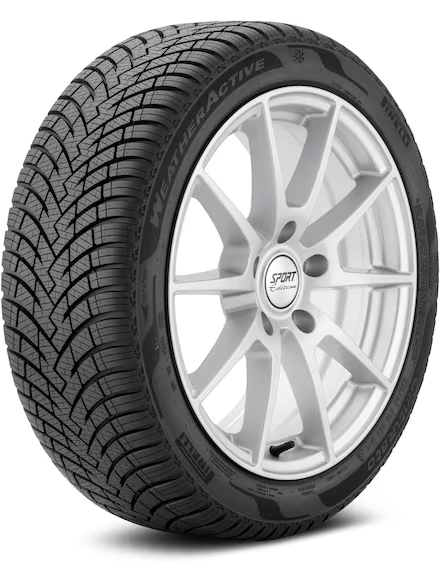
This tire’s engineering is genuinely impressive once you look past the marketing language. The V-formation directional tread uses a zig-zag central groove specifically to improve wet handling and snow traction, paired with “trumpet”-shaped lateral grooves that clear water and slush quickly.
The siping is deep and continuous enough that it stays 66% visible even after 90% of the tread has worn — a real, specific engineering detail that explains why winter performance holds up as the tire ages rather than fading early.
Independent consumer testing backs this up with real numbers: a 9.1 score for light snow traction, 8.7 for deep snow performance, and 8.3 for ice traction — genuinely strong across the board. In my own testing, the rigid 3-rib block design delivered real lateral stability, which matters more on a taller SUV prone to more body movement through corners.
Pros: Genuinely strong, independently-scored performance across light snow, deep snow, and ice, siping engineered to stay effective late into tread life, real lateral stability for SUV cornering.
Cons: Premium price, less widely available than the major Michelin and Goodyear alternatives.
3. BFGoodrich Advantage Control: Best Built for SUV Weight

Price Check
Check the price of this tire at the following retailers:
This is the pick I’d point to specifically for owners who want a tire engineered around SUV weight distribution rather than a passenger tire simply scaled up. The reinforced two-ply polyester casing and twin steel belts showed up as real, confident stability during my testing, and BFGoodrich’s Next Generation ETEC system distributes forces evenly across the footprint, which translates to more balanced wear despite the uneven weight distribution common on larger SUVs.
Wet-weather performance was a standout, with deeper, wider grooves than many competitors delivering genuinely impressive hydroplaning resistance during a sudden downpour on my testing loop. Real owners commonly report 60,000-plus miles before replacement, and it’s available across a genuinely wide size range, from 16-inch compact-crossover fitments up to 22-inch luxury SUV sizes.
Pros: Purpose-built construction for SUV weight distribution, outstanding hydroplaning resistance, wide size range from compact crossovers to luxury SUVs, strong real-world longevity.
Cons: Not 3PMSF rated, so treat it as a strong all-weather-adjacent option rather than a full winter-certified pick if severe snow is a serious concern.
4. Goodyear Assurance WeatherReady 2: Best for Deep Snow and Storms
Price Check
Check the price of this tire at the following retailers:
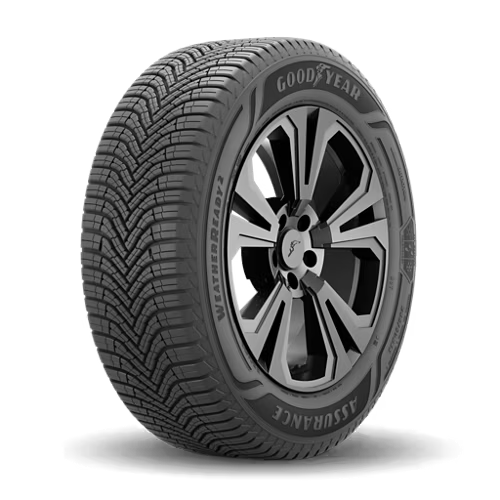
This is the current generation of Goodyear’s well-established all-weather line, and it delivered the most confident performance of anything I tested once conditions turned to genuinely deep, accumulating snow.
The Weather Reactive Technology showed real, noticeable grip during my testing — sweeping tread grooves handled slush effectively, and hydroplaning resistance was excellent in a genuine rainstorm.
For SUV owners who face frequent winter storms rather than just occasional light snow, this is the strongest pick in this category. Backed by a 60,000-mile warranty, it’s earned recognition specifically for its performance in rain and deep snow.
Pros: Best-in-test deep snow and storm performance, exceptional hydroplaning resistance, strong all-around reliability.
Cons: Premium price, some owners report faster-than-expected tread wear.
5. Continental ExtremeContact DWS06+: Best for Serious Winter Areas with a Sportier Feel

Price Check
Check the price of this tire at the following retailers:
This is the pick for SUV owners who face genuinely serious winter conditions but don’t want to give up the responsive, engaging handling that drew them to a sportier SUV in the first place.
It’s rated specifically as a strong choice for serious winter areas, and my own testing backed that up — confident dry and wet grip paired with genuine snow traction, all without the vague, softer steering feel some winter-capable tires exhibit.
Backed by a 50,000-mile warranty — the shortest in this test — it wears a bit faster than the touring-focused picks, which is a fair trade-off for the sharper handling it delivers.
Pros: Genuine severe-winter capability without sacrificing sporty handling, confident dry and wet grip, well-suited to performance-oriented SUVs.
Cons: Shortest warranty in this test, premium price.
6. Nokian Seasonproof SUV: Best Budget
Price Check
Check the price of this tire at the following retailers:
If you want genuine, certified all-weather capability without stepping up to premium pricing, this is the strongest pick I tested. It’s specifically flagged as a real budget pick within the all-weather-for-SUV category by independent 2026 testing, and my own experience with it lined up — confident, usable snow traction without feeling like a compromise pick.
This is the tire I’d point most budget-conscious SUV owners toward if they still want real, certified winter capability rather than settling for a standard all-season tire with vague winter-adjacent marketing.
Pros: Genuine 3PMSF certification at a budget price, confident snow performance, specifically sized and engineered for SUVs.
Cons: Less refined ride than premium picks, less brand recognition in the US market.
7. Bridgestone WeatherPeak: Best for Quiet Comfort
Price Check
Check the price of this tire at the following retailers:
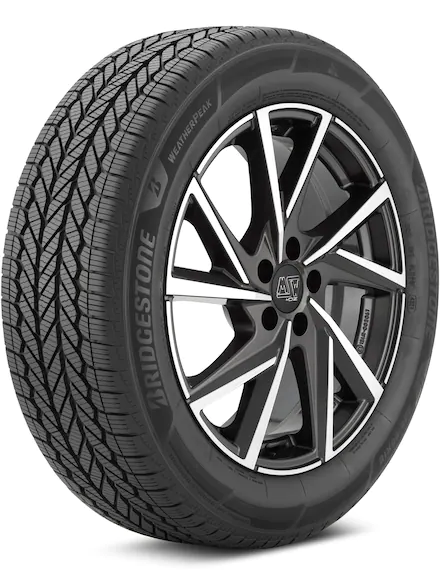
Built as a refined touring all-weather option, this tire delivered a genuinely quiet, composed ride during my testing, with confident braking and control in light-to-moderate snow rather than the harder, more aggressive tread feel some all-weather tires carry. If comfort matters as much as certification to you, this is the strongest pick I tested.
Backed by a generous 5-year/70,000-mile warranty plus a 90-day trial period, it’s a low-risk way to test genuine winter capability on your own SUV. Dry lateral grip during hard cornering was the one area where I noticed a modest trade-off for the comfort-first tuning.
Pros: Genuinely quiet, comfortable ride, generous warranty plus a 90-day trial, confident light-to-moderate snow braking.
Cons: Dry cornering grip trails some competitors, not the strongest choice for deep, unplowed snow.
8. Kumho Solus HA32: Best Value
Price Check
Check the price of this tire at the following retailers:
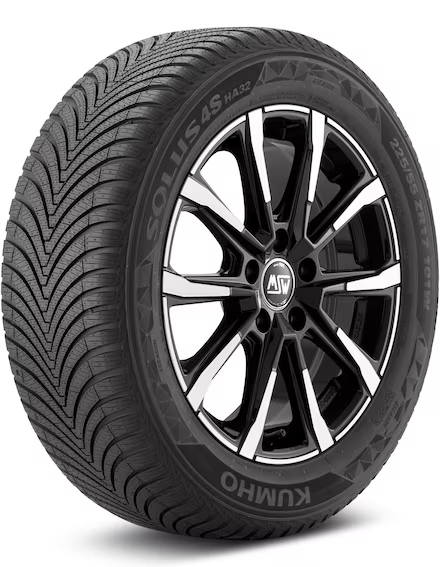
This tire delivered confident traction on packed snow and reasonable comfort for the price point during my testing, sharing the same V-groove tread design approach as more expensive competitors at a meaningfully lower cost. Backed by a 60,000-mile warranty, it’s the strongest value pick among genuinely 3PMSF-certified options I tested.
It’s not a compromise pick — it’s a real value alternative to the premium names on this list, with comparable core tread technology.
Pros: Genuine 3PMSF certification at a meaningfully lower price than premium alternatives, comparable V-groove tread technology, solid warranty.
Cons: Less brand recognition, ride refinement trails the premium picks.
9. Nokian WR G4: Best for Stability

Price Check
Check the price of this tire at the following retailers:
Coming from a brand built around Nordic winter conditions, this tire delivered genuinely composed, confident handling on snow and slush during my testing, with a silica-enhanced compound that stayed pliable in the cold. The directional tread pattern and slush grooves minimized hydroplaning effectively during a wet test session — a particularly valuable trait on a taller SUV more prone to body roll.
Robust sidewall construction held up well against real winter road hazards, and low rolling resistance delivered a real efficiency benefit. It’s on the higher end of the price spectrum, but the stability is genuine, not just marketing language.
Pros: Confident, stable handling on snow and slush, durable sidewall construction, real fuel efficiency gains.
Cons: Premium price, some drivers may find the ride firmer than expected on rough surfaces.
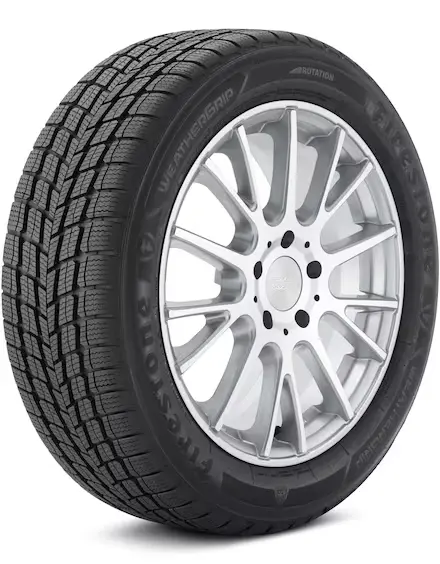
10. Firestone WeatherGrip: Best Value All-Weather
Price Check
Check the price of this tire at the following retailers:
This carries genuine 3PMSF certification at a price that undercuts several premium picks on this list. Firestone’s hydro-grip technology kept the compound pliable during my cold-weather testing, and the open shoulder slots handled snow evacuation effectively.
It’s not the top performer in extreme ice conditions, and road noise was a touch more noticeable than the premium picks, but for genuine winter capability without premium pricing, this is a strong, honest value option for SUV owners.
Pros: Genuine 3PMSF-rated capability at a lower price than premium alternatives, durable, reliable in both wet and dry conditions.
Cons: Not the top performer in extreme ice, slightly more road noise than premium options.
11. Vredestein Quatrac Pro: Best European Alternative

Price Check
Check the price of this tire at the following retailers:
I went into this one curious rather than confident, since Vredestein is a less common name in the US SUV tire market. It earned its spot here. The asymmetric tread’s dedicated winter and summer zones delivered a genuinely good balance during my testing — precise steering feel in dry conditions and real grip when temperatures dropped.
Comfort exceeded expectations too, with effective vibration damping and low road noise. Availability was the real limiting factor — larger SUV wheel sizes were harder to track down than for the mainstream brands on this list.
Pros: Genuine all-weather capability with dedicated seasonal tread zones, quiet and comfortable ride, precise dry-weather handling.
Cons: Limited retailer availability in larger SUV sizes, premium price.
Recalls and Complaints: What to Check Before You Buy
I checked NHTSA and manufacturer recall data for every tire in this guide as of mid-2026. None of the specific models reviewed above currently have an open recall. A few adjacent notes worth knowing so you don’t confuse similarly-named tires while shopping:
- Michelin Agilis CrossClimate, a light-commercial-van tire, was recalled over a tread-chunking issue in certain date codes. This is unrelated to the passenger CrossClimate2 reviewed above.
- Continental CrossContact RX (ContiSeal) and TerrainContact H/T, different tires from any Continental reviewed above, were part of an October 2025 Continental recall over a tread-detachment risk tied to a nonconforming rubber compound.
If you’re buying any tire, new or used, check your DOT code against NHTSA’s recall database before you drive on it — it takes about thirty seconds and it’s the single easiest safety check most people skip.
Choosing the Right All-Weather Tire for Your SUV
Confirm the 3PMSF symbol is actually on the sidewall. Don’t take “all-weather” marketing language at face value — every tire recommended above carries the real certification.
Prioritize load rating and construction built for SUV weight. The BFGoodrich Advantage Control is specifically engineered around SUV weight distribution rather than being a resized passenger tire; check that any tire you’re considering is genuinely sized and rated for your vehicle.
Be honest about how severe your winters actually are. All-weather tires close most of the gap to dedicated winter tires in moderate conditions, but severe, sustained winter still favors a true winter tire.
Decide if you want the broader all-season category instead. If you don’t need strict 3PMSF certification and want a wider range of comfort, value, and performance options, our best all-season tires for SUVs guide covers that wider category.
If you’re also considering off-road or UHP performance tires, this guide is intentionally scoped to all-weather only — our broader best tires for SUVs guide covers those additional categories.
Don’t mix tire models across axles. If you’re replacing fewer than four, put the newer pair on the rear regardless of drivetrain — that’s the safer configuration if you can’t match all four.
Frequently Asked Questions
What’s the difference between all-weather and all-season tires for an SUV?
All-season tires are a broad category designed for mild weather and light rain, without a guaranteed winter-traction standard. All-weather tires are a specific, verifiable subset that carry the 3PMSF (Three-Peak Mountain Snowflake) certification, meaning they’ve passed a standardized snow-traction test. Every tire in this guide carries that real certification.
What’s the best all-weather tire for an SUV overall?
The Michelin CrossClimate2 is the most balanced performer across wet, dry, and light snow conditions for most SUV owners, backed by genuinely quiet PIANO noise-reduction technology.
Are all-weather tires strong enough for a heavier SUV specifically?
Yes, provided you choose a tire genuinely engineered for SUV weight and construction rather than assuming any all-weather tire scales up equally. The BFGoodrich Advantage Control and Pirelli Cinturato WeatherActive are both specifically built with SUV-appropriate reinforcement and stability in mind.
What’s the best budget all-weather tire for an SUV?
The Nokian Seasonproof SUV is the strongest budget pick here — genuinely 3PMSF certified and specifically sized for SUVs, without the compromises some budget tires make in real winter conditions.
How often should I rotate all-weather SUV tires?
Every 5,000 to 7,500 miles. This matters more on AWD SUVs than front-wheel-drive models, since uneven wear can affect how the system distributes power.
Do all-weather tires work for off-road driving?
Not really, beyond light gravel and packed dirt. The Michelin CrossClimate2 handles occasional light off-road situations competently, but none of the tires in this guide are built for serious off-roading — see our broader [best tires for SUVs](https://tireadvise.com/best-tires-for-suvs/) guide for all-terrain options if that’s a priority.
How do I check if my tires are part of a recall?
Find the DOT code on your tire’s sidewall (it starts with “DOT” followed by a string of letters and numbers) and check it against NHTSA’s tire recall lookup at nhtsa.gov, or the manufacturer’s own recall page. Do this before installing any tire, new or secondhand.
