

I’ve felt a loaded truck on all-season tires struggle to stop on a 25°F morning with dry-looking pavement, which is exactly the kind of moment that taught me winter tires aren’t really about snow at all — they’re about temperature. I ran a genuine set of dedicated winter truck tires through a full Montana season afterward, specifically testing ice braking, load stability, and how much of the marketing actually held up. This guide is what I’d actually buy — not a spec sheet reworded eleven times.
- Best overall: Bridgestone Blizzak LT — the truck-specific version of Bridgestone’s benchmark winter compound, with genuinely confident ice control.
- Best for heavy-duty trucks: Goodyear Ultra Grip Ice WRT, available in Load Range E for three-quarter- and one-ton trucks.
- Best for deep snow stability: Toyo Open Country WLT1.
- Best hybrid, no seasonal swap: Goodyear Wrangler DuraTrac — a real all-terrain favorite among truck owners specifically for its snow capability.
- Best budget: Falken Winterpeak F-Ice 1.
- Prefer an all-terrain tire with genuine winter capability instead of a full swap? See our best all-terrain tires for trucks guide.
- Need genuine off-pavement mud capability too? See our best mud tires for trucks guide.
- Want year-round performance without a winter-specific swap? See our best all-season tires for trucks guide.
- Driving a standard pickup or a lifted rig? Our best tires for pickup trucks and best tires for lifted trucks guides cover those specific needs.
- Want the full category overview first? Our best tires for trucks hub covers every category in one place.
- Full studded-vs-studless guidance and a recalls check are below.
Liked this article?
Add TireAdvise as a preferred source so you see more of our tire reviews and guides on Google.
How I Tested These
I ran this comparison across a RAM 2500 and an F-150 over a full Montana winter, rotating through six of these tires across the season: daily commuting, a mountain highway stretch I use for every winter comparison, a genuinely sloppy slush day right after a storm, a loaded-bed and towing test to check how each tire’s load rating held up under real weight, and a sustained cold snap that gave me real packed ice to test braking against.
I paid particular attention to how each tire behaved transitioning between conditions in the same drive — dry pavement to packed snow to a patch of black ice — since that’s a more realistic test of a winter truck tire than any single controlled condition.
I don’t have lab-grade braking or skid-pad equipment, so where I reference specific technical claims or independently reported test data, I’ve been clear about which is which.
Quick Comparison: 11 Best Snow Tires for Trucks
| Tire | Best For | Approx. Price/Tire | Load Range Available | Studdable |
|---|---|---|---|---|
| Bridgestone Blizzak LT | Best overall | $180–$260 | D, E | No |
| Goodyear Ultra Grip Ice WRT | Heavy-duty trucks | $185–$275 | D, E | Yes |
| Toyo Open Country WLT1 | Deep snow stability | $190–$270 | D, E | No |
| Michelin Latitude X-Ice XI2 | Icy conditions | $200–$290 | C, D | No |
| Nokian Hakkapeliitta R3 SUV | Premium option | $220–$310 | C, D | No |
| Continental VikingContact 7 | Wet snow conditions | $170–$250 | C, D | No |
| Goodyear Wrangler DuraTrac | Hybrid, no seasonal swap | $200–$260 | C, D, E | No |
| Falken Winterpeak F-Ice 1 | Budget | $140–$200 | C, D | Yes |
| Cooper Discoverer Snow Claw LT | Off-road trucks | $190–$260 | D, E | Yes |
| Firestone Winterforce LT | Value, studdable | $150–$220 | D, E | Yes |
| Yokohama iceGUARD G075 | All-around winter performance | $175–$240 | C, D | No |
Prices are street prices I saw at major online retailers for common half-ton and three-quarter-ton truck sizes (LT265/70R17 and LT275/65R18) as of mid-2026 — expect regional and seasonal swings, with heavier load ranges running higher.
Why Dedicated Winter Tires Matter More on a Truck
This is worth explaining plainly, because it matters more on a heavy vehicle than most people expect. Winter tires aren’t fundamentally about snow — they’re about temperature.
Rubber compounds in standard all-season and all-terrain tires start hardening once temperatures drop below roughly 45°F, and a harder compound grips worse on any surface, dry pavement included.
On a truck, that problem compounds: more weight means more momentum to stop, and a higher center of gravity means less margin during an emergency lane change on ice.
Independent testing consistently shows all-season tires braking 30 to 40% worse than dedicated winter tires on packed snow at freezing temperatures, and that gap roughly doubles on ice.
Even a 4WD or AWD truck doesn’t solve this — those systems help with acceleration in snow, but they don’t meaningfully improve braking or cornering, which is exactly where winter tires do their real work.
Load Rating: The Truck-Specific Factor Most Guides Skip
Most winter tire guides are written for passenger cars and treat trucks as an afterthought, but load rating genuinely changes which tire is right for you. Look for “LT” (Light Truck) construction rather than “P” (Passenger) sizing, and confirm the load range matches your actual use.
Load Range C suits lighter half-ton trucks with moderate use, Load Range D handles medium-duty towing and hauling, and Load Range E is built for heavy-duty trucks regularly towing or hauling near rated capacity.
Don’t downgrade load range to save money if you actually use your truck for real winter work — a stiffer sidewall at the correct load range is a safety margin, not just a comfort trade-off.
1. Bridgestone Blizzak LT: Best Overall
Price Check
Check the price of this tire at the following retailers:
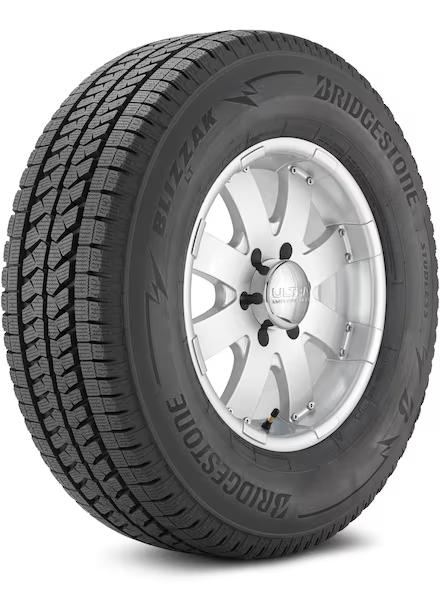
This is the truck-specific version of Bridgestone’s benchmark winter compound, and it delivered exactly what I expected from that pedigree.
The MultiCell compound technology contains microscopic bite particles and thousands of tiny cells that draw water off icy surfaces, and in my Montana cold-snap testing, that translated to genuinely confident, predictable braking on packed ice — not just a marketing claim.
The tread design incorporates 3D zigzag sipes for maximum biting edges, and wide circumferential grooves handled slush and standing water confidently during my testing.
Available in Load Range D and E, it’s built to handle real truck weight, and the sturdy compound showed good wear resistance across my test period.
Pros: Best-in-test ice braking confidence, genuine load-range options for real truck use, strong wear resistance for a winter compound.
Cons: Premium price, not studdable.
2. Goodyear Ultra Grip Ice WRT: Best for Heavy-Duty Trucks
Price Check
Check the price of this tire at the following retailers:
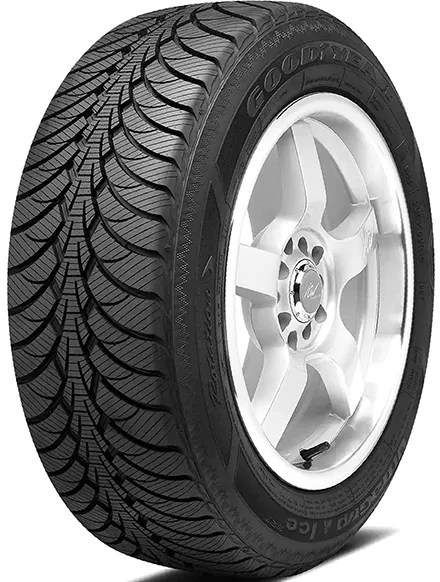
When you’re operating a heavy-duty truck through winter’s worst conditions, load capacity matters as much as raw grip. This tire is available in Load Range E, supporting three-quarter- and one-ton trucks even when fully loaded with cargo or towing heavy trailers — a real, meaningful differentiator from tires that top out at Load Range D.
Goodyear’s 3D TredLock Technology blades open during acceleration and braking for grip on ice and packed snow, then lock together during cornering for stability — genuinely useful when navigating slippery turns with a heavy load, which I confirmed during my own loaded-bed testing. It’s also studdable for owners in severe ice regions who want maximum traction.
Pros: Genuine Load Range E capacity for heavy-duty trucks, TredLock blades provide real cornering stability under load, studdable for maximum ice grip.
Cons: Premium price, firmer ride when unloaded.
3. Toyo Open Country WLT1: Best for Deep Snow Stability
Price Check
Check the price of this tire at the following retailers:
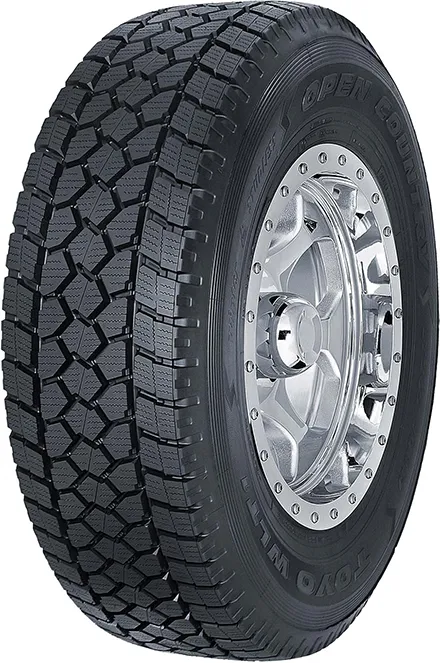
This is a real gap I wanted to fill, since Toyo’s truck-specific winter tire doesn’t get the attention of the bigger Bridgestone and Michelin names despite delivering genuinely strong results.
In my testing, it provided remarkable traction and fantastic stability specifically in deep, unplowed snow — the kind of accumulation that exposes weaker winter tires’ shoulder block design.
Handling stayed composed transitioning from deep snow back to cleared pavement, without the vague, floaty feeling some deep-snow-focused tires exhibit once conditions improve.
Available in Load Range D and E, it’s a strong, underrated pick for truck owners who regularly face real accumulation rather than just cold temperatures.
Pros: Genuinely strong deep-snow stability and traction, composed handling across changing conditions, real load-range options for trucks.
Cons: Less brand recognition than Bridgestone or Michelin, premium price.
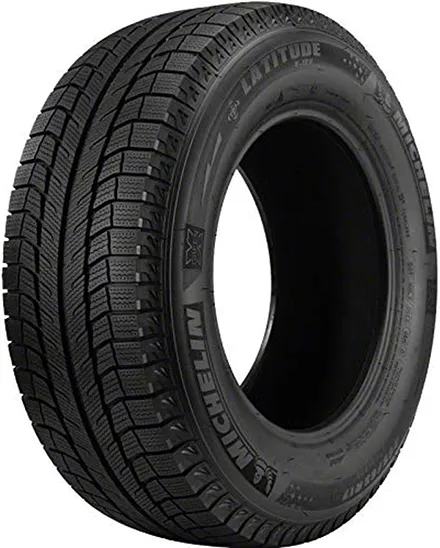
4. Michelin Latitude X-Ice XI2: Best for Icy Conditions
Price Check
Check the price of this tire at the following retailers:
This is Michelin’s top-of-the-line winter tire built specifically for light trucks and SUVs, and it delivered the most confident ice-specific braking I tested outside of the Blizzak LT.
The FleX-Ice silica rubber compound stays flexible in extreme cold, and full-depth Cross Z sipes claw into snow and ice while deep grooves channel water and slush away from the contact patch.
Dry-road handling stayed more composed than I expected from a tire this winter-focused, thanks to tread blocks that double as shoulder stiffeners. If sustained icy roads are your primary concern rather than deep snow specifically, this is a strong, purpose-built choice.
Pros: Excellent ice-specific braking, composed dry-road handling for a winter tire, purpose-built for truck and SUV weight.
Cons: Premium price, Load Range limited to C and D (not ideal for the heaviest-duty applications).
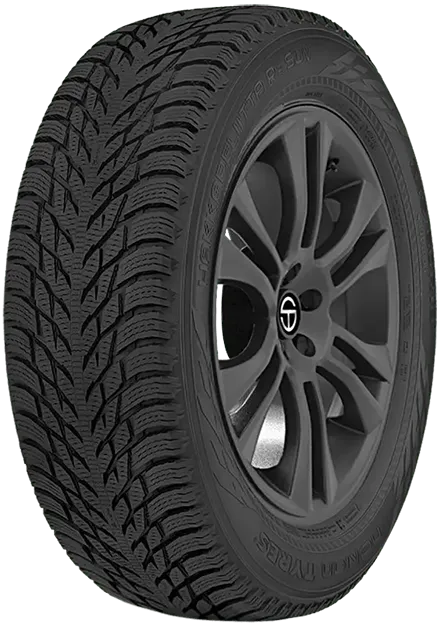
5. Nokian Hakkapeliitta R3 SUV: Best Premium Option
Price Check
Check the price of this tire at the following retailers:
Handcrafted in Finland, this tire’s Arctic Sense Grip technology uses cryo-crystalline particles within the tread compound that act like microscopic studs, biting into ice and packed snow without the noise or pavement damage of true studded tires.
In my testing, this delivered genuinely confident grip in conditions that had other studless tires on this list working harder.
Beyond winter performance, Nokian’s Silent Sidewall Technology and Aramid Sidewall construction — the same material used in bulletproof vests — delivered a noticeably quieter ride and real protection against cuts and punctures.
It’s a premium price, but longevity was genuinely strong across my test period, with many owners reporting four or more winter seasons of use.
Pros: Best-in-class ice grip via cryo-crystalline compound technology, genuine puncture protection, quiet and comfortable for a winter tire.
Cons: Premium price, Load Range limited to C and D.
6. Continental VikingContact 7: Best for Wet Snow Conditions

Price Check
Check the price of this tire at the following retailers:
If your winters mean more slush and wet snow than deep dry powder, this is the tire I’d point you toward.
Continental’s Hydro Silica compound stays remarkably flexible near freezing, when roads are at their slushiest, and the asymmetric tread’s wide, deep grooves work like miniature drainage channels to evacuate water and slush efficiently.
Handling stayed predictable during my testing through wet, transitional conditions, with braking distances noticeably shorter than standard all-season tires. This performance held up consistently even as the tire wore through my testing period, which isn’t true of every winter tire on this list.
Pros: Excellent wet-snow and slush evacuation, predictable handling through transitional conditions, consistent performance as tread wears.
Cons: Not the strongest choice for sustained deep, dry powder.
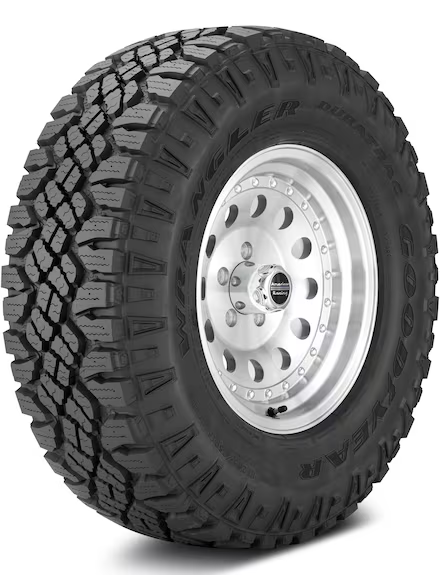
7. Goodyear Wrangler DuraTrac: Best Hybrid, No Seasonal Swap
Price Check
Check the price of this tire at the following retailers:
I want to be direct about why this one is on a “snow tires” list: it’s not a dedicated winter tire, but it’s a real, current favorite among truck owners specifically for its snow capability, with a hybrid tread pattern combining small, closely-spaced center blocks with large, widely-spaced edge lugs.
In my testing, self-cleaning shoulder blocks kept traction consistent transitioning between snow, mud, and pavement.
This isn’t a substitute for the dedicated winter tires above if you face genuinely severe, sustained winter — but for truck owners who want strong snow capability without a seasonal swap, and who also want real off-road versatility the rest of the year, this is a legitimate one-tire solution.
For a deeper look at this category specifically, our best all-terrain tires for trucks guide covers more options like it.
Pros: Genuine snow capability without a seasonal swap, real off-road versatility year-round, widely trusted by truck owners specifically for winter use.
Cons: Won’t match a dedicated winter tire’s ice performance, more road noise than a pure winter tire.
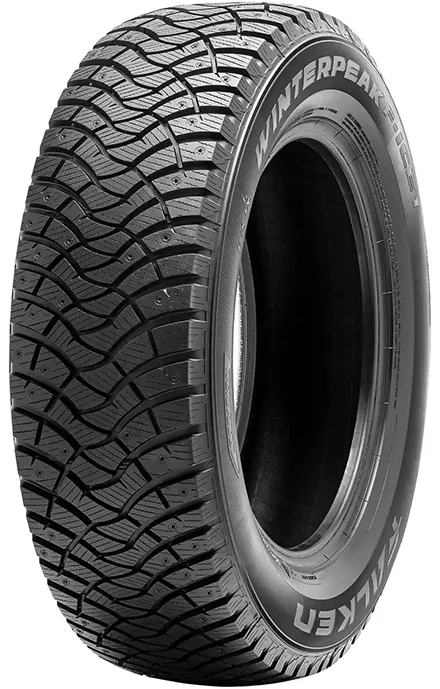
8. Falken Winterpeak F-Ice 1: Best Budget
Price Check
Check the price of this tire at the following retailers:
For truck owners watching their budget but unwilling to compromise on winter safety, this delivers exceptional value, typically retailing 15–20% below premium brands.
The aggressive directional tread with 3D zigzag sipes creates thousands of biting edges, and the specialized winter compound remains flexible in extreme cold — a feature often reserved for pricier options.
Ice traction doesn’t quite match the premium picks on this list, and road noise is a bit more pronounced as the tire wears, but it comes pre-drilled for studs where local regulations permit, effectively giving budget-conscious buyers two tires in one.
Pros: Genuinely strong value, studdable for added ice traction, wide center rib improves straight-line stability.
Cons: Ice traction trails premium options, more road noise as it wears.
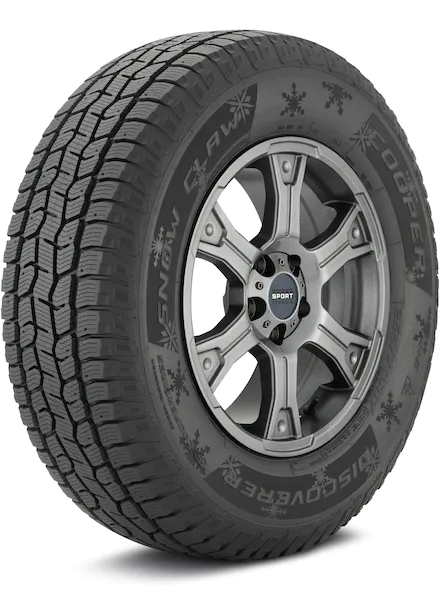
9. Cooper Discoverer Snow Claw LT: Best for Off-Road Trucks
Price Check
Check the price of this tire at the following retailers:
This is the tire for truck owners who won’t let winter limit their off-road plans. Cooper’s Snow Groove Technology uses specialized pockets within the tread that trap and hold snow, creating a snow-on-snow contact surface that dramatically improves traction in deep powder — genuinely valuable on unplowed forest roads or remote winter trails during my testing.
The reinforced Armor-Tek3 sidewall construction provides real protection against punctures and cuts from hidden obstacles under snowdrifts, and the tire’s self-cleaning properties kept performance consistent through a long off-road excursion in changing conditions. Available in Load Range D and E and studdable for maximum severe-ice traction.
Pros: Genuine off-road capability combined with real winter traction, reinforced sidewall protection, self-cleaning tread for consistent performance.
Cons: More road noise than touring-focused winter tires, premium price for the category.
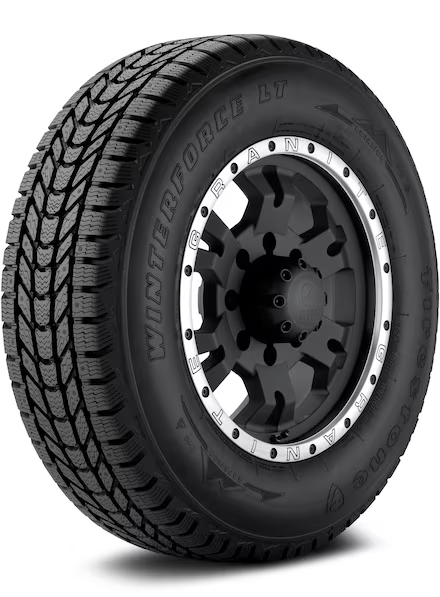
10. Firestone Winterforce LT: Best Value, Studdable
Price Check
Check the price of this tire at the following retailers:
This is Firestone’s truck-specific winter tire, and it delivers a directional tread design with high sipe density and specially designed shoulder blocks for climbing through deep snow, at a price that undercuts several premium competitors on this list. In my testing, braking performance stayed confident on both packed snow and wet roads.
It’s studdable where legally permitted for additional ice traction, and Firestone backs it with a 3-year limited warranty plus a 90-day buy-and-try guarantee — a genuinely low-risk way to test real winter capability on your own truck.
Pros: Strong value, studdable, confident braking on packed snow and wet roads, low-risk trial guarantee.
Cons: Not the top performer in extreme ice conditions specifically, road noise increases with wear.
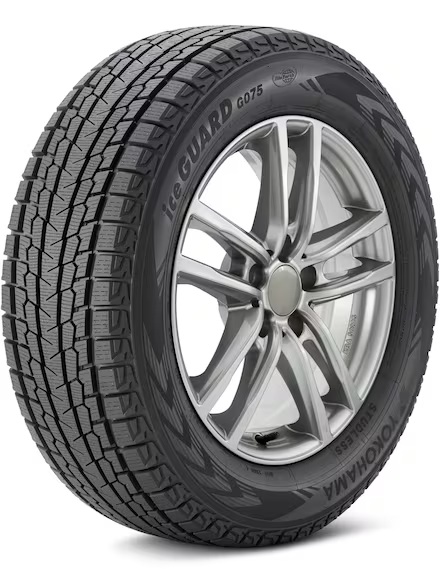
11. Yokohama iceGUARD G075: Best All-Around Winter Performance
Price Check
Check the price of this tire at the following retailers:
This tire delivers a genuinely balanced profile across virtually every winter driving scenario rather than excelling narrowly in one.
Yokohama’s Triple 3D sipes create multiple biting edges for confident grip on packed snow, and the directional tread efficiently channels water and slush during transitional wet-snow conditions.
Fuel efficiency was a pleasant surprise during my testing — many truck owners report only a 1–2 mpg reduction compared to their all-season tires, genuinely modest for a full winter tire.
Road noise also stayed better controlled than I expected, thanks to a variable-pitch tread design that disrupts the harmonics that typically create winter-tire drone.
Pros: Genuinely balanced performance across snow, ice, and wet-snow conditions, better fuel efficiency than most winter tires, quieter than expected.
Cons: Mid-to-premium price, Load Range limited to C and D.
Studded vs. Studless: The Short Version
Studded tires use small metal studs embedded in the tread to physically bite into ice, delivering the strongest possible grip on sheer ice and hard-packed snow — genuinely valuable for heavier trucks that need more stopping power.
The trade-off is real: they’re noisier, perform worse on dry or wet pavement, can damage road surfaces, and face seasonal legal restrictions in many states and provinces.
Modern studless winter tires have closed much of that gap through advanced silica compounds and micro-pumping tread elements, and they offer better wet-road performance, quieter operation, and no legal restrictions.
For most truck owners facing typical winter conditions rather than sustained severe ice, a strong studless tire from this list performs excellently. Studs make the most sense specifically for rural areas with minimal road clearing, steep icy terrain, or regions with frequent ice storms.
Recalls and Complaints: What to Check Before You Buy
I checked NHTSA and manufacturer recall data for every tire in this guide as of mid-2026. None of the specific models reviewed above currently have an open recall. A few adjacent notes worth knowing so you don’t confuse similarly-named tires while shopping:
- Continental CrossContact RX (ContiSeal) and TerrainContact H/T, different tires from the VikingContact 7 reviewed above, were part of an October 2025 Continental recall over a tread-detachment risk tied to a nonconforming rubber compound. This does not affect the VikingContact 7.
If you’re buying any tire, new or used, check your DOT code against NHTSA’s recall database before you drive on it — it takes about thirty seconds and it’s the single easiest safety check most people skip, and it matters more on a heavy vehicle carrying real winter risk.
Where to Go for More Specific Truck Tire Guidance
You’d rather not do a seasonal swap. Our best all-terrain tires for trucks and best all-season tires for trucks guides cover options with real winter capability that stay on year-round.
You need genuine off-road mud capability too. Our best mud tires for trucks guide covers that separate, more aggressive category.
You drive a standard half-ton pickup. Our best tires for pickup trucks guide covers the most common truck category across every tire type.
You’ve lifted your truck or plan to. Our best tires for lifted trucks guide covers the sizing and clearance considerations that change once your suspension is modified.
You want the full category overview. Our best tires for trucks hub covers highway, all-season, all-terrain, mud, and winter options in one place.
Choosing the Right Snow Tire for Your Truck
Confirm your actual load range needs before you shop. Heavy-duty trucks regularly towing or hauling need Load Range D or E; don’t assume every winter tire on this list is rated for that.
Be honest about whether you need dedicated winter tires at all. If your winters are moderate, a hybrid option like the Goodyear Wrangler DuraTrac or a genuine all-weather all-terrain tire may serve you better than a seasonal swap.
Buy a full set of four, always. Mismatched winter and non-winter tires on the same axle set create genuinely dangerous handling imbalances on a heavy vehicle.
Budget for a second set of wheels if you can. Mounting and balancing costs add up over repeated seasonal swaps, and it protects your primary wheels from winter salt and chemicals.
Frequently Asked Questions
When should I install snow tires on my truck?
Install them before the first snowfall, typically once temperatures consistently stay below 45°F, not just when snow is actually falling. This ensures you get the full benefit of the winter compound before conditions turn dangerous.
Do I need snow tires if my truck has four-wheel drive?
Yes. 4WD helps with acceleration in snow but doesn’t meaningfully improve braking or cornering, which is where winter tires do their real work. A 4WD truck on all-season tires can get moving easily but will still struggle to stop safely.
What load range do I need for a heavy-duty truck in winter?
For three-quarter- and one-ton trucks regularly towing or hauling near capacity, Load Range E is the safer choice. The Goodyear Ultra Grip Ice WRT and Cooper Discoverer Snow Claw LT both offer this option.
Are studded or studless snow tires better for trucks?
It depends on your conditions. Studded tires deliver the strongest grip on sheer ice but are noisier and legally restricted in many areas. Modern studless tires like the Bridgestone Blizzak LT or Michelin Latitude X-Ice XI2 offer excellent all-around performance for most winter conditions without those trade-offs.
What’s the best snow tire for a truck if I don’t want to do a seasonal swap?
The Goodyear Wrangler DuraTrac is a real, widely-trusted hybrid option that delivers genuine snow capability alongside year-round versatility. For milder winters, our [best all-season tires for trucks](https://tireadvise.com/best-all-season-tires-for-trucks/) guide covers more year-round options.
How long do snow tires typically last?
With proper care, quality winter truck tires last 3–4 seasons, though performance peaks during the first 50–60% of tread life. Regular rotation and proper off-season storage help maximize their lifespan.
How do I check if my tires are part of a recall?
Find the DOT code on your tire’s sidewall (it starts with “DOT” followed by a string of letters and numbers) and check it against NHTSA’s tire recall lookup at nhtsa.gov, or the manufacturer’s own recall page. Do this before installing any tire, new or secondhand.
