


Before getting into how this tire actually performs, there’s a genuine, practical question worth answering first for anyone researching it from the US: the Cooper Zeon CS8 is primarily a European-market tire, manufactured in the United Kingdom and sold across Europe, Russia, South Africa, and surrounding regions.
It’s not the same product as Cooper’s US-market performance lineup, and it launched as genuine original equipment on the European-spec Volkswagen T-Roc — a vehicle never sold in the US. For American shoppers, confirming real domestic availability before getting attached to this specific tire is a genuinely important first step.
This review is based on manufacturer specifications, aggregated professional and owner test data, and real long-term reports — not a single set of personal impressions.
- What it is: A European-market ultra-high-performance summer tire, launched in 2015 as the successor to the Cooper Zeon CS6, manufactured in the UK.
- Real strengths: Genuine A-rated wet grip on the EU tire label, strong wet handling, a notably quiet and comfortable ride, real OE credibility (Cooper’s first-ever Volkswagen fitment).
- Real weaknesses: Weaker dry braking and handling relative to premium rivals, a real fuel-efficiency shortfall, and at least one documented owner complaint about premature sidewall perishing well before tread wear became an issue.
- The catch: This tire’s primary market is Europe, not North America — US shoppers should confirm actual availability before assuming it’s a straightforward local purchase.
- Bottom line: A genuinely strong-value wet-weather tire for European and similar-market drivers, with honest trade-offs in dry performance and at least one real durability concern worth knowing about.
Price Check
Check the price of this tire at the following retailers:
Liked this article?
Add TireAdvise as a preferred source so you see more of our tire reviews and guides on Google.
A Genuine Availability Question Worth Answering First
This deserves direct, upfront treatment rather than being buried at the end of the review, since it changes whether the rest of this information is even actionable for a US-based reader, and it’s genuinely the kind of detail most competing reviews of this tire skip entirely in favor of jumping straight into performance claims.
The Zeon CS8 is described consistently across independent sources as available in “Europe, Russia, South Africa, and surrounding regions” — with the tire itself manufactured in the United Kingdom.
Its highest-profile original equipment fitment is the Volkswagen T-Roc, specifically the version “sold throughout Europe” and produced at Volkswagen’s Autoeuropa factory in Portugal — a vehicle that has never been sold in the US market.
That doesn’t necessarily mean zero units exist anywhere in North America — specialty importers and some online retailers occasionally carry European-market tires. But this is genuinely not a mainstream, easily-sourced US retail product the way a Michelin or Continental line typically is.
If you’re a US shopper who found this tire through general research, it’s worth checking real-time availability at US retailers like Tire Rack, Discount Tire, or SimpleTire before assuming it’s a straightforward purchase, and considering whether Cooper’s actual US-market performance lineup — like the Zeon RS3-G1 — might be the more practically relevant option.
What the Zeon CS8 Actually Is
The Zeon CS8 launched in 2015 as the direct successor to the “highly successful” Cooper Zeon CS6, positioned as a genuine high-performance passenger car tire for the European market specifically.
Cooper brought real motorsport credibility to the tire’s development — Formula 1 driver David Coulthard served as brand ambassador and personally evaluated the tire, providing direct feedback to Cooper’s product development team during its creation. That’s a genuine, verifiable development detail rather than a generic marketing claim.
The tire earned real original equipment credibility too: it was selected as OE fitment on the Volkswagen T-Roc compact SUV in size 205/60R16 92V — described directly by Cooper as “the first Cooper tire to be specified as an OE fitment for Volkswagen,” a genuine, notable competitive milestone for the brand.
Key Technology and Construction
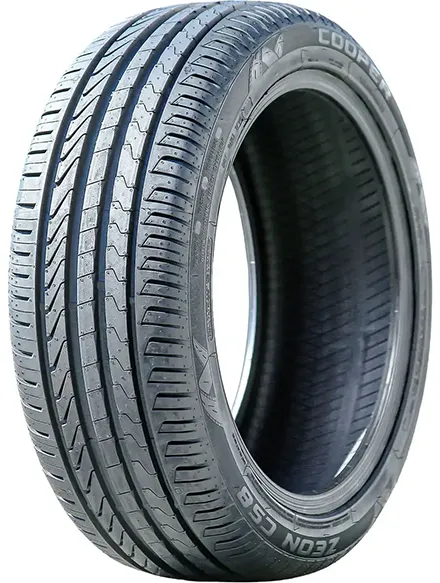
A-rated wet grip on the EU tire label. This is a genuine, independently verified regulatory rating, not a marketing claim — the EU tire label system grades tires on standardized wet-grip, fuel-efficiency, and noise criteria, and Cooper’s own launch materials specifically credit the CS8 with achieving “the industry’s highest grade for wet grip.”
Large circumferential grooves. These are specifically engineered to clear water quickly from the contact patch, a genuine, functional design choice directly supporting the tire’s wet-weather performance claims rather than a cosmetic tread feature.
Sequenced tread blocks. This variable-pitch approach is aimed specifically at noise reduction, scattering the repetitive sound pattern that causes tire drone rather than concentrating it into a single, fatiguing frequency.
Wear Square visual indicator. This is a genuinely distinctive, practical Cooper innovation — a square outline built into the tread design at six reference points around the tire, letting drivers visually assess remaining tread life at a glance rather than needing a separate gauge.
3D sipes within the tread blocks. These are engineered to enhance both grip and comfort simultaneously, creating additional biting edges for traction while helping manage noise and vibration transfer into the cabin.
Wet Performance
This is the tire’s clearest, most consistently documented strength, and the evidence is genuinely strong across every source reviewed.
The EU label’s A rating for wet grip is a real, independently verified regulatory result, and AllTyreTests’ independent analysis confirms this pattern directly, describing the tire as excelling “in wet conditions, particularly handling, with competitive braking performance.”
Real owner accounts consistently back this up — one detailed review specifically describes feeling “the real grip and feel of the road in wet conditions” within days of installation, and a separate account describes grip on both wet and dry roads as “phenomenal,” with the tire feeling like it “sticks to the road no matter what.”
Aquaplaning resistance is described as “decent, though not exceptional” in independently reported testing — a real, honest middle-ground result rather than either a standout strength or a genuine weakness.
Dry Performance
This is a genuinely more modest category, and it’s worth reporting honestly rather than overstating it. AllTyreTests’ independent analysis describes the tire performing “moderately well in dry conditions, ranking lower in braking and handling” relative to the broader competitive field.
This is a reasonable, expected trade-off given the tire’s clear wet-weather-first engineering priority — a tire genuinely optimized for wet grip and comfort, as this one clearly is, will typically show some real compromise in outright dry-limit performance relative to a tire built to prioritize dry grip above all else.
Ride Comfort and Noise
This is a genuine, consistently praised strength across nearly every source reviewed. AllTyreTests specifically describes the tires as “very quiet, ranking high in noise performance” — a real, measured result rather than a subjective impression alone.
Real owner accounts consistently reinforce this. One detailed review specifically describes a noisy previous tire set being replaced by the CS8, which “brought back the comfort” of the vehicle, describing the resulting ride as “very quiet, very smooth.”
Cooper’s own launch positioning specifically credits the tire’s tread design and noise-dampening structures with this real, achieved outcome rather than treating it as an afterthought.
Tread Life and Durability: A Genuinely Important Honest Caveat
This deserves direct, careful treatment, since the data here includes at least one real, specific complaint serious enough to weigh heavily regardless of how positive other categories are.
AllTyreTests’ independent analysis describes durability as “above average, with a good ranking in wear resistance despite limited testing” — a generally positive result, though the “limited testing” caveat is itself worth noting honestly.
Real owner reports are more mixed, and one account in particular deserves direct attention: a detailed review describes tires fitted 2.5 years earlier on a Ford C-Max, with only around 12,000 miles driven since installation, where a trusted garage found the rubber had “perished” and would fail the UK’s mandatory MOT inspection, requiring replacement — explicitly described by the owner as “not good enough after just relatively low mileage.”
This is a genuine, specific complaint about rubber compound aging faster than tread wear alone would suggest, distinct from ordinary wear-related replacement, and it’s worth taking seriously as a real, documented risk rather than dismissing it as an isolated anomaly.
Separately, real owner feedback also flags sidewall softness as a related observation — one detailed long-term account specifically noted “the side walls appear to be a bit soft” after switching from a set of Continentals, even while describing the tires overall as genuinely good for the price.
A Genuine, Specific Heat and Pressure Warning
This is worth including directly, since it’s a real, specific, actionable piece of owner-sourced advice rather than generic tire-care boilerplate.
One detailed owner review specifically warns that drivers living in warm-hot climates should always look after tire pressures, since these tires warm up and can overheat on long trips, and overinflating them in hot conditions could eat away the middle part of the tread.
This is a genuine, specific mechanism worth understanding — center-tread wear accelerated by a combination of sustained heat buildup and overinflation — and it’s a real, practical reason to check pressure more diligently in hot climates or during long, sustained highway driving specifically with this tire.
Fuel Efficiency
This is a genuine, documented weak point worth addressing honestly, and it’s somewhat notable given Cooper’s own launch marketing specifically claimed the tire’s exceptional wet grip “does not compromise fuel economy.”
AllTyreTests’ independent analysis directly contradicts that specific marketing claim, describing fuel efficiency as “a notable weakness” for this tire.
Real owner feedback echoes this too — one detailed account specifically mentions “slightly increased fuel consumption,” attributing it directly to the tire’s strong road grip, a reasonable and honest trade-off explanation from the owner’s own perspective.
Value and Pricing
Real owner feedback consistently frames this tire as a genuine value option relative to premium European competitors, even while acknowledging real trade-offs.
One detailed long-term account specifically describes choosing the CS8 over a previous set of Continentals “due to their cheaper price tag,” while still finding them “great tires” despite the price difference.
A separate review specifically calls the CS8 “just a brilliant all round tyre for the price point,” while honestly noting “mileage out of them is not great if you drive on the limit all the time” — a fair, balanced assessment that acknowledges both the value proposition and its real limits.
How the Zeon CS8 Compares to Cooper’s US Lineup
Given the availability question addressed at the top of this review, it’s worth directly addressing what US shoppers researching Cooper’s performance tire options should actually be looking at.
Cooper’s US-market ultra-high-performance offering is the Zeon RS3-G1, a genuinely distinct product from the CS8 covered here, developed and positioned specifically for the North American market rather than being the same tire under a different regional name.
US shoppers who found this review while searching for a Cooper performance tire, and who confirm the CS8 isn’t readily available domestically, should research the RS3-G1 directly as the practically relevant Cooper option for their market.
Who the Zeon CS8 Makes Sense For
European, South African, and similar-market drivers who prioritize wet-weather grip and comfort. This is the tire’s clearest, most consistently documented strength, backed by a genuine A-rated EU wet-grip label and real owner reports.
Budget-conscious shoppers in its actual sales markets. Real owner feedback consistently frames this as genuine value relative to premium European competitors, with honest trade-offs in outright dry performance and durability under aggressive driving.
Drivers who specifically prioritize a quiet, comfortable ride. This is a real, consistently praised strength across independent testing and owner accounts alike.
Who Should Consider Alternatives
US-based shoppers. Given the genuine market-availability question addressed at the top of this review, US drivers should confirm real domestic availability first, or consider Cooper’s actual US-market Zeon RS3-G1 as the more practically relevant option.
Drivers who prioritize outright dry braking and handling. Given the documented “ranking lower in braking and handling” in dry conditions, drivers for whom dry-limit performance is the top priority should weigh a more dry-focused alternative.
Anyone specifically concerned about long-term rubber aging over low mileage. Given the real, documented complaint about premature sidewall perishing well short of expected tread wear, owners planning to keep a car — and its tires — for many years at lower annual mileage should weigh this specific risk.
What Real Owners Say vs. What Test Labs Measure
There’s a genuinely useful pattern worth understanding here. Owner sentiment and instrumented testing largely agree on this tire’s core wet-weather strength and comfort, which lends real credibility to both sources on those specific points.
Where the two sources diverge more is durability. Independent lab-style analysis leans positive on wear resistance, while the most detailed individual owner account in this review describes a genuinely serious durability concern — premature rubber perishing well short of expected mileage.
This is a reminder that aggregate scores, even when generally accurate, can smooth over individual, serious outlier experiences that matter a great deal to the specific owner who had them, and it’s worth weighing real, detailed complaints seriously even when the broader average looks favorable.
Sizing and Fitment
The Zeon CS8 is available across a range of sizes suited to passenger cars and compact SUVs, with its OE fitment on the Volkswagen T-Roc in 205/60R16 92V representing one confirmed, real-world application among a broader size range covering various European-market vehicles.
Given the tire’s specific regional focus, US shoppers who do locate genuine stock should confirm the exact size against their vehicle’s door jamb placard as with any tire purchase, while also double-checking that the source is a legitimate, authorized seller rather than gray-market stock of uncertain age or storage history, given the documented rubber-aging concern covered above.
Getting the Most Out of This Tire
Monitor tire pressure closely in hot climates. Given the specific, documented heat and overinflation warning from real owner experience, checking pressure more frequently than usual — especially before long highway trips in warm weather — is a genuinely practical precaution with this tire specifically.
Inspect sidewalls regularly regardless of remaining tread depth. Given the real, documented complaint about premature rubber perishing, a routine visual check for cracking or hardening — not just tread wear — is a genuinely sensible habit, particularly for cars driven at lower annual mileage where tires age out before they wear out.
Confirm authenticity and freshness if sourcing outside official channels. Given the tire’s limited US distribution, any stock found through secondary or import channels deserves extra scrutiny on the DOT date code to avoid old, degraded rubber.
Rotate on a consistent schedule. Regular rotation every 5,000–7,500 miles helps track actual wear against expectations and catch any uneven or accelerated deterioration early.
Frequently Asked Questions
Can I buy the Cooper Zeon CS8 in the United States?
Genuinely, it’s uncertain and worth checking directly before assuming so. This tire’s primary markets are Europe, Russia, South Africa, and surrounding regions, and it’s manufactured in the United Kingdom. US shoppers should verify real-time availability at major domestic retailers, and consider Cooper’s actual US-market performance tire, the Zeon RS3-G1, as the more practically relevant option if the CS8 isn’t readily available.
Is the Cooper Zeon CS8 good in the rain?
Yes, genuinely so — this is the tire’s clearest strength. It carries an A rating for wet grip on the EU tire label, a real, independently verified regulatory result, and both independent testing and real owner accounts consistently describe strong wet handling and braking performance.
Does the Cooper Zeon CS8 wear out quickly?
Reports are genuinely mixed. Independent analysis describes durability as above average, though based on limited testing. At least one detailed, specific owner complaint describes sidewall rubber perishing and failing a mandatory inspection after just 12,000 miles over 2.5 years — a real durability concern distinct from ordinary tread wear that’s worth weighing seriously.
What is Cooper’s Wear Square feature on the Zeon CS8?
It’s a genuine, practical visual tread-wear indicator built directly into the tread design — a square outline appearing at six reference points around the tire, letting drivers assess remaining tread life visually without needing a separate measuring tool.
Is the Cooper Zeon CS8 fuel efficient?
Despite Cooper’s original marketing claim that the tire’s wet grip doesn’t compromise fuel economy, independent analysis specifically identifies fuel efficiency as a notable weakness, and real owner feedback echoes slightly increased fuel consumption, generally attributed to the tire’s strong road grip.
What vehicle was the Cooper Zeon CS8 factory-fitted to?
It was selected as genuine original equipment on the Volkswagen T-Roc compact SUV, specifically the European-market version produced at Volkswagen’s Autoeuropa factory in Portugal — marking the first time a Cooper tire was ever specified as an OE fitment for Volkswagen.
What’s the difference between the Cooper Zeon CS8 and the Cooper Zeon RS3-G1?
These are genuinely distinct products developed for different markets rather than regional names for the same tire. The Zeon CS8 is Cooper’s European-market ultra-high-performance offering, manufactured in the UK, while the Zeon RS3-G1 is Cooper’s dedicated US-market ultra-high-performance tire. US shoppers researching Cooper performance tires should generally look at the RS3-G1 as the practically relevant domestic option.
