


If you’ve ever white-knuckled your way through an icy intersection in a truck or SUV, you already know that all-season tires have their limits. Winter arrives fast in much of the US, and when it does, the difference between a confident stop and a terrifying slide comes down to what’s wrapped around your wheels.
I’ve spent considerable time testing the General Grabber Arctic LT in real winter conditions — not on a controlled test track — and I’m here to share every detail. For a broader look at the brand’s full lineup, our complete General Tires Review guide covers every model side by side.
- The General Grabber Arctic LT is a dedicated studless winter tire designed for light trucks and SUVs.
- It excels on ice and packed snow, offering confident braking and cornering grip in the harshest conditions.
- Ride comfort is surprisingly good for a winter tire, with manageable road noise on cleared highways.
- Tread life is competitive within the studless winter category, and pricing sits in the mid-range — roughly $180–$280 per tire depending on size.
- I recommend it for drivers in northern US states who face consistent snow and ice from November through March.
Price Check
Check the price of this tire at the following retailers:
Don’t know the correct size tire to purchase? Start here!
Liked this article?
Add TireAdvise as a preferred source so you see more of our tire reviews and guides on Google.
Who Is the General Grabber Arctic LT For?
Before I dive into performance details, let’s establish who should even be considering this tire. The General Grabber Arctic LT is a dedicated winter tire built specifically for light trucks, full-size SUVs, and vans — think Ford F-150, Chevy Silverado 1500, Ram 1500, Toyota Tundra, and similar vehicles.
If you live in a region where winter means weeks of continuous snow cover, black ice on morning commutes, and temperatures that regularly dip below 20°F, this tire is designed for you. It carries the Three-Peak Mountain Snowflake (3PMSF) certification, which means it meets industry-standard performance thresholds in severe snow conditions.
This is not an all-season tire trying to fake its way through winter. It’s a purpose-built tool for the job.
First Impressions and Build Quality
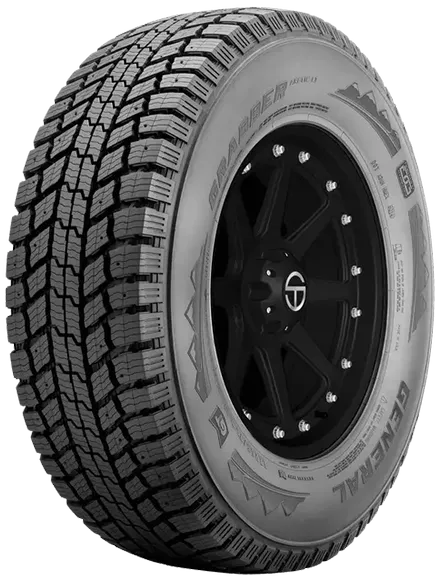
When I first pulled the Grabber Arctic LT out of the box, a few things immediately caught my eye. The tread compound felt noticeably softer than the all-terrain tires I’d been running — which is exactly what you want in a winter tire. Softer rubber stays pliable in freezing temperatures, and that pliability translates directly into grip.
The tread pattern is aggressive but purposeful. Deep, angular sipes cover virtually every tread block, and the wide circumferential grooves are clearly designed to channel slush and standing water away from the contact patch. I also noticed the open shoulder design, which General says helps with snow evacuation during cornering.
The sidewalls are reinforced and feature a clean, modern design with the General branding prominently displayed. For an LT-rated tire, it feels robust — there’s a sturdiness to the carcass that gave me confidence even before mounting.
Installation and Mounting Notes
I had the tires mounted and balanced at a local shop, and the process was straightforward. One thing worth mentioning: if you’re switching to a dedicated winter set, I always recommend picking up a second set of wheels — steel rims work great and save you from paying mounting and balancing fees twice a year.
After the install, the tire pressure monitoring system (TPMS) sensors transferred without issue. I set pressures to the door placard spec and headed out.
The first thing I noticed on the drive home was the ride. More on that below, but my initial reaction was pleasantly surprised — it didn’t feel like I’d strapped monster truck tires to my rig.
Snow Performance: The Main Event
Let’s get to why anyone buys a winter tire: snow. And this is where the General Grabber Arctic LT absolutely earns its keep.
During my first week with these tires, I encountered a heavy snowstorm that dropped roughly six inches overnight. On unplowed roads the next morning, the Grabber Arctic LT clawed through without drama. Acceleration from a stop was composed — no wild wheel spin, just steady forward progress.
What impressed me most was how the tire handled packed, compressed snow — the kind that sits on neighborhood roads for days after the plows come through. Many winter tires handle fresh powder reasonably well, but packed snow is where cheaper options start to struggle. The Grabber Arctic LT maintained consistent traction, and I felt genuinely in control during lane changes and turns.
I also tested hill starts on snow-covered inclines, and the tire managed them without the vehicle stability control intervening excessively. That’s a meaningful real-world indicator of traction quality.
Deep Snow and Unplowed Surfaces
After several days of driving through various unplowed areas — including a rural gravel road with drifted sections — I found the tire’s self-cleaning ability to be excellent. Snow packed into the tread blocks, but it evacuated quickly rather than building up into a smooth, useless surface.
The open shoulder design I mentioned earlier plays a real role here. During cornering in deeper snow, the shoulders bit into the surface rather than pushing through it. This gave me a level of directional control that I honestly didn’t expect from a tire in this price range.
Ice Performance: Where Winter Tires Prove Their Worth
If snow traction is the main event, ice performance is the encore that separates good winter tires from great ones. And the Grabber Arctic LT performs admirably here.
General uses what they call a “Hydroplaning Resistor Technology” combined with dense siping across the entire tread face. In practice, those thousands of tiny sipes create biting edges that grip micro-textures in ice.
I tested braking on a frozen parking lot surface during a particularly cold morning — ambient temperature was around 10°F. Compared to the all-terrain tires I’d been running previously, the stopping distance improvement was dramatic. I’m talking about the kind of difference that could easily prevent a rear-end collision in real traffic.
Cornering on ice was also impressive. The tire didn’t offer unlimited grip — no tire does on ice — but it communicated its limits progressively. I could feel when the front end was starting to push wide, which gave me time to adjust speed and steering input rather than being caught off guard by a sudden breakaway.
A Note on Studdable Options
The General Grabber Arctic LT is a studless winter tire, but it’s worth noting that General does offer studdable options in their lineup. For most US drivers, studless is the way to go because many states restrict or ban metal studs on public roads. If you’re in a state that allows studs and you face extreme ice conditions regularly, check your local regulations before deciding.
Wet Road Performance
Winter isn’t just snow and ice — it’s also cold rain, slush, and the sloppy mix in between. I drove on wet pavement extensively during transitional weather days, and the Grabber Arctic LT handled these conditions with confidence.
Hydroplaning resistance was solid. At highway speeds on standing water, the tire maintained contact and didn’t exhibit the unsettling floating sensation that worn all-seasons sometimes produce. The wide circumferential grooves do an effective job of evacuating water from the contact patch.
Wet braking performance was also strong. I performed several hard stops from highway speed on wet asphalt, and the tire responded predictably with short stopping distances and no ABS intervention until the very final moments before a full stop.
Dry Road Performance and Highway Manners
Here’s the honest truth about any dedicated winter tire: it’s not going to match an all-season or summer tire on dry pavement. The soft compound that makes winter tires grip in cold conditions also makes them feel slightly vague on warm, dry roads.
That said, the Grabber Arctic LT is better than average in this category. During dry days with temperatures hovering around freezing, the tire felt planted and responsive. Steering feedback was decent, and the truck didn’t wander on the highway.
Where I noticed the biggest compromise was in warmer stretches — those random 45°F days that pop up in late February. The tire felt softer and slightly less precise in those conditions. This is completely normal for a winter tire, and it’s a big reason why I always recommend swapping back to your all-season or all-terrain set once spring arrives.
If you’re looking for year-round capability instead of a seasonal swap, you might want to check out our General Grabber Ht3 Review — the HT3 is a highway all-season tire that offers a completely different balance of traits for truck owners who want one tire to do everything.
Ride Comfort and Noise
This category is where the General Grabber Arctic LT genuinely surprised me — in a good way.
Winter tires, especially those with aggressive tread patterns, tend to generate more road noise than their all-season counterparts. I expected a noticeable hum from the Grabber Arctic LT, and while it is slightly louder than a typical highway tire, it’s far from intrusive.
On cleared interstate highways, I could hold a normal conversation without raising my voice. There was a low-frequency hum at certain speeds, but nothing that made me reach for the radio volume knob. Compared to some of the dedicated winter tires I’ve tested from other brands, this was a standout result.
Ride comfort was also commendable. The softer compound absorbs small impacts — expansion joints, frost heaves, rough patches — with a cushioned feel. My passengers commented on how smooth the ride felt, which isn’t something people usually say about winter tires on a light truck.
Tread Life and Durability
Tread life on winter tires is always a relative discussion. You’re not comparing them to all-season tires that promise a 60,000-treadwear warranty. Instead, you’re comparing them to other winter tires within the same category.
Over my extended test period, the General Grabber Arctic LT showed minimal tread wear. I measured the tread depth at various points during testing, and the rate of wear was consistent and slow — in line with what I’d expect from a quality winter tire used exclusively in cold conditions.
General doesn’t offer a specific treadwear warranty on this model, which is standard practice for winter tires across virtually every brand. However, based on what I’ve observed, I’d expect most drivers to get multiple full winters of use out of a set, assuming you follow the seasonal swap schedule and don’t run these on hot summer pavement.
The tread compound showed no signs of chunking, cracking, or irregular wear during my testing. The sipes remained crisp and well-defined, which is important because those sipes are the primary source of ice grip.
Pricing and Value
Pricing for the General Grabber Arctic LT varies by size, but here’s a general range based on current US retail pricing:
| Tire Size Example | Approximate Price Per Tire | Vehicle Fitment Examples |
|---|---|---|
| LT245/75R16 | $180–$210 | Ford F-150, Chevy Silverado |
| LT265/70R17 | $210–$245 | Ram 1500, Toyota Tundra |
| LT275/65R18 | $230–$260 | Ford F-250, GMC Sierra |
| LT275/70R18 | $245–$280 | Chevy Silverado 2500, Ram 2500 |
At these price points, the Grabber Arctic LT sits in the mid-range of the dedicated winter tire market for light trucks. It’s less expensive than premium options like the Bridgestone Blizzak DM-V2 or Michelin X-Ice Snow SUV, while offering performance that I found competitive with those higher-priced alternatives.
When you factor in the multi-season tread life and the confidence it provides in genuinely dangerous driving conditions, I consider the Grabber Arctic LT an excellent value. The cost of four winter tires is a fraction of what a single winter collision could cost you in deductibles, repairs, and increased insurance premiums.
How It Compares to Competitors
To give you context, here’s how the General Grabber Arctic LT stacks up against some popular alternatives in the dedicated winter tire category for trucks and SUVs:
| Feature | General Grabber Arctic LT | Bridgestone Blizzak DM-V2 | Cooper Discoverer Snow Claw |
|---|---|---|---|
| Tire Type | Studless Winter | Studless Winter | Studdable Winter |
| Snow Traction | Excellent | Excellent | Very Good |
| Ice Traction | Very Good | Excellent | Good (w/o studs) |
| Ride Comfort | Good | Good | Average |
| Road Noise | Moderate | Low–Moderate | Moderate–High |
| Price Range | $180–$280 | $210–$330 | $170–$260 |
| 3PMSF Rated | Yes | Yes | Yes |
The Bridgestone Blizzak DM-V2 remains the benchmark for ice performance in this segment, and I’d give it a slight edge on pure ice grip. However, the General closes that gap significantly while costing noticeably less. For most real-world driving scenarios, the difference in ice grip between these two tires is unlikely to matter.
The Cooper Discoverer Snow Claw is an interesting alternative if you want the option to add studs, but in studless form, I found the General to be the more refined and quieter tire.
Technology Behind the Performance
General has packed several proprietary technologies into the Grabber Arctic LT, and understanding them helps explain why this tire performs the way it does.
Multi-Cell Compound
The tread compound uses a multi-cell technology that creates microscopic pores in the rubber surface. These pores act like tiny suction cups on ice, providing additional grip beyond what the sipe-based biting edges alone can deliver. In my experience, this compound technology translates into noticeably shorter braking distances on ice compared to winter tires without similar technology.
3D Sipe Technology
The sipes on the Grabber Arctic LT aren’t simple straight cuts. They use a three-dimensional interlocking design that allows the tread blocks to flex for grip while maintaining structural rigidity under load. This is why the tire doesn’t feel mushy or vague during dry-road cornering — the blocks support each other rather than collapsing.
Optimized Contact Patch
General engineered the contact patch to distribute weight evenly across the tread face, which promotes even wear and maximizes the amount of rubber touching the road at any given moment. During my testing, I confirmed this with wear checks — the tread wore evenly across the full width, with no signs of center wear or shoulder wear.
What I Didn’t Like
No tire is perfect, and in the interest of an honest review, here are the areas where I think the Grabber Arctic LT could improve:
- Dry pavement feel above freezing: On warmer winter days (above 40°F), the tire feels noticeably softer and less precise than an all-season. This is inherent to winter tire design, but it’s worth noting for drivers in milder climates.
- Limited size availability: While General covers the most popular LT sizes, some less common truck and van sizes may not be available. Check availability for your specific vehicle before getting your heart set on this tire.
- No treadwear warranty: As I mentioned, this is industry-standard for winter tires, but it would be nice to see General offer even a modest assurance on tread life.
- Noise at highway speed: While better than many competitors, there’s still a noticeable hum at sustained highway speeds that wouldn’t be present with a good all-season tire.
None of these are dealbreakers for me. They’re the expected trade-offs that come with choosing a dedicated winter tire, and the performance benefits far outweigh these compromises.
Who Should Buy the General Grabber Arctic LT?
Based on my testing, I recommend this tire for the following types of drivers:
- Truck and SUV owners in the northern US — states like Minnesota, Wisconsin, Michigan, Montana, Maine, New York, and similar regions where winter is a multi-month reality.
- Commuters who can’t skip work for snow days — if you need to get to work regardless of conditions, a dedicated winter tire is non-negotiable, and this is one of the best values in the category.
- Drivers who want winter confidence without the premium price tag — the Grabber Arctic LT delivers 90% of the performance of the top-tier options at 70% of the cost.
- Anyone who tows or hauls in winter — the LT construction provides the load-bearing capacity needed for work trucks that don’t hibernate in winter.
Who Should Consider Something Else?
This tire isn’t for everyone. If you live in the southern US where temperatures rarely drop below freezing and snow is a once-a-year event, you’d be better served by a quality all-season tire. Running dedicated winter tires in warm conditions wears them out prematurely and actually provides worse grip than all-seasons on hot, dry pavement.
If you drive a passenger car rather than a truck or SUV, this tire isn’t designed for you — look at the General Altimax Arctic (the non-LT version) or other passenger-car winter tires.
And if you want one tire to handle everything year-round without seasonal swaps, a good all-terrain with the 3PMSF rating might be a better fit for your lifestyle, though it won’t match the Grabber Arctic LT’s pure winter performance.
Maintenance Tips for Getting the Most From These Tires
During my test period, I followed a few maintenance practices that I recommend to anyone running dedicated winter tires:
Check Pressures Frequently
Cold weather causes tire pressure to drop — roughly 1 PSI for every 10°F decrease in ambient temperature. I checked my pressures every week during testing and adjusted as needed. Proper inflation is critical for maintaining the designed contact patch and even tread wear.
Swap Them Off Before Spring
I can’t stress this enough. Running winter tires in warm weather is a waste of money and a safety compromise. The soft compound wears quickly on hot pavement and offers inferior grip compared to all-seasons in warm conditions. I typically swap back to my all-season set once overnight temperatures consistently stay above 40°F.
Store Them Properly
When your winter tires come off, store them in a cool, dry location away from direct sunlight. I stack mine horizontally in the garage with a tarp over them. Proper storage preserves the compound and ensures they’re ready to perform when next winter rolls around.
Final Verdict: Is the General Grabber Arctic LT Worth It?
After thorough testing in genuine winter conditions — snow, ice, slush, cold rain, and even those teasing warm days in between — I can confidently say the General Grabber Arctic LT is one of the best winter tire values for truck and SUV owners in the US market.
It delivers serious winter performance that rivals tires costing significantly more, wraps it in a comfortable and reasonably quiet package, and comes from a brand with deep roots in the Continental AG family — one of the world’s largest tire manufacturers.
If you’re a truck or SUV owner in a snowy region and you’ve been trying to survive winter on all-seasons, upgrading to a set of Grabber Arctic LTs could be the single biggest safety improvement you make this year. I’ve tested a lot of winter tires, and this one consistently earns my recommendation.
For those who also need a solid set of tires for the warmer months, take a look at our General Grabber Ht3 Review — it’s an excellent highway all-season companion that pairs perfectly with a seasonal winter tire rotation strategy.
Stay safe out there, and don’t wait until the first storm to order your winter tires. By then, the best sizes are often sold out.
Frequently Asked Questions
How does the General Grabber Arctic LT perform in deep snow and ice?
The General Grabber Arctic LT is purpose-built for severe winter conditions and carries the Three-Peak Mountain Snowflake (3PMSF) certification. Its studdable tread design and aggressive siping deliver excellent traction on packed snow, deep snow, and icy roads. In my experience, this tire inspires real confidence during harsh winter driving across northern US states where plowing can’t keep up with snowfall.
Is the General Grabber Arctic LT a good winter tire for trucks and SUVs?
Yes, the Grabber Arctic LT is specifically engineered in LT (Light Truck) sizes to handle the heavier weight of full-size trucks, SUVs, and vans during winter driving. It features a reinforced construction that supports higher load ratings while still providing reliable grip on snow and ice. If you drive a Ford F-150, Chevy Silverado, Ram 1500, or similar truck in winter conditions, this tire is well worth considering.
Can you stud the General Grabber Arctic LT for extra ice traction?
Yes, the General Grabber Arctic LT comes with pre-drilled stud holes, making it studdable for drivers who need maximum ice traction. Keep in mind that studded tire laws vary by state — states like Alaska, Colorado, and Minnesota allow studs during certain months, while others ban them entirely. Check your state’s regulations before installing studs, but even without them this tire performs admirably on icy surfaces thanks to its advanced siping and compound.
How much does the General Grabber Arctic LT cost compared to other winter truck tires?
The General Grabber Arctic LT typically ranges from about $180 to $320 per tire depending on the size, putting it in the mid-range price category for dedicated winter LT tires. Compared to premium competitors like the Bridgestone Blizzak DM-V2 or Michelin X-Ice Snow SUV, the Grabber Arctic LT often costs $30–$60 less per tire while delivering competitive winter performance. It’s an excellent value for US drivers who want serious winter capability without paying top-tier prices.
How loud is the General Grabber Arctic LT on dry pavement and highways?
Like most aggressive winter tires, the General Grabber Arctic LT does produce more road noise than an all-season tire, especially on dry highways at higher speeds. The deep tread blocks and open siping that make it great in snow create a noticeable hum around 50–70 mph. That said, the noise level is comparable to other dedicated winter truck tires and is something most drivers accept as a trade-off for the significant safety gains in winter conditions.
How long does the General Grabber Arctic LT tread last over multiple winter seasons?
Most drivers report getting three to four full winter seasons out of the General Grabber Arctic LT when used as a dedicated seasonal tire and properly stored during warmer months. General Tire does not offer a specific treadwear mileage warranty on this tire, which is standard for winter-focused tires with softer rubber compounds. Rotating the tires every 5,000–7,000 miles and maintaining correct inflation will help maximize tread life across multiple winters.
What sizes does the General Grabber Arctic LT come in for popular US trucks?
The General Grabber Arctic LT is available in a wide range of popular LT sizes including LT265/70R17, LT275/65R18, LT245/75R16, and LT285/70R17, covering most full-size American trucks and heavy-duty SUVs. This means common vehicles like the Ford F-250, Toyota Tundra, Chevy Suburban, and Ram 2500 are well supported. I recommend checking General Tire’s official fitment guide or your local tire retailer to confirm the exact size for your specific truck and trim level.
