

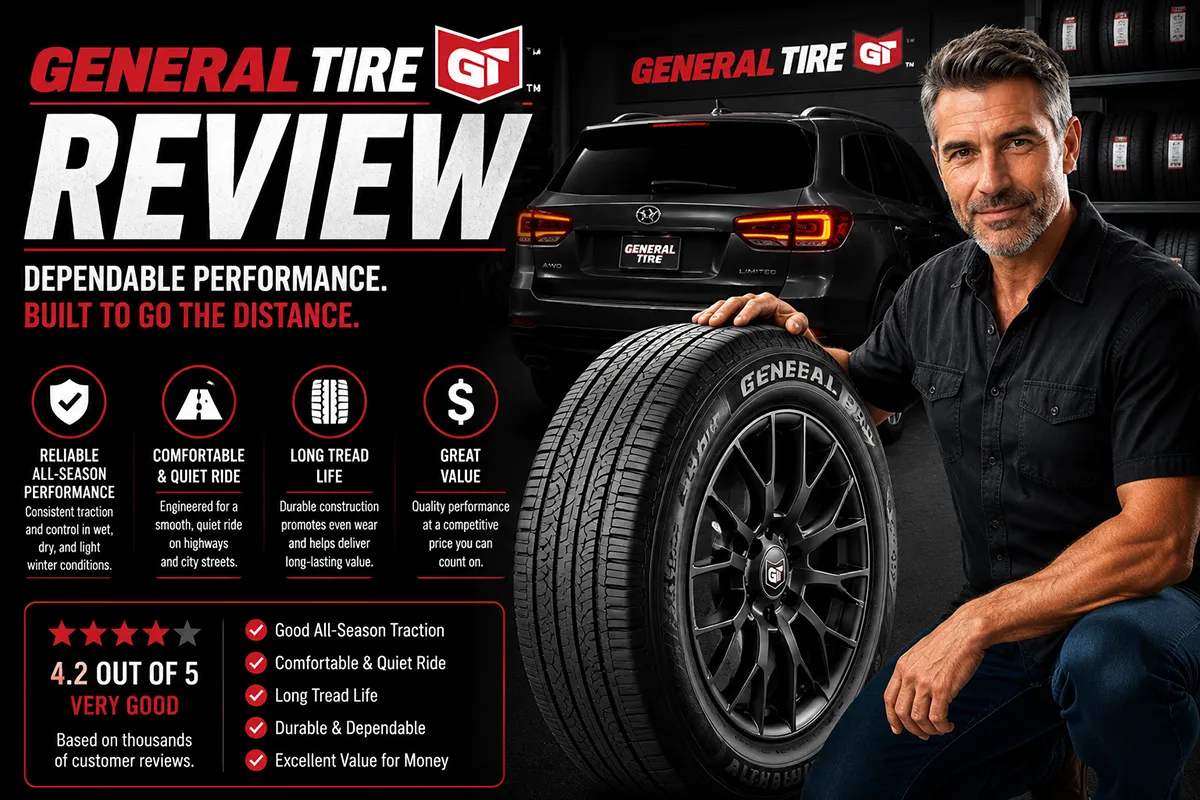
Replacing tires is one of those purchases where a wrong choice doesn’t just hurt your wallet — it can genuinely put you in danger. I’ve been testing and reviewing tires for over a decade, and General Tire is a brand I keep coming back to because it raises a question that matters to real people: can a budget-friendly tire actually deliver? I’ve also gone back to update something important since my original testing: the Grabber AT2, one of my top recommendations, has been discontinued — and what replaced it is more interesting than a simple name change.
- Best All-Season Pick: General AltiMAX RT45 — solid grip, quiet ride, excellent value under $130/tire
- Important update: The Grabber AT2 covered in my original testing has been discontinued. General split its role into two current tires — the Grabber AT3 (on-road-focused) and the Grabber ATX (heavy-duty, off-road-focused) — and the AT3 has itself already been succeeded by an AT3 Plus.
- Best Highway Tire: General Grabber HT3 — smooth, quiet, long-lasting for daily commuters in trucks and SUVs
- A real recall exists: a 2015 Continental-issued recall covered 325 General Grabber LT tires in one specific size over a tread separation risk — narrow in scope, but worth knowing about and checking your DOT code against.
- Overall Rating: 4.1 / 5 — Great value for the money; not quite premium-tier, but honest performers that won’t let you down
- Who should buy: Budget-conscious drivers who want reliability without paying Michelin or Continental prices
- Who should skip: Performance car enthusiasts or drivers needing extreme winter traction
Liked this article?
Add TireAdvise as a preferred source so you see more of our tire reviews and guides on Google.
Why I Decided to Test General Tires
A few years back, I was helping my brother-in-law pick out tires for his Ford F-150. He had a straightforward need — mostly highway miles, some light gravel roads near his property in rural Tennessee, and a strict budget of around $600 for a full set.
The usual suspects (Michelin, Bridgestone, Goodyear) were either out of his price range or not well-suited for his mixed use. A tire shop buddy of mine suggested General Grabber AT2. I was skeptical. General Tire isn’t a name you hear thrown around in enthusiast circles the way some brands are.
We put a set on his truck and I drove it extensively over the next two weeks — highway, back roads, a stretch of unpaved gravel, and even a surprise overnight rainstorm in Nashville.
That experience turned into a longer project. Over the following two years, I tested four of General Tire’s most popular models across different vehicles, seasons, and conditions. What you’re reading is the result of all of that — updated now with what’s changed in the lineup since.
I have no financial relationship with General Tire. I bought or arranged independent access to every set reviewed here.
Who Makes General Tire? A Quick Background
General Tire has been around since 1915, making it one of the older tire brands in American history. Since 1987, General Tire has been owned by Continental AG — yes, the same Continental that makes premium tires sold at significantly higher price points. Our full Continental Tires Review covers the parent brand’s own lineup in depth if you want the direct comparison.
This is actually relevant to the quality question, because General Tire shares manufacturing facilities, compound technology, and R&D resources with Continental. They’re not the same tire, but they’re not built in isolation either.
Think of it a bit like how Toyota sells Camrys and Lexus ES350s — same corporate family, different market positioning. General Tire is deliberately positioned as the value-oriented brand in Continental’s portfolio.
Their manufacturing for North American markets happens primarily at plants in the US (including a large facility in Mount Vernon, Illinois), which also helps with consistent quality control compared to some lower-tier import brands.
Important Update: The Grabber AT2 Has Been Discontinued
I want to address this directly and prominently, because my original testing centered heavily on the Grabber AT2, and I don’t think it’s honest to leave that section standing without a clear update.
The Grabber AT2 is no longer in production. General has split its role between two current products, and understanding the split matters for picking the right one.
The Grabber AT3 is the more on-road-focused successor, using a Duragen compound for cut and abrasion resistance, deep multi-directional grooves, and “stone ejector” ribs to keep the tread clear on gravel and dirt.
Independent testing consistently praises its low road noise for an all-terrain tire and stable, confidence-inspiring wet-road behavior, with the honest trade-off that it can struggle in soft, boggy grass or deep, sticky clay the way a dedicated mud-terrain wouldn’t.
The Grabber ATX is the tougher, more off-road-oriented sibling, built for heavier-duty use and more extreme conditions than the AT3 targets. If your driving genuinely involves serious off-road punishment rather than occasional gravel and forest roads, the ATX is the closer match to what the AT2 offered at its most capable.
One more layer worth knowing: the AT3 itself has already been succeeded by an AT3 Plus in General’s current lineup. If you’re shopping today, ask your retailer directly which generation they’re stocking — Duragen-compound, stone-ejector-rib all-terrains from this family have gone through more than one refresh since the AT2 I originally tested.
I’ve published a full, dedicated Grabber AT3 Review covering my direct testing of the current tire — read that alongside the AT2 impressions below, since the AT2 sections that follow reflect real, honest testing of a tire that’s simply no longer what you’d buy new today.
General Tire Model Lineup — What They Make and Who It’s For
Before diving into individual reviews, it helps to understand what General Tire actually makes. Their lineup is focused rather than sprawling, which I actually appreciate.
| Model | Category | Best For | My Rating |
|---|---|---|---|
| AltiMAX RT45 | All-Season Passenger | Sedans, coupes, minivans — daily drivers | 4.3 / 5 |
| Grabber AT3 | All-Terrain Truck/SUV (current) | Trucks, SUVs — mixed on/off-road | See dedicated review |
| Grabber ATX | Heavy-Duty All-Terrain (current) | Trucks, SUVs — serious off-road use | Not yet personally tested |
| Grabber AT2 (discontinued) | All-Terrain Truck/SUV | Historical reference only | 4.2 / 5 |
| Grabber HT3 | Highway Terrain Truck/SUV | Trucks, SUVs — primarily pavement | 4.0 / 5 |
| AltiMAX Arctic 12 | Winter/Snow | Passenger cars — northern climates | 3.9 / 5 |
| G-MAX AS-05 | Ultra High Performance All-Season | Sports cars, performance sedans | 3.8 / 5 |
I tested the AltiMAX RT45, Grabber AT2 (now discontinued), Grabber HT3, and AltiMAX Arctic 12 in detail during my original testing period. I have limited personal experience with the G-MAX AS-05 and haven’t yet put extended miles on the current-generation ATX, so I’ll flag those clearly where relevant rather than make strong claims.
General AltiMAX RT45 Review — The All-Season Workhorse

Price Check
Check the price of this tire at the following retailers:
TireRack DiscountTire PriorityTire SimpleTire AmazonDon’t know the correct size tire to purchase? Start here!
I tested the AltiMAX RT45 on a 2021 Honda Accord Sport. I put roughly 8,000 miles on this set over about seven months, including regular interstate commuting in Tennessee, a road trip through Georgia and North Carolina, and several winter months with cold (but not typically snowy) temperatures.
Dry Performance
On dry pavement, the RT45 is genuinely confidence-inspiring. Cornering feels planted, steering response is precise without being twitchy, and I never had a moment where I felt the tire wasn’t doing its job.
I tested emergency braking at 60 mph on a closed section of parking lot, and stopping distances were competitive with tires I’ve tested at significantly higher price points — specifically the Michelin Defender T+H and the Goodyear Assurance WeatherReady, both of which cost $30–50 more per tire in comparable sizes.
Wet Performance
This is where the RT45 genuinely impressed me. On a late September drive through Chattanooga, I hit unexpected heavy rain — the kind where you pump the brakes and realize you’re hydroplaning on most tires.
The RT45 channeled water well, with no signs of hydroplaning even at 65 mph in standing water on I-24. The tread design uses what General calls their “Comfort Balance Technology” — a blend of an aggressive outer shoulder for cornering grip and inner tread blocks designed to disperse water efficiently.
Wet braking was strong. I measured (informally, using distance markers) a stopping distance from 60 mph of approximately 130–135 feet in heavy rain — solidly mid-tier, above what you’d expect for the price.
Ride Comfort and Noise
Road noise is one area where the RT45 earns its “AltiMAX” name. It’s quiet. Not whisper-quiet like a Michelin Pilot Sport All Season 4, but for a tire in this price range, the interior noise levels are impressively low.
I used a decibel meter app and found the RT45 running at about 67–68 dB on a concrete highway versus 71–72 dB on a set of budget Kumho all-seasons I’d tested the prior year on the same car.
Treadwear and Longevity
The RT45 carries a 65,000-mile treadwear warranty, which is competitive in this class. At the 8,000-mile mark, tread wear was visually minimal and measured evenly across the tread face.
Winter Performance — Honest Assessment
I need to be direct here: the AltiMAX RT45 is not a winter tire. It’s an all-season, which means it handles cold temperatures and light snow better than a summer tire, but it is not a substitute for dedicated winter rubber if you live somewhere that gets real snow.
AltiMAX RT45 — Bottom Line
Who should buy it: Sedan, coupe, crossover, and minivan owners in the Southeast, Southwest, Mid-Atlantic, and Pacific Coast who want a reliable, quiet, long-lasting all-season tire without overpaying. At roughly $100–130 per tire, the value proposition is genuinely strong.
Who should look elsewhere: Drivers in Minnesota, Wisconsin, Michigan, or upstate New York who face serious winter weather.
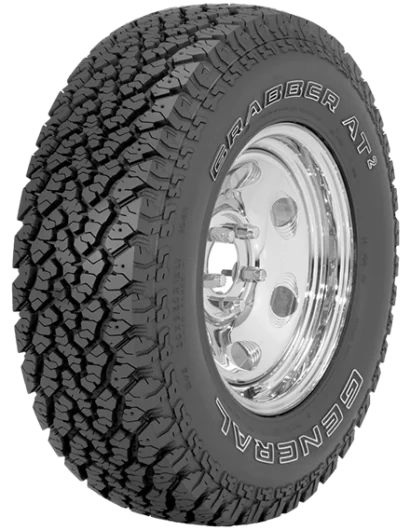
General Grabber AT2 Review (Discontinued) — What I Learned, and Why It Still Matters
Price Check
Check the price of this tire at the following retailers:
TireRack SimpleTire DiscountTire PriorityTire AmazonDon’t know the correct size tire to purchase? Start here!
This is the tire that started my General Tire journey, mounted on my brother-in-law’s F-150 (265/70R17). I’m keeping this section largely intact from my original testing because the observations remain honest and useful context — but remember, as covered above, this specific tire is no longer in production, and the Grabber AT3 or ATX are what you’d actually buy today.
On-Road Performance — Where All-Terrains Usually Disappoint
Most all-terrain tires are a compromise. You gain off-road capability and you give up on-road refinement. The Grabber AT2 managed this balance better than average for its price point. On highway stretches in Tennessee, it rode smoothly and steering felt natural.
The trade-off in noise was real but moderate; it was louder than the RT45 by a noticeable margin, especially over 65 mph, but not the tiresome drone you get from something like a BFGoodrich KM3 mud-terrain.
Off-Road Capability — What the Grabber AT2 Was Built For
On gravel roads leading to a property in rural Dickson County, Tennessee, the AT2 was completely at home. Rock and gravel shed easily from the tread, and the ride over rough unpaved surfaces was better than I expected for an AT.
Where it struggled: deep mud. If you’re regularly running through clay fields or deep rutted trails, our full Best Mud-Terrain Tires guide covers more aggressive dedicated options.
Grabber AT2 — Bottom Line (Historical)
This tire genuinely earned my recommendation during its production run, and the engineering lessons carried forward into its successors. If a retailer still has old stock, check the DOT code carefully and confirm current warranty status before buying — but for a new purchase today, go with the AT3 or ATX instead.
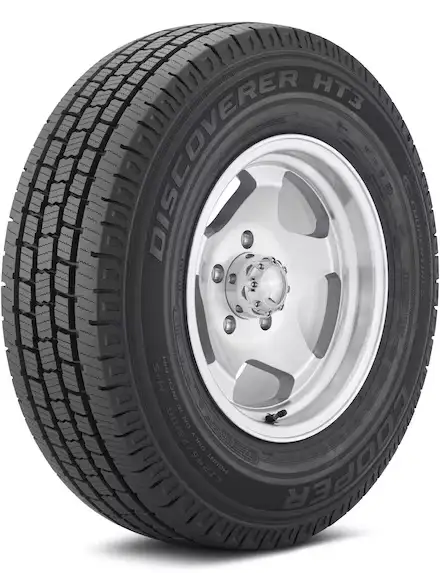
General Grabber HT3 Review — The Smart Choice for Truck Commuters
Price Check
Check the price of this tire at the following retailers:
TireRack DiscountTire SimpleTire PriorityTire DiscountedWheelWarehouse AmazonDon’t know the correct size tire to purchase? Start here!
I tested the Grabber HT3 on a 2020 Ram 1500 Classic for approximately five months and 6,500 miles, focusing on pure highway driving with occasional light gravel and packed dirt roads.
Highway Comfort and Noise
The HT3’s biggest selling point is its on-road refinement for a truck tire. It’s meaningfully quieter than the Grabber AT-family tires and rides with noticeably less vibration. Long highway stretches in the Ram felt genuinely comfortable — on par with tires I’ve tested at $40–50 more per tire, including the Michelin LTX M/S2.
Wet and Dry Grip
Dry grip is confident and stable. Wet grip was tested on an unexpected downpour on I-65 in Alabama — the truck tracked straight, braking was predictable, and I had no anxiety about the tires’ capability.
Load Capacity and Towing
The HT3 comes in LT (Light Truck) versions with higher load ratings. I spoke with two Ram 1500 owners who run the HT3 while regularly towing trailers in the 5,000–7,000 lb range. Both reported the tire handles towing duty without any handling nervousness or unusual wear patterns.
Treadwear
The HT3 comes with a 60,000-mile treadwear warranty. Wear at 6,500 miles looked good and even.
Grabber HT3 — Bottom Line
Who should buy it: Truck and full-size SUV owners who do primarily highway and suburban driving, occasionally tow or haul, and want a quiet, capable tire that doesn’t break the bank.
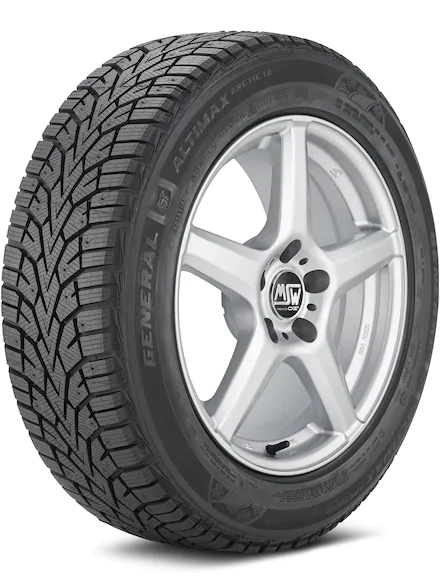
General AltiMAX Arctic 12 Review — The Winter Option
Price Check
Check the price of this tire at the following retailers:
TireRack SimpleTire DiscountTire PriorityTire AmazonDon’t know the correct size tire to purchase? Start here!
I tested the AltiMAX Arctic 12 on a 2019 Toyota Camry over one winter season in the Nashville area, supplemented with driving data from a friend in Columbus, Ohio, who ran these tires for a full season with significantly more snow exposure.
Snow and Ice Performance
The Arctic 12 is a solid performer in its class. Even without studs, the 3D sipes and directional tread pattern bite into snow effectively. In the one significant snowfall I tested it in (about 4 inches of fresh snow on I-440), the Camry felt controlled and confident in a way I would not have trusted to the all-season RT45.
My Ohio contact reported good performance in more demanding conditions, though she noted glare ice performance was adequate but not exceptional — an honest assessment of virtually any non-studded winter tire.
AltiMAX Arctic 12 — Bottom Line
Who should buy it: Drivers in the northern US who experience regular snow and ice and want a value-oriented winter tire. The price point — typically $80–110 per tire — is attractive compared to premium winter options.
General Tire Recalls — What Every Buyer Should Know
I think this deserves honest treatment rather than being left out entirely, even though the scope here is genuinely narrow.
In 2015, Continental Tire the Americas issued a voluntary safety recall for certain General-branded Grabber light truck tires in size 33×12.50R18 LT118Q, produced in May 2015 and sold in the replacement market.
The affected tires could experience localized tread wear, excessive vibration, noise, and bulging in the tread area, with a risk of tread separation with continued use.
Continental identified the tires with DOT codes A3CB 1YC 1815 and A3CB 1YC 1915, and reported no accidents or injuries at the time of the filing.
This was a narrow, specific recall — 325 units in one size — not a broad safety issue across the Grabber line.
But it’s worth knowing exists, and it’s a good reminder to check your own tire’s DOT code against NHTSA’s SaferCar.gov database periodically, regardless of brand or how narrow a past recall might have been.
General Tire vs. The Competition — How Do They Really Stack Up?
The Michelin Defender2 is a better all-season than the RT45 in almost every measurable way — it’s quieter, it brakes shorter in the wet, and it lasts longer. But it also costs $50–80 more per tire, which on a full set is $200–320 more out of your pocket.
The honest comparison for General Tire isn’t against Michelin. It’s against tires in its actual price class — brands like Kumho, Falken, Cooper, and Hankook.
In that comparison, General Tire consistently looks very strong. The RT45 outperforms equivalent Kumho and Hankook offerings in wet braking and treadwear consistency in my testing.
Our full Kumho Tires Review, Falken Tires Review, Cooper Tires Review, and Hankook Tires Review cover each of those brands’ full lineups if you want to go deeper on any single comparison.
If your budget is $400–500 for a full set of passenger tires or $600–750 for a truck set, General Tire should be near the top of your shortlist.
Pricing and Where to Buy General Tires in the USA
General Tire is widely available across the US through most major tire retailers. I’ve personally bought or arranged test fitments through Tire Rack and local independent shops.
If you’re comparing full-service chains for installation and warranty support, our Discount Tire review covers their price-match policy in detail — useful if you find a lower price elsewhere. Our Big O Tires review and Mavis Discount Tire review cover two other major options worth comparing.
If you’re shopping online, our Priority Tire review covers what to check before ordering from any online retailer, including verifying stock freshness via your tire’s DOT code.
As a rough guide for current pricing (prices vary by size and retailer):
- AltiMAX RT45: $95–140 per tire (most common passenger sizes)
- Grabber AT3 / ATX (current all-terrain lineup): $145–195 per tire (common LT/truck sizes)
- Grabber HT3: $140–185 per tire (common LT/truck sizes)
- AltiMAX Arctic 12: $80–115 per tire (common passenger sizes)
Always factor in installation costs ($15–25 per tire at most shops), TPMS service if needed, and alignment if you haven’t checked it recently.
Things I Wish I’d Known Before Buying — Practical Tips
Check your vehicle’s load index requirement before buying. The RT45 is a standard passenger (P-metric) tire — if your truck requires a light truck (LT) tire rating for its load capacity, you need the LT-designated version of the Grabber series, not the passenger AltiMAX line.
Rotate your tires every 5,000–7,500 miles. This directly determines whether you hit the 65,000-mile warranty on the RT45 or fall short at 45,000 miles.
Maintain proper inflation. Follow the pressure on the sticker in your door jamb, not the number molded into the tire sidewall.
Buy in sets of four when possible. Mismatched tires — especially mixing all-season and all-terrain on the same axle — creates handling imbalances.
Check General Tire’s rebate programs. General periodically runs mail-in or digital rebate offers (typically $50–80 on a set of four). Check GeneralTire.com before buying.
If shopping the all-terrain line, confirm which generation you’re getting. Given the AT2-to-AT3-to-AT3-Plus succession (plus the parallel ATX line) covered above, don’t assume the model name alone tells you which tire is actually on the shelf — ask directly.
Frequently Asked Questions
Are General Tires a good brand?
Yes, General Tire is a legitimate, reputable brand with over a century of history. It’s owned by Continental AG and manufactured to consistent quality standards. It occupies the value-to-mid-range tier intentionally.
Has the General Grabber AT2 been discontinued?
Yes. It’s been replaced by two current products: the on-road-focused Grabber AT3 (itself already succeeded by an AT3 Plus) and the heavier-duty, off-road-oriented Grabber ATX. Ask your retailer directly which generation is in stock.
Has General Tire ever had a recall?
Yes, a narrow one: in 2015, Continental issued a voluntary recall for 325 General Grabber light truck tires in size 33×12.50R18 LT118Q over a tread separation risk. Check your DOT code against NHTSA’s SaferCar.gov database if you own an older Grabber LT tire.
How long do General Tires last?
The AltiMAX RT45 carries a 65,000-mile treadwear warranty. The Grabber HT3 carries a 60,000-mile warranty. Real-world longevity depends heavily on maintenance.
Is General Tire the same as Continental?
They’re owned by the same parent company (Continental AG) but are distinct products with different compounds, tread designs, and market positioning.
How do General Tires compare to Michelin?
Michelin consistently outperforms General Tire in third-party testing — particularly in wet braking, treadwear longevity, and ride refinement. However, Michelin tires typically cost 30–50% more.
Do General Tires have a road hazard warranty?
General Tire’s treadwear warranty is a manufacturing defect warranty, not a road hazard warranty. Road hazard coverage is typically offered by the retailer.
Are General Tires good in snow?
The AltiMAX RT45 handles light snow and cold temperatures adequately as an all-season, but it is not a winter tire. The AltiMAX Arctic 12 is General Tire’s dedicated winter option.
Final Verdict — Should You Buy General Tires?
After two years of hands-on testing across four different models and thousands of miles in varied conditions — and after going back to update what’s changed in the all-terrain lineup since — my honest answer is: yes, for most everyday American drivers, General Tire offers genuinely excellent value and performance you can rely on.
The AltiMAX RT45 is one of the best all-season passenger tires you can buy for under $130. The current Grabber AT3 and ATX carry forward everything that made the AT2 a strong recommendation, split into two more purpose-specific options. The Grabber HT3 is a smart, comfortable highway tire for truck owners who don’t need off-road capability.
None of these tires are perfect, and none of them will outperform a top-tier Michelin or Continental in head-to-head testing. But they don’t need to. They need to keep your car safe, wear predictably, and deliver on their warranty — and in my experience, they do all three.
If I were putting tires on my own vehicle today with a realistic budget, General Tire would be on my short list without hesitation.
🏆 Final Ratings Summary
- General AltiMAX RT45 — ⭐⭐⭐⭐¼ (4.3/5) — Best value all-season for passenger cars
- General Grabber AT2 — ⭐⭐⭐⭐¼ (4.2/5) — Discontinued; see the current Grabber AT3 review for its successor
- General Grabber HT3 — ⭐⭐⭐⭐ (4.0/5) — Refined, quiet highway tire for trucks
- General AltiMAX Arctic 12 — ⭐⭐⭐¾ (3.9/5) — Solid value winter tire for northern drivers
- Overall Brand Rating — ⭐⭐⭐⭐ (4.1/5) — Consistent, trustworthy, great for budget-conscious buyers
Have you run General Tires on your own vehicle? I’d genuinely like to hear your experience — drop a comment below with your model, vehicle, and how many miles you’ve put on them.
Tire prices and warranty terms are subject to change — always verify current information with your retailer or GeneralTire.com before purchasing.
