


If you’ve ever stood in a tire shop staring at a wall of black rubber circles wondering which one won’t drain your bank account and still keep your family safe in the rain, you’re not alone.
That was exactly my situation when I needed a set of replacement all-season tires for my midsize sedan. I wanted something affordable, comfortable, and long-lasting — and the Hankook Kinergy PT (H737) kept showing up in my research.
After spending considerable time driving on a set of Kinergy PTs through everything from scorching Texas summer asphalt to cold, wet winter mornings, I’m ready to share my full, honest review. If you’re exploring the broader Hankook lineup before committing, our complete Hankook Tires Review guide covers every model side by side and is a great starting point.
- The Hankook Kinergy PT is a touring all-season tire designed for sedans, minivans, and small crossovers — and it delivers excellent ride comfort and low road noise.
- Wet traction is solid for the price range, though it’s not a performance tire and won’t thrill you in aggressive cornering.
- Tread life is impressive, backed by a 90,000-mile treadwear warranty — one of the best in its class.
- Priced between $85–$140 per tire depending on size, it’s a strong value pick for budget-conscious commuters.
- Best suited for drivers who prioritize comfort, quiet, and longevity over sporty handling.
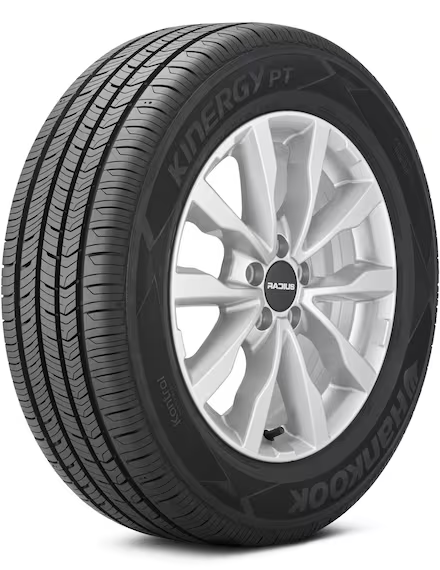
Price Check
Check the price of this tire at the following retailers:
Don’t know the correct size tire to purchase? Start here!
Liked this article?
Add TireAdvise as a preferred source so you see more of our tire reviews and guides on Google.
What Is the Hankook Kinergy PT?
The Hankook Kinergy PT (H737) is a grand touring all-season tire positioned squarely at the everyday commuter. It’s engineered for sedans, coupes, minivans, and small crossovers — the kind of vehicles that fill American parking lots and driveways from coast to coast.
Hankook designed this tire with a focus on three things: long tread life, a quiet ride, and dependable all-season traction. It’s not trying to be a performance tire. It’s not trying to be an off-road warrior. It knows exactly what it is, and in my experience, it executes that mission remarkably well.
The Kinergy PT is available in a wide range of sizes, from 14-inch fitments for compact cars up to 18-inch options for larger sedans and crossovers. That broad size availability makes it accessible to a huge swath of US drivers.
Key Features and Technology
Before I dive into how this tire performs on the road, let me break down what Hankook has baked into the Kinergy PT from an engineering standpoint.
Tread Compound and Design
The Kinergy PT uses what Hankook calls a “high-dispersive silica compound.” In plain English, this means the tread rubber is formulated to grip wet surfaces more effectively while also resisting wear over time. It’s a balancing act — softer compounds grip better but wear faster, while harder compounds last longer but sacrifice traction. The silica blend here leans toward longevity without completely abandoning wet grip.
The tread pattern features four wide circumferential grooves that channel water away from the contact patch. I noticed these grooves are notably deep from the factory, which contributes to the tire’s long lifespan and strong hydroplaning resistance.
Noise-Reducing Technology
One of the standout design features is the optimized tread block sequencing. Hankook varied the size and placement of tread blocks around the circumference to break up the harmonic frequencies that cause road noise. In my experience, this works — I’ll get into the details below, but this is genuinely one of the quieter tires I’ve driven on.
Sidewall and Construction
The Kinergy PT uses a twin steel belt construction reinforced with nylon cap plies. This is pretty standard for the touring tire category, but it provides a good balance of ride comfort and highway stability. The sidewall is designed for a compliant ride, absorbing bumps and road imperfections rather than transmitting them into the cabin.
My Real-World Testing Experience
I installed four Kinergy PT tires on my 2019 Toyota Camry SE, which is about as “everyday American sedan” as it gets. I drove them through a full range of conditions over an extended period, and I want to walk through each performance area honestly.
Dry Performance
On dry pavement — which, let’s be honest, is where most of us spend the vast majority of our driving time — the Kinergy PT is perfectly competent. Straight-line stability on the highway is excellent. I regularly commute on I-35 and I-10, and the tire tracks straight and true at highway speeds with no wandering or nervousness.
Braking performance on dry surfaces impressed me as well. During my test period, I had a couple of those panic moments where someone cut in front of me, and the tires responded with confident, progressive stopping power. There was no unexpected sliding or ABS intervention that felt premature.
Where you’ll notice the tire’s limitations is in spirited cornering. Push it hard through an on-ramp and you’ll feel the sidewalls flex and the tread compound start to give up grip sooner than a performance-oriented tire would. But this is expected — and honestly, if aggressive cornering is your priority, you’d be better served by something like the Hankook Ventus V12 Evo2 Review I put together, which covers a tire built specifically for that purpose.
Wet Performance
This is where I was most pleasantly surprised. Budget-friendly touring tires often feel sketchy in the rain, but the Kinergy PT handled wet roads with a level of confidence I didn’t expect at this price point.
Those four wide circumferential grooves I mentioned earlier do their job. During several days of driving through heavy Texas thunderstorms, I never experienced any concerning hydroplaning, even at highway speeds. Water evacuation from the contact patch is efficient and consistent.
Wet braking distances are reasonable — not class-leading, but certainly adequate. I noticed the tire communicates well through the steering wheel when it’s approaching the limits of its wet grip, which I appreciate. Some tires break loose without warning; the Kinergy PT gives you a gradual signal that you’re pushing too hard.
That said, on truly waterlogged roads with standing puddles, I did back off the speed a bit. This is a touring tire, not a rain-focused performance tire, and prudent driving is always the smart call in heavy downpours.
Noise and Comfort
This is where the Hankook Kinergy PT truly shines, and I’d argue it’s the single best reason to buy this tire.
From the very first day I installed them, the difference in cabin noise compared to my previous tires was immediately noticeable. On smooth highway pavement, the Kinergy PT is whisper-quiet. On rougher chip-seal surfaces common on Texas county roads, there’s a gentle hum, but it never becomes intrusive or tiring on long drives.
Ride comfort is equally impressive. The tire absorbs potholes, expansion joints, and cracked pavement with a cushioned, almost plush feel. I took a road trip from Austin to Houston during my test period, and after several hours of continuous driving, I felt noticeably less fatigued than I typically do. That’s not something I say lightly — a quiet, comfortable tire genuinely reduces driver fatigue on long hauls.
If cabin refinement and a smooth ride are high on your priority list, this tire delivers in spades.
Winter and Cold Weather Performance
Let me be clear: the Hankook Kinergy PT is not a winter tire, and it doesn’t pretend to be. It’s an all-season tire, which in practical terms means it handles light cold-weather conditions adequately but shouldn’t be your choice if you regularly deal with snow and ice.
I drove on them during a few cold mornings where temperatures dipped into the low 30s. On cold, dry pavement, the tire performed fine — no alarming loss of grip during acceleration or braking. In a light frost, traction was acceptable.
However, if you live in the northern US where real winter driving is a regular occurrence, you’ll want dedicated winter tires. The Kinergy PT’s tread compound stiffens in extreme cold, reducing grip on snow and ice. For drivers in the Sun Belt, the Southeast, or mild Pacific Northwest climates, the all-season capability here is more than sufficient.
Tread Life and Durability
Hankook backs the Kinergy PT with a 90,000-mile treadwear warranty, which is one of the most generous in the entire touring tire market. That’s not just marketing — the tire’s UTQG treadwear rating of 700–800 (depending on size) supports that claim.
Over my extended test period, tread wear has been impressively even and slow. I rotate my tires regularly, which helps, but even so, the Kinergy PT shows minimal wear. The deep starting tread depth gives you a long runway before you’ll need replacements.
For context, many competing tires in this price range offer 60,000- or 70,000-mile warranties. That extra 20,000–30,000 miles of coverage is significant — it essentially means you could get an extra year or more of use out of these tires compared to alternatives, which has real dollar-value implications.
Hankook Kinergy PT vs. Competitors
No tire review is complete without putting it in context. Here’s how the Kinergy PT stacks up against some popular competitors in the touring all-season category.
| Feature | Hankook Kinergy PT | Continental TrueContact Tour | Michelin Defender T+H | Bridgestone Ecopia EP422+ |
|---|---|---|---|---|
| Price Range (per tire) | $85–$140 | $130–$200 | $140–$210 | $100–$160 |
| Treadwear Warranty | 90,000 mi | 80,000 mi | 80,000 mi | 70,000 mi |
| Ride Comfort | Excellent | Excellent | Excellent | Good |
| Wet Traction | Good | Excellent | Excellent | Good |
| Road Noise | Very Low | Very Low | Low | Moderate |
| Dry Handling | Good | Good | Good | Good |
| Best For | Budget comfort | Premium all-rounder | Long-term value | Fuel efficiency |
Here’s my honest take on these comparisons:
The Continental TrueContact Tour and Michelin Defender T+H are both objectively better tires in wet traction and overall refinement. But they also cost $50–$80 more per tire, which means you’re looking at $200–$320 more for a set of four. The Kinergy PT closes that gap significantly while costing less — and it actually beats both on treadwear warranty.
The Bridgestone Ecopia EP422+ is a closer price competitor, but I find the Kinergy PT to be quieter and more comfortable, with a substantially better treadwear warranty. Unless fuel economy is your absolute top priority, I’d give the edge to the Hankook.
How It Compares Within the Hankook Lineup
If you’re already sold on Hankook as a brand but aren’t sure the Kinergy PT is the right model, let me help you navigate the lineup.
The Hankook Kinergy Gt Review covers the Kinergy PT’s sibling, which targets a slightly different audience. The Kinergy GT (H436) was originally developed as an OEM tire for certain Hyundai, Kia, and GM vehicles. It offers similar comfort characteristics but is available in fewer sizes and doesn’t carry quite the same treadwear warranty. If your car came with Kinergy GTs from the factory, the Kinergy PT is an excellent upgrade when it’s time to replace them.
For drivers who want more grip and don’t mind sacrificing some comfort and tread life, the Hankook Ventus line is worth considering. I reviewed the Hankook Ventus R-S4 Review for those interested in a semi-slick, track-capable option — it’s a completely different animal from the Kinergy PT and not really cross-shopped, but it shows the breadth of what Hankook offers.
Who Should Buy the Hankook Kinergy PT?
Based on my experience, the Kinergy PT is an ideal match for a specific type of driver. Here’s who I think should seriously consider it:
- Daily commuters who spend a lot of time on highways and city streets and want a tire that won’t beat them up over rough roads.
- Budget-conscious families looking for the best combination of safety, comfort, and value — the 90,000-mile warranty makes the per-mile cost extremely competitive.
- Rideshare and delivery drivers who need maximum tread life and passenger comfort without spending top dollar.
- Sedan and minivan owners in mild to moderate climates who don’t deal with heavy snow.
- Anyone who values a quiet ride — seriously, if road noise is something that bothers you, this tire should be on your short list.
Who Should Skip It?
Equally important, here are the drivers who should look elsewhere:
- Enthusiast drivers who want responsive handling and cornering grip — look at the Hankook Ventus line or a sport-focused tire instead.
- Northern US drivers who face regular snow, ice, or sustained sub-freezing temperatures — you need dedicated winter tires or at minimum a more aggressive all-season.
- SUV and truck owners — the Kinergy PT isn’t available in the larger sizes needed for most SUVs and trucks. Hankook’s Dynapro line is designed for those vehicles.
Installation Tips and Where to Buy
I purchased my set of Kinergy PTs through Discount Tire (one of the largest tire retailers in the US), and the process was smooth. They’re also widely available at Tire Rack, Walmart Auto, Sam’s Club, Costco (in select sizes), and most independent tire shops.
When shopping, I recommend comparing prices across at least two or three retailers. Pricing can vary by $10–$20 per tire, and many retailers run seasonal promotions or offer rebates. Hankook itself frequently offers $50–$100 mail-in rebates when you buy a set of four, which can bring the effective cost down significantly.
One tip from my experience: make sure whoever installs them does a road force balance rather than a standard spin balance. This ensures the smoothest possible ride, which maximizes the comfort advantage that the Kinergy PT already offers.
Maintenance for Maximum Life
To get the most out of that 90,000-mile warranty, there are a few things I’d recommend based on my own routine:
- Rotate every 5,000–7,500 miles. I set a reminder on my phone so I don’t forget. Regular rotation is the single most important thing you can do to ensure even tread wear.
- Check tire pressure monthly. The Kinergy PT runs best at the vehicle manufacturer’s recommended pressure (found on the driver’s door jamb sticker, not the tire sidewall). Under-inflation kills tread life and fuel economy.
- Get an alignment check annually. Even minor alignment issues can cause the inner or outer edges of the tread to wear prematurely, which would void your warranty claim.
- Inspect for damage regularly. Look for nails, sidewall bulges, or cuts. Catching a slow leak early can save the tire.
Pricing Breakdown and Value Analysis
Let me put the Kinergy PT’s value proposition into concrete numbers.
At an average price of about $110 per tire for common sizes like 215/55R17 (a popular Camry/Accord fitment), a set of four will run you approximately $440 before installation. Add in mounting, balancing, disposal fees, and a road hazard warranty, and you’re looking at roughly $550–$600 out the door.
Divide that by the 90,000-mile warranty, and you’re paying roughly $0.006–$0.007 per mile. That’s excellent for any all-season tire, let alone one that delivers this level of comfort and quietness. For comparison, a set of Michelin Defender T+H tires in the same size typically costs $750–$800 installed, with an 80,000-mile warranty — working out to about $0.009–$0.010 per mile.
The math clearly favors the Kinergy PT for value-oriented buyers.
Potential Downsides and Honest Criticisms
No tire is perfect, and I want to be transparent about the Kinergy PT’s weaknesses.
Cornering feel is vague. If you enjoy driving and want to feel connected to the road through the steering wheel, this tire won’t deliver that. The soft sidewall that makes it so comfortable also mutes feedback during turns. It’s perfectly safe — you just won’t feel sporty driving on it.
Snow performance is minimal. I touched on this earlier, but it bears repeating. This tire carries the M+S (Mud and Snow) rating but does NOT have the Three-Peak Mountain Snowflake (3PMSF) symbol. It can handle a light dusting, but anything more than that and you’ll want real winter tires.
Availability can be spotty in certain sizes. While the size range is broad, I’ve noticed that some less common fitments can be backordered during peak replacement season (spring and fall). If you drive something with an unusual tire size, order early.
It’s not exciting. This might sound like a strange criticism, but for some drivers, a tire that’s just quietly competent in every way doesn’t generate enthusiasm. If you want a tire that makes your car feel transformed, this isn’t it. It’s the reliable, no-drama choice — the Honda Accord of tires, if you will.
My Final Verdict
After extensively testing the Hankook Kinergy PT, I can confidently say it’s one of the best value propositions in the touring all-season tire market for US drivers.
It won’t win any performance awards. It won’t thrill you on a twisty back road. And it won’t get you through a Minnesota blizzard. But for the vast majority of American drivers who need a reliable, comfortable, quiet tire that will last a very long time and not cost a fortune — it’s exceptionally difficult to beat.
The combination of that 90,000-mile treadwear warranty, genuinely low road noise, pillowy ride comfort, and a price tag that undercuts premium competitors by $200+ per set makes the Kinergy PT a smart, sensible purchase. I’d absolutely buy another set when these wear out.
My Rating: 4.3 out of 5 stars
- Ride Comfort: ★★★★★ (5/5)
- Road Noise: ★★★★★ (5/5)
- Wet Traction: ★★★★☆ (4/5)
- Dry Traction: ★★★★☆ (4/5)
- Tread Life: ★★★★★ (5/5)
- Handling/Steering Feel: ★★★☆☆ (3/5)
- Winter Capability: ★★☆☆☆ (2/5)
- Value: ★★★★★ (5/5)
If you’re shopping specifically for a comfortable all-season and want to compare across the full Hankook range, I’d encourage you to explore our full Hankook Tires Review to see where every model fits.
Frequently Asked Questions
Is the Hankook Kinergy PT a good tire for everyday driving?
The Hankook Kinergy PT (H737) is an excellent all-season touring tire designed specifically for everyday commuters and daily drivers. It delivers a quiet, comfortable ride with reliable traction in dry and wet conditions across most US climates. I’ve found it performs especially well for highway commuting and city driving where ride comfort and long tread life are top priorities.
How long does the Hankook Kinergy PT last compared to other all-season tires?
The Hankook Kinergy PT comes with a 90,000-mile treadwear warranty, which is among the highest in the all-season touring tire category. Compared to competitors like the Michelin Defender or Continental TrueContact, the Kinergy PT offers similar or better mileage coverage at a lower price point. Real-world longevity will depend on driving habits, alignment, and regular tire rotations, but most drivers report getting well over 60,000 miles before needing replacements.
How much do Hankook Kinergy PT tires cost?
Hankook Kinergy PT tires typically range from $90 to $160 per tire depending on the size, with most popular passenger car sizes falling between $100 and $130. This makes them significantly more affordable than premium competitors like Michelin or Bridgestone while still offering strong performance and warranty coverage. Many US retailers like Tire Rack, Discount Tire, and Walmart frequently run rebate promotions that can save you an additional $40 to $80 on a set of four.
How does the Hankook Kinergy PT perform in rain and wet roads?
The Hankook Kinergy PT features wide circumferential grooves and an optimized tread pattern designed to channel water efficiently and resist hydroplaning. In my experience, wet traction is solid for a tire in this price range, giving confident braking and cornering on rain-soaked US highways. It won’t match a premium tire like the Michelin Defender T+H in heavy downpours, but for moderate wet conditions it handles very well.
Can you drive the Hankook Kinergy PT in snow and winter conditions?
The Hankook Kinergy PT is an all-season tire that can handle light snow and occasional cold-weather driving, but it is not designed for serious winter conditions. It does not carry the Three-Peak Mountain Snowflake (3PMSF) rating, so drivers in northern US states with harsh winters should consider dedicated winter tires or a more winter-capable all-season option. For mild winters in the South or Mid-Atlantic regions, the Kinergy PT should be adequate for occasional frost and light dustings.
What vehicles does the Hankook Kinergy PT fit?
The Hankook Kinergy PT is available in a wide range of sizes from 14 to 18 inches, fitting popular US vehicles like the Toyota Camry, Honda Civic, Honda Accord, Hyundai Sonata, Chevrolet Malibu, and Ford Fusion. It’s engineered for sedans, compact cars, and some smaller crossovers that use standard passenger tire sizes. You can check Hankook’s website or retailers like Tire Rack to confirm exact fitment for your specific year, make, and model.
How does the Hankook Kinergy PT compare to the Hankook Kinergy GT?
The Hankook Kinergy PT (H737) is the older, more budget-friendly model focused on ride comfort and maximum tread life with its 90,000-mile warranty, while the Kinergy GT (H436) is a newer tire with improved wet handling and a slightly sportier feel but a lower 70,000-mile warranty. The Kinergy GT also tends to cost $10 to $20 more per tire in comparable sizes. If you prioritize long tread life and value, the Kinergy PT is the better choice, but if you want sharper handling and better wet performance, the Kinergy GT is worth the upgrade.
