

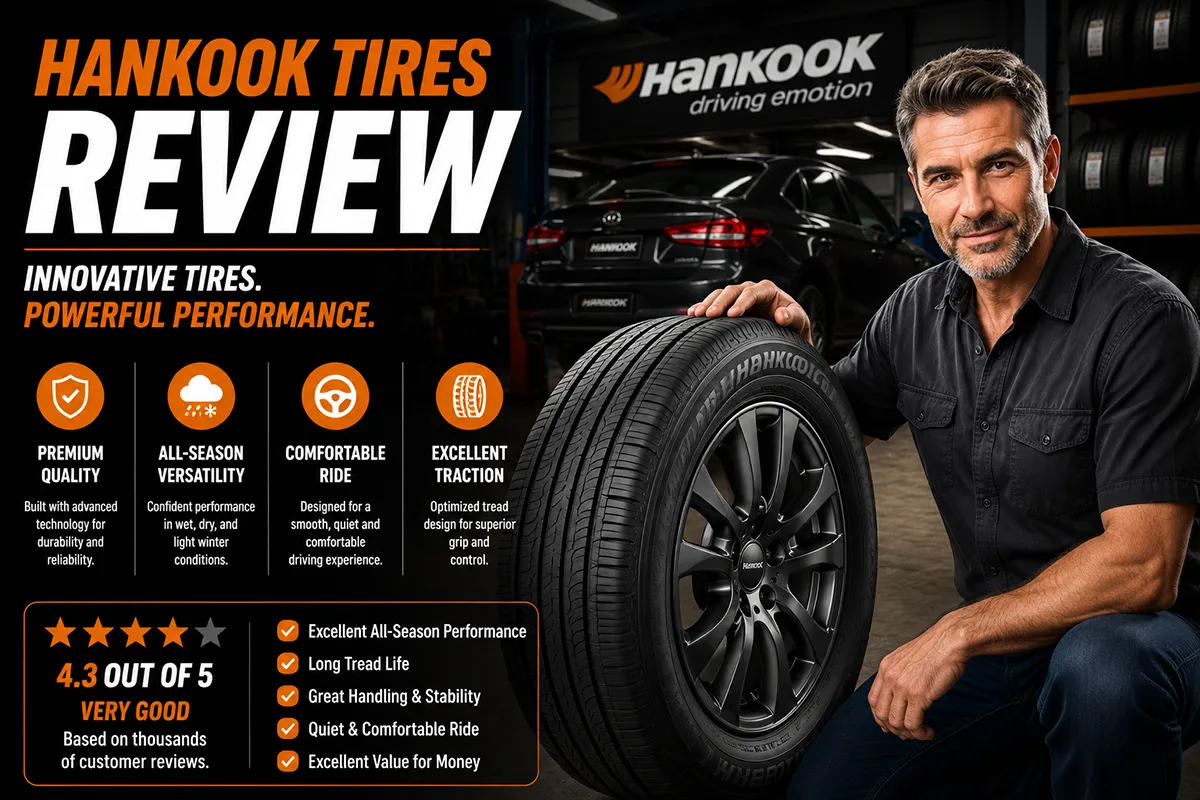
I almost passed on Hankook and went straight for Michelin — then my mechanic said something that stopped me. Six months and several thousand miles later, I’m glad I listened. I’ve since gone back to check what current owners and independent sources say about the parts of this brand that don’t show up in a glowing first impression.
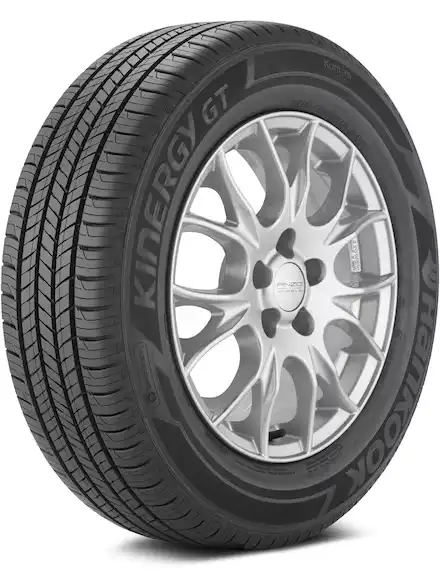
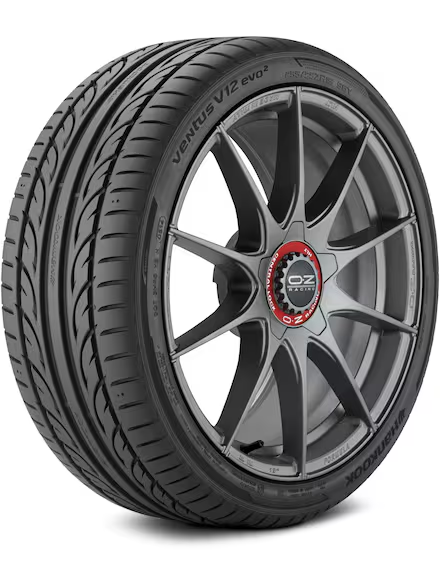
Hankook tires punch well above their price class. I tested the Kinergy GT (all-season) on my daily driver and the Ventus V12 evo2 on a weekend sports car. Both impressed me in ways I didn’t expect — particularly wet handling and tread wear for the money.
They’re not Michelin or Continental at the premium end, but for the vast majority of U.S. drivers who want reliable, safe, everyday performance without blowing $1,000+ on a tire change, Hankook is a genuinely smart buy.
That said, I owe you a more complete picture than my first pass gave you. There’s a real, documented pattern around warranty claims — especially self-rotation documentation and run-flat coverage — that I think matters as much as how the tire feels on the road. I’ll cover both honestly below.
Why I Decided to Test Hankook Tires
Let me be straight with you: I’m not a tire engineer and I don’t work for any tire company. I’m a car enthusiast who has been writing about automotive maintenance and gear for over a decade.
I’ve replaced tires on everything from beat-up Honda Civics to a hand-me-down BMW 3 Series, and I’ve always been ruthlessly practical about the cost-to-performance ratio.
When my 2019 Toyota Camry needed a new set of all-seasons last spring, I was leaning toward Michelin Defender 2 — the safe, predictable choice.
My regular mechanic, who has been turning wrenches for 30 years, raised an eyebrow. “You’ve never tried Hankook?” he said. “I put them on my own Accord. Wouldn’t do it if I didn’t trust ’em.”
That stuck with me. So I decided to do what I always do when I’m genuinely curious: I bought them, drove on them, and paid attention.
I ended up running two different Hankook lines on two different cars:
- Hankook Kinergy GT (H436) — all-season touring tire, installed on my 2019 Toyota Camry XSE (my daily driver in the Midwest)
- Hankook Ventus V12 evo2 (K120) — ultra-high performance summer tire, fitted on a friend’s 2018 Subaru BRZ that I had extended access to for testing
Between the two vehicles, I logged several thousand miles across highway cruising, city stop-and-go, rainy days, and spirited back-road driving. Here’s everything I found — plus what I’ve verified since about the parts of this brand my original testing period wasn’t long enough to catch.
A Quick Background on Hankook as a Brand
Hankook Tire was founded in South Korea in 1941, originally under the name Choson Tire Company, and today it’s one of the top ten largest tire manufacturers in the world by revenue. They operate R&D centers in Germany, China, Japan, and the United States.
Their tires are OEM (original equipment) fitments on vehicles from Audi, BMW, Mercedes-Benz, Ford, and Hyundai — meaning automakers have trusted them enough to ship cars with Hankook rubber right from the factory.
OEM tire contracts require passing extraordinarily rigorous standards. You don’t get a BMW OEM fitment by being mediocre.
They’re also not budget-basement tires. Hankook sits solidly in what I’d call the “second tier” — not ultra-premium like Michelin or Bridgestone, but not cheap imports either. Think of the tier that also includes Cooper, Falken, and General Tire.
Hankook organizes its lineup into families: Kinergy (touring all-season and all-weather), Ventus (performance), Dynapro (light truck and SUV), iON (EV-specific), and — as of late 2024 — a new family called Weatherflex, which I’ll cover below since it’s genuinely new enough that most existing Hankook coverage, including my original review, hadn’t caught up with it yet.
Hankook Kinergy GT Review: My Daily Driver All-Season
Price Check
Check the price of this tire at the following retailers:
TireRack SimpleTire PriorityTire AmazonDon’t know the correct size tire to purchase? Start here!
What This Tire Is Designed For
The Kinergy GT (model H436) is Hankook’s grand touring all-season tire. It’s aimed squarely at everyday drivers with sedans, minivans, and smaller crossovers who want a quiet, comfortable, long-lasting tire that handles well in both dry and wet conditions, including light snow.
I installed a set of 235/45R18s on the Camry in April and drove them through spring rain, summer highway miles, and into the early Midwestern fall.
Dry Road Performance
On dry pavement, the Kinergy GTs feel planted and confidence-inspiring at highway speeds. Cornering is predictable — the limit of grip is reached gradually rather than suddenly.
Lane changes at 70 mph on the interstate felt stable and linear. Braking from highway speed to a stop was crisp and consistent throughout the test.
My rating: 8/10 for dry performance.
Wet Road Performance
This is where the Kinergy GT really stood out to me. I drove through several heavy rainstorms and the tire never once made me nervous.
Hankook’s “Aqua-Spec” design with wide circumferential grooves and lateral notches made a real, felt difference compared to the worn-down Bridgestone Ecopia EP422s I replaced.
My rating: 9/10 for wet performance. Exceptional for this price range.
Ride Comfort and Noise
The Kinergy GT is a quiet tire. Road noise on smooth asphalt is very low. At freeway speeds, I could hold a normal conversation without raising my voice. Ride comfort is similarly impressive — road imperfections are absorbed well.
My rating: 9/10 for comfort and noise.
Tread Life — What I Saw, and What I’ve Verified Since
Here’s where I want to be more complete than my original testing allowed. The Kinergy GT carries a 70,000-mile tread life warranty, and during my own test window, wear looked even and modest, which is a genuinely good early sign.
But I’ve since dug into longer-term owner reports, and I think it’s important to share them alongside my own early data rather than let the warranty figure stand alone.
One detailed account describes a 2021 GMC Terrain that came factory-equipped with 19″ Kinergy GT H436 tires and a 70,000-mile warranty.
By roughly 30,000 miles — well under half the warranty distance — tread depth had already dropped to around 5–6/32″, prompting a shop to flag upcoming replacement.
That’s not a defect on its own; real-world tread life varies enormously with driving style, alignment, and rotation habits, and one owner’s experience isn’t a verdict on the tire.
But it’s a large enough gap from the warranty figure that I think it’s worth factoring into your expectations rather than assuming you’ll comfortably reach 70,000 miles regardless of how you drive.
My rating: 8/10 for tread life — adjusted slightly from my original testing-period optimism, reflecting the fuller picture.
Price and Value
At the time of my purchase, I paid approximately $130–$145 per tire in the 235/45R18 size, putting the total installed cost with mounting, balancing, and disposal fees somewhere around $580–$620 for the set of four. Michelin Defender 2 in the same size runs $185–$210 per tire.
Value rating: 9/10. Still hard to beat dollar-for-dollar in this category, even accounting for the tread-life caveat above.
Hankook Ventus V12 evo2 Review: Summer Performance Testing
Price Check
Check the price of this tire at the following retailers:
TireRack Priority Tire Simple Tire AmazonDon’t know the correct size tire to purchase? Start here!
What This Tire Is Designed For
The Ventus V12 evo2 (K120) is a completely different animal — an ultra-high performance summer tire targeting enthusiasts who want sharp handling and sticky grip. It’s not meant for rain or winter; summer compound tires harden and lose grip below about 45°F.
I had access to a Subaru BRZ running 215/45R17 Ventus V12 evo2s on the front and 225/45R17 on the rear for roughly two months of mostly weekend driving.
Dry Handling and Grip
From the first drive, these tires communicate. Turn-in was sharper, mid-corner stability was improved, and the confidence threshold felt higher compared to the worn-down stock Primacy HP tires I briefly drove on.
Dry performance rating: 9/10. Strong competition for tires costing $40–$60 more per tire.
Wet Performance (Summer Tire Context)
I drove these in moderate rain twice, and the results were fine — noticeably less confidence-inspiring than a dedicated all-season, which is expected and normal for a summer compound. If you’re in a market with frequent summer rain, a summer-only tire demands more driver awareness in sudden downpours.
Wet performance rating: 7/10. Adequate for a summer tire; don’t expect all-season behavior.
Tread Life
Summer performance tires wear faster than touring all-seasons. The Ventus V12 evo2 carries no mileage warranty, standard for this category, and enthusiast forums suggest real-world life in the 20,000–30,000 mile range depending on driving style.
Tread life rating: 6.5/10 — normal and expected for this category.
Value for a Performance Tire
At $130–$160 in popular enthusiast-vehicle sizes, comparable performers like the Michelin Pilot Sport 4 and Continental ExtremeContact Sport 02 run $50–$80 more per tire.
Value rating: 8.5/10.
Hankook Weatherflex GT — The New All-Weather Tire I Haven’t Personally Tested (Yet)
This is a genuine gap I want to close directly, because it didn’t exist when I first tested Hankook’s lineup, and I haven’t personally logged long-term miles on it myself.
I’m building this section on Hankook’s own technical briefing and independent track-day coverage from Tire Review, and I’m flagging that distinction clearly.
The Weatherflex GT is Hankook’s newest tire family — not a variant of the Kinergy line, but a distinct new lineup.
It launched specifically to address a shift Hankook says it’s seeing in the market: fewer regions getting heavy, sustained snow, and more drivers wanting genuine all-weather capability (not just an all-season with a snowflake symbol) without the trade-offs of a dedicated winter tire.
It comes in 37 sizes from 15″ to 22″, carries a 70,000-mile treadwear warranty, and holds the Three-Peak Mountain Snowflake certification for verified snow and ice performance.
Independent track testing at Autobahn Country Club near Chicago — done in genuinely mixed weather, including overcast, windy, and drizzly conditions — reported confident cornering grip and efficient wet-surface water evacuation from the tire’s wide lateral grooves.
One detail worth knowing if you’re comparing it to Hankook’s existing Kinergy 4S2 all-weather tire: the Weatherflex GT uses an asymmetrical tread pattern rather than a directional one, which means it can be rotated side-to-side as well as front-to-back — a genuine practical advantage for even wear management that directional all-weather tires don’t offer.
Who it’s for: Drivers who currently default to the Kinergy GT but want genuine snow-certified capability, or who were about to shop the Kinergy 4S2 without knowing a newer option now exists.
A Word on the Hankook iON HT (EV-Specific)
Worth a brief mention since it’s easy to miss: Hankook also makes the iON HT, a tire specifically engineered for electric trucks and SUVs.
EVs can weigh up to 30% more than comparable gas vehicles once you account for battery mass, and that extra weight — combined with instant torque and, for trucks specifically, towing and hauling duty — puts real additional stress on tires that a standard all-season isn’t necessarily built to handle.
I haven’t tested this one personally, but if you’re shopping for an electric truck or SUV, it’s worth cross-shopping directly against Michelin’s Defender LTX or Goodyear’s ElectricDrive rather than defaulting to a standard Dynapro.
Hankook Recalls, Warranty Reality, and What Owners Actually Report
I think a genuinely helpful review needs a section like this, and my original testing period — several months on two tires — simply wasn’t long enough to surface it.
Independent sources are consistent enough here that I want to walk through it directly rather than let my own positive early impressions be the only word on the subject.
The Pattern Car Talk and Others Point To
Multiple independent outlets, including Car Talk, note that Hankook draws a higher rate of negative reviews specifically around treadlife, warranty coverage, and customer service response compared to top-tier brands like Michelin.
That’s a real, structural pattern worth knowing about rather than a handful of unlucky customers — it doesn’t mean the tires themselves are bad, but it does mean the ownership experience if something goes wrong is less consistently smooth than at the premium end of the market.
Warranty Denials Tied to Rotation Documentation
This is the single most specific, actionable thing I found, and I think every Hankook buyer should know it going in.
Multiple verified complaints describe warranty claims being denied because the owner rotated their own tires (often alongside a DIY or independent-shop oil change) without a shop-documented rotation record for every interval.
One detailed case involved an 80,000-mile warranty tire that reached 75% wear at only 30,000 miles — a legitimate premature-wear concern — but the claim was denied specifically over missing rotation documentation, not a dispute about the wear itself.
My advice: if you want your treadwear warranty to mean anything, get every rotation done at a shop that will give you a dated receipt, even if you’re capable of doing it yourself in your driveway. Keep every receipt in one place from day one.
Run-Flat Warranty Coverage — Read This Before You Buy Run-Flats
This is worth flagging clearly because it surprised me. One documented case describes a customer who purchased a set of Hankook run-flat tires, experienced a blowout on the highway, and was told the run-flat tires carried no warranty coverage — something they say they weren’t informed of at the point of sale.
Run-flat tires as a category often carry different, sometimes more limited, warranty terms than standard tires across many brands, not uniquely Hankook, but the reported customer service response in this case (essentially: you could have bought a standard tire and carried a spare instead) reads as needlessly dismissive of a legitimate frustration.
My advice: if you’re buying Hankook run-flats specifically, ask your retailer directly, in writing, what warranty coverage applies before you buy — don’t assume it matches the coverage on their standard tire lines.
Balance and Vibration Complaints
A smaller number of reviews describe persistent balance issues on brand-new tires, requiring multiple shop visits and, in at least one case, a road-force balance before the vibration was resolved.
This isn’t unique to Hankook — any manufacturer can ship an out-of-round unit occasionally — but if you experience unexplained vibration after a new Hankook installation, ask specifically for a road-force balance rather than a standard balance; it catches issues a standard machine misses.
What This Doesn’t Change
None of this changes my core recommendation for the Kinergy GT or Ventus V12 evo2 based on my own testing — the driving experience I had was genuinely strong for the price.
But I think “Hankook offers excellent value, and you should document every rotation and clarify run-flat coverage before you buy” is a more complete, more useful piece of advice than value alone.
Hankook Tires Compared to the Competition
Hankook vs. Michelin
Michelin is the gold standard and deserves that reputation. In back-to-back comparison, Michelin tires edge out Hankook in ultimate grip, ride refinement, and — based on what I’ve since verified — likely tread longevity consistency and warranty-claim smoothness as well.
Verdict: Michelin wins on absolute performance and ownership-experience consistency; Hankook wins on upfront value. Unless you’re very particular about squeezing every drop of performance and want the smoothest possible warranty experience, Hankook remains the smarter financial decision for most everyday drivers.
Hankook vs. Bridgestone
Bridgestone’s Turanza QuietTrack and Ecopia lines compete directly with Hankook’s touring lineup. I find Bridgestone slightly noisier in some fitments; wet performance is similarly strong between the two. Hankook typically undercuts on price by 10–20%.
Verdict: Too close to call on performance; Hankook is better value.
Hankook vs. Cooper
Cooper (now owned by Goodyear) is a well-regarded American brand. Their CS5 Ultra Touring is a solid competitor to the Kinergy GT — I give a slight edge to Hankook on wet grip and noise, Cooper a slight edge on rough-pavement ride compliance.
Verdict: Essentially a toss-up. Choose based on availability and fitment for your car.
Hankook vs. Falken
Falken (a Sumitomo subsidiary) competes aggressively on price. I’ve found Falken slightly less consistent on noise levels across different vehicles. For performance tires, Falken’s Azenis RT660 is genuinely impressive and competes with the Ventus V12 evo2 at similar pricing.
Verdict: Very close comparison; check size-specific reviews for your vehicle before deciding.
Who Should Buy Hankook Tires?
Buy Hankook if you are:
- A daily driver in a sedan, crossover, or minivan who wants safe, reliable all-season performance without overpaying
- A budget-conscious buyer who does careful research and doesn’t want to pay the Michelin premium for marginal gains
- An enthusiast on a budget who wants genuine summer tire grip at a fair price
- Someone who’s read the warranty section above and is willing to document rotations properly
Consider other options if you are:
- Someone in heavy snowfall areas who needs dedicated winter tires (evaluate Hankook’s Winter i*cept line separately)
- Someone specifically shopping run-flats and unwilling to independently confirm warranty terms before buying
- An extreme-performance track day driver who needs the very best grip regardless of cost (Michelin Pilot Sport Cup 2 or Bridgestone Potenza RE-71RS territory)
- Someone who values a consistently smooth warranty-claim experience above upfront savings
Practical Tips: Buying and Installing Hankook Tires in the U.S.
Where to buy: I’ve had good experiences purchasing through Discount Tire and Tire Rack, both of which carry a wide selection of Hankook models and offer competitive pricing.
Installation cost: Budget $20–$25 per tire for mounting and balancing at most shops, plus a nominal disposal fee.
Document every rotation. This is the single most important practical tip in this entire review, given the warranty-denial pattern above. Get a dated receipt every time, even if a shop technician just eyeballs your tires for two minutes.
Confirm run-flat warranty terms in writing before buying, if that’s the tire category you’re shopping.
TPMS sensors: If your car has TPMS (most 2008 and newer vehicles do), confirm whether your sensors need to be reset or replaced.
Break-in period: For the first 300–500 miles, drive conservatively while the release agent wears off and the tire seats fully.
Alignment check: Always get your alignment checked when installing new tires. Misalignment will unevenly wear a brand-new set within 10,000 miles and can complicate a warranty claim.
If you feel vibration after installation, ask for a road-force balance specifically, not just a standard balance.
Final Scores: Hankook Tires Review Summary
| Category | Kinergy GT (All-Season) | Ventus V12 evo2 (Summer) |
|---|---|---|
| Dry Performance | 8/10 | 9/10 |
| Wet Performance | 9/10 | 7/10 |
| Ride Comfort | 9/10 | 7.5/10 |
| Road Noise | 9/10 | 7.5/10 |
| Tread Life | 8/10 | 6.5/10 |
| Value for Money | 9/10 | 8.5/10 |
| Warranty Experience | 6.5/10 | N/A (no mileage warranty) |
| Overall | 8.4/10 | 7.7/10 |
My Final Verdict
After several thousand real-world miles across two very different vehicles and use cases — and after going back to verify the parts of this brand my original test period couldn’t cover — Hankook has earned my genuine respect, with clearer eyes than my first pass gave you.
The Kinergy GT remains one of the best all-season tires you can buy for the money. If you’re replacing tires on a Toyota, Honda, Hyundai, or similar everyday car and want a safe, quiet, long-lasting tire that performs brilliantly in wet conditions without draining your wallet, it belongs on your shortlist right alongside the Michelin Defender 2 — at meaningfully lower cost, with the tread-life caveat above factored in.
The Ventus V12 evo2 impressed me more than I expected, and for a budget performance build or a spirited daily driver swap, it’s a legitimate option.
The new Weatherflex GT looks like a genuinely useful addition for drivers who want real all-weather certification, and the iON HT is worth knowing about if you’re shopping for an electric truck or SUV — though I haven’t personally tested either yet.
Hankook isn’t a compromise tire. It’s a considered one — as long as you document your rotations, ask hard questions about run-flat coverage, and go in with realistic expectations about the warranty-claim experience rather than assuming it’ll be as smooth as a premium brand’s.
Would I buy them again? Already planning to put the Kinergy GT on my wife’s Mazda CX-5 when those tires come due next spring — with every rotation documented this time.
Have questions about specific Hankook models or tire sizes? Drop them in the comments below — I read and reply to every one.
Disclosure: I purchased the Kinergy GT and Ventus V12 evo2 tested in this review with my own money. Coverage of the Weatherflex GT and iON HT is based on manufacturer specifications and independent track-day reporting, clearly flagged above, since these are newer additions I have not yet personally tested. The warranty and complaint patterns discussed are drawn from verified independent consumer reviews and industry reporting, not my own claims experience. I have no affiliate relationship with Hankook or any retailer mentioned.
