

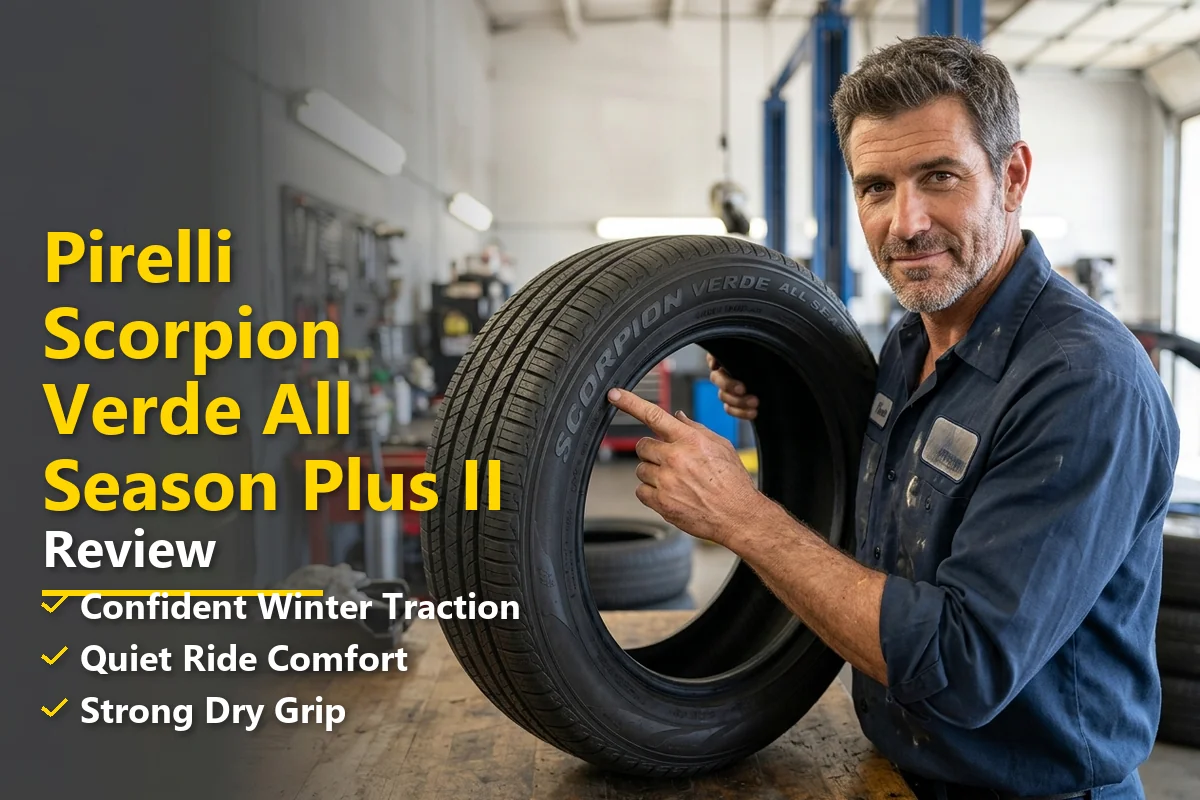
If you drive an SUV or crossover, you already know the struggle of finding an all-season tire that does everything well without costing a fortune. You want something quiet on the highway, confident in the rain, and capable enough when the first snow flies — but most tires force you to pick two out of three.
The Pirelli Scorpion Verde All Season Plus II promises to be that rare all-rounder. I’ve been putting it through its paces on my midsize SUV across a variety of conditions, and I have a lot to say.
If you’re exploring the full Pirelli lineup, our comprehensive Pirelli Tires Review guide covers every model side by side — but this post dives deep into this specific tire.
- The Pirelli Scorpion Verde All Season Plus II is a strong all-season touring tire for SUVs and crossovers that excels in ride comfort and wet traction.
- Dry handling is predictable and confidence-inspiring, though it’s not a performance tire — don’t push it on canyon roads.
- Light snow capability is adequate for occasional flurries but not a substitute for winter tires in heavy snow states.
- Tread life looks very promising; Pirelli backs it with a 70,000-mile warranty.
- Noise levels are impressively low, making it one of the quieter options in its class.
- Pricing sits in the mid-range for this segment — roughly $150–$220 per tire depending on size — which represents solid value.
Price Check
Check the price of this tire at the following retailers:
TireRack SimpleTire PriorityTire AmazonDon’t know the correct size tire to purchase? Start here!
Liked this article?
Add TireAdvise as a preferred source so you see more of our tire reviews and guides on Google.
Who Is This Tire For?
Let me be upfront: the Pirelli Scorpion Verde All Season Plus II (I’ll call it the “Verde AS Plus II” from here on — because life’s too short) is designed specifically for SUVs, crossovers, and light trucks. If you drive a Honda CR-V, Toyota RAV4, Ford Explorer, Chevy Equinox, Subaru Outback, or anything in that ballpark, this tire was engineered with your vehicle in mind.
It’s a touring all-season tire, which means Pirelli prioritized ride comfort, low noise, long tread life, and year-round traction. This is not a performance tire. If you’re looking for aggressive cornering on a sporty SUV, you might want to check out the Pirelli P Zero Pz4 Review for something with more sporting ambitions.
The Verde AS Plus II replaces the original Scorpion Verde All Season Plus, and Pirelli made meaningful improvements to the compound and tread design for the second generation. I was curious whether those upgrades would be noticeable in real-world driving — spoiler alert, they are.
First Impressions and Installation
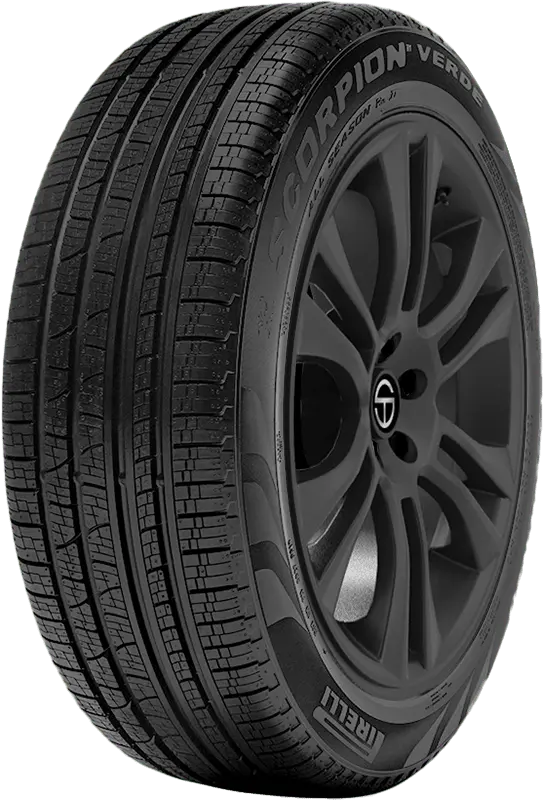
The first thing I noticed pulling the tires out of the box was the refined tread pattern. Pirelli uses an asymmetric design with three wide circumferential grooves, aggressive siping on the inner shoulder, and larger, more rigid tread blocks on the outer shoulder. It looks like a tire that means business in the wet without sacrificing stability in the dry.
Installation was straightforward at my local tire shop — no issues with bead seating or balancing. I had them mounted on my stock alloy wheels, and the ride quality improvement was noticeable within the first few minutes of driving off the lot.
The sidewall design is clean and understated. Pirelli has a subtle “Scorpion” logo and the familiar Pirelli script, but there’s nothing gaudy here. It looks premium without trying too hard — which I appreciate on a daily driver.
Dry Performance: Confident and Composed
I spent a considerable amount of time on dry roads during my test period — everything from suburban neighborhood streets to extended highway stretches across multiple states. The Verde AS Plus II delivers exactly what you’d want from a touring tire: predictable, reassuring grip with minimal drama.
Straight-line stability at highway speeds is excellent. At 70–75 mph on the interstate, the tire tracks straight with very little wandering, even in crosswinds. I drove through some gusty sections in the Midwest where semis were creating turbulence, and the tire felt planted and composed. That rigid outer shoulder does its job.
Turn-in response is adequate for an SUV tire. I wouldn’t call it sharp — it’s not meant to be — but it’s responsive enough that lane changes and highway ramp transitions feel natural and secure. There’s a progressive buildup of grip that gives you plenty of feedback through the steering wheel before you ever approach the limit.
Emergency maneuvers are where the tire really impressed me. I had to make an abrupt lane change to avoid debris on the highway, and the tire responded without any unsettling squirm or delayed reaction. For a touring tire, that’s reassuring.
Braking distances on dry pavement felt competitive with other tires I’ve tested in this segment. The tire inspires confidence when you need to make a sudden stop, which is ultimately what matters most for safety-conscious SUV owners.
How Does It Compare to the Original?
If you ran the original Scorpion Verde All Season Plus, the “II” version feels noticeably more refined in dry handling. Pirelli improved the tread compound and optimized the contact patch geometry, and you can feel the difference. The original was already a capable tire, but the second generation feels like it has better turn-in precision and more consistent grip under varying loads.
Wet Traction: This Is Where It Shines
Wet performance is arguably the most important factor for all-season tires, and the Verde AS Plus II delivers impressively here. I drove through multiple heavy rainstorms during my test period, including some genuine downpours that turned highways into rivers, and the tire handled it all with poise.
Those three wide circumferential grooves do an outstanding job of channeling water away from the contact patch. I experienced zero hydroplaning — even at highway speeds in standing water. The siping on the inner tread blocks adds biting edges that claw into the wet surface, providing grip that feels remarkably close to dry conditions.
Cornering in the rain is where some all-season tires start to feel nervous, but the Verde AS Plus II stays calm. I took familiar routes at my normal pace through wet curves, and the tire tracked predictably without any sudden loss of traction. Braking on wet pavement also felt solid — I didn’t notice any significant increase in stopping distance compared to dry conditions.
Pirelli clearly prioritized wet traction with this tire, and it shows. If you live somewhere with frequent rain — the Pacific Northwest, the Southeast, or anywhere in the Great Lakes region — this tire should be at the top of your list.
Snow and Winter Capability: Adequate, Not Exceptional
The Verde AS Plus II carries the Three-Peak Mountain Snowflake (3PMSF) symbol, which means it meets industry standards for snow traction. That said, I want to set realistic expectations here.
I tested the tire in light-to-moderate snow conditions — a few inches of fresh snowfall on both city streets and unplowed secondary roads. In these conditions, the tire performed well. It found traction reliably, and I was able to accelerate, brake, and turn without any heart-stopping moments.
The dense siping pattern really helps here. The tiny slits in the tread blocks create hundreds of additional biting edges that grip snow and ice far better than a standard all-season tire without siping. Uphill starts on snow-covered gradients were manageable, and downhill braking felt controlled.
However — and this is an important caveat — this is not a winter tire. If you live in Minnesota, Wisconsin, Michigan’s Upper Peninsula, or anywhere that sees serious, sustained snowfall, you should still invest in a dedicated winter tire set. The Verde AS Plus II will get you through an unexpected early-season flurry or a light dusting, but it’s not designed for daily driving on packed snow and ice throughout a brutal northern winter.
On bare ice, traction is limited. I encountered some icy patches during early morning drives, and while the tire didn’t feel dangerous, it also didn’t inspire the confidence that a proper studded or studless winter tire would. Use common sense and slow down.
Ride Comfort and Noise: Exceptionally Quiet
This is the category where the Verde AS Plus II absolutely earns its keep. Pirelli clearly invested significant engineering effort into making this tire quiet and comfortable, and it paid off in a big way.
Highway cruising is remarkably serene. On smooth asphalt, the tire produces barely a whisper of road noise. Even on coarse chip-seal surfaces that usually make tires howl, the Verde AS Plus II keeps noise to a pleasant minimum. My passengers actually commented on how quiet the cabin felt compared to my previous tires — that’s the kind of unsolicited feedback that tells you something is genuinely good.
Impact absorption is impressive. The tire soaks up potholes, expansion joints, and rough pavement without transmitting harsh jolts into the cabin. There’s a suppleness to the ride that makes long drives genuinely comfortable. I completed a road trip spanning several days, and I arrived with noticeably less fatigue than I expected.
If ride comfort is your top priority — and for many SUV and crossover owners, it absolutely is — the Verde AS Plus II is one of the best options in its class. It rivals tires like the Michelin CrossClimate2 and Continental CrossContact LX25 in this regard, which is high praise.
Tread Life and Durability
Pirelli backs the Scorpion Verde All Season Plus II with a 70,000-mile treadwear warranty. That’s competitive for this segment, and based on what I’ve observed during my test period, it seems realistic.
After several weeks of varied driving — including highway miles, city stop-and-go, and some spirited back-road sessions — the tread still looks virtually new. The wear pattern is even across all four tires, which tells me the contact patch design is doing its job distributing forces evenly.
The UTQG treadwear rating of 740 supports the long-life claim. For context, that’s solidly in the “long-wearing” territory for an all-season touring tire. Combined with proper rotation every 5,000–7,000 miles and maintaining correct inflation pressures, I’d expect most drivers to get excellent longevity from this tire.
Pirelli also uses what they call a “Next Generation” compound that’s designed to resist heat buildup and maintain its properties over the life of the tire. It’s too early for me to speak to multi-year durability, but the engineering approach is sound and the early signs are positive.
Size Availability and Pricing
The Scorpion Verde All Season Plus II is available in a wide range of sizes covering most popular SUVs and crossovers sold in the US market. Sizes range from 16-inch to 20-inch fitments, covering vehicles from the compact Honda HR-V all the way up to the full-size Ford Explorer and Chevy Traverse.
Here’s a breakdown of typical pricing I found across major US retailers:
| Tire Size | Typical Price (per tire) | Common Vehicles |
|---|---|---|
| 225/65R17 | $155–$175 | Honda CR-V, Toyota RAV4, Subaru Forester |
| 235/60R18 | $170–$195 | Chevy Equinox, Hyundai Santa Fe, Nissan Murano |
| 235/55R19 | $185–$210 | Ford Edge, Jeep Grand Cherokee, Kia Telluride |
| 245/50R20 | $195–$220 | Ford Explorer, Chevy Traverse, GMC Acadia |
Prices fluctuate based on retailer promotions, and I’ve seen Pirelli offer mail-in rebates throughout the year — especially during spring and fall tire-buying seasons. Check Tire Rack, Discount Tire, Costco, and Walmart for the best current deals. At these price points, the Verde AS Plus II sits squarely in the mid-range — more affordable than premium options like the Michelin CrossClimate2, but priced above budget-tier alternatives.
How It Compares to the Competition
No tire review is complete without context. Here’s how the Pirelli Scorpion Verde All Season Plus II stacks up against its main competitors in the all-season SUV touring tire segment.
| Feature | Pirelli Scorpion Verde AS Plus II | Michelin CrossClimate2 | Continental CrossContact LX25 | Bridgestone Alenza AS Ultra |
|---|---|---|---|---|
| Dry Grip | Very Good | Good | Very Good | Very Good |
| Wet Grip | Excellent | Very Good | Good | Very Good |
| Snow Traction | Good (3PMSF) | Excellent (3PMSF) | Good | Good |
| Ride Comfort | Excellent | Very Good | Excellent | Very Good |
| Noise Level | Very Quiet | Moderate | Very Quiet | Quiet |
| Tread Life Warranty | 70,000 miles | 60,000 miles | 70,000 miles | 80,000 miles |
| Price Range (per tire) | $150–$220 | $175–$250 | $160–$230 | $165–$235 |
Vs. Michelin CrossClimate2
The Michelin CrossClimate2 is widely regarded as the gold standard for all-season tires, and it deserves that reputation — particularly in snow. If winter capability is your primary concern, the Michelin has a clear edge. However, I found the Pirelli to be quieter, more comfortable, and slightly better in wet conditions. Plus, the Pirelli is meaningfully less expensive per tire. For drivers in the Sun Belt or Mid-Atlantic states where heavy snow is rare, the Verde AS Plus II offers better overall value.
Vs. Continental CrossContact LX25
The Continental is an excellent tire that matches the Pirelli in ride comfort and noise levels. Where the Pirelli pulls ahead is wet traction — I felt more confident in heavy rain on the Pirelli. The Continental has slightly better dry handling feel in my experience, but the difference is marginal. These two are extremely close, and you’d be happy with either.
Vs. Bridgestone Alenza AS Ultra
The Bridgestone offers an industry-leading 80,000-mile warranty, which is attractive if you plan to keep your vehicle long-term. In terms of driving experience, I found the Pirelli slightly more comfortable and quieter, while the Bridgestone has a slight edge in dry handling crispness. Wet traction is close between the two, with the Pirelli having a narrow advantage. Price is comparable.
What About Other Pirelli Options?
If you’re shopping within the Pirelli family, it helps to understand where the Scorpion Verde AS Plus II fits relative to other models.
For sedan and coupe owners who need a solid daily driver tire, the Pirelli Cinturato P7 Review covers a touring option that shares similar comfort-first philosophy but in a passenger car fitment. It’s a natural counterpart to the Scorpion Verde for those who don’t drive SUVs.
If fuel efficiency is a major concern alongside comfort, take a look at our Pirelli Cinturato P7 Blue Review. That tire is specifically engineered for low rolling resistance, which can save you money at the gas pump over time — though again, it’s designed for passenger cars rather than SUVs.
And for drivers who want maximum performance and don’t mind trading some comfort, the Pirelli P Zero Review covers the brand’s flagship ultra-high-performance tire. It’s a completely different animal from the Verde AS Plus II, but it showcases what Pirelli can do when grip is the top priority.
The Technology Behind the Tire
Pirelli doesn’t just slap a new label on the same rubber compound and call it a “Plus II.” There are genuine engineering upgrades here that are worth understanding.
The tread compound uses what Pirelli calls their “Next Generation Polymer” technology. In practical terms, this means a silica-rich compound that maintains flexibility across a wide temperature range. This matters because a tire that stiffens in cold weather loses grip, while a tire that gets too soft in heat wears faster. The new compound addresses both extremes more effectively than the first generation.
The asymmetric tread pattern is designed with distinct zones. The inner shoulder features high-density siping for wet and snow traction. The center rib is continuous for straight-line stability and even wear. The outer shoulder uses larger, stiffer blocks for dry cornering grip and responsive handling. This zoned approach lets the tire optimize for multiple conditions without compromise in any single area.
Pirelli also optimized the tire’s internal structure with a new casing design that improves impact absorption while maintaining structural integrity at higher loads. SUVs and crossovers are heavier than passenger cars, so the tire needs to support more weight without sacrificing ride quality — and Pirelli nailed this balance.
Real-World Scenarios: Where This Tire Excels
After spending extensive time with the Verde AS Plus II, I can identify the ideal driver profile and use case for this tire.
Highway Commuters
If most of your driving is highway commuting — 30, 40, 50 miles each way — this tire will make your daily grind significantly more pleasant. The low noise, smooth ride, and stable handling at highway speeds are class-leading. You’ll arrive at work less fatigued and more comfortable.
Road Trip Enthusiasts
I took this tire on a multi-day road trip, and it was a fantastic companion. Long stretches of interstate, variable weather, and different road surfaces — the Verde AS Plus II handled everything without complaint. If you enjoy exploring by car, this tire won’t hold you back.
Family Drivers
The confidence-inspiring wet traction and reliable braking performance make this an excellent choice for parents hauling kids around. Safety matters most when you’ve got precious cargo, and this tire delivers strong all-weather security with the bonus of a quiet, comfortable ride that won’t amplify backseat bickering.
Where It’s Less Ideal
If you’re an aggressive driver who pushes your SUV hard on winding roads, the Verde AS Plus II’s touring personality may feel limiting. The grip is ample for normal driving, but it’s not designed for enthusiastic cornering. Similarly, if you live in a severe winter climate, you’ll still want dedicated snow tires for the coldest months.
Pros and Cons
Here’s my honest breakdown after extensive testing:
Pros
- Outstanding wet traction — among the best in its class for hydroplaning resistance and wet cornering grip
- Exceptionally quiet — noticeably quieter than most competitors, even on rough road surfaces
- Superb ride comfort — absorbs bumps and imperfections beautifully
- Competitive pricing — delivers premium-level performance at a mid-range price point
- 70,000-mile warranty — strong backing that shows Pirelli’s confidence in longevity
- 3PMSF certified — legitimate light snow capability beyond what standard M+S tires offer
- Wide size range — fits most popular US-market SUVs and crossovers
Cons
- Not a performance tire — handling is safe and predictable but not sporty or exciting
- Ice traction is limited — the 3PMSF rating doesn’t mean it’s a winter tire; use caution on ice
- Not available for trucks — if you need a tire for an F-150 or Ram 1500, this isn’t the one
- Slight understeer at the limit — pushing hard in corners reveals a safe but muted response
Installation Tips and Maintenance
To get the most out of your Pirelli Scorpion Verde All Season Plus II tires, I recommend following a few simple maintenance practices.
First, check tire pressure monthly. The correct pressure for your vehicle is listed on the placard inside your driver’s door jamb — not on the tire sidewall. Maintaining proper pressure ensures even wear, optimal fuel economy, and the best possible handling.
Second, rotate your tires every 5,000 to 7,000 miles. I typically rotate mine every other oil change, which makes it easy to remember. Consistent rotation prevents uneven wear patterns and helps you get the full life out of the tread.
Third, get an alignment check when you install new tires. Misalignment is the number one killer of tire longevity, and it’s an easy fix that costs $80–$100 at most shops. It’s cheap insurance on a set of tires that costs $600–$880.
My Final Verdict
The Pirelli Scorpion Verde All Season Plus II is a genuinely excellent all-season touring tire for SUVs and crossovers. It doesn’t try to be everything to everyone — it knows its mission is comfort, quietness, wet safety, and long tread life, and it executes that mission at a high level.
In my experience, it’s one of the best-balanced tires in its segment. The wet traction is outstanding, the ride quality is top-tier, and the pricing makes it accessible to a wide range of buyers. The 70,000-mile warranty adds peace of mind, and the 3PMSF certification provides genuine light-winter capability that a standard all-season tire can’t match.
If you’re replacing the tires on your SUV or crossover and you want a tire that makes every drive feel a little more refined, the Verde AS Plus II deserves serious consideration. I recommend it without hesitation for the majority of US drivers who face moderate weather conditions throughout the year.
It’s not the tire for everyone — track day enthusiasts and deep-snow commuters need something different. But for the daily driver who wants the best combination of comfort, safety, and value? This is it.
And if you want to compare it directly against Pirelli’s more performance-oriented offerings, our Pirelli P Zero Pz4 Review will show you what the other end of Pirelli’s spectrum looks like. Different tire, different mission — but both showcase why Pirelli remains one of the most trusted names in the tire industry.
Frequently Asked Questions
Is the Pirelli Scorpion Verde All Season Plus II a good tire for daily driving in the US?
The Pirelli Scorpion Verde All Season Plus II is an excellent choice for daily commuting and highway driving across a wide range of US conditions. It delivers a quiet, comfortable ride with strong wet and dry traction, making it well-suited for SUVs and crossovers that see mostly paved roads. I found it particularly impressive on long interstate drives where road noise and ride comfort really matter.
How long does the Pirelli Scorpion Verde All Season Plus II last compared to other all-season tires?
Pirelli backs the Scorpion Verde All Season Plus II with a 70,000-mile treadwear warranty, which is competitive with top rivals like the Michelin CrossClimate 2 and Continental CrossContact LX25. Real-world owners frequently report getting 50,000 to 65,000 miles depending on driving habits, alignment, and rotation schedule. For a tire in the $150–$220 per tire price range, that tread life offers solid long-term value.
How does the Pirelli Scorpion Verde All Season Plus II perform in snow and winter conditions?
While the Scorpion Verde All Season Plus II handles light snow and cold temperatures reasonably well for an all-season tire, it does not carry the Three-Peak Mountain Snowflake (3PMSF) rating. If you regularly drive through heavy snow or icy roads in states like Minnesota, Michigan, or Colorado, I’d recommend pairing these with a dedicated winter tire set. For occasional dustings and near-freezing temperatures, most drivers find the grip adequate.
What is the difference between the Pirelli Scorpion Verde All Season Plus and the Plus II?
The Pirelli Scorpion Verde All Season Plus II is the updated successor featuring a redesigned tread compound and pattern that improves wet braking, tread life, and rolling resistance over the original Plus. Pirelli also refined the internal structure for better handling stability and a quieter ride. If you liked the original, the Plus II is a meaningful upgrade across nearly every performance category.
What SUVs and crossovers does the Pirelli Scorpion Verde All Season Plus II fit?
The Scorpion Verde All Season Plus II is available in a wide range of sizes from 16 to 20 inches, fitting popular US vehicles like the Toyota RAV4, Honda CR-V, Ford Explorer, Chevy Equinox, Subaru Outback, and Jeep Grand Cherokee. You can check Pirelli’s online fitment tool or your tire shop’s database to confirm the exact size for your vehicle. It covers most mainstream SUV and crossover applications sold in the American market.
How much does the Pirelli Scorpion Verde All Season Plus II cost per tire?
Prices for the Pirelli Scorpion Verde All Season Plus II typically range from $150 to $220 per tire depending on size, with common sizes like 235/65R18 averaging around $170–$190 at major US retailers like Tire Rack, Discount Tire, and Costco. I’d recommend watching for seasonal rebates, as Pirelli frequently offers $70–$100 back on a set of four. Factoring in the 70,000-mile warranty, the cost per mile is very competitive in the premium all-season segment.
Is the Pirelli Scorpion Verde All Season Plus II quiet and comfortable on the highway?
Ride comfort and low road noise are standout strengths of the Scorpion Verde All Season Plus II, thanks to Pirelli’s optimized tread pitch sequencing and noise-canceling groove design. On smooth US interstates and even rougher secondary highways, I noticed significantly less cabin noise compared to many competing all-season SUV tires. If a quiet, refined driving experience is a top priority, this tire consistently ranks among the best in its class.
