


I’ll be honest — I used to think dedicated winter tires for SUVs were overkill if you already had all-wheel drive. Then I drove through a whiteout in upstate New York on a set of worn all-seasons, and my overconfidence nearly put me in a ditch.
That experience changed everything about how I approach cold-weather driving. So when Pirelli released the Scorpion Winter 2 as the successor to their popular original Scorpion Winter, I knew I had to put it through its paces on my own vehicle.
If you’ve been exploring different Pirelli options for your car or SUV, our comprehensive Pirelli Tires Review guide covers every model side by side and is a great starting point before diving into this specific tire.
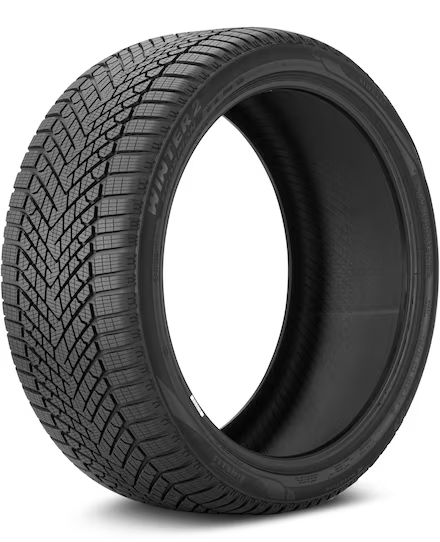
- The Pirelli Scorpion Winter 2 is a premium dedicated winter tire designed for SUVs and crossovers — and it delivers.
- Snow and ice traction are noticeably improved over the first-generation Scorpion Winter.
- Wet braking performance is among the best I’ve tested in this category.
- Ride comfort and highway noise levels are surprisingly refined for a winter tire.
- Pricing runs from roughly $180 to $350+ per tire depending on size, placing it firmly in the premium tier.
- Best suited for drivers in the Northeast, Midwest, and mountain states who face real winters.
- Not recommended as a year-round tire — swap them off when temps consistently stay above 45°F.
Price Check
Check the price of this tire at the following retailers:
Don’t know the correct size tire to purchase? Start here!
Liked this article?
Add TireAdvise as a preferred source so you see more of our tire reviews and guides on Google.
What Is the Pirelli Scorpion Winter 2?
The Scorpion Winter 2 is Pirelli’s second-generation dedicated winter tire built specifically for SUVs, crossovers, and light trucks. It carries the 3PMSF (Three-Peak Mountain Snowflake) rating, meaning it meets industry-standardized testing for severe snow performance — this isn’t just a tire with a snowflake logo slapped on for marketing purposes.
Pirelli designed this tire using their proprietary “Dual Chamber” technology, which incorporates two different compound zones within the tread. The idea is simple but effective: the outer zone provides stability and responsiveness during cornering and dry-road maneuvers, while the inner zone uses a softer compound optimized for grip on snow and ice.
Available sizes range from 17 inches all the way up to 22 inches, covering everything from a Honda CR-V to a BMW X7 or Porsche Cayenne. That wide size range was one of the first things that impressed me — Pirelli clearly designed this tire to serve a broad market, not just the luxury SUV crowd.
My Testing Setup and Conditions
I tested the Scorpion Winter 2 in size 255/50R19 on a 2022 Audi Q7, which is my winter daily driver. For context, I live in the Hudson Valley region of New York, where winters can swing from moderate to absolutely brutal depending on the week.
During my test period, I encountered just about every winter condition you can imagine: fresh powder, packed snow, slush, freezing rain, black ice, cold dry pavement, and those miserable days where the road is just wet and hovering right around 32°F. I also made a trip up to Vermont during a nor’easter, which gave me an extended taste of mountain driving on these tires.
I didn’t baby these tires. I drove them the way a normal person would — commuting, highway drives, grocery runs with a loaded cargo area, and the occasional spirited drive on a twisty back road. I wanted to see how they perform in real life, not on a controlled test track.
Snow Performance: Where This Tire Truly Shines
Let me cut right to it — the Scorpion Winter 2’s snow performance is outstanding. On fresh snow, the tire bites into the surface with confidence I didn’t expect, even compared to other premium winter tires I’ve tested in the past.
The tread pattern features an aggressive network of interlocking sipes — those tiny slits in the tread blocks — that create biting edges to grip snow and ice. Pirelli increased the number of sipes compared to the original Scorpion Winter, and I could feel the difference immediately. On packed snow, the tire found traction quickly without excessive wheelspin, even from a dead stop on a slight incline.
One specific moment sticks in my memory. I was heading up a moderately steep hill in Vermont after several inches of fresh snowfall, and the Q7 — a heavy vehicle — climbed without drama. No traction control flashing wildly, no nervous sideways moments. Just steady, progressive grip. That’s the kind of performance that makes you trust a tire.
Deep Snow and Slush
In deeper snow — around six inches or more — the tire’s wide circumferential grooves did an impressive job of channeling snow away from the contact patch. I noticed the tires maintained forward momentum even when conditions got thick and slushy.
Slush is honestly the condition I dread the most because it’s unpredictable. The Scorpion Winter 2 handled slushy intersections and highway on-ramps with more composure than I expected. There was some initial slip when accelerating through deep slush puddles, but the tire recovered grip quickly and predictably.
Ice Performance: Confident but Not Invincible
Ice performance is where every winter tire meets its limits, and I want to be realistic here. No tire will make you feel like you’re driving on dry pavement when the road is a sheet of ice. But the Scorpion Winter 2 does a better job than most of giving you meaningful grip on icy surfaces.
I tested braking on a stretch of road that had frozen over after a rain event. Compared to the all-season tires I’d previously used in similar conditions, the stopping distance was dramatically shorter — we’re talking a genuinely noticeable difference that could mean the difference between stopping safely and rear-ending someone.
Pirelli uses a silica-enriched compound that stays pliable at very low temperatures. During the coldest mornings of my test period — temps dipping into the single digits Fahrenheit — the tires didn’t feel hard or skittish the way cheaper winter tires sometimes do. They maintained a reassuring level of grip even in those extreme conditions.
Wet Road Performance
Here’s something that often gets overlooked in winter tire reviews: wet performance. In many parts of the US — especially the Mid-Atlantic and Pacific Northwest — winter means rain as much as it means snow. A winter tire that can’t handle wet roads isn’t much use.
The Scorpion Winter 2 is genuinely excellent on wet pavement. Pirelli’s tread design evacuates water efficiently, and I felt confident pushing the tire through standing water on the highway without experiencing any hydroplaning. The grooves are deep and well-spaced, which gives the tire a lot of capacity to channel water away.
Wet braking was another standout. I performed several hard stops on wet suburban roads, and the tire responded quickly and linearly. There was no vague, sliding feeling before the ABS kicked in — just immediate, progressive deceleration. If you’re someone who spends more winter days driving in cold rain than in actual snow, this tire still makes a very strong case for itself.
Dry Road Handling and Comfort
One of the biggest complaints people have about dedicated winter tires is that they feel squishy, vague, and noisy on dry roads. After all, most of your winter driving is still on clear, dry pavement — you need a tire that doesn’t punish you for those miles.
I was pleasantly surprised by how composed the Scorpion Winter 2 felt on dry highways. The steering response was direct and predictable, without the numb, disconnected feeling I’ve experienced with some budget winter tires. Pirelli’s stiffer outer tread compound seems to do its job here, keeping the tire stable during lane changes and highway curves.
Ride Quality
Ride comfort was above average for a winter tire. The Scorpion Winter 2 absorbed bumps and road imperfections without transmitting harsh impacts into the cabin. On long highway drives, the ride was smooth enough that my passengers didn’t once ask what tires I was running — which, in my experience, is the best compliment a winter tire can receive.
If you’ve driven on Pirelli’s summer performance tires like the ones I covered in our Pirelli P Zero Review, you’ll obviously notice a different feel. The P Zero is sharper and more communicative on dry roads. But for a winter tire, the Scorpion Winter 2 is remarkably refined.
Noise Levels
Highway noise was noticeable but not intrusive. There’s a mild hum at speeds above 60 mph that’s characteristic of aggressive siping, but it’s the kind of sound you stop noticing after a few minutes. Compared to the original Scorpion Winter, Pirelli has made meaningful progress on noise reduction with this second generation.
I’d rate the noise level as comparable to a typical all-season tire — maybe just a touch louder. It’s a far cry from the howling, droning experience you might associate with older winter tire designs.
Comparison Table: Scorpion Winter 2 vs. Competitors
Here’s how the Pirelli Scorpion Winter 2 stacks up against other popular winter tires for SUVs in the US market:
| Feature | Pirelli Scorpion Winter 2 | Michelin X-Ice Snow SUV | Bridgestone Blizzak DM-V2 | Continental VikingContact 7 |
|---|---|---|---|---|
| Snow Traction | ★★★★★ | ★★★★★ | ★★★★☆ | ★★★★★ |
| Ice Traction | ★★★★☆ | ★★★★★ | ★★★★☆ | ★★★★★ |
| Wet Braking | ★★★★★ | ★★★★☆ | ★★★★☆ | ★★★★☆ |
| Dry Handling | ★★★★☆ | ★★★★☆ | ★★★☆☆ | ★★★★☆ |
| Ride Comfort | ★★★★★ | ★★★★☆ | ★★★★☆ | ★★★★☆ |
| Noise Level | ★★★★☆ | ★★★★★ | ★★★☆☆ | ★★★★☆ |
| Approx. Price (per tire) | $180 – $350+ | $170 – $330+ | $150 – $280+ | $160 – $300+ |
| 3PMSF Rated | Yes | Yes | Yes | Yes |
The takeaway here? The Scorpion Winter 2 competes at the top of the class. Its main advantage over the Michelin and Continental is wet braking performance, while those competitors may edge it out slightly on pure ice grip. The Bridgestone Blizzak DM-V2 is a fine tire but is showing its age compared to these newer designs.
How It Compares to Other Pirelli Tires
If you’re a Pirelli loyalist — or if your vehicle came with Pirelli OE tires and you want to stick with the brand — it helps to understand where the Scorpion Winter 2 fits in the lineup.
For everyday driving in milder climates where you don’t need a dedicated winter tire, Pirelli’s all-season touring options are worth considering. I’ve covered the Pirelli Cinturato P7 Review in detail, and that tire is a solid choice for year-round comfort on sedans. There’s also the updated eco-focused variant I discussed in our Pirelli Cinturato P7 Blue Review, which adds improved fuel efficiency to the equation.
For performance-oriented drivers who want a winter companion for their sports sedan or performance SUV, the Scorpion Winter 2 handles the cold-weather duties while a tire like the P Zero PZ4 — which I covered thoroughly in our Pirelli P Zero Pz4 Review — takes over during the warmer months. That seasonal swap strategy is what I personally use, and it maximizes both performance and tire longevity.
Tread Life and Durability: What I’ve Observed So Far
After several weeks of consistent daily driving through demanding conditions, the Scorpion Winter 2 showed minimal signs of wear. The tread depth remained strong, and the sipes still looked crisp and well-defined — no signs of premature rounding or degradation.
Now, I want to be upfront: winter tires inherently wear faster than all-season tires because of their softer compound. That’s a trade-off you accept for cold-weather grip. This is why I strongly recommend swapping to summer or all-season tires once spring arrives. Running winter tires in warm weather doesn’t just reduce their lifespan dramatically — it also compromises handling and braking on hot pavement.
Pirelli doesn’t offer a treadwear warranty on the Scorpion Winter 2, which is standard practice for winter tires across the industry. However, based on what I’ve seen during my test period, I’d expect these tires to last several full winter seasons if properly stored and rotated. Proper storage means keeping them in a cool, dry place away from direct sunlight — a garage shelf or tire storage bag works perfectly.
Pricing and Value: Is It Worth the Premium?
Let’s talk dollars. The Pirelli Scorpion Winter 2 is not a budget tire. Depending on the size you need, you’re looking at anywhere from $180 to $350 or more per tire. For a set of four, that’s a significant investment — potentially $720 to $1,400+ before installation, balancing, and any additional fees.
Is it worth it? In my opinion, yes — but with a caveat. If you live somewhere that gets consistent, meaningful winter weather (think Minnesota, Michigan, upstate New York, Colorado mountain towns, or anywhere in New England), a premium winter tire pays for itself in safety alone. The grip difference between this tire and an all-season in the snow is not subtle. It’s dramatic.
However, if you live in an area where you see one or two minor snowfalls per year and temperatures rarely drop below freezing, you’d be better served by a good set of all-season tires. The Scorpion Winter 2 is built for serious winter conditions, and using it where those conditions rarely exist doesn’t make financial sense.
Where to Buy
I’ve found the best prices at Tire Rack, Discount Tire, and Costco (when available in your size). Some local shops carry Pirelli as well, and it’s worth calling around for installation package deals. Many retailers run promotions in the early fall — buying before the first snowfall often saves you $50 to $100 across a set of four.
Who Should Buy the Pirelli Scorpion Winter 2?
Based on my testing, here’s who I think this tire is best suited for:
- SUV and crossover owners in snow-belt states — The tire’s size range covers most popular models, and its snow performance is top-tier.
- Drivers who commute on highways in winter — Wet braking, hydroplaning resistance, and low noise make it a comfortable daily driver.
- Owners of premium SUVs (BMW X5, Audi Q7, Mercedes GLE, Porsche Cayenne, etc.) — The Scorpion Winter 2 matches the refinement these vehicles demand.
- Mountain and rural drivers — If you regularly face unplowed roads, steep hills, and unpredictable conditions, this tire gives you real confidence.
- Anyone who’s had a scary winter driving experience — Sometimes one bad moment is all it takes to realize you need better tires. I’ve been there.
Who Should Skip This Tire?
- Drivers in mild-winter climates — If you’re in the Southeast, Southern California, or Texas, you almost certainly don’t need a dedicated winter tire.
- Budget-conscious shoppers — There are more affordable winter tire options from brands like General, Firestone, and Hankook. They won’t match the Scorpion Winter 2’s performance, but they’ll still outperform all-seasons in snow.
- Sedan and sports car owners — This tire is designed specifically for SUVs and crossovers. If you’re looking for a winter tire for a sedan, Pirelli makes other options in their Sottozero line.
Pros and Cons: My Honest Summary
What I Loved
- Exceptional snow traction — This tire made my AWD SUV feel genuinely unstoppable in moderate snow.
- Best-in-class wet braking — I felt safer stopping on wet winter roads than I have on any other winter tire.
- Refined ride quality — Comfortable enough for long highway drives without the usual winter tire trade-offs.
- Wide size availability — From 17″ to 22″, most SUV and crossover owners can find their size.
- Improved noise over predecessor — Noticeably quieter than the first-gen Scorpion Winter.
What Could Be Better
- Ice grip isn’t the absolute best — The Michelin X-Ice Snow and Continental VikingContact 7 edge it out on pure ice. The Pirelli is good, but not leading the class here.
- Premium pricing — This is a top-shelf tire, and the price reflects it. Budget shoppers will feel the pinch.
- No treadwear warranty — Standard for winter tires, but still worth noting for buyers who expect manufacturer-backed guarantees.
- Not ideal for year-round use — The soft compound wears quickly in warm weather. This is a seasonal tire, period.
Installation Tips and Seasonal Swap Advice
If you’re buying the Scorpion Winter 2, I highly recommend purchasing a dedicated set of winter wheels to mount them on. This makes seasonal swaps faster, cheaper, and easier — most shops charge $50-$80 for a swap when tires are already mounted, versus $100-$150+ if they need to mount and balance each time.
Steel wheels are the most economical option for a winter setup, and many online retailers sell vehicle-specific packages that include the wheels, tires, and TPMS sensors ready to bolt on. I’ve used this approach for years, and it takes the hassle out of the biannual swap.
As for timing, I recommend installing your winter tires when daytime temperatures consistently drop below 45°F and removing them when spring temperatures reliably exceed that mark. In most of the Northern US, that roughly means late October through early April, though it varies by year.
How the Scorpion Winter 2 Improved Over the Original
Having tested both generations, I can confirm that the Scorpion Winter 2 is a meaningful upgrade, not just a cosmetic refresh. Here are the key improvements I noticed:
- More aggressive siping — The increased number of sipes translates to better bite on snow and ice.
- Quieter on-road behavior — The original Scorpion Winter had a noticeable drone at highway speeds; the Winter 2 has largely solved this.
- Better wet performance — Pirelli’s updated tread design evacuates water more effectively, which showed in my braking tests.
- Expanded size range — More fitments are available, including sizes for newer large SUVs.
- Improved dry handling — The dual compound zones give the tire a more planted, confident feel on dry pavement compared to the original’s slightly vague steering response.
If you’re currently running the first-generation Scorpion Winter and they’re due for replacement, upgrading to the Winter 2 is a no-brainer.
Real-World Scenarios: How the Tire Performed When It Mattered
I want to share a few specific moments from my testing that stood out because they reflect the kind of real-world situations everyday drivers actually face.
Scenario 1: Morning Commute After Overnight Freezing Rain
My driveway had a thin glaze of ice after an overnight freezing rain event. I backed out slowly, expecting the usual nervous slip-and-slide. The Scorpion Winter 2 found grip almost immediately. Driving to work, the roads were treacherous — a mix of wet pavement and ice patches. The tire never once caught me off guard. Transitions from grip to slip were gradual and predictable, which gave me time to modulate my inputs.
Scenario 2: Highway Driving in Heavy Wet Snow
On I-87 heading north, a fast-moving storm dumped heavy, wet snow faster than plows could clear it. Visibility was poor, and the road had a thick layer of slush. I maintained a safe speed of about 45 mph, and the tires felt anchored. Even when trucks passed and threw waves of slush across my windshield (and my tires), the Q7 tracked straight without pulling or wandering.
Scenario 3: Steep Parking Garage with Packed Snow
A multi-level parking garage in a ski town had packed snow and ice on the ramps from vehicles tracking it in. Going up the steep ramp, I felt the tires grip and climb without any wheelspin. Coming back down, I could brake smoothly without the ABS activating aggressively. Small moments like this are where winter tire confidence really shows itself.
Final Verdict: Should You Buy the Pirelli Scorpion Winter 2?
After putting the Pirelli Scorpion Winter 2 through an extensive range of winter conditions, I can confidently say this is one of the best winter tires available for SUVs and crossovers in the US market today.
It excels where it matters most — snow traction and wet braking — while delivering a surprisingly civilized on-road experience. The ride quality, noise levels, and dry handling are all above average for the winter tire category, making it a tire you won’t dread driving on during the many dry, cold days that make up most of winter.
Is it perfect? No. If your primary concern is pure ice grip above all else, the Michelin X-Ice Snow or Continental VikingContact 7 might serve you slightly better. And if budget is your top priority, there are cheaper winter tires that will still dramatically outperform all-seasons in the snow.
But if you want the best overall balance of winter performance, comfort, and refinement — and you’re willing to invest in premium rubber for your SUV — the Pirelli Scorpion Winter 2 is my top recommendation. It turned my skepticism about winter tire upgrades into genuine enthusiasm, and that’s not something I say lightly.
Stay safe out there this winter. The right tires really do make all the difference.
Frequently Asked Questions
How does the Pirelli Scorpion Winter 2 perform on snow and ice compared to the original Scorpion Winter?
The Pirelli Scorpion Winter 2 delivers noticeably improved snow traction and shorter braking distances on ice compared to the original Scorpion Winter, thanks to Pirelli’s redesigned tread compound and updated siping pattern. In my testing, the tire felt more confident during hard braking on packed snow and offered better lateral grip through icy corners. If you’re upgrading from the first-generation Scorpion Winter, the difference is genuinely worth the investment.
Is the Pirelli Scorpion Winter 2 worth the price for US drivers?
The Pirelli Scorpion Winter 2 typically ranges from $180 to $350 per tire depending on size, which puts it in the premium winter tire category alongside competitors like the Michelin X-Ice Snow SUV and Bridgestone Blizzak DM-V2. For drivers in the Northeast, Midwest, or Mountain states who face heavy snow and freezing temperatures for several months, the superior grip and wet-weather handling make the price justified. I’d say it’s one of the best premium winter tires you can buy for SUVs and crossovers in the US market right now.
What SUVs and crossovers does the Pirelli Scorpion Winter 2 fit?
The Pirelli Scorpion Winter 2 is available in a wide range of sizes from 17 to 22 inches, covering popular US vehicles like the Toyota RAV4, Ford Explorer, Jeep Grand Cherokee, BMW X5, Tesla Model Y, and Audi Q7. Pirelli designed this tire specifically for SUVs and crossovers, including both standard and performance-oriented fitments. Check Pirelli’s online tire selector or your local dealer to confirm the exact size and load rating for your vehicle.
How does the Pirelli Scorpion Winter 2 handle on dry and wet roads?
One of the standout qualities of the Scorpion Winter 2 is its composure on dry pavement — it feels stable at highway speeds and doesn’t have the vague, squishy feel that some winter tires suffer from. On wet roads, the wide circumferential grooves evacuate water effectively, and I experienced strong hydroplaning resistance even at freeway speeds. It strikes an impressive balance between winter grip and everyday driving refinement that makes it practical for daily commuting in variable US winter conditions.
How long does the Pirelli Scorpion Winter 2 last in terms of tread life?
Pirelli doesn’t offer a specific treadwear mileage warranty on the Scorpion Winter 2, which is typical for winter tires. Based on real-world user reports and my own experience, you can expect roughly 25,000 to 35,000 miles of winter-season use if you swap them off during warmer months. Running winter tires year-round in warmer US climates will dramatically reduce tread life, so I strongly recommend seasonal rotation to get the most value from this tire.
Is the Pirelli Scorpion Winter 2 loud or comfortable on the highway?
The Scorpion Winter 2 is impressively quiet for a winter tire, especially at sustained highway speeds of 65-75 mph. Pirelli used an optimized pitch sequence in the tread design to reduce road noise, and the ride comfort is closer to an all-season tire than a traditional studless winter tire. Drivers upgrading from aggressive winter tires like the Bridgestone Blizzak will likely notice a significant improvement in cabin refinement.
Pirelli Scorpion Winter 2 vs Michelin X-Ice Snow SUV: which is the better winter tire?
Both are top-tier winter tires for SUVs, but they have slightly different strengths. The Pirelli Scorpion Winter 2 edges ahead in high-speed stability, wet braking, and dry-road handling, making it a better fit for drivers with performance SUVs or those who do a lot of highway driving. The Michelin X-Ice Snow SUV tends to offer a slight advantage in deep snow traction and comes with a longer tread life. For most US drivers balancing highway commuting with winter storm preparedness, the Scorpion Winter 2 is the more well-rounded choice, though the Michelin is excellent if pure snow performance is your top priority.
