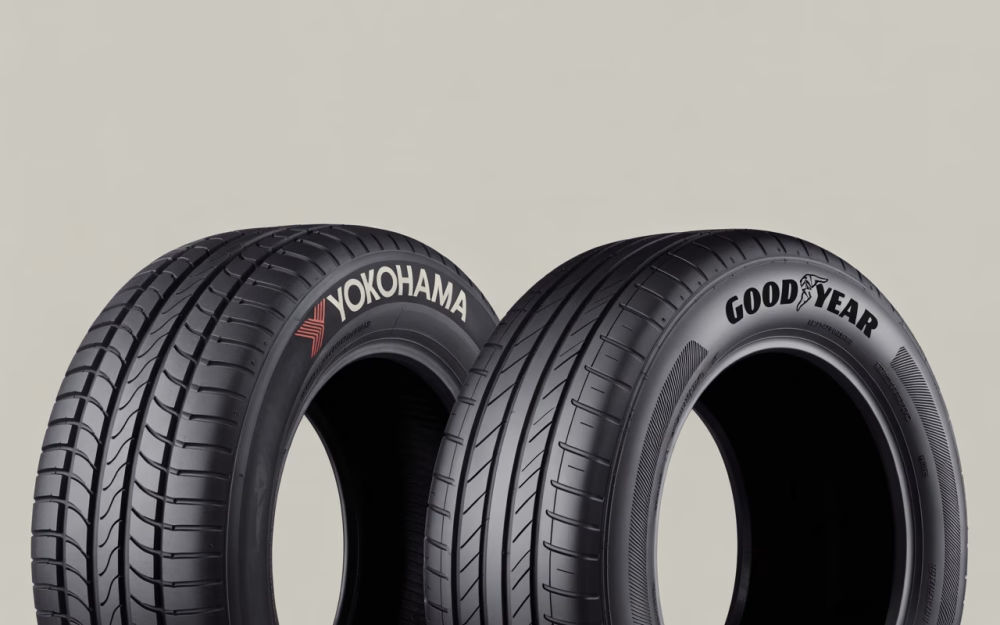
Yokohama vs Goodyear are two of the most prominent names in the tire industry, with a rich history and a strong global presence. Yokohama Tire Corporation, founded in 1917 in Japan, has grown to become one of the world’s leading tire manufacturers, known for its innovative designs and advanced technologies. On the other hand, Goodyear Tire & Rubber Company, established in 1898 in the United States, is one of the oldest and largest tire companies, with a reputation for quality, durability, and performance.
Both companies have a diverse range of tire offerings catering to various segments, including passenger vehicles, commercial trucks, aircraft, and motorsports. Yokohama has a strong foothold in the high-performance tire market, particularly in the areas of ultra-high-performance (UHP) and racing tires, while Goodyear has a significant presence in the original equipment (OE) market, supplying tires to major automakers worldwide.
Over the years, Yokohama and Goodyear have established themselves as industry leaders, continuously pushing the boundaries of tire technology and innovation. Their commitment to research and development has led to the creation of cutting-edge products that enhance safety, fuel efficiency, and driving experience for consumers across the globe.
Table of Contents
Tire Manufacturing Processes
Yokohama and Goodyear employ distinct manufacturing processes to produce their respective tire offerings. Yokohama places a strong emphasis on advanced materials and cutting-edge technology, utilizing proprietary rubber compounds and specialized polymers to enhance tire performance and longevity. Their manufacturing facilities are equipped with state-of-the-art machinery, enabling precise control over the tire-building process and ensuring consistent quality.
On the other hand, Goodyear’s approach to tire manufacturing is rooted in decades of experience and a commitment to continuous improvement. While they also leverage modern materials and technologies, Goodyear’s strength lies in their time-tested production methods, which have been refined over generations. Their manufacturing facilities are meticulously maintained, with stringent quality control measures in place to ensure every tire meets their exacting standards.
Both companies employ rigorous testing procedures throughout the manufacturing process, subjecting their tires to a range of simulated conditions to assess performance, durability, and safety. Yokohama’s testing protocols are heavily influenced by their involvement in motorsports, replicating the extreme demands of high-performance driving. Goodyear, on the other hand, places a greater emphasis on real-world driving conditions, simulating a variety of terrains and climates to ensure their tires perform consistently in diverse environments.
Ultimately, while Yokohama and Goodyear have distinct approaches to tire manufacturing, both companies are dedicated to producing high-quality products that meet the evolving needs of consumers and industry standards.
Tire Offerings and Product Lines
Both Yokohama and Goodyear offer a wide range of tire models and types to cater to different vehicle categories and driving conditions.
Yokohama’s tire lineup includes the ADVAN line for high-performance vehicles, the GEOLANDAR line for SUVs and light trucks, and the AVID line for passenger cars. They also offer specialized tires for winter driving, off-road adventures, and commercial applications.
On the other hand, Goodyear’s tire portfolio includes the Eagle line for high-performance vehicles, the Wrangler line for SUVs and trucks, and the Assurance line for passenger cars. They also have tires designed for winter conditions, off-road use, and commercial vehicles.
Yokohama and Goodyear constantly innovate and update their tire offerings to meet the evolving needs of drivers and vehicle manufacturers. Both companies offer tires with advanced tread designs, compound formulations, and construction methods to enhance performance, durability, and safety across various driving conditions.
Performance and Durability
Yokohama and Goodyear are two of the most renowned tire brands in the world, known for their exceptional performance and durability. Independent testing and customer reviews provide valuable insights into how these tires stack up against each other in terms of tread life, handling, traction, and overall driving experience.
Tread life is a crucial factor in determining a tire’s durability, and both Yokohama and Goodyear have demonstrated impressive longevity. Yokohama’s advanced compound formulations and tread designs have consistently earned high ratings for tread wear resistance, with many customers reporting excellent mileage before needing replacements. Goodyear’s tires, on the other hand, are renowned for their long-lasting tread compounds and innovative tread patterns that promote even wear, ensuring a longer lifespan.
When it comes to handling and traction, Yokohama’s tires are often praised for their responsive steering and excellent grip on both dry and wet surfaces. Their advanced silica-based compounds and optimized tread patterns contribute to superior cornering and braking performance, instilling confidence in drivers. Goodyear’s tires, however, are no slouch in this department, with their proprietary tread designs and cutting-edge compound technologies delivering exceptional traction and handling across a wide range of driving conditions.
In terms of overall driving experience, both brands have garnered positive reviews from customers. Yokohama’s tires are lauded for their smooth and comfortable ride, thanks to their advanced construction and noise-reducing technologies. Goodyear’s tires, on the other hand, are often commended for their balanced performance, offering a blend of ride comfort, handling, and durability that caters to a wide range of driving styles and preferences.
Ultimately, the choice between Yokohama and Goodyear tires comes down to individual driving needs and preferences. While both brands offer exceptional performance and durability, their strengths may align better with certain driving conditions or vehicle types. Independent testing and customer reviews can provide valuable guidance in making an informed decision.
Pricing and Value
When it comes to pricing and value, both Yokohama and Goodyear have adopted different strategies to appeal to various consumer segments. Yokohama tires are generally positioned as a premium brand, with higher prices reflecting their emphasis on advanced technology, performance, and quality. However, they offer a compelling value proposition for drivers seeking exceptional handling, durability, and a comfortable ride.
Goodyear, on the other hand, has a more diverse pricing strategy, catering to both budget-conscious consumers and those seeking premium performance. Their product lineup ranges from affordable entry-level tires to high-end models designed for sports cars and luxury vehicles. Goodyear’s value proposition lies in their ability to provide a wide range of options to suit different driving needs and budgets.
Both companies offer warranties and roadside assistance programs to enhance the overall value for customers. Yokohama’s limited tread life warranty covers defects in workmanship and materials, while Goodyear’s warranty programs vary depending on the tire line, with some models offering impressive coverage for treadwear and road hazard protection.
In terms of customer service, Yokohama and Goodyear have established robust networks of authorized dealers and service centers. These facilities provide professional tire installation, rotation, and maintenance services, ensuring that customers receive the best possible performance and longevity from their tires.
Ultimately, the pricing and value proposition of each brand depend on individual driving needs, budgets, and priorities. Yokohama excels in delivering premium performance and technology at a higher price point, while Goodyear offers a broader range of options, from budget-friendly to high-end, catering to a wider consumer base.
Technological Innovations
Yokohama and Goodyear are at the forefront of technological innovations in the tire industry, continuously pushing the boundaries of tire design and engineering. Both companies have invested heavily in research and development to create cutting-edge products that enhance performance, safety, and sustainability.
Yokohama’s technological advancements include their advanced compound technology, which optimizes the rubber compound for improved grip, handling, and durability. They have also developed advanced tread designs that improve traction and reduce rolling resistance, leading to better fuel efficiency. Additionally, Yokohama has pioneered the use of orange oil in their tire compounds, reducing reliance on petroleum-based materials and promoting sustainability.
Goodyear, on the other hand, has been a pioneer in the development of run-flat tires, which allow drivers to continue driving for a limited distance even after a puncture. Their SilentArmor technology reinforces the tire’s sidewalls, preventing complete deflation and enhancing safety. Goodyear has also introduced advanced tread designs, such as the WinterCommand and UltraGrip lines, which provide exceptional traction and handling in various weather conditions.
Both companies have embraced the use of advanced computer simulations and modeling techniques to optimize tire designs, reducing the need for physical prototyping and accelerating the development process. Additionally, they have incorporated advanced sensors and monitoring systems into their tires, enabling real-time monitoring of tire performance and condition, improving safety and maintenance.
In the realm of sustainability, Yokohama and Goodyear have made significant strides in developing tires with lower rolling resistance, which translates into improved fuel efficiency and reduced carbon emissions. They have also explored the use of recycled materials and renewable resources in their tire compounds, further reducing their environmental impact.
Overall, the technological innovations from Yokohama and Goodyear have revolutionized the tire industry, offering consumers products that deliver superior performance, safety, and sustainability.
Environmental Impact and Sustainability
Both Yokohama and Goodyear have made significant strides in reducing their environmental footprint and promoting sustainability within their tire manufacturing operations. These companies recognize the importance of minimizing their impact on the planet and have implemented various initiatives to achieve this goal.
Yokohama has been at the forefront of developing eco-friendly tires. They have introduced a range of products that are designed to reduce rolling resistance, which in turn improves fuel efficiency and lowers carbon emissions. Additionally, Yokohama utilizes eco-friendly materials in their tire production, such as silica-based compounds and recycled rubber, reducing the reliance on non-renewable resources.
Goodyear, on the other hand, has focused on reducing waste and optimizing energy consumption within their manufacturing facilities. They have implemented advanced recycling processes that allow them to reuse and repurpose a significant portion of their production waste. Goodyear has also invested in renewable energy sources, such as solar and wind power, to power their operations, further reducing their carbon footprint.
Both companies have also placed a strong emphasis on responsible sourcing of raw materials. They work closely with their suppliers to ensure that the materials used in tire production are obtained through sustainable and ethical practices. This includes promoting fair labor practices and minimizing the environmental impact of raw material extraction.
Furthermore, Yokohama and Goodyear are actively involved in various environmental initiatives and partnerships. They collaborate with organizations and governments to promote sustainable practices within the tire industry and raise awareness about the importance of eco-friendly practices.
Overall, Yokohama and Goodyear have demonstrated a strong commitment to environmental sustainability and are continuously exploring new ways to reduce their ecological impact. Their efforts not only benefit the planet but also resonate with environmentally conscious consumers who prioritize sustainable products and practices.
Global Presence and Market Share
Yokohama and Goodyear are two of the most prominent tire manufacturers in the world, with a significant global presence across multiple regions and market segments. While Goodyear has a larger overall market share and a more extensive global footprint, Yokohama has established a strong presence in key markets and continues to expand its reach.
Goodyear, being one of the largest tire companies globally, has a strong market share in various regions, including North America, Europe, and Asia-Pacific. The company has manufacturing facilities and distribution networks spanning over 60 countries, catering to both original equipment manufacturers (OEMs) and the replacement tire market. Goodyear’s brand recognition and reputation for quality have helped it maintain a dominant position in many markets.
On the other hand, Yokohama, while having a smaller global market share compared to Goodyear, has carved out a significant presence in key markets such as Japan, North America, and parts of Europe. The company has a strong foothold in its home market of Japan, where it enjoys a substantial market share and brand loyalty. In North America, Yokohama has steadily increased its presence, particularly in the high-performance and ultra-high-performance tire segments, appealing to enthusiasts and premium vehicle owners.
Both companies have a diverse product portfolio catering to various segments, including passenger cars, light trucks, commercial vehicles, and specialty applications like motorsports and off-road vehicles. Goodyear’s extensive product range and global distribution network have contributed to its larger overall market share, while Yokohama has focused on establishing a strong presence in specific premium and niche segments.
In terms of regional market share, Goodyear maintains a dominant position in North America, with a significant presence in both the OEM and replacement tire markets. In Europe, Goodyear faces stiff competition from other major tire manufacturers but remains a strong player. In the Asia-Pacific region, Goodyear has a substantial market share, particularly in countries like China and India, where the demand for tires is rapidly growing.
Yokohama, on the other hand, has a strong market share in its home country of Japan, where it is one of the leading tire manufacturers. In North America, the company has gained a significant foothold in the high-performance and ultra-high-performance tire segments, appealing to enthusiasts and luxury vehicle owners. Yokohama also has a notable presence in select European markets, particularly in the premium tire segment.
Both companies continue to invest in expanding their global reach, with a focus on emerging markets and regions with increasing demand for tires. Goodyear’s acquisition of various regional tire brands and Yokohama’s strategic partnerships and expansion efforts are aimed at strengthening their respective global footprints and market shares.
Customer Satisfaction and Brand Loyalty
Both Yokohama and Goodyear have built strong reputations for quality and reliability, which has fostered significant brand loyalty among their customer bases. However, there are some notable differences in customer satisfaction levels between the two tire manufacturers.
According to independent consumer surveys and product reviews, Goodyear tends to receive higher overall satisfaction ratings from customers. This is likely due to Goodyear’s long-standing reputation as a leading tire brand, as well as their extensive product offerings that cater to a wide range of vehicle types and driving conditions.
Goodyear’s customer satisfaction scores are consistently high across various tire categories, including passenger car tires, light truck tires, and commercial truck tires. Customers frequently praise Goodyear’s tires for their durability, tread life, and overall performance, with many reporting that they consistently meet or exceed their expectations.
On the other hand, while Yokohama tires are generally well-regarded by customers, their satisfaction ratings tend to be slightly lower than Goodyear’s, particularly in the passenger car tire segment. Some customers have reported issues with uneven wear or shorter-than-expected tread life on certain Yokohama tire models.
However, it’s important to note that both brands have dedicated followings and loyal customers who consistently choose their products. Yokohama, in particular, has a strong reputation among enthusiast drivers and those seeking high-performance tires, with many praising the brand’s handling and responsiveness.
Brand loyalty is a significant factor for both Yokohama and Goodyear, with many customers expressing a willingness to continue purchasing their respective brands based on positive experiences and familiarity. Effective marketing and customer service strategies have also played a role in fostering brand loyalty for these tire manufacturers.
Industry Trends and Future Outlook
The tire industry is undergoing significant changes driven by technological advancements, shifting consumer preferences, and a growing focus on sustainability. As the world moves towards electric and autonomous vehicles, tire manufacturers like Yokohama and Goodyear are adapting their products to meet the unique demands of these new technologies.
One major trend is the development of tires specifically designed for electric vehicles (EVs). These tires need to be optimized for low rolling resistance to improve battery efficiency and extend the range of EVs. Both Yokohama and Goodyear have introduced tire lines tailored to the needs of EVs, incorporating advanced compounds and tread designs to reduce energy consumption.
Another emerging trend is the integration of sensors and connectivity into tires. Intelligent tires can monitor and transmit real-time data on tire pressure, temperature, and wear, enabling predictive maintenance and enhancing safety. Yokohama and Goodyear are investing in this technology, aiming to provide comprehensive tire monitoring systems for both consumer and commercial vehicles.
As concerns over environmental impact grow, sustainability is becoming a crucial factor in the tire industry. Yokohama and Goodyear are exploring eco-friendly materials and manufacturing processes to reduce their carbon footprint and promote circular economy principles. This includes using renewable and recycled materials, as well as developing tires with longer lifespans to minimize waste.
Looking ahead, the tire market is expected to experience steady growth, driven by increasing vehicle production and the need for replacement tires. However, competition will intensify as new players enter the market and existing manufacturers expand their global reach. Yokohama and Goodyear are positioning themselves for this future by investing in research and development, expanding their product portfolios, and strengthening their global distribution networks.
To stay competitive, both companies are also focusing on enhancing customer experiences through innovative services and digital solutions. This includes offering tire monitoring and maintenance services, as well as leveraging data analytics to improve product development and customer support.
Overall, the tire industry is poised for significant transformation, and Yokohama and Goodyear are actively adapting to these changes by embracing new technologies, prioritizing sustainability, and delivering enhanced value to customers through innovative products and services.
Conclusion and Recommendations
In conclusion, Yokohama and Goodyear are two prominent tire manufacturers that offer a wide range of products catering to diverse consumer needs. While they share similarities in their commitment to quality, innovation, and global presence, they also possess distinct strengths and characteristics.
Yokohama tires are renowned for their advanced technology, particularly in the realm of eco-friendly and fuel-efficient tires. Their focus on environmental sustainability and cutting-edge compounds make them an excellent choice for eco-conscious consumers seeking high-performance tires with a reduced carbon footprint.
On the other hand, Goodyear tires are known for their durability, reliability, and extensive product lineup. With a rich heritage and a strong emphasis on research and development, Goodyear caters to a broad spectrum of vehicles, from passenger cars to heavy-duty trucks and off-road applications.
When it comes to recommendations, consumers should consider their specific driving needs, vehicle type, and budget. For those seeking a balance between performance and environmental consciousness, Yokohama’s eco-friendly tires could be an ideal choice. Conversely, if durability and a wide range of options are priorities, Goodyear’s extensive product lineup may better suit their requirements.
Ultimately, both Yokohama and Goodyear offer high-quality tires backed by decades of experience and innovation. By carefully evaluating their specific needs and preferences, consumers can make an informed decision and select the tire brand that best aligns with their driving requirements and values.