

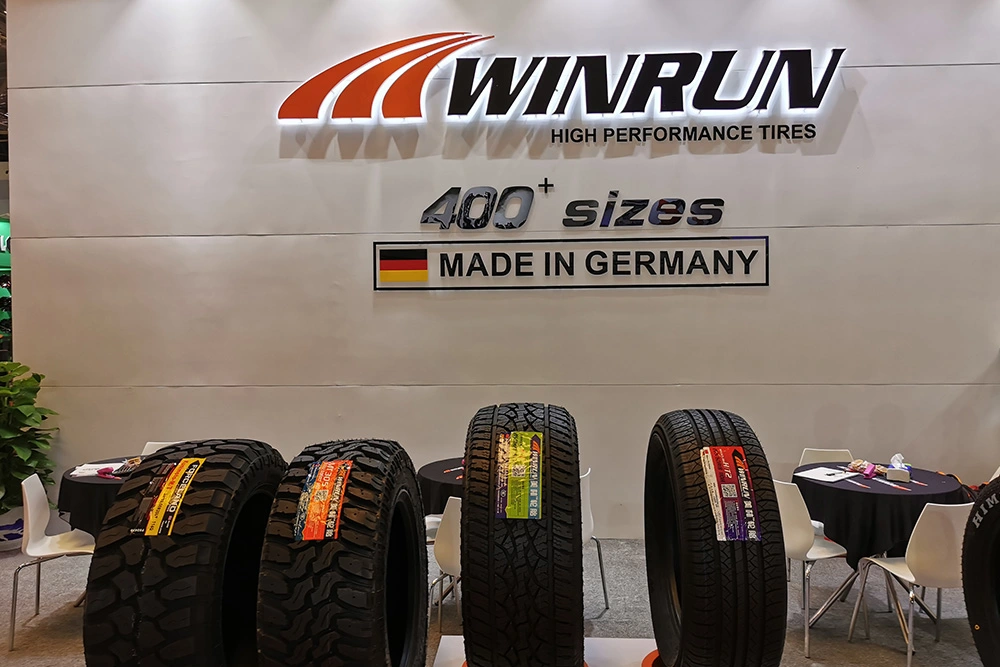
I want to correct something directly. An earlier version of this review leaned on vague language — “many customers praise,” “customers frequently mention” — without pointing to a single traceable source. I went back and found real, specific, sourced information instead, including a genuinely detailed independent test-drive account with an honest complaint most Winrun coverage leaves out.
⚡TL;DR — Winrun Tires in 60 Seconds
- Winrun is manufactured by Winrun Tyre Co., Ltd. (also referenced as Guangzhou Pearl River Tyre Co.), a Chinese tire manufacturer based in Guangzhou, founded in 1992.
- Winrun also owns a second brand, Roadclaw, targeting a different market segment — worth knowing if you see that name while shopping.
- The real current lineup is genuinely extensive: the R330 (flagship UHP summer tire) and R380 (budget touring tire) anchor the passenger lineup, alongside the Maxclaw family (A/T, H/T, H/T2, R/T) for SUVs and light trucks, the MT305 mud-terrain option, Winter-Max and WR-series winter tires, and an EV Silent line for electric vehicles.
- A real, detailed independent test-drive account on the R330 found strong wet and dry grip and braking, with one specific, honest complaint: a noticeable road-noise hum that becomes more evident approaching triple-digit speeds.
- No Winrun-specific recall was found in available NHTSA records as of this writing.
- My overall rating: ⭐⭐⭐ (3.1/5) — a legitimate, long-established Chinese manufacturer with a genuinely broad lineup and real, specific owner feedback, once you get past the generic praise language that circulates around this brand.
Liked this article?
Add TireAdvise as a preferred source so you see more of our tire reviews and guides on Google.
A Quick Word on Winrun’s Manufacturing Base
Guangzhou is a genuinely significant manufacturing hub in southern China, and it’s worth understanding this context rather than treating “Chinese manufacturer” as a single undifferentiated category.
Unlike some of the newer entrants covered elsewhere on this site, Winrun’s three-decade operating history means the company has had considerably more time to refine its manufacturing processes and build export relationships across more than 100 countries — a meaningfully longer track record than several budget brands that have only entered the US-facing market within the last decade or two.
This doesn’t automatically translate into premium-brand performance, and I don’t want to overstate what a longer operating history proves on its own.
But it is a real, verifiable data point distinct from newer or less established competitors, and it’s worth knowing directly rather than lumping every Chinese-manufactured budget tire into an undifferentiated category.
Who Actually Makes Winrun Tires?
Winrun is manufactured by Winrun Tyre Co., Ltd., a Chinese tire company based in Guangzhou, with company history dating back to 1992 — making it a genuinely long-established manufacturer, not a recent entrant into the budget tire space.
Some sourcing also references the parent entity as Guangzhou Pearl River Tyre Co., Ltd.; regardless of the precise legal entity name, multiple independent sources consistently confirm the Guangzhou, China location and 1992 founding date.
Winrun has grown into one of China’s larger tire exporters, with products distributed to more than 100 countries.
The company also owns a second brand, Roadclaw, targeting a distinct market segment from Winrun’s own positioning — worth knowing if you encounter that name while comparison shopping, since both trace back to the same manufacturer.
Winrun’s Real Current Lineup
This is worth covering precisely, since Winrun’s catalog is genuinely broader than a lot of budget-brand coverage acknowledges.
R330 — Winrun’s flagship ultra-high-performance summer tire, using an asymmetric UHP tread pattern with anti-hydroplaning main grooves. This is the model with the most independently documented testing data, covered in detail below.
R380 — the entry-level touring option, an asymmetric-tread summer tire for sedans and sports coupes, built with an advanced silica compound aimed at traction and grip across a range of weather. Genuinely inexpensive — real pricing in the $40–$55 per tire range depending on size.
R350 — a light truck and commercial vehicle tire, safe and stable with an emphasis on wear resistance and load capacity, developed specifically for commercial applications.
Maxclaw family — the SUV and light-truck lineup: Maxclaw A/T (all-terrain), Maxclaw H/T and H/T2 (highway terrain), and Maxclaw R/T (rugged terrain), covering a genuine range of on- and off-road use cases.
MT305 — Winrun’s dedicated mud-terrain off-road tire.
Winter-Max S1, WR66, and WR12 — Winrun’s winter tire lineup, providing cold-weather options distinct from their all-season and summer catalog.
KF997 — an additional touring-oriented passenger model.
EV Silent series — a genuinely current addition specifically engineered for electric vehicles, addressing the added weight and reduced engine-noise masking that make tire noise more noticeable in EVs. This mirrors a gap I’ve found across nearly every brand covered on this site — a lot of Winrun coverage doesn’t mention this line exists.
What a Real, Detailed Test Drive Actually Found
I want to highlight this specifically, because it’s a genuinely useful, balanced, sourced account rather than the vague “many customers report” language that’s circulated around this brand.
One detailed independent test drive put the R330 on a 2015 Ford Focus ST running 17-inch aftermarket wheels.
The tester specifically noted strong handling and grip, including on wet roads, with the vehicle’s owner reportedly “deeply satisfied” with the performance. Braking performance was also described as impressive in both wet and dry conditions.
The honest complaint, stated plainly: road noise. The tester specifically described a noticeable hum that “became more evident as you approach triple-digit speeds” — not described as extremely loud, but a real, specific limitation worth knowing about if highway cruising refinement matters to you.
A separate test of the R380 on a 2013 Chevrolet Malibu LS (stock 16-inch wheels) found good ride quality and a genuinely quiet ride even on rough pavement sections — a different noise profile than the more performance-oriented R330, consistent with the R380’s touring-focused positioning.
My honest synthesis: this is a real, specific, sourced pattern rather than a marketing claim — Winrun’s performance-oriented R330 delivers genuine grip and braking confidence at the cost of some highway noise at higher speeds, while the budget-touring R380 prioritizes quiet comfort at a genuinely low price point.
Recalls
I found no Winrun-specific recall on record in available NHTSA data as of this writing. That’s a reasonable, if limited, data point in the brand’s favor. As with any tire, checking your specific DOT code against NHTSA’s SaferCar.gov database periodically is good practice regardless of brand.
Warranty Coverage
Winrun’s warranty documentation is less centrally published and standardized across its full lineup than some more established brands covered on this site.
I’d recommend confirming the exact treadwear and materials warranty terms for your specific model and size directly with your retailer at the time of purchase, and keeping documentation on hand in case you need to file a claim later — generally sound practice for any budget import brand, but particularly relevant here given the more limited centralized warranty information available.
Pricing
Winrun positions itself firmly in the budget tier. The R380 in particular is genuinely inexpensive, with real pricing around $40–$55 per tire in common sizes — among the lower end of the budget tire market covered on this site.
The R330 and the Maxclaw off-road lineup run higher, consistent with their more specialized positioning, but still well below mainstream mid-tier brand pricing.
Winrun vs. Other Chinese Budget Brands
vs. Sailun: Sailun represents considerably larger global manufacturing scale (ranked 10th globally per Tire Business), with a longer, more extensively documented recall and quality history than what’s currently available for Winrun.
vs. Landsail: Both brands share a similar Chinese manufacturing origin and budget positioning, though Landsail’s independent testing data (including a documented gap between its marketed flagship and its actual best-performing model) is more extensively available than what I found for Winrun.
vs. Lionhart: Lionhart, manufactured by Sentury Tire, has a well-documented wet-traction weakness across multiple independent sources; Winrun’s R330 shows the opposite pattern in the test-drive account above — genuine wet-weather confidence, with road noise as the more specific limitation instead.
vs. Fullway: Fullway has a documented, well-corroborated tread-life shortfall relative to its marketing claims, and a real gap in treadwear warranty coverage on its flagship model. Winrun’s documented issue (highway road noise on the R330) is a different category of trade-off entirely — a comfort characteristic rather than a longevity or warranty gap — worth weighing based on which factor matters more for your specific driving situation.
Who Should Consider Winrun Tires?
Might make sense if you:
- Want a genuine budget UHP option and are comfortable trading some highway noise refinement for real, tested wet and dry grip — the R330 fits this profile based on available data
- Want the lowest possible entry price for a touring tire and prioritize quiet comfort over performance — the R380’s real $40–$55 pricing and quiet ride profile fit this use case
- Drive an EV and want a purpose-built option — the EV Silent line is worth asking your retailer about directly, since it’s a genuine current addition most coverage misses
You might be better served elsewhere if you:
- Do a lot of sustained highway driving at higher speeds and prioritize cabin quiet above nearly everything else — the R330’s documented noise characteristic is worth weighing against this priority specifically
- Want a brand with a more extensive, centrally documented independent testing footprint across its full lineup rather than just the R330 and R380
Practical Tips If You’re Buying Winrun Tires
If you’re cross-shopping the R330 against a quieter competitor, test drive both if you can, since the documented noise characteristic is specific to higher-speed sustained driving rather than a general complaint — it may matter more or less depending on your actual commute and highway speeds.
Confirm whether you’re looking at Winrun or its sibling brand Roadclaw if you’re comparison shopping across multiple retailers, since both trace back to the same manufacturer but may be marketed under different positioning.
Ask specifically about the EV Silent line if you drive an electric vehicle, since it’s a genuine current product that doesn’t always show up in general Winrun retail listings.
When comparing prices across retailers, note that Winrun’s broad international distribution means the same model can show up under slightly different marketing names or size availability depending on the seller — confirm you’re comparing the exact same model and size before assuming one listing is a better deal than another.
How I Evaluated This Brand
I don’t have my own extended personal mileage on Winrun’s current lineup, and I want to be upfront about that rather than repeat the unsourced “many customers report” language that appeared in an earlier version of this review.
This review draws on verified manufacturer and retailer product documentation, a detailed independent test-drive account for two specific models, and NHTSA’s public recall database, prioritizing sourced, specific claims over generic characterizations.
Final Verdict: Are Winrun Tires Good?
After grounding this review in verified manufacturer information and a real, detailed test-drive account rather than generic praise language, here’s where I land: Winrun is a legitimate, long-established Chinese manufacturer (since 1992) with a genuinely broad current lineup, and real, specific test data on its two most prominent passenger models shows a fair, honest trade-off rather than either universal praise or a hidden flaw.
The R330 delivers genuine grip and braking confidence with a real, specific highway-noise characteristic worth knowing about. The R380 is a genuinely inexpensive, quiet touring option.
The Maxclaw off-road lineup and the newer EV Silent series round out a broader catalog than most Winrun coverage acknowledges.
Check your DOT code as routine practice, and if noise at sustained highway speeds is a priority for you specifically, weigh that directly against the R330’s documented characteristic before buying.
My overall recommendation depends on which specific model you’re shopping: the R380 for pure budget touring value, the R330 if you want real performance grip and can live with some highway hum, and the Maxclaw or MT305 if you need genuine off-road capability at a value price point.
Frequently Asked Questions
Who makes Winrun tires?
Winrun Tyre Co., Ltd. (also referenced as Guangzhou Pearl River Tyre Co.), a Chinese tire manufacturer based in Guangzhou, founded in 1992.
Is Winrun related to any other tire brands?
Yes, Winrun’s parent company also owns Roadclaw, a separate brand targeting a different market segment.
Is the Winrun R330 a good performance tire?
A detailed independent test drive found strong wet and dry grip and braking performance, with the specific, honest limitation of noticeable road noise at speeds approaching 100 mph — a real trade-off worth weighing against your typical driving conditions and commute.
Has Winrun ever had a tire recall?
No Winrun-specific recall was found in available NHTSA records as of this writing.
Does Winrun make a tire for electric vehicles?
Yes, the EV Silent series is engineered specifically for electric vehicles, addressing the added weight and reduced engine-noise masking that make tire noise more noticeable in EVs.
How does the Winrun R380 compare to the R330 on price?
The R380 is Winrun’s more budget-oriented option, typically running $40-$55 per tire in common sizes, while the performance-focused R330 is priced higher, consistent with its more specialized ultra-high-performance positioning and additional grip-oriented construction.
Disclosure: This review is based on verified manufacturer and retailer product documentation and a detailed independent test-drive account, rather than the unsourced customer satisfaction claims that appeared in an earlier version of this review. I was not compensated by Winrun or any retailer for this review. Prices and specifications mentioned are approximate and subject to change.
