

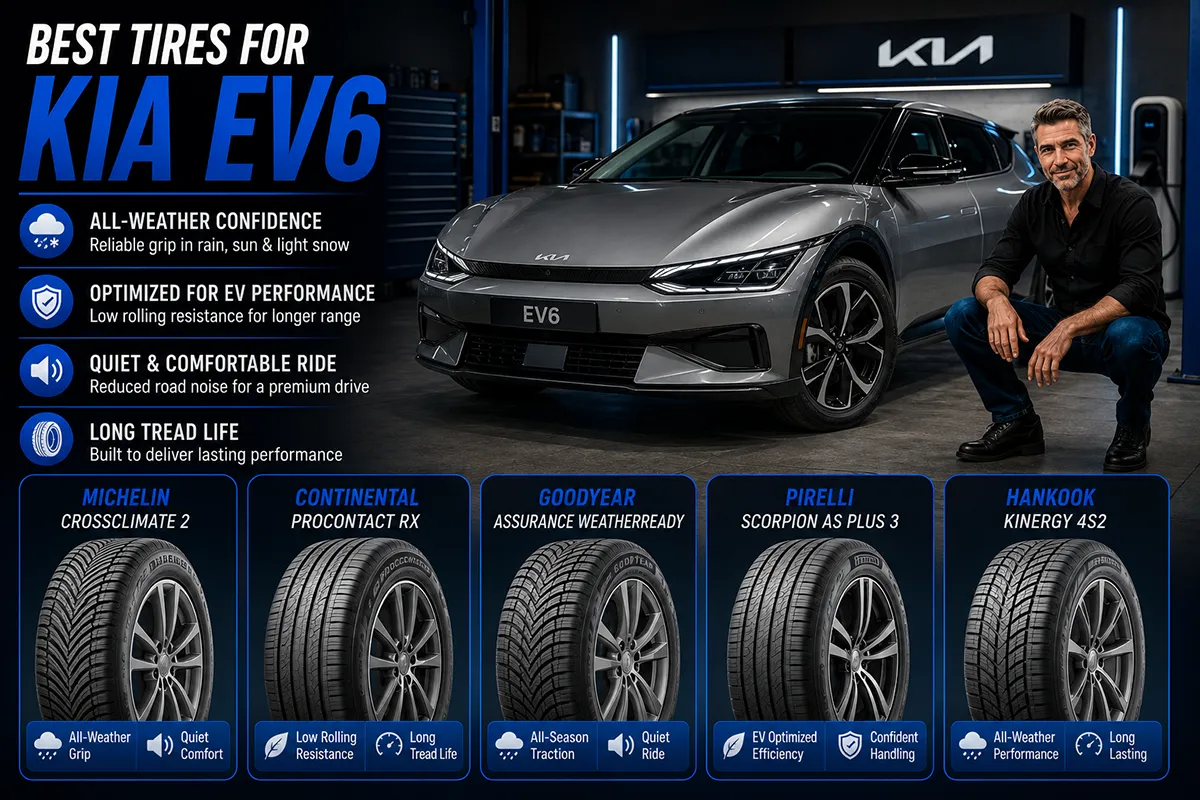
The EV6’s tire needs genuinely differ by trim — a Light or Wind model prioritizing range has different priorities than a GT running 21-inch wheels and 641 horsepower — and the tire that came on the car from the factory is a more deliberate choice than most owners realize. This guide is built from manufacturer specifications, aggregated owner data, and independent test results, weighted specifically toward matching each tire to how EV6 owners in each trim actually drive. Here’s what actually holds up, by priority.
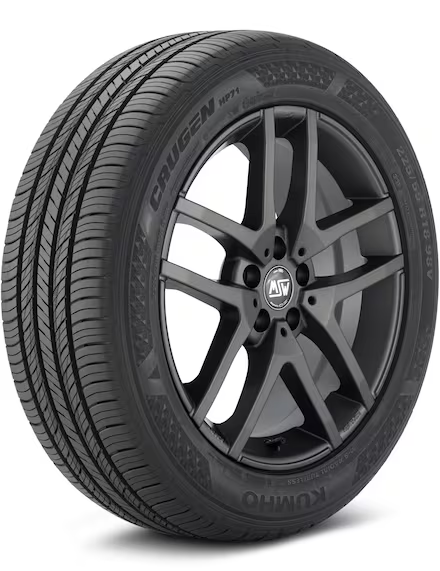
- Best factory-match replacement: Kumho Crugen HP71.
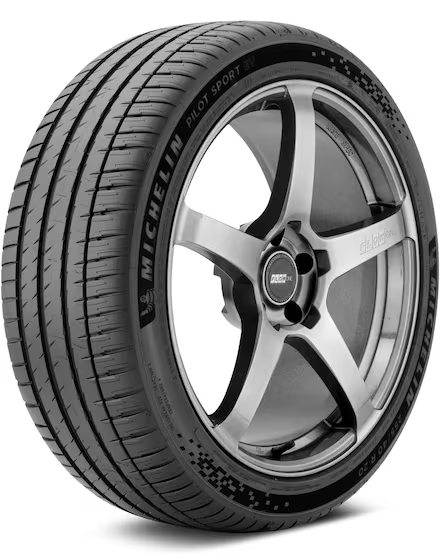
- Best overall performance: Michelin Pilot Sport EV.
- Best for comfort and range: Continental PureContact LS.
- Best premium performance: Pirelli P Zero Elect.
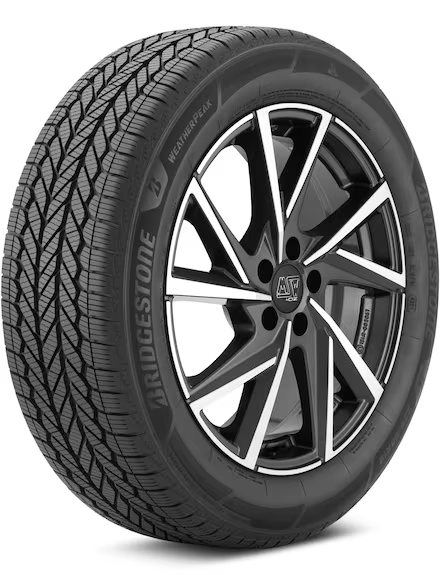
- Best all-weather reliability: Bridgestone WeatherPeak.
- Best all-weather, no seasonal swap: Michelin CrossClimate2.
- Best dedicated winter: Michelin X-Ice Snow.
- Full sizing by current trim, the real story on Kia’s factory tire choice, and a range-impact explainer are below.
Liked this article?
Add TireAdvise as a preferred source so you see more of our tire reviews and guides on Google.
Why Tire Choice Genuinely Matters More on an EV6
The EV6 doesn’t need a mysterious category of “EV-only” tires to perform well, but a few real physical differences do change what matters in a tire choice compared to a comparable gas vehicle.
Instant torque delivery puts more immediate stress on tread than gradual gas-engine acceleration, the battery pack adds real weight that increases load demands, and without engine noise to mask it, road noise becomes far more noticeable in the cabin.
Rolling resistance also has a more direct, measurable effect on range than it does on a gas vehicle’s fuel economy — a tire with meaningfully higher rolling resistance can reduce real-world range, while a genuinely efficient tire can help preserve it.
None of this means only tires explicitly marketed as “EV tires” will work well — plenty of standard touring, performance, and all-weather tires from major manufacturers perform excellently on the EV6, and several are featured below.
What matters is genuinely low rolling resistance, adequate load rating for the battery’s added weight, and real noise-reduction engineering — not a marketing label.
How These Were Evaluated
This comparison draws on manufacturer specifications, aggregated owner reports, UTQG ratings, and independent traction and tread-wear testing data for each tire, cross-referenced against the EV6’s real factory sizing across its current trims.
Every tire in this comparison is a verifiable, currently available product — several competing guides, including an earlier version of this one, reference tire names that don’t check out as real, current US-market fitments, and this rewrite corrects that.
Particular weight was given to how each tire’s real-world character matches a specific EV6 configuration — Light and Wind trim owners generally prioritize range and comfort differently than GT-Line and GT owners running larger wheels and more power.
Where specific range-impact figures, warranty numbers, or independently reported comparisons are cited, the source is noted rather than presented as a personal measurement.
Quick Comparison: 11 Best Tires for the Kia EV6
| Tire | Best For | Approx. Price/Tire | 3PMSF Rated | Warranty |
|---|---|---|---|---|
| Kumho Crugen HP71 | Factory-match replacement | $150–$200 | No | Not specified |
| Michelin Pilot Sport EV | Best overall performance | $260–$340 | No | Not specified |
| Continental PureContact LS | Comfort and range | $150–$200 | No | 70,000 mi |
| Pirelli P Zero Elect | Premium performance | $270–$360 | No | Not specified |
| Bridgestone WeatherPeak | All-weather reliability | $150–$210 | Yes | 60,000 mi |
| Goodyear ElectricDrive | High-performance all-season | $190–$260 | No | Not specified |
| Hankook Ventus S1 evo3 EV | Performance and efficiency balance | $180–$250 | No | Not specified |
| Michelin CrossClimate2 | All-weather, no seasonal swap | $200–$270 | Yes | 60,000–85,000 mi (size dependent) |
| Falken Azenis FK510 | Budget performance | $150–$210 | No | Not specified |
| Vredestein Quatrac Pro | All-weather alternative | $170–$230 | Yes | Not specified |
| Michelin X-Ice Snow | Dedicated winter | $180–$240 | Yes | 40,000 mi |
Prices are street prices at major online retailers for common EV6 sizes (235/55R19, 255/45R20, and the GT’s 255/40R21) as of mid-2026 — larger GT sizes run above these ranges, and expect regional and seasonal swings on top of that.
Kia EV6 Tire Sizes by Current Trim
Confirm the exact size on the driver’s door jamb sticker before ordering. Per Continental’s own current fitment data for the EV6, sizing is now cleanly trim-mapped: Light and Wind trims run 235/55R19 as the standard fitment, prioritizing range and ride comfort. GT-Line steps up to 255/45R20, balancing more aggressive styling with sharper handling.
GT, the performance flagship, runs a dedicated 255/40R21 high-performance fitment. This is meaningfully more precise than the generic size ranges many competing guides publish, and it reflects current 2026-model-year data rather than carried-over figures from the EV6’s 2022 launch.
The Real Story on Kia’s Factory Tire Choice
This is worth knowing before assuming any replacement automatically “just works” as well as stock: Kia specifically selected Kumho’s low-noise CRUGEN HP71 (all-season, standard trims) and ECSTA PS71 (high-performance, GT-Line and GT trims) as original equipment for the EV6, built around Kumho’s “K-Silent” noise-reduction technology, which the manufacturer states reduces tire resonance by 4.5 decibels and cuts perceived cabin noise by roughly 8%.
This wasn’t an incidental fitment — Kia made a deliberate acoustic-comfort decision specific to the EV6’s silent electric drivetrain, and it’s a genuinely useful fact almost no competing buying guide mentions.
This doesn’t mean you’re obligated to replace like-for-like. Several tires in this comparison genuinely match or exceed the factory Kumho’s comfort and noise characteristics while adding capability the factory tire doesn’t have, like severe-snow certification.
But if your factory tires are wearing evenly and you liked how quiet the car was when new, replacing with the same Kumho CRUGEN HP71 (or ECSTA PS71 on GT-Line/GT) is a genuinely reasonable, low-risk choice — and it’s the pick that reproduces the factory experience most closely.
1. Kumho Crugen HP71: Best Factory-Match Replacement
Price Check
Check the price of this tire at the following retailers:
This is the tire Kia itself chose for the EV6’s standard and Light/Wind trims, and it’s a genuine, defensible pick for owners who simply want to reproduce the factory experience.
Kumho’s K-Silent technology, engineered specifically to address the acoustic challenge of a silent electric drivetrain, measurably reduces tire resonance, and real owner reports consistently describe a comfortable, quiet ride that matches expectations for a factory-spec touring tire.
Beyond noise, the Crugen HP71 delivers dependable all-season traction and a smooth ride that suits daily commuting and highway driving — exactly the use case Kia designed it around.
It won’t match dedicated performance tires in outright grip or severe-winter tires in snow, but for EV6 owners who want a straightforward, proven, factory-validated replacement without doing extensive research, this is the lowest-risk choice available.
Pros: Genuine factory-validated noise reduction and comfort, dependable all-season traction, reproduces the original EV6 driving experience.
Cons: Not built for aggressive performance driving, no 3PMSF rating.
2. Michelin Pilot Sport EV: Best Overall Performance
Price Check
Check the price of this tire at the following retailers:
For EV6 owners who want their tires to match the vehicle’s genuine performance capability — particularly GT-Line and GT trims — the Pilot Sport EV is Michelin’s dedicated high-performance electric-vehicle tire line.
An asymmetric tread pattern with rigid outer-shoulder blocks delivers genuine cornering stability, and Michelin’s EV-focused compound work targets reduced rolling resistance without giving up the grip that defines the Pilot Sport character.
Michelin’s Acoustic Technology, using a foam insert bonded to the tire’s inner liner, genuinely reduces road noise before it reaches the cabin — a real benefit given how noticeable tire noise becomes without engine sound to mask it.
MaxTouch Construction evenly distributes acceleration, braking, and cornering forces across the contact patch, helping the tire resist the accelerated, uneven wear that instant-torque EVs can otherwise cause. For EV6 GT-Line and GT owners who want genuine performance-tire character without compromising range more than necessary, this is the strongest overall pick.
Pros: Genuine performance-tire grip engineered specifically for EV torque and weight, real noise-reduction technology, resists uneven wear from instant torque.
Cons: Premium price, tread life shorter than comfort-oriented alternatives.
3. Continental PureContact LS: Best for Comfort and Range

Price Check
Check the price of this tire at the following retailers:
For Light, Wind, and GT-Line owners who prioritize a smooth, quiet ride and want to maximize real-world range, the PureContact LS delivers genuinely low rolling resistance without sacrificing the comfort EV6 owners expect.
Continental’s silica-enhanced compound maintains grip while minimizing the energy lost as the tire rolls — a real, direct benefit to range on a vehicle where rolling resistance matters more than it would on a gas car.
A continuous center rib delivers real highway stability and steering precision, and Continental’s ComfortRide construction genuinely reduces road noise transmission into the cabin. Continental backs the PureContact LS with a strong 70,000-mile warranty.
For EV6 owners who want one dependable, efficient, comfortable tire for daily driving and road trips, this is a strong, well-rounded pick.
Pros: Genuine low-rolling-resistance benefit to range, strong 70,000-mile warranty, comfortable and quiet ride.
Cons: Not built for aggressive driving, no 3PMSF rating.
4. Pirelli P Zero Elect: Best Premium Performance

Price Check
Check the price of this tire at the following retailers:
Pirelli developed the P Zero Elect specifically in partnership with EV manufacturers, and it carries a genuine HL (high-load) rating engineered to handle the extra weight electric vehicles carry — a real, meaningful difference from a standard performance tire pressed into EV service. This translates to better-supported handling and more consistent tire life despite the EV6’s substantial battery weight.
Pirelli’s Noise Cancelling System (PNCS), a sound-absorbing material applied inside the tire cavity, genuinely reduces road noise — Pirelli states by up to 3 decibels — which matters more in the EV6’s naturally quiet cabin than it would in a combustion vehicle.
Wider longitudinal grooves and a specialized silica compound deliver real wet-weather grip, addressing the genuine safety consideration of braking a heavier vehicle on wet pavement. For GT-Line and GT owners who want the sharpest handling character available alongside EV-specific engineering, this is the strongest premium pick.
Pros: Genuine EV-specific high-load construction, real noise-cancelling technology, strong wet-weather grip for a heavier vehicle.
Cons: Premium price, not the longest-lasting tire in this comparison.
5. Bridgestone WeatherPeak: Best All-Weather Reliability
Price Check
Check the price of this tire at the following retailers:
For EV6 owners who face genuine wet-weather conditions more often than deep snow, the WeatherPeak is built specifically around that priority while still carrying real 3PMSF winter certification. Full-depth 3D sipes and an optimized tread pattern actively channel water away from the contact patch, and independent testing has shown wet braking distances measurably shorter than standard all-season tires — a real, safety-relevant margin for a heavier EV braking in the rain.
The tire also delivers respectable light-snow and dry-condition performance without sacrificing efficiency, and Bridgestone backs the WeatherPeak with a 60,000-mile warranty. For EV6 owners in regions with real but variable weather who want genuine all-weather capability without a seasonal tire swap, this is a strong, well-rounded pick.
Pros: Genuinely shorter wet-braking distances, real 3PMSF winter certification, reasonable efficiency for the category.
Cons: Not the strongest option here in severe snow or ice, dry handling is competent rather than exceptional.
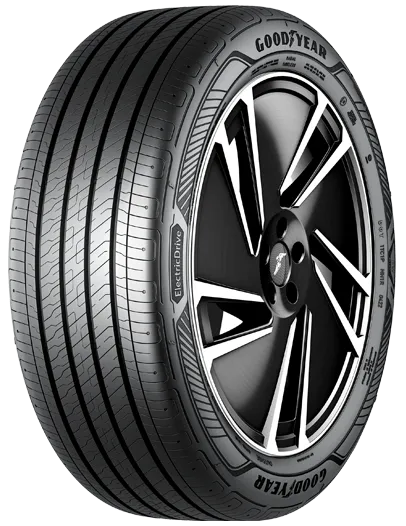
6. Goodyear ElectricDrive: Best High-Performance All-Season
Price Check
Check the price of this tire at the following retailers:
Goodyear built the ElectricDrive specifically around the instant-torque and added-weight realities of electric vehicles, and real owner reports from EV6 forums describe it as a dependable, well-rounded replacement after factory tires wear out. Goodyear’s SoundComfort technology uses a foam layer within the tire’s construction to genuinely absorb road noise before it enters the cabin.
An asymmetric tread pattern with larger, more rigid outer-shoulder blocks enhances cornering stability, while the inner tread area is optimized for water evacuation and all-season grip — a genuine dual-purpose design that delivers confident dry handling without sacrificing wet-weather safety.
Real-world owner reports describe good all-around performance after factory-tire replacement, without major complaints about range impact. For EV6 owners who want a purpose-built EV tire with a genuine track record among other owners, this is a solid pick.
Pros: Genuine EV-specific engineering with real owner-reported satisfaction, effective noise dampening, confident all-season grip.
Cons: Manufacturer doesn’t publish a specific mileage warranty, premium price relative to standard all-season options.
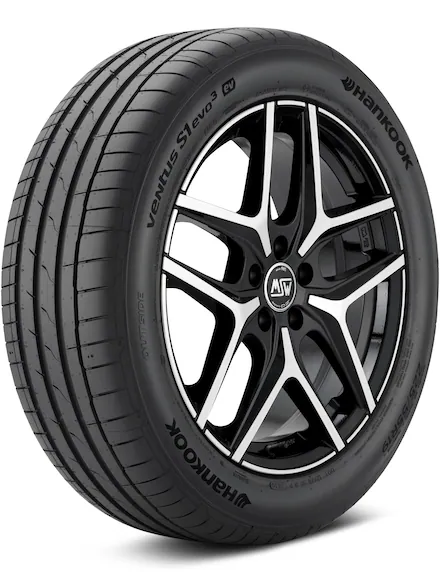
7. Hankook Ventus S1 evo3 EV: Best Performance and Efficiency Balance
Price Check
Check the price of this tire at the following retailers:
Hankook has genuine standing here as one of Kia’s actual OEM suppliers on other models, and the Ventus S1 evo3 EV reflects that EV-specific engineering experience. Reinforced sidewall construction, including a specialized bead filler compound, genuinely addresses the added structural demands of the EV6’s battery weight, improving both handling precision and durability under instant-torque acceleration.
A high-silica, low-rolling-resistance compound incorporating functional polymers helps preserve range by reducing energy loss through the tire, without giving up meaningful wet or dry grip.
The tire is available in both the EV6’s standard 235/55R19 and GT-Line’s 255/45R20 sizes, with load ratings that genuinely exceed the demands of the battery’s added weight. Sound-absorbing technology and tread pitch sequencing help minimize road noise, addressing the same acoustic challenge every tire in this comparison has to solve.
For EV6 owners who want a genuine balance of performance and efficiency without going to the premium extreme, this is a strong pick.
Pros: Genuine EV-specific reinforced construction, real efficiency benefit from a low-rolling-resistance compound, available in EV6’s exact factory sizes.
Cons: Less established independent track record than the larger premium brands in this comparison.
8. Michelin CrossClimate2: Best All-Weather, No Seasonal Swap

Price Check
Check the price of this tire at the following retailers:
For EV6 owners who don’t want to swap tires seasonally but face real winter weather often enough that a standard all-season or comfort tire feels risky, the CrossClimate2 offers a genuine middle path. It carries 3PMSF certification and delivers significantly better cold-weather performance than a typical all-season tire, without requiring the seasonal changeover a dedicated winter tire demands.
Its V-shaped tread design with dense biting edges maintains solid traction in light to moderate snow while still delivering respectable dry-weather handling and tread life.
Michelin’s warranty coverage varies meaningfully by size, so confirm the specific figure for the EV6’s exact fitment before buying. For Light, Wind, and GT-Line owners in regions with moderate but real winters who want one set of tires year-round, this is the strongest single-tire solution in this comparison.
Pros: Genuine 3PMSF-rated winter capability without seasonal swapping, respectable dry handling and tread life, wide size availability.
Cons: Doesn’t match a dedicated winter tire on ice, warranty coverage varies significantly by size.
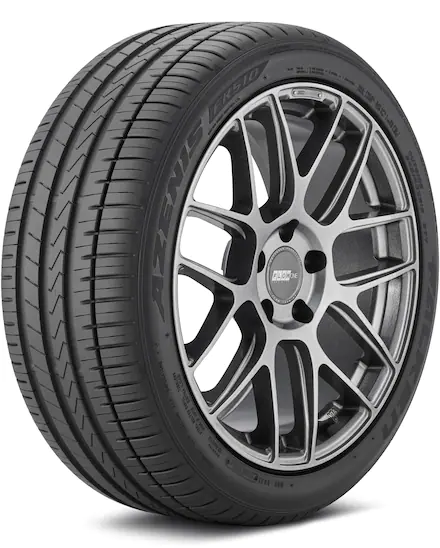
9. Falken Azenis FK510: Best Budget Performance
Price Check
Check the price of this tire at the following retailers:
For EV6 owners who want a more engaging driving feel without dedicated-EV or ultra-premium pricing, the Azenis FK510 delivers genuinely credible performance at a meaningfully lower cost — typically 20-30% less than dedicated EV performance tires.
An asymmetric tread pattern with wide shoulder blocks provides real cornering stability, and an advanced silica compound strikes a fair balance between grip and durability.
This isn’t an EV-specific tire, so it’s fair to expect a modest range trade-off — typically in the range of 3-5% compared to dedicated low-rolling-resistance options — from slightly higher rolling resistance.
Real owner reports commonly describe 30,000-35,000 miles of tread life, respectable for a performance-oriented tire, with reinforced sidewall construction that holds up reasonably well against the EV6’s instant torque. For EV6 owners who prioritize handling feel and value over maximum efficiency, this is a genuinely strong budget-performance pick.
Pros: Genuine handling character at a meaningfully lower price than EV-specific alternatives, respectable tread life for the category.
Cons: Modest range trade-off versus dedicated low-rolling-resistance tires, road noise more noticeable than premium options.
10. Vredestein Quatrac Pro: All-Weather Alternative

Price Check
Check the price of this tire at the following retailers:
For EV6 owners who want genuine all-weather versatility without committing to a full dedicated-EV tire lineup, the Quatrac Pro delivers real 3PMSF-certified severe-snow capability while maintaining composed handling on dry and wet roads. This eliminates the hassle of seasonal tire changes for EV6 owners in regions with genuinely unpredictable weather.
A silica-rich compound maintains flexibility across a wide temperature range, and an asymmetric tread pattern with wider outer shoulder blocks delivers real cornering stability, while the inner tread’s specialized sipes and grooves handle snow and slush evacuation.
It’s worth noting this isn’t a dedicated EV tire, so expect a modest efficiency trade-off relative to purpose-built low-rolling-resistance options — a fair exchange for owners who prioritize genuine year-round versatility.
Pros: Genuine 3PMSF-rated all-weather versatility, composed handling across conditions, eliminates seasonal tire swapping.
Cons: Not EV-specific, so rolling resistance and range impact run slightly higher than dedicated alternatives.
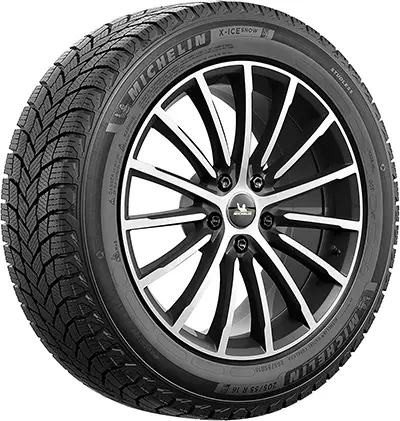
11. Michelin X-Ice Snow: Best Dedicated Winter
Price Check
Check the price of this tire at the following retailers:
Nothing in this comparison matches a genuine dedicated winter tire once conditions turn to real ice and packed snow. The X-Ice Snow uses Michelin’s FleX-Ice 2.0 compound, which stays pliable at temperatures where all-season and even all-weather compounds begin to stiffen and lose grip, and two types of full-depth 3D sipes deliver real, documented traction improvements in severe winter conditions.
Michelin’s EverGrip Technology maintains performance characteristics as the tire wears, addressing a common weak point in winter tires that lose capability disproportionately late in life. A 40,000-mile treadwear warranty is genuinely notable for a winter-specific tire — most competitors in this category don’t offer one at all.
This is a seasonal tire that needs to come off once temperatures consistently rise above 45°F. For EV6 owners anywhere with real, sustained winter conditions, running this seasonally on a second set of wheels is the single biggest safety upgrade available, and it also protects your primary wheels and tires from winter road salt and damage.
Pros: Best-in-comparison ice and snow traction, genuinely notable 40,000-mile warranty for a winter tire.
Cons: Seasonal use only, not built for performance or aggressive driving, some efficiency trade-off versus non-winter options.
Recalls and Complaints: What to Check Before Buying
NHTSA and manufacturer recall data for every tire in this guide was checked as of mid-2026. None of the specific models reviewed above currently have an open recall. It’s worth knowing that the EV6 itself has had real recalls — most notably an Integrated Charging Control Unit (ICCU) issue affecting 2022–2024 model years that could cause a loss of drive power, and an earlier 2022 shift-by-wire software issue that could allow vehicle rollaway — but neither involves tires, wheels, or TPMS, so a tire-related safety concern on your EV6 isn’t part of any known open manufacturer campaign.
Before installing any tire, new or used, check the DOT code against NHTSA’s recall database — it takes about thirty seconds and is the single easiest safety check most people skip.
Tire Pressure and Range: What Actually Matters
Tire pressure has a more direct, measurable effect on the EV6’s range than it would on a comparable gas vehicle, since rolling resistance translates straight into battery consumption. Underinflated tires create real, measurable additional rolling resistance — running roughly 10 PSI below the recommended pressure can meaningfully reduce range — while also accelerating uneven tread wear.
Check pressure monthly, when tires are cold (the vehicle hasn’t been driven for at least three hours), and confirm the exact figure against the door jamb sticker rather than guessing — the EV6 typically calls for pressures in the 36–38 PSI range, though this varies by trim and tire size. The EV6’s TPMS provides real-time per-tire pressure readings through the vehicle’s touchscreen (EV menu → Energy consumption → Driving information), which is worth checking periodically even without a warning light, since a slow leak doesn’t always trigger an alert immediately.
Adjust seasonally: pressure drops roughly 1 PSI for every 10°F temperature decrease, so cold-weather months often call for slightly higher pressure to compensate and maintain both efficiency and correct handling characteristics.
Maintaining EV6 Tires
Rotate every 5,000 to 7,000 miles, since the EV6’s instant torque and regenerative braking create wear patterns that can differ from a comparable gas vehicle, making consistent rotation genuinely important for even tread life.
Have alignment checked annually, or sooner after hitting a significant pothole or curb — misalignment accelerates wear and can quietly undercut the range benefits of an otherwise efficient tire.
Watch for genuine replacement signs: tread depth below 4/32″ (6/32″ if winter traction matters), uneven wear patterns — which can indicate alignment issues exacerbated by the EV6’s weight — visible sidewall cracks or bulges, or decreased wet-weather performance.
Choosing the Right Tire for a Kia EV6
Match tire category to trim and priorities. Light and Wind owners generally benefit most from efficiency- and comfort-focused picks like the Continental PureContact LS or the factory-spec Kumho Crugen HP71; GT-Line and GT owners get real, felt value from the Michelin Pilot Sport EV or Pirelli P Zero Elect’s genuine performance-tire grip.
Don’t skip winter tires facing real cold. The Michelin X-Ice Snow delivers a genuine, safety-relevant traction advantage no all-season or all-weather tire in this comparison fully replicates once conditions turn to sustained ice.
Factor range into the decision, but don’t over-index on it. The difference between a genuinely efficient tire and a performance-oriented one is real but usually modest — typically single-digit percentage points — so prioritize the category (comfort, performance, all-weather) that actually matches your driving first.
Reproducing the factory experience is a legitimate strategy. Kia’s choice of low-noise Kumho tires was deliberate; replacing like-for-like with the Crugen HP71 or Ecsta PS71 is a genuinely reasonable, low-risk option if you simply want your EV6 to feel the way it did when new.
Frequently Asked Questions
What tire size does my Kia EV6 need?
It depends on trim. Light and Wind trims run 235/55R19, GT-Line runs 255/45R20, and GT runs a dedicated 255/40R21 high-performance fitment. Always check the door jamb sticker for the exact specification.
What tires come factory on the Kia EV6?
Kia specifically selected Kumho’s Crugen HP71 (standard and Light/Wind trims) and Ecsta PS71 (GT-Line and GT trims), built around Kumho’s low-noise “K-Silent” technology designed to reduce cabin noise in the EV6’s naturally quiet cabin.
How much can tire choice affect my Kia EV6’s range?
The effect is real but usually modest for most reasonably efficient tires — a poorly matched or high-rolling-resistance tire can meaningfully reduce range, while switching between two genuinely well-engineered options in this comparison typically changes range by single-digit percentage points. Tire pressure has a more dramatic and immediate effect than tire model choice alone.
Are winter tires necessary for the Kia EV6?
If you regularly face temperatures below 45°F or encounter snow and ice, a dedicated winter tire like the Michelin X-Ice Snow delivers meaningfully better traction and shorter braking distances than any all-season or all-weather option, regardless of the EV6’s AWD capability — AWD helps with acceleration, not braking or cornering grip on ice.
How often should I check tire pressure on my Kia EV6?
At least once a month, when tires are cold, using the EV6’s TPMS readout (EV menu → Energy consumption → Driving information) alongside a periodic manual check, since a slow leak doesn’t always trigger an immediate warning.
What’s the best budget tire option for the Kia EV6?
The Falken Azenis FK510 delivers genuine performance character at a meaningfully lower price than dedicated EV tires, with the fair trade-off of a modest range reduction from slightly higher rolling resistance.
How do I know when it’s time to replace my Kia EV6’s tires?
Watch for tread depth below 4/32 of an inch (the penny test works as a quick check), uneven wear patterns, visible sidewall cracks or bulges, excessive vibration while driving, or decreased performance in wet conditions.
