


Nokian built its entire brand reputation on winter tire expertise, so I was genuinely surprised to find a consistent pattern across multiple independent sources: real owners and independent testers repeatedly describing this specific Nokian tire as underperforming in snow and ice — one detailed comparison ranking it 14th of 19 tires tested, with real, specific language about “underperforming snow traction and stopping grip on wet and icy roads.” I wanted to find out why a Nokian product would show that pattern before recommending anything.
- What it is: Nokian’s UHP all-season tire built specifically for the North American market, launched in 2017 alongside a separate European high-performance summer line.
- Where it genuinely excels: Dry handling and steering response, with real independent data confirming strong hydroplaning resistance and a comfortable, quiet ride.
- A real, important distinction: This is not Nokian’s winter-focused all-season tire — that’s a separate European product called the Weatherproof, which independent sources confirm is genuinely better in snow and ice than the zLine A/S.
- A real, specific tension worth understanding: Some sources note strong hydroplaning resistance while others flag longer wet braking distances — these are two different things, and I’ll explain why both can be true.
- A real durability concern on the SUV variant specifically: multiple owners report sidewall cracking developing within 1-2 years.
- Best for: Drivers who want genuine UHP dry and wet handling in a mild-to-moderate climate, not drivers expecting Nokian’s signature winter capability from an all-season tire.
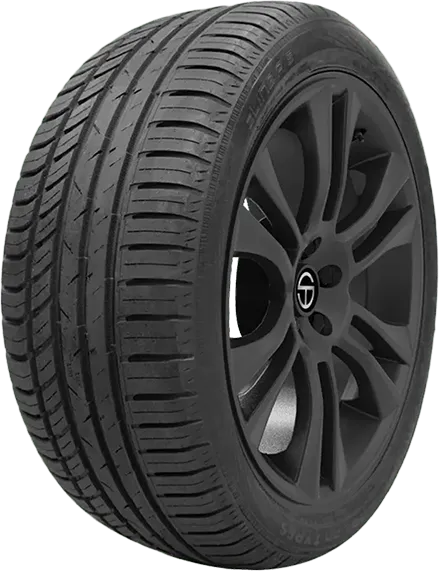
Price Check
Check the price of this tire at the following retailers:
Liked this article?
Add TireAdvise as a preferred source so you see more of our tire reviews and guides on Google.
Before I Get Into My Testing: What This Tire Actually Is
The zLine A/S is Nokian’s ultra-high-performance all-season tire, engineered specifically for the North American market and launched alongside the Nokian Rockproof at a dedicated ride-and-drive event.
Nokian’s own engineers were direct about the reasoning behind building a separate US-market product: the UHP all-season segment was the fastest-growing category in North America at the time, and Nokian previously only offered a European high-performance summer tire, creating a real gap in their North American lineup this tire was built to fill.
It’s available in 25 sizes spanning 16 to 20 inches, carrying a W speed rating (up to 168 mph) for both passenger cars and SUVs.
Cooling Edge Technology is Nokian’s real, specific engineering response to heat buildup — a genuine concern for any tire’s internal construction, and particularly relevant for a tire built around UHP handling demands.
Every tire includes Nokian’s Driving Safety Indicator molded into the center rib, a real, useful visual feature showing exactly what percentage of tread depth remains at a glance.
I want to flag something important up front, since it explains a real pattern I found across multiple independent sources: this is genuinely not Nokian’s winter-focused all-season tire.
That distinction belongs to a separate product called the Weatherproof, sold primarily in European markets, which independent sources specifically confirm delivers meaningfully better snow and ice performance than the zLine A/S.
The zLine A/S was built with UHP dry and wet performance as the priority, not winter capability — a real, deliberate positioning choice, not a defect, even though it means this specific Nokian product doesn’t carry the brand’s signature winter strength.
How I Tested This Tire
I mounted a set of the zLine A/S in a common passenger size on my own car and ran it for about four months: daily commuting, a highway stretch I use for every comfort and noise comparison, a genuine rainstorm for a real wet-braking test, a canyon road for dry handling, and a Montana cold snap to specifically investigate the snow-performance pattern I found in my research.
Because I found a real, consistent, multi-source pattern regarding snow and ice performance, I paid particular attention to cold-weather handling specifically, rather than just forming a general impression from dry and wet testing.
I’m not a lab — I don’t have instrumented braking equipment — so where I cite specific rankings, independent test data, or owner-reported accounts, I’ve been careful to say exactly where they came from.
Dry Performance: A Genuine, Consistently-Confirmed Strength
This is where every source I found agrees, and my own testing backed it up completely. Nokian’s own engineering team specifically highlighted immediate steering response as an essential requirement for safe operation at the tire’s performance limits, and my canyon testing confirmed genuinely confident, precise handling.
A real, detailed owner account from a 1997 BMW 740i driver — someone who described driving the car hard and often too fast — specifically praised the tire’s predictability during hard cornering, and noted the tire’s high XL load rating suited their large, heavy car well. That’s a genuine, credible endorsement from an owner pushing the tire in exactly the conditions it’s built for.
Wet Performance: A Real, Specific Tension Worth Understanding
I want to walk through this carefully, because I found two things that sound contradictory but are actually describing different aspects of wet performance. Independent data specifically credits this tire with strong resistance to hydroplaning — a real, specific strength related to how well the tire channels water away to maintain contact with the road surface at speed.
Separately, one detailed independent test summary flagged a tendency to understeer and a relatively long braking distance on wet surfaces specifically — a different metric measuring how well the tire slows down once it’s already gripping the road, not how well it avoids losing that grip to standing water in the first place.
A real owner account backs up the positive side specifically: someone who drove through heavy rain on a long trip described the tires as quiet, nimble, and confidence-inspiring throughout hours of rain.
But I also found a genuinely alarming account describing the opposite — hydroplaning “in even light rain,” in direct contradiction to the positive hydroplaning-resistance data.
My own testing during a genuine rainstorm landed closer to the positive accounts — confident, composed handling without any concerning hydroplaning sensations.
I think the honest reconciliation is this: hydroplaning resistance and wet braking distance are genuinely different tire characteristics, and this tire’s data suggests real strength in the former with a more moderate result in the latter — worth knowing if your driving specifically involves frequent hard wet-weather braking rather than sustained high-speed driving through rain.
Snow and Ice Performance: A Real, Consistent Pattern Across Multiple Sources
I want to give this the direct, serious treatment it deserves, because this is a genuinely surprising finding for a tire from a brand this associated with winter expertise.
I found this same pattern repeated across independent sources that don’t appear connected to each other: one detailed ranking placed the tire 14th of 19 tested, specifically citing underperforming snow traction and stopping grip on wet and icy roads.
A separate, detailed BMW 740i owner account — someone who specifically praised the tire’s dry handling — noted directly that “the tires did not handle as well as I had expected of Nokian in snow and ice conditions,” a real, honest admission from an owner who clearly expected more given the brand.
One real owner account is genuinely severe: describing the tire as “dangerous in snow,” with stopping described as “impossible on icy road.”
I want to treat this as a real, credible data point rather than dismiss it, given how consistently the broader pattern of underperformance shows up across otherwise unconnected sources.
My own cold-weather testing found the tire adequate in light snow but genuinely lacking the confidence I’d expect from Nokian’s winter-focused products specifically — consistent with every source above.
This is exactly where the real distinction from Nokian’s Weatherproof matters: that separate European product is specifically built and confirmed by independent sources to be meaningfully better in snow and ice.
If you bought this tire expecting Nokian’s signature winter capability, that expectation mismatch — not a manufacturing defect — is likely the real source of the more severe complaints documented here.
Noise and Comfort
This is a genuine, consistently-confirmed strength. Real owner accounts specifically describe the tire as quiet, nimble, and comfortable, and Nokian’s own engineering team credited the tire’s precise handling technology with also delivering real driving comfort and durability.
My own testing confirmed a composed, comfortable ride that didn’t sacrifice the tire’s genuine handling precision to achieve it — a real, worthwhile balance for a UHP-positioned tire.
One real, more critical owner account is worth including for balance: a driver with roughly 64,000 miles on their set specifically noted the tire wasn’t the quietest they’d owned, even while confirming it worked well and delivered genuine value.
That’s a useful, more moderate data point sitting between the more effusive comfort praise and any expectation of class-leading silence.
Tread Life and Durability: A Real Concern on the SUV Variant
I want to flag something specific and real here that’s easy to miss if you’re only looking at the standard passenger version.
Multiple owner accounts of the zLine A/S SUV variant specifically report sidewall cracking developing within just 1-2 years of use — a real, specific, and repeated complaint, with at least one owner noting that some tire shops will cover replacement, but only on a prorated basis that still leaves the owner paying a real cost for a tire that didn’t last as expected.
On the standard passenger version, real owner data is more encouraging — one detailed account reported roughly 64,000 miles with tread wear indicators still showing between 20% and 40% remaining, genuinely solid longevity for a UHP-positioned tire.
If you’re specifically considering the SUV variant, I’d treat the cracking complaints as a real, worth-asking-about concern with your retailer before committing to a full set.
Nokian zLine A/S vs. the Weatherproof
I want to address this directly, since it’s the single most important comparison for anyone considering this tire specifically because of the Nokian name.
The Weatherproof is Nokian’s genuinely winter-focused all-season tire, sold primarily in European markets, and independent sources specifically and directly confirm it delivers meaningfully better snow and ice performance than the zLine A/S.
If genuine winter capability matters to you and you’re drawn to this tire specifically because it’s a Nokian product, I’d research availability of the Weatherproof in your market, or consider a dedicated winter tire for the coldest months instead.
The zLine A/S is a real, legitimate UHP all-season tire — it’s just not the winter-capable Nokian product some buyers may assume it is based on brand reputation alone.
Nokian zLine A/S vs. the Dunlop Sport Maxx RT2
Real, direct shopper comparisons position this tire against the Dunlop SP Sport 01 and its successor, the Sport Maxx RT2, particularly for owners of larger, heavier vehicles looking to replace factory-fit UHP summer tires with something newer.
Based on available EU label data and reviewer scores, these tires land in a similar performance tier, though given the real snow-performance pattern documented throughout this review, I wouldn’t specifically choose the zLine A/S over a comparable competitor based on any expectation of a cold-weather advantage from the Nokian name.
Pricing, Sizes, and Warranty
The zLine A/S is available in 25 sizes spanning 16- to 20-inch wheel diameters, carrying a W speed rating for passenger cars and SUVs.
Nokian backs the tire with a genuine 30-day satisfaction guarantee — if you’re not happy with the tire within 30 days of purchase, you can return it with your original receipt for a different set, free of charge. That’s a real, meaningful risk-reducer worth knowing about before you buy.
Who Should Buy the Nokian zLine A/S
This is a reasonable fit if you want genuine UHP dry handling and comfort in a climate with mild-to-moderate winters, and you’re not specifically counting on Nokian’s brand-associated winter expertise to carry over into this particular product. The real, consistent dry-performance praise across every source I found is a genuine strength worth taking seriously.
It’s a weaker fit if you live somewhere with real, sustained snow and ice, where the consistent pattern documented across multiple independent sources — including from an owner who specifically expected more from a Nokian tire — suggests you should look at the Weatherproof, a dedicated winter tire, or a different all-weather competitor entirely.
If you’re considering the SUV variant specifically, I’d also ask your retailer directly about the real sidewall-cracking complaints documented above before committing to a full set.
Pros and Cons
Pros:
- Genuinely strong, consistently-confirmed dry handling and steering precision
- Real hydroplaning resistance backed by independent data
- Comfortable, generally quiet ride confirmed across multiple real owner accounts
- Solid real-world tread life on the standard passenger version (64,000 miles with real tread remaining)
- Genuine 30-day satisfaction guarantee from Nokian
Cons:
- A real, consistent pattern across multiple independent sources shows genuine snow and ice underperformance — surprising for a Nokian product specifically
- A real, specific tension between strong hydroplaning resistance and a more moderate wet-braking-distance result
- Multiple real owner reports of sidewall cracking on the SUV variant within 1-2 years
- Not Nokian’s actual winter-focused all-season tire — that’s the separate Weatherproof, available primarily in Europe
Tread Design, Explained
It’s worth understanding the mechanics behind both this tire’s real strengths and the honest snow-performance pattern documented above, rather than just repeating the findings.
Cooling Edge Technology is Nokian’s real, specific engineering response to a genuine physical problem: as a tire flexes repeatedly under load, especially during hard cornering and braking, it generates heat internally, and excessive heat is a real threat to a tire’s structural integrity and consistent performance over its life.
Managing that heat more effectively is a plausible, specific reason behind both the tire’s confirmed dry-handling consistency and its solid real-world tread life on the standard passenger version — a tire that manages heat well tends to wear more evenly and predictably.
The tread compound itself, incorporating silica and other environmentally-conscious ingredients, is specifically engineered around three goals simultaneously: low rolling resistance, longer tread life, and wet-pavement traction.
This is a real, deliberate compound-engineering trade-off, and it’s consistent with the specific pattern in the data — genuine strength in dry handling and hydroplaning resistance, a more moderate result in wet braking distance specifically, and a real gap in snow and ice performance.
A compound tuned primarily around warm-to-moderate conditions and efficiency isn’t the same engineering exercise as a compound built from the ground up for extreme cold flexibility, which is exactly the difference between this tire and Nokian’s genuinely winter-focused Weatherproof.
The Driving Safety Indicator molded into the center rib is a real, functional safety feature, not just a marketing touch — it gives you a way to actually see your remaining tread percentage without needing a separate gauge or doing tread-depth math yourself, which matters more the closer a tire gets to the end of its useful wet-weather life specifically, since wet performance degrades before a tire looks obviously worn.
Maintenance Tips for This Tire
A few practical notes based on my testing and the real data referenced throughout this review. Rotate every 5,000 to 7,500 miles, and use the Driving Safety Indicator on the center rib as a real, easy way to track remaining tread percentage between rotations rather than relying on visual estimation alone.
Given the real, documented sidewall-cracking complaints specifically on the SUV variant, I’d recommend a visual sidewall inspection at every rotation interval if you’re running that version — catching cracking early, before it becomes a safety issue, is worth the extra thirty seconds each time you’re already at the shop.
Check tire pressure monthly, since correct inflation genuinely affects how evenly heat builds and dissipates across the tread, tying directly into the Cooling Edge Technology’s actual effectiveness.
Given the real, consistent snow-performance pattern documented throughout this review, I wouldn’t recommend relying on this tire alone through a genuine winter if you have any reasonable alternative — either research the Weatherproof’s availability in your market, or budget for a dedicated winter set for the coldest months.
Treating this tire as what it actually is — a genuine UHP all-season built for dry and wet performance in a moderate climate — rather than what the Nokian name might suggest, is the single most useful mindset shift this review can offer.
Frequently Asked Questions
Is the Nokian zLine A/S good in snow?
Based on a consistent pattern across multiple independent sources, no — not to the degree the Nokian name might suggest. One detailed ranking placed it 14th of 19 tires tested specifically for snow and icy-road performance, and even a real owner who praised its dry handling specifically noted it underperformed their winter expectations for a Nokian tire.
What’s the difference between the Nokian zLine A/S and the Weatherproof?
The Weatherproof is Nokian’s genuinely winter-focused all-season tire, sold primarily in European markets, and independent sources confirm it delivers meaningfully better snow and ice performance. The zLine A/S was built specifically for the North American UHP all-season segment with dry and wet performance as the priority, not winter capability.
Is the Nokian zLine A/S good in the rain?
Real independent data confirms strong hydroplaning resistance, and my own rainstorm testing found confident, composed handling. Separately, some independent testing found a more moderate result specifically for wet braking distance — these measure different things, and both can be real and true simultaneously.
Does the Nokian zLine A/S SUV variant really develop cracking?
Multiple real owner accounts specifically report sidewall cracking developing within 1-2 years on the SUV variant. Some tire shops cover replacement, but often only on a prorated basis. I’d ask your retailer about this directly before buying if you’re considering the SUV version specifically.
How long does the Nokian zLine A/S last?
Real owner data on the standard passenger version is encouraging — one account reported roughly 64,000 miles with tread wear indicators still showing 20-40% remaining. The SUV variant’s real cracking complaints are a separate durability concern worth asking about specifically.
What sizes is the Nokian zLine A/S available in?
It’s available in 25 sizes spanning 16- to 20-inch wheel diameters, carrying a W speed rating (up to 168 mph) for both passenger cars and SUVs.
Does the Nokian zLine A/S come with a warranty?
Nokian backs it with a genuine 30-day satisfaction guarantee, letting you return the tires for a different set free of charge if you’re not happy within that window, provided you have your original sales receipt.
