


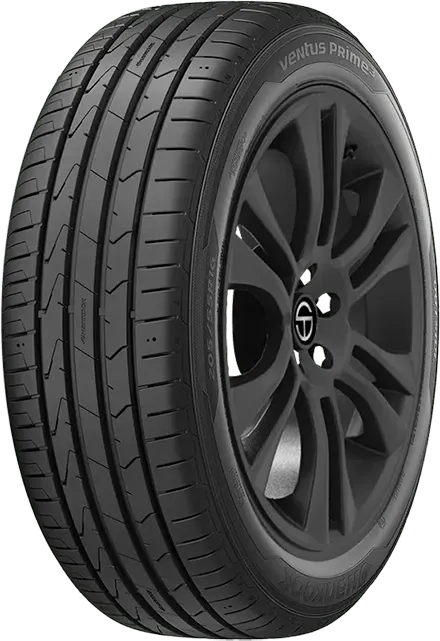
The Hankook Ventus Prime3 K125 debuted at the 2015 Frankfurt Motor Show as the successor to the Ventus Prime2, and it built a genuine, well-documented reputation as a strong-value premium touring tire — 29 independent tests, 4 outright wins, and a solid average finish of 5th place across that entire history.
Here’s what most reviews of this tire don’t make clear: it’s been officially superseded. Hankook has since replaced it in the lineup with the Ventus Prime4 K135, and a remarkably consistent, cross-source pattern in wet-weather performance is worth understanding before deciding whether the outgoing K125 is still the right choice.
This review is based on manufacturer specifications, aggregated professional and owner test data, and real long-term reports — not a single set of personal impressions.
- What it is: A premium touring summer tire, released in 2015, positioned for mid-class sedans, family SUVs, and luxury vehicles.
- Real strengths: Genuinely strong dry grip and braking, excellent ride comfort, respectable tread life, real competitive value.
- Real weaknesses: A remarkably consistent, multi-source pattern of wet-weather and aquaplaning concerns — this isn’t an isolated complaint but a documented theme across independent tests and real owner accounts alike.
- The catch: This tire has been officially replaced by the Ventus Prime4 K135, and its regional availability listing doesn’t explicitly include broad North American distribution the way some competitors do.
- Bottom line: A genuinely strong dry-weather touring tire with real value, but the documented wet-weather pattern is serious enough to weigh carefully, especially for drivers in consistently rainy climates.
Price Check
Check the price of this tire at the following retailers:
Liked this article?
Add TireAdvise as a preferred source so you see more of our tire reviews and guides on Google.
A Genuinely Consistent, Documented Wet-Weather Concern
This is worth addressing directly and in detail, since it’s not a single complaint but a pattern that shows up independently across multiple, unrelated sources — a level of consistency that’s genuinely rare and worth taking seriously rather than dismissing as one dissatisfied owner venting online.
One detailed owner account describes the concern in the starkest terms: after roughly 25,000 km of mostly motorway summer driving over three years, the owner specifically states “aquaplaning is serious on wet surfaces especially when there are heavy rains,” adding that the tires “warn of too quickly” — describing satisfaction with dry performance but real concern about the wet-weather characteristic specifically.
A separate, independent owner account describes an almost identical experience in different words: “wet grip and braking is actually very good. But it just float[s] over the water puddle. Very dangerous for me.” A third account specifically describes reduced confidence and vague steering feedback “especially in the wet” after replacing a set of Bridgestone RE003s.
A fourth source — an independent professional test summary — states the tire “shows slight weaknesses on wet roads” even while praising its dry braking. A fifth source describes it plainly: “Good on dry roads. Relatively weak in the wet.”
Five separate, independent sources — real owners with no connection to each other, plus professional test summaries — all converging on the same specific characteristic is genuinely rare and worth taking more seriously than a single complaint would warrant.
The honest synthesis: this tire’s dry performance is genuinely strong and well-documented, but the wet-weather and aquaplaning characteristic specifically is a real, consistent pattern rather than an isolated or unlucky individual experience.
What the Ventus Prime3 K125 Actually Is
The Ventus Prime3 K125 is a premium touring summer tire, positioned by Hankook for mid-class passenger cars, large family SUVs, and luxury vehicles. It debuted at the 2015 Frankfurt Motor Show as the direct successor to the Ventus Prime2 (K115), which had been in production since 2011.
The tire is largely manufactured at Hankook’s European facility in Hungary, and it’s genuinely served as original equipment on several popular vehicles across its production run.
Hankook’s own positioning describes the tire as achieving “the perfect balance of performance and safety,” with real engineering investment in extending tread life and improving grip across conditions relative to its predecessor.
A genuinely important, current fact: this tire has been officially replaced in Hankook’s current lineup by the Ventus Prime4 K135 — worth knowing directly rather than assuming the K125 remains Hankook’s current premium touring flagship.
Key Technology and Construction
High Grip Silica Compound. This is Hankook’s core engineering claim for this tire, specifically formulated to improve both dry and wet traction while genuinely reducing rolling resistance — a real, functional dual benefit rather than a single-purpose feature.
Four circumferential grooves with variable depth. These are specifically engineered for rapid water evacuation from the contact area, with groove depth varying by tread location specifically to balance wet and dry performance — a genuine, deliberate engineering trade-off rather than a uniform design choice.
High-strength sidewalls with a wide metal-cord breaker strip. This construction is specifically aimed at improving handling and steering response in corners, providing real structural rigidity that supports the tire’s touring-class handling characteristics.
Asymmetric tread pattern. Combined with the silica compound, this is engineered to deliver genuine cornering stability and traction across the range of conditions a touring tire is expected to handle in daily use.
Dry Performance
This is the tire’s clearest, most consistently documented strength, and the evidence is genuinely strong across nearly every source reviewed.
Independent aggregated testing describes the tire achieving “a good result in the dry thanks to its braking distance,” with one detailed professional test specifically crediting it with a strong showing in a dedicated 2021 summer tire braking comparison.
Real owner accounts consistently reinforce this — one detailed review specifically describes “excellent” dry grip with “no problem pushing the corner at excessive speeds,” and a separate account describes “superb dry grip” and confident handling even during spirited driving on country roads.
Wet Performance
As detailed extensively above, this is the tire’s genuine, well-documented weak point, and it deserves continued honest treatment here rather than repetition alone.
It’s worth being precise about what the data actually shows: wet braking distance itself is described as reasonably competitive in at least one professional test summary crediting the tire with strong dry and wet braking specifically.
The more consistently flagged concern is specifically aquaplaning resistance and wet-weather steering confidence — a real, meaningful distinction between straight-line braking performance and the tire’s behavior in standing water or heavy rain at speed, where multiple independent owner accounts describe a genuine loss of confidence.
Ride Comfort and Noise
This is a genuine, consistently praised strength across nearly every source reviewed. Real owner accounts repeatedly describe the tire as quiet and comfortable, with one detailed comparison specifically noting it was quieter compared to a previous set of Bridgestone RE003 performance tires, and another owner directly comparing it favorably to a Bridgestone Turanza AR20, describing “comfort and noise wise much better” performance.
A separate detailed account specifically praised how well the tire filters out “unimportant things (gravel, potholes)” while still preserving genuine steering feedback — a real, felt balance between comfort and communication that’s harder to achieve than it sounds, and a meaningful point in the tire’s favor.
Tread Life and Durability
This is a genuine strength, backed by both independent testing and real long-term owner data. Aggregated testing specifically describes the tire’s “wear behavior” as “convincing,” earning “a very good rating” in that specific category.
Real owner data provides a genuinely useful, concrete data point: one detailed long-term account describes a Skoda Yeti owner reaching 53,000 km with an estimated 5,000–10,000 km of remaining tread, projecting a total service life around 60,000 km (roughly 37,000 miles) — a real, respectable figure for a premium touring tire backed by an actual multi-year ownership account rather than a marketing projection.
That said, at least one detailed account offers a more mixed perspective, describing tread reaching 3.5mm after roughly 25,000 km of primarily summer highway driving and specifically noting a perception that the tires “warn of too quickly” — worth weighing alongside the more positive data point above as a reminder that individual results can vary with driving style and conditions.
Value and Pricing
Real owner feedback consistently frames this tire as genuine value within the premium touring category.
One detailed account specifically describes it as “one of the cheapest premium tyres on the market” while praising the ride quality improvement it delivered, and independent aggregated data describes the tire earning an overall “recommendable” classification when weighing its full set of characteristics together.
How the K125 Compares to the Newer Ventus Prime4 K135
Since Hankook has directly replaced this tire in its current lineup, this comparison is genuinely the most practically relevant one for most shoppers researching the K125 today.
Given that the K135 is Hankook’s current-generation premium touring tire, and manufacturers typically target specific, known weak points when developing a direct successor, it’s reasonable to expect Hankook’s engineering focus for the K135 addressed at least some of the wet-weather and aquaplaning characteristics so consistently documented for the K125 across the sources reviewed here.
This review focuses specifically on the K125 as requested, and the K135 deserves its own dedicated evaluation rather than an assumption about how directly it resolves the K125’s documented pattern — but shoppers specifically choosing between the two should know the newer tire exists and represents Hankook’s current engineering, not simply a rebadge of the same product.
Sizing and Availability
The Ventus Prime3 K125 is available across a wide range of sizes suited to mid-class sedans, family SUVs, and luxury vehicles, with its documented regional distribution spanning Mexico, Central and South America, Europe, Russia, East Asia, Southeast Asia, the Middle East, and Oceania.
Given that broad North American distribution isn’t explicitly confirmed in the same way as for some competing tires, US shoppers should confirm real, current availability with a US retailer before assuming this is a straightforward domestic purchase, and should factor in that the tire has been officially superseded by the Ventus Prime4 K135 when deciding whether to seek out remaining K125 stock specifically.
Who the Ventus Prime3 K125 Makes Sense For
Drivers who prioritize dry-weather comfort, grip, and value. This is the tire’s clearest, most consistently documented strength profile, and it’s genuinely strong across every source reviewed.
Owners in consistently dry or moderate climates. Given the documented wet-weather pattern, drivers who rarely face heavy rain or standing water get the most value from this tire’s genuine strengths without regularly encountering its most consistently flagged weakness.
Budget-conscious shoppers seeking a genuine step up from mid-tier tires. Real owner accounts consistently describe meaningful comfort and refinement improvements over more basic touring options, at a price positioned below many premium competitors.
Who Should Consider Alternatives
Drivers in genuinely rain-heavy climates. Given the remarkably consistent, multi-source pattern documented throughout this review — including one owner’s direct description of the experience as “very dangerous” — drivers facing regular heavy rain or standing water should weigh this real, documented concern seriously rather than treating it as an isolated complaint.
Shoppers specifically wanting Hankook’s current engineering. Given that this tire has been officially replaced by the Ventus Prime4 K135, buyers who prioritize the newest available compound and construction technology should research the current model directly.
US-based shoppers who haven’t confirmed local availability. This tire’s documented regional distribution doesn’t explicitly confirm broad North American availability the way some competing tires do, so checking with a US retailer directly is a sensible first step.
Getting the Most Out of This Tire
Take real, extra care in wet conditions specifically. Given the well-documented pattern covered throughout this review, moderating speed through standing water and heavy rain — rather than assuming uniform confidence based on the tire’s strong dry-weather reputation — is a genuinely important practical takeaway for current owners.
Check tread depth proactively, not just at legal minimums. Given the mixed wear reports and at least one account describing the tire “warning too quickly,” monitoring tread depth regularly and planning replacement before hitting the wear indicators helps avoid being caught out by reduced wet-weather margin as the tire ages.
Maintain correct inflation pressure consistently. As with any touring tire, staying within the manufacturer-recommended range helps preserve the balance between comfort and grip this tire is specifically engineered to deliver.
Rotate on a standard schedule. Regular rotation every 5,000–7,500 miles helps track actual wear against the tire’s documented tread-life reputation and catch any uneven wear early.
Where to Buy
Given the regional availability question addressed above, sourcing the Ventus Prime3 K125 may require checking multiple channels depending on your location.
Established tire retailers in Europe, Latin America, and other confirmed distribution regions should carry it directly, while US shoppers should confirm current stock with major retailers before assuming availability, and consider researching the current Ventus Prime4 K135 as the more readily available current-generation option.
What Real Owners Say vs. What Test Labs Measure
There’s a genuinely useful pattern worth understanding here, and it’s a slightly different one than the typical “labs and owners disagree” story that shows up with many tires.
For this specific tire, real owners and independent testing are unusually well-aligned, not divided. Both sources point to the same core strengths (dry grip, comfort, tread life) and the same core weakness (wet-weather and aquaplaning confidence) with genuine, mutual reinforcement rather than contradiction.
That level of agreement across such different measurement methods — subjective daily driving experience versus controlled instrumented testing — is itself a meaningful signal that the documented wet-weather pattern reflects something real about this tire’s engineering, rather than a coincidence of a few unlucky individual reports.
This is worth internalizing as a broader lesson beyond just this specific tire: when independent lab testing and real owner experience converge this consistently on the same specific characteristic, that convergence deserves real weight in a purchase decision, more so than either source would carry alone.
Frequently Asked Questions
Is the Hankook Ventus Prime3 K125 still available, or has it been replaced?
It’s been officially replaced in Hankook’s current lineup by the Ventus Prime4 K135. Some retailers and markets may still carry remaining K125 stock, but shoppers should confirm current availability and consider whether the newer K135 is the more relevant option for their needs.
Is the Hankook Ventus Prime3 K125 good in the rain?
This is a genuine, well-documented area of concern. Multiple independent owner accounts and professional test summaries consistently describe wet-weather and aquaplaning performance as a real weak point, even though the tire’s dry performance is strong. One detailed owner account specifically described the wet-weather characteristic as “very dangerous” in their experience.
How long does the Hankook Ventus Prime3 K125 last?
Independent testing describes wear behavior as “convincing” with a very good rating, and one detailed long-term owner account reports reaching an estimated 60,000 km (roughly 37,000 miles) of total service life. Results vary somewhat by driving style, with at least one account reporting faster-than-expected wear over roughly 25,000 km of highway-focused driving.
What replaced the Hankook Ventus Prime3 K125?
Hankook has officially replaced it with the Ventus Prime4 K135, the brand’s current-generation premium touring tire. The K125 itself replaced the earlier Ventus Prime2 (K115) when it launched in 2015.
Is the Hankook Ventus Prime3 K125 comfortable and quiet?
Yes, genuinely so — this is one of the tire’s most consistently praised characteristics across independent sources. Real owner comparisons describe it as notably quieter and more comfortable than several competing touring and performance tires it replaced.
Can I buy the Hankook Ventus Prime3 K125 in the United States?
It’s worth confirming directly rather than assuming. The tire’s documented regional availability includes Mexico, Central and South America, Europe, Russia, East Asia, Southeast Asia, the Middle East, and Oceania, without an explicit confirmation of broad US distribution comparable to some competing tires. Checking with a US retailer directly, or considering the current Ventus Prime4 K135, is a sensible first step.
What vehicles is the Hankook Ventus Prime3 K125 designed for?
It’s built for mid-class passenger sedans, large family SUVs, and luxury vehicles, and it has served as genuine original equipment on several popular vehicle models across its production run since debuting at the 2015 Frankfurt Motor Show. ## More Hankook Tire Reviews For a broader look at how Hankook’s tire lineup performs across categories — from touring and performance to all-terrain and winter tires — see our full Hankook tires review covering the brand’s overall reputation, strengths, and where it fits against competitors.
